

What do you think?

Cynegeticus: On Hunting with Dogs
Xenophon (431-355 Be, son of Gryllus, of the deme Erchia of Athens, was a soldier, mercenary and an admirer of Socrates. He is known for his writings on the history of his own times, the sayings of Socrates, and the life of Greece. He participated in the expedition led by Cyrus the Younger against his older brother, the emperor Artaxerxes II of Persia, in 401 BC. His record of the entire expedition against the Persians and the journey home was titled Anabasis (The Expedition or The March Up Country). He was later exiled from Athens, most likely because he fought under the Spartan king Agesilaus against Athens at Coronea. The Spartans gave him property at Scillus, near Olympia in Elis, where he composed the Anabasis. His writings are often read by beginning students of the Greek language. His Hellenica is a major primary source for events in Greece from 411 to 362 BC, and his Socratic writings, preserved complete, are the only surviving representatives of the genre of Sokratikoi logoi other than the dialogues of Plato.
72 pages, Paperback
First published January 1, 385
About the author
Xenophon
2,525 books513 followersXenophon (Ancient Greek Ξενοφῶν, Modern Greek Ξενοφώντας; ca. 431 – 355 BC), son of Gryllus, of the deme Erchia of Athens, was a soldier, mercenary and a contemporary and admirer of Socrates. He is known for his writings on the history of his own times, preserving the sayings of Socrates, and the life of ancient Greece.
Historical and biographical works:
Anabasis (or The Persian Expedition)
Cyropaedia
Hellenica
Agesilaus
Socratic works and dialogues:
Memorabilia
Oeconomicus
Symposium
Apology
Hiero
Short treatises:
On Horsemanship
The Cavalry General
Hunting with Dogs
Ways and Means
Constitution of Sparta
Historical and biographical works:
Anabasis (or The Persian Expedition)
Cyropaedia
Hellenica
Agesilaus
Socratic works and dialogues:
Memorabilia
Oeconomicus
Symposium
Apology
Hiero
Short treatises:
On Horsemanship
The Cavalry General
Hunting with Dogs
Ways and Means
Constitution of Sparta
Ratings & Reviews
Friends & Following
Create a free account to discover what your friends think of this book!
Community Reviews
Displaying 1 - 7 of 7 reviews

July 24, 2011
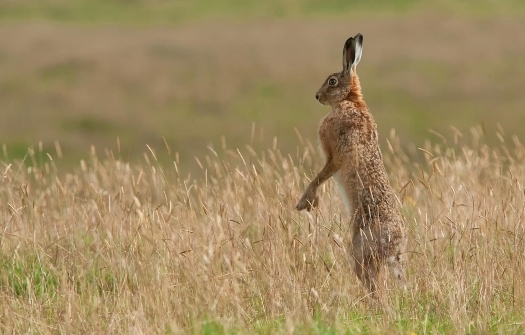
L’art de la chasse est un texte magnifique! Après avoir introduit son sujet par les origines mythiques de cette activité, il la décrit avec son style si particulier et reconnaissable, si harmonieux, viril et concret que l’on se sent courir avec lui au milieu d'une meute de chiens joyeux animés par nos appels, à travers des sentiers de montagnes reculées de la Grèce, loin des villes, au fil des saisons, au rythme de la nature, à la poursuite du lièvre déboulé* de son terrier, et que l’on cherche adroitement à acculer dans un filet.
Tout est précis, nerveux, vivant : les sons, la lumière, les odeurs, tous les sens sont sollicités. Mais c'est la dernière partie, qui aborde l'éducation, puis la morale et la politique, le véritable sujet du livre, qui est très émouvante. Xénophon livre ses sentiments en toute simplicité, mais avec grandeur, et autre ktéma es aeï. Un lexique spécial est fait pour décortiquer tout le vocabulaire grec relatif à la chasse, ainsi que des schémas illustratifs. Un excellent ouvrage acheté d'occasion, que le précédent propriétaire n’avait hélas jamais lu.
*débouler: bondir hors de son terrier dans lequel il était roulé en boule

November 8, 2024
It’s all in here
September 7, 2021
Heard about this from a Historia Civilis video - I’m glad I followed through and picked this up. The content of this book was very interesting to me.
Xenophon starts by describing some desirable characteristics in a hunting dog, names that are easy to call out, etc. He then moves into techniques for hunting/trapping different types of game like hares, deer, and boar accompanied by man’s best friend. The imagery is all very vivid and, although I’m not an expert, I like the translation.
The copy I purchased on Amazon had a few downsides, though. The explanatory notes were less helpful as a guide than I’d like, and the organization of the text is a bit messy.
Still worth picking up if it’s piqued your interest.
Xenophon starts by describing some desirable characteristics in a hunting dog, names that are easy to call out, etc. He then moves into techniques for hunting/trapping different types of game like hares, deer, and boar accompanied by man’s best friend. The imagery is all very vivid and, although I’m not an expert, I like the translation.
The copy I purchased on Amazon had a few downsides, though. The explanatory notes were less helpful as a guide than I’d like, and the organization of the text is a bit messy.
Still worth picking up if it’s piqued your interest.

July 19, 2024
Un libro sobre la caza y sobre los perros de caza, es lo que te esperas que es.

classics
December 19, 2025I can and will name one of my future dogs after ch. 7

August 10, 2026
5/10
Not my idea of leisure time.
Not my idea of leisure time.

June 18, 2025
Version read:
- E. C. Marchant’s, as well as Gregory McBrayer’s
- E. C. Marchant’s, as well as Gregory McBrayer’s
Displaying 1 - 7 of 7 reviews