Jump to ratings and reviews
Rate this book

You Would Have Missed Me

Rate this book
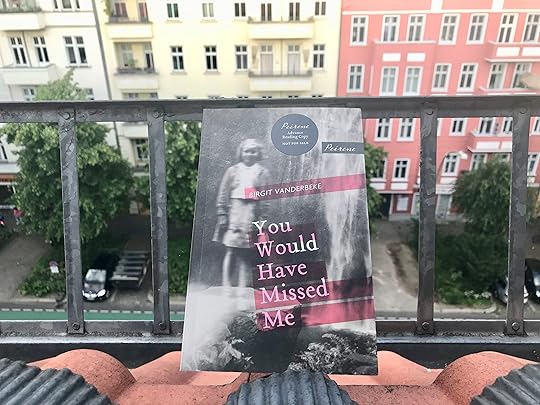
By the author of Peirene’s bestseller The Mussel Feast. A family is torn apart by their dream of a better future in the West. A true story narrated through the eyes of a child.

West Germany, early 1960s: A little girl arrives with her parents from East Germany in a camp for displaced people. The girl’s father is abusive, the mother ignores her. Soon she will celebrate her seventh birthday and all she wants is a cat. Instead she receives an illuminated globe. The girl can’t hide her disappointment – but then she discovers that the globe offers her a way to escape the misery of the camp.

Why Peirene chose to publish this book:

Today, as in the past, people flee from one country to another in the hope of finding a better future. But how do children experience such displacement? How do they cope with traumas of a refugee camp? In this novel Birgit Vanderbeke goes back to her own childhood in the divided Germany of the 1960s. She shows how the little girl she once was saved herself by imagining countries on the far side of the world. A masterpiece of memory turned into fiction.

154 pages, Paperback

First published March 1, 2016

5 people are currently reading
197 people want to read

About the author

Birgit Vanderbeke

28 books47 followers
Birgit Vanderbeke was a German writer. Vanderbeke grew up in Frankfurt am Main after her family moved to West Germany in 1961. She studied Law, Germanic and Romance languages. The English translation of her debut novel, Das Muschelessen, by Jamie Bulloch was published in 2013 by Peirene Press as The Mussel Feast. Since 1993 she has been living in southern France.

(from Wikipedia)

Ratings & Reviews

What do you think?
Rate this book

Friends & Following

Create a free account to discover what your friends think of this book!

Community Reviews

5 stars
29 (17%)
4 stars
51 (30%)
3 stars
69 (41%)
2 stars
10 (5%)
1 star
9 (5%)
Displaying 1 - 30 of 30 reviews
Profile Image for Paul Fulcher.
Author 2 books1,970 followers
April 29, 2019
I can’t remember what it was like being born, but from what they used to tell me it seemed almost as if everything had been fine up to that point.

You Would Have Missed Me has been translated by Jamie Bulloch from Birgit Vanderbeke's 2016 original Ich freue mich, dass ich geboren bin, and published by wonderful small independent publisher Peirene Press, strapline Contemporary European Literature. Thought-provoking, well designed, short, as part of their 2019 “There Be Monsters” series. Peirene's role in social activism (https://www.peirenepress.com/social-a...) is also key to their mission, including donating 50p for each book purchased direct to charity.

The Mussel Feast, from the same author/translator/publisher was shortlisted for the 2014 Independent Foreign Fiction Prize (forerunner of the Man Booker International), and You Would Have Missed Me is the first time that Peirene have published a second book by the same author, making an exception to their usual rule due to the quality of the work. Their reason for publishing the novel(la):
Today, as in the past, people flee from one country to another in the hope of finding a better future. But how do children experience such displacement? How do they cope with traumas of a refugee camp? In this novel Birgit Vanderbeke goes back to her own childhood in the divided Germany of the 1960s. She shows how the little girl she once was saved herself by imagining countries on the far side of the world.
You Would Have Missed Me is a slim, 114 page, novella, narrated by a 7 year-old girl (or rather that girl in later life, looking back on that time and what she would have thought) and set in the early 1960s. Her family fled from East to West Germany (presumably just before the Berlin Wall was erected) when she was 5 (as did the author's own).
Initially housed in a refugee camp, the novel opens on her 7th birthday, with her family now living in a flat of their own, her father working in a local factory (starting at the bottom, but with hopes of rising rapidly) and her mother as a teacher.

The original German title is taken from a traditional birthday song sung by her mother to her:

„Wir freuen uns, dass du geboren bist und hast Geburtstag heut'“

"We're so happy you were born
and that it's your birthday today"

But it gradually becomes clear, as the opening quote suggests, that this isn't really the case, particularly for her father, hence the German title - (at least) I'm glad I was born.

Younger that her mother, her father enjoyed the freedom of his bachelor life in the East in Berlin, and feeling forced to marry and flee to the West after his partner fell pregnant. For him the West is certainly not the 'Promised land' hailed by his wife, although his mood isn't helped by her over-enthusiastic embracing of the consumerist culture and hankering for the latest model of car/furniture/domestic appliance, as well as her constant moans about what might have been (her original fiance, from a wealthy family, was killed in the War, although as the narrator's father is fond of pointing out, if he hadn't died in the war he would like - from a family of wealthy Nazi landowners - have been shot by the Communists in any case). In his view he is 'wasting his youth'.

Indeed it gradually becomes clear that this is a rather darker tale than first appears and that, when provoked, the narrator's father is physically abusive to her.

She instead takes refuge in books, inspired by three elderly (at least to her) people she met in the refugee camp. And for her 7th birthday she receives, in the post, the book they had long promised her when she was old enough to read it - The Time Machine - and, from her parents, a globe. The narrator is regarded as clumsy by her parents, and when her birthday ends with her breaking the head of her new doll as well as damaging the globe, it triggers a violent response from her father, and she, in the latter third of the novel, begins to imagine her travels through time and place inspired by the two gifts.

Wenn man lesen kann, kann man zaubern und sich in alle Länder in der ganzen Welt versetzen oder in Tiere verwandeln oder plötzlich in einer anderen Zeit sein als der, in der man lebt. Man kann nach Belieben herumreisen, als gäbe es keine Zäune und Grenzen und Mauern, an denen es nicht weitergeht, man wird nicht verhaftet, eingesperrt oder erschossen.

If you can read you can perform magic and transport yourself to every country in the world, or change into an animal, or suddenly be in a different era from the one you’re living in. You can travel around as you please, as if there were no fences or borders or walls to stop you, you don’t get arrested, locked up or shot.


Overall 3 stars. A charming tale, but one with a dark heart, although the final third with her imagining her way round the globe didn't feel fully realised.
Profile Image for Gumble's Yard - Golden Reviewer.
2,224 reviews1,806 followers
January 1, 2020
This book was published by the UK small press, Peirene Press “a boutique publishing house with a traditional commitment to first class European literature in high-quality translation” and whose style is described by the TLS as “Two-hour books to be devoured in a single sitting; literary cinema for those fatigued by film”

This is their second publication by this author (both books translated by Jamie Bulloch) after The Mussel Feast.

There are a number of similarities in the underlying theme - a family who have escaped from East to West Germany, disillusionment with aspects of the West, and a father whose disillusionment manifests itself in a domineering and demanding parental style.

However, whereas that book was highly allegorical this is a more straightforward tale (at least until the closing section) narrated by a girl on her seventh birthday, a child in desperate need of someone to talk to about her confusion about her family circumstances and her desire to return to the familiar past from which her family made their escape.

The concept behind the publication of the novel is a good one - a partly autobiographical perspective on the plight of refugees - a theme dear to the heart of this publisher who, in a small press world replete with virtue signalling on social media, match both their actions to their convictions, with 50 pence of all of their books being donated to a refugee charities and the founder of the press taking a sabbatical to work in a camp.

The strongest part of the novel was the child’s reflections on how the boisterous family meals at her Grandma’s in the East, and the time spent in conversation. with her Aunt and Uncles in the Refugee camps feature in her memory as much emotionally richer and secure than her rather mundane (if materialistically more abundant) existence in the West.

The way in which the darkness at the heart of her family is revealed - first of all by a doctor suspicious about some longstanding injuries and then by her own hazy recollections of an incident with her family when she was young - also works well.

But ultimately, I felt this was a novella that was flawed in its two main elements.

The seven-year old narrator is for too much of the book either: cliched in her observations on the illogicality of adults (a whole section in myths told to children eg that sucking a thumb leads to buck teeth was very unoriginal); or unconvincing in the preciousness of her perspective.

And the final part of the story when the child takes refuge in her imagination (sparked by the globe and the Time Machine novel) to travel in her mind and even into her future Is just clumsily executed so that the book ended with this reader disengaged.

3.5* (5* for the thought behind the publication of the book, 2* for its execution)
Profile Image for Johan Thilander.
499 reviews43 followers
Read
February 18, 2019
Som de andra Vanderbeke-romaner jag har läst så handlar Jag är så glad att jag är född om ett barn som måste manövrera sig i ett hem kontrollerat av en neurotisk förälder. I denna fungerar födelsedagen som ett slags respit där barnet (tillsynes) får en andhämtning från en spänd tillvaro.

Varken denna eller Fredliga tider når upp till de höjder som Musselmiddag gjorde, men de är fortfarande väldigt bra böcker.
Profile Image for Jackie Law.
876 reviews
June 17, 2019
You Would Have Missed Me, by Birgit Vanderbeke (translated by Jamie Bulloch), is the latest release in Peirene Press’s ‘There Be Monsters’ series. Based on the author’s childhood, it is told from the point of view of a young girl whose parents have fled East Germany for the West with their daughter just before the building of the Berlin Wall. The adults embrace the materialism of imported American culture, buying goods on credit in an attempt to emulate remembered wealth from their pre-war years. The child considers her parents’ conversations proof that their lives were so much better before she was born, and perceives a correlation.

The story opens on the girl’s seventh birthday. She understands that, once again, she will not be receiving the kitten she has longed for since they left the refugee camp for the assigned two bedroom flat where they now live. Her parents do not listen, believing they know best what is good for her. In her view, since moving to the West, they have done what they can to remove every source of her happiness.

Back in the East her grandmother would care for her while her mother was at work. She remembers: the large house and garden, the fun of visiting uncles, delicious food. Now she subsists on the bland offerings her mother cooks, denied even water when thirsty as her mother believes it will give her worms. Any friends the child makes are derided as beneath her family’s social standing. She is banned from visiting adults whose company she enjoyed at the camp after her mother questions their morals.

The mother is determined that her family will climb the ladder of social success. Her much younger husband struggles to contain his anger at the hand life has dealt him. The girl is frightened of her father and with good cause. She longs for someone wise to talk to, someone such as the fun and friendly doctor who arranges treatment for her injuries.

Children have no choice but to accept the decisions made for them by their parents. Remembering her earlier life, the child does not understand why they became refugees and why adults lie about so much when questions are asked. In viewing life through her eyes the reader is shown how ridiculous many aspects of adult behaviours can be and how futile their often hollow aspirations. Children see through the social blather and observe more than they are given credit for.

The ridiculousness of the mother’s desires add much humour. She hankers after possessions and experiences that, when grasped, will always fall short. Likewise she longs for an ideal daughter, one who is quiet and pretty and does not scuff her shoes or cause damage in the home. The child knows that she is a constant source of disappointment and must find a way to live with the hurt this causes.

“You get used to disappointments, but in the long term they make you feel cold and empty inside, and you begin to lose heart.”

Instead of a kitten the child is given a globe along with presents from people who have shown her kindness in the past. From these gifts she concocts a means to get through the moments of strife she faces at school and at home. Despite her parents’ inability to listen, she finds her voice. It gives her hope that she can navigate her way to a better future.

The nuance and wit in the writing raises this astute tale of childhood hurt to a level both haunting and sanguine. The treatment of children, seen through the eyes of a child, is a reminder that parents are fallible and, too often, selfish in their motives. The refugee element adds a layer of poignancy. Subtle and compact, this is a deftly affecting yet entertaining tale.
Profile Image for verbava.
1,147 reviews162 followers
August 2, 2019
цього року місяць перекладної жіночої прози в мене почався із біргіт вандербеке, як і минулого, – і це знову був досвід страшного, але безумно гарного, як бувають страшні й гарні грози, на ранок після яких лишаються викорчувані дерева, зате небо – прозоре, аж бринить.

«вам би мене бракувало» починається з дівчинки, яка стоїть із батьками у вітальні й розуміє, що на цей день народження – уже третій, відколи вона мріє, – їй знову не подарують котеня. дівчинці сім, вона страшенно незграбний дітлах, якому хочеться пити в не призначений для цього час, і, доки мама співає деньнародженнівську пісню, а батько дивиться собі на руки, у її голові розгортається ціла сімейна історія, позшивана з особистого тілесного досвіду (вандербеке – майстриня передавати дотики й запахи), розмов, яких дорослі не стишують при дітях, бо діти все одно нічого не втямлять, і фантазій, у які ховаєшся, коли тікати більше нікуди. а дуже скоро стає зрозуміло, що це якраз така ситуація.

справді красивий структурний хід: понад третина книжки минає між кількома повторами деньнародженнівської пісні. спочатку вставки між рядками невеличкі, але поступово час ніби загустає й утягує в себе дедалі більше тексту й болю, наче чорна діра. а потім – вибух, і світ довкола стає такий ясний і білий, що очі сльозяться. тобто, здається, саме від цього й сльозяться.
Profile Image for Tripfiction.
2,052 reviews216 followers
June 10, 2019
Novel set in 1960s GERMANY


This novel – novella – is published by Peirene Press who are specialist publishers of short, sharp novels: “Two-hour books to be devoured in a single sitting: literary cinema for those fatigued by film” (TLS). Award-winning translated novellas and proudly European.

50p of every book sale goes to refugee charity Basmeh & Zeitooneh – and it is the plight of the refugee that Birgit Vanderbeke brings to life in this novel, seen through the eyes of a seven year old child.

Her family has fled from East Germany to “The Promised Land” of West Germany and as they move from pillar to post to find their final settling place, the young girl observes her family’s responses to their new life. Mum is intent on acquiring new (fashionable as she sees it) teak furniture, and status is as much about the make and model of car as it is about being able to eat bananas (which were a commodity in the East only available at the time to certain categories of people, like sports men and women who were representing their country). The mother’s aspirations somehow always seem to fall short. She has clearly not found her nirvana and her expectations are dashed time and again. Yet, nowhere is perfect, the grass is only seldom greener.

The little girl looks back with yearning to time spent with her grandmother in the country in the East and hankers after the home cooked food which is in such stark contrast to the bland offerings her mother serves up now. Her parents have made their choice, yet for this little girl there is little to relish in the West.

Adults are a mystery, they have an agenda that clearly confounds her. Children are to be seen and not heard as the adults try to fathom what it is they want. The novel opens on the child’s 7th birthday and once again she has been denied the thing she really wants. A cat.

She is, however, given a globe and it is this that feeds her imagination, helping her adapt to her new surroundings and adjust to her tumultuous uprooting.

The author excellently portrays the confusion of the refugee family in their new Heimat. Striking is the perplexion of the child as she comes to terms with the loss of everything familiar and her struggle to assimilate and to comprehend a nation with the same language but with a different substructure and unaccustomed manners and mores.

I took this novel with me to read in Germany and found it illuminating. I remember much of the period myself – the issue of which car to buy (it had to be an Opel); that drinking tap water was deemed unhealthy; eating cherries and drinking water simultaneously were a no-no (I still have no idea why); factories belching out questionable substances, and yes, there was always a yellow/ochre tinge to the pollutant…

The prose is very good and the translator has brought real skill and judgement to the work.

In many ways the refugee experience has not changed, it is a universal situation with common experience of dislocation and helplessness. The book reminds us all, that those who enjoy settled status in one country are privileged – they (we) really are! It is something that many do not have; and it behoves those of us in such a privileged position to be mindful of and supportive to those who are struggling. – oftentimes through no fault of their own, other than by accident of birth.
Profile Image for Alan (the Lone Librarian) Teder.
2,734 reviews262 followers
June 1, 2022
June 1, 2022 Update Added the new English language audiobook edition You Would Have Missed Me narrated by Kristin Atherton to Goodreads. The audiobook of the Peirene Press translation is published by Spiracle Editions who issue audiobooks in partnership with UK independent presses. See further information at Spiracle Editions.
Bonus Links
Spiracle add several bonus features for each of their audiobooks. You can read the Curator's Letter, listen to interviews with translator Jamie Bulloch, and narrator Kristin Atherton.

Coming of Age Novella
Review of the Peirene Press paperback (2019) translation into English by Jamie Bulloch of the German language original Ich freue mich, dass ich geboren bin (I am Glad, That I was Born) (2016)

[rounded down from 3.5] Brigit Vanderveke's portrait of childhood centres around a 7-year-old girl's birthday when instead of a wished for cat, she receives a globe of the world and a copy of H.G. Wells' "The Time Machine" as gifts. The gifts propel her imagination in ways that likely provoked the future writer to be.

There are a lot of charming anecdotes of childhood here and one harrowing abstract description of physical abuse from an angered parent. A lot of it seems repetitious though as certain facts and descriptions of characters are repeated over and over. This may be from it being stitched together from episodic vignettes.

Childhood coming of age tales can be extremely evocative for everyone, but need something more before they can break into 4 or 5 star territory. Wioletta Greg's recent Swallowing Mercury, although also novella length, had that sort of epic scale for me, but Vanderveke's seems like a snapshot in comparison.
Profile Image for Robert.
2,319 reviews262 followers
July 4, 2019
Although I have said this on the blog many times, I am a huge fan of indie presses and I’m glad to review a book by the mighty Peirene Press, publishing only three books a year with an underlying theme (this year it’s Here be Monsters), the quality of Peirene is usually high.

The book revolves around a girl wanting a kitten for her birthday and then not receiving one. This sets her off on a sort of monologue about her move from a refugee camp in East Germany (mentioning the Trabant gave it away) to her life in Frankfurt (aka The Promised Land).

We then have snapshots of the narrator’s life ; her mother’s superstitions, the difference between east and west Germany, how the war affected people, her interactions with her schoolmates and her misdemeanors. All are told through a child’s point of view, which means that there are some clever naive observations.

I guess you can call this an experimental novel due to the way the narrator jumps from topic to topic. Usually I think that translated experimental novels do not work but translator Jamie Bulloch pulls it off. This is an engrossing read which will raise a chuckle, especially when the narrator eats Italian food for the first time or when she receives a globe as a present.

You Would Have Missed Me is actually based on the author’s experiences of moving from East to West, however this is given a fictional makeover (hence the term autofiction) anyway call it what you want, it’s great and an interesting look at post war Germany.
Profile Image for Lena.
642 reviews
January 18, 2019
"Mormor själv gifte sig när hon var mycket ung. Hon var glad över att ha det överstökat för sin del och att hon redan var änka sedan många år. Men innan en kvinna kan bli änka och få pension och ha det lugnt och skönt från männen måste hon först utstå äktenskapet, det kan inte göras på annat sätt och om en kvinna inte hade någon innan trettio gick det med stormsteg mot att hon skulle bli en gammal ungmö"

Dysfunktionella familjer är något av Birgit Vanderbekes signum.
Svår att betygsätta. En trea tror jag.
Inte alls i klass med Musselmiddag.
Profile Image for Bill Lawrence.
399 reviews6 followers
May 2, 2020
I'm very supportive of Peirene Press, having come across them early and being a subscriber since. I've not read them all, but I do enjoy and appreciate what they do, giving me access to a lot of European literature that I would not get the chance to read, otherwise. Anyway, having read The Mussel Feast, it was a pleasure to the second publication of Vanderbeke's by Peirene. It reminded me Tove Ditlevsen's Youth, that I read recently, that about a young girl growing up in war-time Copenhagen. This is set about 20 years later, but he legacy of war hangs over it as refugees move across Germany, from East to West. It is breathlessly written from the perspective of a seven-year-old girl. I think Vanderbeke's skill is to weave stories within stories while maintaining the singular voice. Equally, there is a lot of space for the reader to think beyond the words, create their pictures around tormented adults and children, tragedy and despair. Deceptively simple in the telling, complex in its portrayal of what it is to be human.
15 reviews1 follower
July 18, 2023
Ich finde ein paar Szenen zu kompliziert geschrieben. Man musste diese Szenen mehrmals durchlesen und sich auch wirklich Gedanken darüber machen, was genau passiert ist oder wie es zu verstehen gemeint ist. Das Thema (Gewalt zu Hause) war spannend, jedoch nicht sehr interessant oder verständlich geschrieben.
Profile Image for Tatiana.
257 reviews1 follower
January 17, 2020
3.5 stars

I loved the writing, it's a very difficult story to read and the fact that it's told from the POV of a 7 year old girl makes the horror sneak up on you in unexpected ways. And the first two thirds are fantastic, firmly planted in reality, even though that reality often seems absurd (which makes sense because adults and the real world are absurd, particularly as seen through the eyes of a 7 year old). But after a particularly horrific incident, and with less than one third to go, the author introduces an imaginary element that in my opinion does not work in this context. In any event it did not work for me. Nevertheless, I love Vanderbeke's style and I hope more of her work gets published in English, hopefully translated by Jamie Bulloch because once again he's done a fantastic job (check out The Mussel Feast, it's brilliant!).
Profile Image for Anne Goodwin.
Author 10 books63 followers
November 18, 2025
A pitch-perfect account of what it’s like to be a child with no-one to help her translate her experience into words, because those whose primary purpose is to do so have a vested interest in concealing the truth. As psychologically astute on the veil draped around child mistreatment as the writings of Alice Miller ...
Full review
Time travel translated: Vintage 1954 & You Would Have Missed Me https://annegoodwin.weebly.com/1/post...
175 reviews3 followers
August 23, 2019
The beginning was dull and meandering, the middle somewhat better but for such a harrowing tale not at all emotionally engaging. and the final part where she's travelling in her imagination is nonsense and leaves the reader abandoned and confused. Book ends with a great big "Huh?". it's narrated by an entirely unconvincing child narrator. Apart from Perene's ever-gorgeous presentation and design, this book's only real merit was its brevity.
Profile Image for Nicole Kusche.
17 reviews
November 5, 2022
Zwei große Themen dominieren Birgit Vanderbekes Roman Ich freue mich, dass ich geboren bin – die Flucht und das Träumen.

Es sind die 1960er-Jahre in Deutschland. Die siebenjährige Ich-Erzählerin ist vor einigen Jahren mit ihren Eltern aus dem Osten in den Westen geflohen. Zunächst sind sie in einem Flüchtlingslager untergekommen, nun leben sie in einer Werkssiedlung des Arbeitgebers des Vaters. Die Mutter hat endlich die Teakholzmöbel bekommen, von denen sie im Osten nur hätte träumen können, und nach außen hin scheint alles in bester Ordnung zu sein.

Doch im Inneren der Familie brodelt und bröckelt es. Die Mutter trauert noch immer ihrem im Krieg gefallenen Verlobten hinterher und findet auch im langersehnten materiellen Wohlstand, der im Westen nun endlich möglich ist, keine Erfüllung. Der Vater wünscht sich regelmäßig in sein ungezwungenes Studentenleben in Ostberlin zurück und fühlt sich im Korsett des Ehe- und Familienlebens eingezwängt und gefangen. Beide sind nicht in der Lage, ihrer kleinen Tochter Liebe und Geborgenheit zu geben.

Stattdessen ist die Kindheit des Mädchens im spießigen Mief der Sechziger Jahre geprägt von psychischer und physischer Gewalt. Die Mutter lässt ihre Tochter regelmäßig spüren, dass sie kein „braves Mädchen“ ist, und wenn sie selbst mit ihrem Erziehungslatein am Ende ist, kommt regelmäßig die „väterliche Hand“ zum Einsatz. Nur schwer lesen sich die Szenen körperlicher Züchtigung, auch wenn sie wenig explizit sind.

Da es für das kleine Mädchen kein Entkommen aus seiner Situation gibt, sucht es sich seinen eigenen Weg, um vor der von Gewalt und Lieblosigkeit geprägten Realität zu fliehen: Mithilfe von Büchern und Geschichten träumt es sich in eine bessere Welt ohne Gewalt und Frustration. Eine innere Stimme meldet sich immer häufiger zu Wort und geleitet das Mädchen durch die Unwägbarkeiten des Alltags. Und so wird alles erträglicher...

Als Leser fühlt und leidet man mit dem Mädchen, das es seinen Eltern nie recht machen kann und sich – im Widerspruch zum Titel des Buches – oft wünscht, dass es gar nie geboren worden wäre. Auf nahezu jeder Seite des Buches spürt man die bedrückende Stimmung, die in der Familie herrscht. Und dennoch zieht einen das Buch nie so ganz in seinen Bann – zu oberflächlich bleibt es in weiten Teilen. Zudem war mir persönlich die Ähnlichkeit zu „Friedliche Zeiten“ einfach zu groß – man hatte den Eindruck, einiges bereits zum zweiten Mal zu lesen.
Profile Image for Johan D'Haenen.
1,095 reviews12 followers
April 24, 2023
In de onvolprezen Peirene Series is dit tweede boek van Birgit Vanderbeke in Engelse vertaling gepubliceerd. Het is zo jammer dat zo weinig boeken van deze Duitse schrijfster in Engelse (of Franse) vertaling verschenen zijn.
Birgit Vanderbeke kruipt hier in de huid van een zevenjarig meisje, geboren in de DDR en met haar ouders gevlucht naar West-Duitsland. Ze is een slachtoffer, zowel fysisch als psychisch, en vertelt hier in een stream-of-consciousness hoe zij haar verleden en heden ervaart... en de toekomst? Dat laatste is een open vraag.
De titel van de Engelse vertaling vind ik wel minder geslaagd. "Ich freue mich, dass ich geboren bin" is de originele Duitse titel... en op haar zevende verjaardag zingen de gasten "We're so happy you were born". Wat mij betreft had dat de vertaling van de titel geweest moeten zijn... waarom? Wel, juist omdat de ouders van het meisje absoluut niet blij zijn met haar geboorte.
444 reviews6 followers
July 15, 2019
The whole thing should be depressing, but it is strangely heartwarming. The young girl needs so little to find happiness and, despite their problems, the family are slowly moving upwards so there is a sense of hope for the future. I always think of East Germany as a bleak, hopeless place, so it was interesting to see the little girl's memories of her grandmother keeping rabbits and baking wonderful cakes.

Full review on my blog : https://madhousefamilyreviews.blogspo...
Profile Image for Beth Cunningham .
466 reviews6 followers
March 7, 2020
I haven't read any literature from this Era so it really enticed me in being a HF fan. It explored the every day divide between the West and East and also highlighted that just because Nazi rule was over, the part mentality in every day Germans had not necessarily gone away. The innocence of the child and the power of imagination has was an interesting contrast from the despairing moods from the people around her - it was almost heartfelt
874 reviews8 followers
June 10, 2020
What a great book. It's a fictionalised memoir of the author told from her childhood perspective. She's in a refugee camp in West Germany having fled East Germany. Although it's not a cheery read (many issues such as domestic abuse, consumerism and life for refugees are raised) it's a delightfully quirky and very entertaining read, largely due to the voice of the child narrator.
Profile Image for Bagus.
481 reviews94 followers
August 2, 2020
“We have our best ideas between the ages of five and ten. Some people have only a few ideas after that, maybe until they’re twenty-five or thirty, depending on whether they’re still talking to anyone then, but after thirty most of them no longer want to talk to anyone, they’ve given up, so obviously that puts an end to any more ideas.”

The original title of this book in German would be “Ich freue mich, dass ich geboren bin”. It literally means “I’m glad that I was born”, a bit different from the English title which is “You would have missed me”. The title didn’t make any sense to me at first when I picked up the book, but what has made me stay in reading it until the end was the story that follows and the beautiful explanation behind the bizarre title.

The book is authored by Birgit Vanderbeke, who was born in Dahme, East Germany in 1956. She escaped from East Germany to the western part of the country with her family when she’s just 6 years old. This fact will, in turn, bring us to more understanding about the protagonist in this book, a 7-year-old girl whose parents just suddenly decided that she must follow them to trespass the border from East Berlin to West Berlin. She didn’t know why they had to flee in the middle of the night while her grandmother was still sleeping. Even more obvious is the fact that they had to leave even though the family seemed to do just fine, to which the 7-year-old mind couldn’t second guess the reason.

As most East German refugees fared after escaping the Iron Curtain at that time, the family had to stay for a while in refugee camps. First at Marienfelde Refugee Camp in West Berlin, then in another refugee camp somewhere in Bavaria. It is interesting to see the life inside a refugee camp from the perspective of a 7-year-old girl. Suddenly she had to live with many different people inside the refugee camp, each of those who also had many stories to tell. And inside this camp, she has made new friendships not with the kids around her age but with 3 adults who almost turned 50: Auntie Eka, Uncle Grewatsch and Uncle Winkelmann. The absurdity of the escape situation will then lead the girl to question her place in this world as to why she’s been born and why everything doesn’t seem to be equal in the Promised Land.

Even though this book is written from the perspective of a 7-year-old girl, it addresses deep issues not only caused by the division of Germany post-World War II into two different German states. There’s also the insatiable curiosity of a child who tries to understand how the world around her works. A question as simple as how did a baby come into being could turn into a journey for a child, to which the adults came up with explanations that a father needed to fish out a tadpole from the water and then put it inside a woman so that it could grow up to be a baby. To put it simply, the period of becoming refugees which could be traumatic for an adult might give endless sources of questions inside the mind of a child.

Before the construction of the Berlin Wall in 1961, it is estimated that 3.5 million East Germans had fled west using the accessible way of Berlin after the closure of the Inner German Border. Imagining there are millions of children who might have experienced similar refugee issues in that period is just inconceivable. If only, this book could also serve as a reminder of not too distant past when Germany was still divided and possibly the daunting childhood experience of becoming a child refugee who still hadn’t formed well the concept of the world in which we live.
118 reviews
September 8, 2019
This short book reads as a stream of conciseness from the point of view of a 7 yr old girl who's family has recently moved from East to West Germany. Her view on the Promised Land and her mother's obsessions and focus on materialism is not, she thinks better than their previous life. She provides a view on their life that the adults around her are creating but cannot see and has led to unhappiness for each individually. An interesting read from the mind of a young girl.
14 reviews1 follower
August 29, 2019
Puzzling novel

Didn't quite get it but appreciated flow of language, excellent translation, reminded me of Bernhardt's obsessive attachments, would have liked more of "auntie" and her two men. Mostly liked despair and grit of narrator.
Displaying 1 - 30 of 30 reviews

Can't find what you're looking for?

Get help and learn more about the design.