

What do you think?

Ligeia
In Edgar Allan Poe's short story, "Ligeia," first published in 1838, the narrator, a self-professed opium addict, details his passion for his first wife, Ligeia, both intelligent and beautiful. When Ligeia passes away and the grief-stricken narrator marries again, his love for Ligeia lives on. Ultimately, the story reveals the destructive power of obsession and the haunting aspect of a love that never dies.
32 pages, Paperback
First published September 18, 1838
About the author
Edgar Allan Poe
10.6k books29.5k followersThe name Poe brings to mind images of murderers and madmen, premature burials, and mysterious women who return from the dead. His works have been in print since 1827 and include such literary classics as The Tell-Tale Heart, The Raven, and The Fall of the House of Usher. This versatile writer’s oeuvre includes short stories, poetry, a novel, a textbook, a book of scientific theory, and hundreds of essays and book reviews. He is widely acknowledged as the inventor of the modern detective story and an innovator in the science fiction genre, but he made his living as America’s first great literary critic and theoretician. Poe’s reputation today rests primarily on his tales of terror as well as on his haunting lyric poetry.
Just as the bizarre characters in Poe’s stories have captured the public imagination so too has Poe himself. He is seen as a morbid, mysterious figure lurking in the shadows of moonlit cemeteries or crumbling castles. This is the Poe of legend. But much of what we know about Poe is wrong, the product of a biography written by one of his enemies in an attempt to defame the author’s name.
The real Poe was born to traveling actors in Boston on January 19, 1809. Edgar was the second of three children. His other brother William Henry Leonard Poe would also become a poet before his early death, and Poe’s sister Rosalie Poe would grow up to teach penmanship at a Richmond girls’ school. Within three years of Poe’s birth both of his parents had died, and he was taken in by the wealthy tobacco merchant John Allan and his wife Frances Valentine Allan in Richmond, Virginia while Poe’s siblings went to live with other families. Mr. Allan would rear Poe to be a businessman and a Virginia gentleman, but Poe had dreams of being a writer in emulation of his childhood hero the British poet Lord Byron. Early poetic verses found written in a young Poe’s handwriting on the backs of Allan’s ledger sheets reveal how little interest Poe had in the tobacco business.
For more information, please see http://en.wikipedia.org/wiki/Edgar_al...
Just as the bizarre characters in Poe’s stories have captured the public imagination so too has Poe himself. He is seen as a morbid, mysterious figure lurking in the shadows of moonlit cemeteries or crumbling castles. This is the Poe of legend. But much of what we know about Poe is wrong, the product of a biography written by one of his enemies in an attempt to defame the author’s name.
The real Poe was born to traveling actors in Boston on January 19, 1809. Edgar was the second of three children. His other brother William Henry Leonard Poe would also become a poet before his early death, and Poe’s sister Rosalie Poe would grow up to teach penmanship at a Richmond girls’ school. Within three years of Poe’s birth both of his parents had died, and he was taken in by the wealthy tobacco merchant John Allan and his wife Frances Valentine Allan in Richmond, Virginia while Poe’s siblings went to live with other families. Mr. Allan would rear Poe to be a businessman and a Virginia gentleman, but Poe had dreams of being a writer in emulation of his childhood hero the British poet Lord Byron. Early poetic verses found written in a young Poe’s handwriting on the backs of Allan’s ledger sheets reveal how little interest Poe had in the tobacco business.
For more information, please see http://en.wikipedia.org/wiki/Edgar_al...
Ratings & Reviews
Friends & Following
Create a free account to discover what your friends think of this book!
Community Reviews
Displaying 1 - 30 of 698 reviews

October 31, 2015
For the beauty of Ligeia

(Fernand Khnopff)
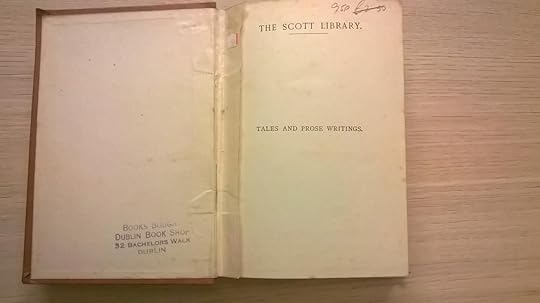
Even if only a few years ago, I cannot, for my soul, remember how, when or even precisely why I choose to make the acquaintance of mister Edgar Allan Poe by meeting his lady Ligeia. The luxuriantly raven- haired, otherworldly erudite and intelligent Ligeia - with her skin rivalling the purest ivory , her brilliant black eyes ‘even fuller than the fullest of gazelle eyes’ and the almost magical melody, modulation, distinctness and placidity of her very low voice - broke the spell of my Poe-phobia. An irrational fear of horror tales (some of Guy de Maupassant’s macabre stories on death and madness scared the hell out of me) kept me away from reading him, a fear quite ridiculous if having to admit enduring romantic leanings, witch aspirations and a penchant for Goth music. To conquer this puerile fear of the dark, I goaded myself to open a few of the mouldy cardboard boxes in the garden shed which I hadn’t touched in 18 years, in which I have stored some old books from my husband - remembering he once showed me a somewhat scruffy (the introduction is dated January 1889) copy of selected Poe tales he brought from Dublin, including Ligeia.
And true, as much as Ligeia might not be the ideal or recommendable first foray into Poe’s work, it was the perfect one to me. The story which seems open to different interpretations, the glowing, baroque prose swamping in resplendent oriental opulence, the dream-like opium and grief inspired observations and delusions and the folie à deux I sensed in the story affected me deeply. Spellbound by this intense, melancholic story on lost but undying love, obsessive desire, feminine power and insanity, Ligeia enabled me to approach her terrifying creator, so I could later continue with two other Dark Ladies - Berenice and Morella - the The Cask of Amontillado and The Tell-Tale Heart. Fascinating, finely composed and brilliant they were, they all kiss the hand of the ravishing, ravenous, matchless lady Ligeia.

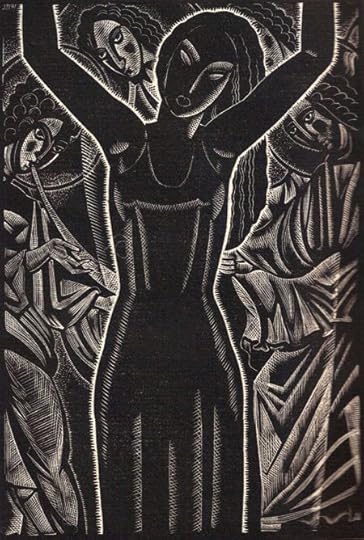
(John Buckland Wright)
In our endeavours to recall to memory something long forgotten, we often find ourselves upon the very verge of remembrance, without being able, in the end, to remember.
(Fernand Khnopff)
Even if only a few years ago, I cannot, for my soul, remember how, when or even precisely why I choose to make the acquaintance of mister Edgar Allan Poe by meeting his lady Ligeia. The luxuriantly raven- haired, otherworldly erudite and intelligent Ligeia - with her skin rivalling the purest ivory , her brilliant black eyes ‘even fuller than the fullest of gazelle eyes’ and the almost magical melody, modulation, distinctness and placidity of her very low voice - broke the spell of my Poe-phobia. An irrational fear of horror tales (some of Guy de Maupassant’s macabre stories on death and madness scared the hell out of me) kept me away from reading him, a fear quite ridiculous if having to admit enduring romantic leanings, witch aspirations and a penchant for Goth music. To conquer this puerile fear of the dark, I goaded myself to open a few of the mouldy cardboard boxes in the garden shed which I hadn’t touched in 18 years, in which I have stored some old books from my husband - remembering he once showed me a somewhat scruffy (the introduction is dated January 1889) copy of selected Poe tales he brought from Dublin, including Ligeia.
And true, as much as Ligeia might not be the ideal or recommendable first foray into Poe’s work, it was the perfect one to me. The story which seems open to different interpretations, the glowing, baroque prose swamping in resplendent oriental opulence, the dream-like opium and grief inspired observations and delusions and the folie à deux I sensed in the story affected me deeply. Spellbound by this intense, melancholic story on lost but undying love, obsessive desire, feminine power and insanity, Ligeia enabled me to approach her terrifying creator, so I could later continue with two other Dark Ladies - Berenice and Morella - the The Cask of Amontillado and The Tell-Tale Heart. Fascinating, finely composed and brilliant they were, they all kiss the hand of the ravishing, ravenous, matchless lady Ligeia.
(John Buckland Wright)
In our endeavours to recall to memory something long forgotten, we often find ourselves upon the very verge of remembrance, without being able, in the end, to remember.

February 4, 2018
كل شيء له حل؛ الا الموت ما له حل
لم يتمنى ادجار الان بو سوى شيء واحد:الا تموت زوجته..لو انها افاقت بعد غيبوبتها الطويلة التي دهمتها..لكنها ماتت

ليصبح قاسيا على ابطاله كالموت ذاته..معظمهم لم يكن لهم ذنب واضح..لكنه ظل يدفنهم أحياء و يصيبهم بأقصى حالات الجنون ..يحولهم لقتلة .. معاتيه

في قصتنا نلتقي مع فتاتين متناقضتين ليجيا و رووينا🏰
.. و بعين الحب و البغض نرى كل منهما
لنغرق في أجواء رعب قوطية فيكتورية بلغة شعرية لا تقارن
منذ صدورها في 1838 تصنف دائما بين أعظم مائة قصة قصيرة عبر العالم
لم يتمنى ادجار الان بو سوى شيء واحد:الا تموت زوجته..لو انها افاقت بعد غيبوبتها الطويلة التي دهمتها..لكنها ماتت
ليصبح قاسيا على ابطاله كالموت ذاته..معظمهم لم يكن لهم ذنب واضح..لكنه ظل يدفنهم أحياء و يصيبهم بأقصى حالات الجنون ..يحولهم لقتلة .. معاتيه
في قصتنا نلتقي مع فتاتين متناقضتين ليجيا و رووينا🏰
.. و بعين الحب و البغض نرى كل منهما
لنغرق في أجواء رعب قوطية فيكتورية بلغة شعرية لا تقارن
منذ صدورها في 1838 تصنف دائما بين أعظم مائة قصة قصيرة عبر العالم

July 25, 2019
Absolute gothic masterpiece. First person narrator loses his love Ligeia (mysterious woman pale as marble) to death. In grief he moves to England buying an old decayed abbey. There he has stores the sarcophagus of Ligeia in a turret. His second wife, Lady Rowena, is getting ill after some months of strange marriage. Will she survive? What is ment with that bizarre 'revivication' the narrator is speaking of. This story is very psychological horror and runs shivers down your spine. What remarkable relationsship our narrator has to women and what dominant role opium plays. Very gothic, very dark, very ghastly. One of the great Poe horror tales! Absolutely recommended!

October 23, 2015
It's Halloween, so I have to revisit my favourite Poe short story!
If a mind has found the most true and profound bliss what happens when it’s taken away?
Well, the simple answer is it doesn’t work anymore, at least not very well. The narrator of this marvellous short story experiences a whole host of emotions and mental states after his loss. Firstly, he is hit with the expected wave of melancholy fuelled by his understandable grief; secondly, he feels the slow calm breeze of acceptance; thirdly, and finaly, he is savaged by an unrealised state of delusion and fantasy. In this, Edgar Allan Poe demonstrates his true mastery of writing a character in different states of mental stability. Needless to say, he’s a remarkable writer.
In beauty of face no maiden ever equaled her. It was the radiance of an opium-dream - and airy and spirit-lifting vision more wildly divine than the phantasies which hovered about the slumbering souls of the daughters of Delos. Yet her features were not of that regular mould which we have been falsely taught to worship in the classical labors of the heathen.”
The narrator cannot be blamed for his fragility. He has lost his world: he has lost his beloved Ligeia. She was everything to him, and they both knew it. Nothing could lessen the blow of her death; nothing could take the pain away of her upcoming demise: nothing could save his mind in a world without her. They were living in harmony; their souls had achieved happiness and love; they were two lesser beings of one greater soul: they were at peace in their own transcendental plane, until she died. So, the narrator’s sense of self awareness and actuality has been destroyed. He is left with the tatters of a wonderful experience, and his own delusion.
I recommend looking at the following quote and considering exactly who is speaking, and why he would conjure up such an image. Perhaps, he didn’t fantasise this. Maybe this is paranormal. I do love the multiplicity of its interpretation.

This short story is a marvel. It appears confusing and contradictory, but if you stop and consider who is actually speaking then its true nature is revealed. Admittedly, on my first read I was a little lost, though after a second read I began to see it for what it was. This is not as approachable as some of Poe’s other works, and it really isn’t an advisable starting point for the author. But, the short story is wonderful, truly wonderful. It highlights the working of the mind in a state of sheer depravity; it is disturbing and brilliant.
One thing that I’ve decided after reading this is that I must simply work my way through his entire works and write some more reviews of such a wonderfully dark writer.
If a mind has found the most true and profound bliss what happens when it’s taken away?
Well, the simple answer is it doesn’t work anymore, at least not very well. The narrator of this marvellous short story experiences a whole host of emotions and mental states after his loss. Firstly, he is hit with the expected wave of melancholy fuelled by his understandable grief; secondly, he feels the slow calm breeze of acceptance; thirdly, and finaly, he is savaged by an unrealised state of delusion and fantasy. In this, Edgar Allan Poe demonstrates his true mastery of writing a character in different states of mental stability. Needless to say, he’s a remarkable writer.
In beauty of face no maiden ever equaled her. It was the radiance of an opium-dream - and airy and spirit-lifting vision more wildly divine than the phantasies which hovered about the slumbering souls of the daughters of Delos. Yet her features were not of that regular mould which we have been falsely taught to worship in the classical labors of the heathen.”
The narrator cannot be blamed for his fragility. He has lost his world: he has lost his beloved Ligeia. She was everything to him, and they both knew it. Nothing could lessen the blow of her death; nothing could take the pain away of her upcoming demise: nothing could save his mind in a world without her. They were living in harmony; their souls had achieved happiness and love; they were two lesser beings of one greater soul: they were at peace in their own transcendental plane, until she died. So, the narrator’s sense of self awareness and actuality has been destroyed. He is left with the tatters of a wonderful experience, and his own delusion.
I recommend looking at the following quote and considering exactly who is speaking, and why he would conjure up such an image. Perhaps, he didn’t fantasise this. Maybe this is paranormal. I do love the multiplicity of its interpretation.
This short story is a marvel. It appears confusing and contradictory, but if you stop and consider who is actually speaking then its true nature is revealed. Admittedly, on my first read I was a little lost, though after a second read I began to see it for what it was. This is not as approachable as some of Poe’s other works, and it really isn’t an advisable starting point for the author. But, the short story is wonderful, truly wonderful. It highlights the working of the mind in a state of sheer depravity; it is disturbing and brilliant.
One thing that I’ve decided after reading this is that I must simply work my way through his entire works and write some more reviews of such a wonderfully dark writer.

August 21, 2022
El narrador anónimo de esta historia alguna vez se sintió bendecido como por decreto divino tras haberse casado con la perfección hecha mujer, se verá maldecido cuando enviude. En consecuencia, sucumbirá a los vicios, donde no sabrá lo que es real o producto de su tan alterada mente.
De por sí, acá se nos presenta una trama alta en cursilerías, la cual se desarrolla de la misma manera. La primera parte se enfoca en el protagonista describiendo e idolatrando a su primera esposa. Y en un principio, nuevamente pensé que esto era una especie de desahogo de Poe, recordando a su mujer tras quedar viudo, pero no; este relato fue publicado años antes de ese funesto suceso. Tampoco es la primera vez que creo que se trata de eso (lean mi reseña de Eleonora), dada la naturaleza arquetípica que tienen los relatos de este autor.
Ya en la segunda parte, el personaje principal nuevamente está de nupcias, con una mujer llamada Rowena; segunda esposa que con el pasar del tiempo comienza a sufrir , a causa de su adicción al opio, del luto y de otras batallas internas. Esta parte es la más interesante, sobre todo cuando Rowena se encuentra . Aquí sucederán algunos acontecimientos bastante llamativos; pero es una lástima que eso sea lo único interesante que ocurre y, en cierto modo, lo que salve a este cuento.
Aparentemente, Ligeia es considerada por el mismo autor como su mejor obra; así que mi enfocaré en comprobar si es que efectivamente es así. Sea como sea, esta es la obra con más palabrería y barroquismo que he leído de Poe hasta ahora. En cada momento decora y embellece absolutamente todo, con excesivas descripciones. Hay más descripción que contenido y trama. Toda la primera parte no es más que descripción por sobre descripción. Me parece excesivo y que se abusó sobremanera de ese recurso literario. De hecho, esperaba con ansias que esta lectura acabase pronto.
Sobre el final, de nuevo estamos ante otra situación de . El problema es que el narrador afronta esto en un mal estado mental. Aparentemente, piensa que su amada Ligeia , o al menos, esa es la interpretación que yo le di.
Investigando, descubrí que hay teorías e interpretaciones muy respaldadas acerca de un posible . Esto se evidenciaría durante el momento que el protagonista dice que Rowena no vio . Personalmente, no me percaté de ese detalle durante la lectura para interpretarlo de dicha manera; pero me convence y concuerda con la naturaleza más agresiva que le muestra a su más reciente esposa. Entonces, con esta nueva interpretación: Rowena y el esposo cree que así . Un desenlace muy poético, a decir verdad.
En general, la historia es muy poco interesante, aparte de que se ha visto en numerosas oportunidades a lo largo de toda la bibliografía del autor: un hombre atormentado por la pérdida de su esposa, que la recuerda con extrema nostalgia y comienza a perder la cordura en el proceso. Dicho concepto no nos brinda nada nuevo ni memorable, es el clásico arquetipo que Poe suele ofrecer.
Además, hay muchos simbolismos presentes, como referencias a otras culturas, autores, literatura, mitología, cosmovisiones, etc. Por lo que se nota que Ligeia es bastante profunda como obra y lectura en ese sentido; junto con ostentar un gran trabajo para su realización. Sinceramente, creo que Poe apuntaba a esto último cuando se refería en señalarla como su mejor trabajo.
Como mencioné, este cuento se salva un poco por la parte en que Rowena , ya que es lo más destacable de todo el cuento; junto con el desenlace, a pesar de que ni si siquiera sea sorprendente. Y según el mismo autor, este era su mejor trabajo y podría ser, eso no lo discuto, pero quizá desde una perspectiva de ser su obra con más sentimiento, profundidad, la más bellamente escrita y elaborada o algo así; pero eso no es para nada lo que yo busco en una lectura y mucho menos en una de Poe. Por ende, debo evaluarla tal cual: como algo muy alejado de mis intereses. Por ahora, creo que podría poner a Ligeia sobre Eleonora para el top 28 —por un asunto de temáticas—, pero esa última era más corta, amena y no se me hizo tan pesada como esta.
De todas maneras, mi calificación para Ligeia es de ★★☆☆☆. Y, para quienes hayan simpatizado con este relato, les aviso que existe un poema del autor titulado El gusano conquistador, el cual está muy relacionado argumentalmente con la obra recién reseñada, para que sepan y le echen un vistazo.
Para no perder el hilo con las demás reseñas que he hecho sobre las obras de Edgar Allan Poe:
1) El gato negro, cuya reseña está bugueada en el feed de Goodreads: https://www.goodreads.com/review/show...
2) El cuervo, el único poema que he reseñado de este autor: https://www.goodreads.com/review/show...
3) Narraciones extraordinarias, recopilatorio en donde reúno a los 28 relatos que he leído de Poe, además de incluir un top personal al respecto; junto con dar mi opinión en profundidad sobre él como autor: https://www.goodreads.com/review/show...
De por sí, acá se nos presenta una trama alta en cursilerías, la cual se desarrolla de la misma manera. La primera parte se enfoca en el protagonista describiendo e idolatrando a su primera esposa. Y en un principio, nuevamente pensé que esto era una especie de desahogo de Poe, recordando a su mujer tras quedar viudo, pero no; este relato fue publicado años antes de ese funesto suceso. Tampoco es la primera vez que creo que se trata de eso (lean mi reseña de Eleonora), dada la naturaleza arquetípica que tienen los relatos de este autor.
Ya en la segunda parte, el personaje principal nuevamente está de nupcias, con una mujer llamada Rowena; segunda esposa que con el pasar del tiempo comienza a sufrir , a causa de su adicción al opio, del luto y de otras batallas internas. Esta parte es la más interesante, sobre todo cuando Rowena se encuentra . Aquí sucederán algunos acontecimientos bastante llamativos; pero es una lástima que eso sea lo único interesante que ocurre y, en cierto modo, lo que salve a este cuento.
Aparentemente, Ligeia es considerada por el mismo autor como su mejor obra; así que mi enfocaré en comprobar si es que efectivamente es así. Sea como sea, esta es la obra con más palabrería y barroquismo que he leído de Poe hasta ahora. En cada momento decora y embellece absolutamente todo, con excesivas descripciones. Hay más descripción que contenido y trama. Toda la primera parte no es más que descripción por sobre descripción. Me parece excesivo y que se abusó sobremanera de ese recurso literario. De hecho, esperaba con ansias que esta lectura acabase pronto.
Sobre el final, de nuevo estamos ante otra situación de . El problema es que el narrador afronta esto en un mal estado mental. Aparentemente, piensa que su amada Ligeia , o al menos, esa es la interpretación que yo le di.
Investigando, descubrí que hay teorías e interpretaciones muy respaldadas acerca de un posible . Esto se evidenciaría durante el momento que el protagonista dice que Rowena no vio . Personalmente, no me percaté de ese detalle durante la lectura para interpretarlo de dicha manera; pero me convence y concuerda con la naturaleza más agresiva que le muestra a su más reciente esposa. Entonces, con esta nueva interpretación: Rowena y el esposo cree que así . Un desenlace muy poético, a decir verdad.
En general, la historia es muy poco interesante, aparte de que se ha visto en numerosas oportunidades a lo largo de toda la bibliografía del autor: un hombre atormentado por la pérdida de su esposa, que la recuerda con extrema nostalgia y comienza a perder la cordura en el proceso. Dicho concepto no nos brinda nada nuevo ni memorable, es el clásico arquetipo que Poe suele ofrecer.
Además, hay muchos simbolismos presentes, como referencias a otras culturas, autores, literatura, mitología, cosmovisiones, etc. Por lo que se nota que Ligeia es bastante profunda como obra y lectura en ese sentido; junto con ostentar un gran trabajo para su realización. Sinceramente, creo que Poe apuntaba a esto último cuando se refería en señalarla como su mejor trabajo.
Como mencioné, este cuento se salva un poco por la parte en que Rowena , ya que es lo más destacable de todo el cuento; junto con el desenlace, a pesar de que ni si siquiera sea sorprendente. Y según el mismo autor, este era su mejor trabajo y podría ser, eso no lo discuto, pero quizá desde una perspectiva de ser su obra con más sentimiento, profundidad, la más bellamente escrita y elaborada o algo así; pero eso no es para nada lo que yo busco en una lectura y mucho menos en una de Poe. Por ende, debo evaluarla tal cual: como algo muy alejado de mis intereses. Por ahora, creo que podría poner a Ligeia sobre Eleonora para el top 28 —por un asunto de temáticas—, pero esa última era más corta, amena y no se me hizo tan pesada como esta.
De todas maneras, mi calificación para Ligeia es de ★★☆☆☆. Y, para quienes hayan simpatizado con este relato, les aviso que existe un poema del autor titulado El gusano conquistador, el cual está muy relacionado argumentalmente con la obra recién reseñada, para que sepan y le echen un vistazo.
Para no perder el hilo con las demás reseñas que he hecho sobre las obras de Edgar Allan Poe:
1) El gato negro, cuya reseña está bugueada en el feed de Goodreads: https://www.goodreads.com/review/show...
2) El cuervo, el único poema que he reseñado de este autor: https://www.goodreads.com/review/show...
3) Narraciones extraordinarias, recopilatorio en donde reúno a los 28 relatos que he leído de Poe, además de incluir un top personal al respecto; junto con dar mi opinión en profundidad sobre él como autor: https://www.goodreads.com/review/show...

June 10, 2020
A delightfully creepy story! I wasn't expecting the ending but I much enjoyed it.

March 19, 2015
Todo lo que Poe había pertrechado para la elaboración de su cuento Morella, lo perfecciona en Ligeia al que consideraba su cuento preferido por sobre todos los demás y recordaba el proceso mental por el que atravesaba cuando lo escribió.
Ligeia, junto con “Morella”, “Berenice” y “Eleonora” (podríamos sumar a Annabel Lee del poema homónimo junto con la recordada Lenore de su gran poema “El Cuervo”) representan el ideal de la mujer romántica, esa que está al borde de la muerte o la que vuelve a la vida para recuperar a su amado (hay casos geniales como “La muerta enamorada” de Theophile Gaultier o “Vera” de Villiers de L'ille Adam).
Estas fémmes fatales dominaban ese famoso mal de siècle que caracterizó al siglo XIX.
"Ligeia" tiene todos los ingredientes del Romanticismo, pero también del pre-romanticismo y del género gótico y en el cuento no nos queda claro si la ensoñación con opio hace que el narrador trastoque su mente a partir del desenlace de Lady Rowena, si la mató, arrebatado por la presencia de Ligeia en su cabeza, si nos encontramos con un cuento sobre el vampirismo, teniendo en cuenta esas gotas en la copa que pueden ser sangre o si se trata de un envenenamiento (las gotas también podrían ser de veneno).
Lo cierto es que “Ligeia” se transforma en uno de los tantos ‘cuentos perfectos’ de Poe junto con “La caída de la casa de Usher” (mi preferido de él), “El gato negro” o “La máscara de la muerte roja”.
Edgar Allan Poe adquiere notoriedad literaria con la perfecta consecución de “Ligeia”.
Ligeia, junto con “Morella”, “Berenice” y “Eleonora” (podríamos sumar a Annabel Lee del poema homónimo junto con la recordada Lenore de su gran poema “El Cuervo”) representan el ideal de la mujer romántica, esa que está al borde de la muerte o la que vuelve a la vida para recuperar a su amado (hay casos geniales como “La muerta enamorada” de Theophile Gaultier o “Vera” de Villiers de L'ille Adam).
Estas fémmes fatales dominaban ese famoso mal de siècle que caracterizó al siglo XIX.
"Ligeia" tiene todos los ingredientes del Romanticismo, pero también del pre-romanticismo y del género gótico y en el cuento no nos queda claro si la ensoñación con opio hace que el narrador trastoque su mente a partir del desenlace de Lady Rowena, si la mató, arrebatado por la presencia de Ligeia en su cabeza, si nos encontramos con un cuento sobre el vampirismo, teniendo en cuenta esas gotas en la copa que pueden ser sangre o si se trata de un envenenamiento (las gotas también podrían ser de veneno).
Lo cierto es que “Ligeia” se transforma en uno de los tantos ‘cuentos perfectos’ de Poe junto con “La caída de la casa de Usher” (mi preferido de él), “El gato negro” o “La máscara de la muerte roja”.
Edgar Allan Poe adquiere notoriedad literaria con la perfecta consecución de “Ligeia”.

October 1, 2016
Ligeia es un cuento de Edgar Allan Poe que nunca había leído y me sorprendió bastante. No sé por qué le tenía poca fe si todos sus cuentos o poemas con nombre de mujer me gustan. But anyway...
Todo empieza con un hombre describiendo la inmensa belleza de su esposa, Ligeia, una mujer de ojos oscuros y pelo negro como el ébano. Sin embargo, Ligeia cae enferma y muere, dejando a su pobre marido devastado y casi deseando morir. Eventualmente, el hombre se muda a Inglaterra y se casa con Lady Rowena Trevanion de Tremaine a pesar de que sigue amando a su queridísima Ligeia. A medida que el cuento avanza, vamos presenciando una lenta enfermedad que va consumiendo a Lady Trevanion...
El relato de Ligeia y del tema de la trascendencia tras la muerte cobra sentido cuando lees las últimas líneas. Cuando te das cuenta de la transformación que se estaba cociendo entre enfermedades, delirios de opio y noches en vela. Es uno de esos cuentos que te sorprende tanto al final que te olvidas de respirar un segundo. Luego recuerdas que Poe es un genio y todo tiene sentido.
Todo empieza con un hombre describiendo la inmensa belleza de su esposa, Ligeia, una mujer de ojos oscuros y pelo negro como el ébano. Sin embargo, Ligeia cae enferma y muere, dejando a su pobre marido devastado y casi deseando morir. Eventualmente, el hombre se muda a Inglaterra y se casa con Lady Rowena Trevanion de Tremaine a pesar de que sigue amando a su queridísima Ligeia. A medida que el cuento avanza, vamos presenciando una lenta enfermedad que va consumiendo a Lady Trevanion...
El relato de Ligeia y del tema de la trascendencia tras la muerte cobra sentido cuando lees las últimas líneas. Cuando te das cuenta de la transformación que se estaba cociendo entre enfermedades, delirios de opio y noches en vela. Es uno de esos cuentos que te sorprende tanto al final que te olvidas de respirar un segundo. Luego recuerdas que Poe es un genio y todo tiene sentido.

June 8, 2019
- قد تكون قصة حب اسطوري، وقد تكون انعكاس لمعاناة ادغار الفعلية في حياته الشخصية وموت زوجته، وقد تكون قصة عن تأثير الأفيون وقد وقد... لكنها بالمحصلة قصة سوداوية كئيبة تمتد بين الواقع والخيال، الحياة والموت، الحب والوله والتعلّق...
- ليجيا" امرأة غير طبيعية خسب وصف ادغار، وغير طبيعية تعني انها تتعدى الكمال من ناحية الجمال والعلم، فهي بذلك قد تكون هاربة من عالم آخر او من ميتولوجيا يونانية مندثرة وبذلك تكون نقيض "رووينا" المرأة الثانية، جائزة النسيان، الجميلة الأرضية العادية!
- تظهر القصة تعلق ليجيا بالحياة في لحظات موتها، وتظهر تعلق الراوي بها في حياتها ومأساته بعد موتها، كما تظهر الهروب الى الأمام من اجل نسيانها. القصة تظهر ايضاً الزواج من "رووينا" من دون حب لكن من اجل النسيان، وتظهر تواجد ليجيا في خضم هذا الزواج وعودتها بجسد رووينا في النهاية!
- شخصياً، لم اشعر برووينا كشخصية حقيقية، بل اظنها شخصية خيالية ابتدعها عقل الراوي المنتشي بالأفيون، ومل الأحداث المتعلقة بها خيال من مخيلة الراوي نتيجة ولهه ب ليجيا، وما الكفن الا كفن ليجيا الذي بقي يلازمه!!
- ليجيا" امرأة غير طبيعية خسب وصف ادغار، وغير طبيعية تعني انها تتعدى الكمال من ناحية الجمال والعلم، فهي بذلك قد تكون هاربة من عالم آخر او من ميتولوجيا يونانية مندثرة وبذلك تكون نقيض "رووينا" المرأة الثانية، جائزة النسيان، الجميلة الأرضية العادية!
- تظهر القصة تعلق ليجيا بالحياة في لحظات موتها، وتظهر تعلق الراوي بها في حياتها ومأساته بعد موتها، كما تظهر الهروب الى الأمام من اجل نسيانها. القصة تظهر ايضاً الزواج من "رووينا" من دون حب لكن من اجل النسيان، وتظهر تواجد ليجيا في خضم هذا الزواج وعودتها بجسد رووينا في النهاية!
- شخصياً، لم اشعر برووينا كشخصية حقيقية، بل اظنها شخصية خيالية ابتدعها عقل الراوي المنتشي بالأفيون، ومل الأحداث المتعلقة بها خيال من مخيلة الراوي نتيجة ولهه ب ليجيا، وما الكفن الا كفن ليجيا الذي بقي يلازمه!!
July 2, 2017
كل شيء له حل؛الا الموت ما له حل
لم يتمنى ادجار الان بو سوى شيء واحد:الا تموت زوجته..لو انها افاقت بعد غيبوبتها الطويلة التي دهمتها..لكنها ماتت
ليصبح قاسيا على ابطاله كالموت ذاته..معظمهم لم يكن لهم ذنب واضح..لكنه ظل يدفنهم أحياء و يصيبهم بأقصى حالات الجنون..يحولهم لقتلة .. معاتيه
في قصتنا نلتقي مع فتاتين متناقضتين ليجيا و رووينا🏰
.. و بعين الحب و البغض نرى كل منهما
لنغرق في أجواء رعب قوطية فيكتورية بلغة شعرية لا تقارن
منذ صدورها في 1838 تصنف دائما بين أعظم مائة قصة قصيرة عبر العالم
لم يتمنى ادجار الان بو سوى شيء واحد:الا تموت زوجته..لو انها افاقت بعد غيبوبتها الطويلة التي دهمتها..لكنها ماتت
ليصبح قاسيا على ابطاله كالموت ذاته..معظمهم لم يكن لهم ذنب واضح..لكنه ظل يدفنهم أحياء و يصيبهم بأقصى حالات الجنون..يحولهم لقتلة .. معاتيه
في قصتنا نلتقي مع فتاتين متناقضتين ليجيا و رووينا🏰
.. و بعين الحب و البغض نرى كل منهما
لنغرق في أجواء رعب قوطية فيكتورية بلغة شعرية لا تقارن
منذ صدورها في 1838 تصنف دائما بين أعظم مائة قصة قصيرة عبر العالم

July 28, 2019
"And the will therin lieth, which dieth not. Who knoweth the mysteries of the will, with its vigor?"
-Joseph Glanvill
[Perhaps] "It was the radiance of an opium-dream-an airy and spirit-lifting vision..." "She came and departed as a shadow". The narrator tried to "recall to memory" his deceased wife, Ligeia. He described, "...her loveliness was indeed 'exquisite'...", but there was much pervasive "strangeness". He attempted " to portray the majesty, the quiet ease of her demeanor..." He remembered her intoxicating eyes and her raven hair.
Starting anew, he purchased an abby in the remote countryside of England. He remarried. But ...
"Ligeia's beauty passed into my spirit, there dwelling in a shrine...".
Edgar Allan Poe's short story "Ligeia", written in 1838, is classic. The narrator seemed "unreliable". The tale was shrouded in mystery. Highly recommended.
-Joseph Glanvill
[Perhaps] "It was the radiance of an opium-dream-an airy and spirit-lifting vision..." "She came and departed as a shadow". The narrator tried to "recall to memory" his deceased wife, Ligeia. He described, "...her loveliness was indeed 'exquisite'...", but there was much pervasive "strangeness". He attempted " to portray the majesty, the quiet ease of her demeanor..." He remembered her intoxicating eyes and her raven hair.
Starting anew, he purchased an abby in the remote countryside of England. He remarried. But ...
"Ligeia's beauty passed into my spirit, there dwelling in a shrine...".
Edgar Allan Poe's short story "Ligeia", written in 1838, is classic. The narrator seemed "unreliable". The tale was shrouded in mystery. Highly recommended.

January 21, 2026
No amount of opium evenings, enchanted musings about Egypt, or rich mahogany ottomans compare with the perfect loveliness of Ligeia.
There's something amiss about her immense beauty, something not quite right that can't be identified or expressed in words.
The living dead perhaps?
What's refreshing is the straightforward events compared to other abstract EAP stories, often meandering and overly abstract, Ligeia reading like a quirky chapter from D.H. Lawrence or maybe an outtake from Northanger Abbey.
Best of all a sense of hope I rarely expect from EAP always obsessed with death, but here a ray of spiritual sunlight that life's desires continue beyond the grave, perhaps more vivacious than before.
Not so macabre this time round and maybe with a bit of unexpected hope and love.
There's something amiss about her immense beauty, something not quite right that can't be identified or expressed in words.
The living dead perhaps?
What's refreshing is the straightforward events compared to other abstract EAP stories, often meandering and overly abstract, Ligeia reading like a quirky chapter from D.H. Lawrence or maybe an outtake from Northanger Abbey.
Best of all a sense of hope I rarely expect from EAP always obsessed with death, but here a ray of spiritual sunlight that life's desires continue beyond the grave, perhaps more vivacious than before.
Not so macabre this time round and maybe with a bit of unexpected hope and love.

June 25, 2017
An I for an Eye.
Is it really better to have loved and lost than never to have loved at all? The answer to this question might depend on what else you lose when you lose the beloved person. In Edgar Allan Poe’s marvellous short story Ligeia (1838) the narrator cannot even remember when and under what circumstances he has first met the lady Ligeia, who is the love of his life, and whether this forgetfulness may be due to the workings of grief on a human brain, or to the abuse of opium, or whether it might not have something to do with the uncanny nature of Ligeia herself, a dark and mysterious beauty, with a low, melodious voice and large, vivid eyes, a woman who is full of learning and knowledge of matters dark and forbidden, is a matter that every reader has to decide for himself.
Suffice it to be said that our narrator is a typical example of an extremely unreliable narrator, and what we are told about the death of his second wife, the fair-haired and blue-eyed lady Rowena, who has always been in the shade of the overwhelming memories connected with Ligeia, sounds so unbelievable that it casts serious doubts on the honesty of our narrator. And then, are we really supposed to believe that a person’s resistance against death – whose inevitability must appear as a dire humiliation to anyone with a proud will – can actually make this person return and take possession of the body of somebody else? Or is it all a figment of our depraved narrator’s imagination? And what is such a broken-hearted creature ready to do, whereat will he shy, in order to win another glimpse at the black, wild eyes of the lady Ligeia?
The story will not allow itself to be unravelled completely, and you can easily picture the narrator writing down his memories in a padded cell next to the one in which the man who extinguished the vulture eye sits, but it is full of magic whisperings. Drowning in the eyes of a beautiful and intelligent woman, is a death preferable to many others, but is it really worth to yield an I for an eye, to lose one’s mind and mental health about it?
However, if your lady Ligeia is inspired with poetry as dark and haunting as “The Conqueror Worm”, one of the most intense instances of memento mori I have ever come across, especially since it is so unconciliatory towards Death, then I can understand why you will not hesitate to take the plunge into the realm of madness.
Is it really better to have loved and lost than never to have loved at all? The answer to this question might depend on what else you lose when you lose the beloved person. In Edgar Allan Poe’s marvellous short story Ligeia (1838) the narrator cannot even remember when and under what circumstances he has first met the lady Ligeia, who is the love of his life, and whether this forgetfulness may be due to the workings of grief on a human brain, or to the abuse of opium, or whether it might not have something to do with the uncanny nature of Ligeia herself, a dark and mysterious beauty, with a low, melodious voice and large, vivid eyes, a woman who is full of learning and knowledge of matters dark and forbidden, is a matter that every reader has to decide for himself.
Suffice it to be said that our narrator is a typical example of an extremely unreliable narrator, and what we are told about the death of his second wife, the fair-haired and blue-eyed lady Rowena, who has always been in the shade of the overwhelming memories connected with Ligeia, sounds so unbelievable that it casts serious doubts on the honesty of our narrator. And then, are we really supposed to believe that a person’s resistance against death – whose inevitability must appear as a dire humiliation to anyone with a proud will – can actually make this person return and take possession of the body of somebody else? Or is it all a figment of our depraved narrator’s imagination? And what is such a broken-hearted creature ready to do, whereat will he shy, in order to win another glimpse at the black, wild eyes of the lady Ligeia?
The story will not allow itself to be unravelled completely, and you can easily picture the narrator writing down his memories in a padded cell next to the one in which the man who extinguished the vulture eye sits, but it is full of magic whisperings. Drowning in the eyes of a beautiful and intelligent woman, is a death preferable to many others, but is it really worth to yield an I for an eye, to lose one’s mind and mental health about it?
However, if your lady Ligeia is inspired with poetry as dark and haunting as “The Conqueror Worm”, one of the most intense instances of memento mori I have ever come across, especially since it is so unconciliatory towards Death, then I can understand why you will not hesitate to take the plunge into the realm of madness.

November 9, 2019
Full disclosure: Eddie Poe, the old Gothic dipsomaniac, is one of my favorite writers, and his masterpiece The Tell-Tale Heart is, in my humble opinion, the best short story ever written. "Ligeia" gives us lots of classic Poe ingredients: There's the beautiful woman who dies (consumption? well, it's Poe!), there's the metaphysical/supernatural, and there's even a poem within the story. As usual, this author is not here for apparent shock value, but for psychological horror, in this case the disturbing effects of loss and death.
The unnamed narrator falls in love with and marries Ligeia, an unconventional beauty who is not only highly educated in science and languages, but also has a penchant for metaphysical inquiries. When Liegeia falls ill, she writes the poem "The Conqueror Worm" and dies. The narrator moves to an English abbey and enters a loveless marriage with Rowena, and then - well, creepy things start to go down.
As this is Poe, the story raises a lot of questions regarding the mental state of the unnamed protagonist, who qualifies as an unreliable narrator: Not only is he addicted to opium, he also tries to suppress memories of Ligeia, but can't - so what is it that really happens to Rowena, and why? The trauma of a love lost haunts the narrative, and the effect on the depiction of the events remains intentionally unclear. And of course, there's the apparent opposition between raven-haired and dark-eyed Ligeia, who hails from a city near the Rhine and dabbles in forbidden wisdom, and fair-haired and blue-eyed Rowena, an Englishwoman with whom the narrator lives in an abbey. Then again, some academics have mentioned the possibility that parts of the story might simply satirize Gothic literary conventions - with this author, everything seems possible.
If you look for outrageous, in-your-face horror, Poe is clearly not your guy: He is the expert for psychological horror that investigates the dark and lonely corners of the human heart, and I just love him for his multi-faceted, perfectly composed and always slightly enigmatic texts.
The unnamed narrator falls in love with and marries Ligeia, an unconventional beauty who is not only highly educated in science and languages, but also has a penchant for metaphysical inquiries. When Liegeia falls ill, she writes the poem "The Conqueror Worm" and dies. The narrator moves to an English abbey and enters a loveless marriage with Rowena, and then - well, creepy things start to go down.
As this is Poe, the story raises a lot of questions regarding the mental state of the unnamed protagonist, who qualifies as an unreliable narrator: Not only is he addicted to opium, he also tries to suppress memories of Ligeia, but can't - so what is it that really happens to Rowena, and why? The trauma of a love lost haunts the narrative, and the effect on the depiction of the events remains intentionally unclear. And of course, there's the apparent opposition between raven-haired and dark-eyed Ligeia, who hails from a city near the Rhine and dabbles in forbidden wisdom, and fair-haired and blue-eyed Rowena, an Englishwoman with whom the narrator lives in an abbey. Then again, some academics have mentioned the possibility that parts of the story might simply satirize Gothic literary conventions - with this author, everything seems possible.
If you look for outrageous, in-your-face horror, Poe is clearly not your guy: He is the expert for psychological horror that investigates the dark and lonely corners of the human heart, and I just love him for his multi-faceted, perfectly composed and always slightly enigmatic texts.

July 30, 2019
Her name was Ligeia.
Ligeia is a poetical, symphonic, rhythmic story about a husband who loses his wife, his idol, to an illness and gives us, the reader, his exquisite memories of her.
Her eyes: “The hue of the orbs was the most brilliant of black, and, far over them, hung jetty lashes of great length.”
There are ghostly images revealed within this story by the husband, who mentions a few times, his use of opium.
As Ligeia lies close to death, she requests her husband to read a poem she had written while she was ill. The last stanza:
Out —- out are the lights — out all!
And over each quivering form,
The curtain, a funeral pall,
Comes down with the rush of a storm.
And the angels, all pallid and wan,
Uprising, unveiling, affirm
That the play is the tragedy, “Man.”
And its hero the Conqueror Worm.
There seems to be a hint of satire in this story, I feel, but not quite sure.
I am hooked on Edgar Allen Poe!
Thank you to Peter (here on Goodreads) for a great review of this story. If I had not seen his review, I would not have opened my eyes to Edgar Allen Poe’s writing this soon.

June 14, 2022
"There is always some madness in love. But there is also always some reason in madness."
― Friedrich Nietzsche
Romantic gothic literature at its finest— exquisite writing. The story is simultaneously happening at the literal and psychological levels, both factual and imaginary/supernatural. In Ligeia, Poe's approach is sophisticated; he leaves the readers to differentiate between imagined and factual events based on clues subtly disclosed throughout the story. The tale once again reveals how perceptibly Poe always succeeds in penetrating the complex workings of a deranged mind.
The themes of love, beauty and death are eminent in the tale. Eventually, Poe may pose the query of which power is most potent and what happens when the three combine.
Poe himself once observed in a letter to Griswold that Ligeia was the "loftiest" of his tales, requiring for its composition the "highest imagination."
Further, George Bernard Shaw said, "The story of the Lady Ligeia is not merely one of the wonders of literature: it is unparalleled and unapproached."
Moreover, one paragraph in and my delibrations halted my reading and pushed me to draw a parallel between Ligeia and Lolita; could Lolita be some long-lost child of Ligeia. Later, I read this article that quenched some of my wanderings. In his article "Discursive Killings: Intertextuality, Aestheticization, and Death in Nabokov's Lolita," Author Philipp Schweighauser quotes Bronfen's "Risky Resemblances." According to him Lolita is, like Poe's Ligeia, "denied her own body and is thus only a figure for a meaning other than herself, prematurely turned into a ghost."
Finally, this tale reminded me once again how much I adore Poe. Oh, is it my fantasy to be Ligeia, or isn't it the secret chimaera of some women to be loved like Ligeia!
"My wish is that you may be loved to the point of madness."
― André Breton
P.S There is an article titled "Poe's Ethereal Ligeia" by Jack L. Davis and June H. Davis on Jstor. If I could, I would have quoted the whole article, but to avoid spoilers, read it afterwards if you love the tale.
― Friedrich Nietzsche
Romantic gothic literature at its finest— exquisite writing. The story is simultaneously happening at the literal and psychological levels, both factual and imaginary/supernatural. In Ligeia, Poe's approach is sophisticated; he leaves the readers to differentiate between imagined and factual events based on clues subtly disclosed throughout the story. The tale once again reveals how perceptibly Poe always succeeds in penetrating the complex workings of a deranged mind.
"And the will therein lieth, which dieth not. Who knoweth the mysteries of the will, with its vigor? For God is but a great will pervading all things by nature of its intentness. Man doth not yield him to the angels, nor unto death utterly, save only through the weakness of his feeble will."
The themes of love, beauty and death are eminent in the tale. Eventually, Poe may pose the query of which power is most potent and what happens when the three combine.
"In beauty of face no maiden ever equalled her. It was the radiance of an opium dream—an airy and spirit-lifting vision more wildly divine than the phantasies which hovered about the slumbering souls of the daughters of Delos. Yet her features were not of that regular mould which we have been falsely taught to worship in the classical labors of the heathen."
Poe himself once observed in a letter to Griswold that Ligeia was the "loftiest" of his tales, requiring for its composition the "highest imagination."
Further, George Bernard Shaw said, "The story of the Lady Ligeia is not merely one of the wonders of literature: it is unparalleled and unapproached."
Moreover, one paragraph in and my delibrations halted my reading and pushed me to draw a parallel between Ligeia and Lolita; could Lolita be some long-lost child of Ligeia. Later, I read this article that quenched some of my wanderings. In his article "Discursive Killings: Intertextuality, Aestheticization, and Death in Nabokov's Lolita," Author Philipp Schweighauser quotes Bronfen's "Risky Resemblances." According to him Lolita is, like Poe's Ligeia, "denied her own body and is thus only a figure for a meaning other than herself, prematurely turned into a ghost."
Finally, this tale reminded me once again how much I adore Poe. Oh, is it my fantasy to be Ligeia, or isn't it the secret chimaera of some women to be loved like Ligeia!
"My wish is that you may be loved to the point of madness."
― André Breton
P.S There is an article titled "Poe's Ethereal Ligeia" by Jack L. Davis and June H. Davis on Jstor. If I could, I would have quoted the whole article, but to avoid spoilers, read it afterwards if you love the tale.

September 17, 2022
Creepy, spine tingling ending!

October 14, 2015
While I didn't really understand the point or message of this story, it was beautifully written and the tone is darkly, insanely, intensely beautiful, so I cannot help but bestow four well-deserved stars upon yet another short story by my beloved Mr Poe.
The basic premise of this story is the narrator's relationship with Ligeia, his wife, to the grave and beyond. This tale is aptly named, as not a single thought passes through the protagonist's head that is not about the eponymous Ligeia. Our narrator (who is unnamed, as per usual) takes every chance he can to declare his love for the Lady Ligeia- four pages are dedicated to a description of her face, for god's sake- but, to me, there was something... off about their love. It seemed like a mutual obsession with each other, that Ligeia and her husband loved each other in a sick, narcissistic, warped kind of way, and I loved those subtle undertones of darkness beneath the veneer of dramatic, undying proclamations of love both from the narrator and his wife.
Another wonderful thing about this short story is the tone. Throughout the climax and much of the story, the narrator is under the influence of opium, which casts a feverish, hyperreal yet dreamlike feeling upon it all. The ending, while it was in line with what I expect of Poe, was still great. He could have easily just
But, like I mentioned earlier, I really don't know the meaning of this story. It's more of a story for story's sake, which I am completely fine with. This isn't typical Poe- the narrator is much more manic here than in most of the other poems and stories I've read so far. (Excepting the Tell-Tale Heart, of course, but not The Cask of Amontillado, because Montresor really was quite calm about the whole thing, wasn't he?) He reaches marvellous highs and crashing lows, and is deep in the throes of grief, which Poe writes so heartbreakingly well it's hard not to be convinced that he was pouring a lot of his own pain into this particular tale.
Read it here.
"My memory flew back (oh, with what intensity of regret!) to Ligeia, the beloved, the august, the beautiful, the entombed. I revelled in recollections of her purity, of her wisdom, of her lofty- her ethereal nature, of her passionate, her idolatrous love. Now, then, did my spirit fully and freely burn with more than all the fires of her own. In the excitement of my opium dreams (for I was habitually fettered in the shackles of the drug), I would call aloud upon her name, during the silence of the night, or among the sheltered recesses of the glens by day, as if, through the wild eagerness, the solemn passion, I could restore her to the pathways she had abandoned- ah, could it be forever?- upon the earth."
The basic premise of this story is the narrator's relationship with Ligeia, his wife, to the grave and beyond. This tale is aptly named, as not a single thought passes through the protagonist's head that is not about the eponymous Ligeia. Our narrator (who is unnamed, as per usual) takes every chance he can to declare his love for the Lady Ligeia- four pages are dedicated to a description of her face, for god's sake- but, to me, there was something... off about their love. It seemed like a mutual obsession with each other, that Ligeia and her husband loved each other in a sick, narcissistic, warped kind of way, and I loved those subtle undertones of darkness beneath the veneer of dramatic, undying proclamations of love both from the narrator and his wife.
Another wonderful thing about this short story is the tone. Throughout the climax and much of the story, the narrator is under the influence of opium, which casts a feverish, hyperreal yet dreamlike feeling upon it all. The ending, while it was in line with what I expect of Poe, was still great. He could have easily just
But, like I mentioned earlier, I really don't know the meaning of this story. It's more of a story for story's sake, which I am completely fine with. This isn't typical Poe- the narrator is much more manic here than in most of the other poems and stories I've read so far. (Excepting the Tell-Tale Heart, of course, but not The Cask of Amontillado, because Montresor really was quite calm about the whole thing, wasn't he?) He reaches marvellous highs and crashing lows, and is deep in the throes of grief, which Poe writes so heartbreakingly well it's hard not to be convinced that he was pouring a lot of his own pain into this particular tale.
Read it here.
"My memory flew back (oh, with what intensity of regret!) to Ligeia, the beloved, the august, the beautiful, the entombed. I revelled in recollections of her purity, of her wisdom, of her lofty- her ethereal nature, of her passionate, her idolatrous love. Now, then, did my spirit fully and freely burn with more than all the fires of her own. In the excitement of my opium dreams (for I was habitually fettered in the shackles of the drug), I would call aloud upon her name, during the silence of the night, or among the sheltered recesses of the glens by day, as if, through the wild eagerness, the solemn passion, I could restore her to the pathways she had abandoned- ah, could it be forever?- upon the earth."

October 31, 2019
Für Liebhaber des Mystischen ist die Gothic-Story von Poe sicher eine Fundgrube mit den vielen Anspielungen und Deutungsmöglichkeiten. Ich zähle hierzu nicht unbedingt, sondern achte eher darauf, ob die Geschichte mich berührt oder schockiert. Diesbezüglich konnte mich die Erzählung aber nicht so wie sonst bei Poe überzeugen. Vielleicht lag es daran, das es ein Frühwerk von ihm ist. Ich schätze Poe, weil er üblicherweise das Grauen in Worte fassen kann und die Gefühle seiner Protagonisten zum Ausdruck bringt. Hier las ich aber wiederholt in lovecraftischer Manier, dass die Schönheit von Lady Legia nicht beschreibbar war, für ihre Klugheit noch keine Worte gefunden wurden und ihre Anmut namenlos ist. Von der Idee ist die Reinkarnationsgeschichte allerdings schon ansprechend, aber sprachlich für mich eher mittelmäßig.

October 13, 2020
This was another one of Poe’s creepers.

November 1, 2019
Das ist leider wirklich eine der schwächeren Geschichten von Poe. Und es bedurfte nicht einmal der Hinweise eines anderen Lesers um zu erkennen, dass da einige Zeilen drinstecken (immer wenn es um Dinge geht, die angeblich unbeschreiblich sind), die an den von mir nun gar nicht geschätzten Lovecraft erinnern.
Die geliebte dunkelhaarige, dunkeläugige, gefährliche und begehrte Frau vs. die blonde, blauäugige, langweilende Frau: Wie abgedroschen.
Der Verlust geliebter Frauen ist bei Poe immer ein im Grunde spannendes Thema, doch in Gedichte wie "Der Rabe" und "Lenore" viel eindringlicher und subtiler beschrieben.
Und ob das Beschriebene nicht doch eher dem Alkohol-, bzw. hier Drogenrausch zuzuschreiben ist, hat Poe auch schon besser in Worte gefasst.
Aber es ist immer noch ein Poe!
Update 02.11.2019
Ich habe die falsche Übersetzung gelesen! Angeregt von anderen Reviews fiel mir auf, dass die Version, die ich gestern an meinem Arbeitsplatz las und dich ich online fand, nicht einmal vollständig war (so fehlte das Gedicht). Auch kann ich nicht herausfinden, wer der Übersetzer war. Sicher aber ist, dass die Übersetzung von Wollschläger/Schmidt (die einzig wahre!) umfassender und besser ist. Ligeia hat bei dieser Lektüre deutlich gewonnen und bekommt einen vierten Stern.
Die geliebte dunkelhaarige, dunkeläugige, gefährliche und begehrte Frau vs. die blonde, blauäugige, langweilende Frau: Wie abgedroschen.
Der Verlust geliebter Frauen ist bei Poe immer ein im Grunde spannendes Thema, doch in Gedichte wie "Der Rabe" und "Lenore" viel eindringlicher und subtiler beschrieben.
Und ob das Beschriebene nicht doch eher dem Alkohol-, bzw. hier Drogenrausch zuzuschreiben ist, hat Poe auch schon besser in Worte gefasst.
Aber es ist immer noch ein Poe!
Update 02.11.2019
Ich habe die falsche Übersetzung gelesen! Angeregt von anderen Reviews fiel mir auf, dass die Version, die ich gestern an meinem Arbeitsplatz las und dich ich online fand, nicht einmal vollständig war (so fehlte das Gedicht). Auch kann ich nicht herausfinden, wer der Übersetzer war. Sicher aber ist, dass die Übersetzung von Wollschläger/Schmidt (die einzig wahre!) umfassender und besser ist. Ligeia hat bei dieser Lektüre deutlich gewonnen und bekommt einen vierten Stern.

November 1, 2019
Der Mensch stehet den Engeln nach,
ja letztlich dem Tode selbst,
nur kraft der Schwäche seines so matten Willens.
Arabesk ist der verschlungene Satzbau, arabesk die fremdartig=dunkle orientalische Schönheit Ligeias, der Geheimnisvollen; eine Gleichung, die nicht aufgeht, der sich der Erzähler auf den Wolken aus der Opiumpfeife annähert. Poes mäandernder Satzbau - paraphrasierend könnte man anstelle von den "Tollhausmustern der Teppiche" im Turm der Abtei vielleicht von den Tollhausmustern der Sätze sprechen, "wilde Wische, Schattenflitter, opiumbürtig", - bildet auch formell die Besessenheit nach, mit dem der Erzähler sich der Liebe seines Lebens zu besinnen sucht, nachdem sie für immer verloren ist, gestorben zu den Strophen eines von ihr erdichteten Liedes:
(...)
Wie´s ringelt! - wie´s ringelt! - es würgt im Sturm
jed´ armen Mimnichtgut;
Und bei Seraph´s schluchzt´s, so lutscht der Wurm
geliertes Menschenblut.
(...)
War Ligeias Wille zum Leben zu schwach, wie es (angeblich) Joseph Glanvill im eingangs zitierten Gedicht schreibt? Sicherlich nicht, Leben wollte sie, mit aller Kraft, aber endlich ist es doch der immer gleiche ewige Skandal: Immer siegt der Conqueror Worm, der Tod!
Wer nicht abstumpft, wird sich mit Freund Hein nicht arrangieren wollen, wird den Lebens- und Menschenwidrigen hassen und bekämpfen.
Mit großartiger Sprache (von Arno Schmidt ins Deutsche gebracht) erzählt Poe ( - und für eine Seite aus LIGEIA mag man ganze Werke seiner "Nachahmer & -folger" hingeben; der Rauch, der da aus Poes Opiumpfeife emporsteigt, hat mehr Substanz als ganze Berge des Wahnsinns anderer Schauer=Autoren - ) von diesem Skandal, ins fast unerträgliche hier gesteigert dadurch, dass es der über alles geliebte Mensch ist, der stirbt.
Aber wenn der Tod nicht endgültig wäre - wäre das nicht der furchtbarste, der erschreckendste vorstellbare Tabubruch?
Schrecklicher als der Tod - wäre die Wiederkehr?

(Die rabenschwarzhaarige und -äugige Schöne)
Das Trauma des Verlustes wird unausgesprochen auch daraus ersichtlich, dass für Lady Rowena, die zweite Ehefrau des Erzählers, keine Worte der Liebe, keine Warmherzigkeit mehr da ist; und sie kann mir als Leser nur leid tun, dass sie sich auf diese Ehe eingelassen hat (auch wenn bzw. gerade weil ihre Eltern sich durch den Reichtum des Erzählers blenden ließen). Fast will es scheinen, ihre wesentliche Funktion sei es, den Akt des Sterbens ein zweites Mal aufzuführen, um wenigstens hierin einmal wie Ligeia zu sein, diese zu "verkörpern".
Habe übrigens kürzlich die Neuverfilmung von PET SEMETARY gesehen, eine vage thematische Verwandtschaft zu LIGEIA könnte, wer mag, herstellen. Auf die qualitativen Unterschiede will ich nicht eingehen, aber auch wenn es ein Gemeinplatz ist, will ich es an dieser Stelle noch einmal feststellen: Mehr Blut ist nicht gleichbedeutend mit mehr Horror.
ja letztlich dem Tode selbst,
nur kraft der Schwäche seines so matten Willens.
Arabesk ist der verschlungene Satzbau, arabesk die fremdartig=dunkle orientalische Schönheit Ligeias, der Geheimnisvollen; eine Gleichung, die nicht aufgeht, der sich der Erzähler auf den Wolken aus der Opiumpfeife annähert. Poes mäandernder Satzbau - paraphrasierend könnte man anstelle von den "Tollhausmustern der Teppiche" im Turm der Abtei vielleicht von den Tollhausmustern der Sätze sprechen, "wilde Wische, Schattenflitter, opiumbürtig", - bildet auch formell die Besessenheit nach, mit dem der Erzähler sich der Liebe seines Lebens zu besinnen sucht, nachdem sie für immer verloren ist, gestorben zu den Strophen eines von ihr erdichteten Liedes:
(...)
Wie´s ringelt! - wie´s ringelt! - es würgt im Sturm
jed´ armen Mimnichtgut;
Und bei Seraph´s schluchzt´s, so lutscht der Wurm
geliertes Menschenblut.
(...)
War Ligeias Wille zum Leben zu schwach, wie es (angeblich) Joseph Glanvill im eingangs zitierten Gedicht schreibt? Sicherlich nicht, Leben wollte sie, mit aller Kraft, aber endlich ist es doch der immer gleiche ewige Skandal: Immer siegt der Conqueror Worm, der Tod!
Wer nicht abstumpft, wird sich mit Freund Hein nicht arrangieren wollen, wird den Lebens- und Menschenwidrigen hassen und bekämpfen.
Mit großartiger Sprache (von Arno Schmidt ins Deutsche gebracht) erzählt Poe ( - und für eine Seite aus LIGEIA mag man ganze Werke seiner "Nachahmer & -folger" hingeben; der Rauch, der da aus Poes Opiumpfeife emporsteigt, hat mehr Substanz als ganze Berge des Wahnsinns anderer Schauer=Autoren - ) von diesem Skandal, ins fast unerträgliche hier gesteigert dadurch, dass es der über alles geliebte Mensch ist, der stirbt.
Aber wenn der Tod nicht endgültig wäre - wäre das nicht der furchtbarste, der erschreckendste vorstellbare Tabubruch?
Schrecklicher als der Tod - wäre die Wiederkehr?
(Die rabenschwarzhaarige und -äugige Schöne)
Das Trauma des Verlustes wird unausgesprochen auch daraus ersichtlich, dass für Lady Rowena, die zweite Ehefrau des Erzählers, keine Worte der Liebe, keine Warmherzigkeit mehr da ist; und sie kann mir als Leser nur leid tun, dass sie sich auf diese Ehe eingelassen hat (auch wenn bzw. gerade weil ihre Eltern sich durch den Reichtum des Erzählers blenden ließen). Fast will es scheinen, ihre wesentliche Funktion sei es, den Akt des Sterbens ein zweites Mal aufzuführen, um wenigstens hierin einmal wie Ligeia zu sein, diese zu "verkörpern".
Habe übrigens kürzlich die Neuverfilmung von PET SEMETARY gesehen, eine vage thematische Verwandtschaft zu LIGEIA könnte, wer mag, herstellen. Auf die qualitativen Unterschiede will ich nicht eingehen, aber auch wenn es ein Gemeinplatz ist, will ich es an dieser Stelle noch einmal feststellen: Mehr Blut ist nicht gleichbedeutend mit mehr Horror.

June 23, 2019
Um conto muito bom de Poe, onde a realidade e o delírio se misturam tudo isso regado a muito ópio.
Ligeia a primeira esposa do narrador tem uma beleza peculiar , cabelos e olhos pretos cativantes e uma inteligência impressionante, vivem muito felizes mas de repente ela adoece….a segunda é Rowena uma freira de olhos azuis, que de acordo com ele mesmo, não o ama. Rowena de repente também adoece e morre , mas ao velar seu corpo durante a noite coisas estranhas começam a acontecer. Como vai lidar o nosso narrador com tantas perdas e danos?? Esteja pronto para o impossível e o sobrenatural.
Ligeia a primeira esposa do narrador tem uma beleza peculiar , cabelos e olhos pretos cativantes e uma inteligência impressionante, vivem muito felizes mas de repente ela adoece….a segunda é Rowena uma freira de olhos azuis, que de acordo com ele mesmo, não o ama. Rowena de repente também adoece e morre , mas ao velar seu corpo durante a noite coisas estranhas começam a acontecer. Como vai lidar o nosso narrador com tantas perdas e danos?? Esteja pronto para o impossível e o sobrenatural.

October 24, 2015
Nothing remarkable happens. Except for the prose, all else quite revolves around Poe's main theme: death of a beautiful woman, monomania, drug...etc. Still a nice read for Halloween. But compared to Rue Morgue, I prefer the latter.

January 22, 2023
I have to say that its been years since I ready any Poe - in fact I think I was a teenager when I read one last (I will have to check my library here to see if I can prove myself wrong - not the first time). So when this title popped up in my suggestions list I was intrigued especially by the reference of it being a lost classic and often referred to on literary courses and studies.
So what of the story - well its short so I have to be careful of spoilers - you know the rule - the short the story the more direct and hence light of fluff a story is. However this is a classic gothic story from the master of the genre and it is one of those tales where you can guess where it is going almost by the second page but you are just so entranced by the writing you have to read on.
I will admit that the imagery is rather cliche however remember this was written by the man who pretty much created it - and with that at mind you have to wonder how many other this story (and others by Poe) have gone on to influence so much today?
So what of the story - well its short so I have to be careful of spoilers - you know the rule - the short the story the more direct and hence light of fluff a story is. However this is a classic gothic story from the master of the genre and it is one of those tales where you can guess where it is going almost by the second page but you are just so entranced by the writing you have to read on.
I will admit that the imagery is rather cliche however remember this was written by the man who pretty much created it - and with that at mind you have to wonder how many other this story (and others by Poe) have gone on to influence so much today?

Read
November 16, 2022Una mujer bellísima y culta, una repentina muerte y una fuerte obsesión.
Edgar Allan Poe nos sumerge en un oscuro relato en el que el narrador nos describe la tortura en la que se sumerge tras perder a su bella, refinada e inteligente mujer, Ligeia. Una joven que, pese a sus ganas de vivir, enferma y fallece en pocos días. Tiempo después, el narrador toma en segundas nupcias a Rowena Trevanion de Tremaine, una mujer bella también pero que no consigue hacer olvidar a la fallecida Ligeia. Cuando Rowena también cae enferma, su marido se sumerge en un profundo trance en el que realidad y ficción se confunden.
✔️ Puntos fuertes: lectura ágil gracias a su breve extensión, la envolvente ambientación, la creciente tensión del relato, la prosa narrativa del autor y el sobrecogedor final.
❤ Te gustará si: buscas una ficción gótica, un cuento de horror o si te gusta el estilo narrativo del autor.
Edgar Allan Poe nos sumerge en un oscuro relato en el que el narrador nos describe la tortura en la que se sumerge tras perder a su bella, refinada e inteligente mujer, Ligeia. Una joven que, pese a sus ganas de vivir, enferma y fallece en pocos días. Tiempo después, el narrador toma en segundas nupcias a Rowena Trevanion de Tremaine, una mujer bella también pero que no consigue hacer olvidar a la fallecida Ligeia. Cuando Rowena también cae enferma, su marido se sumerge en un profundo trance en el que realidad y ficción se confunden.
✔️ Puntos fuertes: lectura ágil gracias a su breve extensión, la envolvente ambientación, la creciente tensión del relato, la prosa narrativa del autor y el sobrecogedor final.
❤ Te gustará si: buscas una ficción gótica, un cuento de horror o si te gusta el estilo narrativo del autor.

June 28, 2026
Historia de género terror sobre la obsesión, la muerte de Edgar Allan Poe.
En el cual el ser humano solo se rinde a la muerte por la debilidad de su propia voluntad. 4.0/5.0
En el cual el ser humano solo se rinde a la muerte por la debilidad de su propia voluntad. 4.0/5.0

November 1, 2019
Zum Fürchten fand ich an der Geschichte absolut nichts, bin darüber dreimal eingenickt.

July 5, 2020
In this classic Poe story, the narrator meets and becomes consumed by his love for the raven haired Ligeia. She is an otherworldy embodiment of perfection and his adoration for her mind and body is complete. This makes it all the more devastating when he watches as she withers and dies before his eyes taking his heart and soul with her (a recurring theme in Poe’s writings – everyone including the narrator can fall ill by stages and the women loved by the narrator often perish). Narrator later meets and marries the Lady Rowena of Tremaine. We watch as he grows to loathe her and sinks into deeper and heavier opium stupors, pining for his lost Ligeia, within the confines of the (very) spooky turret wedding chamber where the story of this second marriage takes place. Here Roweena too falls ill and is about to make her exit. The atmosphere is haunting to say the least, and instead of letting wife two die in peace, wife one is tormenting her, as she struggles with the soulless body, repeatedly trying to bring the physical body (but not the soul) back to life. I am not even going to begin to discuss the literary aspects of this work other than to say that the beauty of Poe’s prose (sorry about that) is overwhelming, and I caught myself constantly rereading or rewinding to experience once again the beauty of his words. For a more in-depth study (something I haven’t done since college and don’t intend to do now) there are countless articles on the internet analyzing every word, phrase, character, emotion and symbol…What I will add is that listening to the story read by Vincent Price was hypnotic and chilling. I’m sure I’ll repeat that about the other Poe stories and poems I’m listening to. Vincent Price has THE most amazing voice and delivery and (in my humble opinion) he is the absolute king of creep making him a good match for the king of horror and dread.
Poe's work is in the public domain and can be found everywhere online for free including on Project Gutenberg. The audio read by Vincent Price can be found at: https://bookaudio.online/779-ligeia.html
Poe's work is in the public domain and can be found everywhere online for free including on Project Gutenberg. The audio read by Vincent Price can be found at: https://bookaudio.online/779-ligeia.html

December 18, 2015
E pentru prima dată când văd la Poe, pe lângă latura obscură, latura romantismului suferind, concentrarea pe eul propriu. În "Ligeia" prezintă melancolia neagră a unei iubiri pierdute din pricina sabiei morţii şi aura metafizică a dragostei.
Displaying 1 - 30 of 698 reviews