Jump to ratings and reviews
Rate this book

Metal Story

Rate this book
Le monde se divise en deux catégories : ceux qui aiment le metal, et les cons. Si vous appartenez à la deuxième catégorie ne vous inquiétez pas, Andrew O'Neil saura se montrer très convaincant. L'histoire du metal nous a depuis toujours abreuvé d'extraordinaires histoires de personnages bigger than life vivant à l'excès, des noms les plus connus comme Ozzy Osbourne et Metallica, à la scène plus underground du Black Metal norvégien ou à la New Wave of British Heavy Metal. Voici l'histoire complètement folle de ces fans enragés s'échappant tous les jours d'un quotidien morne à travers la plus heavy des musiques et des groupes qu'ils vénèrent. Ce panthéon improbable de musiciens et chanteurs metal rassemble des satanistes et des chrétiens born-again, des vegan et des junkies, des groupes de stade et des prolos de la musique écumant les petits clubs miteux. Il y a même un pilote d'avion.

Andrew O'Neil est un comédien de stand-up et un guitariste de metal. son show History Of Heavy Metal a reçu les louanges de toute la presse métal. Les présent ouvrage en est l'adaptation. Il est également connu pour avoir un cou tellement épais à force d'headbanger que les t-shirts standard ne lui vont plus.

286 pages, Paperback

Published January 1, 2018

179 people are currently reading
1420 people want to read

About the author

Andrew O'Neill

11 books16 followers

Ratings & Reviews

What do you think?
Rate this book

Friends & Following

Create a free account to discover what your friends think of this book!

Community Reviews

5 stars
507 (25%)
4 stars
882 (45%)
3 stars
443 (22%)
2 stars
90 (4%)
1 star
29 (1%)
Displaying 1 - 30 of 311 reviews
Profile Image for Mort.
Author 3 books1,625 followers
July 6, 2018
"There are two types of people in the world: people who like heavy metal, and dicks."

I'll admit it - I think some of the things this guy says is hilarious, which made me enjoy this book more than I thought I would.

Let's get something out of the way: I'm a rocker, not a metal-head, which means I like the heavier stuff in general (and this includes some heavy metal as well), but I do have my limits of acceptability. Whenever the vocals of a song makes me think the person must be drowning, smothering or vomiting, or maybe all of them at the same time, it's too heavy for me.
And this also means that Andrew O'Neill had something bad to say about most of the bands I love - I couldn't take him too seriously most of the time to feel offended.

The reason I have to tell you is, when it comes to recommending this book to people, I think it will be important to (at least) have some fundamental knowledge about heavy metal, or you will totally drown in all the names of bands, songs and albums.
While I knew about 90% of the bands mentioned in the first third of the book, I don't think I've even heard of 10% in the last third of the book.

It was very informative and interesting - to me - since I have a passion for music and constantly attach it to memories. I have a friend who passed away shortly after we left school and he will forever be linked to Ozzy Osbourne, Black Sabbath and Manowar - my introduction to the heavier stuff.
A song by Union Underground (which was used as the theme song for WWE RAW for a long time), broke the ice when I met my wife. Back then, it was my ringtone on my cellphone, she was into heavier music than me. Currently, my ringtone is CHOP SUEY by System of a Down. And I will never forget the first text I got from my wife: I'd recommended she watch LIVING DEAD GIRL on YouTube. Her message read:
This shit is THE SHIT!!!

But I digress, I'm getting off the topic of reviewing the book here.
The author is very passionate about the life and his research is decent, so I don't think anybody can top him knowledge wise. Some things were totally new to me and very interesting - Those Norwegian Black Metal guys are scary as fuck!
If I had to criticize this book, it must be because the author is completely rigid and unbendable in his opinions. Maybe it's part of his charm and the very reason why I enjoy his sarcasm, I'm not sure.
But I do think that this book will polarize people, they will either "get it" or "hate it".

As for me, I've finally found the one guy who is more full of shit about his music than I am - I also tend to criticize a lot of the shit that comes out these days. At least I feel that everybody is entitled to their own opinion, no matter how shitty or wrong it is.
Profile Image for Paul Bryant.
2,409 reviews12.6k followers
July 19, 2019
Heavy metal is the funniest musical genre so it is appropriate that its history is here written by a comedian. I think of myself as an eclectic sort of music fan but I have more bagpipe solos on my ipod than heavy metal songs, so it was time to broaden my mind, but having read this very crude but otherwise charming history, I fear my mind has been physically narrowed by the experience.

Because – metalheads, look away now – all due respect, this entire genre is like an elaborate fifty year long examination of the obsessions of a group of morbid 15 year old boys. I used to be one of those myself.


Anyway, I wanted to find out the difference between Anthrax and Cannibal Corpse and Discharge and Death and Napalm Death and Deicide and Venom and Mangled Grandparents and Cradle of Filth. Okay, I made one of those up. And all these sub-sub genres – thrash, death metal, speed, grindcore…

While death metal was finding its core sound in Florida and Sweden, in the UK a related but different beast was being conceived : GRINDCORE! To the uninitiated, grindcore and death metal sound very similar! To us who are in the know they sound…very similar. They are very similar.

I checked up a number of these bands on youtube as I was reading along. Gotta say that to the uninitiated Bathory and Deicide really don’t sound much different to Cannibal Corpse. I know, what a philistine. But really the electric guitars go zzzzzzzzzz-zzzzzzzzz-zzzzzzzzzz like very powerful drills and the drummer with his double bass drums goes blatblatblatblatblat bappabappabappa and the vocalist goes ARGGGRRRRRRBLEUUUURRRRGHHHHHLEGLELELLLLRRRRRRRRGGGGGHHH very aggressively as the mood takes him. There appears to be little in the way of verse-chorus-verse-middle 8-instrumental break-chorus-fade structure about any of this stuff.

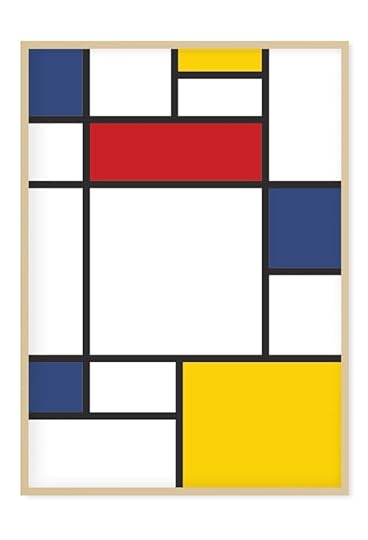
Well, let’s look at this whole thing from a different perspective. When Piet Mondrian, the Dutch painter, hit on his trademark style


he started churning out variations of the same thing from then on, and the art world thought he was a genius. Me, I can’t tell one from another. Same goes for Mark Rothko. He got himself a patented style


and he also started churning out small variations on that for the rest of his career. Another genius. So if it’s hard to tell one Goatwhore song from another, they’re just doing a Mondrian, just doing a Rothko. It’s an accepted artistic tradition.

Andrew O’Neill does a great job in this book. He should be made United Nations Ambassador for Metal. He believes in the power of any great band like Bolt Thrower to unite all people in the celebratory roar of lyrics like

Killer instinct, sadistic tendency
Aggression breeding hatred, kill all enemies
Powersurge eliminates remorse for mankind
Hopelessness, domination freezes in the mind


After one gig by Metallica he writes

Dreadlocked trustafarians and mandied-up chavs joined wide eyed festival virgins and the elite indie snobs in the visceral enjoyment of ‘EAVY FUCKING METAL…Metal is truly for the masses


ITS OWN ECOSYSTEM

I found one very illuminating remark on page 87. By the early 1980s

Heavy metal was not just a description of a type of rock music : it was a lifestyle, a community. Heavy metal broke off from the mainstream and began to operate in its own world, its own ecosystem.

As you tramp through the years of metal, though, nagging thoughts arise. There seem to be very few women in this story, and even fewer black people. Metal seems to be 99.9% by white men. Well, I thought, how many British folk bands are black, then? None, as far as I know. You don’t get many black British people singing “As I roved out one May morning in the springtime of the year”. But you do get lots of women singing that stuff. Same in country music – not too many black country singers but lots and lots of females. Metal seems to be almost exclusively white AND male. (And keen to flirt with racism. That's a whole other thing.)

But there are always exceptions :

A trend appeared in the nineties of good-looking, classically trained women fronting gothic metal bands with dudes who look like music teachers and have very neat facial hair.


SOME OTHER GEMS

Finland has the highest number of metal bands in the world per capita

In regard to the band Mercyful Fate:

Their satanism was sincere, compared to the more light-hearted approach of Venom

In regard to Varg Vikernes :

So the big question, Andrew, is how can you justify listening to the music of a white supremacist murderer? The short answer is “with growing unease”.

An unwelcome development :

Soon black metal overtook death metal as the biggest extreme metal scene in the world. This was never meant to happen.

A TYPICAL LYRIC

The souls of my victims brings me great power
Feasting on flesh by the hour
Lungs explode as I cave in your chest
Probing through your organs - searching for meat
Chewing the heart of my kill builds by evil will
Bodies emptied of blood to fill my sacrificial chalice


IN CONCLUSION

So will I be listening to any more metal in the future? Well strangely, I found I did like Motorhead, and Metallica’s very first album is pretty good.

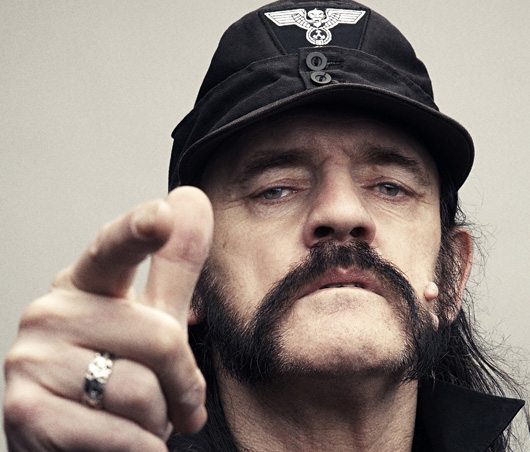
This book, though, is RECOMMENDED. You tell 'em, Lemmy.


Profile Image for Claudia.
1,013 reviews776 followers
February 13, 2020
Just for the record, in order not to offend O’Neill (too much), I will state here that I don’t consider myself a metalhead: if I listen to a particular band or go to a concert of theirs, doesn’t necessarily mean that I’m a fan; I do not wear black (anymore) – this is something to do with the too many deaths (literally) around me; and most of the times I have a hard time remembering names of songs or albums (blasphemy, I know).

But I do love this music deeply (well, at least some of it, as is the case with all genres, as far as I'm concerned): it resonates with me, makes me happy, gives me energy, comfort, and lifts me up when I’m down, calms me (yes, it does) when I’m stressed or nervous. And the live concerts have no comparison with anything else on this world: the feeling you have when you’re in the crowd, being surrounded by all that energy that radiates from the scene and fans, is pure bliss. As O’Neill accurately says: “Heavy metal is visceral”. There is no better way to recharge your batteries (actually, there is a better one, but I’m talking about the music now; that one belongs in another story).

That being said, on to the book. Andrew O’Neill does know how to tell a story. It is his story as much as it is the history of the genre, because it’s highly subjective on occasion. But he says that in the beginning, so you kinda know what to expect.

The structure is coherent, follows a timeline, brings a lot of interesting facts about the bands (gossip and trivia, too) and how the genre evolved and expanded/divided in time, everything being spiced up with a lot of jokes -some brilliant, some good, some really crappy.

First half of the book is about the titans: Led Zeppelin, Black Sabbath, Metallica and many, many more and it’s quite thoroughly documented: lots of facts and details, very informative. The last half, dealing with the heavier stuff, not so much. A lot of big names are missing from the pages, to name just Moonspell and Meshuggah (how could you not include them, Andrew?!)

(I'm making a parenthesis here regarding Moonspell: their album, Antidote, was released together with a little volume of 10 short stories (with the same name, Antidote ) by José Luís Peixoto, each of them being inspired by the lyrics and music of the album' songs.)

Anyway, despite a few annoyances, I had a great time reading it and I would recommend it to all rock/metal lovers.

And if you’re curious how’s the writing style, I’ll leave you some O’Neill' samples:

“The term [heavy metal] was first used in literature in 1962 by William Burroughs in his novel The Soft Machine, which includes a character known as ‘Uranian Willy, the Heavy Metal Kid’. […] In 1968 Steppenwolf were the first to use it in a song – “Born to be Wild’ talks of the ‘heavy metal thunder’ of motorbikes.”

“A significant by-product of Judas Priest’s incredible metal career is the fact that Rob Halford conducted most of it while dressed as a cartoon version of a gay man, while keeping his homosexuality a secret. He single-handedly introduced an image taken from the gay underground. Heavy metal culture embraced the leather-daddy BDSM leather and spikes look, thinking it was the most masculine look possible. Which, in a way, it totally is. They were unaware of the massively obvious homo-erotic subtext to the uniform. It’s the greatest ever example of hiding in plain sight. When Halford came out in 1998 the metal community was bafflingly shocked, and homophobic metalheads realized they’d been dressing kind of gay the whole time. What a total hero.”
(LOL!)

“Most of the music said to ‘increase IQ’ or ‘improve spatial awareness’ is classical. So what does heavy metal do to the brain? Well, based on observation I’d argue that heavy metal:
(1) Increases your capacity for alcohol
(2) Makes you sexier
(3) Makes you think everything was better in the past”

“There are too types of people in this world: people who like heavy metal and dicks. Don’t worry too much if you don’t fall into the later category; I’m very persuasive.”
3,117 reviews6 followers
December 19, 2018
Book Reviewed by Steve on www.whisperingstories.com

I’ve always been a huge heavy metal fan, even going as far back as I can remember, a very young child, so I was eager to read this book as it seemed right up my street. I started the book not long after finishing Bruce Dickinson’s autobiography, but the two books couldn’t be more different.

The book covers lots of subject areas within heavy metal as well as other extreme metal music – These did seem to dominate over your norm, well known heavy metal. There were even a few groups mentioned that I’d never heard of before. However, Andrew O’Neill’s voice comes across strong and makes these areas as interesting as all the others.

If you are a big metal fan this book will be of interest to you. It can be heavy going at times and a few sections I found myself flicking through rather than reading, but overall it was informative and I certainly learned a lot.

I also have to agree with the author that the 1990s saw the demise of heavy metal and although some groups are still going (or making a come back) there doesn’t seem to be that much interest amongst the youngsters nor the radio stations these days.

If you have no interest or only a passing interest in heavy metal I can’t see this book catching your attention for long and so I would pass it by. This is for major fans only.
Profile Image for Thor Garcia.
Author 8 books66 followers
November 24, 2021
“Imagine how hairy Robin Williams’ arsehole must have been?! Must have looked like a gunshot on a tarantula,” says Andrew O’Neill in the dreadful A History of Heavy Metal.

O’Neill makes his wanton “arsehole speculation” in a footnote in a section discussing whether Slayer’s later albums are any good (in that opinions are like are like arseholes because everyone’s got one [uh, and some are stinkier than others?]). He attributes this saying to Williams—which is pure nonsense, as that quote has been attributed to a range of folks, including jazzman Art Blakey and Dirty Harry, but not Williams. Mark it down as another of the many things that O’Neill gets wrong in this lousy book).

O’Neill’s “Hey-ho, I’m a-dreamin’ of Robin Williams’ arsehole” bit arrives after he has written that Manowar are “the most unwittingly homo-erotic thing I’ve ever seen” and that Mötley Crüe “definitely weren’t gay. No siree. Not gay AT ALL.”

O’Neill claims the Crüe were “full transvestite . . . occasionally managing to almost pass as female.”

This is cheap stuff, bottom-of-the-barrel-scraping type of stuff. But, you may ask, perhaps O’Neill—who describes himself as a practicing transvestite who suffers from gender dysphoria (and who’s got loads of tattoos)—would know?

Nah. He just doesn’t seem to get it—or to want to get it. What we can say is that it’s certainly hilarious how much Mötley Crüe—and glam metal in general—make a monkey of O’Neill, an Englishman who touts himself as an award-winning “occult comedian” and “life-long heavy metal obsessive.”

Idiot that he is, O’Neill never bothers to connect the super-duper obvious dots between KISS and glam-era Mötley Crüe (and the glam metal movement in general). Wouldn’t these connections be obvious to anyone who knows anything about rock and roll and heavy metal?

But O’Neill can’t make those connections because earlier in this lousy book he declares that KISS “are not heavy metal” (without ever exactly explaining why he thinks so). KISS gets all of one mention in this terrible book of nearly 300 pages.

Sorry, Andrew, but KISS are absolutely heavy metal—their earliest incarnation helped define the sound, look and philosophy of heavy metal, right alongside Black Sabbath and Judas Priest. Maybe KISS never sounded like proto-Bathory or Morbid Angel, but that wasn’t their shtick, Andy. Times were different when KISS ruled the world, but it was still awesome—and it was heavy metal. (See, for example, Death’s reverential cover of “God of Thunder.”) And if KISS are not cool enough in your revisionist little world to be considered heavy metal, then you’ve missed the point of this whole “heavy metal” shebang.

But back to Mötley Crüe. In addition to accusing the band of a long list of other crimes (being “shit” musicians among them), O’Neill tries to smear the Crüe for writing and releasing the song and album Girls, Girls, Girls. He suggests they did it to conceal their cross-dressing queerness and homo-leanings with gobs of false heterosexual bravado: “It’s almost as if they are trying a little bit too hard to prove they definitely like girls,” he writes.

O’Neill’s full of bullocks, as usual, but it’s odd that he identifies Girls, Girls, Girls as some kind of rip in the Crüe’s spandex instead of celebrating it as the band’s superb, eternal sleazeball gift to strip clubs everywhere. From where I was watching, Girls, Girls, Girls (the band’s fourth album, in 1987) seemed not an “oh no, they’re on to us—come on, let’s cover our homo tracks with, er, a song about girls!” rearguard action, but rather a natural (and lazy) progression as the band ran out of ideas and continued to reel from booze and drug abuse and the fallout from Razzle’s death in that drunken car crash in Redondo Beach.

Yet it should be said, and loudly: The Mötley Crüe who show up in the gatefold of 1983’s Shout at the Devil are utter Satanic glam metal superheroes: head-to-toe covered in leather and spikes, S&M halters and faux-armor, their humongous hair dyed, styled and teased far, far beyond what anything in Glamour might aspire to. The band’s faces, lathered in gloss, glitter and lipstick, sneer and preen from a flaming pit of Hell. It’s magnificent, glorious, one of the greatest photo shoots in rock history, one that still rewards repeated viewings. The Shout at the Devil recording, meanwhile, strikes an electrifying, sinister-ish vein of Satanic mumbo-jumbo, raw metal riffing, head-banging and sexually aggressive posturing. The complete package is totally prima. I still get a tingly rush when I listen to it, which is often.

Lordy, anyone who isn’t having a huge belly laugh about Mötley Crüe is truly lost. Dear Lord, one can only bow to Mötley Crüe. It was meant to be absurd and over-the-top and Total Entertainment from Day One, starting with the brilliant leather-and-studs crotch shot cover and white knee boots of 1981’s Too Fast For Love (which still sounds fantastic, by the way—a swaggering, cowbell-crazy blend of Ramones-y, Aerosmith-y, Motörhead-ish punk-metal bubblegum). Almighty, this is the band that escalated everything by implanting not one but two umläüts in their name (one from Motörhead, the other from Blue Öyster Cult, some might say). How quickly we forget. Yes, the Crüe were pure whisky flavor-coated popcorn—gimme more, gimme more. Dressing up in high-glam Satan-wear and makeup was just how it was done in that world.

In the words (not quoted in this lousy book) of David Johansen, singer of glam-metal forerunners The New York Dolls (who set the early high-water mark for bands dressing in women’s clothes): “We thought that’s the way you were supposed to be if you were in a rock ‘n’ roll band: flamboyant.”

Nick Stillman runs rings around O’Neill in his apt 2011 analysis of the situation on the East of Borneo website:

“There’s a distinct lineage, from Elvis to Liberace to Bowie to the Dolls to hair metal, that points not just to a historical acceptance of androgyny in rock and roll but to its equation with masculine virility. . . . So, Sunset Strip testosterone in the eighties wore women’s clothes. ‘It has that sizzle!’ raved twinkle-eyed, grandfatherly club owner Bill Gazzarri in [The Decline of Western Civilization Part II: The Metal Years]. The conventional justifications for drag—escaping repression, getting a job restricted to one gender—don’t seem to apply to hair metal. By all accounts, these were alpha-male high school bullies who were strutting around like oversize peacocks. . . . Hair metal fashion gratified the enduring demand of pop culture: escape through spectacle. The style could even be considered an extreme technique of differentiation from their audience, haloing them with the godly aura of unattainability, as their obscure commodities and styles were endlessly refashioned in publicity images and on MTV. . . . I’d like to think there’s a wild and complex erotic unconscious underlying and explaining the Sunset Strip cross-dressing scene of the eighties, but I’m just not sure it’s there. The hair metal fashion story is a sad and pathetic one with that blandly familiar corporate ending: the industry moved, turned the page.” (https://eastofborneo.org/articles/cry...)

A History of Heavy Metal is not really “a history of heavy metal” so much as a desperate screed that reads as if the insecure O’Neill is attempting to prove how “cool” he is through the bands he says he likes and hates. O’Neill runs away from the apparently no-longer-cool glam metal, for example, but reveres the humorless and often suffocatingly intense Metallica, Sepultura and Pantera, who still apparently maintain a patina of cool among the people he hangs around with.

He also often writes as if he’s sitting around in a drag-queen bar, feeling superior and reeling off one-liners in a hoarse, cigarette-cracked voice. Several times, for example, he says, “Fuck Whitesnake.” Hee-hee. Sniggers. Well, what if you’d like to know more about the influence of Whitesnake, who were absurd but pulled off some pretty good songs? I, for example, would welcome it. But O’Neill can’t be bothered. He’d rather just repeat, “Fuck Whitesnake.” Hee-hee. Sniggers. And when that wears off: “Oh your god, just think of how amazing Robin Williams’ sphincter would be, would you!” Hee-hee! Sniggers!

Of the mediocre Pantera’s lead singer, he writes that Phil Anselmo (revealed as a “white power” bell end in 2016) was a musical hero and “something of a role model.” One can only say: Ugh, you’ve got lousy taste Andrew O’Neill. Ridiculously, O’Neill says of Dimebag Darrell, the beloved Pantera guitarist who was shot dead on stage during a gig in 2004: “I felt like had we met we might have got on.” One can only say: You wish, Andy. Or is this supposed to be another “joke,” you funny comedian you?

While failing to offer a serious discussion of the impact of KISS, Van Halen or Guns N’ Roses, huge portions of the book are spent on thrash, death metal, the overrated Celtic Frost and the Nordic black metal scenes. Thrash, death and black metal are very much worthy of investigation, but O’Neill adds little, virtually nothing, to what even an average metal fan would already know about these genres and storylines. Yes, he seems to have skimmed some of the bigger websites and biographies. On the other hand, if you’ve never heard the music of Obituary or Napalm Death or Deicide or Darkthrone or Exodus or Kreator, huge sections of this terrible book will seem like the ramblings of an insane gibber-monkey.

One is left with the impression that O’Neill believes the only “true” metal is an elitist, tribal kind of metal that is humorless, unrelentingly gloomy, easily exploited by right-wing racists and that scorns the kind of crossover popularity that was enjoyed by the likes of Mötley Crüe, the Scorpions, Van Halen, Def Leppard, KISS, Guns N’ Roses, Korn and Rage Against the Machine (all of whom, according to the “purists,” would be sellout purveyors of “false metal”). O’Neill seems to take the position that “true” metal can only be so extreme that the average person would find it dull and unlistenable—which then makes it “cool” because, after all, the ordinary person is stupid and “real metalheads” want nothing to do with them. This type of hogwash will go a long way toward continuing to reduce metal to a fringe populated by obese, bearded twats and racist swine.

Near the end of this lousy book, O’Neill admits: “Maybe black metal has removed my sense of humour about the ludicrous.”

He also admits that the internet has ruined everything, saying there will never be another Metallica or Motörhead because the economic and cultural production systems that led to the ascendancy of those bands no longer exist. But then he foists a big lie: “The internet provides an embarrassment of riches” for metal fans. After he repeats several times that metal is now “healthier” than it’s ever been thanks to the web, you begin to realize that O’Neill is just another bozo who natters on and pontificates about how “great” it is that every other bozo can start a band and release the results on the internet. According to some theory or other, this, in theory, might be “great.” But we can already see that the endless clutter of mediocre bands clamoring for attention will continue to dilute, if not completely kill, what we love most about heavy metal: Its air of potent aggression, screeching power and hunger for the jugular. The menacing pageant of brutal, defiant, unrelenting men on a thunderous mission to capture and kill their chosen prey. You got to be ready to die with your boots on! Die hard the hunter! Mayhem, murder, madness! My Sweet Satan! Another piece of meat! To Hell with the devil!

Another lousy thing about this terrible book is O’Neill’s copious footnotes, most of which take the form of unfunny, unnecessary “jokes.” I’ll say it again: O’Neill is not a funny man. In addition to his gender dysphoria, O’Neill wastes space letting you know about his own idiotic bands and his veganism and sex life. Sod off, Andrew O’Neill!

For those who are interested, O’Neill will take a long time trying to explain the history and meaning of “grindcore” to you. He will also tell you that he thinks “Rock You Like a Hurricane” is a terrible song (another thing he gets wrong).

My edition of this unfunny tome comes with laudatory quotes on the covers from big-time comic book writers Neil Gaiman and Alan Moore, both talking about how “hilarious” and “funny” this book is. Jesus, you would have thought Gaiman and Moore would be beyond it. You would think they would've at least glanced at this thing.

But then we look and find that A History of Heavy Metal was published by Headline Publishing Group, which is owned by Hachette, “the third largest trade and educational publisher in the world,” according to our Wiki masters. Predictably, Hachette has its hooks into Gaiman and Moore in various ways.

So yes—you can call this just another shoddy, useless, insulting corporate suck n’ fuck, with unfunny “heavy metal comedian” Andrew O’Neill serving as the designated reach-around partner.
Profile Image for Matias Cerizola.
570 reviews33 followers
November 14, 2021
La Historia Del Heavy Metal.- Andrew O'Neill⁣


"El ansia por generar ruidos rítmicos es parte fundamental de la naturaleza humana. De modo innato, a los humanos les resulta placentero hacer mucho ruido. Y si acaso tienes dudas sobre ello, dale a un niño una batería."⁣


Un día gris como cualquier otro en la deprimente ciudad fabril de Birmingham, un bajista toca un fragmento de Los Planetas de Gustav Holts durante el ensayo de su banda, más precisamente de la pieza Marte, el guitarrista basándose en esa melodía crea un riff siniestro y poderoso, que resuena hasta el día hoy, más de 50 años después. El Heavy Metal ha nacido.⁣


El humorista y músico Andrew O'Neill nos cuenta con un estilo muy desenfadado, pero con un conocimiento infernal del género, la historia del querido y nunca bien ponderado Heavy Metal. El autor hace un recorrido pormenorizado desde las influencias y cómo confluyen distintos estilos en la génesis del metal, su desarrollo en las distintas décadas y la inmensidad de subgéneros que hay dentro de está "gran bola de ruido" cómo definen los herejes a nuestra querida música.⁣


La Historia Del Heavy Metal es un libro muy entretenido de leer, el humor de Andrew O'Neill es bastante ácido y peculiar lo que hace la lectura muy amena y descontracturada. El libro está lleno de data y nombra cientos de bandas, (siempre hay alguna para descubrir, no importa lo tan informado que uno se sienta) pero sin abrumar al lector.⁣


Uno de los pocos géneros musicales que se encuentra en constante cambio y evolución, que da lugar a músicos que recién comienzan como también a verdaderos maestros de su instrumento, y que en la gente que escucha impacta como ningún otro estilo musical, creando un sentido de pertenencia y fraternidad que no se rompe con el correr de los años. Podrá ser más o menos popular dependiendo de la época, pero el Heavy Metal y su gente siempre va a estar ahí, molestando a una sociedad cada vez más plástica.⁣


🤘🤘🤘🤘
Profile Image for Eduardo.
308 reviews16 followers
September 30, 2018
Está claro que a Andrew le gusta mucho, pero mucho mucho Slayer, y más concretamente el CD "Reign in Blood", le comprendo, pero en el libro de vez en cuando se le escapa.

Quitando este pequeño defectillo el libro está muy bien y cubre los hitos más importantes del heavy metal, al menos yo no he encontrado a faltar nada.

La lectura es muy fácil y amena, realmente divertido y engancha con facilidad, sobre todo los primeros capítulos y el primer párrafo ... ¿qué puedo decir de ese párrafo? no olvidaré nunca que alguien ha empezado un libro con las siguiente y lapidaria frase:

"En el mundo hay dos tipos de personas: los fans del heavy metal y los gilipollas."

Tras leer esa frase me quedé con la idea de que iba a leer el típico libro chorra de alguien jugando a ser escritor, pues oye, no ha sido así. Totalmente recomendable y lo voy a volver a releer, seguro.

También es verdad que soy un seguidor empedernido de estos géneros musicales y claro, a mi el libro me ha maravillado, por eso también las cuatro estrellas.
Profile Image for Paul Fulcher.
Author 2 books1,956 followers
April 21, 2018
They coalesced everything that has made Black Sabbath different from their hard rock peers and placed a rocket under it. They stripped down and turbo-powered their sound. Black Sabbath’s sound was rooted in their blues past, but Judas Priest created something that stood alone. Heavy Metal was now a genre of its own ... Sad Wings of Destiny changed the game.

A History of Heavy Metal by Andrew O'Neill does what is says on the tin, but also manages to create a lot of amusement on the way.

O'Neill is a heavy metal fan and band member (currently of The Men That Will Not Be Blamed For Nothing - their self description crusty punk meets cockney sing-songs meets grindcore in the 1880s) but also a professional comedian - indeed this book is based on a show he has performed at both heavy metal festivals and the Edinburgh Festival. The combination means he treads a narrow line between affection and satire, seriousness and mickey-taking (to be fair, in a genre that itself lives on this line), although one he navigates well.

O'Neill's history carefully traces many of the key bands, albums and songs in the history of the genre, and is best digested with its own handy playlist provided on the author's website:
https://www.andrewoneill.co.uk/histor...

While he satirises the obsession of metal fans with genre boundaries, he does rather get dragged into the debate himself, particularly with what is and is not heavy metal (e.g. AC/DC are probably the band that most commonly gets incorrectly called heavy metal). His thoughts on Whitesnake are unprintable and perhaps vindicated when, in one of those 'you bought that so you might like this' moments, based on this book Amazon decided to offer me 'Soft Rock Forever' featuring such heavy metal stalwarts as Heart, Foreigner, Bryan Adams and Cher - alongside Whitesnake.

As the opening quote suggests, while he traces the history of heavy metal from the early development of blues and rock'n'roll, he sees Judas Priest as perhaps the first true band to make heavy metal a distinctive genre. Although, the very existence of a 'genre' raises its own issues. As primarily a literary fiction rather than music fan myself, 'genre' fiction is something I tend to avoid simply as the very term implies rules, boundaries, criteria - the opposite of innovation which is what I most value in fiction (hence my preference for the Goldsmiths and Republic of Consciousness Prizes). In O'Neill's history, he is very good at highlighting those who create each new sub-genre, the innovators.

But one striking thing with heavy metal is the sheer number of sub-genres. In O'Neill's account, from Sad Wings of Destiny in 1976 which ushered in the new wave of British heavy metal, it took only 5 years for the first sub-genre to emerge with Venom's Welcome to Hell ushering in thrash. And from a music fan rather than an obsessive's perspective, the book does get a too bogged down into these competing categories of what is ultimately just a small part of the music scene, which is a good excuse to insert Emo Philips's joke, voted the best religious gag of all time:

Once I saw this guy on a bridge about to jump. I said, "Don't do it!" He said, "Nobody loves me."

I said, "God loves you. Do you believe in God?" He said, "Yes."

I said, "Are you a Christian or a Jew?" He said, "A Christian."

I said, "Me, too! Protestant or Catholic?" He said, "Protestant."

I said, "Me, too! What franchise?" He said, "Baptist."

I said, "Me, too! Northern Baptist or Southern Baptist?" He said, "Northern Baptist."

I said, "Me, too! Northern Conservative Baptist or Northern Liberal Baptist?" He said, "Northern Conservative Baptist."

I said, "Me, too! Northern Conservative Baptist Great Lakes Region, or Northern Conservative Baptist Eastern Region?" He said, "Northern Conservative Baptist Great Lakes Region."

I said, "Me, too!" Northern Conservative Baptist Great Lakes Region Council of 1879, or Northern Conservative Baptist Great Lakes Region Council of 1912?" He said, "Northern Conservative Baptist Great Lakes Region Council of 1912."

I said, "Die, heretic!" And I pushed him over.
Heavy Metal is a music genre that also comes with some major issues. The largely pathetic but also seriously disturbing flirtation with satanism is covered, but it feels O'Neill is rather worryingly awarding points at times for authenticity.

And one acknowledged but not resolved elephant in the room is the domination of the genre by white hetrosexual males.

In a comprehensive index with more than 1000 sub-entries. there is one heading 'Women" with just 5 entries.

The roots of the history of rock and roll in African-American music are acknowledged in an earlier chapter callled, I suspect quite consciously, Roots, Bloody Roots but then not really addressed again, although he does acknowledge the worrying flirtation (again often cartoonish, but that doesn't necessarily make it less worrying) of many bands with right-wing politics and even Nazism.

But he does hilariously skewer homophobia, with Judas Priest again the example:

A significant by-product of Judas Priest's incredible career is the fact that Rob Halford conducted most of it as a cartoon version of a gay man, while keeping his homosexuality a secret. He single-handedly introduced an image taken from the gay underground ... When Halford came out in 1998, the metal community was bafflingly shocked!1, and homophobic metalheads realised they'd been dressing gay the whole time.

with the footnote:
1 Other revelations that have surprised the metal community include the religion of the Pope and the toilet habits of bears.

However, when less targeted than this, the omniprescent gags shoehorned, with little regard to relevance, into almost every paragraph get a little warying: of the constant changes in 'Richie Blackmore’s Rainbow' (the actual original full band name) he comments he got through more members than a hungry German cannibal, and rather lamely Black sabbath are so rich Geezer can probably afford his own butler.

And as a generic heavy metal fan but not a 'metalhead', and one who likes many of the bands that this book would argue are not really metal, the later chapters spend too much time on rather obscure areas of the scene, while many of the wider genres that took their inspiration from metal but developed in a very different way (grunge for example in the 90s) are given relatively cursory acknowledgement. In particular it seems that any innovation that makes music 'heavier' (faster or much much slower, louder, more extreme lyrically or in the band's behaviour) is explored in detail, but those that go in the opposite direction written off.

Overall - I suspect one would be better hearing the live show (where the quickfire gags will be funnier) and listening to the playlist than just reading the book, but quite entertaining nonetheless.
Profile Image for Aurélien Thomas.
Author 9 books121 followers
January 18, 2022
I had two issues reading this book:

-it claims to be a 'history of heavy metal' = It's not. It's the subjective journey of a fan.
-I expected comedy = It's not that funny. Mind you, he can be hilarious; but the fun turns out to be, apart from the occasional jokes here and there, mainly in the footnotes, not the main narrative. If, like me, you expected a stand-up like comedy over 280 pages, then, again, that's not it.

Now, heavy metal, of course, is difficult to define! It's not only the general population who is confused enough (sorry people, but AC/DC is not metal; please, stop...) but the fans themselves. Here's a very rich type of music, highly creative, so creative in fact that over the past few decades it has exploded into multiple genres and sub-genres themselves divided into sub-sub-genres branching out into other sub-sub-genres and sub-genres and genres all influencing or acting as a reaction against each others in a never ending process of crosspollination and evolution... Are you baffled?! It's normal. We, fans of extreme music, perfectly accept that Cannibal Corpse and In Flames both play Death Metal (while sounding nothing like belonging to the same scene) yet we will argue no end as to whether Cradle of Filth should be classified as Black Metal at all. Andrew O'Neill nails the point:

'We're like zoologists or some shit.'


Sadly, the problem with trying to define it all is that you can quickly get lost into your own labelling and attempts at justifications to your own labelling. The author, here, falls into that trap. There are too many pages dedicated to proto-metal or hard rock. There are also too many pages dedicated to various 'core' scenes, which is not a bad thing, but, weird in a book which cites more punk bands than progressive/ power metal ones. In fact, it's only mid-way through the book that it dawned on me that I had been misled by the title. This was never supposed to be an objective history per se, but, instead, the subjective account of a metal fan's journey over the years. It makes for a nice read, but beware of his personal prejudices!

The problem indeed with fans is that they can be very passionate, very opiniated, and very dismissive of what they dislike. As a result, I found myself agreeing a lot with him (e.g. he is fond of Iron Maiden, he loves Venom and Celtic Frost, he acknowledges Neurosis...). More often than not, though, he made me jump off my seat with a shocked gasp (e.g. I dislike glam too, yet I wouldn't dismiss it all as 'a stinking ditch of rotten pus'). About glam, those among you fans of such scene can surely pass over the concerned chapter because, even I, who can't stand most of these hair bands, was left aghast when he attacked my favourites (e.g. 'Twisted Sister? Right-wing shit'; 'Whitesnake can fuck off'...). Having said that, he can be very insightful and clever, as when he assesses Nu-metal:

'It is, in the main, fucking appalling. It began to look dated almost immediately... A soundtrack to adolescence that fails entirely to translate into the adult world.'


Indeed. Personally, apart from the first KORN, Deftones, System Of A Down, and Linkin Park (ironically enough, I used to hate Linkin Park when young...) you have to admit the scene has badly aged (well, to me at least, and compared to the more extreme stuff I was mainly into at the time, e.g. Black Metal, which I still listen to!).

Funnily, as a grown up now who has been into the scene ever since he was a teenager, his evolution somehow reflects mine; not when it comes to specific genres and bands in particular, but, when it comes to musical tastes evolving as a process. Metalheads will recognise a pattern. There are the bands you're supposed to like and don't. There are the bands you're supposed to hate and actually love. There are the bands you used to despise when young but strangely grew to become fond of over the years. And there are the bands you used to love, and now can't understand why on earth you could have ever been bothered at all. Quite a journey!

What about it all now? Well, like it or not, metal music is far from being on its deathbed! Do you think young metalheads are carrying the torch as they should? Or are you a grumpy old headbanger who think it all has gone to hell (or heaven; gone to heaven is worse...)? Whatever! At least agree with the author:

'Fourteen-years-olds are way better served listening to Slipknot or Bring Me The Horizon or Motionless in White than Ed Sheeran or Justin Bieber or fucking Nicki Minaj.'


Indeed too.

Here's a nice book to read, but it's not history. It's the personal story of a fan with very entrenched opinions. Agree or not with his, but, at least, I give him 'the nod'.

Long live metal!
Profile Image for Javier Pavía.
Author 10 books44 followers
May 23, 2018
3,5

Lo bueno: es heavy. Muy heavy. Lo lees y te crece el pelo. Descubres un trillón de grupos y está contado con un humor y un buen rollo que más parece que el autor te está dando la chapa en un bareto. Y eso es bueno.

Por otra parte, se mete con el nu metal, y eso siempre es bueno y necesario. Que esa cosa acercó a mucha gente al rock de verdad, es cierto, pero madre mía, no había por dónde cogerlo.

Lo malo: el autor peca un poco de que su rollo es el mejor. Como si ser fan del black metal noruego fuera mejor que serlo de otros géneros. Que sí, es su libro y hace lo que quiere, pero no es tanto un libro de historia como una historia de sus subgéneros favoritos del metal. Despacha el metal sinfónico y el power en una página, por ejemplo, y cae a veces en la falacia de que un metal más extremo es un metal mejor. Y no. Vamos, que en MI historia del metal, despacharía el black en una página.

Aparte de eso, el libro está basado en un monólogo de humor y el formato libro no le hace mucho bien al ritmo, además de que algunas bromas se pierden en la traducción.

Pero mola, y hacen falta más libros llenos de METAL.
Profile Image for Darjeeling.
351 reviews41 followers
October 29, 2018
Everything is sexist, everything is racist and xir has to point it all out. Also, orange man bad.

There is allot of information in here, and some parts made me laugh. The authors love of metal seems sincere, but sometimes for what I would consider the wrong reasons, like knowing about bands that people haven't heard of which is weird given that the author is quite vocal about how much they hate hipsters. The author hates allot of things though. They do not come across as terribly tolerant. There is also allot of information that simply isn't relevant. I bought a book titled "The History Of Heavy Metal" because I wanted to learn about the history of heavy metal. I am not sure why the author felt the need to mention that they are a vegan, that they suffer from gender dysphoria, that they are in an open relationship, and what their opinions are on Trump, Brexit, The conservative party, UKIP, etc. etc... None of that has anything to do with heavy metal, but it's on every page, and all considered it probably uses about half the paper and ink up, so minus all the virtue signalling this would be rather a small pamphlet.
Profile Image for The Tattooed Book Geek (Drew). .
296 reviews635 followers
August 31, 2017
As always this review can also be found on my blog The Tattooed Book Geek: https://thetattooedbookgeek.wordpress...

I received a free copy of this book courtesy of the publisher through bookbridgr in exchange for an honest review.

"There are two types of people in the world: people who like heavy metal, and dicks"


An auspicious and unashamedly blunt start (come on, admit it, if you're a heavy metal fan you smiled at that sentence and said fuck yeah in agreement) and a tantalising taste of what's to come as you prepare to delve further into the book!

I'm a rock/metal fan, from the 1980's poodle perm rock of Def Leppard through bands like Maiden, Guns N' Roses and Metallica to the modern day metal bands like Cold, Flaw, Tremonti, Disturbed, Five Finger Death Punch, Demon Hunter and Any Given Day. And, whilst there is a chance that O'Neill would deride and scoff at my favourite bands (be warned fans your favourite bands might be mentioned and they might be roasted too) it would be hard to take offence as it's told in such a fun way that it's hard to take offence and I loved this book.

A History of Heavy Metal is like a 300 page world tour of heavy metal taking you on a journey through the fifty year history of the genre from its inception and very beginning across the various subgenres, fads and trends that have occurred over the years before finally ending with a look at the state of metal today. With an additional epilogue depicting the future of heavy metal as perceived by O'Neill and trust me, the epilogue is funny as fuck!

I'd heard of most of the bands and musicians mentioned. Some of them only in passing and from music articles but the names were familiar even if I hadn't listened to the bands. (I'm not up on all the old bands at the beginning of the heavy metal movement or the Death, Black Metal and Grindcore sub genres).

A History of Heavy Metal is funny and irreverent with the footnotes by O'Neill often verging on the hilarious. But it's more than just a humorous look at the genre and culture and what you find inside the pages is that O'Neill has actually created a very knowledgeable, insightful and enjoyable read.

Andrew O'Neill, the author is a comedian and a metal fan and both shine through in A History of heavy metal. The humour of the comedian in O'Neill shines through in his writing and the true music and metal fan in him shines through in his knowledge and passion for the genre.

A History of Heavy Metal is written by O'Neill in his own colourful and individual way. It is not a boring historical text book of musical history as told by some bland ass stuffy vanilla writer who loves to pontificate and lecture yet, in reality, knows nothing about metal! Oh no! The book itself is a personal look at heavy metal, it's O'Neill's own account and view and not an encyclopedic look at the history. The information is well researched and accurate but where personal opinions on subjects and bands are concerned, it's very much a subjective view by a fan who loves the genre. 

There really isn't much else to say about A History of Heavy Metal as obviously if you aren't a fan of this genre of music then the book won't be for you. If you are a dance loving dimwit or a pop loving pussy, then, whilst I question your sanity and taste in music. I do admit and respect that if you don't listen to heavy metal, you really wouldn't want to read a book based on its history just like I wouldn't want to read about Justin Bieber or Taylor Swift's conception and life in their autobiographies!

AC/DC sang "for those about to rock, we salute you" well, as a heavy metal fan I salute you Andrew O'Neill for writing this adventure through the annals of heavy metal.

If you are a heavy metal fan then just buy this book, it's loud, brash, opinionated, full of fun and written with a genuine love for the music, you need to read it! Simply put it's an exceptional companion piece to the best music genre out there! Devil horns baby!

Profile Image for TheWhispererInDarkness.
12 reviews
December 19, 2019
This book should probably be called "My Very Opinionated History of Heavy Metal".

The first couple of chapters are quite funny but as the book progresses the authors opinions start to creep in. Boy does he not like Glam or Nu Metal. Much of the comedy is of the hectoring lefty kind (like the Mash Report) i.e. If you don't agree with their politics you'll be tapped on the bonce with the racist stick.

As an overview of Metal as a genre it's passable but it'd be a damn sight better without the authors polarising musical preferences. By the closing chapters I felt like I was stuck on a long train journey with an obnoxious drunk blocking me into a window seat and ranting on about his world view. This is coming from someone who has broadly similar tastes to the author. Live and let live chief.

The lowest point in the book for me was when he slagged off members from his old band. That crosses a line.
Profile Image for Ieva Bullīte.
25 reviews4 followers
March 22, 2024
A pretty thorough and interesting look at the roots of metal scene, sprinkled in with humor. I was giggling a lot through reading this book.
The author goes into detail about what bands and movements in the genre influenced what other bands and movements, how the evolution flows and changes.
O'Neill does not shy away from mentioning his own opinion on different styles for metal. I might not agree on some of it, but we all have our opinions and its ok to disagree sometimes.
The book read very easely. It was hard to put it down. I do recommend it to anyone, who is interested in the metal scene and its roots.
Profile Image for Harney.
33 reviews1 follower
October 3, 2025
3,5 Sterne
eigentlich wollte ich 4 geben, weil der Autor mich inspiriert hat Mal wieder bewusster in Musikalben reinzuhören bzw. mich mehr mit Musik zu befassen. Generell habe ich viel gelernt und manche Sachen waren schon ganz witzig geschrieben. Aber diese Metal Elitist Attitude kann ich einfach nicht mehr ernstnehmen und hat von Anfang an genervt. Vor allem warum trashtalked man Nu-Metal und die Emo Szene und schreibt dann 2 ganze Kapitel über black Metal, das cringeste Genre von allen? :o unerhört
Profile Image for Levent Pekcan.
197 reviews620 followers
February 17, 2025
Pek beklediğim gibi çıkmadı. Açıkçası üstat Neil Gaiman neresini "hilarious" bulmuş da kapağa kadar yazılmış, bilemedim. Konu benim için ilginç, bu konuda yapılmış çalışma da herhalde yok denecek kadar azdır, bunlara sözüm yok. Lakin iddia edildiği gibi kırıp geçiren bir anlatım yok ortada, hatta gülümsettiği bile söylenemez. Keza, her sayfanın altında 2-3 dip not bulunuyor ve bu durum anlatıyı mahvediyor. Bilemiyorum, beklediğim gibi çıkmadı kesinlikle, belki beklentisiz olarak okunursa daha çok keyif alınabilir.
122 reviews5 followers
March 1, 2018
While I was excited for the release and had pre-ordered the book (having been a fan of Andrew O'Neill for two years when the book was announced), my motivation to read it declined soon after having read the first chapter, wherefore completion took me nine months.
The cause isn't the writing-style or humour, though; There was just very little new I learned (having been a metal-maniac for ages) and what I learned I did not care about in the slightest.

There are great jokes that really made me laugh and many good ones, so despite not getting every reference (who the hell are "The Stone Roses"?) I really enjoyed that part of the ride.
Sadly the delight was much outweighed by annoyance and I ended up quite disappointed by and discontent with the book.

Now, I understand that metal is an enormous genre and I won't hold it against the author that he does not mention all the bands I deem deserving or that he does not do certain bands justice at times.
I am however much annoyed by some of his priorities;

I don't want to read about the Beastie Boys, Public Enemy or grunge bands in a book about metal and, even if they were relevant to the chapter, I think it is ridiculous to give them such a large space when for example there is NO MENTION of Yngwie Malmsteen, the Shrapnel-Records guys and Mike Varney, as they have been incredibly influential on metal guitar playing and accelerated the technique arms race that was started by EVH. (Van Halen themselves are mentioned only once, btw, despite Eddie having been a great influence on so many guitarists. Know who's mentioned, though, and who has a place on the index? Abba. I shit you not.)
And although hardcore and grunge are at least somewhat related and have had cross-influences with metal, spending so much time on them is unwarranted.
Worse still, the discussion of hip-hop is roughly the same length as the discussion of doom metal and it boils down to two collaborations and acts as a prelude to a bunch of shitty bands.
Power metal has three or four mentions, prog metal has none, sludge is mentioned only in passing, funeral doom isn't at all but hey, you can learn about two hip hop bands and their part in the history of heavy metal.
Space used for multiple lamentations of Machine Head having become shit could have also been used better.

Another very annoying aspect of the book is that the author accuses several people of racism (e.g.: claiming Eric Clapton to being a "semi-professional racist") without backing the claims up, says that one musician was rumoured having been racist and that that anybody believing to know the difference between thrash and speed metal is possibly a racist.
He even makes a joke about light-mindedly accusing people of racism without any proof. This I'd have liked to take for a punch-line of an unsuccessful joke, however afterwards several times the "painful whiteness" of audiences to some bands are mentioned in a way that seems to imply something being wrong with it and in the beginning the birth of rock'n'roll is described as having been a result of people having "[taken] black music and racist music and mixed them".
To a lesser extent there is also a focus on (real and fictitious) sexism and misogyny which peaks in jokes that describe Game of Thrones as "frozen landscape and a mythical medieval world + sexism". Even the buzzword "mansplaining" is being used.

And then there's minor embarrassments such as making a list of notable Gibson SG players and naming oneself and two non-metal musicians while leaving out Tony Iommi, claims that "all rock music is essentially dance music" or getting details wrong (e.g.: who played Django Reinhardt to Iommi, forgetting about "War Pigs" when claiming Sabbath were never explicitly political [which the author deems a result of their lack of confidence]) and so on.
Who he means by "Him off Emperor" who "is rubbish now, but creating still" is a mystery to me.
Additionally the book rather aggrandizes the Beatles, Elvis and several other artists, who, despite important, weren't as great or as fundamental as Mr O'Neill would like us to believe.

And while definitely not being a right-winger I was annoyed by the repeated politicisation or bringing up of politics in a very left-biased way or use of the term "apolitical" as criticism.
Profile Image for Judith.
1,044 reviews5 followers
February 13, 2021
Yes, it has some history of heavy metal but it's heavily influenced by what the author likes. He doesn't like glam/hair metal so the chapter devoted to it is lacking in detail and many of the bands that were influential/big at that time; the majority of the chapter is just his opinion on it and poking fun at it. Likewise some major bands in the late 1980s which had a huge influence on how heavy metal developed (and whatever your opinion of them, they were under the broad umbrella of 'metal' as a genre) barely get a few sentences; bands like Bon Jovi and Guns N' Roses (who had a HUGE impact on the scene). Likewise, bands like Faith No More and Rammstein get a sentence each and again, both these bands have had a huge impact on the metal music scene. It's fine to focus on the heavier death metal side of it but you also have to give equal weight to the other genres of metal (you can argue that hard rock is not metal but at the end of the day, hard rock, AOR, MOR etc all came under the metal umbrella since the 80s). Bands like Living Colour or 24-7Spyz barely get a mention (if at all) or bands like Girlschool, L7 and female trailblazers like Heart and Joan Jett and Lita Ford.

In fairness, the author doesn't claim that the book is a complete history of heavy metal and everyone is entitled to their opinion, but if you're going to write a history it needs to be more about the facts and less what you thought. This book is far more opinion than history. There are some funny bits in the book but sometimes the many footnotes wear thin in their humour (but humour is again subjective, so you might read it and find the whole thing hilarious). As long as you expect a light read which isn't a complete history but a large dollop of opinion, fairly weighted towards death metal and all the sub-genres that are the heavier side, you'll be fine.

(Review written by someone who likes a wide range of metal, from Motley Crue to Slayer \m/ )
Profile Image for Rob Adey.
Author 2 books11 followers
July 27, 2017
My first gig was Metallica ( \m/ \m/ ) and I spent a lot of time in the late 80s discussing exactly where to place particular bands on the rock/metal continuum that ran at the time from Marillion to Napalm Death, so I found this book very entertaining. It's very much a history by a fan, and while O'Neill is comprehensive he makes no pretence of being impartial – there's a chapter called 'Fucking Glam Fucking Metal' – but this gives the book a ton of authenticity and charm.

I have to say I enjoyed the show on which it's based more – you get more jokes, O'Neill's band plays illustrative examples throughout – and it's naturally much less comprehensive, and more accessible to non-metal fans. But it's still deeper and more informative than most BBC4 documentaries; I hope someone in TV lets O'Neill make one.
Profile Image for Paul.
1,284 reviews29 followers
May 11, 2022
The author sets out to list bands who qualify (or not) as heavy metal. Instead he spends most of the time determining whether or not the bands are racist and agonising over Metallica and his other (equally rubbish) favourite bands. At one point he complains there are too many white men in heavy metal, which is probably the most baffling brain fart in the book. There's a bit of swearing and a lot of boring anecdotes from the author's life.
Profile Image for Octavio Villalpando.
530 reviews29 followers
July 17, 2018
El Heavy Metal es uno de los hijos bastardo del rock, que a pesar de todo, se ha logrado mantener con vida ya casi por medio siglo. Entre toda la polémica generalmente asociada con él (sobre todo por los medios más amarillistas), ha logrado crear una audiencia leal como pocas: verdaderas tribus urbanas para quienes las barreras incidentales (lenguaje, fronteras, credos) no significan nada, y que siempre encuentran en la ferocidad del siguiente acorde de una guitarra bien distorsionado, un motivo más de regocijo que contribuye a reafirmar aún más la validez de su creencia.

Desde un punto de vista antropológico, es muy interesante estudiar al respecto. El género tiene particularidades específicas que hacen que no sea precisamente un producto sencillo de consumir para las masas, y sin embargo, ahí sigue, resistiendo los embates de las modas musicales o de los cambios en los hábitos de consumo de los compradores de discos (o visitantes de youtube y demás plataformas digitales de música, en estos tiempos), casi podríamos hablar de que consituye una religión en si mismo, incluyendo, como no, la infaltable panda de fanáticos qué, más que ayudar a darle buena fama, tan solo contribuyen a seguirlo haciendo parecer como algo sucio, sin gusto, y que merecería ser erradicado de la faz de la tierra sin dudarlo.

Andrew O'Neill nos ofrece una opción muy amena para introducirse en la historia del Heavy Metal. El libro se basa de hecho, en un show de comedia que suele presentar de vez en cuando, así que no va a resultar para nada aburrido, ni para los fans del género ni para los neofitos que se acerquen a él tratando de aprender algo nuevo. Sin complicaciones, recorre los eventos más significativos que finalmente han llevado al Heavy Metal a ser el fenómeno que es hoy en día. Debido al alcance del libro, desde luego que hay muchos eventos que se han dejado de lado, y muchas bandas que no se han mencionado, pero eso no importa, la base esta ahí, tan simple y clara como para no hacer que nadie se pueda extraviar durante el recorrido.

¡Recomendable!
Profile Image for Xfi.
547 reviews88 followers
December 31, 2018
¿Por qué me he leído 300 páginas de la historia del heavy?, si ni siquiera soy un "jeviata" tal como dice el autor del libro, solo un amante de la música que se quedó anclado 30 años atrás.
Pues porque el libro es divertido, el autor es cómico, líder de una banda heavy metal y todo un entendido de la música pero para mi solo me interesó las partes que hablaba de los primeros tiempos y del trahs metal de los 80, Metallica en estado puro.
Cuando se pierde en desmenuzar los géneros, subgéneros, sub-subgeneros, y así hasta el infinito me pierdo bastante.
Nunca pasé esa línea de cordura que separa el trash de lo que vino después: death-metal, satanismo y demás.
Libro divertido para los que tengamos cierta edad y disfrutáramos (y aun disfrutamos) de los discos míticos de Metallica (los primeros claro, ja ja lo entenderéis si leeis el libro), Judas Priest, Black Sabbath, Slayer, Iron Maiden...aunque a los ojos de Andrew O'Neill yo soy un hereje que considera AC/DC un grupo heavy, además de haberme pasado al grunge a principios delos 90....no creo que este hombre me firme nunca un ejemplar de su libro, me lo tiraría a la cabeza.
Profile Image for Tamsin.
427 reviews9 followers
February 12, 2018
A well researched, comprehensive and humorous loon into the history of the heave metal genre of music, from its influences and beginnings right up until the current day with the almost infinite number of sub-genres that seem to exist. I listened to the audiobook version of the was was often smiling to myself at recognition of my similar thoughts or agreements, and even laughing out loud - my favourite being the chapter on glam metal which also isn't the author's favourite sub-genre either.

Definitely recommended for anyone vaguely interested in this kind of music.
Profile Image for Tommy Schenker.
19 reviews8 followers
December 24, 2023
There's a lot of reviews on this book already so I'll keep it short. The first thing you need to know about this book is that it's written by a comedian. I didn't know this going in but I was pleasantly surprised. Some parts of this book had me laughing my ass off. If you take it too seriously this book will piss you off at times, depending on which bands you like. But to me it was all great fun.
Profile Image for Caroline.
1,546 reviews77 followers
August 28, 2021
Didn't think I needed another book about metal - while reading the introduction, I realized I most definitely did. This book is hilarious! I cackled out loud so many times.

This book takes you from the roots of music in general as well as rock and metal, and then on a journey from Black Sabbath, the golden age of heavy metal, NWOBHM, first wave of black metal, thrash, glam, death metal, second wave of black metal, genre inflation, the 90s, nu-metal, metalcore, post-metal, retro/revival, metal today and finally to the future of heavy metal.

I wouldn't say this is the book for learning about metal history though (maybe try Louder Than Hell: The Definitive Oral History of Metal), I think it's better for people who are already familiar with all of this, especially since there are so many inside jokes throughout. The footnotes aren't like your regular footnotes, they're hysterical! The author does voice their opinions a lot throughout, which might step on some people's toes, but I mostly found them funny.
Also big bonus, there's a playlist! I wish it was longer though, since it follows the book's chapters pretty well until the first wave of black metal. https://open.spotify.com/playlist/0H2...
Profile Image for Titus Hjelm.
Author 18 books98 followers
August 23, 2018
There's only one way of putting it: Fucking Brilliant! I'm biased, of course, because I saw an early incarnation of the comedy show, and know Andrew (sort of), but this is a genuinely funny book. Get the audiobook version, if you can. It's pure gold. I have no idea whether non-metalheads will get any of the funny stuff or enjoy the hair-splitting genre definitions, but I sure did. Only two things: (early) Whitesnake is bloody brilliant and why was there not a word about Ministry? (Effectively, I just proved Andrew's important point about metalheads 'owning' their idols and being prickly about their favourites being put down or ignored). Anyway, simply brilliant (especially the Finland becoming the 51st state of the US when Manowar are president...).
Profile Image for Gabriela Muñoz González.
41 reviews33 followers
November 5, 2021
Una pasada (me causaba gracia el español ibérico de la traducción). Me encanta como toca muchas aristas de este género musical (menciona hasta el metal pirata). Lo malo que le pillo es la imparcialidad del autor al hablar en cada-puto-capítulo de Metallica. Hahaha. Me descojono. Ah, y me encantó el epílogo con la proyección del futuro del metal.
Profile Image for Joel.
58 reviews10 followers
March 19, 2019
An absolutely brilliant experience of a book!
O’Neill is very well researched and bloody hilarious in his delivery.
He provides more than just excellent overviews for the musical genre - including its evolutions as it splinters into a sea of subgenres. He also does an inspiring job of presenting the key ethnographic elements that incubated these musical mutations.
.
With that being said, I really wished that there was more on the Blue Öyster Cult within the early chapters of progenitor groups. I can also imagine O’Neill’s clever retort that he would have dealt out to such a comment. I’m sorry, I couldn’t help myself.
.
His knowledge of everything from the birth of the electric guitar and amplification, to the nuanced extreme movements in the forests of Finland, give the expedition a truly anthropological and wholistic feel. He celebrates the music and the culture with unabashed joy and vitality and it is a delight to engage. By the end of the book I felt that I knew him as a friend and comrade.
Absolutely brilliant.
Profile Image for Ignacio Izquierdo.
342 reviews40 followers
January 6, 2019
Puede que el metal no sea lo tuyo pero si hay algo que agradecerle a Andrew O'Neill es haber hecho de esta biblia de música algo entretenido, lleno de historias y anécdotas que seguro que divertirán también a los más alejados del género. En esta evolución hacia la búsqueda del sonido más contundente y extremo hay tantas ramas y tantas respuestas a momentos históricos que uno acaba abrumado de tantos grupos y de tantos subgéneros, pero acaba descubriendo más música de la que uno pudiera imaginar. Es, creo, muy interesante leerlo junto a Spotify y Google, para escuchar y ver muchos de los detalles a los que hace referencia. Si tomamos esta opción la lectura se convierte, obviamente, en un camino mucho más lento pero lleno de recompensas.
Profile Image for Tom Fordham.
188 reviews1 follower
May 8, 2025
I did not want this book to end! I've devoured it and it's been the most addictive book I've read in ages! This is a fun history of metal, full of anecdotes and comedic insights into the contradictions and ludicrous things we do as metalheads. It's not just about the musical evolution but the cultural one as well, and even though it was written in 2017 and I've read it 8 years later, it goes to show nothing changes. I think for me the vindication moment was when O'Neill discussed his dislike for Trivium, finally someone who shares my view! Anyway, this is a must read for metal fans, well researched, comedic and thoroughly enjoyable, O'Neill leaves no stone unturned...except when it comes to Electric Wizard, mad to me that you talk about heaviness and not mention them!
Displaying 1 - 30 of 311 reviews

Can't find what you're looking for?

Get help and learn more about the design.