Курортный городок Болета-Бэй славен своими пляжами и большим парком аттракционов Фанленд на берегу океана. Но достопримечательности привлекают не только отдыхающих, но и множество бездомных, получивших прозвище тролли. Зачастую агрессивные и откровенно безумные, они пугают местных жителей, в Болета-Бэй все чаще пропадают люди, и о городе ходят самые неприятные слухи, не всегда далекие от истины. Припугнуть бродяг решает банда подростков, у которых к троллям свои счеты. В дело вмешивается полиция, но в Фанленде все не то, чем кажется. За яркими красками и ослепляющим светом таится нечто гораздо страшнее любой комнаты страха, и ночью парк аттракционов становится настоящим лабиринтом ужасов, откуда далеко не все выберутся живыми.
No, no, no, no...bad Laymon. Baaaaaad. Okay, this isn't the worst book I've ever read, but for a Laymon book, it's distinctly horrible, in extremely bad taste, and too dull in too many sections to give it that zap! and zing! I've come to expect from him.
The late Richard Laymon is always my go-to guy for a pulpy, sometimes sleazy, never politically correct but always satisfying horror romp. There's just something so delightfully wicked and deranged about his straightforward, shoot from the hip, slice like a razor blade prose that puts you right into the action and hardly ever relents until the last page is turned.
Once upon a time, Stephen King referred to his own work as the literary equivalent of a Big Mac and fries. Not a chance Mr. King; even on your worst day you offer up something rich and tasty with complex flavor profiles that linger long in the memory luring readers back over and over again for repeated tastings. Laymon's books, however (and I love them for this) are a cheeseburger and fries that you wolf down and perhaps groan in pleasure while doing so, then lie back for a satiated moment of stoned out bliss. You'd never want to subsist entirely on a diet of Laymon books, but Jesus, who doesn't get a craving every now and then for an injection of grease and carbs?
But god help you if you get a bad burger and spend the night in the john or grasping that bottle of Pepto Bismol in your weak and shaky hands (I'm definitely taking this metaphor too far, but seriously, I feel like I just ate a bad burger, and I'm not happy about it). The indigestion is leaving me a little pissy and put out.
This book has its moments that salvage it from the garbage heap completely -- the last section in the Funhouse is pretty messed up and unfolds nicely with Laymon's characteristic cinematic style. Why more of his books have not been made into movies is beyond me. They are the perfect fodder for the slasher crowd. But for the most part, this book is too slow to really get started. The characters are mostly terrible and so dislikable it kept making me curl my lip in distaste.
I've pretty much gotten used to Laymon's standard sex-obsessed male adolescent who ogles all the female characters and thinks nasty, inappropriate things about them in his mind. Doesn't matter if death is breathing down your neck or some monster is crawling up out of the floor, if there's any chance of getting laid, these male characters will never pass up an opportunity to cop a feel or make out. This time the level of inappropriate hormone-driven angst is ridiculous, and insulting. The comments made about the girls drove me bananas! Maybe I'm just getting too old for this shit. All I know is my tolerance for blatant male chauvinism bordering on misogyny has whittled down to zero. Laymon tries to balance this with "strong" female leads who are the heroes of the story, but it wasn't enough to tip the scales for me.
Furthermore, there are huge, long, meandering sections supposedly reserved for "character development" but do much more to bog the story down than enrich it in any way.
Sorry Laymon my man. Rest in peace and all, but this one is a real miss for me.
Funland is the first book I've read by Richard Laymon. It was an interesting read and I want to read more by this author. 3.5 stars but don't know what I think of his writing yet.
A classical Laymon with all the ingredients you'll expect. Sexism, voyeurism, brutality, a cunning story of revenge, a love story, hard action with lots of violence... do you want to read more? Then you're right on your way entering Funland. I missed to mention the freaks, without spoiling your reading pleasure, you'll meet them inside. An entertaining roller coaster ride! Sometimes even with all its explicit details a bit long woven. Nevertheless a recommendation!
I had started the book with high expectations. It was my first novel by Laymon and was looking forward to some great suspense and fear. But, unfortunately it failed to deliver.
The story in brief - The town of Boleta Bay, especially the amusement park Funland, is facing the problem of "leering" homeless people referred to as Trolls. The locals blame them for vitiating the town atmosphere and crimes have been linked to them. A group of local teens, headed by the attractive Tanya, form their own vigilante group to take on the trolls. Initially, they just harass and manhandle the trolls, but later – yes, you have guessed it – things go south from there.
I am not going to talk about all the characters and incidents. Will only say that there are plenty of them, and the author has done a decent job of portraying the teenage mind set – the need to be a part of a clique, to be cool, to get close to people you think as hot, grappling between right and wrong.
I felt that the story could have been much better if the author had cut down on the flab and increased the pace. He had plenty of opportunity to magnify the suspense, give some back story to the villain. But, Laymon did not capitalize on these elements. At many places, I felt my attention waver and had to trudge along somehow. The ending was way over the top.
I had heard about Richard Laymon’s books on Goodreads. This might not have been his best work, but I will certainly be on the lookout for more of his novels (once the lockdown is over). Will not recommend this book – there are plenty of good horror novels out there. But, recommendations around Richard Laymon’s best novels are welcome.
I read this book almost entirely on a balcony of the historic Atlantic Hotel in Ocean City, Maryland, overlooking the boardwalk amusement park. Perhaps the emerald waves against white sand combined with the sounds of kids howling with delight on roller coasters and scramblers put me in the right mood for this story, as I seem to have enjoyed it more so than many other horror fans in the community, even those typically fond of famed schlock-meister Richard Laymon's overall work. But certainly it was no masterpiece.
I agree with other sentiments which state that the book was relatively devoid of scares. The book was rather long, yet not because of any action-packed narrative or deep character development. I did enjoy the main protagonists, two officers with some really good romantic chemistry. But the action largely consisted of a group of juvenile delinquents who had to be some of the most annoying characters I've encountered in fiction. It wasn't until the very end of the book that this really felt like a Laymon novel, where the brutality and suspense are turned up to eleven. Otherwise, this novel was just a slow and pleasant beach read.
Seems I am in the minority here, but yeah here I am with only two stars. It started off with a bang, then it fizzled out, and crawled off to die probably under that dark boardwalk. Halfway through this book I decided Laymon must have a serious problem with homeless people. One of them must have hounded him outside of a gas station for spare change really hard one dark night. I won't even get into the so called reveal and climax of the book as it is predictable and lame. I would pass this Laymon book up, especially if you don't like homeless people being looked down on.
This book was right up my street, I haven't read many books by Richard Laymon I think this might be my third and I wasn't disappointed. This book follows troll (bums), troller's (people who hurt trolls) and the police out to catch the troller's. Although not a complex plot it was fascinating.
Funland has been on myself for a while and I am glad I finally got around to it - this is defiantly a slasher style horror which I found really enjoyable. I find with most horror books I have read there isn't that much character development, however this was full of it.
Duke/Jeremey was such a believable character who is developed brilliantly throughout the pages going form someone you feel sorry for to someone you hate back to do a 360 by the end of the book. Tanya is such a good character to love/hate she is the most manipulative person I think I have ever read about.
There are some characters that were defiantly background characters that we don't really know a great deal about but they didn't need it. The pace of this book I really enjoyed it was a slow-burn but it also had shocking and unexpected moments throughout.
Towards the end of the book is where we really see the horror, gore, guts and everything in between was needed. Richard Laymon's description of gore was really good but I have read better. This would easily have made it as a 90s slasher film and I don't know why it hasn't been done yet!
The reason this isn't quite a 5 star is because of it's simplicity and sometimes drawn out chapters/explanations but otherwise a really strong read.
Well, Funland is definitely one of Laymon's more 'mature' works (if that is not an oxymoron) and while a little slow to get going, finishes as usual with a totally splatterpunk ending. Laymon employs many POVs in this story and this is one of his more 'populated' novels to boot; nonetheless, four characters emerge as central-- two cops (Dave and Joan) who patrol the boardwalk of Funland, 'Shiner', one of the teens that goes 'trolling', and Robin, a young traveling busker with a banjo. Homeless people (AKA trolls) abound around Funland and over the years there have been many people 'gone missing'. One teen, Tanya, was horribly raped and scarred by the trolls and she leads the pack that goes 'trolling'. The book starts off with the trolling teens who capture a troll late one night and then proceed to beat him within an inch of his life, burn his cloths and leave him tied up by his ankle swinging in the breeze.
I should mention that this takes place in a small California town of Boleta Bay-- kinda arty, kinda sleazy-- with a large boardwalk (Funland) filled with tacky rides, attractions and so forth. The first half of the book Laymon spends introducing a wide range of characters-- 'Duke', a new kid (16yo) in town, 'Cowboy', a boy who befriends Duke at Funland, Tanya, the leader of the trollers who also works as a lifeguard at the nearby beach, 'Shiner', a somewhat mysterious gal who is attracted to Duke (meeting him during a 'trolling'), the two cop's partners, one of which writes for the local rag, and of course, Robin, our banjo playing busker who one day ended up at Funland, along with several more minor players. Whew-- what a list!
Anyway, knowing Laymon, you know things are going to head south somewhere and that a final denouement will end the story with a bang. Laymon takes his time getting there, however, and we are treated with lots of descriptions of bums and breasts of course along the way. The main pervy, horny teen is 'Duke', who, while attracted to 'Shiner' is head over heals in lust with Tanya. Duke, something of a momma's boy wants to start fresh in the new town and going trolling with Tanya seems to be just the ticket! I will stop with the plot here as, again with Laymon, getting to the final denouement is half the fun!
If you can get by Laymon's fascination with nipples and breasts this is a pretty good read with a crazy, although not entirely unexpected ending. 3.5 stars rounding up!
This book is glorious. It is like a 1980’s horror movie. Gorgeous women and deranged people with meat cleavers. High school punks, crooked life guards, alcoholic vagrants, and deformed freaks. A sexy female cop. Three different budding romances, including love triangles. Ferris wheel weirdness. Sneaking out at night. House of mirrors. The book is from 1989. I loved it. 4.5 stars. I just ordered a lot more Laymon books. Laymon is so rad.
There's a bit of a story here. Browsing through Goodreads, I ran across the page on Richard Laymon and was surprised to see he passed away in 2001.I met him in a science fiction book store autograph party in the 90s. There were only a handful of people there so we had a good hour or two just talking amongst ourselves. Needless to say, Laymon was a very nice enthusiastic man who was in love with books and writing. He autographed a copy of Resurrection Dreams which I remembered reading and liking very much but I have not read any more Laymon since then. So recently I looked for the book in my collection to reread yet I couldn't find it! Instead I stumbled across Funland, a novel that I must have bought at the same time since it is autographed and inscribed, "Marvin, Have fun at the boardwalk...but stay out from under it!". I totally forgot about this book and am sure I never read it. So now's the time to read it!
---------------------
So I finished it and it is an amusing read firmly in the range of modern 80s horror novels set up by King and McCammon. The amusement park in the lazy California beach town of Boleta Bay (a take off of the non-fictitious Bodega Bay made famous by Hitchcock?)is plagued by trolls, the name the residents give the unsavory homeless element. Teenagers called trollers set themselves up as vigilantes until the harassment turns into murder. From there, Laymon bring in other sub-plots elements including a mysterious funhouse and proprietor to wrap up the last 100 pages of continuous action. It's a good summer read, mildly scary and entertaining despite somewhat one dimensional protagonists.
Yet this 1990 novel made me quite uncomfortable. In the 80s, President Reagan virtually eliminated the funding for government institutions for the mentally ill. His intent was to remove the mentally ill from the institutions which he saw as huge financial drains and often ineffective at improving the person and directing them to halfway houses and boarding facilities that would work on integrating the mentally ill into society. Yet there was no real effort or funding to set up these types of facilities and the mentally ill were forgotten, many of them joining the ranks of the homeless. The homeless population soared. The problem continues today with the homeless population being viewed as addicts and "crazies", a different take on this population from the, as Layman described himself, "bums and beggars" of pre-90s America.
(From here on, there may be spoilers)
Layman appears to be mirroring this change in perception, this paranoia of the homeless. His trolls are definitely mentally ill and always malicious. The townpeople are only protecting their way of life and the trollers are portrayed as heroes until one of their vicious pranks go wrong. The liberal "bleeding heart" woman journalist is written as naive and is punished for it when her naivety ends up in her death. Layman appears torn in his views. It's bad to persecute the unfortunate yet they should stay hidden and away from normal people. In other word, he exhibits the same pull of conscience most people of the 90s did when the abandoned mentally ill showed up on their streets. Layman however doesn't really know where to take this and late in the novel he introduces a funhouse element of horror that exists more to get him out of his corner rather than to enhance the plot. Perhaps the most intriguing thing about this novel is that it illustrates how the social problems of the time creates our fears and horrors. This novel, for good or bad, feeds on this fear. Overall, it is just a horror novel, a pretty good one at that, but I wish the author took a stand on his theme and explored it a little better.
If you love Laymon books, as I do... You have to adore this one. What a great plot! This novel was so much fun. Underneath all the horror and adventure, it really made you think about your preconceptions and who really is more evil and twisted: 'the regular folks', 'the freaks', or 'the hobos'. Another reviewer said it before me but this book would make an awesome movie... Brian Da Palma or Lynch could probably do it best!
4.5 stars. Degenerate hobos and sadistic teens battle to the death on the boardwalk! Very The Lost Boys in terms of setting, but with derelicts and sideshow freaks instead of hot vampires. And alas, no Corey Feldman.
But yeah, this was great fun, a total page-turner, and it got an extra half a star for that gory and extremely pulpy ending. I especially loved it when
Wheeeee! Fun Land! More Laymon mayhem that gives ominous meaning to Under the Boardwalk. Not the best Laymon I've read, but perhaps more interesting than most, since there actually seems to be a few things going on beneath the surface. Peer pressure and teens, homeless people, revenge, all come into play, but with Laymon's spin that includes a giant spider, punk rockers, murderous freaks & geeks, a banjo playing heroine, and a FunHouse battle that reminded me of the end of Them. Some reviewers have dinged this one for being long and padded. It is long (500 pages), but with Laymon the pages tend to fly by. So I'm OK with that. I actually think Laymon spent the extra pages to establish the boardwalk/beach atmosphere. And on that front, I think the novel succeeds.
The story line is fairly simple, with teen age vigilantes ("trollers") terrorizing crazy homeless people ("trolls") who are hanging around the amusement park at the board walk in Boleta Bay. But there's more to it than that since people have been disappearing around Boleta Bay -- for years. The leader of the teen age gang, Tanya, is one mean psycho who seems to be losing it, and quickly. But there's a reason for that, and by book's end she's a tragic figure trapped in revenge mode. One of the cool things about this book is that Laymon cuts against your expectations. Yes, some of the trolls are just mentally ill, but some are also really bad, as a crusading newspaper writer finds out. One thing missing, or not as prevalent as I've found in other Laymon novels, is the humor. There are funny moments, but not as many. There's more real sadness to this effort, despite the Fun Land glitter and lights.
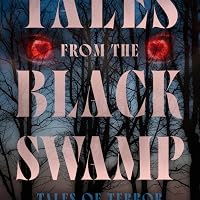
Found this book at a local charity shop which jumped out at me with that cover and the fact it was a Richard Laymon book. Having only read one (Amara) of his books I was in the mindset for another. Adding to this are my two previous reads (The Electric and Dead Shift). Funland would be opposite to these two. A fun pulp horror read.
Just by looking at the cover I assumed that it was a slasher type horror which involved a killer stalking and murdering teenagers. Don’t know why. It also appealed as I often visit seaside resorts (which started back in the 80’s) where you walk along the seafront and sit on the beach. Ok, there is no Funland or huge rides but there are small rides, arcades and crazy golf.
The story has the local teenagers battling against evil trolls with a couple of cops investigating and innocent bystanders getting involved. Laymon writes about all these characters in their own stories until they all come together for the violent and gory end.
Laymon is known for his sex and gore content but this one does not have as much as I was expecting. At 500 pages it is quite a long read but not once did I get bored. It is more a tale of the characters such as the teenagers who deal with issues of peer pressure, how to be cool and what’s right or wrong as they head to their encounter with the others in Funland.
Funland was first published in 1989 but it felt very much to me that it could be written today and set in the 80’s. That’s my 80’s nostalgia showing through.
My next read is a book published in 2018 and set in 1989. For my 80's nostalgia, Within the Woods.
The story takes us to a small town in which crime is getting out of control. The teenagers in town are accusing the homeless of taking their loved ones. The homeless people are afraid of being assaulted by the teenagers.
Seems like someone might be getting these two gangs against each other. In the middle of all this, we follow the police department as they try to get to the bottom of the disappearances and the violent acts against the homeless.
The setting on a small town by the sea with a Funpark that was nothing like Disneyland was a great atmospheric choice. Funland is tacky, dirty, small and full of freaks.
The book started slow and introduced too many characters at the same time. However I do love Laymon's writing and the story got better and better as all the pieces of the puzzle started to come together. The last 150 pages were a great payoff and we get the intense gore galore that we expect from his books.
After having mixed feelings at the beginning I am glad the book picked up the pace and delivered a great story about revenge, dangerous friendships and how quickly we judge each other.
3.5 Stars. Well written, but a fantastic setting ultimately can't save a slow burner that withholds its pleasures for the very end. Clearly a "Laymon-lite" title targeted at a slightly more juvenile audience than some of his other work, Laymon does a good job at juggling multiple story lines and bringing it all seamlessly together at the end. Unfortunately, his character interactions are awkward and tough to read. I found myself scanning and flipping through much of the book. When the grand finale does come, it's a bit too over the top and utterly unconvincing to be much more than a trip through a fun house, which I suspect will be enough for most readers. Had I read this as a teenager it would probably be a five star read; as an adult I prefer Laymon's more extreme visions.
This one was hard for me to get into. I had a hard time comprehending what was going on. It was about a group of kids and some goings on at a boardwalk funland. It was also a story about two police officers who patrol the funland. I didn't see how the two stories were connected until suddenly they were and the story got very good! I didn't see that twist coming at all. The violence was graphic and I was creeped out by it many times. Of course there was the whole teenaged hormone, breast obsessed boy thing going on too. Though this one wasn't a favorite of mine, it was a perfect start to summer read.
While this wasn't the page-turner I've come to expect from Laymon, it still had some decent scares. I felt like I was reading a Jack Ketchum book at times with the human vs human horror. I also thought the relationship building between characters was a bit too drawn out and bogged the story down. I was bothered at times as well by the portrayal of homeless people as there seemed to be some prejudice there that I couldn't get around. I'm kind of glad this wasn't my first Laymon book as it may have put me off him for awhile.
I love carnival horror. Funhouse started off strong with a great carnival atmosphere and well fleshed out characters. As the book progressed, I was expecting horror in Funland. The carnival aspect of the story was lacking. The majority of the story focused on the relationships among the characters and their struggles. The end of the book was great with a horror carnival ending that was hella fun.
I give this one a 4.25. Although it's slower paced than most of the author's other novels, I never lost interest and tore through the book in a couple of sittings. The final showdown in the funhouse is classic, action-packed Laymon.
I probably would have upped my rating on this one to a 5 if not for the laggier sections and an odd loose thread in the story that Laymon could have tied up with a single scene or even just a short paragraph. It wasn't anything major, and it didn't keep me from enjoying the story, but those kinds of loose threads nag at me (I'd say more but don't want to give away any of the plot). Still, it's a great read.
If you're a horror fan just stumbling onto Laymon, I'd suggest starting with In the Dark or Island before moving on to Funland, but if you're already addicted to Mr. Laymon's work, don't miss this one.
This was... fun? I did have a lot of fun, and it sure as hell was a quick book, let me tell you that. For 500 pages it went by like that . Definitely gross, and MEAN in points, just straight-up mean... but I had fun reading it. Is it good? No. Is it for everyone? No. Is it fun? Yeah. Yeah, I'd say so.
OK, 8 stars. Is one of the best Laymon books I've read and one of the longest now. So what's this about you ask.. Well, in this tale we are in a place where you've got beach, boardwalk and a funhouse - of all novels by Laymon this is the first time I see a beach and such. Strangely enough there is a lot of hobos laying around and the vast majority are quite odd , crazy or downright evil. One of the things that jump around is that there multiple POV whilst the vast majority of his works are only one or two. You've got two police officers (Dave & Joan), Robin a new-young hobo that lives to play the banjo & Young teen new to the town. This boy meets other teens that at a night go around trolling (trolling being evil stuff to the trolls - the trolls are hobos). If at first you think they are just bunch of kids doing evil stuff to pass the time but we get to learn that one of the girls were raped by hobos and they are now "avenging" this girl. Another girl is doing to search for his sister among other reasons.
As I've said, we also follow cops who patrol that place and the main focus of them is basically the romance subplot. While Robin is the figure you root for.
So how is this compared with other Laymon stuff? Well, first of all is not as gory and full of scarce as other books (woods are dark). You've got some gory parts but mostly in the last 50 pages. The remaining 400 is setting everything in place, is developing the characters, is fulfilling the romance and making teens horny and confused.
As all other Laymon takes you've got some sexy parts, and some sexy parts that make you feel naughty but all good. Rape (which exists in other novels) are mostly told about and not vividly (if you understand what I am trying to say). The purpose of a rape scene that exists (again, told about) is important to understand the hate one of the characters have and how she ensnares other people. You've got horny boys and some underage stuff (but again, nothing that jumps as dirty - or do you all thing young boys of 16 don't think of sex and porn and other stuff?) Of course , the vast majority of people who are reading are adults and they feel a bit strange reading BUT alas, that's the reader problem.
Someone wrote; "I've pretty much gotten used to Laymon's standard sex-obsessed male adolescent who ogles all the female characters and thinks nasty, inappropriate things about them in his mind. Doesn't matter if death is breathing down your neck or some monster is crawling up out of the floor, if there's any chance of getting laid, these male characters will never pass up an opportunity to cop a feel or make out. " is he wrong? Boys are like that and to be honest, so are girls. Or girls don't think about sex until they are 18? LOL that's not chauvinist. That's being dumb and worst, blind. Before someone jumps the gun, we are not talking about abusing or forcing someone. We are talking about thinking about sex.
Oh well, you've read one Laymon you read them all, in some instances, beautiful perfect girls. Horny teenagers and violence. What differentiate the novel is intensity or lack of it of one of these. Because you will have everything.
One thing I didn't enjoy, well, although I did enjoy the setup, I thought it was a bit too long. The other is the romance part. For Laymon there is no love, only urges and when he tries to write about love it feels flat. Both the cops, the boy and Shinner and the banjo player (plus another boy) all feel somekind of stuff akin to love But it's not. They are feeling desire and urges. One had a girlfriend that he almost hates and thank the lords another person appears so swaps with a new plaything (which in turn drops a pretender that she "cares" deeply). Other had a twisted girlfriend and swaps and at the same night already loves another girl (overnight) and the third doesn't understand love, although a girl loves him back (or does she?) and prefers to side with desire/lust over love.
Those things were a bit of turn off. I would have imagine having a more unique form of love, and one of the other , because characters are different but in the end they are all the same. That's why this book gets a 8 out of 10. BUT overall enjoyed.
I'd give it 3.5 stars Honestly really good. I've been really enjoying books and movies with fair and funhouse themes lately and it satisfied that for me the climax takes place inside a funhouse. It goes balls to the wall crazy at the end with a giant spider and a gun fight at that point im like "oh come on" but not in the way you think, i just really like the trolls(homeless bums that are crazy) jumping out from everywhere and attacking. I just think they could have done more with the spider, though I hate them so eh. It went out in a blase of glory in a gun fight so thats just fine. at points it seems like it was trying to make you feel bad for the homeless being attacked by the group of teens called trollers but then turns right around and make the trolls evil too. The trollers where just as bad, and I hated that I started to feel bad for them as they got picked off. Accept for Jeremy (Tanya too) god I hated him the whole book I feel bad for his mom. anyways the book has 4 people It's told through It sounds like It could get confusing but It doesn't they all tie into one another. Robin is a drifter that ran away from home and plays a banjo, Jeremy's the new kid in town trying to impress to get friends joins the trollers, Dave and Joan are cops and are partners. So it gives you all side of the story going on and I found that good. It has a pretty satisfying end all tied up in a bow. at least for me.hope this review isn't all jumbled up. feel kinda scatter brained today
Classic Laymon fun. Horny teenagers, evil hobos, sideshow freaks, sex, blood and gore. What's not to like...although one must be in a mood for it. I own the Onyx edition, but this cover art seems more appropriate. This one did somehow feel a bit different from Laymon's other books, maybe a bit more serious, though that doesn't seem like the right word for it. Great ending. 3.5 stars. Recommended.
The amusement park in Boleta Bay has a huge population of homeless beggars(trolls) who menace and intimidate locals and tourists alike. A group of vigilante teenagers calling themselves trollers decide to start scaring the trolls into leaving so they can have their town back. But when their pranks develop into murder, sinister things are going to happen especially in the old funhouse.
You really can understand the attitude of the trollers as these 'trolls' are vicious, offensive and violent, causing nothing but trouble. We're not talking about the harmless homeless man looking for spare change. These people are dangerous and nobody wants them around. However it is difficult to find anything to like about their leader Tanya, who uses her sex appeal to snare the boys into doing anything for her.
It is one of the slower and less enjoyable books, and not much is really going on for the first half of the book. It only livens up as Tanya becomes more deranged, and the big confrontation takes place inside the Funhouse. Now the Funhouse sequence I did enjoy, as I'm a bit twisted and I liked the rising death toll! And I did like the irony of the ending.
This was the first Richard Laymon novel I'd read after hearing about him for years. I was a little disappointed to be honest, but I also plan to read a few more of his novels to get a better sampling of his work.
Funland had an interesting premise, but the plot just seemed to meander. I think this book could have been edited down and been a better novel. The characters were interesting, but honestly didn't seem all that real to me. And the ending seemed to come out of nowhere. I don't like to put spoilers in my reviews, so I'll just say the ending didn't really fit in with what you'd expect. I understood what he was going for, but it just seemed out of place. Actually the entire storyline was disjointed.
Overall, it was creepy and it was interesting, but overall it feel a little flat to me. The characters seemed to act out-of-character too often, and they just weren't very believable.
I still gave it three stars because even with its flaws, I still enjoyed reading it. If you like quirky horror, give this one a shot. It's different if nothing else.
How did Laymon do it? In my opinion, this guy puts King and Koontz to shame as far as horror novelists go. Funland is a great starting point for Laymon newbies. It's scary as hell (especially that ending) and moves at a pace that very few authors can pull off. As much as I love stephen king, i really can't stand when he spends pages upon pages on the background of a single character. Laymon manages to get you hooked on his characters without having to break too long from the storyline. Funland is a perfect example. I was on edge wondering what was going to happen to each character as if I knew them personally. Love, love, love this book....love, love, love this author....
My least favorite Laymon read out of the three I've read thus far. I can usually overlook the criticisms people have of Laymon's work as long as the story is exciting or fun and zany.
Funland, however, just dragged on for far too long and contained too little action and excitement to feel that this read was worth it. I only liked one character out of many and had a hard time getting sucked into the story. There was some fun action and gore at the end, but, by that point, it was too little, too late for me.
I think others should still give this one a chance, if intrigued. I always advise picking up a book and judging for oneself.
Funland.... Yes!!! What a place to be as a kid, as a grown-up, as a wino! Funland was GREAT! Wish they would make a movie after this one, might be too "gruesome" but wicked! Friends, love, fears, attacks... what's worse... being stuck in a ferris wheel with winos or in the gravity (from Zombieland) with zombies! I just don't know.