

What do you think?

Tomorrow's Bread
From the author of the acclaimed The Dry Grass of August comes a richly researched yet lyrical Southern-set novel that explores the conflicts of gentrification—a moving story of loss, love, and resilience.
In 1961 Charlotte, North Carolina, the predominantly black neighborhood of Brooklyn is a bustling city within a city. Self-contained and vibrant, it has its own restaurants, schools, theaters, churches, and night clubs. There are shotgun shacks and poverty, along with well-maintained houses like the one Loraylee Hawkins shares with her young son, Hawk, her Uncle Ray, and her grandmother, Bibi. Loraylee’s love for Archibald Griffin, Hawk’s white father and manager of the cafeteria where she works, must be kept secret in the segregated South.
Loraylee has heard rumors that the city plans to bulldoze her neighborhood, claiming it’s dilapidated and dangerous. The government promises to provide new housing and relocate businesses. But locals like Pastor Ebenezer Polk, who’s facing the demolition of his church, know the value of Brooklyn does not lie in bricks and mortar. Generations have lived, loved, and died here, supporting and strengthening each other. Yet street by street, longtime residents are being forced out. And Loraylee, searching for a way to keep her family together, will form new alliances—and find an unexpected path that may yet lead her home.
In 1961 Charlotte, North Carolina, the predominantly black neighborhood of Brooklyn is a bustling city within a city. Self-contained and vibrant, it has its own restaurants, schools, theaters, churches, and night clubs. There are shotgun shacks and poverty, along with well-maintained houses like the one Loraylee Hawkins shares with her young son, Hawk, her Uncle Ray, and her grandmother, Bibi. Loraylee’s love for Archibald Griffin, Hawk’s white father and manager of the cafeteria where she works, must be kept secret in the segregated South.
Loraylee has heard rumors that the city plans to bulldoze her neighborhood, claiming it’s dilapidated and dangerous. The government promises to provide new housing and relocate businesses. But locals like Pastor Ebenezer Polk, who’s facing the demolition of his church, know the value of Brooklyn does not lie in bricks and mortar. Generations have lived, loved, and died here, supporting and strengthening each other. Yet street by street, longtime residents are being forced out. And Loraylee, searching for a way to keep her family together, will form new alliances—and find an unexpected path that may yet lead her home.
352 pages, Paperback
First published March 26, 2019
About the author
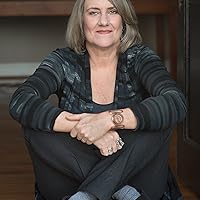
Anna Jean Mayhew
4 books403 followers Anna Jean "A. J." Mayhew’s first novel, The Dry Grass of August won the Sir Walter Raleigh Award for Fiction, was a finalist for the book award from the Southern Independent Booksellers Alliance, and has been translated into seven languages. She was a writer in residence for a month at Moulin à Nef Studio Center in Auvillar, France.
A. J.’s second novel, Tomorrow's Bread, is about the destruction of inner city neighborhoods in urban renewal programs that swept across the country, beginning in the 1950s and continuing today. As a native Charlottean, A. J. witnessed the demolition of the Brooklyn community in Second Ward, and her feelings about that travesty prompted the writing of Tomorrow's Bread. The novel was selected for the TRIO program, a traveling exhibit of art, music, and literature that celebrates the inspirational power of great storytelling.
A. J. lives with her Swiss-born husband and a French-speaking cat in Hillsborough, NC, where she's working on a third novel.
A. J.’s second novel, Tomorrow's Bread, is about the destruction of inner city neighborhoods in urban renewal programs that swept across the country, beginning in the 1950s and continuing today. As a native Charlottean, A. J. witnessed the demolition of the Brooklyn community in Second Ward, and her feelings about that travesty prompted the writing of Tomorrow's Bread. The novel was selected for the TRIO program, a traveling exhibit of art, music, and literature that celebrates the inspirational power of great storytelling.
A. J. lives with her Swiss-born husband and a French-speaking cat in Hillsborough, NC, where she's working on a third novel.
Ratings & Reviews
Friends & Following
Create a free account to discover what your friends think of this book!
Community Reviews
Displaying 1 - 30 of 266 reviews

May 8, 2022
Often there are many terms to describe the same thing: city revitalization, urban renewal, gentrification, facelifting. Often, too, the terms disguise what is actually meant: low income neighborhood demolition, slum clearance. Little thought is given to the destruction of a community, not just homes, but a social infrastructure of families and neighbors. In 1961 Charlotte, North Carolina, the predominantly black neighborhood of Brooklyn was declared a blight on the city. As rumors of this bulldozing circulated, the residents worried about where they would go and how they would manage. What they did know was their life was about to radically change. The history of their community would be lost.
Loraylee Hawkins, a young, black mother, is the main narrator. We see Brooklyn through her eyes. Her boss and father of her son is white. The laws against miscegenation require them to keep their loving relationship secret. Loraylee has many concerns: raising her son, dealing with her dissolving neighborhood support system, holding her extended family together, keeping her relationship private. She is no saint, no miracle worker, just an ordinary woman dealing with her problems as best she can. The author does a wonderful job of portraying the characters in a realistic and unsentimental fashion. I felt for these people who were facing the unknown during a time of segregation and discrimination. I also could relate to those who were white and caring but had little power to change the insufferable laws in the South.
I am very fortunate to live in the same town as Anna Jean Mayhew, a town that is home to many esteemed writers and painters. There must be something in the N.C. air! Although Ms. Mayhew does not reside in Charlotte now, it is the city she grew up in. She has recollections of this city renewal. Her background and meticulous research resulted in a book that made me think, made me care, made me want to read The Dry Grass of August, also by Mayhew.
Loraylee Hawkins, a young, black mother, is the main narrator. We see Brooklyn through her eyes. Her boss and father of her son is white. The laws against miscegenation require them to keep their loving relationship secret. Loraylee has many concerns: raising her son, dealing with her dissolving neighborhood support system, holding her extended family together, keeping her relationship private. She is no saint, no miracle worker, just an ordinary woman dealing with her problems as best she can. The author does a wonderful job of portraying the characters in a realistic and unsentimental fashion. I felt for these people who were facing the unknown during a time of segregation and discrimination. I also could relate to those who were white and caring but had little power to change the insufferable laws in the South.
I am very fortunate to live in the same town as Anna Jean Mayhew, a town that is home to many esteemed writers and painters. There must be something in the N.C. air! Although Ms. Mayhew does not reside in Charlotte now, it is the city she grew up in. She has recollections of this city renewal. Her background and meticulous research resulted in a book that made me think, made me care, made me want to read The Dry Grass of August, also by Mayhew.

July 2, 2019
EXCERPT: 'Misery is when you heard on the radio that the neighbourhood you live in is a slum, but you always thought it was home.' - Langston Hughes
Home will never again be 1105 Brown Street, Charlotte 2, North Carolina, where I was born in 1936, where Shushu left me when she went to Chicago, and where Bibi and Uncle Ray brought me up from a baby to the mother I am now. I'm glad Bibi never saw the day when the city say we got to move. She bought and paid for our home working forty years as a maid, but that came to nothing when the city say Brooklyn is blight. That which withers our hopes.
ABOUT THIS BOOK: In 1961 Charlotte, North Carolina, the predominantly black neighborhood of Brooklyn is a bustling city within a city. Self-contained and vibrant, it has its own restaurants, schools, theaters, churches, and night clubs. There are shotgun shacks and poverty, along with well-maintained houses like the one Loraylee Hawkins shares with her young son, Hawk, her Uncle Ray, and her grandmother, Bibi. Loraylee’s love for Archibald Griffin, Hawk’s white father and manager of the cafeteria where she works, must be kept secret in the segregated South.
Loraylee has heard rumors that the city plans to bulldoze her neighborhood, claiming it’s dilapidated and dangerous. The government promises to provide new housing and relocate businesses. But locals like Pastor Ebenezer Polk, who’s facing the demolition of his church, know the value of Brooklyn does not lie in bricks and mortar. Generations have lived, loved, and died here, supporting and strengthening each other. Yet street by street, longtime residents are being forced out. And Loraylee, searching for a way to keep her family together, will form new alliances—and find an unexpected path that may yet lead her home.
MY THOUGHTS: I love historical fiction set in America's south, and I loved this author's previous book, The Dry Grass of August, but for some reason this one just failed to entrance me. It's not a bad book, I enjoyed it, but I didn't feel the magic that I felt with The Dry Grass of August and I mostly failed to connect with the characters, although I could definitely sympathise with them.
The story is told by the voices of three characters - Loraylee, Pastor Ebenezer Polk, and the wife of the man pushing to have this area demolished and redeveloped. I had heard of these things happening, but had never really thought through the implications or impact on those who were being relocated. It opened my eyes.
***.5
THE AUTHOR: Anna Jean (A.J.) Mayhew’s first novel, The Dry Grass of August, won the Sir Walter Raleigh Award for Fiction, and was a finalist for the Book Award from the Southern Independent Booksellers Alliance. She has been writer-in-residence at Moulin à Nef Studio Center in Auvillar, France, and was a member of the first Board of Trustees of the North Carolina Writers' Network. A native of Charlotte, NC, A.J. has never lived outside the state, although she often travels to Europe with her Swiss-born husband. Her work reflects her vivid memories of growing up in the segregated South. A.J.—a mother and grandmother—now lives in a small town in the North Carolina Piedmont with her husband and their French-speaking cat.
DISCLOSURE: Thank you to Kensington Books via Netgalley for providing a digital ARC of Tomorrow's Bread by Anna Jean Mayhew for review. All opinions expressed in this review are my own personal opinions.
Please refer to my Goodreads.com profile page or the 'about' page on sandysbookaday.wordpress.com for an explanation of my rating system.
This review and others are also published on my webpage sandysbookaday.wordpress.com
Home will never again be 1105 Brown Street, Charlotte 2, North Carolina, where I was born in 1936, where Shushu left me when she went to Chicago, and where Bibi and Uncle Ray brought me up from a baby to the mother I am now. I'm glad Bibi never saw the day when the city say we got to move. She bought and paid for our home working forty years as a maid, but that came to nothing when the city say Brooklyn is blight. That which withers our hopes.
ABOUT THIS BOOK: In 1961 Charlotte, North Carolina, the predominantly black neighborhood of Brooklyn is a bustling city within a city. Self-contained and vibrant, it has its own restaurants, schools, theaters, churches, and night clubs. There are shotgun shacks and poverty, along with well-maintained houses like the one Loraylee Hawkins shares with her young son, Hawk, her Uncle Ray, and her grandmother, Bibi. Loraylee’s love for Archibald Griffin, Hawk’s white father and manager of the cafeteria where she works, must be kept secret in the segregated South.
Loraylee has heard rumors that the city plans to bulldoze her neighborhood, claiming it’s dilapidated and dangerous. The government promises to provide new housing and relocate businesses. But locals like Pastor Ebenezer Polk, who’s facing the demolition of his church, know the value of Brooklyn does not lie in bricks and mortar. Generations have lived, loved, and died here, supporting and strengthening each other. Yet street by street, longtime residents are being forced out. And Loraylee, searching for a way to keep her family together, will form new alliances—and find an unexpected path that may yet lead her home.
MY THOUGHTS: I love historical fiction set in America's south, and I loved this author's previous book, The Dry Grass of August, but for some reason this one just failed to entrance me. It's not a bad book, I enjoyed it, but I didn't feel the magic that I felt with The Dry Grass of August and I mostly failed to connect with the characters, although I could definitely sympathise with them.
The story is told by the voices of three characters - Loraylee, Pastor Ebenezer Polk, and the wife of the man pushing to have this area demolished and redeveloped. I had heard of these things happening, but had never really thought through the implications or impact on those who were being relocated. It opened my eyes.
***.5
THE AUTHOR: Anna Jean (A.J.) Mayhew’s first novel, The Dry Grass of August, won the Sir Walter Raleigh Award for Fiction, and was a finalist for the Book Award from the Southern Independent Booksellers Alliance. She has been writer-in-residence at Moulin à Nef Studio Center in Auvillar, France, and was a member of the first Board of Trustees of the North Carolina Writers' Network. A native of Charlotte, NC, A.J. has never lived outside the state, although she often travels to Europe with her Swiss-born husband. Her work reflects her vivid memories of growing up in the segregated South. A.J.—a mother and grandmother—now lives in a small town in the North Carolina Piedmont with her husband and their French-speaking cat.
DISCLOSURE: Thank you to Kensington Books via Netgalley for providing a digital ARC of Tomorrow's Bread by Anna Jean Mayhew for review. All opinions expressed in this review are my own personal opinions.
Please refer to my Goodreads.com profile page or the 'about' page on sandysbookaday.wordpress.com for an explanation of my rating system.
This review and others are also published on my webpage sandysbookaday.wordpress.com
October 2, 2018
In the 1960s, under the guise of a program called "urban renewal," the nation bulldozed hundreds of black neighborhoods, destroying communities and undermining hard-won racial progress.
Anna Jean Mayhew sets her page-turning novel in one of these now-lost communities, the Brooklyn neighborhood of Charlotte, as its residents await its destruction.
Mayhew tells the story through three characters. Two are Brooklyn residents – a pastor about to lose his church and a young mother who must hide her relationship with her white boss. The third is a white woman who senses the sin her city is perpetrating, though her husband is championing Brooklyn's destruction in the name of progress. As a Charlotte area resident, I love how Mayhew has reincarnated long-gone Brooklyn. This is a moving, vivid story – historical fiction that's both instructive and entertaining.
Anna Jean Mayhew sets her page-turning novel in one of these now-lost communities, the Brooklyn neighborhood of Charlotte, as its residents await its destruction.
Mayhew tells the story through three characters. Two are Brooklyn residents – a pastor about to lose his church and a young mother who must hide her relationship with her white boss. The third is a white woman who senses the sin her city is perpetrating, though her husband is championing Brooklyn's destruction in the name of progress. As a Charlotte area resident, I love how Mayhew has reincarnated long-gone Brooklyn. This is a moving, vivid story – historical fiction that's both instructive and entertaining.

April 3, 2019
There's not much by way of plot in this book, despite the fact the main characters are facing the biggest change of their lives. There's this feeling though, that things are building within subplots, only to kind of fizzle out. The graveyard "mystery" doesn't ever feel "solved," while the relationship between Loraylee and Archie is drastically altered without us going thru the change with them. And what was the point of the marital tension and distance between the white couple that never built to anything? I appreciated the insights and research into the dramatic impacts of gentrification, but this one failed for me as a story or as a character development piece.

December 30, 2018
In the early 60s, many large cities started a plan called urban renewal - it was a way to make space for the new large buildings that they planned in the future. In many places, urban renewal meant displacement of the people who lived in the neighborhoods that were being destroyed to make way for the future. Tomorrow's Bread is about urban renewal in Charlotte, NC, where an entire area was wiped out called Brooklyn. The residents of Brooklyn were mostly black and poor but they had a community of friends and a pride in their area that had existed there since the end of the civil war.
This story is told from three viewpoints - Loraylee who lives in a home with her mother, her uncle and her son. She is in love with the white manager of the cafeteria she works at and he is the father of her son - something that had to stay secret during this time. Pastor Ebenezer Polk is the leader of a church that will be demolished with a graveyard that must be moved. There is also a white viewpoint from the wife of one of the men on the planning board who are in charge of the demolition of Brooklyn. She feels the wrongness but knows that there is little she can do. With these three divergent voices, we learn about how urban renewal will affect the families of the people who have lived in Brooklyn for generations. I especially enjoyed the life journey that Loraylee was on. She worked full time, took care of her son and her senile mother but still tried to do the best she could for her neighbors and friends. She knew that leaving Brooklyn would be difficult because generations had lived there and supported each other through the years.
This was a well-written, well-researched novel about a little known area of Charlotte, NC in the 1960s. After I finished the book, I wanted more information about it and found several interesting articles. I love it when I enjoy a book and also learn about a part of history that I had no idea happened. This is one of those books - you will love these characters and ache with them as they leave their old lives behind and work to create new lives in areas very different from the life they've always known.
Thanks to the publisher for a copy of this book to read and review. All opinions are my own.
This story is told from three viewpoints - Loraylee who lives in a home with her mother, her uncle and her son. She is in love with the white manager of the cafeteria she works at and he is the father of her son - something that had to stay secret during this time. Pastor Ebenezer Polk is the leader of a church that will be demolished with a graveyard that must be moved. There is also a white viewpoint from the wife of one of the men on the planning board who are in charge of the demolition of Brooklyn. She feels the wrongness but knows that there is little she can do. With these three divergent voices, we learn about how urban renewal will affect the families of the people who have lived in Brooklyn for generations. I especially enjoyed the life journey that Loraylee was on. She worked full time, took care of her son and her senile mother but still tried to do the best she could for her neighbors and friends. She knew that leaving Brooklyn would be difficult because generations had lived there and supported each other through the years.
This was a well-written, well-researched novel about a little known area of Charlotte, NC in the 1960s. After I finished the book, I wanted more information about it and found several interesting articles. I love it when I enjoy a book and also learn about a part of history that I had no idea happened. This is one of those books - you will love these characters and ache with them as they leave their old lives behind and work to create new lives in areas very different from the life they've always known.
Thanks to the publisher for a copy of this book to read and review. All opinions are my own.

March 26, 2019
Anna Jean Mayhew's latest novel, TOMORROW'S BREAD, is a work of southern fiction that pulls quietly, persistently at the heart. The story's time is 1961, the setting an almost all black community nestled within the greater city of Charlotte, North Carolina, known as Brooklyn, a self-sufficient, thriving, close knit neighborhood where families have lived for generations.
Times are changing, progress is on the march and with it comes the idea that Brooklyn is not good for Charlotte. "Blight" is the word used to describe the area, yet for those who only know it as home, it is their safe haven. Houses are to be torn down, residents moved from the only place they've ever lived, and their sense of unity, belonging, is sure to be broken. It is shocking, what will they do? Where will they go? Mayhew perfectly captures the essence of how this must seem to the inhabitants with this quote at the beginning of one of her chapters. It is from Langston Hughes who said, "Misery is when you heard on the radio that the neighborhood you live in is a slum, but you always thought it was home."
From the very first page, I was eager to spend time with Loraylee Hawkins, her young, bi-racial son, Hawk, her grandmother, Bibi, and Uncle Ray, the pastor Eben Polk, and all the rest, because they were realistic, and became characters I cared about. Mayhew has given us a wonderful, original account of a time that reminded me of another place similar to Brooklyn, the small community known as Soul City in Warren County NC. Mayhew's TOMORROWS' BREAD is a story that is pertinent even today, a distinctive work at once engaging and provocative.
Times are changing, progress is on the march and with it comes the idea that Brooklyn is not good for Charlotte. "Blight" is the word used to describe the area, yet for those who only know it as home, it is their safe haven. Houses are to be torn down, residents moved from the only place they've ever lived, and their sense of unity, belonging, is sure to be broken. It is shocking, what will they do? Where will they go? Mayhew perfectly captures the essence of how this must seem to the inhabitants with this quote at the beginning of one of her chapters. It is from Langston Hughes who said, "Misery is when you heard on the radio that the neighborhood you live in is a slum, but you always thought it was home."
From the very first page, I was eager to spend time with Loraylee Hawkins, her young, bi-racial son, Hawk, her grandmother, Bibi, and Uncle Ray, the pastor Eben Polk, and all the rest, because they were realistic, and became characters I cared about. Mayhew has given us a wonderful, original account of a time that reminded me of another place similar to Brooklyn, the small community known as Soul City in Warren County NC. Mayhew's TOMORROWS' BREAD is a story that is pertinent even today, a distinctive work at once engaging and provocative.

May 16, 2019
I had never heard about Brooklyn an area of Charlotte, North Carolina before reading this book. I was shocked that this event occurred in the 1960s. After reading this story, I read some more online to learn about this tragedy. https://www.charlotteobserver.com/new... is an article with comments from some of the actual citizens who were affected by this event.
In the 1960s calling it urban renewal, the city councillors in Charlotte, North Carolina, bulldozed a vibrant black neighborhood. It had its own churches, cemeteries, stores and businesses that were thriving, but they managed to destroy this community and scatter its residents around Charlotte. The story is told from the POV of three characters. Two are Brooklyn residents – a pastor about to lose his church and have his cemetery moved, and a young, single mother who must hide her relationship with her white boss. The third is a white woman who senses that this is wrong, even though her husband is championing Brooklyn's destruction in the name of progress. Through research done on the cemetery, there is information about slavery, and other incidents that African Americans had to deal with. This is a moving, story that evoked emotions of sadness, anger and helplessness. It is historical fiction that's both informative and entertaining. I love Anne Jean Mayhew's writing. Her prose is wonderful, the story well-paced and kept me reading long into the night. The publisher generously provided me with a copy of this book upon my request. The rating, ideas and opinions shared are my own.
In the 1960s calling it urban renewal, the city councillors in Charlotte, North Carolina, bulldozed a vibrant black neighborhood. It had its own churches, cemeteries, stores and businesses that were thriving, but they managed to destroy this community and scatter its residents around Charlotte. The story is told from the POV of three characters. Two are Brooklyn residents – a pastor about to lose his church and have his cemetery moved, and a young, single mother who must hide her relationship with her white boss. The third is a white woman who senses that this is wrong, even though her husband is championing Brooklyn's destruction in the name of progress. Through research done on the cemetery, there is information about slavery, and other incidents that African Americans had to deal with. This is a moving, story that evoked emotions of sadness, anger and helplessness. It is historical fiction that's both informative and entertaining. I love Anne Jean Mayhew's writing. Her prose is wonderful, the story well-paced and kept me reading long into the night. The publisher generously provided me with a copy of this book upon my request. The rating, ideas and opinions shared are my own.

December 8, 2018
The Langston Hughes poems at the beginning of the book and at the end say it all about this beautiful, touching book.
"Misery is when you heard on the radio that the neighborhood you live in is a slum but you always thought it was home." Langston Hughes
"Misery is when you heard on the radio that the neighborhood you live in is a slum but you always thought it was home." Langston Hughes
June 16, 2019
While the historical facts in the book were interesting I did not find the characters someone I wanted to invest time with. The author did not "flesh out" the characters in a manner that made me want to know more about them or their plight. The book seemed disjointed to me as it skipped from one point of view to another in succeeding chapters. I thought the book had promise but did not deliver a strong enough storyline to succeed.
In 1961 Charlotte, North Carolina, the predominantly black neighborhood of Brooklyn is a bustling city within a city. Self-contained and vibrant, it has its own restaurants, schools, theaters, churches, and night clubs. There are shotgun shacks and poverty, along with well-maintained houses like the one Loraylee Hawkins shares with her young son, Hawk, her Uncle Ray, and her grandmother, Bibi. Loraylee’s love for Archibald Griffin, Hawk’s white father and manager of the cafeteria where she works, must be kept secret in the segregated South.
Loraylee has heard rumors that the city plans to bulldoze her neighborhood, claiming it’s dilapidated and dangerous. The government promises to provide new housing and relocate businesses. But locals like Pastor Ebenezer Polk, who’s facing the demolition of his church, know the value of Brooklyn does not lie in bricks and mortar. Generations have lived, loved, and died here, supporting and strengthening each other. Yet street by street, longtime residents are being forced out. And Loraylee, searching for a way to keep her family together, will form new alliances—and find an unexpected path that may yet lead her home.
In 1961 Charlotte, North Carolina, the predominantly black neighborhood of Brooklyn is a bustling city within a city. Self-contained and vibrant, it has its own restaurants, schools, theaters, churches, and night clubs. There are shotgun shacks and poverty, along with well-maintained houses like the one Loraylee Hawkins shares with her young son, Hawk, her Uncle Ray, and her grandmother, Bibi. Loraylee’s love for Archibald Griffin, Hawk’s white father and manager of the cafeteria where she works, must be kept secret in the segregated South.
Loraylee has heard rumors that the city plans to bulldoze her neighborhood, claiming it’s dilapidated and dangerous. The government promises to provide new housing and relocate businesses. But locals like Pastor Ebenezer Polk, who’s facing the demolition of his church, know the value of Brooklyn does not lie in bricks and mortar. Generations have lived, loved, and died here, supporting and strengthening each other. Yet street by street, longtime residents are being forced out. And Loraylee, searching for a way to keep her family together, will form new alliances—and find an unexpected path that may yet lead her home.
May 20, 2019
In 1961, a mostly African American neighborhood is slated for demolition in the guise of urban development and progress. Though the residents come together to try and stop it, the dye is set. Loraylee Hawkins is a young woman who is caught between two worlds at a time of change, as she raises her son, Hawk, and cares for her aging Grandmother. She finds love, but that too is not an easy path because she is black, and he is white.
This is an amazing story. It made me laugh and cry. If I could give it 10 stars, I would. It ranks right up there with "The Hate U Give" by Angie Thomas. It is that good. If you read it, it will bless you.

April 12, 2019
This was a wonderful family story, if sad in ways, but this family truly shows you what it means to be a family.
The gentrification of “blight” in Charleston but the people living in those houses didn’t think of them as blight they were home and neighborhood.
“Misery is when you heard on the radio that the neighborhood you live in is a slum, but you’ve always thought it was home.”
---Langston Hughes
The city and some businessmen shoved these people out of their homes without giving them enough to buy new or a new neighborhood because this the 60’s in the south so the options for these folks was limited.
Loraylee is a strong woman and mother to her son Hawk , don’t want to spoil the story so just enjoy how her story unfolds.
There is a side story which unfortunately wasn’t fleshed out as much as I had hoped I’d like to see more of Percy.
One other little qualm is I wish the time jumps had been marked with even a date it was a little jarring at times.
This is southern fiction at its finest.
Allyson Johnson’s narration is fabulous everyone has their voice and her accents were great. I would highly recommend this book on audio because Johnson brings these characters to life!
4 Stars
The gentrification of “blight” in Charleston but the people living in those houses didn’t think of them as blight they were home and neighborhood.
“Misery is when you heard on the radio that the neighborhood you live in is a slum, but you’ve always thought it was home.”
---Langston Hughes
The city and some businessmen shoved these people out of their homes without giving them enough to buy new or a new neighborhood because this the 60’s in the south so the options for these folks was limited.
Loraylee is a strong woman and mother to her son Hawk , don’t want to spoil the story so just enjoy how her story unfolds.
There is a side story which unfortunately wasn’t fleshed out as much as I had hoped I’d like to see more of Percy.
One other little qualm is I wish the time jumps had been marked with even a date it was a little jarring at times.
This is southern fiction at its finest.
Allyson Johnson’s narration is fabulous everyone has their voice and her accents were great. I would highly recommend this book on audio because Johnson brings these characters to life!
4 Stars

May 11, 2019
Urban redevelopment to eradicate blight sounds like a great idea unless you're a person of color living in 1960s North Carolina, and your neighborhood, your church and your cemetery are slated to be obliterated.
Anna Jean Mayhew has a charming writing style that doesn't preach, but she certainly gets across her points about the inequities facing blacks in the South. The story is told from three viewpoints, including that of a sympathetic, but essentially ineffectual, white woman.
I've got to stop writing now because I just put my preaching hat on. If I don't shut up now, ya'll gonna get an earful about gentrification and racial injustice.
Anna Jean Mayhew has a charming writing style that doesn't preach, but she certainly gets across her points about the inequities facing blacks in the South. The story is told from three viewpoints, including that of a sympathetic, but essentially ineffectual, white woman.
I've got to stop writing now because I just put my preaching hat on. If I don't shut up now, ya'll gonna get an earful about gentrification and racial injustice.

April 18, 2019
The time lapses were not clear at all, the viewpoints were told in third person and first person, all of which made it hard to follow. I read the whole thing because I did like the characters, but they didn't grow a ton and it all just kind of ended. I liked the premise and think the book easily could have been set today rather than the 1950s (sad if you think about it), but it was not my favorite.

April 1, 2019
I really struggled to get into this one. While I appreciate the multiple points of view, I feel as if the narrative jumped around. I also feel as if more character development could have been done. I'm disappointed that I could not relate to the high ratings may others have given this one.
*I received an advanced copy of this book in a Goodreads Giveaway.
*I received an advanced copy of this book in a Goodreads Giveaway.

January 7, 2023
As a native Charlottean, I really enjoyed reading a novel set in my hometown from a time before I was born. I drive by the Brooklyn Village area regularly after working uptown and I've always wanted to know more about the history of the neighborhood. It's fascinating to see how much the city has changed over the last 65 years but also upsetting that the city was fine wiping out an entire community. I'm glad the current Brooklyn Village revitalization project has started and I can't wait to see what they do over the next few years to honor that neighborhood.
May 14, 2026
3.5🌟
Great story. The fact that it was based on Charlotte NC and the gentrification of a neighborhood called Brooklyn is what drew me to it. There was also a romance thrown in. I enjoyed it!
Great story. The fact that it was based on Charlotte NC and the gentrification of a neighborhood called Brooklyn is what drew me to it. There was also a romance thrown in. I enjoyed it!
March 26, 2019
"Misery is when you heard on the radio that the neighborhood you live in is a slum but you always thought it was home." -Langston Hughes
"Home will never again be Brown Street, Charlotte 2, North Carolina, where I was born in 1936 . . . where Bibi and Uncle Ray brought me up from a baby to the mother I am now. I'm glad Bibi never saw the day when the city say we got to move. She bought and paid for our home working forty years as a maid . . . ."
As I read this novel, I became more and more confused trying to identify all the characters. I actually had to go back to the beginning and take notes, separating one character from the other! There are three narrative voices in this book; one is first person: Loraylee; and the other two are third person: Reverend Ebenezer Polk and Persy Marshall. As an African-American, Loraylee Hawkins shares a well-kept house with her son, her uncle, and her grandmother in the segregated south. She lives a fairly happy and secure life, working at the S&W Cafeteria, but she has a secret which she isn't about to tell anyone. There is a rumor in the wind that the city plans to bull-doze her neighborhood, Brooklyn, North Carolina, to get rid of the "blight" which is the "238 acres surrounding the courthouse." The government desires to build new homes and businesses so the African-Americans will have to relocate. Persy Marshall is disturbed that her lawyer-husband is so involved in the Brooklyn Redevelopment Commission, and Rev. Eben Polk worries about his church congregation and the graveyard that will be removed. As you can see, you will read a number of reactions, positive and negative, to the changes which are planned. I felt the novel,"Tomorrow's Bread" could have been clearer and less convoluted. I received an advance copy of this book from Goodreads and I am grateful.
"Home will never again be Brown Street, Charlotte 2, North Carolina, where I was born in 1936 . . . where Bibi and Uncle Ray brought me up from a baby to the mother I am now. I'm glad Bibi never saw the day when the city say we got to move. She bought and paid for our home working forty years as a maid . . . ."
As I read this novel, I became more and more confused trying to identify all the characters. I actually had to go back to the beginning and take notes, separating one character from the other! There are three narrative voices in this book; one is first person: Loraylee; and the other two are third person: Reverend Ebenezer Polk and Persy Marshall. As an African-American, Loraylee Hawkins shares a well-kept house with her son, her uncle, and her grandmother in the segregated south. She lives a fairly happy and secure life, working at the S&W Cafeteria, but she has a secret which she isn't about to tell anyone. There is a rumor in the wind that the city plans to bull-doze her neighborhood, Brooklyn, North Carolina, to get rid of the "blight" which is the "238 acres surrounding the courthouse." The government desires to build new homes and businesses so the African-Americans will have to relocate. Persy Marshall is disturbed that her lawyer-husband is so involved in the Brooklyn Redevelopment Commission, and Rev. Eben Polk worries about his church congregation and the graveyard that will be removed. As you can see, you will read a number of reactions, positive and negative, to the changes which are planned. I felt the novel,"Tomorrow's Bread" could have been clearer and less convoluted. I received an advance copy of this book from Goodreads and I am grateful.

May 24, 2019
I enjoyed this book, it was a quick easy read, and easy to follow. It truly paints a picture of what it was like to live in the South in the 60s. It is told from three different perspectives, Loraylee, Persy, and Reverend Polk. I enjoyed all of the characters different stories, but in the end it felt as though they didn't quite come together. I felt as though something was missing, or left out. I would have liked to learn more about Persy, and what became of her.
All in all, the book is very beautifully written, and a good read. There were several times during the book I found myself crying, so it was a little sad for me as well.
All in all, the book is very beautifully written, and a good read. There were several times during the book I found myself crying, so it was a little sad for me as well.

June 24, 2019
This novel does a beautiful job of exploring racial issues during a time of change in America's history. It's really a story about belonging, not belonging, and obstacles to forming relationships. What I love most is the close focus Mayhew uses to fully put us in the shoes of each character. You feel Loraylee's nervousness when she applies for a job at the cafeteria. You feel Persy's conflicted feelings over her husband's project of urban renewal. He feels that he is "fixing" a problem. You really get to know Uncle Ray, Bibi, and Eben as they move through their lives at home in Brooklyn. You feel their sense of belonging in this vibrant, caring community. While the book is a cohesive story, it almost feels like a collection of short stories that tie together in the same way that families who live in a neighborhood all belong, but each have their own story to tell. Mayhew presents a realistic view of life in Brooklyn without getting bogged down in stereotypes: Yes, many of the children have only one parent or a parent in jail, but also Uncle Ray is active on the PTA and has no previous criminal history. Yes, Oscar has made bad decisions, but Eben is educated and a strong supportive figure in the community. Georgeanne is a lawyer. Roberta and Jonny run successful businesses. I see a real snapshot of a community. The realistic setting is preserved as characters ultimately accept the impending destruction of their neighborhood. The takeaway message is that life does really suck sometimes--bad things happen, people die--but life goes on and sometimes we just have to do our best to create good things: we hold on to dear friends, we plant new honeysuckle, we learn new ways of existing.

May 19, 2019
The premise of this book is an interesting and heartbreaking one, especially as Mayhew describes Brooklyn and what it means to the people who live there. Seen through the eyes of Loraylee and Reverend Polk, the community comes alive for the reader in all its variety, both good and bad. I enjoyed getting to know Brooklyn's residents and felt like I knew them. The inclusion of Persy as a narrator threw me a little as her sections seemed out of place in the novel. Overall, the pieces of the book's plot didn't quite come together for me into one unifying, satisfying whole but all in all, I liked this one. Didn't love it, but liked it well enough. I'd give it a B-.

Want to Read
April 5, 2019Being from the deep South, I've read so many books about race and segregation that they blend together at some point. While Tomorrow's Bread is compelling and beautifully written, it's really not anything new. It's a good story that's informative for anyone wanting to learn more about the subject. Thanks to NetGalley for an arc in exchange for an honest review.

January 7, 2019
For me, this book was just okay. The story is told in multiple voices. I didn't think it flowed well. Also, I didn't "feel" the characters.
I received an advance copy of this book in a Goodreads giveaway.
I received an advance copy of this book in a Goodreads giveaway.

May 11, 2019
I received this book from a Goodreads giveaway. I was honestly very bored with this. The writing was good and descriptive but the story jumped around too much for me and it took a long time for it to get into anything. It was hard to really stay invested in this one.

December 17, 2018
Great book

January 19, 2021
I like Ms. Mayhew's characters, who are interesting and empathetic. She definitely develops interesting stories and I loved the historical context. When the city of Charlotte decides that a city area which consists of poor black constituents could be better utilized as business and shopping area, this black community has to figure out a new life for themselves away from their community, their jobs and their spiritual center. They are challenged in many ways as their future becomes uncertain.
The main character is Loraylee Hawkins and her family, which includes her illegitimate mixed race son, Hawk, who favors his father, Loraylee's boss, Mr. Griffin. This dynamic was really interesting and sad, living in 1960, Charlotte, NC, means that they can't marry or even interact in public due to the still popular racist views held by the citizens. Also featured is a nearby church pastor, Pastor Ebenezer Polk, who deals with his church being razed and the cemetery where his deceased wife is interned. Other neighbors face challenges of finding nearby housing and transportation to their places of employment since city bus access is limited and few have the finances to afford a vehicle.
The story plotlines were strong and intriguing and would have easily earned four stars for me but I had some issues with how Ms. Mayhew delivered her story. My biggest disappointment is the various perceptions and representations of the pastor, Eben Polk, a man that would put most people at ease. However, his Christianity certainly isn't based on the Bible. There were multiple erroneous views that Ms. Mayhew assigned him. One of the key premises is that once a Christian accepts the gift of salvation, we are assured that we will go to heaven. Not so, in Eben's view. He considers his wife to be a ghost and refers to her that way and there is also a mention of reincarnation, a Hindu belief.
There were in total 5 key Christian doctrines that were miscommunicated within the story and that is appalling. What really bothers me is that the pastor still could have had a powerful presence without these errors. If Ms. Mayhew took the time to do research on the history of Charlotte, why didn't she dedicate the same commitment to Christianity? Is she corrupting the black church and portraying it as a different form of faith? I am not sure, I have been a member of two nearly all African American membership churches in FL and I did not see such errors in the teachings. I will mention that Pastor Eben is grieving his lost wife and there is mention of him questioning his faith but it wasn't in context to these errors. It was more to do with being world weary.
This is my third book by Mayhew, I really preferred the other two much more in their telling. I will most likely pick up her next story hoping that she will resolve to more accurately tell us a story worthy of our time.
The main character is Loraylee Hawkins and her family, which includes her illegitimate mixed race son, Hawk, who favors his father, Loraylee's boss, Mr. Griffin. This dynamic was really interesting and sad, living in 1960, Charlotte, NC, means that they can't marry or even interact in public due to the still popular racist views held by the citizens. Also featured is a nearby church pastor, Pastor Ebenezer Polk, who deals with his church being razed and the cemetery where his deceased wife is interned. Other neighbors face challenges of finding nearby housing and transportation to their places of employment since city bus access is limited and few have the finances to afford a vehicle.
The story plotlines were strong and intriguing and would have easily earned four stars for me but I had some issues with how Ms. Mayhew delivered her story. My biggest disappointment is the various perceptions and representations of the pastor, Eben Polk, a man that would put most people at ease. However, his Christianity certainly isn't based on the Bible. There were multiple erroneous views that Ms. Mayhew assigned him. One of the key premises is that once a Christian accepts the gift of salvation, we are assured that we will go to heaven. Not so, in Eben's view. He considers his wife to be a ghost and refers to her that way and there is also a mention of reincarnation, a Hindu belief.
There were in total 5 key Christian doctrines that were miscommunicated within the story and that is appalling. What really bothers me is that the pastor still could have had a powerful presence without these errors. If Ms. Mayhew took the time to do research on the history of Charlotte, why didn't she dedicate the same commitment to Christianity? Is she corrupting the black church and portraying it as a different form of faith? I am not sure, I have been a member of two nearly all African American membership churches in FL and I did not see such errors in the teachings. I will mention that Pastor Eben is grieving his lost wife and there is mention of him questioning his faith but it wasn't in context to these errors. It was more to do with being world weary.
This is my third book by Mayhew, I really preferred the other two much more in their telling. I will most likely pick up her next story hoping that she will resolve to more accurately tell us a story worthy of our time.

March 12, 2022
Down in the gully Little Sugar whispers, sliding through the night like a ghost.
In 1961, the Black neighborhood of Brooklyn in Charlotte is a thriving community boasting two schools, numerous churches, and several businesses that serve both Black and white members of the community. But, suddenly, rumors start flying that the City of Charlotte plans to bulldoze the community to make more room for city offices, leaving residents in a panic. Loraylee Hawkins has lived in Brooklyn her entire life with her grandmother and great-uncle, and it is where she is raising her son. Now, she faces the frightening prospect of losing the only home she has ever known. Pastor Ebenezer Polk tries to save his church and cemetery from demolition. Everyone is searching for a new place to call home.
I had this book on my TBR list for awhile and picked it up now as part of a Community Read. This is one of those where I learned a lot from the book and appreciate that the author is sharing the story. I didn't know anything about Brooklyn prior to reading this book and it was a very enlightening look at the city of Charlotte during the beginnings of the Civil Rights movement. I appreciated the maps and author's note that helped me orient myself between historic and contemporary Charlotte.
Unfortunately, all this history was not packaged in a compelling story. Though I enjoyed the characters, I felt like the book was lacking a cohesive narrative. It was hard to follow the passage of time as the story jumps around a lot in time. There were many plot points that were never followed up on. For example, it seemed like there was going to be a bit of a mystery regarding the cemetery that never panned out. Also, I am not sure what purpose the character of Persey was to serve, but her story seems to be forgotten about halfway through. There was just a lot of stuff like this that made me wonder what was the point of it all.
And then, I want to talk about the historical accuracy of things. I expect historical fiction authors to do their research and to stick to historical facts as closely as possible (or at least make clear in the author's note if something was inserted for dramatic effect). For example, in the book there is a major fire that appears to have never happened in real life. Also, the author states in the backmatter of the book that she brought her manuscript to someone who actually lived in Brooklyn at the time and this person told her that Loraylee would not have talked the way Mayhew had her talk (in a very stereotypical, ungrammatical way). The author did make changes based on this feedback but admits that she just HAD to keep a feature of incorrect grammar in Loraylee's speech. I think this is particularly telling for a white author writing a Black character.
This is a good book to look at the impact of gentrification on a community, but it is not the most engaging novel and I do hesitate a bit in recommending it because of some of my concerns regarding historical accuracy and the author's motives. Unfortunately, I do not know of another book that covers the same subject matter. Maybe someone else will write one in the future.
CW: alcoholism, cancer, death of a prominent character, deceased family members, guns, homophobia, incarceration, medical procedures, mental illness, miscarriage/infant death, murder, racist language, sexual assault (attempted on page), sexual content (a few detailed scenes), slut-shaming, swearing (brief strong language), violence
In 1961, the Black neighborhood of Brooklyn in Charlotte is a thriving community boasting two schools, numerous churches, and several businesses that serve both Black and white members of the community. But, suddenly, rumors start flying that the City of Charlotte plans to bulldoze the community to make more room for city offices, leaving residents in a panic. Loraylee Hawkins has lived in Brooklyn her entire life with her grandmother and great-uncle, and it is where she is raising her son. Now, she faces the frightening prospect of losing the only home she has ever known. Pastor Ebenezer Polk tries to save his church and cemetery from demolition. Everyone is searching for a new place to call home.
I had this book on my TBR list for awhile and picked it up now as part of a Community Read. This is one of those where I learned a lot from the book and appreciate that the author is sharing the story. I didn't know anything about Brooklyn prior to reading this book and it was a very enlightening look at the city of Charlotte during the beginnings of the Civil Rights movement. I appreciated the maps and author's note that helped me orient myself between historic and contemporary Charlotte.
Unfortunately, all this history was not packaged in a compelling story. Though I enjoyed the characters, I felt like the book was lacking a cohesive narrative. It was hard to follow the passage of time as the story jumps around a lot in time. There were many plot points that were never followed up on. For example, it seemed like there was going to be a bit of a mystery regarding the cemetery that never panned out. Also, I am not sure what purpose the character of Persey was to serve, but her story seems to be forgotten about halfway through. There was just a lot of stuff like this that made me wonder what was the point of it all.
And then, I want to talk about the historical accuracy of things. I expect historical fiction authors to do their research and to stick to historical facts as closely as possible (or at least make clear in the author's note if something was inserted for dramatic effect). For example, in the book there is a major fire that appears to have never happened in real life. Also, the author states in the backmatter of the book that she brought her manuscript to someone who actually lived in Brooklyn at the time and this person told her that Loraylee would not have talked the way Mayhew had her talk (in a very stereotypical, ungrammatical way). The author did make changes based on this feedback but admits that she just HAD to keep a feature of incorrect grammar in Loraylee's speech. I think this is particularly telling for a white author writing a Black character.
This is a good book to look at the impact of gentrification on a community, but it is not the most engaging novel and I do hesitate a bit in recommending it because of some of my concerns regarding historical accuracy and the author's motives. Unfortunately, I do not know of another book that covers the same subject matter. Maybe someone else will write one in the future.
CW: alcoholism, cancer, death of a prominent character, deceased family members, guns, homophobia, incarceration, medical procedures, mental illness, miscarriage/infant death, murder, racist language, sexual assault (attempted on page), sexual content (a few detailed scenes), slut-shaming, swearing (brief strong language), violence

March 22, 2022
4.5 Having previously lived in Charlotte, NC for 14 years this historical fiction novel based on the “urban renewal” of a black neighborhood in Charlotte was a compelling read for me. Expertly drawn characters, such as Loraylee, Uncle Ray and Pastor Polk, gave an emotional depth to their story of their homes, businesses and neighborhood being leveled to make way for “progress”. The level of injustice/racism is tragic, particularly as it is still experienced 60 years later. Any city in the U.S. could be substituted for Charlotte.
This novel is a Charlotte “All Read” for March 2022. The Levine museum in Charlotte currently has an exhibit that features the history of the Brooklyn (2nd Ward) neighborhood and it’s extinction in the 1960’s.
This novel is a Charlotte “All Read” for March 2022. The Levine museum in Charlotte currently has an exhibit that features the history of the Brooklyn (2nd Ward) neighborhood and it’s extinction in the 1960’s.

March 11, 2022
In 1961 the vibrant community of Brooklyn is a city within the city of Charlotte, NC. Developers have their plans to level the traditionally Black community to make way for White residents in this segregated city. Mayhew drops us into the Brooklyn neighborhood where we meet its residents and share their struggle to live and thrive amidst the machinations of the city council and profiteers.
Mayhew is a gifted story teller. Her characters are strong and unique. Highly recommend it for readers of historic fiction and for those interested in the politics of gentrification of Southern cities.
Mayhew is a gifted story teller. Her characters are strong and unique. Highly recommend it for readers of historic fiction and for those interested in the politics of gentrification of Southern cities.

November 23, 2024
I completely agree with Sandysbookaday's review:
"I love historical fiction set in America's south, and I loved this author's previous book, The Dry Grass of August, but for some reason this one just failed to entrance me. It's not a bad book, I enjoyed it, but I didn't feel the magic that I felt with The Dry Grass of August and I mostly failed to connect with the characters, although I could definitely sympathise with them."
"I love historical fiction set in America's south, and I loved this author's previous book, The Dry Grass of August, but for some reason this one just failed to entrance me. It's not a bad book, I enjoyed it, but I didn't feel the magic that I felt with The Dry Grass of August and I mostly failed to connect with the characters, although I could definitely sympathise with them."

November 16, 2021
Another excellent book by Anna Jean Mayhew! Since I loved the acclaimed book The Dry Grass of August, a coming-of-age book set in mid-1950s Charlotte, North Carolina, I was excited to discover a new book by this author. Also set in Charlotte, this novel explores racial and "urban renewal" issues from the points of view of three diverse and empathetic characters. "Misery is when you heard on the radio that the neighborhood you live in is a slum but you always thought it was home." -Langston Hughes
Displaying 1 - 30 of 266 reviews