African women are seldom given the space to express their concerns, their ideas and their reflections about the societies in which they live. In situations where a good woman is expected to remain silent, literature can provide an important medium for the expression of deeply-felt and sometimes shocking views. In this anthology the award-winning author Yvonne Vera brings together the stories of many talented writers from different parts of Africa. The act as witnesses to the dramas of private and public life. Their stories challenge contemporary attitudes and behaviour, leaving no room for complacency.
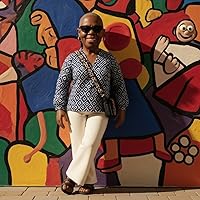
Yvonne Vera (September 19, 1964 – April 7, 2005) was an award-winning author from Zimbabwe. Her novels are known for their poetic prose, difficult subject-matter, and their strong women characters, and are firmly rooted in Zimbabwe's difficult past. For these reasons, she has been widely studied and appreciated by those studying postcolonial African literature.
Vera was born in Bulawayo, in what was then Southern Rhodesia, to Jerry Vera and Ericah Gwetai. At the age of eight, she worked as a cotton-picker near Hartley. She attended Mzilikazi High School and then taught English literature at Njube High School, both in Bulawayo. In 1987 she travelled to Canada and she married John Jose, a Canadian whom she had met while he was teaching at Njube. At York University, Toronto, she completed an undergraduate degree, a master's and a PhD, and taught literature.
In 1995, Vera returned to Zimbabwe and in 1997 became director of the National Gallery of Zimbabwe in Bulawayo, a gallery that showcases local talent ranging from that of professional artists to school children. In 2004 she went back to Canada, where she died on April 7, 2005, of AIDS-related meningitis.
Some of the stories are really good—well crafted and thought provoking. The rest are underwhelming, unfortunately. But they all share one positive aspect, good cultural exposition. Since many readers unfamiliar with African literature may not realise that Africa is not a homogenous country, but a massive continent containing more culture than any other place on Earth. That collection as small as this still manages to depict some of that cultural flavour is a treat.
Opening Spaces is an anthology of contemporary African Women’s writing, edited by Yvonne Vera, whose introduction is probably one of the best I’ve ever read from an anthology👏🏾 This book sought to celebrate recent (at the time of publication) writings by African women united in their views through the “prism of a combined womanhood” and for the first time since I’ve been reading anthologies, I thoroughly enjoyed every story (except one). Opening spaces, All the Women in my Family Sing and The Things I would Tell You can share similarities in terms of their very diverse style of writing and representation.
Aidoo’s The Girl Who Can touches on the subject of policing the female bod through the eyes of a child and with that childish innocence and intelligence intact while Myambo’s Deciduos Gazettes manages to discuss multiple angles from which women struggle when it comes to romantic/sexual relationships with the opposite gender. Momplé’s Stress, told in a way to questions the society’s pressure and expectations on the males and how it inherently affects the females in the society, helps you refocus and emphasize with the struggles of African men and how African women bear the brunt in the long run.
For the first time, an anthology based on Africa/ about Africa includes the work of only one Nigerian author and I’m impressed by this because, let’s be real, Nigerian authors take up too much spotlights when it comes to African Literature 🌚 Anyway, Okoye’s The Power of a Plate Of Rice highlights a very important point; how African women rebel against oppressive, patriarchal systems in their own little way, down to taking over a plate of hot spicy jollof rice. In A Perfect Wife, Dao smashes this popular notion that women will always fight over men and as such can’t be friends, while schooling the reader on multiple aspects of the Malian culture.
Last but most definitely not the least, Leila Aboulela contributed to the anthology with her short story, The Museum, which one the first Caine Prize for African Writing. In it, Aboulela shed light on the struggles of being an African woman away from home, studying in a foreign (white) country. The academic, emotional and identity struggles are highlighted without losing the catchiness of the story.
All in All, a superb 4.5 stars and I really hope another one of this anthology, featuring more countries like Seychelles 🇸🇨 , Mauritania 🇲🇷 , Rwanda 🇷🇼 , Madagascar 🇲🇬, etc, will come out of the continent
So, one thing I enjoy is a good anthology. Whether it’s in film or book form, there’s just something about the variety and the different voices. So, the moment I saw ‘Opening Spaces’ at the bookshop, I knew I was going to get it.
The stories are from a background of several countries and perspectives, each one carrying the writer’s views. I was smiling while reading some, and deeply furrowed my brows while reading others. Now, I’ll admit. I half-expected to see some Nigerian stories, especially since they are everywhere, but to my surprise, there was just one. That shocked me a bit.
Let’s start with ‘The Girl Who Can’, a story about a young girl whose legs are talked about more than anything else. We’re not exactly told what’s wrong with them, but apparently, they’re not ‘ideal’ for childbearing, at least, according to her Nana. The girl doesn’t understand what the issue is about, and eventually uses those very legs to win a race, earning respect from everyone, including the same grandmother who doubted her.
I’d say it’s more than just a story about legs. It’s a critique of how women are reduced to their reproductive parts. The story is saying, ‘We can do more than carry babies. Legs can run too.’ And the story does good justice to that.
‘Deciduous Gazettes’ stirred my brain like a pot of soup. There are multiple stories intertwined, and if you blink, you might miss something. Believe when I say, I read this one without pausing, and I was able to see a connection: betrayal.
Husbands cheating, women finding their voices, and one older woman who confronts a man and tells him to leave a younger girl alone. Oh, there’s also a mother trying to guilt her son’s wife into staying with her adulterous husband, but the wife isn’t having it, and she chooses herself. And honestly, good for her.
‘The Enigma’ confused me at first, but I found it funny in a dry way. It’s about a girl who thinks her father’s suggestion to find a “bon garçon” (a suitable boy) is nonsense. Meanwhile, she’s already pregnant—the twist I didn’t see coming.
One of my favourites was ‘The Red Velvet Dress’. It’s a story of trauma, family issues, and the possibility of healing. A young woman, having a cruel father and an emotionally distant mother, returns home as her mother is dying. She uncovers some truths, like her father not being her father, which explains the cruelty even to others. The story ends in the character finding clarity, which is painful but beautiful. At least she gains closure.
Next is ‘Uncle Bunty’. It’s a bit similar to ‘Deciduous Gazettes’—a woman staying with a cheating husband because of tradition. But years later, she discovers his secret second family and finally chooses to walk away. It’s sad, but at least she got her triumph.
‘The Betrayal’… I didn’t get this at first. It felt a bit otherworldly. The pacing was actually odd, and I’m still not sure about what happened, but I think someone betrayed their family? I don’t know.
‘The Museum’ follows Shadia, a woman studying abroad, homesick, and engaged to a man who doesn’t understand her. It explores the complications of arranged marriage, the loneliness of distance, and that slow realisation that maybe you want something else.
Like realising you really want that ice cream even though your mother already said there’s rice at home.
And speaking of rice, ‘The Power of a Plate of Rice’—another favourite and not because it’s Nigerian themed—shows that oppression in the workplace is real, and sometimes, the revolution starts with rice. Our character is tired, but one stolen meal from her boss somehow gives her the courage to speak up. Food as fuel for protest? Yes, please. And she needed it badly.
‘Stress’ begins like a mystery, and you’re not sure what the major general’s lover or the man on the balcony has to do with anything. You just know they are there. But then it touches on stagnation and the consequences of emotional stress. A dark story.
In ‘A State of Outrage’, the focus is on AIDS. Really. A woman is murdered for raising awareness, and her friends step up to carry on the mission she started. It’s tragic, but also heroic. Like the passing of the torch.
‘Crocodile Tails’ is more on the comic side, highlighting the clash between local teachers and well-meaning-but-clueless expats. It shows the awkwardness surrounding cultural misunderstandings, set in a school setting.
In ‘Night Thoughts’, a woman, likely on her deathbed, tells her lover—also dead, I think—about the state of her country. There’s an intimate vibe around it as if she’s actually talking to you, though I’m unsure I’d want to hear about the state of my country when I’m already long gone. My bones are likely to rise and seriously deal with the speaker.
‘At the Barrel of a Pen’ tackles abortion. Even without you being there, you can feel the urgency, the fear, and the desperation. It’s a story about youthful mistakes and the consequences of a society that doesn’t talk to its children until it’s too late.
‘A Perfect Wife’ taught me that not all titles are ironic. I actually expected sarcasm, but what I got instead was a story about two women—one older and the other much younger—both married to a man who’s been drafted into the army and is expected to return. (Spoiler: he doesn’t.)
But in his absence, friendship blossoms between them. However, as time goes on and he fails to show up, their bond deepens. Eventually, the younger one remarries, has a child, and names the baby after her friend. That part got me, I won’t lie.
And then there’s the final tale: ‘The Homecoming’, which resonated with me. It’s about a woman who spends years taking care of other people’s children—working abroad and sending money home—only to realise she’s barely been around for her own. She feels guilty, and you can feel the weight in every sentence. But then her daughter reassures her of her understanding and the ones waiting for the woman back home. It was a beautiful ending for the anthology.
All in all, Opening Spaces was a good read. Raw, real, messy, and a fresh breath of air.
This entire review has been hidden because of spoilers.
This is a collection of 15 short stories that revolves around male domineering, girl empowerment, husband polygamy, rape, domestic abuse, etc. The author expressed her concern about how women are sometimes undermined (The girl who can) but fights back to prove their capacity and ability. This aspect of the story is what I loved most aside "The Enigma" by Lindsey Collen and "The Girl who Can" by Ama Ata Aidoo. These give insight into why women or girls should be empowered towards great achievement and what happens when parent(s) become overprotective, respectively. Although there were consistent crowding around themes, each story was delivered with passion, and worth the read.
Some well-crafted stories. Particularly I was fond with "The Red Velvet Dress," others were less intriguing. In the grand scheme of things this is all subjective, therefore my review must be taken with a grain of salt. Either way a great exploration into African culture and literature especially as it pertains to womanism.
The first and final story were perfect. Like this is why you are here and we bid you farewell as you end your journey with us. “The perfect Wife, Stress, The girl who can, and The barrel of a Pen” were stories that exceptionally stood out for me. Overall for someone like me that loves travelling through time and places it was a perfect read.
I have had this book on the shelf for some years and decided to pick it up to read (also need to get my read count up!) A delightful set of short stories written by African women.
great collection. some stories were greatly crafted, others a bit less. but overall an excellent read that i would recommend as not many are familiar with the diversity of African culture and writing
I only gave this a three star because there were a few so-so stories, but overall a fantastic collection of African Women's writing. The last story in particular is very moving, I think it's called something like "The Other Wife." Many of these authors I had never read in short story form, like Ama Ata Aidoo, so it was interesting to see them working with another medium. A quick read, but a thought provoking one.
An ok collection of short stories written by women with some connection to Africa. Some a little better than the rest, others kind of boring, but mostly average and nothing exceptional.