Jump to ratings and reviews
Rate this book

Optic Nerve

Rate this book
The narrator of Optic Nerve is an Argentinian woman whose obsession is art. The story of her life is the story of the paintings, and painters, who matter to her. Her intimate, digressive voice guides us through a gallery of moments that have touched her.

In these pages, El Greco visits the Sistine Chapel and is appalled by Michelangelo’s bodies. The mystery of Rothko's refusal to finish murals for the Seagram Building in New York is blended with the story of a hospital in which a prostitute walks the halls while the narrator's husband receives chemotherapy. Alfred de Dreux visits Géricault's workshop; Gustave Courbet's devilish seascapes incite viewers “to have sex, or to eat an apple”; Picasso organizes a cruel banquet in Rousseau’s honor. . . . All of these fascinating episodes in art history interact with the narrator's life in Buenos Aires—her family and work; her loves and losses; her infatuations and disappointments. The effect is of a character refracted by environment, composed by the canvases she studies.

Seductive and capricious, Optic Nerve is a book that captures, like no other, the mysterious connections between a work of art and the person who perceives it.

208 pages, ebook

First published January 1, 2014

626 people are currently reading
11739 people want to read

About the author

María Gainza

12 books344 followers
María Gainza nació en Buenos Aires. Trabajó en la corresponsalía de The New York Times en Buenos Aires y fue corresponsal de ArtNews. Durante más de diez años fue colaboradora regular de la revista Artforum y del suplemento Radar del diario Pági­na/12. Ha dictado cursos para artistas y talleres de crítica de arte, y fue coeditora de la colección sobre arte argentino «Los Sentidos», de Adriana Hidalgo Editora. En 2011 publicó Textos elegidos, una selec­ción de sus notas y ensayos sobre arte argentino. El nervio óptico, su primera incursión en la narrativa, ha sido traducida a diez idiomas y fue recibida con entusiasmo por la crítica: «Flamante primera no­vela» (Ana Wajszczuk, Página/12); «Se cuenta entre lo más trascendental (amén de íntimo y delicado) que he leído en el género en los últimos tiempos» (Christopher Domínguez, El Universal); «Una lectura tan inteligente como inaudita. Una inusitada joya» (Care Santos, El Mundo); «Emocionante» (Aloma Ro­dríguez, Letras Libres); «Sentida, vivaz, llena de hu­mor. Y justo por eso, seria, pertinente, refrescante» (Javier Montes, ABC); «Un libro insólito, hermoso, en ocasiones delicado y a veces brutal» (Mariana Enriquez); «No hay nada frívolo ni banal en el libro de Gainza, posiblemente uno de los mejores de este año» (Patricio Pron); «Excepcional» (Enrique Vila-Matas); «María Gainza ilustra de forma sumamente lúcida la relación de la fascinante protagonista con el arte y describe imágenes con palabras tan certe­ras que el lector tiene la impresión de estar junto a ella delante de un cuadro» (Cees Nooteboom).

Ratings & Reviews

What do you think?
Rate this book

Friends & Following

Create a free account to discover what your friends think of this book!

Community Reviews

5 stars
2,190 (29%)
4 stars
3,071 (40%)
3 stars
1,767 (23%)
2 stars
378 (5%)
1 star
89 (1%)
Displaying 1 - 30 of 1,096 reviews
Profile Image for julieta.
1,331 reviews42.3k followers
September 18, 2023
Este libro no es ni ficción, ni memorias, ni ensayo. Pero tiene algo de las tres cosas, porque la autora tiene una sensibilidad especial, porque sabe de arte, pero más importante, porque escribe maravillosamente bien, y le gustan las historias. Y todas las personas estamos hechas de ellas, tenemos historias dando vueltas. Ella las cuenta desde su vida, pero también desde las vidas de artistas de quienes cuenta sus cuadros. Todo es historias. Y eso es precioso de leer. Gran libro, y uno de mis favoritos de este año.
------
Tercera lectura de este libro, son crónicas, o relatos, un poco de su vida, un poco del arte, es una belleza, de mis libros favoritos sin duda.

Cuarta lectura, cada vez que lo leo encuentro cosas nuevas, está lleno de historias de vida, de arte, con una cercanía que he encontrado pocas veces. Muy muy bello.
Profile Image for Candi.
707 reviews5,513 followers
March 3, 2021
3.5 stars

“… you write one thing in order to talk about something else.”

I was drawn to this work because of the subject matter. During the month of January, I had been completely enthralled with a story set mostly within the Museum of Modern Art, and I wasn’t ready to leave this world quite yet. This piece sounded promising. On an artistic level it delivered what I was searching for, but from a readerly standpoint I struggled a bit. I think if I had gone about reading this as a set of essays rather than short stories, I may have been more successful. Optic Nerve consists of several short stories told from the perspective of the same narrator, an art lover (and perhaps a trained art historian.) Each segment is an anecdote in the narrator’s life which links her to a piece of art and artist. We then get a brief biographical sketch of that particular artist’s life. Each story clearly demonstrates the strong connection she feels to the work of art. The visual images are stunning and beautifully written. The best part about this was my desire to look up each artist and the painting that was highlighted within the text.

“The Stormy Sea. When you stand before it, art disappears and something else rushes in: life, in all its tempestuousness.”

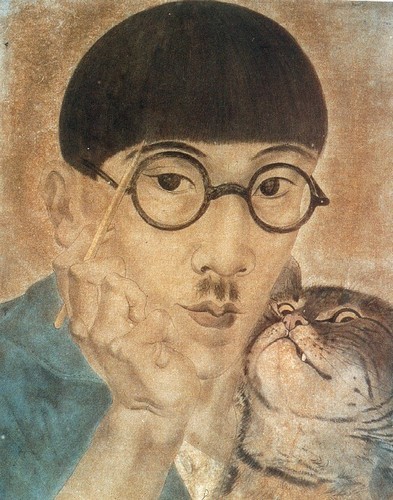
“He says he paints cats to give his eyes a rest. But if you look at these portraits, everything that Foujita’s own figure withholds can be discerned in that of the cat: the nervousness, the anxieties, the hunger for recognition.”

The trouble I had while reading was not just that these were individual anecdotes, but that within each story there were several shifts between the narrator’s life and that of the artist. It was more of a concentration issue on my part perhaps. There’s really no narrative drive, no character development - therefore, my hunch that I may have fared better if I had read each one as an individual essay. I took the narrator of each story to be the author herself. These are her personal reflections. Of course, I’m willing to concede that I could be wrong about that. In any case, Maria Gainza is a very talented author that evokes the senses quite beautifully. She also makes some very perceptive observations on life.

“Some days you are liable to be devastated by a broken nail, or a cuticle that’s ever so slightly too big, or the nail varnish chipping; and cracks suddenly appear in the dam that keeps all of your sadness in check.”

“A cage is a strange thing, perverse even: it isn’t that you suffocate inside it, rather you get used to living off the minimum amount of air possible.”

I love what Gainza was trying to do here. She constructs gorgeous sentences. Her reflections are intellectually stimulating. She successfully connects art to life itself. The fact that I limped rather than leapt from one transition to the next is my biggest complaint, really. It caused me to quickly forget exactly what each piece was about not long after finishing. Criticisms aside, I would love to read Gainza again. I think she has a lot to offer.

“… isn’t all artwork—or all decent art—a mirror? Might a great painting not even reformulate the question what is it about to what am I about? Isn’t theory also in some sense always autobiography?”
Profile Image for ♑︎♑︎♑︎ ♑︎♑︎♑︎.
Author 1 book3,799 followers
May 7, 2019
From the first page, I was immediately and intensely endeared to the narrator of Optic Nerve. I would follow this narrator on any reading journey, wherever she would lead me, because the places she leads me, sentence by sentence and chapter by chapter, are unexpected, wonderful, startling, and humane.

The chapters hang together loosely. There is no plot to speak of. And yet the pieces and digressions come together again and again to become something whole and true.

The novel situates you in the mind of an insightful person, and makes you wiser as she herself becomes wiser. Her epiphanies come to her through the experience of viewing art, and thinking about art deeply. She lets her experience of art reverberate through her life experience.

So, of course I love this novel, because at its core it is championing the idea that contemplation of the arts can be life-changing, enriching, devastating, and above all, an essential part of what makes us human.

To have an entire novel make this case, at a time in the world where there is so much ugliness, and so much attention given to economic utility over aesthetic utility, is a gift.

This is one of the most personally significant books I've read since Laurus by Evgenij Vodolazkin.
Profile Image for El Librero de Valentina.
336 reviews27.5k followers
August 15, 2021
Difícil definir el género, sin embargo a través de 11 historias maravillosamente bien escritas, la autora, logra su cometido, la visión de la vida y sus complejidades a través del arte.
Profile Image for Tony.
1,030 reviews1,912 followers
May 24, 2019
This was fascinating. It's called a novel but it's its own genre really. The first-person narrator reads so true you'd swear it's memoir.

That narrator has studied art and each chapter features an artist or artwork that she explains, mixed with some literary quote and ongoing personal reflection. What plot there is is piecemeal.

A neat little summary from me is impossible and a larger exposition would ruin it for you. And you should read this.

But let me share some of the paintings that are featured (even though sometimes the exact painting is not identified):

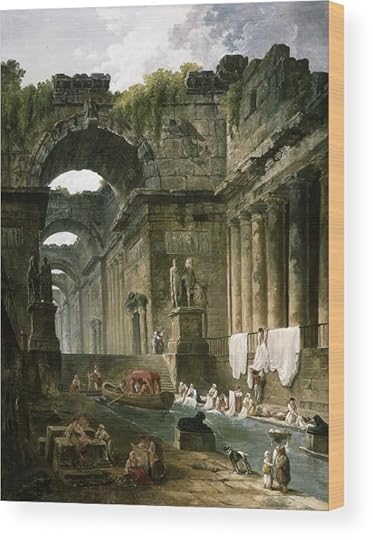
There's Hubert Robert, who liked his ruins:


Leonard Tsuguharu Foujita and his Self-Portrait with Cat:


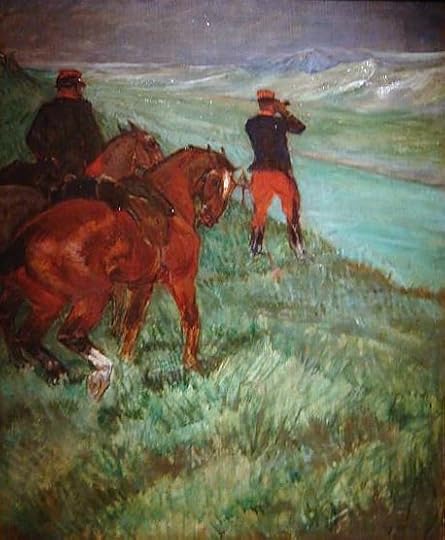
Henri de Toulouse-Latrec and his En observation--M. Fabre, Officer de reserve:


Alfred de Dreux and his Deer Hunt:


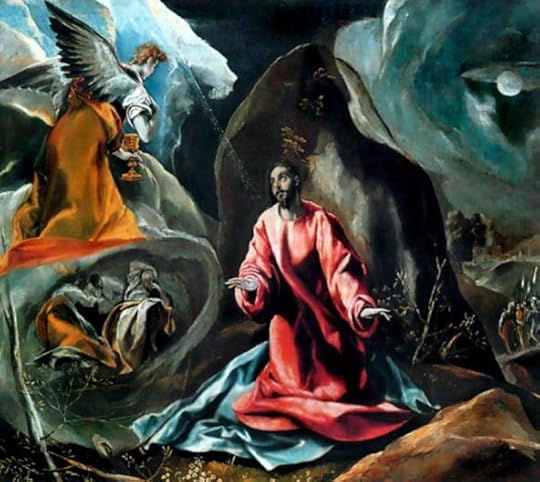
El Greco's The Agony in the Garden:


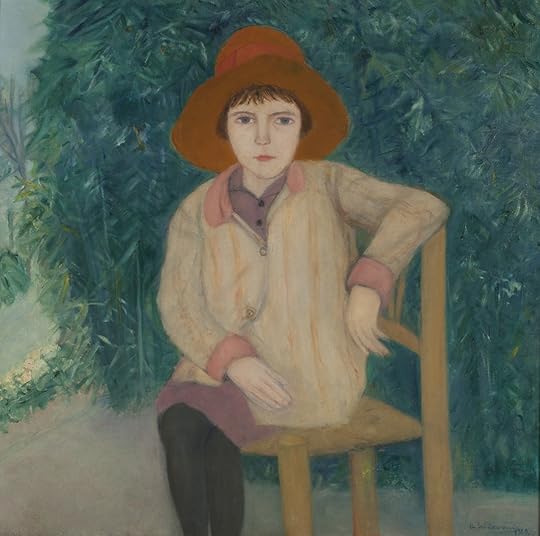
And then there's Augusto Schiavoni's portrait of a girl in a lilac dress, I think this one, La niña sentado:


The author is convinced the girl is her, and says this about her:

What she lacks in wordliness she makes up for in attitude; she can turn a look on you as withering as radioactive fallout, and her lips are sealed so tight that the sound of Velcro accompanies the parting. But inside she feels made of butter, and it takes all her patience, every ounce of her, not to lose her temper. Be a good girl! She wrestles nightly with the question: Is a person born bad, or does she become so? She sometimes gets angry; pushed for a description, she says it feels like a snake inching up her leg....

There are plenty more painters who make appearances - Victorica, Rothko, Picasso, Cándido López, Henri Rosseau - but you can find those. More authors too, just the right quote to advance her self-reflection or tie things together.

I liked, too, her passing observations:

A cage is a strange thing, perverse even: it isn't that you suffocate inside it, rather you get used to living off the minimum amount of air possible.

And:

I once heard that 90 percent of the dust in a house is skin cells. This being so, my oldest brother was still there, really, when my other brothers walked in.

A friend of the narrator asks her what she's reading, saying, "Tell me what you're reading and I'll tell you where your head's at." Gogol, she says.

Well, I'm reading this, maybe re-reading this immediately. Where's my head?
Profile Image for Marchpane.
324 reviews2,846 followers
February 25, 2020
“Good, bad, what kind of gauge is that?” says Matías. “Either one likes a thing, or one does not. That is all. Now, get your lips around this mint julep and try telling me it isn’t art.”

Optic Nerve is a tricky book to categorise. Comprised of personal reflections narrated by an author-stand-in, it’s tempting to use the term autofiction. But in lieu of a plot, there are briskly-written digressions into art history—including potted biographies of big names like Rothko or Toulouse Lautrec—which subsume the ‘character’ of María. Her own narrative is there but it’s submerged and refracted by her subjects. Is this fiction? Essays? Gonzo Art Criticism?

Much like great works of art, Optic Nerve is entrancing in the moment, and then elusive as soon as you turn your head away. It’s incredibly visual: Victorica’s Aunt Cecilia wears a dress ‘the gray of photocopiers’; the red and black of a Rothko is echoed by a woman dressed in red who recedes down a dark corridor; blues and greens in Courbet’s The Stormy Sea are reflected in feverish collages made by María’s ‘eccentric’ (ie mentally ill) cousin.

This book itself feels like a collage. Or else Gainza is a bowerbird, collecting brightly coloured scraps in the form of quotations, factoids, snippets from other people’s lives, and of course, all those paintings (have Google Images at the ready while reading!).

Optic Nerve is a story told through what interests María, the ‘beautiful shocks’ to be found in the world, rather than what happens to her. Wry, perceptive observations override character development. It all adds up to more of an intellectual than emotional read, which regardless succeeds in being warm, open and unstuffy. I liked it a lot.
Profile Image for Rachel.
604 reviews1,055 followers
March 8, 2020
This book should have done so much more for me than it actually did.  I'm a bit of an art history geek, so autofiction about an art geek musing on various paintings sounded like it was going to be a dream, but I think the execution left a lot to be desired.  I found the art history lessons engrossing, as expected, but Maria Gainza's life (or the life of her fictional stand-in, I guess) never really dovetailed into her art lessons to form a cohesive narrative.  This ultimately felt a bit disjointed and unsatisfying, though I did enjoy the strength of Gainza's passion for art.
Profile Image for Alejandra Arévalo.
Author 4 books1,881 followers
September 27, 2020
El nervio óptico es un libro que se lee con detenimiento porque no es cualquier libro, es un experimento, un juego. Ni novela, ni cuento, ni texto didáctico sobre la pintura: es un trenzado de historias, de la narradora, de los personajes reales que aparecieron en su vida y de los pintores y pinturas que poblaron su mirada. Es un libro her mo so sobre mirar, mirar con detenimiento el arte, pero también a los otros y las otras. A la familia, al amigo, a la amiga, al vagabundo. Mirar y enfocarte. Mirar y sentir. Este libro habla sobre muchas pinturas y sobre el síndrome de stendhal pero no es más que un pretexto de la autora para hablar y hablar y meterte en historias ajenas y disfrutarlas y de repente zaz, encontrarte con una frase que lo cambia todo. Que te cambia toda. Un libro lleno de tesoros que nos trae María Gainza a través de su mirada, su nervio óptico.
Profile Image for Peter.
396 reviews232 followers
May 16, 2021
Meine Entdeckung des Jahres ! Vielen Dank an meine Goodreads-Freunde, dass ihr mich auf dieses Buch gestoßen habt. Vor einigen Jahren habe ich ein Faible für Kunst, speziell Gemälde entwickelt. Das Lesen von Ausstellungs- und Museumskatalogen ist ein optisches, aber kein literarisches Vergnügen. María Gainza, eine argentinische Kunsthistorikerin, verbindet beide Genüsse, indem sie Szenen aus ihrem oder ihrer Familie Leben ein Kunstwerk aus einem der Museen Von Buenos Aires gegenüberstellt. Nebenbei erfahren wir etwas aus dem Leben der Künstler und verstehen so die Bilder ohne die übliche, spaßtötende Analyse von Aufbau, Farbgebung, Pinselstrich etc. Dabei lernen wir sowohl lokale Künstler kennen wie Cándido López, der im Krieg gegen Paraguay seinen rechten Arm verlor und lernte mit der linken Hand zu malen, aber auch Künstler wie den Japaner Léonard Foujita (eigentlich 藤田 嗣治, Fujita Tsuguharu), der zu einem Star der Pariser Bohème wurde. Sein Katzenbild ziert den Umschlag dieses auch handwerklich schönen Büchleins.


Wir treffen aber auch auf die weltbekannten Gustave Courbet und Henri Toulouse-Lautrec. Mein Favorit ist das Bild des fast unbekannten (nicht einmal im spanischen Wikipedia hat er einen Eintrag) Augusto Schiavoni, in dem sich die Autorin als Kind wiedererkennt. Es ziert auch den Umschlag der französischen Edition dieses Buches.

Augusto Schiavoni, La niña sentada, 1929


Keines dieser Gemälde ist im Buch abgebildet. Vielmehr motiviert es den Leser selbst auf die Suche zu gehen. Wer es etwas einfacher mag, kann sie aber auch in diesem Youtube Video sehen, das alle erwähnten Kunstwerke zusammenstellt.
Profile Image for Gala.
480 reviews1 follower
July 20, 2018
Libro inclasificable, excelentemente escrito. Combina arte con intimidad, museos y crónica social. Una joyita.
Es muy posible que admita relectura.
Como si fuera un poema, difícil de resumir.
Profile Image for Justo Martiañez.
568 reviews241 followers
June 9, 2024
2.5 Estrellas

Curiosa mezcla de ensayo sobre pintura y relatos con tintes autobiográficos.

Si tengo que contestar si me ha gustado el cóctel, pues tengo que responder que no demasiado, por diversas razones:
-Los cuadros y artistas elegidos son en su mayoría menores y muchos desconocidos para mi. La autora ha estudiado bellas artes y es crítica de arte. Parece que la selección incluida en el libro responde a criterios meramente personales, a cuadros que en su deambular por los museos bonaerenses a lo largo de los años han llamado por una u otra causa su atención. Perdónenme, pero no creo que estos museos destaquen por ser la meca del arte, es decir, que las obras reseñadas son en su mayoría obras menores.
-Vale, aceptamos pulpo y asumimos que los cuadros son lo de menos, un hecho introductorio para narrarnos episodios de la vida del artista seleccionado y pequeños relatos ¿autobiográficos? de la autora. Relatos que en general no tienen nada que ver con la obra y con la vida del artista elegido. Relato autobiográfico y la obra/autor elegido parecen dos líquidos inmiscibles, que tienden a separarse en dos fases bien definidas.
-Los relatos ¿autobiográficos? me han interesado entre poco y nada. Porque básicamente no hay hilo conductor, va saltando de un momento a otro de su vida, de un familiar a otro, de un amigo a otro.......

Y os preguntaréis, con razón ¿Y porqué le doy un aprobado al final?. Por las siguientes razones:
-El formato es atrevido, novedoso y original. Mezclar arte con retazos de tu propia historia/vida.
-Hay un retrato bastante clarividente de la sociedad argentina. Retazos, flashes. La chica proviene de buena familia y se aprecia el derrumbe de los valores tradicionales, el derrumbe de antiguas familias terratenientes de rancio abolengo. Episodios históricos pasados y recientes se ven reflejados en los relatos y no te dejan indiferente.
-La escritura es intimista, atractiva, atrevida. Esta mujer escribe bien y parece que se está ganando el respecto del mundo literario. El del mundo artístico ya lo tendrá ganado, porque vive de esto.

Vamos a volver a territorio conocido, tierra firme, disfrute asegurado, porque la mala racha ya se alarga demasiado: novela histórica.
Profile Image for Jerrie.
1,033 reviews162 followers
April 18, 2019
This is the second book that I finished today that I would call weird and wonderful. The narrator relates episodes from her life through various works of art and the stories of the artists. Wonderful writing about art and life, in general. My only complaint is that I would have liked the parts to be more coherent and fit together more logically. As what might be called experimental fiction, however, this is one of the better examples.
Profile Image for luce (cry bebè's back from hiatus).
1,555 reviews5,836 followers
August 28, 2021
| | blog | tumblr | ko-fi | |

3 ½ stars

“I am a woman hovering at the midpoint of life, but I still haven’t lost my touch completely: it is within my power, for instance, to flit from the Schiavoni painting in the National Museum of Fine Arts to the Miguel Carlos Victorica they hold in the Sívori Gallery. In other words, to make the shift from childhood to old age in an instant. ”


A series of interesting vignettes that juxtapose the lives of famed and lesser-known artists to the experiences of the people in our narrator's orbit.
This novel is an ode and a critique of art. There isn't a cohesive storyline nor a plot, bur rather it is an examination and a mediation on the people who create art. These artists use different mediums to different effects yet they all seem to similarly alienated (a fact that our narrator is quick to point out). I enjoyed learning about their lives, Gainza related their histories in a compelling voice, even when I didn't agree with the narrator's pronunciations on their work (she is dismissive of Monet). Often the narrator looked back on a symbolic moment or aspect of their lives to better understand their work.
The unnamed narrator is an Argentinian woman who remains an ambiguous and multivalent presence throughout the course of the narrative as she links art and artists to the experiences of her friends and acquaintances. Art becomes the lens through which she can make sense of her own life and those of her friends. For instance after our narrator views a painting by Alfred De Dreux (depicting a dying deer) she then recounts the unfortunate death of an old college friend. There was always something that connected these personal anecdotes to the artists that our narrator critiqued.
There is loneliness, beauty, anxiety, dissatisfaction, and a general sense of estrangement (from one's self, from the world).

“There’s nothing more subterraneously oppressive than a family legend. My father was a talented sculptor, but became an architect; he used to say that in life we do what’s required of us, not what we want. But I saw what this did to him over time, how his frustration grew. It wasn’t helped by my mother, whose great aspirations for all of us were equal only to her deep-seated fear that we would fail her.”
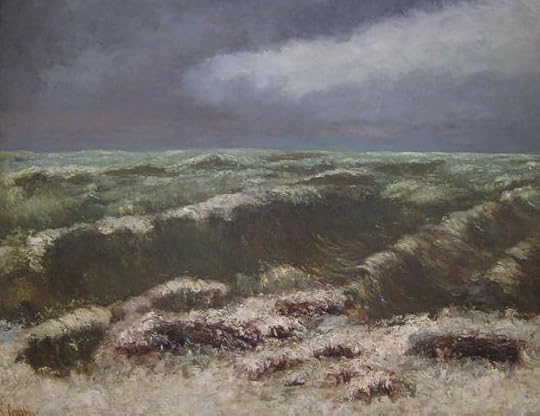


The narrator uses quotations of other authors to convey her feelings or impressions, and the novel itself seems to be aware of being a deeply intertextual work.
The style is unapologetically experimental (almost a la Rachel Cusk), and you sort of have to just go with its enigmatic flow. There are some beautiful reflection nestled within this unconventional narrative, and I think this is a must for the lovers of the arts.
During my re-read however I did come across a line that bothered me. This is not the first time I have came across such lazy descriptions. When talking of a Japanese artist she describes his fringe "like an upside-down bowl of rice"...why? Why not just say that he had a bowl-cut ? Why specify that it was a bowl of rice? Because he's Japanese? For goodness' sake. This is the kind of stuff I would except from Italian authors.
A short and interesting read, I look forward for more from Gaiza.

Profile Image for Neale .
358 reviews196 followers
February 2, 2020
This novel is shortlisted for the 2020 ToB.

This novel is about a woman, an art historian, an art lover, who is reminiscing about her life. As an art lover, much of this reminiscing revolves around her favourite painters and anecdotes from their lives.

There is no plot, but this novel is far from boring, in fact it is hard to put down once you start.

The anecdotes and tales are told in no particular order, one story about a painter may lead to some completely different memory from the woman’s past. Although arbitrary, all these stories and memories coalesce to give the reader the story of the woman’s life. However, this is done slowly, in fragments, and again, arbitrarily. This structure works beautifully, one story will provide insight on the woman’s past and then segue somehow seamlessly into a completely different story. As you get deeper into the novel you start to “see” the woman, her face slowly forming like a portrait being painted. Her likes, her dislikes, her fears, her perceptions.

Perception of not just the art, but life, is a theme that runs through the novel, just like the stream of memories which form the narrative. How perceptions can change, and how you can find your perception of an event in the past changing upon reflection.

This novel is quite short in length, but seems deceptively longer because it is simply packed with so many stories. Stories which cover a large swath of topics and history. I found myself wanting to find out more about some of the artists, and learnt what a dorodango is.

Readers who like their novels with a solid plot and linear narrative may not enjoy this novel. The meandering format and lack of plot may be too much. Similarly, readers who have an aversion to art may be put off. But I know very little of the art world and I simply adored this book. It is beautifully written, and surprisingly, given the structure of the narrative, flows along effortlessly, and there is no trace of this being a debut novel at all.

A wonderfully rewarding and enjoyable debut novel. 4 Stars!

There is a link to LITERARY HUB on my blog with a wonderful article on Gainza here - https://www.collinsbookblog.com/post/...
Profile Image for Katia N.
710 reviews1,110 followers
April 24, 2019
This is a bit unusual, but successful piece of auto-fiction from Argentina. The author is the art critic. The book blends the reflections of her alter-ego's personal life with the fragments about the artists and paintings. I found her perception of art fascinating, really thrilling sometimes. Her knowledge seems to be boundless and she brings the artists alive in a very economic, but self-sufficient fragments which are never trivial. I liked it especially when she talked about the Argentinian artists whom I've never heard about such as Schiavoni. The pieces about Rothko, Courbet, Toulouse-Lautrec were striking as well. She blends them skilfully with the personal life of her heroine and the associations never come across as artificial. However, the personal bits themselves are quite dark sometimes and a bit less developed. I was glad that the subject of her digressions was the art, not medicine or anatomical dissections which was the subject of a few successful recent books in this style. Add dry, self-deprecating humour and slightly pessimistic world-view to the picture and you have a worthwhile addition to the genre.
Profile Image for Will.
277 reviews
January 6, 2020
I was initially torn between a 4 or 5 star rating. In the end, this is such a little gem of a novel that I simply had to give it the max. Special, original - it might not appeal to everyone but I loved it.
Profile Image for Julie Ehlers.
1,117 reviews1,603 followers
February 8, 2020
Billed as a novel by its publisher, Optic Nerve reads more like a series of personal essays, each of which focuses on a different painting and its artist. Interwoven with the tales of the artists are episodes from the narrator's life and the lives of people she knows. It's a short book and it doesn't sound like much, but I'm a novice when it comes to fine art and I loved having a reason to learn more about it. I also liked the voice of the narrator and felt that her personality, while somewhat enigmatic, served as a kind of connective tissue that held book together, taking pieces that could have seemed unrelated and turning them into a whole. Optic Nerve is not a conventional narrative, but for some reason I felt at home in its world.
Profile Image for Paula Mota.
1,662 reviews561 followers
January 3, 2025
Releitura 5*

Agora, que estão ambas adultas e cansadas, cada discussão parece uma cena de comédia; há pouco tempo, seguiste-a por um corredor de sua casa lendo-lhe parágrafos de Irène Némirovsky: “Nos teus raros momentos de ternura maternal, quando me apertavas junto ao peito, as tuas unhas cravavam-se nos meus braços nus.” A tua mãe, apressando o passo com insólita agilidade a fim de te deixar para trás, murmurava: “Mas que horror, filha, as coisas que tu lês!”

No último parágrafo deste livro, María Gainza fala de “felicidade poética” quando sai do carro à porta do Centro de Terapia por Radiação de Buenos Aires e vê a neve a cair suavemente. É felicidade poética que sinto ao reler “O Nervo Ótico”, a obra que me fez perceber que o género híbrido é um dos que maior prazer me traz na literatura.

Há pormenores que se perdem na noite dos tempos e é melhor que assim seja: compreender as coisas por inteiro torna a mente inflexível.

Já antes de publicar este livro, María Gainza era crítica de arte, colaborava com suplementos culturais de jornais e revistas da especialidade, além de ministrar oficinas de crítica de arte na universidade de Buenos Aires. Em “O Nervo Ótico” transpõe os seus conhecimentos sobre um punhado de pintores do mundo inteiro, fala de alguns dos seus quadros que viu ao vivo e integra esses comentários em episódios da sua vida, desde pequenina até ao presente, de uma forma entusiasmante e orgânica.
Esta é uma daquelas experiências de leitura que deve ser feita com a Internet ao alcance do dedo para a visualização dos quadros mencionados, para se poder apreciar a pintura de El Greco, Alfred de Dreux, Miguel Carlos Victorica, Hubert Robert, Cándido López, Gustave Courbert, Mark Rothko, Henri Rosseau, Augusto Schiavoni, Henri de Toulouse-Lautrec e o meu preferido, Tsugouharu Foujita.

Nesses anos Foujita pinta também autorretratos, nos quais aparece sempre junto desse gato matreiro e sem nome que os seus amigos batizaram como Fou-Fou. Diz que pinta gatos para descansar os olhos. Se observarem esses autorretratos, tudo o que o rosto de Foujita não diz é revelado pela figura do gato: o nervosismo, a ansiedade, o desejo de ser reconhecido.

A dado momento da sua vida, devido à fobia de andar de avião, a narradora tornou-se “uma mulher parada no equador da vida” e deixou de poder visitar os museus de outros países. Haverá males que vêm por bem? Tantos gostam de fazer alarde dos monumentos e museus que visitaram no estrangeiro, mas conhecerão todos aqueles onde podem chegar em poucos minutos ou horas?

Dizes a ti própria que a imaginação continua a ser a tua aliada e que, com a que tens, a tua mente já se entretém maravilhosamente. Apanhas um autocarro, desces, entras no museu e segues diretamente para o quadro que te chama. É barato e rápido. Com algumas dessas obras tens a mesma familiaridade que com os livros da tua biblioteca ou as plantas do teu jardim. (…) Não importa o que dizem na tua família (embora os oiças na mesma, para venceres o inimigo com as suas próprias armas). (…) Quem sabe, talvez te tenhas convencido, dada a tua progressiva e alarmante tendência para viveres cada vez com menos, de que não precisas nem de grandes aviões nem de obras-primas na tua vida.
Profile Image for Ana Cristina Lee.
765 reviews401 followers
November 15, 2021
El hilo conductor de estas historias es que cada una gira entorno a un cuadro, la mayoría presentes en los museos de Buenos Aires. La narradora parece ser la misma, una mujer relativamente joven, relacionada con el mundo del arte, que observa los cuadros y los relaciona con la biografía de los pintores, al mismo tiempo que habla de sus propias vivencias o anécdotas – más o menos conectadas con la obra en cuestión.

El formato recuerda un poco a Instrumental – ambas fueron publicadas el mismo año – en que James Rhodes cuenta los episodios de su azarosa vida, relacionando cada capítulo con una pieza musical e insertando apuntes sobre la biografía del compositor. En este caso no es explícito si la autora está haciendo auto-ficción, pero es la impresión que causa.

La narración tiene un velo melancólico, una atmósfera opaca en que las pinturas parecen más reales que la realidad que observan, inmóviles e imperecederas, ajenas al drama pasado del artista que las creó.

Hay un desfile interesante de pintores, algunos bien conocidos, como el Greco, Toulouse-Lautrec o Rosseau, y otros no tanto como Schiavoni, Foujita o Cándido López. Me han gustado los capítulos sobre pintores que se especializaron en un tema, las marinas de Courbet, las cacerías de Dreux o las ruinas de Hubert Robert:

La ruina artificial era una forma de restablecer vínculos con la Antigüedad; no es casual que surgiera en vísperas de la Revolución Industrial. La artificialidad exacerbaba la melancolía por lo perdido; los ricos se regodeaban en su tristeza.

En general está muy bien escrito y puede gustar a los aficionados al arte. Quizá algunas de las historias son un poco confusas y la conexión con los cuadros no queda demasiado clara. También creo que me he perdido algunas claves que seguramente serán más relevantes para las personas que conozcan Buenos Aires.

Una recomendación obvia: buscar en internet las obras citadas, al mismo tiempo que se lee cada capítulo.


Mer orageuse se dice en francés, y la gárgara rasposa que producen las consonantes replica el rugir de las olas.
3,5*
Profile Image for Alice.
120 reviews41 followers
June 10, 2018
"Ser un espíritu inquieto, sentir que mi cuerpo se desmaterializa, mi plúmbeo cerebro sobre todo: desprenderme de los arrebatos que son mi cárcel, del magma que brota de mi corazón las veinticuatro horas, volverme ondas intermitentes de energía, centelleos caprichosos del más allá, en fin, parar de pensar, eso sería la gloria"

Libro magnético, interesante, inclasificable, que te lleva a partir de una historia de un cuadro o un artista a una crónica íntima, personal. Entrelaza las historias con un talento y una intensidad increíbles. La intertextualidad desborda y produce un infinito deseo de leer y ver todo lo que el texto expone. Arte y vida juntos, entretejidos, dónde todo se cuenta: miserias, enfermedades,angustias, amor, en una voz narrativa única, singular, envolvente. Un texto de no ficción, prodigioso y exquisito!
Profile Image for Laura.
123 reviews363 followers
Read
January 7, 2022
“Una jaula es perversa: no te sofoca sino que te acostumbra a vivir con la mínima cantidad de aire indispensable.”
.
María me atrapó desde el primer momento. “El nervio óptico” es narrativa, es historia del arte, es ensayo, es poesía, es una colección de relatos, es una biografía, lo es todo. A través de los cuadros (y de las historias de sus autores) María cuenta una vida, su vida y también la tuya propia.
Me ha fascinado su manera de enlazar los temas, de tratar la muerte y la sed artística. De ver la vida.
La propia María describe perfectamente su obra cuando escribe: “supongo que siempre es así, uno escribe algo para contar otra cosa”.
Profile Image for Claire.
1,219 reviews314 followers
February 27, 2020
Is it a novel? Or maybe short stories? Auto-fiction? Personal essays? At the end of Optic Nerve, I still wasn’t sure what exactly it was I’d read, but it didn’t make it any less engraving. For want of a more accurate descriptor, this book is a meditative tour through a series of artworks, both well-known and not so. I was surprised by how much I enjoyed reading this alongside my exploration of the referenced art online. I’m not always especially moved by visual art, but the way that Gainza located this within a narrative brought meaning to the way I was able to read and engage with the visual medium. Optic Nerve was both measured, and even meandering, but also at times brutal, shocking, and visceral. It is a thoughtful meditation on the relationship between life and art (who is the imitator here?) In short, it tickled a lot more of my interests than I expected it to.
Profile Image for Quirkyreader.
1,629 reviews10 followers
June 6, 2019
I think the translator did a wonderful job putting Gainza’s words into English. So major kudos to Thomas Bunstead for his work.

I am not big on comparisons, but Gainza’s work reminds me of Mary Gaitskill, whose work I enjoy. I hope that Catapult options more of Gainza’s work and publishes it in English.

The main character of this story has an eye for art and she describes her adventures to see certain works.

What moved me the most about this story is that I know how the character feels. The first time I saw a Van Gogh in person I broke down in tears. Art moves all of us in different ways.

Try and see if you can find a copy of this book, and enjoy it.
Profile Image for Michelle.
653 reviews192 followers
January 22, 2020
52 Weeks of Women of Color
2020 Tournament of Books


"Everything is a story." Art is a mirror reflecting life off its surface.

Please do not approach Optic Nerve as a simple novel where the reader is led from one plot point to the next. Instead, envision a narrative in which art rather than being a mere recording of historical events, serves as an impassioned plea for individual stories to be heard.

Gainza admits that Optic Nerve is in part her story with bits of her life adding color to the pages. The chapters do not seem to be chronological. Rather each sliver into her world revolves around personal perception, the myriad roles we assume in life and who we are to other people.

As a lover of art I read this book as if I were a student studying abroad and Gainza were my teacher. I pulled up the images of these paintings gazing upon them as Gainza described the artists' emotions and the symbolism within their artwork. I was enthralled. I would recommend this book to anyone remotely interested in art and art history.
Profile Image for Emejota (Juli).
219 reviews115 followers
May 31, 2021
Novela, relatos, ensayo, crónica o lección de arte, no se entiende bien qué es pero no importa. Es un poco de todo y a la vez no es nada de eso. Algo nuevo quizás. Otra cosa.

Gainza es una cheta que cae bien. Genera una intimidad con el lector que no siempre logran los autores que hacen autoficción. Por momentos sentía como si estuviera leyendo a una amiga contándome fragmentos de su vida y divagara sobre arte.
Ya quisiera no? Tener una amiga que escribiera así.
Profile Image for Caro the Helmet Lady.
833 reviews462 followers
August 8, 2021
This didn't read like a novel to me at all. I'd say it was rather a series of essays on art and artists, some well known, other only locally famous, each one meticulously mixed with Author's personal story, which are never random, always à propos and quite interesting, given the Author's unusual (to me) background. And if you read it better prepare yourself for a lot of googling on names and pieces of art, which is kind of fun in itself.
When I think about it I guess all of us would be able to make such albums of memories connected to art, music, books and people. But would all of us be capable to give it a smooth story to accompany? Not too many I'm afraid.
This wasn't mind blowing, but an easy and interesting read. I'd make friends with Maria.
Profile Image for Maxwell.
1,441 reviews12.4k followers
May 2, 2020
[3.5 stars]

This book is an unusual mix of non-fiction essays/histories of artists through the ages and a sort of meta-fictional memoir of a woman who is affected by these artists and how they tie into her life in various moments or experiences. It's unclear if the "I" of the stories is Gainza herself, a fictionalized version, or just totally made up. But it reads quite like a memoir and the weaving between the narrator's stories and those of the artists is seamless. I do think this is book would really only interest people that want to read about art history and enjoy experimental fiction. I liked it and would recommend it if either of those topics interest you. Though each story is very good on its own, the overall impact of the book as a whole is not as strong.
Profile Image for Teresa.
1,492 reviews
February 24, 2018
Gosto da capa, que me atraiu a comprá-lo.
Do que tem dentro não gosto. Uma narradora que relata uns episódios da sua vida (sem qualquer interesse, nem ligação entre eles) intercalados com descrições sumárias de quadros e de uma pequena biografia dos respectivos pintores. Para ficar mais bonito, inclui citações de escritores e até resumos de filmes. Uma salganhada presunçosa...
Profile Image for Makis Dionis.
558 reviews156 followers
August 18, 2018
Πολύ λεπτοδουλεμένα διηγήματα με φόντο την οπτική διαφόρων ζωγράφων και την εξέλιξη της τέχνης του, κ πως το "τι λέει" μετατρέπεται στο "τι μου λέει"

Η ιστορία της τέχνης, όταν χορηγείται με λάθος τρόπο, μπορεί να γίνει θανατηφόρα σαν τη στρυχνίνη
Profile Image for Gaspar Alvarez.
65 reviews55 followers
October 16, 2017
Que rico leer un libro y tener esa sensacion de que ya quieres ser distinto para leerlo de nuevo.
Displaying 1 - 30 of 1,096 reviews

Can't find what you're looking for?

Get help and learn more about the design.