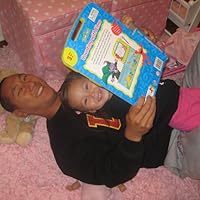
Ninth grader Rudy has a date with eleventh grader Patricia. Now he has to come up with the money, the poise, and the conversation to carry it off. This one-act play, by turns heartwarming and heart-wrenching, follows Rudy from his desperate search for guidance through the hilarious date itself--all the way to its happy conclusion.
Gary Soto is the author of eleven poetry collections for adults, most notably New and Selected Poems, a 1995 finalist for both the Los Angeles Times Book Award and the National Book Award. His poems have appeared in many literary magazines, including Ploughshares, Michigan Quarterly, Poetry International, and Poetry, which has honored him with the Bess Hokin Prize and the Levinson Award and by featuring him in the interview series Poets in Person. He has received fellowships from the National Endowment for the Arts and the Guggenheim Foundation. For ITVS, he produced the film “The Pool Party,” which received the 1993 Andrew Carnegie Medal for Film Excellence. In 1997, because of his advocacy for reading, he was featured as NBC’s Person-of-the-Week. In 1999, he received the Literature Award from the Hispanic Heritage Foundation, the Author-Illustrator Civil Rights Award from the National Education Association, and the PEN Center West Book Award for Petty Crimes. He divides his time between Berkeley, California and his hometown of Fresno.
This was a cute little play about a young boy named Rudy who is going to go out on a date with an older girl named Pamela AND EVERYTHING that builds up to that date. All the chisme, oh yeah and this play is written in Spanglish and has a little Spanish glossary of words used in the play, that leads up to the date: Rudy talking to his best friend about it, Rudy trying to get some money for the date, his family's reaction to him dating an older girl, etc. etc. It all culminates at the restaurant Steaks, Steaks, y mas Steaks, where somehow, all the characters end up crashing Rudy and Pamela's big date.
It was a cute fun little read, that I can really see kids Junior High age kids getting into and having fun acting out and performing. Good easy to read writing by Gary Soto.
This is not really a book, it's a play about a guy named Rudy who is going on a date with a girl who is older than him. Her name is Patricia and she's in eleventh grade. Rudy is nervous about going on a date with Patricia, he thinks there will be nothing to talk about and he will look ridiculous. Patricia on the other hand is kind of exited, she thinks Rudy is cute and nice. My favorite part of the book is when Rudy tells his mom he's going on a date and asks her for money because he doesn't have any and she freaks out and kind of gets jealous of his little boy going on a date. I wouldn't really recommend this book to anyone because I didn't really like it, it was too simple in my opinion but if you like to read plays then you might think its kind of funny.
This book is about one boy that are in ninth grade, her name is Gary and he look for a girl, of the eleventh grade and her name is patricia . and Rudy ask a looking for a date , and she say yes , and Rudy is very nervous , what will he say to her , how cant act form her and how he can surprise her. and he invited her to the restaurant while he is trying to romance patricia. the Important think is that he want that she have a excellent and unforgettable day .
Novio Boy, in my opinion, is a great book. It was short and funny but had a good vibe to it. The main character in the story was Rudy and he was my absolute favorite character. He had this sense of humor like no other guy. Rudy was super sweet and it was so cute of him because he was just trying to make his date with an older girl so perfect. Even if his date was two years older than him. Overall, this book was super funny but I have to say that my favorite part of the book was when his date, Patricia, went to go get her hair done before a date. It turns out that she went to the salon that her date’s mom owns. At the salon, Rudy’s mother and Patricia were talking about the date but had no idea they were both talking about the same boy. You couldn’t imagine what happened after that. Guess you’re going to have to read to find out! Although this book was very good in my opinion, there was still something I didn’t like. In the book the author set it up so that everybody-- Rudy’s mom, aunt, friend, uncle-- found each other at the restaurant the date was taking place. What a coincidence, huh? Either way I really recommend this book to all of you because other than being a great book, it is a very easy book to read. Also, it’s a play book so maybe after you’re done reading it, you and your class could act it out!
Novio Boy by Gary Soto I believe everyone should read this book because it was funny, I remember when Rudy told his mom that he needs 15 dollars for his date with Patricia. And she was like who is she.? My favorite character was Rudy because, He was in a date and he got embarrassed because his mom, and his uncle Juan was on his date with Patricia. The funniest part was when Patricia ordered like 5 things to eat and Rudy just ordered a soda. He only has the $15 that his mom gave him. I really want to heard uncle Juan songs I remember one song was call “Tortillas and Beans.” My favorite character was Rudy because he was the funniest one in the book. When he was selling the apples to a buyer. He was just laughing because Alex didn’t know how to count all the apples the buyer wanted. I recommend this book to ninth graders because, it's a really good book, and funny especially when the teacher let us acting like we all are in the play. Based on that I want every freshman read this book because, everybody could now more about a date with a boy who’s in 9 grade and the girl is on 11 grade
My overall impression of the book Novio Boy was okay. My favorite character of this book was Patricia, because she is an eleventh grader who knows a lot about dating and she even knows how to drive. One of my reasons I liked this book was because the character Patricia reminded me of my friend. My friend is beautiful, tall and a passionate girl which is totally like Patricia. The funniest part of this book was when Patricia and Rudy were on a date for the first time. Rudy told Patricia how beautiful she was and was telling her sweet things. Another funny and embarrassing part was when all Rudy’s family was there and Patricia didn’t know they were there.
I would recommend this book to other ninth graders. I think it is a good idea to refresh your memory by reading a book that everybody can enjoy. Also that everybody can act too, and that makes it fun for me. Another reason this book is great is because it includes Spanglish words.
My first impression of the book was that it a funny because and it a good book to read because all of the characters make the book better when you have fun when you're reading,Tio juan make the funny parts he was always the funniest person in the book from the beginning until the end.My favorite character was Tio Juan because he makes the funnies part also it was nice when he went and sing at the restaurant and he gave the money to him. The funniest part it was when Uncle Juan was was singing at the restaurant. I think it was funny when novio boy went to the restaurant with Patricia and her whole family was there,if that was me i would feel weird about because you will be in a date with someone that you like and it would be just weird.
However I would recommend this book to another 9th graders. Because it’s easy to read and is a really fun book Also there's a lot of characters.
I did like Novio Boy by Gary Soto because I think is not a long book and each one read one character. My favorite character from the book was El Gato because he talks funny and he work in a radio. The funniest part from the book was when Uncle Juan sings in El Gato’s radio and it was a really funny song. Uncle Juan was funny from the beginning until the end. My first impression from the book is that it was funny and it’s a good book to read. One thing that I don’t like it was when novio boy went into to the date and he’s whole family was there It was embarrassing because it was uncontrollably for him. One thing I could change from the book it’s that patricia's mom was weird and i also would change the old mas...
I will recommend this book to other ninth grader because it makes you laugh and is interesting because all character talk two different languages and it’s funny..
I read this book for an extracredit project. ONLY because of that did i read that book. It was only about 80 pages and read it in 30 extremly long minutes. Its about a boy named rudy, a 9th grader, going on a date with a girl 2 years older than him. Pointless book. If it wasnt because a need the extracredit, i wouldnt have looked at it.
This book is about a kid that has a crush on this girl and he finly got a date with her. But his family came to the resteraunt they went to. This is a funny play, when my class actted this out i starting luaghing on the floor. A lot more classes should act out this play.
I really enjoyed this play. Super comical and quick to read. I felt an affinity for the protagonist Rudy. But I think the background or minor characters really write the story. They illuminate the themes of friendship the most. Also, I like how the title came to life…Novio Boy! Read in my Read180 class time.
In the play, Novio Boy, by Gary Soto, Rudy is a freshman in high school who manages to ask Patricia, a junior that he's infatuated with, on a date. The play follows Rudy preparing for his date as he seeks guidance from friends and family. Alex who is Rudy's best friend, schemes with him to ensure that his date is successful, assisting him in different ways, ranging from helping Rudy find ways to make money so he can pay for his date, to giving him advice on how to behave on his date. The day of Rudy's date finally arrives, and he soon realizes that age doesn't determine ones maturity after Patricia and Rudy learn that they have a lot in common and are able to relate to each other despite their age difference. Maturity is an important theme found throughout the play. The audience is able to sympathize with Rudy's mother as she's conflicted over Rudy's date with an older girl, being glad that her son is maturing, but as any parent would, she fears that he may soon leave the nest. After his successful date with Patricia, Rudy decides to sell all of his old toys at a yard sale symbolizing that he is crossing over into young adulthood.
My least favorite character in the play was Estela, a patron who often visits Rudy's mother's beauty shop. It's evident that Estela is undergoing a mid-life crisis. She's been married so many times that even she can't remember how many partners she's had, telling Rudy's mother, "I've been there three...no, four times" (37) referring to how many marriages she's been involved in. I don't dislike Estela because of her unsuccessful marriages, in fact that's what makes me pity her, instead, I dislike her because she fails to understand that looks aren't the only thing people look for in a partner. This may be the reason she isn't able to sustain a decent marriage. When talking to Rudy's mother she asks, "I can get wild...Do you think redheads have more fun?"(35) to which Rudy's mother replies "It's not the color of your hair, it's your attitude" (35). Estela completely misinterprets the meaning of "attitude" in this context, thinking Rudy's mother is accusing her of having a bad attitude. I believe Gary Soto intended for the audience to view Estela the way I did to stress a recurring theme, that age doesn't determine maturity. Estela may be grown, but she clearly doesn't act like a grown up.
I really enjoyed this play and I would definitely recommend it to others. If you're into coming-of-age stories, Soto manages to fit many important lessons into this comedic play about a boy and his first date. Rudy's date serves as his rite-of-passage into adolescence. The audience that may enjoy this play ranges from teenagers to young-adults since they will be able to relate to Soto's messages involving maturity and age. Although, I personally believe that everyone will be able to enjoy the play, regardless of age, as it has many other themes not discussed in this review, ranging from family and culture to society and passion.
In the book Rudy was a teenage boy in love with a girl named Patricia. Patricia was older than him. He was a freshman and she was a junior. At first he was nervous like some people that see the woman/man they like. Then he starts talking with her and makes good friends with her. Rudy thought it would be good to take her out to on a date but he didn’t have money. Rudy’s uncle Juan gave Rudy money cause he didn’t have money to take her out to eat. His whole family went on the date with him. Rudy’s family and people who knew him went on the date as well. They had their own table but Rudy’s family was in the same restaurant. They were hearing the conversation and were making Rudy embraced. Rudy and the Patricia danced and talked and after the date she kissed him on the cheek. It was a okay date. We can’t it was the best.
This book is so interesting because it involved a teenage boy that likes a girl that is older than him. He didn’t care about age and he talked to her until they became good friends. He wanted to be something more than friends. So he decides to ask her out on a date. You gotta have courage to do that. Not to mention Patricia is older than Rudy. You also gotta respect him. He overcame a fear and won. That’s also why I liked this book because he stepped up and decided to overcome his fear. That’s a life lesson.
This appeals to my age group because we sometimes get embarrassed by our families for liking someone. We also sometimes have crushes on people that are older. This is interesting because it’s something that we can actually pay attention to. Most of us don’t like reading and I’ll admit I don’t like reading, but if it’s something like novio boy then I wouldn’t mind reading. Sometimes we read about world history or ect. and half way done we all pass out cause we aren’t interested in it. We don’t have that appeal or interest in reading something we don’t have those two things. That’s why I recommend this book. You gotta check it out.
Rudy is really nervous about going on a date with an older girl from school. Patricia is excited to be dating a younger boy with dimples. Age doesn't matter - it's modern times after all. After both ask advice from friends and family, it turns out that they can just be themselves around each other. The two of them have more in common than they realize. Finally the day of the date arrives, but instead of it being a private affair, it's seems like everyone Rudy knows also shows up to the date!
Novio Boy is a really fun story. It's a short, easy play that doesn't take itself too seriously. It was first published in 1997, and there are a couple of times throughout the play that it seems a little dated. These instances mostly have to do with money, or how much things cost, so it could be easily adapted for modern audiences. The dialogue of each character is written in English with a sprinkling of Spanish words (with a Spanish dictionary provided in the back). ....
I think this would be a really great play to read with a middle school class. It introduces the readers to some of the nuances of Hispanic culture, and Spanish speaking students could have a lot of fun using language skills in a classroom that they might not normally use. The play uses easy verbiage, while still presenting a nice challenge for students who may not know Spanish. The play is short, and can be read in just a couple of days. Students could even pick parts and decide to act it out for the class. The play deals with themes such as dating, dealing with overprotective parents, and friendship- themes that students would immediately recognize and relate to. It's also told from both the male and female perspective, so the play easily speaks to everyone in the classroom audience. I know that students would laugh and have a blast reading about Rudy and his crush Patricia, while still being able to discuss some deeper messages along the way.
Snapshot: A charming vignette of a play, set in the Mexican American community in Fresno (if my memory serves). Rudy, a 9th grader, asks out Patricia, a 12th grader, and -- to everyone's surprise -- she says yes. A lot of bumbling and stumbling humor ensues. Again, charming. And good for young actors.
Hook: Young love, and meddling family. Who can't relate?
Challenges: Hmm... There is a lot of Spanish. Although there is a glossary, this could present a challenge for certain students, whether non-Spanish-speaking ELLs or those w/ disabilities.
Student(s) in mind: A great play to read together in an ESL class. Reading plays and potentially memorizing lines can serve as a wonderful opportunity for practicing fluency and expression, and the subject matter could enable a discussion of minority communities in the U.S., cultural norms for dating, cultural differences in family, etc.
Conference notes: I probably wouldn't suggest this as independent reading, because I think plays are best read aloud. However, if I used it in a literature circle, I would ask a lot of questions about the topics suggested above. What is the world depicted in this play? What is the "community" here? What are the expectations about what a date should be like? What sort of a family is portrayed? What is the effect of a large amount of Spanish on our feelings about what this play is about?
This book Novio Boy was good. Although it really wasn’t a book. It was a romantic comedy play by Gary Soto. The characters were Patricia (Pat), Mother, Alex, Rudy, Tio Juan, Alicia, Estella, The Old Man, El Gato, and Mama Rosa. Rudy and Alex are best friends. Mother is Rudy’s mom and Estella was mother’s friend. Patricia was Rudy’s date and Alicia was her best friend. Juan and mother were brother and sister, which means that Juan is Rudy’s uncle. The old man is someone that Rudy and Alex give advice to and sell apples too. El Gato and Mama Rosa are people who give advice threw the radio. The problem Rudy has is that he needs advice for his date with Pat. I’m always in a situation when I have a problem but I don’t know what to do about it. I learned that real friends are always there for you like Alex was they’re for Rudy, and Alicia was there for Pat. I also learned that you shouldn’t be embarrassed by your family because other people might like them even if you don’t. My favorite part of the book was when Mother was doing pat’s hair and Pat was talking about Rudy. Mother was getting all upset because her baby boy was growing up. I found that part hilarious. I would recommend this book because I loved it and I think other people will too. Also because it’s a funny book and people can get advice from it.
How was your first date?have you ever been on a date?what do you say? Those were some questions our main character ruby was asking himself before going on is his date with a girl 2 years older than him. Something that i found really cool was that the author of this play gary soto drove 200 miles to watch the first production of his first play.In this book novio boy the character is kinda relatable like with his mom not wanting him to go on dates.But something that i found that was really annoying was how they would just speak and sometimes add spanish words in the middle of there sentences and how they would try to use spanish slang to try to get some humor out of it but i found it kind of annoying.Something else that i did not like was that i felt no connection towards the character like the i didn't really care if his date went well or not i did not the book didn't really give me any reason why i should care about this character . I do no think this book can relate to 2017 because most people when they want to go on a date they just go to the mall or to see a movie in the book they did something different something more old school that i really don't see it happening in 2017.But overall this book is ok i would give it a 2 out of 5 i feel like it's a ok book but it was really not for me.Maybe just like ruby date is not for him.
This is a very simplistic story about a ninth grader named Rudy who scores a date with eleventh grader Patricia. Everyone in this story is Mexican American and speaks a combo of English and Spanish. The idea is cute, but it just seems silly and pointless at times. I know this was based 20 years ago, so maybe wording has changed, but it's not that big of a time difference from when I would have been Rudy's age. I don't feel like this is really how people talked at that age. Maybe it's exaggerated. I certainly hope so. It was definitely weird how everyone just happened to be connected somehow and all ended up in the steakhouse at the end during Rudy's date. I do think that how the date turned out (not the people watching, really), is accurate: wanting to take a girl somewhere nice, and her ordering too much! haha
The Novio Boy A Play is about Rudy and Patricia who are going to go on a date. Although Patricia is 2 years older than Rudy. Everybody around them are giving them advices what to do on the date. Patricia even goes to Rudy's mom to curl her hair,but she doesn't know that. Although Rudy's mom realizes that after they talk a little bit, but she doesn't say anything. During reading this book I made a text-to-text connection. This book reminds me of all the stories that friends give all these advises and in the end the people that are going to date want to miss the date. Although they go and really like the person. I gave this book 4 stars because it is really nice how the characters get together in the end. I don't like the part that Rudy's whole family gets into the fancy restaurant. I this this is a little overexcited. I would recommend this book to people that like plays or date stories.
This book was a play between more than 2 people about a boy who has a crush on this girl and is working up a nerve to ask her out. The problem that the boy has is that he is really nervous because the girl is in a higher grade than he is and the girl is being teased for going out with a kid a lower grade.
Text-to-world . the reason why i connected this book to world is because there are people who do go out people in lower grades especially teenagers now in days. I'm pretty sure that a lot of teenagers can relate to this book.
i would give this book between 3 to 4 stars like a 3.5 because i thought it was pretty complicated as it being a play and not just a regular book but other than that i thought it was a pretty good book i liked the main idea and the topic. i would recommend this book to a teenager that's going through this
My students and I read this play in class as part of a unit on Gary Soto. Actually he was supposed to speak at our school. It was all planned out, everyone was excited and he ended up backing out at the last minute. Everyone including myself thought that that was a classless thing to do. Even before this incident, I wasn't a huge fan of his writing.
Soto merely capitalized on writing down the coming of age stories of Mexican-Americans. He certainly isn't an exemplary Chicano author, but to fair, he is writer that writes with clarity in a simple way.
The kids do enjoy reading and acting out this little play. If I seem jaded about Soto, read it yourself and like I always say, "You be the judge of that."
This book is about this boy named Victor who likes this girl named Patricia. So he decides to take the girl to a restaruaut,but he is nervous because he knows thet Patricia is older then him. But he also dosen't have the money to take her to the famous restaruant, so he ask his family,and his friends for money so he can take her to the restaraunt. I liked this book because everything that happens in the book sometimes happen in the real world. I don't understand why the author didn't the author didn't finish the book knowing it was going great. I wished that they had made another Novio boy to see what would of happended at the end of the interesting story. I Rate this book a 4 because it was an interesting book to read about the boy trying to empress the girl.
This play is brief and lighthearted. I enjoyed the cultural statements made about Mexican-American culture, although it does incorporate more of a Chicano style of speaking. At times, even as a Spanish speaker, I found myself a little bit thrown off my some of the verbage of the Spanish that's thrown in there. I'm from Monterey County, somewhat near to Fresno, so I expected Soto's Spanish style to be like mine! They are similar but differ in some ways. I like that there's a glossary at the end for the Spanish words, especially for those looking to interpret the play at their schools. I could see myself enjoying it in the theater! :) It's funny, family oriented, and fun for all ages.
I think that this book is so awesome because it talks about how they did the play and when they showed who's turn it was when they were talking in the play. I would love to read this book again because it talks about how this boy takes a girl out that is 2 grades older than him but they don't care because it doesn't matter if they will always love or like each other by getting to know that person. But I want to read it my self because I really want to know if what they are telling me is true and if they can tell me some interesting facts about this boy ruby and patrica.
Because it was a play it made the book easier to read. However, I really didn't like it. I didn't feel like the characters where real. Because in real life friends don't write down dating notes. I don't think that people listen to the radio for dating advice or love potions.
I did like that it was short and easy to read. The author mixed a lot of Spanish words into the text and so it was more fun to read than a book in all English. I liked that there was a radio DJ in the book, because I like music.
I don't recommend this book, because I like to read mysteries better.
Novio boy was the funniest book I read in 6th grade last. The genre was a play and it was realistic fiction. I liked how the author used Spanglish or spanish and english together to make the charcters funny yet realistic. I can relate to this book because Rudy's family was in his business and my family is much like that too! I loved this book because I could read it at my reading level and also because it made me laugh a lot!
A funny, cute play that I think would really appeal to middle schoolers, especially those who are bilingual or learning Spanish vocabulary. This was a little bit too simplistic for my ninth and tenth grade ELL students since the humor was a little too childish, and the plot was too predictable for them. Still, this play definitely has value, and seems like a great way to get junior high schools interested in drama.
Novio boy by Gary Soto is about a Date. The main character, Rudy is a funny boy, responsible and intelligent. The book takes place in his neighborhood and in a restaurant. The message from this book is that nothing is imposible you only have to work with effort and dedication for it. I really enjoyed this book because was a great play book and a quiet and interesting book. I recommended this book to people who want to read a quiet book and those who want to know some interesting Spanish words.
Gary Soto has always been one of my favorite authors. For me, this book didn't make the cut. Frankly, the book is written as a script for those interested in making it a play. The script is mainly about a 9th grader, Rudy who asks out an 11th grader, Patricia. Being who he is, he has no experience with dating, therefore nervous about his big day. This story basically tells how Rudy got help from his family and friends to be able to go out on a date with Patricia and still hope for a second.
This is a stage play about a boy who like this girl who takes advice from his friend to date this girl. Even though his friend don't have any experience dating. They are both in high school but the girl is 2 years older then him. He don't really have any experience with girls. Though he really likes her and she likes him.