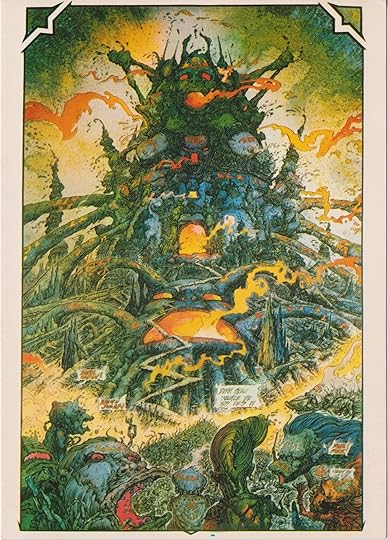
Born from a personal tragedy, The Night is the darkest, most explosive work of comics legend Philippe Druillet (Lone Sloane, Yragael).
In a post-apocalyptic future of nihilistic anarchy, barbarians and bikers race for the ultimate high, screaming defiance in the face of extinction.
Named by Warren Ellis as a major influence, The Night is an "exegetic" masterpiece.
"Every panel is at war for your attention; every page wants to be your favorite page. A beautifully rendered reminder that everything ends, and time comes for us all." – Diamond Staff Pick"
Most terrible of the graphic novels. Druillet is haunted by the evil. His parents were collaborator Nazis. They followed the withdrawal of the German troops until Sigmaringen with Celine. ts style is sumptuous, jagged. The characters seek a direction that they wont never find. This book is particular. He was written after the death of his wife by cancer. It is a painful song of love for his wife, it is a cry of despair and incomprehension. After this book, he sanks in depression and alcohol. Lucas proposed to him to work on Starwar but he has unable to answer. He is alive miraculously. It is an apocalyptic book which returns us to our major interrogations.
Les plus désespérés sont les chants les plus beaux, Et j'en sais d'immortels qui sont de purs sanglots.
Stricken with grief following the loss of his wife Nicole to cancer, Druillet penned this gorgeously apocalyptic mess of warring undead bike gangs staring down the end of their world. The cataclysmic page layouts and the hallucinatory bleed-out of his bleak reality into the desperately mythic universe he creates take this way beyond the basically adolescent plot arc and into something bitterly, blackly luminous as the killing dawn that will wipe everything in the story away when it breaks. Real shrieking into the void material.
Never translated into English, but once you have some basic obscenities and words for death and decay, it's pretty readable.
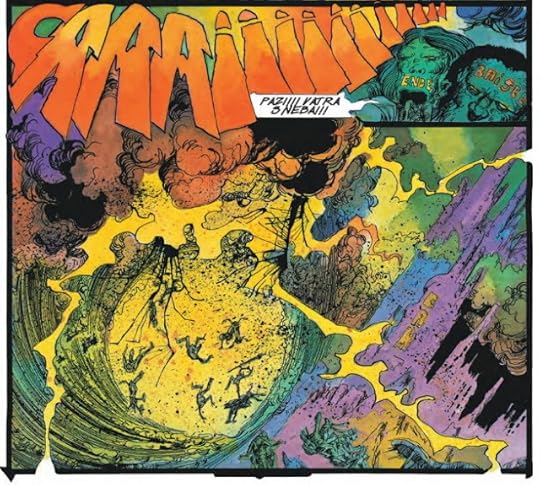
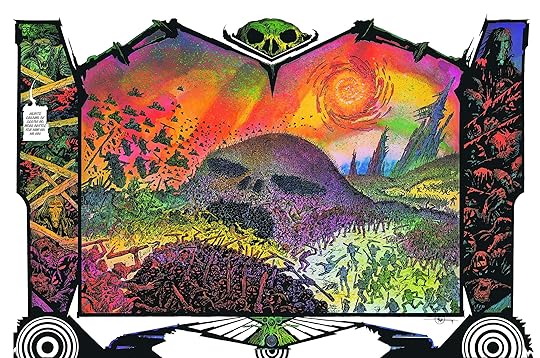
La Nuit (“The Night” in English) is what happens when an incredibly talented artist channels overwhelming grief through the medium of a horrific, post-apocalyptic sci-fi comic. To focus on the plot – which somehow manages to be straightforward and incomprehensible at the same time – would be to miss the point. There’s no backstory or world-building to speak of: the only context Druillet provides is to explain that his wife has recently died – this is all the reader needs to know. Rather than trying to work out who, what and where the story’s characters are, or attempting to decipher their motivations, this is a comic where it’s best to just go along for the ride, soak up the atmosphere and enjoy the visuals. And the visuals, by the way, are astounding. The psychedelic metalhead-type aesthetic might not be to everyone’s taste, but I find myself in awe of every page. The colours are vibrant, the level of detail is amazing and there are some of the most glorious page layouts I’ve seen.
Above all, this comic is expressive. The panels drips with a mix of angst, rage, defiance and anguish. This is conveyed somewhat bluntly in the apocalyptic subject matter and the crude dialogue, but is expressed absolutely masterfully through the art. La Nuit is an exhausting, nightmarish read, but it’s a comic I’m sure I’ll keep coming back to in the future.
Čim videh da se Drije družio sa Mebijusom, jasno mi je bilo da treba očekivati alogičnu priču. To sam i dobio. Prepuno alegorija i referenci, sumorna priča o smrti sa predivno autentičnim crtežom. Nisam razočaran Drijeovim premijerom na srpskom jeziku.
Voleo bih da pročitam jednu pametnu rečenicu o ovom stripu a ne samo opšta mesta koja "opravdavaju" ocene 4 i 5 čak 70% recenzenata na Goodreads. Ne zezam se, stvarno bih voleo da čujem kako je neko STVARNO razumeo strip. Komentari su otvoreni.
7/10 In 1976 Druillet mourns the death of his beautiful young wife drawing a tour de force of barbaric violence depicted with insanely baroque art. Explosions of bright colours, rotten bodies, angular panel edges, proto-heavy metal aesthetics. A futuristic prehistoric world, where a masnada of troglodytes are fighting against the end of all things. Do not expect much of a plot: you open this comics album only for the strength, the intensity and the sophistication of the art. If you can, buy some used old edition. The most recent reprints (the French one by the publisher Glénat and the English one by Titan), although sufficiently nice to look at, seems not to make justice to the insane colouring of the original edition. See this video on the issue: https://www.youtube.com/watch?v=DFZmJ...
This is stunning, and, contrary to a few other reviews here, at least as easily comprehensible in both plot and dialogue as Riddley Walker, say. A gorgeous, proud, nihilistic celebration of both life and death done by a true master.
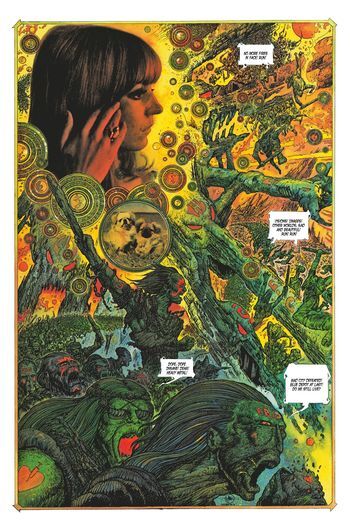
Plutôt 4.5 La Nuit est une marche funèbre et en même temps une oeuvre-temple qui rend hommage à Nicole, compagne de Druillet morte à la suite d'un cancer alors qu'elle avait 30 ans. Sous une narration caotique et incongrue, ce sont les cris de desespoir, la poursuite et la destruction qui forment le noyau de cette oeuvre. Et des portraits de Nicole. Nicole toujours, tel une madonne baroque qui arpente des vallées détruites et veille au-dessus du sang et de la haine des personnage mutants. La Nuit est une apothéose de douleur, talent et obsession. Druillet éclate la mise en page traditionelle, ses planches s'étalent en deux pages et lire Druillet c'est proche de lire un story-board; plan d'ensemble - grand plan - très gp - grand plan - on coupe, page suivante - plan general. Le trait à l'encre de chine dessine milimetriquement des scènes grandioses. Le tout jailissant d'une deuxième main, cette fois-ci de couleurs, chaudes et froides; vert et beaucoup de jaune. En regardant l'oeuvre de Druillet il en impossible de ne pas se représenter les scenarios futuro-fantastiques immortalisés par George Lucas au cinéma. Et pour tout dire, l'influence va en sens contraire des aprioris: la Guerre des Étoiles doit beaucoup à Maître Druillet (tout comme à la capacité d'appropriation de George Lucas). Oeuvre à découvrir plus et encore.
Druillet's La Nuit is extremely weird: a sexual violent classic Metal Hurlant-style story where-in the artist Philippe Druillet is working through their grief over the recent death of his wife—a photograph of which the characters in the story see in a religious vision. One of the prisoners exclaims: "Visions! Images! Other worlds, sad and beautiful!" then another answers him: "Dope, dope insane! Dear! Heavy Metal!"
The edition I has bookmarked epigraphs of the Charles Baudelaire poems Semper Eadem and The Portrait, both about the death of a woman, paired with the same sad photograph of Philippe's Nicole in a flower crown holding a bouquet.
It's really fascinating to see a very beautiful, obviously personal and angry work processed through a bizarre sci-fi fantasy story about prisoners on the run. Incredible art.
"...to this world we did not make, which murders us. O elders, I HATE you!"
Alla luce della recente rilettura dell'opera, mi trovo a rivalutare La Notte di Druillet essendo, oggi, per me, il suo miglior lavoro. Specifico che Lone Sloane sarà sempre lassù in quanto è una pietra angolare della nona arte, una svolta significativa rispetto alla classicità ad ogni costo. La Notte non aggiunge nulla ma è il cardine di un Druillet irripetibile. La sua antiestetica raggiunge qui i massimi livelli di bruttura e la "spettacolarità" delle pagine da metà libro in poi non sovrastano lo schifo che c'è sotto. Il tratto sketchato e melmoso di Druillet trova la culla perfetta in una storia mortifera e senza speranza. Canto disperato ed inno alla distruzione, lontano dai canoni estetici tradizionali sin dagli esordi rinnegati ma che qui trova il suo massimo compimento nella scala del marciume cosmico. Se è vero che il suo tratto nei lavori precedenti era più o meno così, è anche vero che era meno gravoso e carico di linee, e alcune volte era più goffo del voluto, non era ancora padrone del tutto di quello stile, questo è certo. Mentre ne La Notte la distorsione anatomica e prospettica, nonché il tratteggio, sono esattamente al loro posto e si trascinerà questo alone tetro anche in Gail('78), infettando ancora di più gli scenari disperati di Lone Sloane ma, ripeto, mai più tanto marcio e viscerale come qui. Mai più il magma caotico di Druillet si è riversato con tanto ordine, con tanta irruenza e veridicità. Druillet è sempre stato un folle irriverente, ma profondamente triste, d'altronde provava sconforto sin dalla sua infanzia sapendo che i genitori erano fascisti convinti, il cui padre ha anche combattuto per il regime franchista e la madre torturava, uccideva e deportava partigiani e ebrei. Ma se i genitori non te li scegli e magari in età adulta riesci a lasciarteli dietro, il suo malessere - dovuto alla malattia della moglie (costretta ad abortire pure) e poi la sua morte - è palpabile pagina dopo pagina. Tutto questo è evidente (sin dalla prima lettura) al di là delle firme visibili in alcune tavole (scoperte solo alla seconda lettura) contenenti, oltre alla data, anche i luoghi, ovvero gli ospedali le cui stanze aveva allestito a mo' di atelier per mostrare alla moglie una finta normalità, che la malattia non lo stava distruggendo. "Nella storia dell’arte, ogni volta che un artista veniva colpito da una tragedia simile, creava una scultura, un dipinto o qualcosa del genere. Nei fumetti, non era mai stato fatto, all’epoca." Senza dubbio La Notte era un'operazione catartica e fu una cura anche per lui, dove la sua arte gli serviva come sfogo, come è palese nella prefazione quando se la prende con i dottori e la morte. Infatti è proprio la morte la protagonista dell'opera, è l'ombra dei folli motociclisti che combattono per fotterla. Morti viventi che cercano di salvarsi seminando morte e violenza di una frenesia delirante in città organiche che defecano tutto il loro squallore, dove neanche i miraggi delle fotografie della moglie, che condiscono alcune pagine, sono d'aiuto. La Notte è finita, l'alba è giunta, l'ombra non si nasconde più nel buio ma poi scompare per sempre. La morte ha afferrato tutti, disfacimento totale e "la musica sale in lento crescendo." E' un'opera senza fronzoli, sentita, in cui Druillet - del tutto disilluso - riversa tutto se stesso, si sporca e fa dannare. Non c'è più la magniloquenza di Lone Sloane o Yragael o Salammbò, i morti viventi parlano con un lessico basilare, sono esseri umani regrediti allo stato primitivo, dove anche la parte grafica inizia in un modo abbastanza scarno - per gli standard di Druillet - ma si carica man mano fino ad esplodere. E' una marcia o, forse è meglio dire, corsa funebre dell'umanità verso la tappa ultima della vita e poi dopo solo l'oblio della dimenticanza. Penso che è la terza volta che lo leggo, si cresce e si cambia idea, dapprima lo consideravo migliore di Salammbò e Yragael, poi inferiore ed ora il suo apice. Magari sarà il formato maggiore con cui l'ho letto ora (Titan Comics in eng), magari è il fatto che ho scoperto che i colori originali sono nettamente meno diluiti di questa riedizione o magari oggi, pur amando infinitamente di più le sue opere cosmiche, mi viene più semplice discernere il suo reale valore. L'opera d'arte non deve piacere né accontentare, ma deve creare e suscitare una qualsivoglia sensazione, stupirci con qualcosa di inaspettato e non infiocchettato, di cui all'artista deve fregare poco del conforto del lettore. D'altronde la morte è lì che aspetta tutti, è ineluttabile (non con uno schiocco di dita) e Druillet ha ragione quando dice che in occidente viene occultata perché ci fa paura, ci fa riflettere e non è redditizia, ma cerca di svegliare il lettore, con cui si rivolge con sferazante pietà, chiamandolo "futuro cadavere". Con "...sto imparando ad amare la morte ... ho buon gusto." chiude Druillet la prefazione del '76, ma mi viene in mente anche una famosissima citazione di Truman Capote "il buon gusto è la morte dell'arte". La Notte è un'opera d'arte sulla morte, tutto torna.
P.S. Scopro solo ora che Druillet tenta anche il suicidio con un mix di droghe ma lo salvano in extremis. Poi: "Torno a casa. Mi rimetto al lavoro. Devo terminare la mia opera. Non posso dimenticare Nicole. Le costruirò un mausoleo. Sublimo così il mio dramma. Sono pazzo. Mi abita la follia. Un fuoco interiore mi divora. Non dormo più. Non mangio più. Bevo e lavoro senza sosta. Mi incateno alle crisi del mio delirio."
Treba se vratiti pod zemlju. Vrelina i ognjena kiša spaliće nam tela. Čekajte da se vetar utiša!
Ako očekujete priču, ovde je baš i nema. Na stranicama možete jedino naći bes, agresiju, haos, dekadenciju i opšte beznađe. Uvodna reč autora je jako bitna, možda i ključna da bi se išta u ovom stripu ispratilo. Njega je pisao vidno uznemiren, besan, užasnut životom, duboko potrešen, neutešan i slomljen čovek. Taj (nazovimo ga) predgovor se ne može oceniti i taj predgovor ne može razumeti i osetiti onaj koji nije prošao sličnu patnju i susreo se s granicama savremene medicine, (ne)čoveštvom i (ne)ematijom ljudi kojima ukazuje poverenje, tačnije život svojih najmilijih.
Bes, haos, urlici, jauci, vonj i smrad iskaču s tabla ovog stripa i uvlače vas u jednu noć Mad Max-a. Razuma i reda bez. Jedinu koherentnu misao ćete čuti od jedne žene i to tek pri sredini stripa. Skoro sve ostalo je jurcanje za dopom bez kog se ne može preživeti naredni dan.
Crtež je, pa malo je reći, impresivan i nestvaran! Detalji su neverovatni! Uramila bih pola tabli. Ako je Dario Argento "master of colours" horor filma, Philippe Druillet je (pored još nekih imena za mene) master of colour za svet stripa. I baš me briga ako sam subjektivna!
Nečiji komentar je bio da uz La Nuit savršeno ide muzika Voivod-a. Ima istine, ali ne uz sve table. Meni uz neke ide Set The Controls For The Heart Of The Sun od Pink Floyd-a, a uz poslednjih par The Great Gig In The Sky takođe od Floyd-a. Ne pitajte, ne umem to opisati. Jednostavno po emociji mi idu ruku pod ruku. Iz nekog haosa, besa, tuge, beznađa, možda, ali samo možda, stižemo do neke katarze. I prepuštamo se.
And I am not frightened of dying Any time will do, I don't mind Why should I be frightened of dying? There's no reason for it, you've gotta go sometime.
In an apocalyptic dystopia, tribes of biker gangs roam the wasteland in pursuit of pleasure but find themselves routinely subjugated by the jackbooted thugs of the unseen paleface authorities. That is until one day when the various disputing gangs put aside their squabbles and join forces to storm the Blue Depot which serves as the head of the authoritarian regime and overthrow those who keep them underfoot.
Made in reaction to his wife's death, Druillet seemingly crafted this narrative as nihilistic catharsis for his rage towards her premature death and the medical establishment that acted as callous gatekeepers for her cancer treatment. In theory the symbolism sounds like it could be emotionally powerful but, Druillet being the poor storyteller that he is, it's largely just a semi-coherent action romp. While it's clear the palefaces and their enforcers are metaphors for the doctors and those of means who control access to life saving care, the analogy feels very clumsy and morally simplistic at best. This clumsiness extends to the plotting which includes several instances of strange non-sequiturs like when the bikers sing The Rolling Stones' "Brown Sugar" before going into battle or see nude visions of Druillet's wife as they storm the Blue Depot. Add to this grating dialogue which leans into one of the most obnoxious sci-fi tropes of utilizing opaque, primitive language to imbue a sense of far flung alienness and the whole narrative package is rather eye rolling.
However, like all Druillet work the experience almost entirely rides on the quality of the art and this is pretty engaging on that front. While the initial pre-rebellion pages feel somewhat low on detail and limited in color palette, both of these aspects improve dramatically as the book progresses and Druillet crafts some simply killer compositions of kaleidoscopic chaos. I really enjoy when Druillet utilizes this messier, almost spray paint like coloration and this was probably the best example of that I've seen in his work so far (though Gail is nice too). Layouts and the inclusion of graphic design elements are also quite dynamic and make for fun pages to explore.
Val a dir que La noche és un estrany —i improvisat— homenatge de l'autor a la seva parella sentimental. Quan Druillet l'estava escrivint, el càncer se la va endur i això el va marcar profundament. El text que serveix com a pròleg n'és un clar i devastador exemple.
La història comença com un retrat de bandes motoritzades amb una estètica futurista en la línia de Mad Max. En aquesta distopia farcida de drogues i motos la policia és un element repressor al qual cal estomacar, i els protagonistes s'hi dediquen de bon grat. La violència irracional del principi muta cap a mig relat en un esclat d'ira organitzat i amb una finalitat més elevada: les diferents bandes s'uneixen per lluitar contra un enemic comú.
És aquí quan Druillet deixa anar tota la seva creativitat, introduint retrats bucòlics de la seva estimada enmig d'il·lustracions grandioses i barroques sobre la confrontació amb el Mal, un mal en majúscula, immens, delirant i invencible. En l'àmbit visual el volum és un espectacle fascinant i sense mesura. Precisament és aquest excés, aquesta excentricitat, el que m'agrada tant de Druillet. Té una manera curiosa de compondre, sovint amb un primer pla, un pla mitjà i un fons carregat de detalls, i en qualsevol escena d'aquestes grandioses il·lustracions és fàcil perdre-s'hi buscant detalls. Violència, sexualitat i esperit cyberpunk impregnen un text demolidor i pessimista que, més enllà d'un simple enfrontament, és una batalla sense treva contra un final que no podem evitar.
In a nutshell: Mad Max meets the Fabulous Furry Freak Brothers. I expected this to basically be a Blue Oyster Cult song in comic book form, and it certainly was that - minus a bit of cleverness perhaps.
OK, so some bikers who get burned by the sun are being exterminated by the cops and the "palefaces". They decide to rise up and seize the production facility the produces the drugs they need to stay alive.
It's barely coherent as a premise, and this is not helped by the dialog, which is in the form "HA HA HA! BLOOD! CRAP! NIGHT!". Maybe it's a translation issue, or maybe this was kinda just shat out in a bender of grief (included are extra helpings of explanation that this was produced right after the death of Druillet's wife, probably to make up for the merits lacking in the work itself).
The art is deceptively complex: it appears simple and drug-addled, but on closer inspection there is a lot of complex detail, but on further inspection this detail is just extra lines. Filler, added perhaps as a texture, providing no form, no information, no *detail*. It's like Druillet saw the hints of intricacy that Moebius tosses into his work, and is aping that style without understanding it.
Kinda fun, in a trashy 80s Italian dystopian sci-fi film sorta way, but I wouldn't call it *good*.
Real quick: The composition and colors are stunningly beautiful. Story is straightforward and a bit passe, I don't think putting it into context changes that. Doesn't make the novel itself better or worse, the novel is interesting regardless, if only because even without the foreword, what the author is doing: a sheer expression of emotion on the page, is fairly obvious. I think given the context though, I don't know if... I find that the way that the way it equivalizes death (sing.) and the feeling of grief with not just expression but in this case the scenario of war and drugs and devastation. It interesting to me the way that he chooses to display death, how he visualizes it: the distorted faces, tattoos, clubs and sticks, barren landscapes. All things that surely exist, that he makes synonymous to the "base" facets of humanity: death and war and drugs and sex- So yea, I agree that the story doesn't matter so much as the context, but not because of the grief, but because of the association (or "appropriation") of visuals with distinct associations (poverty, desolation, anarchy or rebelliousness) with grief.
There are images in here with incredible depth, some of which are very effective. I haven't read anything else by Druillet, but I could say he feels like a creator with a poet's spirit (Maybe that's the Baudelaire quote at the end).
Da gusto sentarse a leer una historia corta tan extraña ambientada en un mundo peculiar que no llegamos a entender, justo en una época en la que parece que una buena parte de las historias de ficción (entiendase en el mainstream) tengan que ambientarse en universos hipercomplejos donde todo está conectado.
La Noche no pretende que entiendas el funcionamiento de su sociedad, sino los sentimientos que hay detrás. Las motivaciones de los personajes son simples: buscar droga para poder sobrellevar su vida en el brutal páramo post apocalíptico hasta el punto de morir por ella, y es que aquí todo rezuma muerte y pesimismo. Todo el mensaje se condensa en el dibujo de Druillet, que ofrece composiciones brutales y psicodélicas donde los personajes muchas veces se reducen a manchas insignificantes en contraposición a lo titánico que es ese mundo, reluciendo la desesperación de los habitantes.
Adentrarse en esta obra es echar un vistazo en la psique de su autor justo en un momento nefasto de su vida, y creo que Druillet consigue traspasar esos sentimientos y pensamientos de su cabeza al papel como nadie
La Nuit is what happens when talent meets grief and despair. I didn't know exactly what to expect going into this book. I knew Druillet wrote it after his wife had passed from cancer. I'd heard people like it to Mad Max and other post apocalyptic wasteland stories. I definitely didn't expect such an onslaught of raw emotion. Though I probably should have. Not quite as geometrically panelled had his Lone Sloane books, for the most part, this remains very much Druillet. The insane detail, the psychedelic colors.. It's a feast for the eyes. The story is chaotic and nonsensical. From the intro text, and what I managed to gleam from the actual narrative, his anger seems to be somewhat misplaced. Though who am I to judge how he should grieve his loved one.. But even through the fog of his surreal revolutionary story, it remains absolutely captivating. Nothing will ever beat the awe when turning the page on some of those splashes in Six Voyages, but the ones with collages of his wife in the middle of the climactic takeover battle definitely come close. This is truly one of a kind.
A madcap, drug-fueled psychedelic tale of a bloodthirsty biker gang in a post-apocalyptic wasteland. There isn't much to the story behind "The Night"/"La Nuit", but the expressive artwork complemented by the burning infusion of vibrant greens, blues and oranges make this one of Druillet's best looking works. The nihilistic tone to the story is best understood through the lens of a grieving artist who decided to channel his frustration and sorrow into something defiant of all conventional works in the medium. Though marginal in narrative, "The Night" evokes a beautifully dreary atmosphere that only Druillet can really capture.
Wow. Simply wow. It was amazing to experience it so visually, as his text is almost superfluous to the amazing range of images he shows. I was particularly in awe of how he could go from a crazy abstract multi page spread and then immediately switch back into an ordered box style comic panel. I can definitely see his influence in a lot of work, but for some reason the two big parallels for me were Tartakovsky and The Gorillaz, oddly enough, with some Bankin Rass high fantasy thrown in. Honestly jaw dropping color work.
The story of The Night is comprised of trippy nonsense, but the art is awesome. Composed in the wake of his wife's death, Druillet clearly poured himself onto these pages and the result is undoubtedly a powerful work. The art is really incredible, though gloomy and even ugly in places. But for me I always prefer a bit stronger of a story. Still, this is an essential piece in any Druillet collection.
This is an interesting (read weird) story that brings to mind all the cheesy italian mad max rip-off movies. I like those movies. There's something beautiful about naming your protagonist "Trash".
Apparently, this was a story that the author wrote in response to his wife dying of cancer, so that's heavy.
I'm not sure I got the message here. But the art is incredible, and is worth the read, alone. I definitely want to explore more works by the author.
A wild apocalyptic trip into a war between a bunch of factions. I can't say that I was able to follow along with everything but I had a great time getting lost in the detailed drawings and following along on the journey. The work definitely benefits from the large format. Druillet made this while grieving the death of his wife and you can feel him pouring his heart on the page.
A graphic novel processing the loss of his young wife to cancer. The setting is a post apocalyptic drug fueled gang revolt leading to a nihilistic conclusion. Druillet is a master artist; the colors, the line work, the world building are exquisite. The story is very difficult to read. It's so jarring. It's so painful.
Las viñetas de Druillet son abigarradas como siempre, pero todavía no había alcanzado la limpieza geométrica que sería después su seña de identidad. A la mitad del álbum murió su mujer y la segunda parte se convierte en un homenaje que se entrelaza con la historia.