

What do you think?

Robert Shannon #1
Юные годы
Дилогия о Роберте Шенноне, написанная известным английским писателем А. Дж. Кронином, во многом автобиографична. В ней искренне, правдиво, психологически честно и художественно выразительно показана история становления молодого человека, жизненный путь которого начался в серой убогой среде маленького провинциального городка Ливенфорда. В первой части дилогии рассказывается о юных годах Роберта, о его мальчишеских радостях и огорчениях, первых увлечениях, мечтах и житейских бедах.
318 pages, Hardcover
First published January 1, 1944
About the author
A.J. Cronin
220 books506 followersArchibald Joseph Cronin was a Scottish novelist, dramatist, and non-fiction writer who was one of the most renowned storytellers of the twentieth century. His best-known works are The Citadel and The Keys of the Kingdom, both of which were made into Oscar-nominated films. He also created the Dr. Finlay character, the hero of a series of stories that served as the basis for the long-running BBC television and radio series entitled Dr. Finlay's Casebook.
-Wikipedia: http://en.wikipedia.org/wiki/A.J._Cronin
-Wikipedia: http://en.wikipedia.org/wiki/A.J._Cronin
Ratings & Reviews
Friends & Following
Create a free account to discover what your friends think of this book!
Community Reviews
Displaying 1 - 30 of 94 reviews

April 4, 2023
This book is amazing for ME, and a book must be amazing for me to give it five stars! I absolutely, absolutely, absolutely love it.
Why do I so very much adore this author's books?! I must figure out how to put this in words before I write my review.
I went into the book knowing nothing, neither its plot nor its themes. Discovering this on my own was part of the joy of the reading experience. I am going to avoid specific plot details. I want you to also experience the joy of discovering the book on your own.
We are given characters that have ideals they simply cannot and will not sacrifice. It is impossible for them to do otherwise. Beliefs can be so deep-rooted that they are as bodily instincts. Principles such as these cannot be squashed. This is not because the person has a particularly noble character. It is because the beliefs are an intrinsic part of who the person is. Following one’s ideals doesn’t go down easily in any society. Always obstacles arise. My heart went out to those willing to fight for a cause they wholeheartedly believe in. I like the contrast between the ordinariness of the person and the steadfastness with which they fight for a belief. So few have the strength to stick to their guns. Such people win my heart. My heart goes all mushy for them. I care. I become emotionally involved. I want to be moved by the books I read. I hate being left indifferent when I read. This book brought tears to my eyes, smiles and warmth to my heart. It moved me.
We follow a boy from the age of eight to eighteen. Both his mother and father have recently died. He has no other place to go but relatives he scarcely knows. I’ll tell you this—it’s the relationship that develops between him and his great-grandfather that lies at the core of the tale. We’re in Scotland, not far from Castle Rock. The time-setting is the turn of the 20th century.
Religion is an important theme. It’s extremely well handled. The boy, our central character, has been brought up as a !
Parsimony is another central theme. Scotts are so often characterized as being stingy. We observe how mannerisms, beliefs and long-accepted traditions play out in the family. The value of fresh air, exercise and the beauty of nature underly the book’s message. Life lived on a small scale is valued over the loud and flashy. Friendship is both rewarding and a source of great sorrow.
There is humor in the lines. It doesn’t hit you in the face; you must think about the underlying significance of what people say.
The cast of characters is not large, but just enough to expose us to different types! Rather than there being many, the focus is instead on a few and they are drawn in depth. We are shown both good and bad qualities in each. I smile when I say this. The great-grandfather is my hero and yet he has plenty of faults. He’s human!
Have I said too much? I’ve tried to just focus on the essential. Your heart is going to be wrung. Life is not easy for any of us! You are going to smile. You will finish the book saddened and yet you will still have hope. Life is drawn realistically; both its delights and difficulties are engagingly interwoven. The worst and the very best can happen. The result being you do not know what will happen!
The audiobook I listened to is read by Tore Bengtsson. The only version I could get my hands on was a Swedish translation done by Nils Holmberg. I always prefer the untranslated original! Both the translation and narration were fine—not hard to follow, although English names never sound quite right when spoken in another language. Idioms and expressions flow well. The narration deserves three or four stars.
This is the first volume of a series of two. The second is Shannon's Way. I have begun it immediately. This tells you how much I have enjoyed the book!
I highly recommend any book written by the Scott A.J. Cronin (1896 – 1981). A.J. stands for Archibald Joseph. He was both a novelist and physician. His works combine both realism and social criticism. They grab at your heart.
*******************
Standalones:
*The Keys of the Kingdom 5 stars
*The Stars Look Down 5 stars
*A Thing of Beauty 4 stars
*The Citadel 4 stars
*Adventures in Two Worlds 4 srats
(autobiography)
*The Judas Tree 4 stars
*The Spanish Gardener 4 stars
*Hatter's Castle 4 stars
*Beyond This Place TBR
*Three Loves  TBR
*The Northern Light TBR
*Vigil in the NightTBR
*Grand Canary TBR
Duologies:
1,The Green Years 5 stars
2.Shannon's Way 3 stars
--------------------
1.A Song of Sixpence 5 stars
2.A Pocketful of Rye 3 stars
Why do I so very much adore this author's books?! I must figure out how to put this in words before I write my review.
I went into the book knowing nothing, neither its plot nor its themes. Discovering this on my own was part of the joy of the reading experience. I am going to avoid specific plot details. I want you to also experience the joy of discovering the book on your own.
We are given characters that have ideals they simply cannot and will not sacrifice. It is impossible for them to do otherwise. Beliefs can be so deep-rooted that they are as bodily instincts. Principles such as these cannot be squashed. This is not because the person has a particularly noble character. It is because the beliefs are an intrinsic part of who the person is. Following one’s ideals doesn’t go down easily in any society. Always obstacles arise. My heart went out to those willing to fight for a cause they wholeheartedly believe in. I like the contrast between the ordinariness of the person and the steadfastness with which they fight for a belief. So few have the strength to stick to their guns. Such people win my heart. My heart goes all mushy for them. I care. I become emotionally involved. I want to be moved by the books I read. I hate being left indifferent when I read. This book brought tears to my eyes, smiles and warmth to my heart. It moved me.
We follow a boy from the age of eight to eighteen. Both his mother and father have recently died. He has no other place to go but relatives he scarcely knows. I’ll tell you this—it’s the relationship that develops between him and his great-grandfather that lies at the core of the tale. We’re in Scotland, not far from Castle Rock. The time-setting is the turn of the 20th century.
Religion is an important theme. It’s extremely well handled. The boy, our central character, has been brought up as a !
Parsimony is another central theme. Scotts are so often characterized as being stingy. We observe how mannerisms, beliefs and long-accepted traditions play out in the family. The value of fresh air, exercise and the beauty of nature underly the book’s message. Life lived on a small scale is valued over the loud and flashy. Friendship is both rewarding and a source of great sorrow.
There is humor in the lines. It doesn’t hit you in the face; you must think about the underlying significance of what people say.
The cast of characters is not large, but just enough to expose us to different types! Rather than there being many, the focus is instead on a few and they are drawn in depth. We are shown both good and bad qualities in each. I smile when I say this. The great-grandfather is my hero and yet he has plenty of faults. He’s human!
Have I said too much? I’ve tried to just focus on the essential. Your heart is going to be wrung. Life is not easy for any of us! You are going to smile. You will finish the book saddened and yet you will still have hope. Life is drawn realistically; both its delights and difficulties are engagingly interwoven. The worst and the very best can happen. The result being you do not know what will happen!
The audiobook I listened to is read by Tore Bengtsson. The only version I could get my hands on was a Swedish translation done by Nils Holmberg. I always prefer the untranslated original! Both the translation and narration were fine—not hard to follow, although English names never sound quite right when spoken in another language. Idioms and expressions flow well. The narration deserves three or four stars.
This is the first volume of a series of two. The second is Shannon's Way. I have begun it immediately. This tells you how much I have enjoyed the book!
I highly recommend any book written by the Scott A.J. Cronin (1896 – 1981). A.J. stands for Archibald Joseph. He was both a novelist and physician. His works combine both realism and social criticism. They grab at your heart.
*******************
Standalones:
*The Keys of the Kingdom 5 stars
*The Stars Look Down 5 stars
*A Thing of Beauty 4 stars
*The Citadel 4 stars
*Adventures in Two Worlds 4 srats
(autobiography)
*The Judas Tree 4 stars
*The Spanish Gardener 4 stars
*Hatter's Castle 4 stars
*Beyond This Place TBR
*Three Loves  TBR
*The Northern Light TBR
*Vigil in the NightTBR
*Grand Canary TBR
Duologies:
1,The Green Years 5 stars
2.Shannon's Way 3 stars
--------------------
1.A Song of Sixpence 5 stars
2.A Pocketful of Rye 3 stars

August 26, 2015
This is my second A J Cronin and it didn't disappoint. This is just the kind of story I like, true characterization (warts and all), a plot packed with everyday drama, tragedy mixed with triumph at the very last gasp, a novel some might call melodramatic and soap-opera-ish but whatever, it's a great read and I dare you to not get choked up at least twice.
A young orphan boy is sent to live with his grandparents, aunts, uncles, and great-grandparents in Scotland, where the head of the house, his pecuniary grandfather, rules the roost with austere frugality. Even with Shannon's bent for biology and his good chances of winning a scholarship, his studious passions meet a brick wall when he becomes of "wage age".
His one reprieve in life is his un-sunderable friendship with Gavin as they adventure together on school breaks in the fields and glens, hiking, fishing and collecting birds eggs and specimens.
Then tragedy. And more tragedy. And more tragedy.
*sigh*
Some interesting characters here, including a red nosed eccentric grandfather with an eye for the ladies and a taste for strong drink, a retired barrel monkey with double pneumonia. A kindly school teacher with a scarred lip and ideas of socialism, a bowlegged suitor, and a young lady with a voice of angels.
Recommended for those who enjoyed "A Tree Grows in Brooklyn", Francis Brett Young's "The Young Physician", or Howard Spring's "My Son, My Son"
CONTENT:
Clean with minimal to no profanity
A young orphan boy is sent to live with his grandparents, aunts, uncles, and great-grandparents in Scotland, where the head of the house, his pecuniary grandfather, rules the roost with austere frugality. Even with Shannon's bent for biology and his good chances of winning a scholarship, his studious passions meet a brick wall when he becomes of "wage age".
His one reprieve in life is his un-sunderable friendship with Gavin as they adventure together on school breaks in the fields and glens, hiking, fishing and collecting birds eggs and specimens.
Then tragedy. And more tragedy. And more tragedy.
*sigh*
Some interesting characters here, including a red nosed eccentric grandfather with an eye for the ladies and a taste for strong drink, a retired barrel monkey with double pneumonia. A kindly school teacher with a scarred lip and ideas of socialism, a bowlegged suitor, and a young lady with a voice of angels.
Recommended for those who enjoyed "A Tree Grows in Brooklyn", Francis Brett Young's "The Young Physician", or Howard Spring's "My Son, My Son"
CONTENT:
Clean with minimal to no profanity

September 13, 2013
http://youtu.be/wbzT8JuevaA
Jessica Tandy in here. Fab! A one-liner review somewhere on the net, forget where, states 'The conflict between Catholics & Presbyterians in Ireland', Nope, that is not what this is about at all. It is a semi-autobiographical account of the coming of age a budding young scientist who happened upon a microscope in a swap for a golden plover egg. Did I mention Grandpa? Well he is great-grandpa and he is wonderful.
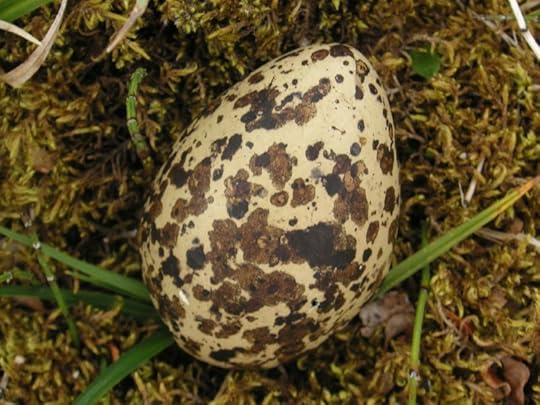
5* Hatters Castle
5* The Citadel
4* The Green Years
The above three novels are so different in texture:
Hatter's Castle is dark and gothic;
The Citadel about the plight of The Pit Valleys of South Wales, and the working conditions therein
The Green Years is an uplifting tale where the disadvantaged can realise dreams through hard work and sacrifice.
There is a religious theme running through but nothing heavy, and medicine of course: A J Cronin had a few capital letters after his name. Ready for them?...
MB, ChB, MD, DPH, MRCP
Jessica Tandy in here. Fab! A one-liner review somewhere on the net, forget where, states 'The conflict between Catholics & Presbyterians in Ireland', Nope, that is not what this is about at all. It is a semi-autobiographical account of the coming of age a budding young scientist who happened upon a microscope in a swap for a golden plover egg. Did I mention Grandpa? Well he is great-grandpa and he is wonderful.
5* Hatters Castle
5* The Citadel
4* The Green Years
The above three novels are so different in texture:
Hatter's Castle is dark and gothic;
The Citadel about the plight of The Pit Valleys of South Wales, and the working conditions therein
The Green Years is an uplifting tale where the disadvantaged can realise dreams through hard work and sacrifice.
There is a religious theme running through but nothing heavy, and medicine of course: A J Cronin had a few capital letters after his name. Ready for them?...
MB, ChB, MD, DPH, MRCP

August 18, 2013
Girovagando tra gli scaffali della biblioteca a volte si possono scoprire dei libri dimenticati.
È il caso di questo libro che giaceva un po’ abbandonato, con la copertina un po' rotta e che da un po’ di tempo mi faceva l’occhiolino (la bibliotecaria mi ha detto che non veniva preso in prestito da un bel po’ di tempo).
Grazie a questo libro ho scoperto un autore (per me semi-sconosciuto) e un romanzo bellissimo.
Esso narra la storia di Robert Shannon, che, dopo essere rimasto orfano di entrambi i genitori, è costretto a trasferirsi dalla natìa Dublino alla Scozia, nel piccolo paese di Levenford, presso la casa dei nonni materni .
Nel paese è deriso per il suo nome, per gli abiti che indossa, per la sua religione cattolica. In famiglia viene messo in disparte dalla maggior parte dei parenti: il nonno, che si occupa solo del denaro fino all’ultimo centesimo, la nonna, sottomessa che si fa in quattro per far quadrare il bilancio familiare con i pochi soldi che gli da' il marito; gli “zii” Murdock e Kate, che pensano solo a loro stessi; la bisnonna (madre del nonno), donna rigida e irremovibile nel voler far “convertire” Robert alla religione protestante; e infine il bisnonno (padre della nonna), Alexander Grow, personaggio con un cuore d’oro, un uomo senza un soldo, con mille difetti, dalla dubbia moralità, ma l’unico che riesce a dare affetto e conforto a Robert.
Tra gli insegnamenti del bisnonno, le escursioni nella natura con il suo migliore amico, i primi amori, fatti tragici, avventure e disavventure, insicurezze e lotte interiori, seguiamo la crescita del piccolo Robert, dall’infanzia all’età adulta.
Libro molto scorrevole, ben scritto, stile di scrittura incantevole, dialoghi bellissimi, profondità delle descrizioni psicologiche, personaggi ben delineati (soprattutto il bisnonno e il protagonista), humor tipicamente inglese, vicenda coinvolgente, commoventi le ultime pagine.
Insomma un romanzo e un autore che non dovrebbe mancare nelle librerie dei lettori. Da leggere sicuramente.
Volevo essere come Giulio Cesare e Napoleone.
Ma non ero che me stesso.
June 27, 2018
Yıllar önce okuduğumda çok etkilendiğim bu eserde nedense aynı duyguyu yakalayamadım zaman aşımına mı uğruyor duygularımız ,beğenilerimiz bu defa daha melankonik buldum eseri. kullanılan kelimeler betimlemeler bazı yerlerde bana eksik bazı yerlerde ise fazla geldi. yazarın bir çok eserini çok severek okumuşumdur . Hayranımdır anlatılarına amma 40 yada 50 sene önce okuduğumda ki aynı etkiyi yaşamadığıma göre bu kuşağın klasikleri anlamasını bizimle aynı şekilde etkilenmesini beklemek sanırım haksızlık oluyor onlara.
October 13, 2022
История, от която лъха тъга и меланхолия. Написана обаче по начин, който ме кара да съчувствам, съпреживявам и да мечтая за по-доброто бъдеше на Роби, главния герой. Кронин е завладял напълно душата ми! ❤
February 21, 2008
Just this year I "discovered" A. J. Cronin and have read 4 of his books. THE GREEN YEARS is obviously the autobiographical account of Cronin's coming of age in Scotland in the early 20th Century. The supurb, honest characterization of his various family members coupled with Cronin's eye for detail, skill in plot construction, and depth of focus make this an excellent read. This book, like his others I have read, looks squarely at life and death, at joy and anguish. It is both humorous and serious as it follows a young orphan from his entrance into a new extended family through his eighteenth year. If I had not already read the second half of his life in ADVENTURES IN TWO WORLDS, I would begin it immediately. I can say with assurrance that I would be in for a treat. Since I am a reader who enjoys learning new words, likes figurative language and description, loves strong characterization, and prefers the single point of view, this book is perfect for my taste.

December 5, 2022
Non mi ha particolarmente entusiasmato. Il romanzo di per sé è estremamente scorrevole, non tende a stancare, ma l'ho trovato un po' spoglio: oltre a qualche episodio abbastanza divertente, a qualche descrizione affascinante e qualche momento concitato, non mi ha colpito. E poi a livello contenutistico credo sia abbastanza vacuo: più interessante per il contesto storico-grografico in cui è ambientato (piccola provincia scozzese agli inizi del '900), piuttosto che per altro. Soprattutto le piccole riflessioni religiose sono davvero blande, nonostante la questione religiosa sia uno dei temi fondamentali del romanzo. Dunque, le vicende del malinconico e sfortunato Roberto Shannon, pur non siano orribili, anzi, non mi han detto granché.
November 21, 2008
I stayed up late one night and watched an old 1937 movie made from this book. I enjoyed it very much and decided to read the book. Generally, I like books better than movies, and I have to say that reading the book after watching the movie took some of the fun out of the book, but I loved the characters in this book. They were very well defined and true to life. How can you not love Grandfather, who suffers from too much drink, but has one of the kindest hearts. The main character has a series of life altering set-backs and the story shows how he struggled with them. I really liked this book which exemplifies the spirit of man.
June 15, 2009
This author is a gem who receives little attention nowadays. The Green Years was recommended by a co-worker. Originally published in the 1930s, it is a charming story of a young boy growing up with his grandparents in Scotland before WWI. AJ Cronin has a real literary talent, making the reader feel as though the trials and tribulations of Robert Shannon, the main character, are the reader's own. The only disappointment was the end - which to me, seemed a little anti-climatic, although I can't put my finger on why.

August 4, 2012
I read this. 53 years ago. I love this lonely story. I was 12 then and I will read again.

June 12, 2021
Robert è un bambino davvero disgraziato, rimasto orfano di entrambi i genitori viene costretto a lasciare l'Irlanda per trasferirsi dai nonni materni in Scozia.
Cosa c'è di peggio dall'essere un Irlandese orfano in un paese straniero e in una casa non cattolica?
La sua lettera scarlatta è quella di essere figlio di un irlandese, come per la madre, prima di lui, lo era stata l'averlo sposato, un irlandese.
Un po' come in un altro romanzo di formazione irlandese, "Le Ceneri di Angela", la religione si abbatte sulle giovani menti come una scure e diventa fonte di spunti spassosi.
Ai protestanti non piacevano i cattolici, i cattolici non amavano i protestanti, ed entrambi nutrivano scarso amore per gli ebrei.
Robert cresce dunque, diviso e conteso, dai due bisnonni che lo usano come sfogo ai loro personali rancori. Una famiglia che deve sottostare alla ferrea disciplina del nonno, un vero spilorcio, che sfrutta chiunque, persino la moglie.
Nonostante l'eccentricità del bisnonno, sarà lui però il suo unico punto di riferimento.
Riuscirà a gestire tutto, religione e studio, con ottimi risultati, e non poca sfortuna.
Non manca di humor, quello tipicamente inglese, questo romanzo che, fra situazioni assurde e momenti di sconforto, ci conduce ad un finale che chiude il capitoto fanciullesco di Robert e gli apre le porte alla maturità e alla possibilità di scegliere una vita migliore.
Cosa c'è di peggio dall'essere un Irlandese orfano in un paese straniero e in una casa non cattolica?
La sua lettera scarlatta è quella di essere figlio di un irlandese, come per la madre, prima di lui, lo era stata l'averlo sposato, un irlandese.
Un po' come in un altro romanzo di formazione irlandese, "Le Ceneri di Angela", la religione si abbatte sulle giovani menti come una scure e diventa fonte di spunti spassosi.
Ai protestanti non piacevano i cattolici, i cattolici non amavano i protestanti, ed entrambi nutrivano scarso amore per gli ebrei.
Robert cresce dunque, diviso e conteso, dai due bisnonni che lo usano come sfogo ai loro personali rancori. Una famiglia che deve sottostare alla ferrea disciplina del nonno, un vero spilorcio, che sfrutta chiunque, persino la moglie.
Nonostante l'eccentricità del bisnonno, sarà lui però il suo unico punto di riferimento.
Riuscirà a gestire tutto, religione e studio, con ottimi risultati, e non poca sfortuna.
Non manca di humor, quello tipicamente inglese, questo romanzo che, fra situazioni assurde e momenti di sconforto, ci conduce ad un finale che chiude il capitoto fanciullesco di Robert e gli apre le porte alla maturità e alla possibilità di scegliere una vita migliore.

April 7, 2020
I begin to detect a pattern in Cronin’s books. The protagonist’s dreams are thwarted and met with one setback after another; that is, until the very end when fortune takes a sudden and unexpected turn for the better- a eucatastrophe (to borrow from Tolkien) - and all ends happily and triumphantly for our poor, harassed Job.

September 29, 2019
Though this book was written in 1944, it takes place in the early 1900's. Robert Shannon is the son of an Irish Catholic father and a Scottish mother, both of whom die of tuberculosis, leaving him an orphan. His penny-pinching, beyond frugal grandparents take him in. Still living at home are Robie's aunt and uncle, as well as his great-grandparents (his grandmother's dad and his grandfather's mom).
The "green years" becomes symbolic ... green for Ireland and his Catholic faith; green for growing up and naivete, green for his love for nature and scientific studies, and most unforgettable, the horrible green suit his great-grandmother made for him.
The book is somewhat depressing, but Robie struggles with depression and that is felt in the book. It is also a masterfully-told story with superb character development.
The "green years" becomes symbolic ... green for Ireland and his Catholic faith; green for growing up and naivete, green for his love for nature and scientific studies, and most unforgettable, the horrible green suit his great-grandmother made for him.
The book is somewhat depressing, but Robie struggles with depression and that is felt in the book. It is also a masterfully-told story with superb character development.

June 15, 2022
I loved this story and how it gives great insight into the benefits of multigenerational living. The relationship between Robert and his grandfather was heartwarming… a relationship that would not have grown if distance were between them. It is a story of family, friendship, first love, and maturity. A meaningful quote I chose to remember “ my particular nature strained harder in the face of difficulties”.

November 20, 2017
Буквально недавно в фейсбуке (у Галины Юзефович?) было обсуждение того, кто над какой книгой когда-либо плакал. Я читала комментарии, огорчённо думая о том, что у меня такой книги нет. И вот когда сегодня я утирала слёзы, дочитывая "Юные годы", то была счастлива вдвойне. И от того, что у полюбившегося мне героя все хорошо, и от осознания того, что у меня теперь тоже есть Та Самая книга!

July 19, 2023
Why had I never before heard of this author, AJ Cronin? I look forward to reading more of his books, as this one was fabulous!

May 4, 2023
Just brilliant.

July 27, 2020
A heartfelt story. This is the first book that almost made me cry.
Robert Shannon, who was an orphan, was raised up by his grandparents and great-grandparents. The way the book struck me was the climax and the twist are not as dramatic as some other novels. There were trouble of the youth such as discrimination and alienation due to different religions or regions. As fate would have it, Robert grew up developing his personalities from his family members, and eventually befriended Gavin, who, I think, does not deserve the tragedy like that.
Those two children became the definition of true friends and real bromance: always got each other's back, close to each other as they're lovers but they're not. It seems bad luck always surrounds Robert even when he grew up. Some parts of the story I sympathized was the cram for the great exam, which I'm sure Asian students would have experienced.
This is a story of personal struggle, of friendship, of dreams, of compassion and of affection.
I do wanted Robert and Gavin to be together, but yeah, nothing lasts forever. It hurts, but it's true.
Robert Shannon, who was an orphan, was raised up by his grandparents and great-grandparents. The way the book struck me was the climax and the twist are not as dramatic as some other novels. There were trouble of the youth such as discrimination and alienation due to different religions or regions. As fate would have it, Robert grew up developing his personalities from his family members, and eventually befriended Gavin, who, I think, does not deserve the tragedy like that.
Those two children became the definition of true friends and real bromance: always got each other's back, close to each other as they're lovers but they're not. It seems bad luck always surrounds Robert even when he grew up. Some parts of the story I sympathized was the cram for the great exam, which I'm sure Asian students would have experienced.
This is a story of personal struggle, of friendship, of dreams, of compassion and of affection.
I do wanted Robert and Gavin to be together, but yeah, nothing lasts forever. It hurts, but it's true.

December 24, 2011
Robert Shannon is a young orphan who is skirted off to Scotland from his Irish homeland after losing both his parents in an accident. He has never met these relatives before and is quickly assigned to the room of an elderly grandfather. Grandpa enjoys his pints too much, if you know what I mean and likes to engage with pretty young women. He can be quite the scoundrel but he has a good heart and genuinely cares for young Robbie.
Robbie grows up in this household with various family members and they are all interesting characters indeed. You will feel the elation of they boy's victories and the anguish of his defeats.
After my father died, I learned that this was his favorite author, The Citadel being his favorite book. So I have slowly been reading all of AJ Cronin's books and thoroughly enjoying reading each and every one of them!
Robbie grows up in this household with various family members and they are all interesting characters indeed. You will feel the elation of they boy's victories and the anguish of his defeats.
After my father died, I learned that this was his favorite author, The Citadel being his favorite book. So I have slowly been reading all of AJ Cronin's books and thoroughly enjoying reading each and every one of them!

April 29, 2018
A Tale of a Boy Becoming a Man
A young lad in the early 20th century growing up in a small Scottish town surrounded by hills and the wonder of nature, enjoys his young life discovering new things enjoying new experiences. He begins to realise the trap he is in, an intelligent boy being raised in a poor family where education is not a right nor desirable as his grasping father expects him to work in the local steel mill. A Roman Catholic he also has to deal with the small town prejudices of the majority Protestant population.
Heavy?
Perhaps but intricately and cleverly woven into an intriguing and moving tale of science, religion, education and love where to succeed means the stars, to fail unthinkable.
A young lad in the early 20th century growing up in a small Scottish town surrounded by hills and the wonder of nature, enjoys his young life discovering new things enjoying new experiences. He begins to realise the trap he is in, an intelligent boy being raised in a poor family where education is not a right nor desirable as his grasping father expects him to work in the local steel mill. A Roman Catholic he also has to deal with the small town prejudices of the majority Protestant population.
Heavy?
Perhaps but intricately and cleverly woven into an intriguing and moving tale of science, religion, education and love where to succeed means the stars, to fail unthinkable.
June 15, 2021
A wonderful, sentimental story of a young Irish orphan growing up with relatives on the west coast of Scotland. The book is so well written and the characters so beautifully drawn, I shared young Robert’s journey with a smile on my face. The incorrigible grandfather is the star of the tale and I laughed out loud at times. I won’t continue; I don’t want to provide any spoilers, but you must buy this book! I’m working my way through Cronin’s books; written many years ago but not dated in any way.
September 22, 2018
I read this book long ago, read it again today. paragraphs like this in the book make me think and enjoy the book even more.
'Life is no straight and easy corridor along which we travel free and unhampered, but a maze of passages, through which we must seek our way, lost and confused, now and again checked in a blind alley.
But always, if we have faith, a door will open for us, not perhaps one that we ourselves would ever have thought of, but one that will ultimately prove good for us”
'Life is no straight and easy corridor along which we travel free and unhampered, but a maze of passages, through which we must seek our way, lost and confused, now and again checked in a blind alley.
But always, if we have faith, a door will open for us, not perhaps one that we ourselves would ever have thought of, but one that will ultimately prove good for us”

February 5, 2019
An obscure but highly recommended book, The Green Years got off to a slow start but by the middle, I was completely absorbed in it. Robie doesn’t have an easy time of it, becoming an orphan and being sent to live with his grand—and great-grandparents. But he works hard and perseveres through his challenges. It felt to be a very authentic coming-of-age story for an Irish Boy in Scotland.

March 28, 2014
This was the first A.J Cronin Book I've read (in french) and it was an amazing book about the struggle of a young boy who liked science but raised christian, and the hard time he had to keep faith in his beliefs and go forward with science. the characters and the story are present and enjoyable.

August 5, 2022
Хубава книга за силата на младостта и порастването. Свършва някак внезапно. Като младостта.
April 5, 2023
It seems a common enough premise–after death of parents, young child is taken to live with some relations or adoptive family, initially stern, but gradually softening to them as they grow up, learning all the lessons they need through mistakes and the power of friendship and love. The Green Years by A.J. Cronin tells the coming-of-age of one young Robert Shannon. True, he is not fully Irish, his mother being strong Scots, but his last name and his religion, as well his first years growing up in Belfast, have made him a bit of a foreigner and oddity among his family. After his mother’s premature death, he is taken in by his mother’s parents to live with them, their other son and daughter, and his great-grandmother and great-grandfather, from opposite sides of the family.
The narrative voice in this novel is Shannon’s narrating his own recollections, reminding me of How Green Was My Valley by Richard Llewellyn, which is also narrated by its protagonist, Huw, through his growing up years. And it seems like there may be an affinity between the two, given their close publication dates (How Green in 1939, Green Years in 1944), and of course the superficial similarity of their titles.
But despite these seeming correlations, and the fact that they are both, tangentially, bildungsromans, their scope and tone vary so wildly as to almost seem ridiculous to mention them in the same breath.
How Green Was My Valley is a biography of loss: loss of family, of sanity, of faith, of love, of livelihood, and of innocence. While of course The Green Years touches on some aspects of these elements, like loss of family, faith, and innocence, it is in a much less catastrophic and existential manner.
How Green Was My Valley is a litany of wrongs, an awakening to the destruction of the Welsh people and their way of life, after years of suppression and exploitation, the reality of a child having to grow up and learn about life while caught in the throes of social reform and family divisions; The Green Years is a comic and domestic drama of an oddball making his way in a new environment, committing the follies and faux pas of youth and inexperience, influenced and disillusioned at different times by different people, and encountering the mortifications of inferiority, poverty, and embarrassing relatives.
The tone, too, is starkly contrasted. Huw’s voice is Welsh, realistic, and tragic, narrating with maturity the events he witnesses his older siblings going through as a young child. While it can express beauty and comedy, it is mainly limited to those events that are defined by those characteristics, never seeing a different side to something in the moment. Rob’s voicing throughout is bit self-deprecating and full of humorous understatement, turning a description from regular to ridiculous in one line of clever word-painting. While not unfamiliar with tragedy and giving in to episodes of duly dramatic doom and despair, Rob has a true Irish consciousness of life’s inherent farcical nature, often seeing himself as from a distance and able to commentate or mock as necessary.
In the end, The Green Years provides hope and fortune for its protagonist’s future; in How Green Was My Valley it seems the protagonist’s life has already ended by the time the story starts.
So, we’re not here to talk about How Green Was My Valley.
The Green Years has much more in common with L.M. Montgomery’s Anne of Green Gables, still in keeping with the colour scheme as well as tonally throughout its episodes and characters. Both end up forming a close friendship with the child of a prosperous neighbour… although Robert’s friendship with Gavin starts a little less ice-cream-at-the-Sunday-school-picnic-y than Anne and Diana’s, and a little more bloody-nose-fighting-for-schoolyard-dominance-y.
Rob is an orphan like Anne, though overrun with non-parental relatives. To stretch a point, he is also quite taken with the wonders of nature and, although perhaps less romantic and literary about it than Anne, also decides to pursue his calling and education at college to achieve those dreams.
Though Anne’s story is largely rural and Rob’s is in town, in both there are a cast of local characters that weave in and out of the narrative lending colour and variety. Memorable episodes rich with description and vivid characterisation abound, lightly connected with prosy summaries of the intervals of routine and exploration that accompany growing up. Exploration of religion and personal beliefs about life is tangential but also significant, though of course Montgomery’s sphere is firmly Presbyterian and Cronin’s Roman Catholic.
Having given Green Gables its mention, it hardly seems fair to omit at least a passing reference to Sentimental Tommy by J.M. Barrie, whose structure and events most closely resemble those of The Green Years. Both boys’ mothers left their hometowns and families for a man who then turned out to be no-good or sickly and dying, before dying themselves and leaving their orphaned young sons to be raised by members of the community they had abandoned.
In this town, both boys are given the chance, by the tutelage of a gruff teacher, to compete for a scholarship that would enable them to pursue further education that their adoptive families could never afford for them. They both lose in the eleventh hour despite initially appearing to have the advantage and are then apprenticed to a menial labouring job, only to have some last minute miraculous boon grant them the opportunity to leave their towns and pursue their chosen vocation. There is even a fair episode in both books, though the resemblance stops at the event itself.
The titular Tommy, though, could not be more different in temperament and personality than Rob, and he also has the benefit of not having to own up to his shortcomings and foibles because the all-knowing narrator can do that for him. Rob, narrating his own story, is acutely aware of his childhood naivete and speaks of it with candour and humorous understanding born of experience.
So, there ends my discussion of J.M. Barrie’s bildungsroman in a post where it has no business being. Curse you for a scene-stealer, Tommy!
I enjoyed reading Cronin’s The Green Years. It has a unique voice that gives all the people and events their own colour in a type of story that has been told many ways before. That said, I’m ambivalent about the way I’ve written this review because I feel like I haven’t given The Green Years enough room to speak for itself outside of the context of the other stories it reminded me of in different ways. But that is the only way I felt I could write it at this point.
Perhaps the answer to individualizing it more firmly is to continue with the series. I may have to borrow Shannon’s Way soon.
The narrative voice in this novel is Shannon’s narrating his own recollections, reminding me of How Green Was My Valley by Richard Llewellyn, which is also narrated by its protagonist, Huw, through his growing up years. And it seems like there may be an affinity between the two, given their close publication dates (How Green in 1939, Green Years in 1944), and of course the superficial similarity of their titles.
But despite these seeming correlations, and the fact that they are both, tangentially, bildungsromans, their scope and tone vary so wildly as to almost seem ridiculous to mention them in the same breath.
How Green Was My Valley is a biography of loss: loss of family, of sanity, of faith, of love, of livelihood, and of innocence. While of course The Green Years touches on some aspects of these elements, like loss of family, faith, and innocence, it is in a much less catastrophic and existential manner.
How Green Was My Valley is a litany of wrongs, an awakening to the destruction of the Welsh people and their way of life, after years of suppression and exploitation, the reality of a child having to grow up and learn about life while caught in the throes of social reform and family divisions; The Green Years is a comic and domestic drama of an oddball making his way in a new environment, committing the follies and faux pas of youth and inexperience, influenced and disillusioned at different times by different people, and encountering the mortifications of inferiority, poverty, and embarrassing relatives.
The tone, too, is starkly contrasted. Huw’s voice is Welsh, realistic, and tragic, narrating with maturity the events he witnesses his older siblings going through as a young child. While it can express beauty and comedy, it is mainly limited to those events that are defined by those characteristics, never seeing a different side to something in the moment. Rob’s voicing throughout is bit self-deprecating and full of humorous understatement, turning a description from regular to ridiculous in one line of clever word-painting. While not unfamiliar with tragedy and giving in to episodes of duly dramatic doom and despair, Rob has a true Irish consciousness of life’s inherent farcical nature, often seeing himself as from a distance and able to commentate or mock as necessary.
In the end, The Green Years provides hope and fortune for its protagonist’s future; in How Green Was My Valley it seems the protagonist’s life has already ended by the time the story starts.
So, we’re not here to talk about How Green Was My Valley.
The Green Years has much more in common with L.M. Montgomery’s Anne of Green Gables, still in keeping with the colour scheme as well as tonally throughout its episodes and characters. Both end up forming a close friendship with the child of a prosperous neighbour… although Robert’s friendship with Gavin starts a little less ice-cream-at-the-Sunday-school-picnic-y than Anne and Diana’s, and a little more bloody-nose-fighting-for-schoolyard-dominance-y.
Rob is an orphan like Anne, though overrun with non-parental relatives. To stretch a point, he is also quite taken with the wonders of nature and, although perhaps less romantic and literary about it than Anne, also decides to pursue his calling and education at college to achieve those dreams.
Though Anne’s story is largely rural and Rob’s is in town, in both there are a cast of local characters that weave in and out of the narrative lending colour and variety. Memorable episodes rich with description and vivid characterisation abound, lightly connected with prosy summaries of the intervals of routine and exploration that accompany growing up. Exploration of religion and personal beliefs about life is tangential but also significant, though of course Montgomery’s sphere is firmly Presbyterian and Cronin’s Roman Catholic.
Having given Green Gables its mention, it hardly seems fair to omit at least a passing reference to Sentimental Tommy by J.M. Barrie, whose structure and events most closely resemble those of The Green Years. Both boys’ mothers left their hometowns and families for a man who then turned out to be no-good or sickly and dying, before dying themselves and leaving their orphaned young sons to be raised by members of the community they had abandoned.
In this town, both boys are given the chance, by the tutelage of a gruff teacher, to compete for a scholarship that would enable them to pursue further education that their adoptive families could never afford for them. They both lose in the eleventh hour despite initially appearing to have the advantage and are then apprenticed to a menial labouring job, only to have some last minute miraculous boon grant them the opportunity to leave their towns and pursue their chosen vocation. There is even a fair episode in both books, though the resemblance stops at the event itself.
The titular Tommy, though, could not be more different in temperament and personality than Rob, and he also has the benefit of not having to own up to his shortcomings and foibles because the all-knowing narrator can do that for him. Rob, narrating his own story, is acutely aware of his childhood naivete and speaks of it with candour and humorous understanding born of experience.
So, there ends my discussion of J.M. Barrie’s bildungsroman in a post where it has no business being. Curse you for a scene-stealer, Tommy!
I enjoyed reading Cronin’s The Green Years. It has a unique voice that gives all the people and events their own colour in a type of story that has been told many ways before. That said, I’m ambivalent about the way I’ve written this review because I feel like I haven’t given The Green Years enough room to speak for itself outside of the context of the other stories it reminded me of in different ways. But that is the only way I felt I could write it at this point.
Perhaps the answer to individualizing it more firmly is to continue with the series. I may have to borrow Shannon’s Way soon.
February 17, 2021
."Upon a fiction, heavy tears I'll weep"
Sometimes it happens so that a book comes to you at such a moment that it extremely resonates with the strings of your own soul, and then every barely noticeable hint in the text evokes a storm of emotions and tears are about to splash ... It is exactly like “Upon a fiction, heavy tears I'll weep ", as Alexander Puhkin said in his poem "Elegy" (1830)...
Reading this largely autobiographical novel by Cronin, I involuntarily recalled many other works of world literature about childhood. In general, it is always especially interesting for me to read the diary notes of a generation, refracted in the writer's mind, telling about the youth that took place at the beginning of the 20th century ... For example, the study by two friends of the fauna of the Wynton Hills, described by Cronin, reminded me of Marcel Pagnol's childhood trilogy. La gloire de mon pèrehttps://www.goodreads.com/series/7340...
In his presentation of events, the author tries to be objective and to place accents accurately, at the same time striving both with a grain of irony to imagine how the hero looked from the outside, and not to miss the whole stream of thoughts and emotions that rushed through his head, while he was answering to his interlocutors with his meager restrained remarks.
Perhaps I will make this review rather personal since I'd like to describe my amazement when I was captured by emotions about the episode in which the "grandmother", with the best intentions, sews a school suit for Robert instead of the worn one, using the fabric of the green lining of her skirt, and all the troubles that awaited the main character after that. And when a caring "mother" suggested that he put on his aunt's women's sharp-toed shoes in case his own ones would suddenly break off at the moment of perhaps the most responsible exam in his life ...
“The poor are not given the right to choose, my boy,” says his “dad” with some hypocrisy, the main feature of which was stinginess ... In this book, stinginess is perhaps brought to the point of absurdity, but perhaps this is somehow familiar to many readers in some form, and this is especially true of the older generation in our country - Russia, accustomed to try to save extremely - even if sometimes they could well afford something more.
There is, of course, a national flavor in the book, and it is described especially vividly due to the fact that the main character was born in Dublin into a Catholic family, but then he was forced to live in a small Scottish town inhabited by Protestants - by the way, through the prism of the perception of the little hero we we learn a lot about the way of life and manners of this very town.
Summing up, I will note that we have an example of such kind of book, in which, perhaps, there are no such action events as in a thriller or in an action movie, but, nevertheless, thanks to the correctly placed accents and interesting cognitive aspect of the text, the level of the reader's response to which far surpasses many books of sharp genres.
Sometimes it happens so that a book comes to you at such a moment that it extremely resonates with the strings of your own soul, and then every barely noticeable hint in the text evokes a storm of emotions and tears are about to splash ... It is exactly like “Upon a fiction, heavy tears I'll weep ", as Alexander Puhkin said in his poem "Elegy" (1830)...
Reading this largely autobiographical novel by Cronin, I involuntarily recalled many other works of world literature about childhood. In general, it is always especially interesting for me to read the diary notes of a generation, refracted in the writer's mind, telling about the youth that took place at the beginning of the 20th century ... For example, the study by two friends of the fauna of the Wynton Hills, described by Cronin, reminded me of Marcel Pagnol's childhood trilogy. La gloire de mon pèrehttps://www.goodreads.com/series/7340...
In his presentation of events, the author tries to be objective and to place accents accurately, at the same time striving both with a grain of irony to imagine how the hero looked from the outside, and not to miss the whole stream of thoughts and emotions that rushed through his head, while he was answering to his interlocutors with his meager restrained remarks.
Perhaps I will make this review rather personal since I'd like to describe my amazement when I was captured by emotions about the episode in which the "grandmother", with the best intentions, sews a school suit for Robert instead of the worn one, using the fabric of the green lining of her skirt, and all the troubles that awaited the main character after that. And when a caring "mother" suggested that he put on his aunt's women's sharp-toed shoes in case his own ones would suddenly break off at the moment of perhaps the most responsible exam in his life ...
“The poor are not given the right to choose, my boy,” says his “dad” with some hypocrisy, the main feature of which was stinginess ... In this book, stinginess is perhaps brought to the point of absurdity, but perhaps this is somehow familiar to many readers in some form, and this is especially true of the older generation in our country - Russia, accustomed to try to save extremely - even if sometimes they could well afford something more.
There is, of course, a national flavor in the book, and it is described especially vividly due to the fact that the main character was born in Dublin into a Catholic family, but then he was forced to live in a small Scottish town inhabited by Protestants - by the way, through the prism of the perception of the little hero we we learn a lot about the way of life and manners of this very town.
Summing up, I will note that we have an example of such kind of book, in which, perhaps, there are no such action events as in a thriller or in an action movie, but, nevertheless, thanks to the correctly placed accents and interesting cognitive aspect of the text, the level of the reader's response to which far surpasses many books of sharp genres.

October 11, 2025
This is an engaging and moving coming-of-age story. Robie is a young boy whose Scottish mother had married a catholic Irishman and brought her son up in that faith in Dublin. After his parents' deaths in quick succession he is brought back to Scotland by his mother’s strictly protestant family and we follow him through his difficult, turbulent childhood and adolescence in the early 20th century.
Robie is devoted to his faith but that’s not the only thing that makes him an outsider. He’s a sweet boy and a loner. Shy, underfed and anxious, he is mercilessly bullied by his class-mates and loves nothing better than to be out in nature. As he grows up, his burning desire to be a scientist leads to years of internal conflict with his religion.
With great sensitivity and fine humour the author describes the social, political and economic life of the village and the dynamics of the family Robie is suddenly thrown into : there’s kind, downtrodden Mama, Papa whose stinginess is bordering on the pathological, an awkward, taciturn adolescent son who loves plants but is forced to study for civil service exams and his eternally bad-tempered and irritable sister. There is also an easy-going, drinking and womanising great-grandfather who consorts with the lower elements of the village and who drives the father crazy by being a burden on the family finances. Last but not least, there is grandpa's sworn enemy, the kind but fanatically Presbyterian great-grandmother.
For me, the most interesting part of the book was the changing relationship between Grandpa and Robie as he grows up. The ending might be a little too pat but then again, good things do happen to good people now and then. It's a heartwarming story with strong characters, at times funny and at times tragic which makes me want to read more by this author.
The title refers to Robie : “foolish and morbid, suffering dreadfully from the green sickness of youth.”
Robie is devoted to his faith but that’s not the only thing that makes him an outsider. He’s a sweet boy and a loner. Shy, underfed and anxious, he is mercilessly bullied by his class-mates and loves nothing better than to be out in nature. As he grows up, his burning desire to be a scientist leads to years of internal conflict with his religion.
With great sensitivity and fine humour the author describes the social, political and economic life of the village and the dynamics of the family Robie is suddenly thrown into : there’s kind, downtrodden Mama, Papa whose stinginess is bordering on the pathological, an awkward, taciturn adolescent son who loves plants but is forced to study for civil service exams and his eternally bad-tempered and irritable sister. There is also an easy-going, drinking and womanising great-grandfather who consorts with the lower elements of the village and who drives the father crazy by being a burden on the family finances. Last but not least, there is grandpa's sworn enemy, the kind but fanatically Presbyterian great-grandmother.
For me, the most interesting part of the book was the changing relationship between Grandpa and Robie as he grows up. The ending might be a little too pat but then again, good things do happen to good people now and then. It's a heartwarming story with strong characters, at times funny and at times tragic which makes me want to read more by this author.
The title refers to Robie : “foolish and morbid, suffering dreadfully from the green sickness of youth.”

October 10, 2024
Robert Shannon, rimasto orfano all’età di otto anni, è costretto a lasciare la cattolica Irlanda per trasferirsi in Scozia presso la famiglia materna. Tutto è nuovo ai suoi occhi, in tutto si sente diverso da chi lo circonda: la sua nuova famiglia appare cortese ma fredda, il cibo è differente e tutto risulta incomprensibile per questo bambino sradicato e solo. Unico faro di luce nelle tenebre di questa nuova casa: un alleato, un mentore, un punto di riferimento, le cui idiosincrasie, manie e il cui indomabile spirito riusciranno più di qualsiasi altra persona o esperienza vissuta a forgiare l’uomo che diventerà da adulto.
Nel romanzo seguiamo la formazione e la crescita di Robert, e nel farlo si innesca il secondo piano di lettura - senza dubbio il più importante per l’autore: la denuncia sociale. Attraverso i ricordi di Robert, Cronin sviscera le disuguaglianze sociali, le scarse opportunità offerte ai ragazzi appartenenti a famiglie povere, la mancanza di un sostegno pubblico per il diritto allo studio di ogni giovane, la fallacia di un sistema che non garantisce l’accesso ai gradini più alti dell’istruzione a chi si è distinto per merito, per vocazione, per tenace volontà, la chiusura mentale e i pregiudizi di una comunità presbiteriana chiusa e conformista.
Visti gli argomenti trattati, potrebbe sembrare un romanzo difficile da digerire: ma non lo è. Merito della prosa dell’autore, dell’espediente dei flashback, delle atmosfere dickensiane: le pagine di questo libro trasudano dolcezza e tenerezza. Un classico.
Nel romanzo seguiamo la formazione e la crescita di Robert, e nel farlo si innesca il secondo piano di lettura - senza dubbio il più importante per l’autore: la denuncia sociale. Attraverso i ricordi di Robert, Cronin sviscera le disuguaglianze sociali, le scarse opportunità offerte ai ragazzi appartenenti a famiglie povere, la mancanza di un sostegno pubblico per il diritto allo studio di ogni giovane, la fallacia di un sistema che non garantisce l’accesso ai gradini più alti dell’istruzione a chi si è distinto per merito, per vocazione, per tenace volontà, la chiusura mentale e i pregiudizi di una comunità presbiteriana chiusa e conformista.
Visti gli argomenti trattati, potrebbe sembrare un romanzo difficile da digerire: ma non lo è. Merito della prosa dell’autore, dell’espediente dei flashback, delle atmosfere dickensiane: le pagine di questo libro trasudano dolcezza e tenerezza. Un classico.
Displaying 1 - 30 of 94 reviews