

What do you think?

Perception: A Photo Series
Tired of reading negative and disparaging remarks directed at Indigenous people of Winnipeg in the press and social media, artist KC Adams created a photo series that presented another perspective. Called “Perception Photo Series,” it confronted common stereotypes of First Nation, Inuit and Metis people to illustrate a more contemporary truthful story. First appearing on billboards, in storefronts, in bus shelters, and projected onto Winnipeg’s downtown buildings, Adam’s stunning photographs now appear in her new book, Perception: A Photo Series. Meant to challenge the culture of apathy and willful ignorance about Indigenous issues, Adams hopes to unite readers in the fight against prejudice of all kinds.
120 pages, Hardcover
First published July 3, 2019
Ratings & Reviews
Friends & Following
Create a free account to discover what your friends think of this book!
Community Reviews
Displaying 1 - 19 of 19 reviews

December 18, 2019
No matter what you think - you've done it, I've done it. Made a snap judgement about someone based on an initial look or meeting. And how many times have you been wrong?
KC Adams has just released Perception: A Photo Series - 'a project to combat racism and present First Nations, Metis and Inuit people in the way they see themselves.' This was initially a project in Winnipeg.
Two photos. First you see the one taken while hateful words are hurled at the sitter. And on the following page, the same person, but now thinking of joy and happiness. And the truth.
The result is powerful. I sat and pondered every face and then the flip side. And the difference is 'in your face', if you will. Truly eye opening. Perception should be in schools as a starting point for discussions that need to happen.
KC Adams has just released Perception: A Photo Series - 'a project to combat racism and present First Nations, Metis and Inuit people in the way they see themselves.' This was initially a project in Winnipeg.
Two photos. First you see the one taken while hateful words are hurled at the sitter. And on the following page, the same person, but now thinking of joy and happiness. And the truth.
The result is powerful. I sat and pondered every face and then the flip side. And the difference is 'in your face', if you will. Truly eye opening. Perception should be in schools as a starting point for discussions that need to happen.

April 30, 2019
KC Adams had had enough. She was tried of hearing all the racist language used against indigenous peoples, both online and in the newspapers. So she came up with a photo essay, where she would show an angry, sullen face of someone who was Indigenous, and then show their smiling face. The first photo would be labeled with the hateful words. The smiling one, labeled with who he or she really is.
The joy of the second photos contrasted with the first is amazing. It is almost like two different people.
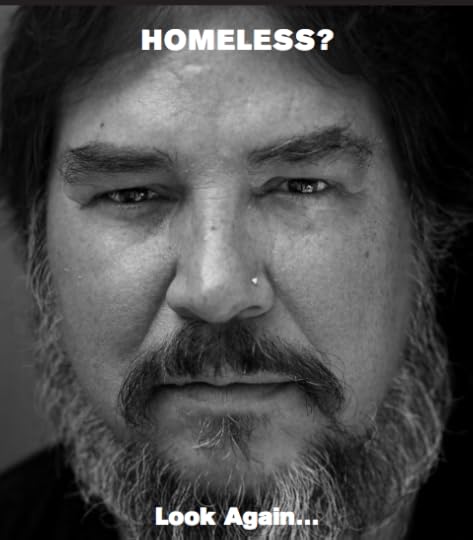
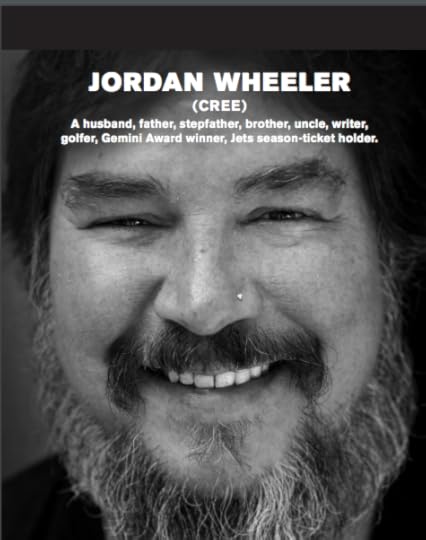
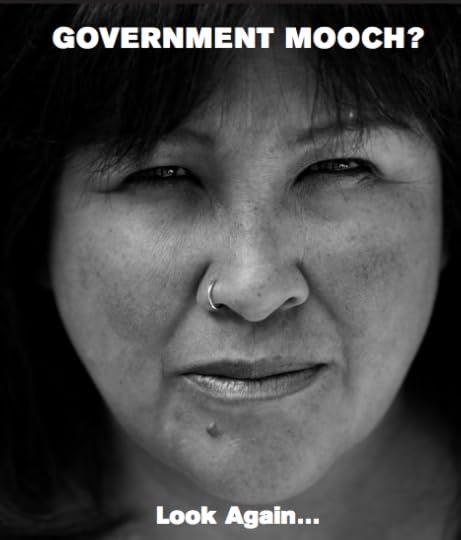
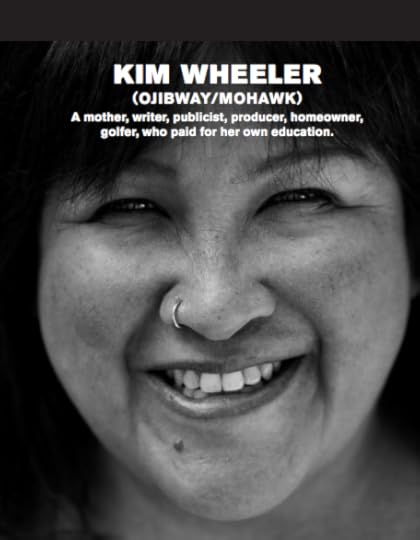
She said she acheived this by having them look at her, while she said hateful things to them. And the second photo she asked them to clear their heads, and relax.
This is truly amazing, and I would recommend this to everyone.
Thanks to Netgalley for making this book available for an honest review.
The joy of the second photos contrasted with the first is amazing. It is almost like two different people.
She said she acheived this by having them look at her, while she said hateful things to them. And the second photo she asked them to clear their heads, and relax.
This is truly amazing, and I would recommend this to everyone.
Thanks to Netgalley for making this book available for an honest review.
February 12, 2019
This is a fantastic book and a real conversation starter. K.C. Adams explores stereotypes of First Nations, Inuit and Métis people through portrait photography. What started off as a social media and poster project at bus stops has now been turned into a book as she photographs people with assumptions that have been made about them written next to the photo before showing the real person and who they really are. It’s a very simple but overwhelming creative and effective idea. It’s made me reflect what assumptions I might hold about certain groups of people and how accurate they are. I really appreciated that this is also not just a book of photographs but also informs the reader how the project got created and why it is so important and what art can do. One person who sat for photos also talked about the experience which is something photography books often don’t include but really adds to the photo. I hadn’t heard of Adams before but shall definitely be looking up more of work.
Thank you very much to Net Galley and High Water Press for providing me with an ARC in return for a honest review.
Thank you very much to Net Galley and High Water Press for providing me with an ARC in return for a honest review.

August 4, 2019
KC Adams was inspired to create an art installation to get people talking about making negative assumptions about others based on race. On one side, Adams shows each person in a negative light with a derogatory term... then on the other, each oration was told to think of positive things and another image is made along with a description of who each person actually is. These are a great reminder to never assume you know who someone may be based on appearances or heritage.
Thank you to Portage & Main Press and NetGalley for the eARC in exchange for my honest review.
Thank you to Portage & Main Press and NetGalley for the eARC in exchange for my honest review.

February 23, 2024
This collection of photographs and the accompanying explanation are a beautiful piece of social art that can provoke meaningful discussion.

November 17, 2019
The critical essay, foreword by Katherena Vermette, and the preface by the author add insightful commentary to this exceptional series of portraits.

April 8, 2025
Powerful

February 7, 2019
I admire what KC Adams did when she kept hearing disparaging remarks and slurs against the Native peoples of Canada. As an indigenous person herself, she too, had been subjected to mistreatment and prejudice just be being someone who looks different. She was determined to find a way to get people's perceptions to change. The Native/indigenous people and their cultures were here to stay and non-Native people had to come to terms with and accept that. Adams choose to use her skill as a photographer as a catalyst to address the racism and prejudice head on.
She took a series of two photographs of the same person; one as she said a racist remark, the other as she said something positive about the person. She then put up these pictures as posters around municipal areas. The first picture was headlined with the slur said while filming it, the bottom said "Think again". The second picture (taken when she invoked a positive response in them) told who they were and some things about them. This photography series (now captured in her book Perceptions) helped people recognize their own reactions to Native peoples and realize that they were unfair and untrue.
I love when art is not only creative, but an agent for social change! Kudos, Ms. Adams! Well done!
Many thanks to NetGalley and High Water Press for allowing me to read an ARC of this book in exchange for an honest review. All opinions expressed here are strictly my own.
She took a series of two photographs of the same person; one as she said a racist remark, the other as she said something positive about the person. She then put up these pictures as posters around municipal areas. The first picture was headlined with the slur said while filming it, the bottom said "Think again". The second picture (taken when she invoked a positive response in them) told who they were and some things about them. This photography series (now captured in her book Perceptions) helped people recognize their own reactions to Native peoples and realize that they were unfair and untrue.
I love when art is not only creative, but an agent for social change! Kudos, Ms. Adams! Well done!
Many thanks to NetGalley and High Water Press for allowing me to read an ARC of this book in exchange for an honest review. All opinions expressed here are strictly my own.
August 19, 2020
"For Indigenous artists, socially engaged art is more than a yearning to make right in society; it is also about their own relationships to the land, and a way to personally and collectively heal from the negative impact of colonization. It requires making art in a good way, grounded in culture, community, and kinship ties." - Cathy Mattes

September 7, 2019
Deserves a wide audience. I certainly plan to share it with family, friends and colleagues. This is an important work with high accessibility. I hope to see it in every high school and hope it’s made part of curriculum.

September 20, 2020
A powerful collection of photographs that forces the reader to confront the dangers of surface-level assumptions. This would be an excellent resource to include in any student exploration of race relations or unconscious bias.

February 26, 2020
KC Adams for Prime Minister!

May 9, 2020
This book is brilliantly conceived and manifested. It is a neutral platform that lets truth stand for itself. Important, beautiful, skillful art. Exceptional!
March 6, 2021
Absolutely loved this book 📚 💕

March 19, 2022
A wonderful book about breaking stereotypes through the use of photographs. It is smart, creative, and effective. The power of the smile. It can break barriers and welcome connections.

August 11, 2026
Powerful book of social art.
February 17, 2019
I'm very glad to have read Perception.
Its premise is a simple one: two images sit side-by-side, each capturing a different reaction from the same specimen. And, for the most part, this is what I was expecting to encounter. After finishing it, however, I can say with absolute certainty that that idea is merely the structure with which Perception is able to discuss ideas such as prejudice openly, offering something so meaningful to today's readers that it cannot quite be put into words.
Please - read this book if you haven't.
Its premise is a simple one: two images sit side-by-side, each capturing a different reaction from the same specimen. And, for the most part, this is what I was expecting to encounter. After finishing it, however, I can say with absolute certainty that that idea is merely the structure with which Perception is able to discuss ideas such as prejudice openly, offering something so meaningful to today's readers that it cannot quite be put into words.
Please - read this book if you haven't.

March 23, 2019
We hear the saying, “A picture can say a thousand words” quite often, but sometimes we don’t take the time to actually look at what we are seeing and what it is saying. Sometimes photographs are taken for fun, with no real meaning behind them. But there are times when a photograph is taken for a purpose, taken to deliver a message. KC Adams, with Perception, is doing just that. She is not only delivering a message, she is also making a statement in order to break down the racial prejudices and stereotypes towards the indigenous community in Canada.
As I looked at each side-by-side head shot of different indigenous men and women, it was powerful to not only see the difference in their facial expressions based on how they felt being called a racial slur versus remembering a happy memory, but it was also powerful to see the amount of emotion in each photograph. There were some that I could feel their pain through their eyes to the point it made me cry, as they might have done so many times before. There were some that I could feel their anger and their anger is rightfully justified.
Natives throughout the world are commonly looked down upon and a lot of times suffer the worst among people of color. The amount of disrespect towards them is upsetting and bewildering. The amount of missing natives, the amount of murdered natives, the amount of brutally beaten and raped natives rarely get an outcry in the media. But there are those, like KC Adams and some of the subjects in her photo series, that are fighting against the injustice towards the indigenous people. They continuously make an impact in their community and make it very clear that they aren’t different from any other human that you encounter.
From looking at the first picture that shows their reaction to what people think of them to looking at their second picture that shows their look of pure happiness coupled with their name, their tribes, and the words they would use to describe themselves is what is causing people to think twice, think differently, and spark conversation.
Perception: A Photo Series will be released this year in September. Pre-order now or buy in stores when it is released. It is a must have.
As I looked at each side-by-side head shot of different indigenous men and women, it was powerful to not only see the difference in their facial expressions based on how they felt being called a racial slur versus remembering a happy memory, but it was also powerful to see the amount of emotion in each photograph. There were some that I could feel their pain through their eyes to the point it made me cry, as they might have done so many times before. There were some that I could feel their anger and their anger is rightfully justified.
Natives throughout the world are commonly looked down upon and a lot of times suffer the worst among people of color. The amount of disrespect towards them is upsetting and bewildering. The amount of missing natives, the amount of murdered natives, the amount of brutally beaten and raped natives rarely get an outcry in the media. But there are those, like KC Adams and some of the subjects in her photo series, that are fighting against the injustice towards the indigenous people. They continuously make an impact in their community and make it very clear that they aren’t different from any other human that you encounter.
From looking at the first picture that shows their reaction to what people think of them to looking at their second picture that shows their look of pure happiness coupled with their name, their tribes, and the words they would use to describe themselves is what is causing people to think twice, think differently, and spark conversation.
Perception: A Photo Series will be released this year in September. Pre-order now or buy in stores when it is released. It is a must have.

April 16, 2019
This is an amazing portrayal of the indigenous community. The emotions displayed by each individual are clearly defined. I hiighly recommend this resource be placed in all libraries and used to dispel racism and discriminatory ideas.
#Kcadams #netgalley
#Kcadams #netgalley
Displaying 1 - 19 of 19 reviews