

What do you think?

Tonguebreaker
In their fourth collection of poetry, Lambda Literary Award-winning poet and writer Leah Lakshmi Piepzna-Samarasinha continues their excavation of working-class queer brown femme survivorhood and desire. Tonguebreaker is about surviving the unsurvivable: living through hate crimes, the suicides of queer kin, and the rise of fascism while falling in love and walking through your beloved’s Queens neighborhood. Building on her groundbreaking work in Bodymap, Tonguebreaker is an unmitigated force of disabled queer-of-color nature, narrating disabled femme-of-color moments on the pulloff of the 80 in West Oakland, the street, and the bed. Tonguebreaker dreams unafraid femme futures where we live—a ritual for our collective continued survival.
148 pages, Paperback
First published April 9, 2019
About the author
Leah Lakshmi Piepzna-Samarasinha
31 books1,102 followersLeah Lakshmi Piepzna-Samarasinha is a Toronto and Oakland-based poet, writer, educator and social activist. Her writing and performance art focuses on documenting the stories of queer and trans people of color, abuse survivors, mixed-race people and diasporic South Asians and Sri Lankans.
Ratings & Reviews
Friends & Following
Create a free account to discover what your friends think of this book!
Community Reviews
Displaying 1 - 30 of 45 reviews

May 1, 2019
tonguebreaker is another expansion & precision of a distinct poetics. leah lakshmi piepzna-samarasinha has been defining & teaching femme poetics since at least 2015 & has been part of a cresting wave of disability justice & qtbipoc creative practice for even longer. they have been teaching disability/dream time & queer ancestral practice for about as long as i can remember being queer.
bodymap was their first collection writing disability explicitly & publicly, and tonguebreaker continues this lineage, riding the borderlines wider, making explicit an autistic poetics & femme ancestral lineage. this volume is a love work & possibility model for trauma survivor / neuroweirdos / disabled babes all over, especially qtbipoc & femmes. we look chronically for guidance from queers past 40, past 60, past 90 & this is one thread weaving these lineages together gracefully & impactfully.
bodymap was their first collection writing disability explicitly & publicly, and tonguebreaker continues this lineage, riding the borderlines wider, making explicit an autistic poetics & femme ancestral lineage. this volume is a love work & possibility model for trauma survivor / neuroweirdos / disabled babes all over, especially qtbipoc & femmes. we look chronically for guidance from queers past 40, past 60, past 90 & this is one thread weaving these lineages together gracefully & impactfully.

June 25, 2020
These poems will break your heart, empower you, inspire you, and heal you. I loved this poetry collection by the brown, queer, disabled, femme poetess Leah Lakshimi Piepzna-Samarasinha.

November 5, 2020
This book is a soft, wild, aching spell. It is glitter and guts. It is relentless...and restful. It is unapologetic, yearning towards the future, and also deeply meditative upon and informed by the past. After reading Piepzna-Samarasinha’s work for years in various magazines, zines, and collections, it was incredibly satisfying and enriching to read an entire book of their poetry and performance pieces—I felt extremely moved emotionally and also moved (politically) to action, expansion, and deeper listening and consciousness as I eagerly read these personal, communal, generous, and unflinching poems.
This book is aching with grief and loss, particularly the loss of BIPOC femme disabled/crip/crazy elders who made so many ways for revolutions both intimate and massive. This grief and loss is bound together with other traumas and pains experienced by Piepzna-Samarasinha personally, and magicked into something powerful and transformative: “At 42 I make a beautiful dress of all my scars / Scar tissue is the strongest tissue in the body / Maybe you are unlucky if you do not have a card to its library” (85). I felt opened, reading this book. I felt Piepzna-Samarasinha asking more of me and the world, a call to devote our energy and love towards a more creative, inclusive, and caring future. I felt opened to the simultaneous possibilities of always seeking to avoid causing harm and remembering that harms, struggles, pains, and traumas can also bring us great strength, be beautiful, honored, celebrated, and help connect us to others in a web of sparkling interdependence.
This book is aching with grief and loss, particularly the loss of BIPOC femme disabled/crip/crazy elders who made so many ways for revolutions both intimate and massive. This grief and loss is bound together with other traumas and pains experienced by Piepzna-Samarasinha personally, and magicked into something powerful and transformative: “At 42 I make a beautiful dress of all my scars / Scar tissue is the strongest tissue in the body / Maybe you are unlucky if you do not have a card to its library” (85). I felt opened, reading this book. I felt Piepzna-Samarasinha asking more of me and the world, a call to devote our energy and love towards a more creative, inclusive, and caring future. I felt opened to the simultaneous possibilities of always seeking to avoid causing harm and remembering that harms, struggles, pains, and traumas can also bring us great strength, be beautiful, honored, celebrated, and help connect us to others in a web of sparkling interdependence.

November 4, 2019
beautiful amazing work. cw for specific/named mentions of femmes who committed suicide 2014-2017.
November 26, 2019
cried a lot with this one, on the train, en route to the TM memorial, trying to keep my weight off my “bad” ankle. the remembrances-embraces, especially.
January 31, 2021
This book is fucking stunning!!!!!!! I couldn’t believe how much I loved it when I started reading the first few poems. This is honestly the first time I’ve read poetry about disabilities in a way that is so refreshing and empowering.

December 10, 2020
One hundred forty pages and every single one moved something in me, hit some spot, made me think. This book dedicated to all femmes who struggle is a collection of poems and performance pieces. Here disabled working-class queer brown and Black femmes are centred; their dreams, futures, relationships. This is a book about suicidal ideation and surviving – and also the ones who did not survive. It is a book about queer and disabled ancestors; and a lineage drawn from the ones passed away decades ago to the newly disabled finding their place. This book is a love letter and a prayer.
“Disability is adaptive, interconnected, tenacious, voracious, slutty, silent,
raging,
life giving”
The texts are sorted in six chapters: femme futures, sacrum, bedlife, rust will cut you, ritual payers: performance texts from mangos with chili, cripstory. These chapters sing to each other and echoes can be found throughout the book. And I still can’t wrap my head around the fact that this book is so slim but I could write many, many posts about it. I will certainly go back to this collection again and again, rereading different texts.
“When I hear us dream our futures,
believe we will make it one,
We will make one.”
Books I also read by Piepzna-Samarasinha and absolutely loved: “Care Work: Dreaming Disability Justice” and “Beyond Survival: Strategies and Stories from the Transformative Justice Movement” (edited with Ejeris Dixon)
“Disability is adaptive, interconnected, tenacious, voracious, slutty, silent,
raging,
life giving”
The texts are sorted in six chapters: femme futures, sacrum, bedlife, rust will cut you, ritual payers: performance texts from mangos with chili, cripstory. These chapters sing to each other and echoes can be found throughout the book. And I still can’t wrap my head around the fact that this book is so slim but I could write many, many posts about it. I will certainly go back to this collection again and again, rereading different texts.
“When I hear us dream our futures,
believe we will make it one,
We will make one.”
Books I also read by Piepzna-Samarasinha and absolutely loved: “Care Work: Dreaming Disability Justice” and “Beyond Survival: Strategies and Stories from the Transformative Justice Movement” (edited with Ejeris Dixon)

August 18, 2019
Touching and powerful work of art. I am appreciative to have read this. These parts/poems particularly stuck out:
"When I hear my femme say, When I'm old and riding a motorcycle with white hair down my back.
When I hear my femme say, When I'm old and sex work paid off my house and my retirement.
When I hear my femme/myself say, When I get dementia and I am held with respect when I am between all worlds.
When I see my femme packing it all in, because crip years are like dog years and you never know when they're going to shoot Old Yeller." (Femme futures)
"Most of all there's this:
they will forget you
You have to know this, they will forget you,
over and over again." (Crip fairy godmother)
"My love says femme is a beautiful knife, warm in the hand.
My love sleeps with a boxcutter on the windowsill, machete under their bed
They used to put a knife under the bed to cut the pain of birth
Femme, I see our work." (boxcutter beloved)
Prayer ghazal for Orlando
"I want to be monsters with my femmes
Our monster is how we lived through this.
...
I love us, born broken blade,
our love languages we half know celebrating each other's birth" (birth day)
The obituaries in the end, especially Nicole Demerin (although really all of them), are beautifully worded and heartbreakingly sad. Happy to remember/commemorate
"When I hear my femme say, When I'm old and riding a motorcycle with white hair down my back.
When I hear my femme say, When I'm old and sex work paid off my house and my retirement.
When I hear my femme/myself say, When I get dementia and I am held with respect when I am between all worlds.
When I see my femme packing it all in, because crip years are like dog years and you never know when they're going to shoot Old Yeller." (Femme futures)
"Most of all there's this:
they will forget you
You have to know this, they will forget you,
over and over again." (Crip fairy godmother)
"My love says femme is a beautiful knife, warm in the hand.
My love sleeps with a boxcutter on the windowsill, machete under their bed
They used to put a knife under the bed to cut the pain of birth
Femme, I see our work." (boxcutter beloved)
Prayer ghazal for Orlando
"I want to be monsters with my femmes
Our monster is how we lived through this.
...
I love us, born broken blade,
our love languages we half know celebrating each other's birth" (birth day)
The obituaries in the end, especially Nicole Demerin (although really all of them), are beautifully worded and heartbreakingly sad. Happy to remember/commemorate

May 29, 2019
This really knocked my socks off. As a disabled woman, I've been trying to read more books that I fully connect to in regards to being disabled and my own experiences. While the author and I do not have a ton of life experiences in common, I connected to these poems incredibly deeply on the disability front.
Reading something so open and raw, especially from some disabled and queer like myself, just felt... I don't even know. I feel connected and like other people understand my experiences and like the poetry has reached parts of myself that poetry doesn't usually reach. I think my favourite poems were Crip Fairy Godmother, I Know Crips Live Here, and Crip Magic Spells, but I feel like they all had something incredible to offer.
I definitely have a new favourite here. I will be reading more from Leah Lakshmi Piepzna-Samarasinha. Highly recommended.
Reading something so open and raw, especially from some disabled and queer like myself, just felt... I don't even know. I feel connected and like other people understand my experiences and like the poetry has reached parts of myself that poetry doesn't usually reach. I think my favourite poems were Crip Fairy Godmother, I Know Crips Live Here, and Crip Magic Spells, but I feel like they all had something incredible to offer.
I definitely have a new favourite here. I will be reading more from Leah Lakshmi Piepzna-Samarasinha. Highly recommended.
May 7, 2019
This is a truly glorious book
March 14, 2022
3.5/5
This book is a collection of poems, performances and not surprisingly enough, eulogies. In the preface Leah describes this process as a map of “wending, winding creative process of being a working class, disabled femme of colour artist who is awake, living and noticing in these times”. This part about being awake and noticing these times, times that are full of disability justice moments, and gaining consciousness, are the core of this collection. I really liked reading certain poems. My favourite was “Burning house”. I really enjoyed that piece.
I find that the authors use of specific words seemed more like a trigger, as if they wanted to be provocative. It was off putting and made me kind of uncomfortable because it seemed unnecessary. The overuse of enjabments with no connective thought process also took away from certain poems. The style of writing was not something I could get behind, it was repetitive in a sense, and it seemed like there was soo much packed into one. I know I’m not the intended audience so Maybe that could be it, but I found it easy to understand but frustrating to read.
This book is a collection of poems, performances and not surprisingly enough, eulogies. In the preface Leah describes this process as a map of “wending, winding creative process of being a working class, disabled femme of colour artist who is awake, living and noticing in these times”. This part about being awake and noticing these times, times that are full of disability justice moments, and gaining consciousness, are the core of this collection. I really liked reading certain poems. My favourite was “Burning house”. I really enjoyed that piece.
I find that the authors use of specific words seemed more like a trigger, as if they wanted to be provocative. It was off putting and made me kind of uncomfortable because it seemed unnecessary. The overuse of enjabments with no connective thought process also took away from certain poems. The style of writing was not something I could get behind, it was repetitive in a sense, and it seemed like there was soo much packed into one. I know I’m not the intended audience so Maybe that could be it, but I found it easy to understand but frustrating to read.
January 1, 2022
I have apparently given myself the tradition of reading the most obscure book in my TBR as my first book of the year. I picked this up at the first indie bookstore I went to in Dallas. It sat on my bookcart for a year and I have aptly picked it up for the new year.
Tonguebreaker is the kind of collection that reminds you of how human you are. You read the poet scream and cry and tear at their skin. Break themselves and pour their heart onto the pages. It is painful and hurts and you have to put the piece down for your sake but you will not look away.
This collection gives me hope for creative feminist, for the artsy desis, that my life is not the best but things will be okay. Things will get better. You might not share the same experiences of poet but I think it’s honestly a must read!
TW: Sexual assault, mentions of self harm and suicidal ideation. (confirm and check for others triggers these were just the ones I remembered)
Tonguebreaker is the kind of collection that reminds you of how human you are. You read the poet scream and cry and tear at their skin. Break themselves and pour their heart onto the pages. It is painful and hurts and you have to put the piece down for your sake but you will not look away.
This collection gives me hope for creative feminist, for the artsy desis, that my life is not the best but things will be okay. Things will get better. You might not share the same experiences of poet but I think it’s honestly a must read!
TW: Sexual assault, mentions of self harm and suicidal ideation. (confirm and check for others triggers these were just the ones I remembered)

August 9, 2023
3.5 rounded up!
For this only being 100ish pages, you’ll need quite a few sittings to finish this. As my warning to you, you’ll need to read this in small amounts. There’s a lot of trigger warnings, so please be kind to yourself.
Although there’s so much pain within these pages, there is also light. There’s love and hope to combat all the darkness. These pieces helped me reflect on what it’s like to be human. There’s good days and bad along with being able to feel every single emotion within a one-day span. Piepzna-Samarasinha will have you on a rollercoaster of emotions.
Content warnings: ableism, racism, child abuse, hate crime, mental illness, self harm, sexual assault, suicide ideation
For this only being 100ish pages, you’ll need quite a few sittings to finish this. As my warning to you, you’ll need to read this in small amounts. There’s a lot of trigger warnings, so please be kind to yourself.
Although there’s so much pain within these pages, there is also light. There’s love and hope to combat all the darkness. These pieces helped me reflect on what it’s like to be human. There’s good days and bad along with being able to feel every single emotion within a one-day span. Piepzna-Samarasinha will have you on a rollercoaster of emotions.
Content warnings: ableism, racism, child abuse, hate crime, mental illness, self harm, sexual assault, suicide ideation

October 4, 2023
A collection of poems about being a queer, femme, disabled, person of color.
from Femme Futures: "When one of more of us is murdered / by the state of a husband / we survive / whether we want to or not."
from Crip Fairy Godmother: "Most of all there's this: / they will forget you / You have to know this, they will forget you, / over and over again."
from suicide contract: "died already / went down to the river / sucked a mouth full of mud / came up gasping // it's hard to be / the one who's good / at suicide"
from birth day: "At 42 I make a beautiful dress of all my scars / Scar tissue is the strongest tissue in the body / Maybe you are unlucky if you do not have a card to its library"
from Femme Futures: "When one of more of us is murdered / by the state of a husband / we survive / whether we want to or not."
from Crip Fairy Godmother: "Most of all there's this: / they will forget you / You have to know this, they will forget you, / over and over again."
from suicide contract: "died already / went down to the river / sucked a mouth full of mud / came up gasping // it's hard to be / the one who's good / at suicide"
from birth day: "At 42 I make a beautiful dress of all my scars / Scar tissue is the strongest tissue in the body / Maybe you are unlucky if you do not have a card to its library"

January 28, 2020
Wow. This one is intense. And hard. Don't expect to read it in one sitting. Or two. Or three. Read it in small doses. There’s pain. And abuse. And struggle. And so much disability. But there’s also friendship and love and so much more. I love that Piepzna-Samarsinha included the performance pieces where she purposefully brought disability into queer spaces. I love that she brought it into those spaces in the first place. (BTW - My favorite pieces are "I know crips live here" and "the amethyst room.")
(3.7 stars, if you're being exact.)
(3.7 stars, if you're being exact.)
March 8, 2024
I enjoyed it a lot! Some of the poems hit more than others. My favs were “crip fairy godmother” and “the stories you tell to save your life”.
Here’s some fav quotes of mine from the book:
“I am an only child
I may not have been born into sibling hood
but I went out and found mine
Made mine”
“Know that everyone deserves to get exactly what we need
There is no such thing as not disabled enough
Just because there’s three months when you’re not in pain doesn’t make your pain less than chronic”
“Be as big she unapologetic as your
fat femme ass spreading out on a bench.”
Here’s some fav quotes of mine from the book:
“I am an only child
I may not have been born into sibling hood
but I went out and found mine
Made mine”
“Know that everyone deserves to get exactly what we need
There is no such thing as not disabled enough
Just because there’s three months when you’re not in pain doesn’t make your pain less than chronic”
“Be as big she unapologetic as your
fat femme ass spreading out on a bench.”
This entire review has been hidden because of spoilers.

Read
February 22, 2020There is so much grief, fire, love, and beauty in this book. I couldn't really connect with the poems themselves (on a structural, not a content, level). Actually my favorite parts of the book were the introduction, and the sections where they describe the various performances pieces that are transcribed in the book. I put their book of essays onto my TBR immediately, and I'm really looking forward to reading their prose. This is a writer whom I desperately want to read more from.

July 9, 2021
Coming to terms with a society that doesn't want you based on your body...and creating your own space instead...has to be a challenging thing. Leah Lakshmi Piepzna-Samarasinha bares her soul to the world in this collection of poems and one-act plays. Her use of language to lecture gripped me and her exploration of what it means to live in this world, to choose life amidst death, despite being close to death, is hauntingly beautiful.
July 10, 2024
3,25/5.
From a theme pov, it's a powerful book tackling important topics, particularly disability. And as I live with a chronic illness, of course some poems resonated with me. The references to Audre Lorde were greatly appreciated too.
On the other hand, from a poetic writing pov, I really don't enjoy prose poetry. And so, I'm realising that several 2010s poetry collections have disappointed me and that they are not for me.
From a theme pov, it's a powerful book tackling important topics, particularly disability. And as I live with a chronic illness, of course some poems resonated with me. The references to Audre Lorde were greatly appreciated too.
On the other hand, from a poetic writing pov, I really don't enjoy prose poetry. And so, I'm realising that several 2010s poetry collections have disappointed me and that they are not for me.

May 15, 2019
I tend to rebel against things that I feel I am supposed to like. This is how I always feel when I pick up Leah's work - however I cannot help but eat up the words, I like it despite my attempt to resist - to take the journey, to embrace the language. pain and resilience - honoring ourselves and our ancestors.
March 14, 2023
If you live anywhere in the intersection of being queer, disabled and person of color, this is a powerful, unflinchingly raw, and yet profoundly compassionate collection of poetry you must read. It's gratifying, humbling, and inspiring all at once. Tread gently through the plethora of necessary trauma triggers, though.

November 28, 2025
I really liked a lot of these poems- many spoke to me and I felt them on a deeper level. However, some seems to just be complete stream of consciousness or almost showing off in a way, which took me out a bit. I still really appreciate the author’s candor and have purchased a copy for my own library. A recommended read!
May 11, 2024
The words I needed:
"Most of all there's this:
they will forget you
You have to know this, they will forget you,
over and over again."
"Disability is adaptive, interconnected, tenacious, voracious, slutty, silent, raging, life giving."
"Most of all there's this:
they will forget you
You have to know this, they will forget you,
over and over again."
"Disability is adaptive, interconnected, tenacious, voracious, slutty, silent, raging, life giving."

July 24, 2024
I know of Leah Lakshmi Piepzna-Samarasinha from her Care Work collection and I have been meaning to read her poetry for a while. I loved these poems and particularly enjoyed the Mangoes with Chili performance texts.
Heart wrenching and powerful.
Heart wrenching and powerful.
February 20, 2025
I can’t say enough good things about Leah Lakshmi Piepzna-Samaransinha. She voices my experience in ways I couldn’t have imagined and didn’t know I needed. Tonguebreaker specifically stirred some stuff up inside me and has me wanting to pick up the pen. Creating is healing!
March 27, 2025
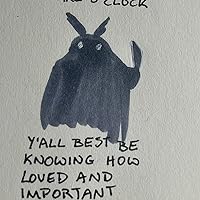
4.5/5 stars
This was my first time reading Piepzna-Samarasinha’s poetry (I’ve only read their essays before). Her writing absolutely crushes, and this was a great collection.
CW: ableism; racism; child abuse; suicide; self-harm; panic attacks
This was my first time reading Piepzna-Samarasinha’s poetry (I’ve only read their essays before). Her writing absolutely crushes, and this was a great collection.
CW: ableism; racism; child abuse; suicide; self-harm; panic attacks

April 27, 2019
Tender, grieving, sharp-toothed.
4.5
4.5


May 31, 2020
So much to think about here. I love her writing always but this challenged me and made me uncomfortable in ways that her other collections haven't (which is a good thing).

July 18, 2020
*cries*
the best performance text collection
thank you leah
the best performance text collection
thank you leah
Displaying 1 - 30 of 45 reviews