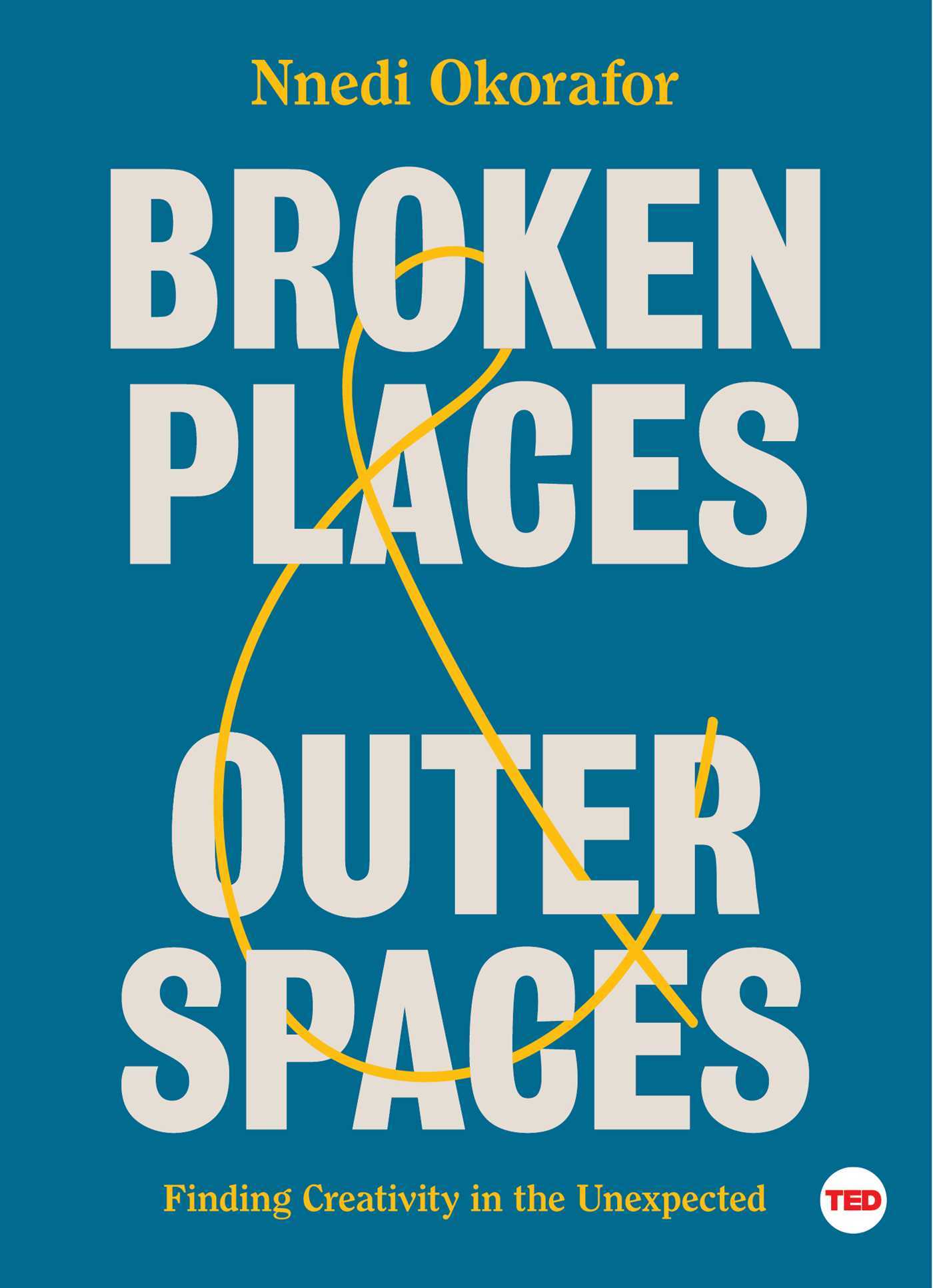
A powerful journey from star athlete to sudden paralysis to creative awakening, award-winning science fiction writer Nnedi Okorafor shows that what we think are our limitations have the potential to become our greatest strengths.
Nnedi Okorafor was never supposed to be paralyzed. A college track star and budding entomologist, Nnedi’s lifelong battle with scoliosis was just a bump in her plan—something a simple operation would easily correct. But when Nnedi wakes from the surgery to find she can’t move her legs, her entire sense of self begins to waver. Confined to a hospital bed for months, unusual things begin to happen. Psychedelic bugs crawl her hospital walls; strange dreams visit her nightly. Nnedi begins to put these experiences into writing, conjuring up strange, fantastical stories. What Nnedi discovers during her confinement would prove to be the key to her life as a successful science fiction author: In science fiction, when something breaks, something greater often emerges from the cracks.
In Broken Places & Outer Spaces, Nnedi takes the reader on a journey from her hospital bed deep into her memories, from her painful first experiences with racism as a child in Chicago to her powerful visits to her parents’ hometown in Nigeria. From Frida Kahlo to Mary Shelly, she examines great artists and writers who have pushed through their limitations, using hardship to fuel their work. Through these compelling stories and her own, Nnedi reveals a universal truth: What we perceive as limitations have the potential to become our greatest strengths—far greater than when we were unbroken.
A guidebook for anyone eager to understand how their limitations might actually be used as a creative springboard, Broken Places & Outer Spaces is an inspiring look at how to open up new windows in your mind.
Nnedi Okorafor is a New York Times Bestselling writer of science fiction and fantasy for both children and adults. The more specific terms for her works are africanfuturism and africanjujuism, both terms she coined and defined. Born in the United States to two Nigerian (Igbo) immigrant parents and visiting family in Nigeria since she was a child, the foundation and inspiration of Nnedi’s work is rooted in this part of Africa. Her many works include Who Fears Death (winner of the World Fantasy Award and in development at HBO as a TV series), the Nebula and Hugo award winning novella trilogy Binti (in development as a TV series), the Lodestar and Locus Award winning Nsibidi Scripts Series, LaGuardia (winner of a Hugo and Eisner awards for Best Graphic Novel) and her most recent novella Remote Control. Her debut novel Zahrah the Windseeker won the prestigious Wole Soyinka Prize for Literature. She lives with her daughter Anyaugo in Phoenix, AZ. Learn more about Nnedi at Nnedi.com and follow Nnedi on twitter (as @Nnedi), Facebook and Instagram.
I love Okorafor's fiction, and was always curious to learn more about her life, so I was thrilled to get the chance to read this memoir. Short and powerful.
“The world breaks everyone and afterward many are strong at the broken places”—Ernest Hemingway
A short memoir by Afro-futurist science fiction writer and Chicagoan Nnedi Okorafor (Akata Warrior, Binti, The Shadow Speaker, and also writing comics for Marvel out of the Black Panther universe) who writes of Africa, science and technology, strange creatures, with magical realism and strong black feminist commitments, with strong young black women main characters who overcome adversity. And what are the sources for her writing? In this short memoir we learn that the promising athlete and wannabe entomologist Okorafor was diagnosed with scoliosis at 13, was paralyzed (for a time) from the waist down during corrective surgery.
During the time she was (kind of miraculously) recovering, she was visited by morphine-induccd hallucinations of bugs, and began to take notes in the margins of science fiction books that would emerge as her early novels. The theme and trajectory of the suffering-to-success story is not a new one, which she admits, liking her sown tory to others such as Frida Kahlo and Mary Shelley’s Frankenstein, but she makes the point that she would never have become a writer had she not faced this adversity.
Okorafor connects this time in her life to the stories she has now written of girls who overcome challenges to not only walk but fly, and travel in space, excel in science and magic. And who love weird bugs and creatures. Also she tells of visiting Nigeria, and being inspired by her ancestors and family who have supported her along the way in various ways. I know this work is very short, but it is now one of my favorite works from her because of the specific links from her life to her work.
The 9-minute TED talk that is related to this (much-expanded) book but less autobiographical, more Afro-Futurist:
This was a combined personal history of Nnedi Okorafor's paralysis, an account of the discrimination she received due to the colour of her skin, and a hopeful message on how to persevere through the dark times and use them as your fuel to greatness.
I really liked the format for this short autobiographic piece. Snippets from Okorafor's time in hospital are interspersed with segments from her early years, before the reader gets to journey through to her eventual progression beyond these times.
Despite being deeply personal, this also conveyed a long-lasting message for any reader to take away, and I found much to personally connect to on the themes of creativity.
I considered not leaving a review for this one but the more I read the 5 star reviews the more I feel like it's necessary for me to express what upset me about this book. I'm physically disabled and owe a lot to online disability communities. They helped me understand the social model of disability, which comes down to the idea that "people are disabled by barriers in society, not by their impairment or difference." It does not seem like Nnedi Okorafor subscribes to this same way of thinking. She uses terms like "wheelchair-bound" which are offensive to wheelchair users. Wheelchairs are not something a person is "trapped" in, but rather a tool that gives people freedom. I use a wheelchair whenever I have awful pain days or need to travel long distances, and it has made my life so much easier and made many places accessible to me that would not have been before. She also references media that involves wheelchair users/disabled characters that are "cured" from their disability, and views them in a positive light. In Avatar, the main character is a wheelchair user that is shown to despise his chair and his body. When he is able to take over a different, abled body, this is pictured as his dream come true, as his "freedom". This media trope is very upsetting to wheelchair users and other disabled people. If you ask a lot of disabled people if they would choose to get rid of their disability, they would say no. Many people are born with their disabilities, and have had their entire life shaped by their condition. They would not be the same person if they were not disabled, so wishing it away would be wishing away a core part of that person. While Nnedi Okorafor is describing her own life and experiences, she does so in a way that I find troubling. I wish that she would be more involved in disabled communities and speak to other disabled people, as well as read up on the social model of disability. Her being a spokesperson for disability while actively using terms such as "wheelchair-bound" and championing narratives that erase disability from a person is upsetting because she is only appealing to a very narrow idea of disability. Okorafor seems to almost "get" the idea that a person can be disabled and flourish from their disability when she talks about Frida Kahlo, but I feel this is lost amongst everything else she writes in this short book. If she wanted to make that the central topic of her work, she should have dug a little deeper to understand that people can be disabled in many different ways and use many different aids and still be happy and living their best life.
'Nigeria was my door to science fiction. The opening of this door restored my faith in science after science failed me. And once I was back as a proud disciple, I was free to embrace my own cyborgity. Something just had to break first.'
I have kind of mixed feelings about this one, and I'm honestly struggling to sort through them. I'm going to sort it into what I liked and what I didn't like, for the sake of simplicity and exploring my own thoughts a bit here.
Liked: -The explorations of literature and artists from the past was really interesting and enjoyable for me. -Her own experiences were explored in a way that was relatable and emotional but also straightforward and practical. -I am inherently interested in more stories about disability from actually disabled people (I am disabled). -Despite some of my issues below, I didn't feel like she was peddling in inspiration porn or that she had "overcome" her disability or done anything "despite" it.
Disliked: -I feel like there was a lot of really questionable language used that isn't generally accepted by the disability community at large, like "wheelchair-bound." -Literally the entire quote: "But choosing between a one percent chance of paralysis and a one hundred percent chance of an early death after a crippled life was a simple decision." Other than being pretty sure that's not how scoliosis works and finding that hyperbole really awkward for folks who have limited knowledge of it, and despite my own reclamation of cripple/crippled, the use of "crippled life" in this sentence just made me cringe really hard. -She's really just gonna talk about how her friend took her cane away from her and then not unpack how fucked up that is? -There's so much talk of technological ideas that veer into "cure" territory that I didn't enjoy seeing without any extra discourse. Obviously, she writes sci-fi and is also talking about something she would theoretically want for herself, but "cures" are SUCH a divisive issue in the disability community that it seems almost irresponsible to just throw those ideas around without extra depth.
Basically, there was stuff I really liked here but it was just weighed down by what felt like a lot of ableist ideas. Though I think her experiences and emotions are obviously all completely legitimate, and obviously this is a book about her own internal experiences, I still couldn't help but feel like these internal experiences could be potentially harmful to read without doing any extra unpacking. It was often emotionally difficult to read, and it was emotionally hard for me to think about other disabled people reading and feeling like I did or worse. It was also emotionally difficult to think about abled people reading it and forming broader opinions based on these narrow experiences.
I wanted to love this, but ended up only liking certain aspects despite much of the broader tone and content. I would hesitate to recommend it for these reasons.
This book speaks to me on so many levels. As a disabled woman who didn't receive a diagnosis until more than a decade after my health problems surfaced, it's been a process of looking back to see where and how my life changed--became broken and rearranged. Because Okorafor's disability occurs so suddenly and dramatically, she's able to make connections that I hadn't thought to make about myself. Despite my almost thirty years of living with this disability, I now see it differently. I highly recommend reading this slim memoir about finding creativity within a life-altering disability.
A quick and inspiring read. Okorafor's lush literary style is on full display, and every page packed a punch. It's not everyday you get such a brutally honest and intimate offering from one of your favorite authors, and not every author can produce nonfiction this lovely. I feel very privileged to have gotten to read this arc. It only cemented my certainty that Nnedi Okorafor is one of my favorite human beings on this planet.
I love Nnedi Okorafor's novels and I found the same power of personality in this autobiography of her. A short, but powerful narration about the fact that sometimes being broken can be the beginning of something new and good. Very uplifting and in her wonderful raw and authentic voice.
Now I'd love to go back to reading the Binti books and the Who Fears Death? books with this knowledge in my mind, seeing the autobiographical touch.
A Ted talk memoir of how the author coped with being paralyzed.
Just based on her fiction, I knew Nnedi Okorafor was an amazing person. I enjoy her way of looking at living with a different slant, partially based on her background and visits with her family to Nigeria, and partially (I see now) due to the difficult fight she had to regain the use of her legs when a scoliosis surgery leaves her paralyzed.
I don't feel the short Ted talk format let this memoir breathe enough to really reach a great place. This was more like the sharing of facts, with a bare outline of how it affected her. I didn't feel like I understood her in my gut, just my head. I was a little concerned by the implication that you need to be 'broken' in order to be able to grow stronger and be creative.
One neat fact I got out of this is finally understanding 'treeing' (which shows up in her Binti novellas). Apparently it's a tennis term for heightened awareness, and refers to "...when you are playing out of your mind, when you can do no wrong, when you can make the universe yield to your every whim."
One of the most compelling works of nonfiction I’ve read about those critical before/after moments in life. Nnedi offers a uniquely powerful perspective that forgoes tropes and feels deeply personal and reflective.
When Nnedi Okorafor, a star athlete with scoliosis wakes up from surgery paralyzed from the waste down, she feels an understandable rage. She soon reflects on other creators who have used their physical pain to help others or digest it for their own personal understanding. I was particularly intrigued by her marriages of science fiction, pain, tech, and Nigeria. She could never have become the person she is without the pain, and she had to let go of the person she could have been without it. But the creation that comes from it doesn’t feel like a consolation prize for her pain - it’s more like a truth that grows and blossoms. I don’t really have the words beyond that. I’ll be thinking about this one for a very long time.
Brief but beautifully written memoir about Nnedi Okafor’s paralysis after a scoliosis surgery gone wrong. It’s the story of her pivot from star athlete and premed student to science fiction writer (of what she calls “Africanfuturism”), how she discovered her own creativity and a new passion for science fiction after science failed her. Her powerful description of what it’s like to face this kind of “breaking” and the difficulty of learning how to walk again is intertwined with her story of becoming a writer, and all of it is very inspiring.
"What we perceive as limitations have the potential to become strengths greater than what we had when we were “normal” or unbroken. In much of science fiction, when something breaks, something greater often emerges from the cracks." pg 5 🦗 🦗 🦗 Nnedi Okorafor's works are a tour de force. When I found out she would be publishing a memoir I didn't even read the blurb. Okorafor recounts paralysis from the waist down as a result of a "simple" operation for scoliosis, which runs in her family. Ultimately, this leads her to self-reflection and exploration of an untapped fertile imagination. She begins to journal, dream, write and changes her major to creative writing. Charting a path that transformed her existence inside and out. 🦗 🦗 🦗 There is power imbued in the written word. "Broken Places, Outer Spaces" resonated within the marrow of my bones, plasma of my blood and hidden crevices of my soul. I understand the before and after metamorphosis of a body no longer functioning like "before." Within that stillness a quiet death and rebirth occur. This chrysalis of rebirth is uncertain and lonely, but prepares the mind for the new "after" body. I too fantasized about the possibility of cybernetic enhancements be like "before." At one point I called myself The Six Million Dollar Man. My imagination ran wild along with my emotions. But she picked herself up like myself and became something greater. 2029 here I come! 🦗 🦗 🦗 🦗 ✊🏿✊🏿✊🏿✊🏿✊🏿 5 fists
*Trigger/content warnings in this book for ableism, miscarriage (mentioned), and racism*
June is Scoliosis Awareness Month, and from the blurb, it sounded like this book would explore Nnedi Okorafor’s experience with scoliosis. Also, I’ve been eyeing Okorafor’s books for years now (especially Akata Witch), so I thought maybe Broken Places & Other Spaces would get me excited for them.
Very quickly into the book, however, I began to feel…icky. Some of Okorafor’s word choices and thought processes came off as ableist, and these were never challenged. A lot of the Goodreads ratings for this were four or five stars, though, so I started to question if I was overthinking it. But eventually, I was able to find a couple of reviews that confirmed to me that there was unchallenged ableism. I have placed links to them at the bottom, so please read these reviews because they put it into better words than I could.
Overall, even though I was excited to read this, I was left disappointed. I’m now not sure if I should try Okorafor’s other works, because if this is how she felt about disabilities, how much is this reflected in her other books?
Nnedi Okorafor was scheduled for an almost-routine back surgery to correct her scoliosis, but she awake after the surgery to find she was paralyzed.
This is what Okorafor came to call the Breaking. She did not realize at the time that it would be this experience that would lead her to become more than she ever would have become without it.
Beautiful quote from the book:
'In Japan there is an art form called kintsugi, which means “golden joinery,” to repair something with gold. It treats breaks and repairs as a part of the object’s history. In kintsugi, you don’t merely fix what’s broken, you repair the total object. In doing so, you transform what you have fixed into something more beautiful than it previously was. This is the philosophy that I came to understand was central to my life. Because in order to really live life, you must live life. And that is rarely achieved without cracks along the way. There is often a sentiment that we must remain new, unscathed, unscarred, but in order to do this, you must never leave home, never experience, never risk or be harmed, and thus never grow.'
Overall, this was a neat memoir about her experience becoming paralyzed and how it impacted her writing. It was beautifully written. However, some parts were a bit rushed. In particular, I would have loved to see more of the last part expanded, when she was talking about African futurism and how going to Nigeria impacted her writing. But I'm glad I picked it up and hearing about her background makes me more excited to read more of her books!
Okorafor’s characters have captivated me over the last year, and I love getting lost in the worlds she weaves. It was fascinating to learn more about her own journey into writing, and her inspiration for her characters. I would love to read a longer memoir someday - this one stops just as her writing career is beginning.
I love the narrative and watching the world through the author’s lens. The only thing I would change is make this book longer as I really enjoy seeing her growth at different stages of her life :”)
I didn't know what this was, I only read it because Nnedi Okorafor is the author and she's one of my faves. SO glad I did, it gives me so much more understanding of her as an author! This is about Okorafor's personal evolution toward becoming the writer she is today. It's a short memoir, but very personal and intimate. I loved it.
A hopefully, inspiring journey of Okorafor's from teenage athletic star to award wining sci fi writer, via surgery, paralysis, physical therapy and pain.
Broken Places & Outer Spaces is a look inside Nnedi Okarafor’s path to scifi writing and how post-surgery paralysis opened new doors to creativity for her. From her drug-induced hallucinations of creepy crawling bugs to seeing how pain has imbued other artists’ works, she paints the experiences that have shaped her life and her writing. I really enjoyed the narrative style that interlaced different timelines, allowing us a peek into her family and the racism she had to experience from very early on in her childhood. It is then her trips to Nigeria that veered her away from white dominated SFF worlds and into africanfuturism. I agree with some reviews saying it was a little short and a shame she couldn’t go a little more in depth on certain subjects but it is definitely a compelling overview of the inspirations that can be found in her work.
As I believe I have mentioned once or twice before, Okorofor is one of the "recent" SFF writers I find most interesting.
This "TED talk book" -- no, not a transcription of a TED talk, but a book related to a TED talk Okorafor gave -- is two things at once: a very focused memoir, and a discussion about the value of brokenness in creativity.
After a brief scene of her more-or-less current self at an ocean beach, Okorofor describes herself up through high school: both a brilliant student and a star athlete, child of two doctors who were also athletes (Okorafor's mother was chosen for Nigeria's Olympic team but missed the Games due to illness coming at the last minute); a Black girl (with two sisters and a brother) whose family was one of the first Black families in a White neighborhood of Chicagoland, and who had to run or fight because of that; but with a worsening scoliosis that, unoperated, would almost certainly kill her by the time she was thirty. In the summer after her freshman year of college, she chose to have spinal surgery, figuring a 1% chance of paralysis beat a 100% chance of early death.
She woke up unable to feel or to move her legs.
From this point, two things entwine: Okorafor's slow recovery of the ability to walk, and her discovery of her desire to write. She began writing (in the margins of a copy of Asimov's _I, Robot_) in her first days in hospital, not so much stories as fantasies related to her condition (though some of this material, transformed, made its way -- though the book itself was lost -- into an early novel).
The core idea is that being "broken" was what enabled her to find her true calling. Which is not to say (I think) that she is grateful for the surgical mess she found herself in; but that hardships and limitations can bring forth creative ways of living.
I also want to say that another constant thing in the book is the love and support of Okorofor's parents, her siblings, her friends, and her extended family in Nigeria. It doesn't really fit anywhere else in this review, so I've stuck it here.
For a very short book -- an hour or two to read -- it's quite moving.
I listened to the audiobook version (read by the author) and I was actually shocked by how short it was: even shorter than novellas like Binti.
If you are familiar with Nnedi Okorafor's fiction, there are lots of Easter eggs in here, - including the concept of treeing. For everyone else, in addition to a personal memoir about finding one's new calling (and college major!) against the backdrop of botched surgery, there are also references to pop culture like Kill Bill.
I passed this one along to my dad since two of his go-to subjects lately have been scoliosis devices and Kill Bill and he really needs to branch out more.
I am also left wondering why giant insects haven't shown up more in her books I've read.
I've long since said that Nnedi isn't from this world. She is a creative goddess from some unknown dimension. I love her Binti trilogy, and am slowly acquiring her other titles so that I can go on a binge read. I wanted to read this to get to know an author that I love.
This Ted Talk is short but filled with inspiration. Nnedi goes deep into her brush with paralysis and finding her space. I've often read about when people are at their worst that they find creativity from that pain. Nnedi discloses some glimpses into that part of her life. Also, if you follow Nnedi Bug (ha! that's what I call her in my mind) on Social Media, then you know of her love for the beautiful creepy crawlies. More incite on that in the pages.
Overall, this was a quick read from a writer who found her creativity through a period in her life when she thought that her life was over. Great read!
Though I have not yet listened to the TED Talk which this targeted memoir follows, I did hear Okorafor speak about the "accident" that changed the course of her life and ignited her creativity. During that talk she did not specify the nature of the accident, so this focused, detailed account is exceedingly helpful in understanding the themes and power of her writing. Okorafor's contention that brokenness is necessary to create the cracks through which growth and creativity can emerge is evident in much of her fiction and now the physical reality that provided this insight is revealed. This slender volume struck me as a succinct cousin of Gretel Ehrlich's A Match to the Heart: One Woman's Story of Being Struck By Lightning.
I fell in love with Binti last year. I honestly knew nothing about the author other than I should really read more of her stuff. I really enjoyed hearing Ms. Okorafor's stories of how and why she began telling her stories. I also appreciated the reference to related TED talks at the end of the book.
This is a great story about resilience. Bad things happen to everyone, some things worse than others. Some things more lasting than others. I truly had never thought about how I know where my body is until I read about someone who does not know. I am glad it spurred her to write stories wondering "what if" about her characters.