

What do you think?

Last Days at Hot Slit: The Radical Feminism of Andrea Dworkin
Selections from the work of radical feminist author Andrea Dworkin, famous for her antipornography stance and role in the feminist sex wars of the 1980s.
Radical feminist author Andrea Dworkin was a caricature of misandrist extremism in the popular imagination and a polarizing figure within the women's movement, infamous for her antipornography stance and her role in the feminist sex wars of the 1980s. She still looms large in feminist demands for sexual freedom, evoked as a censorial demagogue, more than a decade after her death. Among the very first writers to use her own experiences of rape and battery in a revolutionary analysis of male supremacy, Dworkin was a philosopher outside and against the academy who wrote with a singular, apocalyptic urgency.
Last Days at Hot Slit brings together selections from Dworkin's work, both fiction and nonfiction, with the aim of putting the contentious positions she's best known for in dialogue with her literary oeuvre. The collection charts her path from the militant primer Woman Hating (1974), to the formally complex polemics of Pornography (1979) and Intercourse (1987) and the raw experimentalism of her final novel Mercy (1990). It also includes “Goodbye to All This” (1983), a scathing chapter from an unpublished manuscript that calls out her feminist adversaries, and “My Suicide” (2005), a despairing long-form essay found on her hard drive after her death.
Radical feminist author Andrea Dworkin was a caricature of misandrist extremism in the popular imagination and a polarizing figure within the women's movement, infamous for her antipornography stance and her role in the feminist sex wars of the 1980s. She still looms large in feminist demands for sexual freedom, evoked as a censorial demagogue, more than a decade after her death. Among the very first writers to use her own experiences of rape and battery in a revolutionary analysis of male supremacy, Dworkin was a philosopher outside and against the academy who wrote with a singular, apocalyptic urgency.
Last Days at Hot Slit brings together selections from Dworkin's work, both fiction and nonfiction, with the aim of putting the contentious positions she's best known for in dialogue with her literary oeuvre. The collection charts her path from the militant primer Woman Hating (1974), to the formally complex polemics of Pornography (1979) and Intercourse (1987) and the raw experimentalism of her final novel Mercy (1990). It also includes “Goodbye to All This” (1983), a scathing chapter from an unpublished manuscript that calls out her feminist adversaries, and “My Suicide” (2005), a despairing long-form essay found on her hard drive after her death.
408 pages, Paperback
First published February 8, 2019
About the author
Andrea Dworkin
32 books1,684 followersAndrea Rita Dworkin was an American radical feminist and writer best known for her criticism of pornography, which she argued was linked to rape and other forms of violence against women.
An anti-war activist and anarchist in the late 1960s, Dworkin wrote 10 books on radical feminist theory and practice. During the late 1970s and the 1980s, she gained national fame as a spokeswoman for the feminist anti-pornography movement, and for her writing on pornography and sexuality, particularly in Pornography - Men Possessing Women (1981) and Intercourse (1987), which remain her two most widely known books.
An anti-war activist and anarchist in the late 1960s, Dworkin wrote 10 books on radical feminist theory and practice. During the late 1970s and the 1980s, she gained national fame as a spokeswoman for the feminist anti-pornography movement, and for her writing on pornography and sexuality, particularly in Pornography - Men Possessing Women (1981) and Intercourse (1987), which remain her two most widely known books.
Ratings & Reviews
Friends & Following
Create a free account to discover what your friends think of this book!
Community Reviews
Displaying 1 - 30 of 106 reviews

March 15, 2019
Content Note: This review contains mention of many kinds of abuse of women that I won't specifically list for worry of leaving something out as well as suicide.
I couldn't write a review without an analysis of Andrea Dworkin and everything that has developed since her contributions to the world. Dworkin is one of the most passionate, honest, and brave writers I have ever read. I had to take my time reading this book even though Dworkin's writing sucks me in. The book is extremely intense with lots of very heavy, difficult subject matter- which is common for Dworkin, but took a lot out of me nonetheless. There were some excerpts from books I had already read and it was interesting to reread them with where I am in life now. This is not a feel-good book but it is a necessary one. So, read this book and review with care.
The first time I read Andrea Dworkin years ago, it was with great hesitation. I was a member of the third wave "sex positive" feminist world. Some people I knew seemed to think that all radical feminists were either TERFs or joyless, sex-hating, oppressive prudes. However, I did enjoy the work of Carol Adams, Audre Lorde, and others. I was on a mission to understand everyone better- especially a woman who seemed to arouse such big emotional responses from all kinds of people. I read "Woman Hating," and I recall thinking, "Almost everything I heard about Andrea Dworkin is wrong." Dworkin is not only an excellent writer, but she is someone who truly loves women- including trans people- and who has survived hell on Earth only to use it as a vehicle to change the world and help other women. According to the editors' introduction, Dworkin was the first to widely and publicly use her own rape and trauma as a vehicle to discuss feminism and womens liberation. Dworkin has since then become an exercise in balance for me. While I do not agree with everything she says, it keeps me from going to the extremes of some third wave advocates that I really dislike. I teaches me feminist history and keeps me honest. I have read some but not all other works by Dworkin. When I saw that a collection was put out, it seemed like a great place to start reading the rest.
"Last Days at Hot Slit" is a collection of nonfiction essays, speeches, book excerpts including one autobiographical fiction excerpt, letters to her parents, and finally, a heartbreaking writing titled "My Suicide" that was found on Dworkin's hard drive after her death and was previously unpublished. I will say more on that at the end of this review.
I have a pretty hard line disagreement with Dworkin on some issues found in this book, but I still gave the book I high rating. Why I did will hopefully become clear in this review. When I started the book, very early on I was put off because Dworkin seems to cosign Yoko Ono saying, "woman is the n----- of the world." This obviously problematic phrase is often highlighted as a prime example of how white feminists erase Black women from feminism or claim and tokenize oppression that is not theirs. I began to wonder, however, if I misunderstood what she was saying. The rest of the section was devoted to a discussion about how white middle class women were centered far too much and how this was harmful, about what we now call intersectionality, and about the struggles of Black, poor, lesbian, and other marginalized women. So, she cosigned this horrendous phrase but it doesn't seem to match her politics and actions otherwise. This was also an excerpt from her first book and I'd like to think she has learned from it since then. I am not sure if the editors thought about this before choosing to include it or not.
I also have big critiques of how Dworkin and others of the second wave characterize femininity. I do believe that there is always room for critique regarding how we present ourselves. What do we do because we enjoy and what do we do because it helps us exist and/or get ahead more in the world? How do the choices we make in how we present ourselves affect our lives and the world at large? Am I being honest with myself? These are good things to think about regarding gender expression. But, the anti high-femininity often takes over in some second wave feminist texts, including Dworkin's, to the point that it gets more attention than toxic masculinity- which is actually a problem. The quest for androgyny in the second wave came from a desire to abolish forced gender roles and expression. But- and I wonder if Dworkin would have come around on this had she lived longer- there is nothing wrong with gender expression including binary and commonplace kinds like cis women femininity. Having known femmes who were around when this kind of thought ruled feminism, one who was even kicked out of a feminist book store for wearing lipstick and nail polish, I can't really cosign anything that critiques stereotypical feminine expression as negative. That said, I do think there is room to interrogate why we choose to express ourselves as we do.
The rest of the book made up for my disagreements on some things. There is also something to be said of the time these were written. Older writings will often be dated, but there is still a reason these schools of thought came to be and led to where we are today. And, at worst, we can look at these arguments as a feminist time capsule. As a person with a long history of all kinds of exposure to misogyny, I have always been disillusioned by how some third wave, "sex-positive" feminists characterize certain aspects of "sexual freedom." Some people will speak loudly about an unfavorable representation of a woman in a mainstream movie, but in another breath state that any critique whatsoever of the mainstream pornography industry and how it portrays women is "anti-sex worker." Some people talk about how empowering sex work is and silence those of us who have not found it empowering whatsoever. Andrea Dworkin is not anti-sex, nor were second wave feminists overall. She is vocally pro-sex and pro-fucking (yes, she says many positive things about "fucking" in this book) while anti-rape and exploitation of women.
Dworkin's opinions in her essays on pornography are clear- it is all abusive exploitation of women and must stop. I think the truth is somewhere in between the third and second wave characterizations, which is why reading both Dworkin and third wave, pro-sex work writings is critical. In fact, reading Dworkin's writings along with Pat Califia's on similar subjects, I found myself- to my surprise as someone who is a kinky, trans and queer weirdo that supports queer porn- to agree far more with Dworkin. The essays on rape, sex, pornography, and intercourse in this book are a great selection of such words. The misrepresentations and simplifications of her work as "anti-sex" or "sex-negative" couldn't be more wrong. The myth that Dworkin said something to the tune of "all insertive sex is rape" is patently false. The excerpts from "Intercourse" included in this book are from the later edition where she sets the record straight. Dworkin's ideas and reality came from extensive research, personal experience, and endless conversations with women. Dworkin challenges us to always be interrogating our desires and to not fall into the "anything I like and everything that turns me on is liberation" trap of some third wave feminists or especially rich white male pornographers who were some of Dworkin's largest attackers. Even if you disagree with the second wave's takes on pornography and sex work, there is still something to be gained by reading Dworkin's words.
Dworkin also tackles topics such as intra and inter-racial abuse, general prejudice and supremacist thinking, being a non-Zionist, pro-Palestinian Jew who grew up being taught a different philosophy, public cases of women in the media, and others. Her writing on Nicole Brown Simpson and Lorena Bobbitt is quite an interesting time capsule as there are now multiple documentaries and reenactments of these cases. These series send the messages Dworkin was trying to send decades ago. Having recently binge-watched Jordan Peele's 'Lorena,' it was both refreshing and frustrating to see the truth finally being played out rather than constant jokes about a woman who was horrifically raped and abused and who violently defended herself as a result. What would have happened had we listened to Dworkin and other feminists in regards to Nicole Brown Simpson and Lorena Bobbitt?
Throughout the collection, across multiple books, Dworkin discusses her own experiences with rape and intimate partner violence. She does not mince words or dance around issues. She does not question or hesitate. The power behind her words can be felt through the page as she describes being horrifically abused and stalked by her ex husband, multiple rapes, and other traumas. She talks about being harrassed and hated. She talks about chronic illness. She talks about being alone. Where this is the most intense is in the final, formerly unpublished essay- My Suicide.
"My Suicide" is one of the most devastating, relatable, painful, accurate, and honest things I have ever read. Dworkin captures what it feels like to be drugged and raped. She captures what it feels like to be suicidal. She captures what it feels like to be chronically ill. She captures shame, regret, hopelessness, depression, fear, despair, and many other things. If you wanted a happy ending, there isn't one. Dworkin died of inflammation of the heart at only 58 years old. Her illnesses were undoubtedly compounded by both extensive trauma and how horrible it was to be a feminist that took center stage against misogynists and their supporters. If she had not died from her illnesses, would she have completed suicide? Reading this last entry makes one wonder. While reading this I just kept thinking, "Yes, someone gets it. Someone really gets it." And, without revealing too much more about myself, I can say that all I wanted to do after reading this was hold her and say, "I believe you. I am here. I understand. I truly understand. You are not alone." I say that as a person who is not very touchy-feely. But, some part of me believes that no matter how much Andrea was loved- and she was widely loved by feminists all over the world- life beat her down in ways no one can survive for long. She left us with a legacy anyways. She worked so hard and never gave up. While the last entry is full of hopeless wonder of how women and girls can survive in this world, I do hope that her last dream before death was peaceful. It is all I can hope for.
In conclusion, Andrea Dworkin gave her life for the feminist movement. None of us is perfect and no wave of feminism has been 100% right. But, we can all learn from each other. If you have not read Dworkin because of something negative you've heard, I urge you to push past that and read her with an open mind anyways. There is something to be gained for everyone in this book and this collection is an excellent place to start.
This review was also posted to my blog.
I couldn't write a review without an analysis of Andrea Dworkin and everything that has developed since her contributions to the world. Dworkin is one of the most passionate, honest, and brave writers I have ever read. I had to take my time reading this book even though Dworkin's writing sucks me in. The book is extremely intense with lots of very heavy, difficult subject matter- which is common for Dworkin, but took a lot out of me nonetheless. There were some excerpts from books I had already read and it was interesting to reread them with where I am in life now. This is not a feel-good book but it is a necessary one. So, read this book and review with care.
The first time I read Andrea Dworkin years ago, it was with great hesitation. I was a member of the third wave "sex positive" feminist world. Some people I knew seemed to think that all radical feminists were either TERFs or joyless, sex-hating, oppressive prudes. However, I did enjoy the work of Carol Adams, Audre Lorde, and others. I was on a mission to understand everyone better- especially a woman who seemed to arouse such big emotional responses from all kinds of people. I read "Woman Hating," and I recall thinking, "Almost everything I heard about Andrea Dworkin is wrong." Dworkin is not only an excellent writer, but she is someone who truly loves women- including trans people- and who has survived hell on Earth only to use it as a vehicle to change the world and help other women. According to the editors' introduction, Dworkin was the first to widely and publicly use her own rape and trauma as a vehicle to discuss feminism and womens liberation. Dworkin has since then become an exercise in balance for me. While I do not agree with everything she says, it keeps me from going to the extremes of some third wave advocates that I really dislike. I teaches me feminist history and keeps me honest. I have read some but not all other works by Dworkin. When I saw that a collection was put out, it seemed like a great place to start reading the rest.
"Last Days at Hot Slit" is a collection of nonfiction essays, speeches, book excerpts including one autobiographical fiction excerpt, letters to her parents, and finally, a heartbreaking writing titled "My Suicide" that was found on Dworkin's hard drive after her death and was previously unpublished. I will say more on that at the end of this review.
I have a pretty hard line disagreement with Dworkin on some issues found in this book, but I still gave the book I high rating. Why I did will hopefully become clear in this review. When I started the book, very early on I was put off because Dworkin seems to cosign Yoko Ono saying, "woman is the n----- of the world." This obviously problematic phrase is often highlighted as a prime example of how white feminists erase Black women from feminism or claim and tokenize oppression that is not theirs. I began to wonder, however, if I misunderstood what she was saying. The rest of the section was devoted to a discussion about how white middle class women were centered far too much and how this was harmful, about what we now call intersectionality, and about the struggles of Black, poor, lesbian, and other marginalized women. So, she cosigned this horrendous phrase but it doesn't seem to match her politics and actions otherwise. This was also an excerpt from her first book and I'd like to think she has learned from it since then. I am not sure if the editors thought about this before choosing to include it or not.
I also have big critiques of how Dworkin and others of the second wave characterize femininity. I do believe that there is always room for critique regarding how we present ourselves. What do we do because we enjoy and what do we do because it helps us exist and/or get ahead more in the world? How do the choices we make in how we present ourselves affect our lives and the world at large? Am I being honest with myself? These are good things to think about regarding gender expression. But, the anti high-femininity often takes over in some second wave feminist texts, including Dworkin's, to the point that it gets more attention than toxic masculinity- which is actually a problem. The quest for androgyny in the second wave came from a desire to abolish forced gender roles and expression. But- and I wonder if Dworkin would have come around on this had she lived longer- there is nothing wrong with gender expression including binary and commonplace kinds like cis women femininity. Having known femmes who were around when this kind of thought ruled feminism, one who was even kicked out of a feminist book store for wearing lipstick and nail polish, I can't really cosign anything that critiques stereotypical feminine expression as negative. That said, I do think there is room to interrogate why we choose to express ourselves as we do.
The rest of the book made up for my disagreements on some things. There is also something to be said of the time these were written. Older writings will often be dated, but there is still a reason these schools of thought came to be and led to where we are today. And, at worst, we can look at these arguments as a feminist time capsule. As a person with a long history of all kinds of exposure to misogyny, I have always been disillusioned by how some third wave, "sex-positive" feminists characterize certain aspects of "sexual freedom." Some people will speak loudly about an unfavorable representation of a woman in a mainstream movie, but in another breath state that any critique whatsoever of the mainstream pornography industry and how it portrays women is "anti-sex worker." Some people talk about how empowering sex work is and silence those of us who have not found it empowering whatsoever. Andrea Dworkin is not anti-sex, nor were second wave feminists overall. She is vocally pro-sex and pro-fucking (yes, she says many positive things about "fucking" in this book) while anti-rape and exploitation of women.
Dworkin's opinions in her essays on pornography are clear- it is all abusive exploitation of women and must stop. I think the truth is somewhere in between the third and second wave characterizations, which is why reading both Dworkin and third wave, pro-sex work writings is critical. In fact, reading Dworkin's writings along with Pat Califia's on similar subjects, I found myself- to my surprise as someone who is a kinky, trans and queer weirdo that supports queer porn- to agree far more with Dworkin. The essays on rape, sex, pornography, and intercourse in this book are a great selection of such words. The misrepresentations and simplifications of her work as "anti-sex" or "sex-negative" couldn't be more wrong. The myth that Dworkin said something to the tune of "all insertive sex is rape" is patently false. The excerpts from "Intercourse" included in this book are from the later edition where she sets the record straight. Dworkin's ideas and reality came from extensive research, personal experience, and endless conversations with women. Dworkin challenges us to always be interrogating our desires and to not fall into the "anything I like and everything that turns me on is liberation" trap of some third wave feminists or especially rich white male pornographers who were some of Dworkin's largest attackers. Even if you disagree with the second wave's takes on pornography and sex work, there is still something to be gained by reading Dworkin's words.
Dworkin also tackles topics such as intra and inter-racial abuse, general prejudice and supremacist thinking, being a non-Zionist, pro-Palestinian Jew who grew up being taught a different philosophy, public cases of women in the media, and others. Her writing on Nicole Brown Simpson and Lorena Bobbitt is quite an interesting time capsule as there are now multiple documentaries and reenactments of these cases. These series send the messages Dworkin was trying to send decades ago. Having recently binge-watched Jordan Peele's 'Lorena,' it was both refreshing and frustrating to see the truth finally being played out rather than constant jokes about a woman who was horrifically raped and abused and who violently defended herself as a result. What would have happened had we listened to Dworkin and other feminists in regards to Nicole Brown Simpson and Lorena Bobbitt?
Throughout the collection, across multiple books, Dworkin discusses her own experiences with rape and intimate partner violence. She does not mince words or dance around issues. She does not question or hesitate. The power behind her words can be felt through the page as she describes being horrifically abused and stalked by her ex husband, multiple rapes, and other traumas. She talks about being harrassed and hated. She talks about chronic illness. She talks about being alone. Where this is the most intense is in the final, formerly unpublished essay- My Suicide.
"My Suicide" is one of the most devastating, relatable, painful, accurate, and honest things I have ever read. Dworkin captures what it feels like to be drugged and raped. She captures what it feels like to be suicidal. She captures what it feels like to be chronically ill. She captures shame, regret, hopelessness, depression, fear, despair, and many other things. If you wanted a happy ending, there isn't one. Dworkin died of inflammation of the heart at only 58 years old. Her illnesses were undoubtedly compounded by both extensive trauma and how horrible it was to be a feminist that took center stage against misogynists and their supporters. If she had not died from her illnesses, would she have completed suicide? Reading this last entry makes one wonder. While reading this I just kept thinking, "Yes, someone gets it. Someone really gets it." And, without revealing too much more about myself, I can say that all I wanted to do after reading this was hold her and say, "I believe you. I am here. I understand. I truly understand. You are not alone." I say that as a person who is not very touchy-feely. But, some part of me believes that no matter how much Andrea was loved- and she was widely loved by feminists all over the world- life beat her down in ways no one can survive for long. She left us with a legacy anyways. She worked so hard and never gave up. While the last entry is full of hopeless wonder of how women and girls can survive in this world, I do hope that her last dream before death was peaceful. It is all I can hope for.
In conclusion, Andrea Dworkin gave her life for the feminist movement. None of us is perfect and no wave of feminism has been 100% right. But, we can all learn from each other. If you have not read Dworkin because of something negative you've heard, I urge you to push past that and read her with an open mind anyways. There is something to be gained for everyone in this book and this collection is an excellent place to start.
This review was also posted to my blog.

May 18, 2019
Tenacious, ferocious, exhausting, brazen, grim, provoking, lucid, lurid, stirring, dogmatic, painful, artful, riveting, boom: I'm here for Dworkin's writing, and this is a fine assortment of it, ranging from letters to her parents to excerpts from unpublished essays and novels, along with well-chosen selections from her most infamous texts. There is much to appreciate in this body of work, and plenty to object to as well. She was a force--her audacious fearlessness necessarily covering over an intense vulnerability. I loved the piece from Right-wing Women (1983) especially, and the excerpt from My Life as a Writer (1995). I got to see Karen Finley perform "In Memory of Nicole Brown Simpson (1994-5) at the NYC launch party: a chilling, heart-stopping call to arms.
From Johanna Fateman's terrific intro: "...right or wrong--right and wrong--Dworkin's oracular voice helped to shape the historic grassroots feminist organizing of the late 70s and 80s; she rallied the forces of the antipornography, antirape and battered women's movements, and she left behind a complex, experimental body of work that will make your blood run cold" (39).
From Johanna Fateman's terrific intro: "...right or wrong--right and wrong--Dworkin's oracular voice helped to shape the historic grassroots feminist organizing of the late 70s and 80s; she rallied the forces of the antipornography, antirape and battered women's movements, and she left behind a complex, experimental body of work that will make your blood run cold" (39).

March 24, 2020
“Men of the Right and men of the Left have an undying allegiance to prostitution as such, regardless of their theoretical relationship to marriage. The Left sees the prostitute as the free, public woman of sex, exciting because she flaunts it, because of her brazen availability. The Right sees in the prostitute the power of the bad woman of sex, the male's use of her being his dirty little secret. The old pornography industry was a right-wing industry: secret money, secret sin, secret sex, secret promiscuity, secret buying and selling of women, secret profit, secret pleasure not only from sex but also from the buying and selling. The new pornography industry is a left-wing industry: promoted especially by the boys of the sixties as simple pleasure, lusty fun, public sex, the whore brought out of the bourgeois (sic) home into the streets for the democratic consumption of all men; her freedom, her free sexuality, is as his whore--and she likes it. It is her political will as well as her sexual will; it is liberation. The dirty little secret of the left-wing pornography industry is not sex but commerce.
The new pornography industry is held, by leftist males, to be inherently radical. Sex is claimed by the Left as a leftist phenomenon; the trade in women is most of sex. The politics of liberation are claimed as indigenous to the Left by the Left; central to the politics of liberation is the mass-marketing of material that depicts women being used as whores. The pimps of pornography are hailed by leftists as saviors and savants. Larry Flynt has been proclaimed a savior of the counterculture, a working-class hero, and even, in a full-page advertisement in The New York Times signed by distinguished leftist literati, an "American Dissident" persecuted as Soviet dissidents are. Hugh Hefner is viewed as a pioneer of sexual freedom who showed, in the words of columnist Max Lerner, "how the legislating of sexuality could be fought, how the absurd anti-play and anti-pleasure ethic could be turned into a stylish hedonism and a lifeway which includes play and playfulness along with work. Lerner also credits Hefner with being a precursor of the women's movement.
On the Left, the sexually liberated woman is the woman of pornography. Free male sexuality wants, has a right to, produces, and consumes pornography because pornography is pleasure. Leftist sensibility promotes and protects pornography because pornography is freedom. The pornography glut is bread and roses for the masses. Freedom is the mass-marketing of woman as whore. Free sexuality for the woman is in being massively consumed, denied an individual nature, denied any sexual sensibility other than that which serves the male. Capitalism is not wicked or cruel when the commodity is the whore; profit is not wicked or cruel when the alienated worker is a female piece of meat; corporate bloodsucking is not wicked or cruel when the corporations in question, organized crime syndicates, sell cunt; racism is not wicked or cruel when the black cunt or yellow cunt or red cunt or Hispanic cunt or Jewish cunt has her legs splayed for any man's pleasure; poverty is not wicked or cruel when it is the poverty of dispossessed women who have only themselves to sell; violence by the powerful against the powerless is not wicked or cruel when it is called sex; slavery is not wicked or cruel when it is sexual slavery; torture is not wicked or cruel when the tormented are women, whores, cunts. The new pornography is left-wing; and the new pornography is a vast graveyard where the Left has gone to die. The Left cannot have its whores and its politics too” (156-157).
“Goodbye to stupid feminist academics who romanticize prostitution and to stupid feminist magazine editors who romanticize pornography and fetishism and sadomasochism. And especially goodbye to stupid feminist writers who romanticize rituals of degradation and symbols of inferiority. Oh, and incidentally, goodbye to all you feminists who go to bars and concerts but won’t buy books. Goodbye to all this, all them, all you” (215).
“Intercourse does not narrate my experience to measure it against Norma Mailer’s or D.H. Lawrence’s.
The first-person is embedded in the way the book is built. I use Tolstoy, Kobo Abe, James Baldwin, Tennessee Williams, Isaac Bashevis Singer, Flaubert not as authorities but as examples. I use them; I cut and slice into them in order to exhibit them; but the authority behind the book—behind each and every choice—is mine. In formal terms, then, Intercourse is arrogant, cold, and remorseless. You, the reader, will not be looking at me, the girl; you will be looking at them. In Intercourse I created an intellectual and imaginative environment in which you can see them. The very fact that I usurp their place—make them my characters—lessens the unexamined authority that goes not with their art but with their gender. I love the literature these men created; but I will not live my life as if they are real and I am not. Nor will I tolerate the continuing assumption that they know more about women than we know about ourselves. And I do not believe that they know more about intercourse. Habits of deference can be broken, and it is up to writers to break them. Submission can be refused; and I refuse it” (229-230).
“There has always been a peculiar irrationality to all the biological arguments that supposedly predetermine the inferior social status of women. Bulls mount cows and baboons do whatever; but human females do not have estrus or go into heat. The logical inference is not that we are always available for mounting but rather that we are never, strictly speaking, ‘available.’ Nor do animals have cultures; nor do they determine in so many things what they will do and how they will do them and what the meaning of their own behavior is. Only humans face the often complicated reality of having potential and having to make choices based on having potential. We are not driven by instinct, at least not much. We have possibilities, and we make up meanings as we go along. The meanings we create or learn do not exist only in our heads, in ineffable ideas. Our meanings also exist in our bodies—what we are, what we do, what we physically feel, what we physically know; and there is no personal psychology that is separate from what the body has learned about life. Yet when we look at the human condition, including the condition of women, we act as if we are driven by biology or some metaphysically absolute dogma. We refuse to recognize our possibilities because we refuse to honor the potential humans have, including human women, to make choices. Men too make choices. When will they choose not to despise us?” (254-255).
The new pornography industry is held, by leftist males, to be inherently radical. Sex is claimed by the Left as a leftist phenomenon; the trade in women is most of sex. The politics of liberation are claimed as indigenous to the Left by the Left; central to the politics of liberation is the mass-marketing of material that depicts women being used as whores. The pimps of pornography are hailed by leftists as saviors and savants. Larry Flynt has been proclaimed a savior of the counterculture, a working-class hero, and even, in a full-page advertisement in The New York Times signed by distinguished leftist literati, an "American Dissident" persecuted as Soviet dissidents are. Hugh Hefner is viewed as a pioneer of sexual freedom who showed, in the words of columnist Max Lerner, "how the legislating of sexuality could be fought, how the absurd anti-play and anti-pleasure ethic could be turned into a stylish hedonism and a lifeway which includes play and playfulness along with work. Lerner also credits Hefner with being a precursor of the women's movement.
On the Left, the sexually liberated woman is the woman of pornography. Free male sexuality wants, has a right to, produces, and consumes pornography because pornography is pleasure. Leftist sensibility promotes and protects pornography because pornography is freedom. The pornography glut is bread and roses for the masses. Freedom is the mass-marketing of woman as whore. Free sexuality for the woman is in being massively consumed, denied an individual nature, denied any sexual sensibility other than that which serves the male. Capitalism is not wicked or cruel when the commodity is the whore; profit is not wicked or cruel when the alienated worker is a female piece of meat; corporate bloodsucking is not wicked or cruel when the corporations in question, organized crime syndicates, sell cunt; racism is not wicked or cruel when the black cunt or yellow cunt or red cunt or Hispanic cunt or Jewish cunt has her legs splayed for any man's pleasure; poverty is not wicked or cruel when it is the poverty of dispossessed women who have only themselves to sell; violence by the powerful against the powerless is not wicked or cruel when it is called sex; slavery is not wicked or cruel when it is sexual slavery; torture is not wicked or cruel when the tormented are women, whores, cunts. The new pornography is left-wing; and the new pornography is a vast graveyard where the Left has gone to die. The Left cannot have its whores and its politics too” (156-157).
“Goodbye to stupid feminist academics who romanticize prostitution and to stupid feminist magazine editors who romanticize pornography and fetishism and sadomasochism. And especially goodbye to stupid feminist writers who romanticize rituals of degradation and symbols of inferiority. Oh, and incidentally, goodbye to all you feminists who go to bars and concerts but won’t buy books. Goodbye to all this, all them, all you” (215).
“Intercourse does not narrate my experience to measure it against Norma Mailer’s or D.H. Lawrence’s.
The first-person is embedded in the way the book is built. I use Tolstoy, Kobo Abe, James Baldwin, Tennessee Williams, Isaac Bashevis Singer, Flaubert not as authorities but as examples. I use them; I cut and slice into them in order to exhibit them; but the authority behind the book—behind each and every choice—is mine. In formal terms, then, Intercourse is arrogant, cold, and remorseless. You, the reader, will not be looking at me, the girl; you will be looking at them. In Intercourse I created an intellectual and imaginative environment in which you can see them. The very fact that I usurp their place—make them my characters—lessens the unexamined authority that goes not with their art but with their gender. I love the literature these men created; but I will not live my life as if they are real and I am not. Nor will I tolerate the continuing assumption that they know more about women than we know about ourselves. And I do not believe that they know more about intercourse. Habits of deference can be broken, and it is up to writers to break them. Submission can be refused; and I refuse it” (229-230).
“There has always been a peculiar irrationality to all the biological arguments that supposedly predetermine the inferior social status of women. Bulls mount cows and baboons do whatever; but human females do not have estrus or go into heat. The logical inference is not that we are always available for mounting but rather that we are never, strictly speaking, ‘available.’ Nor do animals have cultures; nor do they determine in so many things what they will do and how they will do them and what the meaning of their own behavior is. Only humans face the often complicated reality of having potential and having to make choices based on having potential. We are not driven by instinct, at least not much. We have possibilities, and we make up meanings as we go along. The meanings we create or learn do not exist only in our heads, in ineffable ideas. Our meanings also exist in our bodies—what we are, what we do, what we physically feel, what we physically know; and there is no personal psychology that is separate from what the body has learned about life. Yet when we look at the human condition, including the condition of women, we act as if we are driven by biology or some metaphysically absolute dogma. We refuse to recognize our possibilities because we refuse to honor the potential humans have, including human women, to make choices. Men too make choices. When will they choose not to despise us?” (254-255).

May 1, 2022
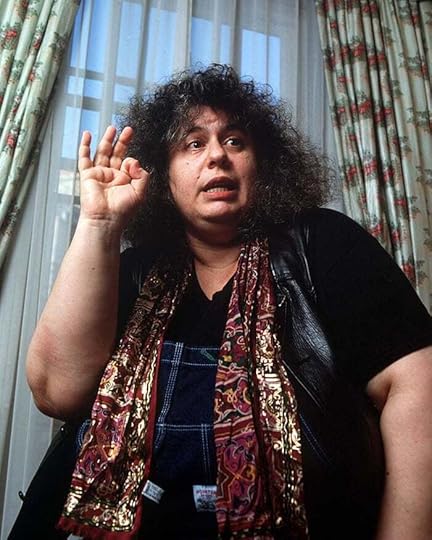
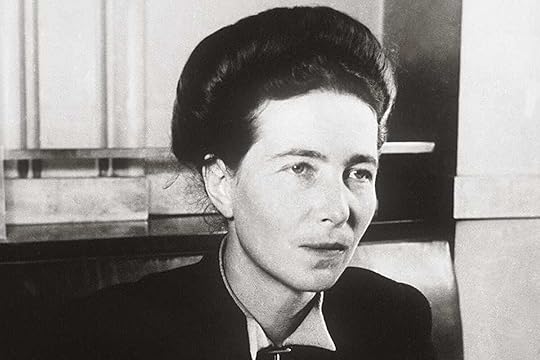




تصاویر برجستهترین فمینیستهای تاریخ و یک فمینیست ایرانی
درکین دشمنِ چندتایی چیز بد بود. از آن طرف اما با هرچه چیز خوب هست هم سر دشمنی داشت
در ایدئولوژی فمینیسم خوشبختی زنان و رضایتشان از زندگی هیچ محلی از اعراب ندارد
"I think that men will have to give up their precious erections and begin to make love as women do together."
ایدئولوژی زنستیز ترنس از زیر عبای فمینیسم بیرون آمده
"Androgynous mythology provides us with a model which does not use polar role definitions, where the definitions are not, implicitly or explicitly, male = good, female= bad, man = human, woman = other. Androgyny myths are multisexual mythological models. They go well beyond bisexuality as we know it in the scenarios they suggest for building community, for realizing the fullest expression of human sexual possibility and creativity.
Androgyny as a concept has no notion of sexual repression built into it. Where woman is carnality, and carnality is evil, it stands to reason (hail reason! ) that woman must be chained, whipped, punished, purged; that fucking is shameful, forbidden, fearful, guilt- ridden. Androgyny as the basis of sexual identity and community life provides no such imperatives. Sexual freedom and freedom for biological women, or all persons “female,” are not separable. That they are different, and that sexual freedom has priority, is the worst of sexist hypes. Androgyny can show the way to both. It may be the one road to freedom open to women, men, and that emerging majority, the rest of us."
این پاراگراف بهخوبی اغراض و انگیزهها و نقطهنظر ایدئولوژی فمینیسم را عیان میکند
"We want to destroy sexism, that is, polar role definitions of male and female, man and woman. We want to destroy patriarchal power at its source, the family; in its most hideous form, the nation-state. We want to destroy the structure of culture as we know it, its art, its churches, its laws: all of the images, institutions, and structural mental sets which define women as hot wet fuck tubes, hot slits."

August 28, 2019
Might start recommending this as a starter to Dworkin. It has bits and pieces of all of her work, speeches, fiction, and a previously unpublished essay My Suicide. I wish so badly things had gone differently. This collection is a much more multifaceted look at Dworkin instead of the different one-dimensional representations she is presented as in different places. A complicated woman.

January 10, 2025
I am so mad at myself for not buying this book so I could mark it up. This changed me as a person and not for the better.
All of my adult feminist life I have heard Andrea Dworkin spoken of as this pariah, the feminist you don’t want to be like, and the entire time I was reading I was like yeah no this is the correct amount of angry to be. This is the same amount of angry that I am.
“Does anyone care that this is not a world where girls and women can live in?”
Her biggest sin (in this book at least) is hubris and maybe myopia. Which if we applied these to male writers PHILOSOPHERS even, we’d have exactly 0 male writers.
All of my adult feminist life I have heard Andrea Dworkin spoken of as this pariah, the feminist you don’t want to be like, and the entire time I was reading I was like yeah no this is the correct amount of angry to be. This is the same amount of angry that I am.
“Does anyone care that this is not a world where girls and women can live in?”
Her biggest sin (in this book at least) is hubris and maybe myopia. Which if we applied these to male writers PHILOSOPHERS even, we’d have exactly 0 male writers.

July 7, 2023
this book changed my life also makes me never wanna be with a man ever again but

January 17, 2022
Andrea Dworkin was one of the most powerful writers of the 20th century, maybe ever. There is no way to describe the way she writes. It is so powerful and so painful. She speaks to me like no one else can.
This is a wonderful selection of her work. So happy to see her "I Want A Twenty-Four Hour Truce During Which There Is No Rape" speech included. Underappreciated and absolutely phenomenal speech. Also loved the inclusion of the androgyny chapter of Woman Hating. Fateman and Scholder did a wonderful job at showing how progressive she was.
This read took me a long time because of how heavy the content is. I think everyone going into a Dworkin book knows that it will be graphic and horrifying and completely real, so I don't know if I need to send out trigger warnings. But if this is your first Dworkin then major trigger warnings for spousal abuse and rape. (Dworkin says that spousal abuse is a euphemism and we should all call it wife-beating. Sorry, Andrea.)
Men must read this. Women must read this. RAPE VICTIMS MUST READ THIS. There is very little that can make me feel less alone in my rape trauma. Andrea Dworkin can. She is able to capture the absolute despair and heartbreak of rape so clearly and eloquently. Of course she understands, having her history, but it is so comforting (and depressing) to see someone express so well what one feels in the aftermath of rape.
Andrea, I'd die for you a million times over.
This is a wonderful selection of her work. So happy to see her "I Want A Twenty-Four Hour Truce During Which There Is No Rape" speech included. Underappreciated and absolutely phenomenal speech. Also loved the inclusion of the androgyny chapter of Woman Hating. Fateman and Scholder did a wonderful job at showing how progressive she was.
This read took me a long time because of how heavy the content is. I think everyone going into a Dworkin book knows that it will be graphic and horrifying and completely real, so I don't know if I need to send out trigger warnings. But if this is your first Dworkin then major trigger warnings for spousal abuse and rape. (Dworkin says that spousal abuse is a euphemism and we should all call it wife-beating. Sorry, Andrea.)
Men must read this. Women must read this. RAPE VICTIMS MUST READ THIS. There is very little that can make me feel less alone in my rape trauma. Andrea Dworkin can. She is able to capture the absolute despair and heartbreak of rape so clearly and eloquently. Of course she understands, having her history, but it is so comforting (and depressing) to see someone express so well what one feels in the aftermath of rape.
Andrea, I'd die for you a million times over.

March 26, 2019
Please let me die.
August 28, 2019
25th birthday present from a great friend, only got to read it late in the year. I love the Dworkinite community. Andrea-heads will pass around a book like this like the sacred text in a Brecht play, and it doesn't always read like a revelation, but I do always feel like I'm keeping some important strange little part of the world alive. It's so common in these circles to project a personal relationship onto this author, and this anthology's editor Johanna Fateman makes it even easier by slipping a couple of Dworkin's letters to her parents into the book between significant texts from her life's work. Dworkin's like the Outline: She's not for everyone; she's for me.
Fateman provides pretty good background on Dworkin in the introduction, in which she also disowns Dworkin just enough and in just vague enough terms that she can't be held accountable for the kinds of statements that still make good people despise Dworkin ("The Left cannot have its whores and its politics, too" is in here), but by the same token, a reader doesn't really get a sense for what the secondary "literature" has struggled with and against in Dworkin. Fateman couldn't be more right, though, when she points out how often Dworkin is taken to mean the exact opposite of what she clearly means in context.
I found the stereotype of Dworkin's pessimism, perfected in the infamous all-sex-is-rape misinterpretation of her book Intercourse, wonderfully contradicted when I realized that Dworkin is one of the most optimistic writers/speakers on issues like rape and abuse that I've ever encountered. She fits perfectly into the socialist tradition she seems to have inherited from Marcuse by way of Firestone. She sees injustice fold further injustice into itself, assimilate its own challenges for its own purposes, and yet she continues to see in every new depth of atrocity all the greater potential for revolutionary change, in every new woman who escapes her batterer husband a new potential warrior for liberation. Speaking of the Outline, the line Leah Finnegan has cited to demonstrate Dworkin's sense of humor, that "men will have to give up their precious erections" is in here. I think her line about woman-hating male authors is even funnier: "So what do you say; they're just so fucking filled with hate they can't do anything else or feel anything else or write anything else? I mean, do they ever look at the fucking moon?"
Far from any continuity with the kind of trans-hating "radfems" or "cultural feminists", who I think Sophie Lewis rightly identifies as opportunistic usurpers of the Second Wave tradition, Dworkin insists on abolishing men and women as such, manhood and womanhood, and muses about the possibilities opened up by "androgyny". I've seen people pull quotes of hers entirely out of place and onto twitter, like the one about how "The Israelis my guys", when her essay on Israel in this book makes it explicitly clear that Dworkin is "not a Zionist and never was". Unfortunately, she's a good writer. She implicitly takes her own father as a model in how he performed a type of self-criticism, listing his anti-Black prejudices to his daughter and cutting each one of them down in front of her. She confronts her own and her community's history of anti-Arab racism head-on and I think holds up her own ambivalent feelings about the Jewish state (including the haunting reminder that "the Cambodians had Cambodia and it didn’t help them much") as a warning for victims of violence who know its power well and might be tempted by it.
She doesn't even let her liberal childhood self off the hook. When she tells the story about how, at eleven years old, she got into a shouting match with her Holocaust-survivor Hebrew school teacher because he told the class they should consider themselves Jews first, Americans second, and citizens of the world or human beings last and little Andrea told him that the exact opposite was true, that the only way Jews would ever be safe was if people considered themselves fellow citizens of the world first, members of a secular democracy next, and part of their ancient tribe last, the writer Dworkin puts her preferred spelling of "Amerika" and "Amerikan" into the mouth of the child she's recalling being long before that girl read Kafka and developed her own idiosyncratic critique of what she came to call the "Immovable Punctuation Typography Structure". By the time she gets through her witness of the horrors committed against Palestinians in the name of the country, the "abject" condition of Jewish women in Israel, and the real joke, that "[i]t turns out that I am a woman first, second, and last", you can get the sense that she doesn't disagree with her old teacher that she has the blood of Jews on her hands; she just sees a lot more blood there than he did.
Dworkin hates herself early and often. Her self-destructive fantasies usually stall at the individually suicidal level, but as Fateman draws out by giving this collection the title (Last Days at Hot Slit) that Dworkin initially intended for the book that eventually became Woman Hating, an apocalyptic vein runs throughout.
I read The World Turned Upside Down right before this, and seeing how a belief in the looming Second Coming motivated so many seventeenth-century English radicals primed me to pay special attention to the thread in Dworkin that holds nuclear annihilation as the logical endpoint of male domination. I don't think it's fair to say that every generation of radicals imagines the end of the world and they all turn out to be wrong. For a lot of ethical Protestants, Christ did return: in them. The kingdom they established was capitalism, and it might not last a thousand years, it might already have ended, but we're at least living in its ruins. Human beings might not evaporate entirely in the Sixth Great Extinction, but the world has already ended for countless other species, and it's hard to imagine the world as we know it will last another decade.
As far as Dworkin goes, she may have escaped the atomic bombs. For now, we continue to as well. But she lived to see the inauguration of the unipolar world, the collapse of one nuclear empire and the hegemony of another, and after her death, it's obvious that Dworkin lost her battle for humanity. Not just because the new pornocrats have achieved heights of power, exploitation, and propaganda that Hefner, Guccione, and Flynt could've never dreamed of, but also because her prophesy came true that reactionary masochism would find synthesis with reactionary sadism in the generation of hack writers who came after her. The world is now full of the mutant Miller-Genet hybrids that she saw coming.
All the more reason to make sure all those glamorous personal battles she got into don't disappear into the ether. Take a couple minutes today to listen to Dworkin tell a reporter about the time she threatened to murder Allen Ginsberg because he harassed her about how much he loved raping children: https://www.youtube.com/watch?v=tx714...
She calls his style of pedophile apology "very Gemini"! Project with me!
Fateman provides pretty good background on Dworkin in the introduction, in which she also disowns Dworkin just enough and in just vague enough terms that she can't be held accountable for the kinds of statements that still make good people despise Dworkin ("The Left cannot have its whores and its politics, too" is in here), but by the same token, a reader doesn't really get a sense for what the secondary "literature" has struggled with and against in Dworkin. Fateman couldn't be more right, though, when she points out how often Dworkin is taken to mean the exact opposite of what she clearly means in context.
I found the stereotype of Dworkin's pessimism, perfected in the infamous all-sex-is-rape misinterpretation of her book Intercourse, wonderfully contradicted when I realized that Dworkin is one of the most optimistic writers/speakers on issues like rape and abuse that I've ever encountered. She fits perfectly into the socialist tradition she seems to have inherited from Marcuse by way of Firestone. She sees injustice fold further injustice into itself, assimilate its own challenges for its own purposes, and yet she continues to see in every new depth of atrocity all the greater potential for revolutionary change, in every new woman who escapes her batterer husband a new potential warrior for liberation. Speaking of the Outline, the line Leah Finnegan has cited to demonstrate Dworkin's sense of humor, that "men will have to give up their precious erections" is in here. I think her line about woman-hating male authors is even funnier: "So what do you say; they're just so fucking filled with hate they can't do anything else or feel anything else or write anything else? I mean, do they ever look at the fucking moon?"
Far from any continuity with the kind of trans-hating "radfems" or "cultural feminists", who I think Sophie Lewis rightly identifies as opportunistic usurpers of the Second Wave tradition, Dworkin insists on abolishing men and women as such, manhood and womanhood, and muses about the possibilities opened up by "androgyny". I've seen people pull quotes of hers entirely out of place and onto twitter, like the one about how "The Israelis my guys", when her essay on Israel in this book makes it explicitly clear that Dworkin is "not a Zionist and never was". Unfortunately, she's a good writer. She implicitly takes her own father as a model in how he performed a type of self-criticism, listing his anti-Black prejudices to his daughter and cutting each one of them down in front of her. She confronts her own and her community's history of anti-Arab racism head-on and I think holds up her own ambivalent feelings about the Jewish state (including the haunting reminder that "the Cambodians had Cambodia and it didn’t help them much") as a warning for victims of violence who know its power well and might be tempted by it.
She doesn't even let her liberal childhood self off the hook. When she tells the story about how, at eleven years old, she got into a shouting match with her Holocaust-survivor Hebrew school teacher because he told the class they should consider themselves Jews first, Americans second, and citizens of the world or human beings last and little Andrea told him that the exact opposite was true, that the only way Jews would ever be safe was if people considered themselves fellow citizens of the world first, members of a secular democracy next, and part of their ancient tribe last, the writer Dworkin puts her preferred spelling of "Amerika" and "Amerikan" into the mouth of the child she's recalling being long before that girl read Kafka and developed her own idiosyncratic critique of what she came to call the "Immovable Punctuation Typography Structure". By the time she gets through her witness of the horrors committed against Palestinians in the name of the country, the "abject" condition of Jewish women in Israel, and the real joke, that "[i]t turns out that I am a woman first, second, and last", you can get the sense that she doesn't disagree with her old teacher that she has the blood of Jews on her hands; she just sees a lot more blood there than he did.
Dworkin hates herself early and often. Her self-destructive fantasies usually stall at the individually suicidal level, but as Fateman draws out by giving this collection the title (Last Days at Hot Slit) that Dworkin initially intended for the book that eventually became Woman Hating, an apocalyptic vein runs throughout.
I read The World Turned Upside Down right before this, and seeing how a belief in the looming Second Coming motivated so many seventeenth-century English radicals primed me to pay special attention to the thread in Dworkin that holds nuclear annihilation as the logical endpoint of male domination. I don't think it's fair to say that every generation of radicals imagines the end of the world and they all turn out to be wrong. For a lot of ethical Protestants, Christ did return: in them. The kingdom they established was capitalism, and it might not last a thousand years, it might already have ended, but we're at least living in its ruins. Human beings might not evaporate entirely in the Sixth Great Extinction, but the world has already ended for countless other species, and it's hard to imagine the world as we know it will last another decade.
As far as Dworkin goes, she may have escaped the atomic bombs. For now, we continue to as well. But she lived to see the inauguration of the unipolar world, the collapse of one nuclear empire and the hegemony of another, and after her death, it's obvious that Dworkin lost her battle for humanity. Not just because the new pornocrats have achieved heights of power, exploitation, and propaganda that Hefner, Guccione, and Flynt could've never dreamed of, but also because her prophesy came true that reactionary masochism would find synthesis with reactionary sadism in the generation of hack writers who came after her. The world is now full of the mutant Miller-Genet hybrids that she saw coming.
All the more reason to make sure all those glamorous personal battles she got into don't disappear into the ether. Take a couple minutes today to listen to Dworkin tell a reporter about the time she threatened to murder Allen Ginsberg because he harassed her about how much he loved raping children: https://www.youtube.com/watch?v=tx714...
She calls his style of pedophile apology "very Gemini"! Project with me!

January 20, 2025
andrea’s pen is sooooo lethal

October 2, 2019
This is a harsh book to read! OMG. I read it pretty quickly though--it's immersive and honestly not the type of book I wanted to linger over. I'm sort of fascinated with Andrea Dworkin, but not in the sense that I would espouse her beliefs, or agree with (most of) the things she says. The subtitle on this book says "The Radical Feminism of Andrea Dworkin"--but she doesn't actually get into her thoughts about trans women, and I think she was a radical feminist in the original sense of taking her feminism to an extreme of misandry. Which is pretty unusual actually, and can be sort of exciting to read. She had lots of controversial opinions which are covered here, the most contentious probably being that heterosexual sex (PIV as people say!), amount to rape due to the power imbalance between men and women. Obviously its not that simple, and she expounds on this idea until its truly wearying. She also writes extensively about rape, sexual assault and domestic violence.
The book is excerpts from her books, plus a couple of speeches she gave (one at a men's rally where she makes a plea for them to stop rape for 24hrs--better than it sounds!). Her polemics against pornography are honestly kind of compelling. I don't agree with the assertion that pornography teaches men to rape--at all--nor do I think research supports that idea. But she does get to the bottom of a nagging feeling that women might have who've been exposed to really explicit or violence pornography--mainly that there is something self negating about it. I think that self negation might be more worthy of investigation than the porn itself, but Dworkin really immerses herself in porn, and as a reader you wind up wallowing in these really abject images, and being forced to analyze their creation, or the market that supports it.
With respect to sex she basically demanded that men leave their penises out of it---that this would remedy the sexual script that had caused so much misery for women.
I'm glad I read this. I had tried to read Intercourse, and failed years ago. Her writing can be difficult--it's pretty stark and nihilistic, although at times entertaining, such as the piece where she bids farewell to all the leftist liberals who she feels have sold out or capitulated on their radical ideals (mainly other writers, but also any sex positive feminist of the day)--and that piece made me laugh out loud.
She strikes me as a narcissistic person, and she clearly can't imagine any women actually enjoying sex--so if you take free will and sexual desire out of the equation where sex is concerned between men and women---that's the perspective she's writing from. She is also prone to really lurid and lengthy descrptions of her own sexual assaults, which are difficult to read but also must have been agony to write. Strangely the book ends with a suicide tract she wrote (she didn't commit suicide but Johanna Fateman's foreword tells you this essay devastated her partner after her death in 2002)--wherein she confesses the worst thing she ever did was to beat her dog when she was a battered woman in her 20s. So--not a happy book and a terribly grim ending. And yet! I enjoyed it.
My sense of Dworkin is that she was a true Marxist feminist revolutionary. I think working on the President's Commission on Obscenity Pornography (the Meese Report)--which aimed to treat pornography as a violation of women's civil rights, was a huge turning point for her in how she was accepted (or rather completely rejected and abandoned) by the women's movement. OF course she must had high hopes of having some lasting impact on her lifelong war against porn and sexual violence, but the work really drew a line in the sand between Dworkin and the changing tides of feminism after the second wave, which was becoming more sex positive and trying to acknowledge women's sexual agency. The work she and Catharine McKinnon did there really caused mainstream feminism to totally write her off, which must have been difficult and painful for her. I find her a pretty tragic figure honestly.
At any rate, she writes really well, and she's definitely an accessible intellectual if you are interested in some very radical feminist writing that really, really hates men.
The book is excerpts from her books, plus a couple of speeches she gave (one at a men's rally where she makes a plea for them to stop rape for 24hrs--better than it sounds!). Her polemics against pornography are honestly kind of compelling. I don't agree with the assertion that pornography teaches men to rape--at all--nor do I think research supports that idea. But she does get to the bottom of a nagging feeling that women might have who've been exposed to really explicit or violence pornography--mainly that there is something self negating about it. I think that self negation might be more worthy of investigation than the porn itself, but Dworkin really immerses herself in porn, and as a reader you wind up wallowing in these really abject images, and being forced to analyze their creation, or the market that supports it.
With respect to sex she basically demanded that men leave their penises out of it---that this would remedy the sexual script that had caused so much misery for women.
I'm glad I read this. I had tried to read Intercourse, and failed years ago. Her writing can be difficult--it's pretty stark and nihilistic, although at times entertaining, such as the piece where she bids farewell to all the leftist liberals who she feels have sold out or capitulated on their radical ideals (mainly other writers, but also any sex positive feminist of the day)--and that piece made me laugh out loud.
She strikes me as a narcissistic person, and she clearly can't imagine any women actually enjoying sex--so if you take free will and sexual desire out of the equation where sex is concerned between men and women---that's the perspective she's writing from. She is also prone to really lurid and lengthy descrptions of her own sexual assaults, which are difficult to read but also must have been agony to write. Strangely the book ends with a suicide tract she wrote (she didn't commit suicide but Johanna Fateman's foreword tells you this essay devastated her partner after her death in 2002)--wherein she confesses the worst thing she ever did was to beat her dog when she was a battered woman in her 20s. So--not a happy book and a terribly grim ending. And yet! I enjoyed it.
My sense of Dworkin is that she was a true Marxist feminist revolutionary. I think working on the President's Commission on Obscenity Pornography (the Meese Report)--which aimed to treat pornography as a violation of women's civil rights, was a huge turning point for her in how she was accepted (or rather completely rejected and abandoned) by the women's movement. OF course she must had high hopes of having some lasting impact on her lifelong war against porn and sexual violence, but the work really drew a line in the sand between Dworkin and the changing tides of feminism after the second wave, which was becoming more sex positive and trying to acknowledge women's sexual agency. The work she and Catharine McKinnon did there really caused mainstream feminism to totally write her off, which must have been difficult and painful for her. I find her a pretty tragic figure honestly.
At any rate, she writes really well, and she's definitely an accessible intellectual if you are interested in some very radical feminist writing that really, really hates men.

June 19, 2025
A fascinating collection, and a great primer for those unfamiliar with Dworkin or who are exploring the lineage of feminism as we know it. The essay by the editor was very compassionate and nuanced, which helped prepare me for the famous intensity of Dworkin’s most popular ideas.
Most impactful: that excerpt of Right Wing Women highkey should be essential reading right now. I went into the Intercourse excerpt thinking it was over the top cynical, but ended it with a complete paradigm shift of how I viewed my own sexuality.
Most impactful: that excerpt of Right Wing Women highkey should be essential reading right now. I went into the Intercourse excerpt thinking it was over the top cynical, but ended it with a complete paradigm shift of how I viewed my own sexuality.

January 5, 2019
I have read all of her books (in fact I used to use some of them in my Women's Studies classes) and since this is a compilation of her work, I consider that I have read it.

January 25, 2020
Last summer, I picked up the new Andrea Dworkin essay collection Last Days at Hot Slit (2019) and was surprised to find my alma mater featured.
In a speech Dworkin gave in New York in 1975, titled “The Rape Atrocity and the Boy Next Door,” she describes a gang-rape that happened at Notre Dame in 1974, offering it as one of many examples of how male-founded and male-controlled institutions (such as the university and the justice system) are ultimately loyal to male interests.
“The girl” Hesburgh referenced was an 18-year-old South Bend high school student who was gang raped by six Notre Dame football players in a men’s dormitory on campus.
Read the rest of my review here: https://wp.me/p4PLpp-jX
In a speech Dworkin gave in New York in 1975, titled “The Rape Atrocity and the Boy Next Door,” she describes a gang-rape that happened at Notre Dame in 1974, offering it as one of many examples of how male-founded and male-controlled institutions (such as the university and the justice system) are ultimately loyal to male interests.
“The girl” Hesburgh referenced was an 18-year-old South Bend high school student who was gang raped by six Notre Dame football players in a men’s dormitory on campus.
Read the rest of my review here: https://wp.me/p4PLpp-jX

March 24, 2019
A great Dworkin primer, anthology, that allows her to be at once human, feminist, female, writer, poet, and artist. This compilation explores the depth and breadth of her work in a way that puts the "never read her but know we oppose her" critics to shame. Well organized and an excellent introduction by the editors.

March 9, 2025
2.75/5
Men suck.
This book explores several areas of sexism and feminism. Sometimes it was a bit too tough for me. This ain't an easy read. It is still very informative.
Men suck.
This book explores several areas of sexism and feminism. Sometimes it was a bit too tough for me. This ain't an easy read. It is still very informative.

August 27, 2019
The cover and title caught my eye. Then the words "radical feminism" made me pick it up. I read a piece about her in The New Yorker my link text so Dworkin was lodged in my brain somewhere.
I was most interested by the introduction, which goes into detail about her life, her life's work, and why this collection was being put together. She lived a complicated, fascinating life. We were both born in Camden, NJ which intrigued me on a personal level.
I did not finish reading Last Days at Hot Slit. I intended to read all of it all the way through but found myself skipping over sections and to move on. At first the text was very overwhelming because it is sexually and violently graphic. Dworkin is known for being repetitive for to make a point and after reading 100 pages (its just about 400) I felt like I got the point. The piece she 'Pornography: Power' will remain with me forever.
There are speeches, college addresses and lectures in this book in addition to adaptations, essays, and condensed chunks of her books. She was not well liked and I found out one of my heroes was one of her enemies: Ellen Willis. Willis was outspoken and active in the third wave of feminism. (Her and Dworkin did not agree about free speech and pornography.)
It's a great collection to honor her but after a while felt dated. Her piece devoted to rape discusses how martial rape is still legal in all 50 states: it's not anymore. Not that this isn't an issue (never mind that our sitting president is guilty of marital rape) but the context is decades behind politically and legally. It made me disinterested in investing my time in it. This is when I started to move on. But her style of writing, the graphic nature of it, and her philosophies became so intense, violent, and aggressive I started having unsettling dreams (I was reading right before bed) which turned me off from reading it at all.
I'm glad I spent time reading and ruminating on this book. It made me want to engage with all kinds of feminist philosophies and reminded me there is radicalism everywhere, even in my own beliefs, and that it's important to acknowledge and engage with them even if I don't agree. The publication of this book and the press surrounding it declares we need Dworkin now more than ever. I'm not sure she would've liked what our society and culture has become. Her heart would've exploded all over again, again and again. Although it would be great to see her write about Trump, what porn has become, and #MeToo. I genuinely wonder what she'd have to say.
I was most interested by the introduction, which goes into detail about her life, her life's work, and why this collection was being put together. She lived a complicated, fascinating life. We were both born in Camden, NJ which intrigued me on a personal level.
I did not finish reading Last Days at Hot Slit. I intended to read all of it all the way through but found myself skipping over sections and to move on. At first the text was very overwhelming because it is sexually and violently graphic. Dworkin is known for being repetitive for to make a point and after reading 100 pages (its just about 400) I felt like I got the point. The piece she 'Pornography: Power' will remain with me forever.
There are speeches, college addresses and lectures in this book in addition to adaptations, essays, and condensed chunks of her books. She was not well liked and I found out one of my heroes was one of her enemies: Ellen Willis. Willis was outspoken and active in the third wave of feminism. (Her and Dworkin did not agree about free speech and pornography.)
It's a great collection to honor her but after a while felt dated. Her piece devoted to rape discusses how martial rape is still legal in all 50 states: it's not anymore. Not that this isn't an issue (never mind that our sitting president is guilty of marital rape) but the context is decades behind politically and legally. It made me disinterested in investing my time in it. This is when I started to move on. But her style of writing, the graphic nature of it, and her philosophies became so intense, violent, and aggressive I started having unsettling dreams (I was reading right before bed) which turned me off from reading it at all.
I'm glad I spent time reading and ruminating on this book. It made me want to engage with all kinds of feminist philosophies and reminded me there is radicalism everywhere, even in my own beliefs, and that it's important to acknowledge and engage with them even if I don't agree. The publication of this book and the press surrounding it declares we need Dworkin now more than ever. I'm not sure she would've liked what our society and culture has become. Her heart would've exploded all over again, again and again. Although it would be great to see her write about Trump, what porn has become, and #MeToo. I genuinely wonder what she'd have to say.

January 21, 2020
While I vehemently disagree with Dworkin on some race, gender, and sex work issues she's far more nuanced than critics would have you believe. I went in skeptical and ready for the worst but finished up the audiobook feeling devastated. & for someone said to be anti-sex she clearly seems to be pro-sex as long as it's not exploitative and/or coerced.

January 1, 2024
3.5 stars. Dworkin dwarves way less hate than she gets. I’ll put in some quotes later when I’m not outside at a bar waiting to reign in the new year.

August 3, 2024
I feel so empty now that I've finished this book. Dworkin is truly a timeless writer; her work should be required reading for all.
Some extracts:
“And I want one day of respite, one day off, one day in which no new bodies are piled up, one day in which no new agony is added to the old, and I am asking you to give it to me. And how could I ask you for less--it is so little. And how could you offer me less: it is so little. Even in wars, there are days of truce. Go and organize a truce. Stop your side for one day. I want a twenty-four-hour truce during which there is no rape.”
“Capitalism is not wicked or cruel when the commodity is the whore; profit is not wicked or cruel when the alienated worker is a female piece of meat; corporate bloodsucking is not wicked or cruel when the corporations in question, sell cunt; racism is not wicked or cruel when the black cunt or yellow cunt or red cunt or Hispanic cunt or Jewish cunt has her legs splayed for any man's pleasure; poverty is not wicked or cruel when it is the poverty of dispossessed women who have only themselves to sell; violence by the powerful against the powerless is not wicked or cruel when it is called sex; slavery is not wicked or cruel when it is sexual slavery; torture is not wicked or cruel when the tormented are women, whores, cunts. The new pornography is left-wing; and the new pornography is a vast graveyard where the Left has gone to die. The Left cannot have its whores and its politics too.”
“Being female in this world means having been robbed of the potential for human choice by men who love to hate us. One does does not make choices in freedom. Instead, one conforms in body type and behavior and values to become an object of male sexual desire, which requires an abandonment of a wide-ranging capacity for choice...
Men too make choices. When will they choose not to despise us?”
“Any violation of a woman's body can become sex for men; this is the essential truth of pornography.”
The men’s movement seems to stay stuck on two points. The first is that men don’t really feel very good about themselves. How could you? The second is that men come to me or to other feminists and say: “What you’re saying about men isn’t true. It isn’t true of me. I don’t feel that way. I’m opposed to all of this.”
And I say: don’t tell me. Tell the pornographers. Tell the pimps. Tell the warmakers. Tell the rape apologists and the rape celebrationists and the pro-rape ideologues. Tell the novelists who think that rape is wonderful. Tell Larry Flynt. Tell Hugh Hefner. There’s no point in telling me. I’m only a woman. There’s nothing I can do about it. These men presume to speak for you. They are in the public arena saying that they represent you. If they don’t, then you had better let them know.”
“The new pornography industry is held, by leftist males, to be inherently radical. Sex is claimed by the Left as a leftist phenomenon; the trade in women is most of sex. The politics of liberation are claimed as indigenous to the Left by the Left; central to the politics of liberation is the mass-marketing of material that depicts women being used as whores.”
“The accounts of rape, wife beating, forced childbearing, medical butchering, sex-motivated murder, forced prostitution, physical mutilation, sadistic psychological abuse, and other commonplaces of female experi
ence that are excavated from the past or given by contemporary survivors should leave the heart seared, the mind in anguish, the conscience in upheaval. But they do not. No matter how often these stories are told, with whatever clarity or eloquence, bitterness or sorrow, they might as well have been whispered in wind or written in sand: they disappear, as if they were nothing. The tellers and the stories are ignored or ridiculed, threatened back into silence or destroyed, and the experience of female suffering is buried in cultural invisibility and contempt… the very reality of abuse sustained by women, despite its overwhelming pervasiveness and constancy, is negated. It is negated in the transactions of everyday life, and it is negated in the history books, left out, and it is negated by those who claim to care about suffering but are blind to this suffering.
The problem, simply stated, is that one must believe in the existence of the person in order to recognize the authenticity of her suffering. Neither men nor women believe in the existence of women as significant beings. It is impossible to remember as real the suffering of someone who by definition has no legitimate claim to dignity or freedom, someone who is in fact viewed as some thing, an object or an absence. And if a woman, an individual woman multiplied by billions, does not believe in her own discrete existence and therefore cannot credit the authenticity of her own suffering, she is erased, canceled out, and the meaning of her life, whatever it is, whatever it might have been, is lost. This loss cannot be calculated or comprehended. It is vast and awful, and nothing will ever make up for it.”
Some extracts:
“And I want one day of respite, one day off, one day in which no new bodies are piled up, one day in which no new agony is added to the old, and I am asking you to give it to me. And how could I ask you for less--it is so little. And how could you offer me less: it is so little. Even in wars, there are days of truce. Go and organize a truce. Stop your side for one day. I want a twenty-four-hour truce during which there is no rape.”
“Capitalism is not wicked or cruel when the commodity is the whore; profit is not wicked or cruel when the alienated worker is a female piece of meat; corporate bloodsucking is not wicked or cruel when the corporations in question, sell cunt; racism is not wicked or cruel when the black cunt or yellow cunt or red cunt or Hispanic cunt or Jewish cunt has her legs splayed for any man's pleasure; poverty is not wicked or cruel when it is the poverty of dispossessed women who have only themselves to sell; violence by the powerful against the powerless is not wicked or cruel when it is called sex; slavery is not wicked or cruel when it is sexual slavery; torture is not wicked or cruel when the tormented are women, whores, cunts. The new pornography is left-wing; and the new pornography is a vast graveyard where the Left has gone to die. The Left cannot have its whores and its politics too.”
“Being female in this world means having been robbed of the potential for human choice by men who love to hate us. One does does not make choices in freedom. Instead, one conforms in body type and behavior and values to become an object of male sexual desire, which requires an abandonment of a wide-ranging capacity for choice...
Men too make choices. When will they choose not to despise us?”
“Any violation of a woman's body can become sex for men; this is the essential truth of pornography.”
The men’s movement seems to stay stuck on two points. The first is that men don’t really feel very good about themselves. How could you? The second is that men come to me or to other feminists and say: “What you’re saying about men isn’t true. It isn’t true of me. I don’t feel that way. I’m opposed to all of this.”
And I say: don’t tell me. Tell the pornographers. Tell the pimps. Tell the warmakers. Tell the rape apologists and the rape celebrationists and the pro-rape ideologues. Tell the novelists who think that rape is wonderful. Tell Larry Flynt. Tell Hugh Hefner. There’s no point in telling me. I’m only a woman. There’s nothing I can do about it. These men presume to speak for you. They are in the public arena saying that they represent you. If they don’t, then you had better let them know.”
“The new pornography industry is held, by leftist males, to be inherently radical. Sex is claimed by the Left as a leftist phenomenon; the trade in women is most of sex. The politics of liberation are claimed as indigenous to the Left by the Left; central to the politics of liberation is the mass-marketing of material that depicts women being used as whores.”
“The accounts of rape, wife beating, forced childbearing, medical butchering, sex-motivated murder, forced prostitution, physical mutilation, sadistic psychological abuse, and other commonplaces of female experi
ence that are excavated from the past or given by contemporary survivors should leave the heart seared, the mind in anguish, the conscience in upheaval. But they do not. No matter how often these stories are told, with whatever clarity or eloquence, bitterness or sorrow, they might as well have been whispered in wind or written in sand: they disappear, as if they were nothing. The tellers and the stories are ignored or ridiculed, threatened back into silence or destroyed, and the experience of female suffering is buried in cultural invisibility and contempt… the very reality of abuse sustained by women, despite its overwhelming pervasiveness and constancy, is negated. It is negated in the transactions of everyday life, and it is negated in the history books, left out, and it is negated by those who claim to care about suffering but are blind to this suffering.
The problem, simply stated, is that one must believe in the existence of the person in order to recognize the authenticity of her suffering. Neither men nor women believe in the existence of women as significant beings. It is impossible to remember as real the suffering of someone who by definition has no legitimate claim to dignity or freedom, someone who is in fact viewed as some thing, an object or an absence. And if a woman, an individual woman multiplied by billions, does not believe in her own discrete existence and therefore cannot credit the authenticity of her own suffering, she is erased, canceled out, and the meaning of her life, whatever it is, whatever it might have been, is lost. This loss cannot be calculated or comprehended. It is vast and awful, and nothing will ever make up for it.”

August 4, 2025
Andrea Dworkin lives in my head now and it’s not very pleasant, I hope she’s wrong about most of this but unfortunately a lot of it resonates

May 1, 2021
In Last Days at Hot Slit, editors Johanna Fateman and Amy Scholder present excerpts from the work of feminist Andrea Dworkin, well-known in the 1970s-90s for her outspokenness against rape and her strong anti-pornography and anti-prostitution views. Dworkin, a battered woman and victim of rape herself, was audacious and uncompromising in speaking out against the patriarchal systems that tacitly condone violence against women and treat them as second-class humans. Dworkin is challenging and problematic in some of the ways she writes about men and violence. And Dworkin's stances on pornography and prostitution have made her passé with today's Third Wave feminists, who tend to see possibilities for women's empowerment in both those things. The fact that Last Days at Hot Slit is the only Dworkin book available through my library system is evidence of just how buried she and her feminist legacy have become. However, in her introduction to the collection, Johanna Fateman makes a case for revisiting and reconsidering the work of this flawed but influential thinker.
I came away from the collection convinced that Fateman is right: There's absolutely something here that shouldn't be buried and forgotten. I found Dworkin's writing a little uneven in places, but poetic and shining with clarity in others. The fiction excerpts, in particular, failed to connect with me, but I found her nonfiction writing engaging and searing in its truth telling. The essay "I Want a Twenty-Four-Hour Truce During Which There Is No Rape," which she delivered as a speech to a men's conference in 1983, is downright electrifying. To put it mildly, it took some serious chutzpah to say the convicting things she did to an audience of 500 men. And "Goodbye to All This" is a first-class "f--- you" to both patriarchy and the emerging "girl" feminism that was starting to overtake the the more overtly political and outspoken women's liberation of the seventies. I thought Dworkin's instincts toward intersectionality were interesting, too. At times, she misses the mark and seems to engage in appropriation in the way she links modern Western women's oppression to American slavery, or to Chinese foot binding practices. But at other times, she seems spot on in her understanding of American patriarchy as a system built on a toxic foundation of both sexism and racism. I also got the distinct feeling that Dworkin could have told us in 1988 that a Donald Trump (or someone very like him) was coming for us. Lucky her, she died in 2005, so didn't live to see it--but I think she wouldn't have been a bit surprised to see an avowed sexual predator elected president.
In any case, I came away a fan. I'd particularly like to read Woman Hating, Letters from a War Zone, and Right Wing Women now. Unfortunately, those are the very out-of-print tomes that seem to be going for $50-$175 on Amazon. I may have to settle for the excerpts for now.
I came away from the collection convinced that Fateman is right: There's absolutely something here that shouldn't be buried and forgotten. I found Dworkin's writing a little uneven in places, but poetic and shining with clarity in others. The fiction excerpts, in particular, failed to connect with me, but I found her nonfiction writing engaging and searing in its truth telling. The essay "I Want a Twenty-Four-Hour Truce During Which There Is No Rape," which she delivered as a speech to a men's conference in 1983, is downright electrifying. To put it mildly, it took some serious chutzpah to say the convicting things she did to an audience of 500 men. And "Goodbye to All This" is a first-class "f--- you" to both patriarchy and the emerging "girl" feminism that was starting to overtake the the more overtly political and outspoken women's liberation of the seventies. I thought Dworkin's instincts toward intersectionality were interesting, too. At times, she misses the mark and seems to engage in appropriation in the way she links modern Western women's oppression to American slavery, or to Chinese foot binding practices. But at other times, she seems spot on in her understanding of American patriarchy as a system built on a toxic foundation of both sexism and racism. I also got the distinct feeling that Dworkin could have told us in 1988 that a Donald Trump (or someone very like him) was coming for us. Lucky her, she died in 2005, so didn't live to see it--but I think she wouldn't have been a bit surprised to see an avowed sexual predator elected president.
In any case, I came away a fan. I'd particularly like to read Woman Hating, Letters from a War Zone, and Right Wing Women now. Unfortunately, those are the very out-of-print tomes that seem to be going for $50-$175 on Amazon. I may have to settle for the excerpts for now.

October 15, 2019
Published in 2019, "Last Days at Hot Slit: The Radical Feminism of Andrea Dworkin," is a deeply compelling selection of the published and unpublished work of the feminist author and activist Andrea Dworkin.
Edited by Johanna Fateman and Amy Scholder, Ms. Fateman's introduction is also quite excellent.
I was astonished that the book even received a positive review in "The New York Times" -- which I'll link here, for those interested --
https://www.nytimes.com/2019/03/12/bo...
This is the fourth book I have read by Andrea Dworkin, following "Pornography" (1981), "Intercourse" (1987), and "Woman Hating" (1974). All have been read earlier this year (2019).
"Last Days at Hot Slit" was definitely the darkest Dworkin book I have read, by far. I loved this book, and I felt empowered reading it, but I also cried. This book is so dark that I wasn't able to finish it. I skipped around in the collection and read the material in my own order, and there were a few selections that I didn't read. I checked this book out three times from my library, keeping it for more than two months -- and honestly, I just needed longer to finish it.
Sometimes, written material requires a long, long time for me to emotionally process in order to consume it in full. That was the case with "Last Days at Hot Slit."
It's very tragic to me that Andrea Dworkin is labelled a "radical," when her "extremism" is nothing more than telling the truth. I have never read a writer who can break down power structures so clearly and succinctly as Dworkin can. I don't find Dworkin's work "radical" at all. In the past ten years, I've heard a number of Young Adult/YA authors describe their own fiction work as being "radically honest," but that is the kind of "radical" that Dworkin really is: radically honest.
She is much more than honest, though. This is a writer who saw power clearly. She wrote about power clearly. Reading her work is a gift. She exposes power as it is, and her prose is ruthless and exacting. Other people call that radical. I call it a gift. I call it grace. When I take a walk in the woods or swim in the sea, I feel grace. When I read Andrea Dworkin's work, I feel grace. It's that powerful feeling of Truth washing over me. Dworkin's prose is as clear as a blue summer sky.
Five stars. An excellent read.
And one day, when I'm ready, I'll read the remaining selections. I'll update this review after I finish every page.
Edited by Johanna Fateman and Amy Scholder, Ms. Fateman's introduction is also quite excellent.
I was astonished that the book even received a positive review in "The New York Times" -- which I'll link here, for those interested --
https://www.nytimes.com/2019/03/12/bo...
This is the fourth book I have read by Andrea Dworkin, following "Pornography" (1981), "Intercourse" (1987), and "Woman Hating" (1974). All have been read earlier this year (2019).
"Last Days at Hot Slit" was definitely the darkest Dworkin book I have read, by far. I loved this book, and I felt empowered reading it, but I also cried. This book is so dark that I wasn't able to finish it. I skipped around in the collection and read the material in my own order, and there were a few selections that I didn't read. I checked this book out three times from my library, keeping it for more than two months -- and honestly, I just needed longer to finish it.
Sometimes, written material requires a long, long time for me to emotionally process in order to consume it in full. That was the case with "Last Days at Hot Slit."
It's very tragic to me that Andrea Dworkin is labelled a "radical," when her "extremism" is nothing more than telling the truth. I have never read a writer who can break down power structures so clearly and succinctly as Dworkin can. I don't find Dworkin's work "radical" at all. In the past ten years, I've heard a number of Young Adult/YA authors describe their own fiction work as being "radically honest," but that is the kind of "radical" that Dworkin really is: radically honest.
She is much more than honest, though. This is a writer who saw power clearly. She wrote about power clearly. Reading her work is a gift. She exposes power as it is, and her prose is ruthless and exacting. Other people call that radical. I call it a gift. I call it grace. When I take a walk in the woods or swim in the sea, I feel grace. When I read Andrea Dworkin's work, I feel grace. It's that powerful feeling of Truth washing over me. Dworkin's prose is as clear as a blue summer sky.
Five stars. An excellent read.
And one day, when I'm ready, I'll read the remaining selections. I'll update this review after I finish every page.

February 9, 2020
Oh man ohhhhhhh man. As I'm sure many of you know, I love Andrea Dworkin. I spent the past year reading through all of her non-fiction (InterLibrary Loan became my best friend) and to reread some of her most cited works as well as a brand new essay ("My Suicide") was absolutely and utterly enchanting. And, now that I've read all of her works, to know just when in her life and politics these works are contextualized made this read much more edifying.
With a well thought out introduction written by Fateman and Scholder describing Dworkin's influence, life work, and personal prejudices, this book is well-contextualized for someone less enthusiastic about Dworkin than I am. That being said, for an anthology, it's good. I'm never disappointed by Dworkin.
Not only that, but her previously unreleased essay "My Suicide"...my god. She gets it, she really fucking gets it. Or rather, maybe I get her. I could only hope to never understand what she went through--being a battered wife, running away, having men rape me, prostituting myself for money. But as for her ideologies, the hurt and pain and desperation when it comes to the knowledge of how many and how often women are hurt every single day, how men and the patriarchy--whether they realize it or not--are more insidious and layered and institutionalized in ways we could never even dream of. After all, the ways we already know about are horrific. Sometimes it all feels like too much, and I'd have to agree with her. Yet, just like her, we must keep trucking along and doing our best to break down barriers for generations of women to come.
This is definitely worth reading if you've already read many introductory feminist texts and are aware of basic feminist concepts. This isn't a feminism 101 book, but an anthology that resonates as anti-women industries become more and more heinous. A great read, a spectacular read.
Review cross-listed here!
With a well thought out introduction written by Fateman and Scholder describing Dworkin's influence, life work, and personal prejudices, this book is well-contextualized for someone less enthusiastic about Dworkin than I am. That being said, for an anthology, it's good. I'm never disappointed by Dworkin.
Not only that, but her previously unreleased essay "My Suicide"...my god. She gets it, she really fucking gets it. Or rather, maybe I get her. I could only hope to never understand what she went through--being a battered wife, running away, having men rape me, prostituting myself for money. But as for her ideologies, the hurt and pain and desperation when it comes to the knowledge of how many and how often women are hurt every single day, how men and the patriarchy--whether they realize it or not--are more insidious and layered and institutionalized in ways we could never even dream of. After all, the ways we already know about are horrific. Sometimes it all feels like too much, and I'd have to agree with her. Yet, just like her, we must keep trucking along and doing our best to break down barriers for generations of women to come.
This is definitely worth reading if you've already read many introductory feminist texts and are aware of basic feminist concepts. This isn't a feminism 101 book, but an anthology that resonates as anti-women industries become more and more heinous. A great read, a spectacular read.
Review cross-listed here!

May 26, 2025
FINALLY FINISHED OMG......... 4 months later.... AWKWARD!!!!!! idgaf dworkin is such a talented writer but i don't always agree with her thoughts and opinions on everything ❤️
her voice was SOOOO important at the time so i think reading this was such an incredibly valuable experience.
my fave reads were:
- a battered woman survives
- intercourse
- israel: whose country is it anyway?
i will maybe consider purchasing a copy of intercourse for myself.
her voice was SOOOO important at the time so i think reading this was such an incredibly valuable experience.
my fave reads were:
- a battered woman survives
- intercourse
- israel: whose country is it anyway?
i will maybe consider purchasing a copy of intercourse for myself.

May 7, 2024
WOW. can say with this confidence this book has already Changed My Life
to be honest, I'd give 4 stars to this edition, just because the introduction felt a little...... well it seemed the editors may not like Dworkin and it established a general distrust in what excerpts they may have included but whatever it ended up being great :P
she is truly..... revolutionary. alsoooo the chapter on Israel was totally unexpected to me and so well written.
I want to maybe eventually write a proper fancy review but as of now I'm just stuck saying Wow I Love You
to be honest, I'd give 4 stars to this edition, just because the introduction felt a little...... well it seemed the editors may not like Dworkin and it established a general distrust in what excerpts they may have included but whatever it ended up being great :P
she is truly..... revolutionary. alsoooo the chapter on Israel was totally unexpected to me and so well written.
I want to maybe eventually write a proper fancy review but as of now I'm just stuck saying Wow I Love You
July 24, 2025
"If a reader could lift up the words on the page, she would see---far, far under the surface---my life. If the print on the page turned into blood, it would be my blood from many different places and times."

Read
November 24, 2022Finally finished!!
Not rating bc my enjoyment varied greatly essay to essay, but proud of myself for having read some of Dworkin’s work and eager to read more
Not rating bc my enjoyment varied greatly essay to essay, but proud of myself for having read some of Dworkin’s work and eager to read more

June 13, 2023
Good read. As the website says.
Displaying 1 - 30 of 106 reviews