The extraordinary drama of Malta's WWII victory against impossible odds told through the eyes of the people who were there.In March and April 1942, more explosives were dropped on the tiny Mediterranean island of Malta - smaller than the Isle of Wight - than on the whole of Britain during the first year of the Blitz. Malta had become one of the most strategically important places in the world. From there, the Allies could attack Axis supply lines to North Africa; without it, Rommel would be able to march unchecked into Egypt, Suez and the Middle East. For the Allies this would have been catastrophic. As Churchill said, Malta had to be held 'at all costs'.FORTRESS MALTA follows the story through the eyes of those who were young men such as twenty-year-old fighter pilot Raoul Daddo-Langlois, anti-aircraft gunner Ken Griffiths, American Art Roscoe and submariner Tubby Crawford - who served on the most successful Allied submarine of the Second World War; cabaret dancer-turned RAF plotter Christina Ratcliffe, and her lover, the brilliant and irrepressible reconnaissance pilot, Adrian Warburton. Their stories and others provide extraordinary first-hand accounts of heroism, resilience, love, and loss, highlighting one of the most remarkable stories of World War II.
Librarian note: There is more than one author in the GoodReads database with this name
James Holland was born in Salisbury, Wiltshire, and studied history at Durham University. He has worked for several London publishing houses and has also written for a number of national newspapers and magazines. Married with a son, he lives near Salisbury.
One of WWII’s finest historians, James Holland is the author of The Savage Storm, Brothers in Arms, Sicily ’43, Normandy ’44, Big Week, The Rise of Germany and The Allies Strike Back in the War in the West trilogy, and Dam Busters. He has written and presented the BAFTA-shortlisted documentaries Battle of Britain and Dam Busters for the BBC, and his WWII podcast, We Have Ways of Making You Talk, now has millions of listeners.
James Holland’s look at the World War II siege of the Isle of Malta brings to life one of the lesser known, to Americans at least, major battles of the war. Starting in 1940 and continuing through 1943 capture of Sicily, which ended the siege; this is a very comprehensive look at the whys, wherefores and people on both sides of the action.
Because of the nature of the siege, the author mainly tells the story from the perspective of the pilots on both sides. There are many firsthand accounts that bring to life their war. In looking at the beginnings of the siege, the author makes it clear that, in spite of its strategic importance, the island was totally unprepared for war. For example in 1939 there were no modern fighter aircraft assigned to the island and the four fighters that were there, were not in flyable condition. In fact, they were still in crates. These obsolete Gloster Bi-planes became known as Faith, Hope and Charity and served well until more modern Hurricanes could be sent
At the beginning of the siege, Malta was an important Royal Navy base. Much of the Navy was withdrawn as the bombing began, but for most of the siege, it remained an important submarine anchorage. For me at least the story of the Navy’s submarine war again Axis shipping was enlightening. Using U-Class boats, the submariners gave a good account of themselves. However, during the height of the bombing, the lack of preparation of adequate sub pens during the run up to the war forced the submarines out of Malta to Alexandria. In telling the submarine war, Mr. Holland also relates some of the inadequacies of the British U-Class submarines. These include being slow, a periscope depth of only 12 feet – allowing them to occasionally broach the surface during attacks, a fairly shallow crash depth (180 ft or so) and a short range. It spite these limitations, the U-Class boats preformed yeoman’s service against the Italian Navy.
As the author tells the story of the air war, he looks at many of British deficiencies. These include not having bomb shelters and dispersal points ready when modern fighters were finally sent to the Island. In the first few months, The Germans were destroying fighters on the ground almost as soon as the landed. It seems the British command had not worked out procedures to quickly refuel and arm the fighters as they arrived on the island. Mr Holland as tells the stories of some of misfit pilots who flew for the RAF. One of my personal favorites is Adrian Warburton’s story. If one looks up misfit in the dictionary, his picture will probably be the illustration. He barely passed flight school – he graduated with a below average rating. During the Battle of Britain, nobody trusted him with an airplane – one month he had total of 35 minutes of flight time. His takeoffs and landings were and adventure for anyone in the area (he could not taxi, takeoff or land in a straight line.) He almost killed himself and another pilot when he swerved into the other pilot’s way. When the call for pilots for Malta came out, he CO immediately volunteered him. On arriving in Malta, his ground performance remained an adventure. Out of necessity, he was sent of photo recon missions and surprising everyone, proved an outstanding performer. He always go the pictures and more importantly, he always got back. In addition to his military story, Mr. Holland also tells his personal one.
Another misfit whose story Mr. Holland tells is the one of the leading aces on the island – George Beurling. His standoffishness and inability to become part of a team got him shipped to Malta, where his keen eyesight and shooting skill quickly led him to become the leading RAF ace on the island.
The author emphases the constant need of resupply of the island. This probably the most tragic part of the story. Convoys were under constant air and submarine attack and some case were so badly beat up that they returned to their stating point. This leads to probably the most famous story to the siege – Operation Pedestal and the Tanker SS Ohio. Of the 14 merchant ships in the convoy only 5 got through, including the Ohio, which was so damaged, two destroyers where lashed to it to keep it afloat. When the convoys couldn’t get through, efforts were made by submarine to bring in supplies. Several times during the siege, the island was within days of totally running out of food, ammunition and fuel.
In summary, Mr. Holland has written and excellent and complete look at Malta, both the actual combat over and around the island and the strategic importance of the island as a base to block Axis supplies to North Africa. This is a 4.25 star read, but I’ve rounded down
In short, this is an ABSOLUTELY BRILLIANT BOOK about one of the longest sieges in military history, largely told in the words of the combatants and civilians who lived and struggled together to survive on the Mediterranean island of Malta between 1940 and 1943.
The World War Two Group's June discussion was a 1941-1942 battle/campaign into which Fortress Malta fit nicely, and I needed the 1940 background. Although familiar with the Italian, then German, invasion/occupation of Greece, with Gilbraltar and Operation Torch, and with the liberation of Southern France and Italy, somehow Malta didn't get discussed or didn't register, which is a shame.
Holland states (p. 407) "No other place in the world had suffered such persistent and concentrated bombing. And while the bombs fell, her people had endured starvation, death, and disease. The island had been brought to her knees, but she had never fallen. ..." For this, Holland avers, the free world avoided a catastrophe, as Axis control of the Middle East, North Africa, and the Suez Canal would have allowed a linkup with Japan with the fall of the Far East, India and Australia (pp. 39-40).
Churchill, of course, deserves credit for his insistence on the strategic value of the Mediterranean. Even now, " it has been argued that the decision to remain in the Mediterranean and Middle East was a waste of men and resources, more to do with pride than strategic importance" (p. 39)--a view that baffles and angers me. At the time, resistance was predicated on the abysmal unpreparedness of the Allies for war, to the point of not building basic defenses urged by British military on Malta, including the hoarding of planes once production was more than sufficient. Furthermore, Holland depicts, to my mind, Air Vice-Marshal Hugh Pughe Lloyd as incompetent and underhanded, albeit liked by his men.
Mention is made of the saving grace of Ultra for the British. Perhaps kindly, Holland does not mention that some of Rommel's success was due to a daily rendition of British plans afforded by the US Military Attache's transmission of them by insecure State Department code. A Man Called Intrepid: The Secret War by William Stevenson (p. 420).
Holland relates the saga through the personal stories of citizens and military on the island and avoids minute by minute descriptions of individual military encounters better covered in separate books, although I must admit to losing track with the number of people and nicknames.
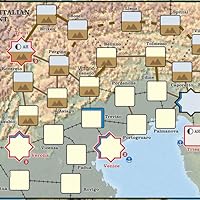
Nits, big and small: * p. ?: map with no page number, caption, or year. * p. 31, ¶ 3, line 3: part of quote but insert "we" after "knew" or "we're" for "were"? * p. 137, ¶ 2, line 1: substitute "days'" for "days,". * p. 191, ¶ 2, lines 5-6: "Rather like hepatitis, this was a virus" is inaccurate, as catarrhal jaundice is Hepatitis A. * p. 283, line 3: "a full quarter" underrates the attacks, as tonnage of 6,728 versus 18,000 is more than a third. * p. 399, ¶ 3, lines 7-8: "appointments" made/agreed to not "resolved".
I don't give 5 stars easily. But to write a 500+ page book on the siege of Malta and keep my interest the whole time deserves 5 stars. The more I learn about this island the more I become obsessed with it!
A very readable account of the Italian and German attempts to neutralise the inconveniently located island of Malta as a sideline to the campaign in North Africa.
The narrative carries the reader through the initial, almost tentative attempts by the Italians to force the island into submission, although it isn't until Malta proves itself to be a thorn in the side of the supply route to Africa that the seige steps up as German forces get involved.
The book contains the experiences of the pilots, sailors, soldiers and civilians (though not too many of the latter) inhabiting "the most bombed place on earth" during those few years, and is a remarkable snapshot of what a mid-20th century seige was like from the sharp end.
Although the book is very Allied-centric (I'd hesitate to use the phrase British given that virtually every Allied nation had combatants on the island) the exclusion of Axis voices isn't damaging in the slightest. I obtained avery clear picture of tbe hardships of the civilian population under indiscriminate bombing and strafing (the Luftwaffe's so called "knights of the sky" don't come off well in this one) and the chapters dealing with Operation Pedestal are excellent. Highly recommended.
James Holland tells the story of the siege of Malta through the experiences of a few dozen participants, mainly service men. Well written and easy to read, and very poignant in places. I’m amazed at what these people, and all of Malta, endured. My only criticism (and I’m being picky) is that we don’t get to hear enough about what life was like for native Maltese, who occasionally Holland treats patronisingly.
This book details not only one of the great epics of the 20th Century but also the heights to which the Human Spirit can rise. There are thousands of heroes and heroines in this book - not just the soldiers, sailors and airmen, but the civilians, the normal men, women and children who endured bombing and near starvation and won through to the freedom we enjoy in the West. It's hard to single out any one episode for special praise, because the book is full of courage above and beyond all expectation, but the most moving moment is the arrival of the tanker, the Ohio, in the Grand Harbour of Valetta, its back broken but its crew's spirit undaunted, lashed between to small destroyers to keep it from falling apart. Its arrival, and the fuel it carried, can be argued to be the turning point of WW2 in the West, since it assured continued interdiction of the Axis supply lines to North Africa and paved the way for the victory at El Alamein shortly afterwards. The price paid in terms of losses on the Pedestal Convoy which got the Ohio through were quite horrendous but the spirit of the Royal Navy and Merchant Navy seamen involved never wavered. This is an epic book, beautifully researched and written. Give it to your children and to your grandchildren to remind them what is the Price of Freedom.
A very interesting account, using the stories of individuals caught up in the conflict, of the seige of Malta in WWII, whereby the island was heavilly bombed and blockaded from 1940 onwards. The privations suffered by the ordinary people are evoked as well as the initially deplorable conditions facing pilots who were trying to defend the island, and the crews of ships and submarines also involved in the operations around the island. It explains how crucial the island's role was in trying to disrupt the supplies going to North Africa for Rommel's army and the initial mismangagement which resulted in heartbreaking losses of pilots and aircraft in particular.
The book has many photographs also so you can better picture the individuals discussed. There are some very tragic stories of the various fatalities, in some cases caused by senseless accidents, poor plane maintenance, exhaustion of pilots etc.
One issue I found was that the index quite often does not cite all the references to particular individuals if wishing to look back and refresh your memmory during the read, as there are a lot of people discussed, and it isn't possible to keep them all in mind, at least for me. But some particular pilots were such eccentrics and misfits that it wasn't difficult to recall who they were. For this reason only am dropping to a 4-star rating overall.
I knew a little about the air war over Malta from various novels, and something of what the civilian population went through from Nicholas Monserrat's The Kappilan of Malta, but I learned a great deal more from this account, which uses personal stories from military and civilian occupants to put together a wider picture of fortunes on land, at sea and in the air.
I started reading while on holiday in Malta, and it made it much more vivid to know that I'd been to the beaches where airmen relaxed off duty, and that the hotel with the funny name I'd laughed at had been bombed.
There was a lot here I enjoyed. The description of the “Pedestal” convoy is one of the highlights of the book. If this vital supply convoy had not got through, Malta would have starved. As it was, most of the ships were sunk, but just enough survivors got through to ensure the island’s survival. The description of these battered ships limping into the Grand Harbour to be met by thousands of wildly cheering Maltese civilians is immensely moving.
I did feel there were some weaknesses, though. I would have liked a great deal more on General Dobbie, the Governor of the island in the first part of the siege. He was, rather unusually, a fanatical Protestant, and on the face of it an odd choice for such a deeply Catholic place as Malta. The author suggests the Maltese rather liked him, looking beyond sectarianism to appreciate someone who was just as obsessed with religious faith as most of them were. But he was got rid of, mainly it would seem due to the backstabbing from the euphoniously named Hugh Pughe Lloyd, the Welshman who commanded the RAF on the island, aided and abetted by Mabel Strickland of the Malta Times. Unusually, this is a war story where a woman had more clout than any man in Malta, but I was left wanting more detail about her.
Hugh Pughe seems to have been a thoroughly nasty piece of work and I developed a strong dislike for him. But having pulled no punches in describing his disloyalty and incompetence, the author then says “he was liked and trusted by most…”. Eh? This confused me somewhat.
I really wanted more on some of the key players and a bit less on the many minor characters whose lives are dissected in some detail. This is interesting at giving us some flavour but I’m afraid I would far rather see the view from Dobbie’s desk than from some poor child’s air raid bunker. And there is very little from the perspective of the Germans and Italians, which is also a great pity. Nevertheless, I learned a great deal that I did not previously know, and the narrative has a fluent flow.
I’ve never really been into reading about history but I do love learning about it so I thought I’d give this a try. I definitely learnt a lot of new things but there were a lot of war-terms in it that I just didn’t properly understand so for someone with a lack of war knowledge it was confusing to read at times. It also flicked between a lot of different accounts and attempted to build a picture of that person and their life but it wasn’t done very well. I feel like this book would be more enjoyable for people who already know quite a lot about the Siege of Malta beforehand as this would add a lot of extra context but for someone who’s learning about it for the first time, it’s not the best way to learn about it.
However, I’m glad to know more about the history of Malta and what its people went through during the war; I never knew that Malta received the heaviest and most sustained bombing in World War II.
This is an excellent book covering the period of the siege of Malta, 1940-43. The account of the action is surrounded by records of the authors' interviews with survivors and from participants' letters and records. Very well written in an easily read style that reveals the stress and dangers suffered by them. Most of those involved were so very young and their lives were changed forever. This account is well worth 5 stars.
Read almost like fiction it was so well written. Furthermore, this is Holland’s first major work and it was executed superbly. Makes me excited to read his other content.
Holland truly has ways of making us talk (Holland’s podcast listeners will get this).
This is my first introduction into Malta and it was incredible. Must read more.
I'm not gonna lie, I had watery eyes by the end of the book. It's unbelievable how much the people on this island had to withstand. The endless bombing, the starvation, the diseases. Horrible. What made me tear up by the end was to read about the tragic end of some of the heroes from those times. Very sad.
But a big compliment to the writer, James Holland. The incredible amount of research that has gone into this book is staggering. The details of the personal lives of people of all different ranks are what make this book so valuable.
By the beginning of the book, I felt like a freshly recruited cadet. Full of enthusiasm to read about Malta during the war. It was very cool to recognise all the places that were discussed and to be able to visit them shortly after reading about them. But by the end of the book, I felt like a Raoul Daddo-Langlois. He was a fighter pilot that, at the age of twenty-one, had become an old man that was burdened by the psychological wounds of war.
I wanted to learn about the history of Malta, and chose this book to get an impression of its situation at one specific point in time, hoping to be able to connect the dots with its future and past. My choice turned out to be a poor one, mainly because the book isn't really about the political entity that is Malta, nor about the ethnic-cultural-linguistic population group that is the Maltese: it is about the British air force and navy fighting the Italians and Germans on a tiny island in the Mediterranean, that just happens to be Malta.
My bad choice is mostly my own fault: a book about Malta during WWII probably needs to focus most of its attention on the British, who were the political leaders and main actors in Malta at the time. Indeed, the main reason Malta got tangled up in the war was because they were a British colony. Still, I would have wished for there to be more involvement of local forces and consequences. The book follows dozens of individuals throughout the war, and only a very few of them are native Maltese. In fact, a fair number of pages are spent describing British fighter pilots' upbringing in England - probably more than are spent on pre-war civilian life of native Maltese. The fact is that the author is a Brit who researched the war from a British standpoint, going through British records, and interviewing British witnesses in Britain. There is nothing wrong with this, it just feels a little... colonial.
On the other hand, the description of the war is good and extensive. I got a good overview of events, and a good "feel" for how things must have felt for the people involved. The book is probably a little too long - in the second half of the book, I started skipping the introductions of new characters, who I knew were going to disappear after a few chapters anyway. The author also engages in some personal speculation about the tactical mistakes of various generals and politicians, which seems a little misplaced in a book written for the general public, who cannot properly judge the accusations. But if you want to understand WWII in Malta from a British standpoint, this books gives a pretty good overview.
I will be honest, I am not a war buff nor would I pick up a book of this nature however it was loaned to me following a conversation on the bombardment of Malta during World II. As the expression goes “never judge a book by its cover” and in this case I can certainly say it is true. This was not the book I had been expecting. Granted there are many technical aspects to be discussed concerning the battles, the ships, submarine wars, air forces, ground strikes, strategy and various tactics but what pulled me in was Holland’s ability to humanise the story.
James Holland was born in Wilshire, UK and is a member of the British Commission for Military History. He contributes regularly to newspapers, magazines and has written numerous works including “Italy’s Sorrows” and “The Battle of Britain”.
Interchangeably he writes about the ferociousness of the war on Malta and the lives of the people down on the ground experiencing the battle first hand. A huge amount of research has been undertaken with many interviews concerning the people involved. I have never experienced war and what struck me on reading about the actual lives of the people involved was how life still went on, friends were made, romance blossomed and amusement continued. Morale was maintained even when it looked like Malta would be bombarded into the Mediterranean receiving continuous bombing from the German air force. One such example is reconnaissance pilot, Adrian Warburton, who on one occasion after photographing Sicily took an unauthorised detour to Greece to pick up alcohol for the rest of his comrades back on base in Malta as reserves were running low.
Holland goes on to describe in detail what life was like above ground and down below within the bunkers with first hand experiences from the people involved. The smells, emotions and conditions all become real as each page is turned. An excellent read into wartime Malta and how the island battled and won against all odds as it has done many times in its history.
Il y a ceux qui pensent que le seul vrai “theatre of war” pendant la deuxieme guerre mondiale était le front d´est en Russie et Ukraine, et que quand Stalingrad était terminé tout allais changer. Ces gens sousestiment l´importance de la Méditerranée et la guerre navale entre le Royaume-Uni et l´Allemagne nazi. Un facteur clé dans toute cette histoire était la petite île de Malta ou la base navale britannique faisait tout pour empêcher les livraisons allemands á arriver aux mains de Rommel et son Afrika Korps. Sans livraisons, Rommel ne pouvait mener une guerre effective contre Montgomery et a aussi fini par perdre la bataille dans le desert africain.
Ce livre raconte l´histoire passionante de ce petit people qui a recu la croix de St. George en témoin de l´héroisme du pendant la période la plus sanglante entre 1940 et 1943 oú les avions allemands avait presque réussi á détruire la resistance de ce petit île. Lecture obligatoire pour tous les passionés de la WWII en Méditerrannée.
This is one of the best books I’ve ever read. If you have engender the slightest interest in the Second World War or Malta you’ll love this book. It’s inspiring and astounding of the feats of individuals and the island a whole. The book tells the history of the war on the island by telling the stories of the people involved. Amazing and interesting read and I can’t wait to read other books by this author.
In this book, James Holland does not only give an overview of the situation in Malta during World War II, but also covers a wider spectrum, especially the Mediterranean theatre. Whilst I stand to be corrected, most literature, being non-fiction or otherwise tend to cover other areas where the conflict was going on, like for example the Pacific and the English Channel, while the war in the Mediterranean is most of the times neglected. However, works like the one by James Holland documents not only the importance of what was occurring within the theatre, but also the dire situation that existed for the Allies’ areas due to the lack of resources and geographical challenges which not only limited the military operation but also the to sustain their population with the most basic needs of survival.
“Fortress Malta – An Island Under Siege” is the account of a small island in the Mediterranean Sea during one of the worst periods in the history of humanity. The island, my native land, is much of the time neglected especially through historical accounts. However, its strategic position, and its resilience even in the worst of conditions have been of the utmost importance during the conflict in the Mediterranean theatre. James Holland depicts exactly this as he gives an extensive account of what was taking place within the whole region and then focusing on Malta’s invaluable contribution to the war efforts. It is one of the first works I encountered that credit Malta both for air and sea operations, which their success was the turning point of the war both in the north of Africa and in the South of Europe.
The author, with the utmost capability tells the story of one of the most intense and longest battles in World War II. Through survivors’ testimonies the author documents the reason why Malta was labelled as “fortress”, “the unsinkable aircraft carrier” and “the most bombed placed on earth”. It is the story of courage and bravery, both from those serving in the military and the civilians who never gave up as hell rained down on them, all buildings almost eradicated and fought against submitting to one of the evilest regimes in history. The testimonies of a few dozen servicemen and native Maltese gathered in this book gives a clear picture of the horror that it was endured during what is considered on of the longest battles in World War II.
Whilst many Maltese writers focus on the conditions that the people of Malta had to endure during this siege, James Holland focuses more on the military aspect of the ferocious battle. It was interesting reading on many operations which either originated from Malta, or that it played a pivotal role in. The importance of Malta in the Mediterranean is highlighted in this book as the readers will see how the Allies increased their resources throughout the course of the battle, that is from practically none at the start to one of the most military enriched bases in the world. However, the truth that it is highlighted in James Holland account is that Malta withstood the worst of the battle isolated and lacking crucial supplies.
James Holland book is one of the best to cover the Mediterranean theatre during World War II. For history enthusiasts, especially those interested in the cited era and area, “Fortress Malta – An Island Under Siege” offers one of the most extensive information accounts. As stated beforehand, while the difficulties of the people on the island are highlighted, the book goes more into the military operation side of the story. Those reading this book will come to understand the vital role that Malta played, and why some of the decisive operations carried out in the Mediterranean theatre, and the victories ultimately achieved in the north of Africa and the south of Europe would have not been possible without on the smallest countries in the world, Malta.
'Fortress Malta' (2003) was James Holland's first non-fiction and he has since then created his own mini-industry on WW2 history books. You might call him the David Baldacci of the subject. Recently completed his one on Sicily (2020) which was considerably better than Malta. I guess with 17 (!) WW2 books in between he's learned some things. Pros: excellent maps and many photos, a general, albeit erratic, narrative and decent timeline of events. Cons: way too many 'characters' (they are real people however and the research and interviews reflects extensive work) and mostly irrelevant or and often boring detail on their lives (where they were born and raised, how they joined the RAF, RN or whatever, how much they drank, etc., etc.). Lot of breadth not much depth. On the other hand, interspersing these often lengthy stories with the ongoing military history really broke up the flow of that bigger picture. There is nothing on the perspective of 'ordinary' Germans and Italians something he remedied in 'Sicily '43'. The poor Italian Navy (and Air Force to a lesser extent) comes off as clownish at times yet while displaying great courage especially in the convoy operations to North Africa. Despite the flaws the military story was interesting and really points up the magnitude of the strategic error in the German invasion of Crete in May, 1941 instead of Malta. He does not explore all the ramifications of that but they would seem to have been considerable. The 'ifs' of history remain just that. Either way the Allied materiel advantage became so overwhelming by 1943 that the rest was inevitable. The author repeatedly mentions Malta as the 'most bombed place on earth' but never mentions that the tonnage of bombs dropped on Malta (~15,000) was dwarfed by the strategic bombing of German cities and towns and also with incendiaries designed primarily to kill civilians. In addition, much of the Malta bombing was on airfields, not the city. Estimates are 1300-1500 civilians killed in three years of bombing; not insubstantial but about 15 minutes in Dresden (or a few months in Gaza for that matter).
I am visiting Malta next month and while I am glad I read this, it wound up as a disappointment. Very little is given on the history of Malta other than it was Catholic and living under the British Empire apparently with little problem at the outset of the war. Amazingly, the Great Siege of 1565 (my next reading project) was unmentioned. Yet I will visit the Malta National War Museum in Valletta with a considerable background! Overall I'd say 2.5 stars but I have to round down as it often ended up boring me, which is not easy!
Easy to read, with lucid explanations of strategy and tactics and some interesting facts such as Malta suffering a greater tonnage of Axis bombs between 1940-1942 than London throughout the entire war. It was an old fashioned siege with 20th century weapons absent a forlorn hope. Why Malta was not invaded is only briefly touched upon, an apparent reluctance of Hitler’s to suffer losses on the scale of his successful invasion of Crete, his increasing focus on Russia and the reluctant combatant status of the Italian armed forces. A straightforward historical narrative is woven around the personal stories of a couple of dozen characters and the book sheds a welcome light on the neglected role of British submarines in WW2. For me the book lost a star for too often turning into one of those “Voices from the Whatever” collections with wheezy romantic Mills & Boon interludes: ‘he left with a sad face as if he knew he would never return’ kind of thing. Edit that stuff out, reduce 435 pages to 360 and I’d give it four stars.
this is a more modern military history, and concerns a part of WW2 history we're all supposed to know about; Malta, the George Cross island - what it talks about in detail is how come this small island became one of the most bombed places in the second world war. There is a lot of detail from people who were there, Maltese as well as British and others, and a lot of the nasty detail that tends to get airbrushed out of history - there's a lot of human remains getting shoveled into sandbags, for example, and a lot on the futility of war. A lot of the participants, both those who made it tell their stories and those who didn't (a couple of participants left journals and letters before losing their lives) talk about the exhaustion and constant horror of being bombed day after day, in what is now a popular holiday destination, however one where the scars of war are still in evidence, like the opera house, bombed into rubble and never rebuilt. Recommended
Such a good description of the Island and the people there at the time of WWII. My own mother was there from 1939 until she was repatriated to Egypt in 1943 by which time Italy was about to surrender and the war in Malta would end. As a result, I learned the stories first hand and James Holland's book replicates them all. The places described in the book are all recognisable today and it is obvious that a great deal of research had been carried out. Few people know just how much ordinance was thrown at the Island by both Hitler and Mussolini. I think that in the book, Holland says that it was the most bombed place in the world! Their declared intention was to flatten the land and starve the people into submission and they very nearly succeeded. Well done, Mr Holland for an excellent read. I will now follow you to Italy.
I visited Malta some decades ago and spent most of my holiday visiting the sites connected to the first great Siege of Malta (in 1565 by the Ottomans.) I wish now I'd spent more time researching the WW2 sites. I was aware of Malta's stoicism across 1940-43 and the George Cross award of course, but I didn't know the full story and what a story it is. It is brought vividly to life by James Holland through the medium of telling the individual stories of many who were stationed or living there during the worse of what Hitler and Mussolini could throw at the Island. Using personal recollections within the telling of Malta's complete history of the period makes it all the more accessible. Heroic is an often overused word, but it is fully justified in the subject matter here.
Another excellent WWII book by historian James Holland. Also, another aspect of the truly WORLDwide war about which I had never heard. This is probably because it was the British and Maltese who are involved in the fight against the Nazis and the Italians, rather than about the US.
The Axis powers flew over 3,000 air raids against this little island that lies just south of Sicily but were never able to invade nor totally destroy the allied powers there. A truly fascinating account of how the Brits turned it around to the point of positively affecting the war in Africa AND becoming the site of the launch of the allies into Sicily and Italy.