

What do you think?

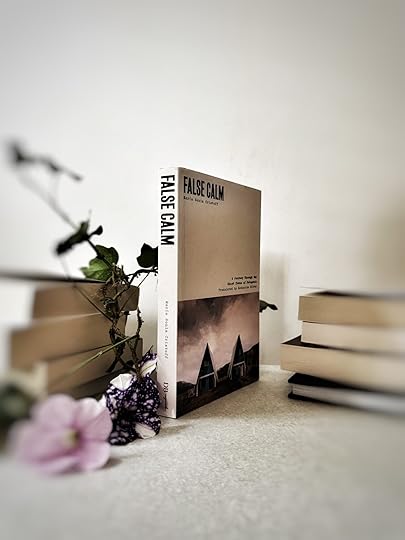
False Calm: A Journey Through the Ghost Towns of Patagonia
"A marvelous chronicle."—Publishers Weekly
Part reportage, part personal essay, part travelogue, False Calm is the breakout work by Argentinian author María Sonia Cristoff. Writing against romantic portrayals of Patagonia, Cristoff returns home to chronicle the ghost towns left behind by the oil boom. In prose that showcases her sharp powers of observation, Cristoff explores Patagonia’s complicated legacy through the lost stories of its people and the desolate places they inhabit.
248 pages, Kindle Edition
First published June 1, 2005
About the author
María Sonia Cristoff
21 books34 followersMaría Sonia Cristoff es una novelista y cronista argentina con tres novelas, dos libros de no ficción y muchos artículos y cuentos publicados en prensa internacional y volúmenes colectivos.
Ratings & Reviews
Friends & Following
Create a free account to discover what your friends think of this book!
Community Reviews
Displaying 1 - 29 of 29 reviews
May 20, 2024
Cristoff’s travelogue tell the stories of the small and isolated towns scattered throughout Argentina’s far south, Patagonia, through the eyes of their residents. I have travelled here myself quite a lot over a five year period, for work and pleasure, so had a particular interest.
Each town she visits has its story to tell, from Santa Cruz, where the story of an amateur pilot is intertwined with Saint-Exupéry‘s writing, and the history of Patagonian aviation, to El Cuy, where superstition surrounding a shrine dedicated to a young boy affects the behaviour of the town’s residents.
The stories she tells have a mix of humour and tragedy, with the darker side coming through in the last part of the book, informing on the poverty of the area, and how it has been ignored by recent governments. In one small town at the very end of the railway line she tells of a spate of suicides amongst children at the local school. It’s the end of the line because the railroad ran out of money.
In another town, in the same area, every TV plays the same channel, the one being watched by the commissioner and his family as nobody else can afford the cost of TV individually.
Most of the stories are fascinating, and a pleasure to read, chiefly because Cristoff lets the local residents shape her writing, rather than having set out with an agenda in mind.
Each town she visits has its story to tell, from Santa Cruz, where the story of an amateur pilot is intertwined with Saint-Exupéry‘s writing, and the history of Patagonian aviation, to El Cuy, where superstition surrounding a shrine dedicated to a young boy affects the behaviour of the town’s residents.
The stories she tells have a mix of humour and tragedy, with the darker side coming through in the last part of the book, informing on the poverty of the area, and how it has been ignored by recent governments. In one small town at the very end of the railway line she tells of a spate of suicides amongst children at the local school. It’s the end of the line because the railroad ran out of money.
In another town, in the same area, every TV plays the same channel, the one being watched by the commissioner and his family as nobody else can afford the cost of TV individually.
Most of the stories are fascinating, and a pleasure to read, chiefly because Cristoff lets the local residents shape her writing, rather than having set out with an agenda in mind.

November 15, 2020
The only bump in an all together smooth, beautiful ride are the metaphors. They never quite worked. Rather forced, and completely devoid of the sublime necessary for the synapse connection the great metaphors encourage.
Her observations of the townspeople; Cristoff’s talent for the anecdote, and the anecdote via an anecdote (a bore under a lesser writer); she gives just enough of herself, as well, without a full on fall into memoir.
I enjoyed her digression on Harris’ Hannibal, a result of the craving for literature in a room with only one choice. She made the most of it.
Her observations of the townspeople; Cristoff’s talent for the anecdote, and the anecdote via an anecdote (a bore under a lesser writer); she gives just enough of herself, as well, without a full on fall into memoir.
I enjoyed her digression on Harris’ Hannibal, a result of the craving for literature in a room with only one choice. She made the most of it.

August 25, 2019
Part memoir, part travelogue of the small towns and stories in Patagonia, Argentina.
Ten essays vary widely in content. My favorite - Chapter Five - discussed Arab immigration to Patagonia in the early 20th century, and some related stories, including period newspaper clippings and headlines. Cristoff manages to relate this to her own research of FBI profilers (the real-life agent from Netflix's Mindhunter comes up). It's tangential, but she made it work.
Ten essays vary widely in content. My favorite - Chapter Five - discussed Arab immigration to Patagonia in the early 20th century, and some related stories, including period newspaper clippings and headlines. Cristoff manages to relate this to her own research of FBI profilers (the real-life agent from Netflix's Mindhunter comes up). It's tangential, but she made it work.
May 20, 2019
Qualche capitolo piuttosto interessante, un paio emozionanti, qualcuno davvero inutile. Per esempio una lunga dissertazione sul thriller coinvolgendo Shining e Hannibal Lecter c'entra, a mio avviso, come i cavoli a merenda.
In sostanza, discreto ma ampiamente prescindibile.
Non soffro di insonnia e libri del genere rischiano di trascinarsi per giorni: è un anno così, incappo su librini che non mi acchiappano, deludenti, a tratti noiosi, abbastanza inutili. Peccato, col tempaccio che imperversa là fuori da giorni un bel libro sarebbe quello che ci vuole.
In sostanza, discreto ma ampiamente prescindibile.
Non soffro di insonnia e libri del genere rischiano di trascinarsi per giorni: è un anno così, incappo su librini che non mi acchiappano, deludenti, a tratti noiosi, abbastanza inutili. Peccato, col tempaccio che imperversa là fuori da giorni un bel libro sarebbe quello che ci vuole.

March 26, 2019
Haunting and moving -- this travelogue takes readers to the outskirts of Patagonia and down into the lore of the region. Original and a touch creepy. I would recommend this to anyone who enjoys literary essay collections or travel writing.
June 16, 2026
Only criticism is the essays occasionally lacked context, which made them hard to follow initially
December 28, 2023
This book reads like ten vignettes from the lives of the inhabitants of more or less abandoned towns in Patagonia. It was a valuable look at the sometimes boring, mundane day-to-day of the less glamorous side of Patagonia. As a tourist, you see the amazing landscapes of mountains, the hiking, the raw beautiful wilderness, but those chapters recounted the hardships of isolation. Not sure I would call them essays, I sometimes had the impression of reading the non-edited transcript of the author, there was a lack of context and very little hindsight. But maybe that was the whole point: to stick as close as possible to the way those people were telling their story.
Overall, I came away ambivalent; I enjoy reading the book, but I didn't feel like it ignites any reflections and I don't think I would ever think about this book again now that I finished it.
Overall, I came away ambivalent; I enjoy reading the book, but I didn't feel like it ignites any reflections and I don't think I would ever think about this book again now that I finished it.
November 7, 2025
Some parts of this book were fascinating, and some were extremely dull. I have come away from it with more knowledge of Patagonia, (which isn't difficult as I knew pretty much nothing, well nothing at all if I'm honest), but not as much knowledge as I had hoped I would get from it. I would have rated it exactly halfway between dire and great if a rating of 2.5 stars was available. I feel 3 stars is a little generous.

October 22, 2025
This was good! 4.5⭐
Cristoff spends time in small towns in the Patagonian meseta (plateau lands), getting to know the rhythms of life and the locals, staying long enough to become a recognisable, if temporary, community feature to whom people open up about their lives.
Cristoff augments testimony with some historical research and, probably, a degree of literary licence, which coheres into a picture of brittle lives dwarfed by a vast landscape, cold and barren, hiding a mineral wealth extracted by a distant government and foreign corporations with little trickle-down to the locals.
There's a hint of David Lynch in the 'dark suburbiana' tone, and of Philip K. Dick in the ordinariness of Cristoff's Everyperson protagonists. The darkness is sometimes in the historical antecedents of the region, including banditry, colonialism and cannibalism, and sometimes contemporary in the domestic and sexual abuse, alienation and psychosis, and unflinching encounters with a spate of teenage suicides.
Approach with caution, but do approach.
Cristoff spends time in small towns in the Patagonian meseta (plateau lands), getting to know the rhythms of life and the locals, staying long enough to become a recognisable, if temporary, community feature to whom people open up about their lives.
Cristoff augments testimony with some historical research and, probably, a degree of literary licence, which coheres into a picture of brittle lives dwarfed by a vast landscape, cold and barren, hiding a mineral wealth extracted by a distant government and foreign corporations with little trickle-down to the locals.
There's a hint of David Lynch in the 'dark suburbiana' tone, and of Philip K. Dick in the ordinariness of Cristoff's Everyperson protagonists. The darkness is sometimes in the historical antecedents of the region, including banditry, colonialism and cannibalism, and sometimes contemporary in the domestic and sexual abuse, alienation and psychosis, and unflinching encounters with a spate of teenage suicides.
Approach with caution, but do approach.

September 29, 2025
PATAGONIA
3.5*
A collection of vignettes to transport the reader through the ghost towns of Patagonia. The inhabitants followed the money and the oil, leaving much behind, and it is the desolate sense of abandonment - coupled with interesting stories - that make this readable and interesting. The author herself left in the 1980s because government and planners seemed to focus on Buenos Aires, and the outlying villages and towns simply got left behind. In these stories, she connects with the country of her birth.
Each place she visits has an individuality that the author captures well through her writing, with well observed anecdotes and information. Who knew about the Arab immigration into the country in the early 20th Century?
There are gritty and dark aspects to her journey (goodness, a spate of children's suicides in one area she visits), there are humorous interludes and there is a great sense of lives eked out in a relatively poor area of the world.
A good book to pick up if you are choosing to visit Patagonia.
3.5*
A collection of vignettes to transport the reader through the ghost towns of Patagonia. The inhabitants followed the money and the oil, leaving much behind, and it is the desolate sense of abandonment - coupled with interesting stories - that make this readable and interesting. The author herself left in the 1980s because government and planners seemed to focus on Buenos Aires, and the outlying villages and towns simply got left behind. In these stories, she connects with the country of her birth.
Each place she visits has an individuality that the author captures well through her writing, with well observed anecdotes and information. Who knew about the Arab immigration into the country in the early 20th Century?
There are gritty and dark aspects to her journey (goodness, a spate of children's suicides in one area she visits), there are humorous interludes and there is a great sense of lives eked out in a relatively poor area of the world.
A good book to pick up if you are choosing to visit Patagonia.
April 11, 2026
3.5/5
A mostly captivating read, 'False Calm' is an anthology of various ghost towns in Patagonia and their inhabitants.
The author paints a desolate and lonely picture of Patagonia through the lives of these inhabitants. These stories, are at times, enthralling and will keep you reading. Others are perhaps less interesting but the overarching commentary keeps you hooked.
What truly stands out is the way Cristoff captures the humanity of these individuals and their stories. Their stories are told through an interesting cultural and socio-economic lens that lends an air of compassion and empathy to their stories.
While I did have difficulty staying focused at times, in part due to what feels like clunky writing, I kept coming back to this one every night and found it to be truly enjoyable.
Would recommend!
A mostly captivating read, 'False Calm' is an anthology of various ghost towns in Patagonia and their inhabitants.
The author paints a desolate and lonely picture of Patagonia through the lives of these inhabitants. These stories, are at times, enthralling and will keep you reading. Others are perhaps less interesting but the overarching commentary keeps you hooked.
What truly stands out is the way Cristoff captures the humanity of these individuals and their stories. Their stories are told through an interesting cultural and socio-economic lens that lends an air of compassion and empathy to their stories.
While I did have difficulty staying focused at times, in part due to what feels like clunky writing, I kept coming back to this one every night and found it to be truly enjoyable.
Would recommend!
January 17, 2020
Several years ago I travelled through southern Patagonia. What impressed the was the vastness and emptiness of the stepps. We traveled for hours on a van from Punta Arenas to Perito Moreno and saw one car and one horseman. As the saying goes, "miles and miles of nothing but miles and miles". Ms Cristoff captures the misery of life in he near abandoned settlement on he vast plain. Hopeless, despair, abandonment are major characters of this collection of thoughts, experiences and lives in Patagonia. Perhaps not to everyone's taste, but a soon to be classic account of people less plains of the southern steppes.
August 11, 2019
I think there is something to the translation of this book where perhaps things are lost, maybe not literally but I think culturally it's hard to translate outside of South America.
While this book reads like a stream of consciousness, but also specific stories, I got a distinct sense of place in each story. Cristoff's writing creates pictures of small towns and conveys a sense of dread and child-like wonder and transports you to these places.
If you want a structured story with a clear moral and a beginning, middle, and end this may not be the book for you. But it is an informative read.
While this book reads like a stream of consciousness, but also specific stories, I got a distinct sense of place in each story. Cristoff's writing creates pictures of small towns and conveys a sense of dread and child-like wonder and transports you to these places.
If you want a structured story with a clear moral and a beginning, middle, and end this may not be the book for you. But it is an informative read.
September 5, 2026
La autora es oriunda de Trelew, pero desde su juventud se mudó a Buenos Aires. 20 años después decidió recorrer algunos pueblos del sur, pasando por El Cuy, Cañadón Seco, Maquinchao, El Caín y Las Heras.
Este libro es una crónica que en diez capítulos cuenta no solo las historias de vida de algunas de las personas a quienes entrevistó, sino hechos históricos locales, sus sentimientos al volver al sur, sus experiencias durante el viaje y hasta el argumento bastante detallado de una novela que estaba leyendo en el momento.
Este libro es una crónica que en diez capítulos cuenta no solo las historias de vida de algunas de las personas a quienes entrevistó, sino hechos históricos locales, sus sentimientos al volver al sur, sus experiencias durante el viaje y hasta el argumento bastante detallado de una novela que estaba leyendo en el momento.

November 20, 2025
Me gusto porque es algo diferente que nunca había leído, el libro se va formando con las personas que la autora va conociendo en el camino de su viaje y todos los problemas de estas personas hacen referencia a lo aisladas que están por el lugar en donde viven (Patagonia ghost towns), pero sentí que falto un cierre, una opinión personal, una conclusión, se acaba con la historia de Sandra de esa última persona que conoce y me quede con ganas de ese cierre.
March 8, 2019
While it seems like this a travel book about Patagonia, the book includes no maps and very little landscape descriptions, except for the emptiness of the place. The author, who was born in Patagonia, brings out instead the isolation of the people from each other. Cristoff brings out their stories intimately, so much so, that in the end your feel like you have read a horror movie.

March 25, 2018
Toda la bajona de gente que ha nacido muerta o que se van a morir de no tener un amigo con el que echar una caña está compensada por las historias de gente que fue asesinada hace cien años. Ojalá contar mis movidas a una señora que luego las hile tan bien como esta.

July 3, 2021
There are so many books about Patagonia and lament. This is the only one that really gets the place.
(I started this book in Spanish years ago and finished it in English today, which feels appropriate. Katherine Silver’s translation is marvelous. The style is half the fun here.)
(I started this book in Spanish years ago and finished it in English today, which feels appropriate. Katherine Silver’s translation is marvelous. The style is half the fun here.)
March 12, 2019
Some chapters were fascinating. Others not so much...
A map in the book would have been helpful.
A map in the book would have been helpful.
May 31, 2019
A breathtaking work, Sebald-esque but with a greater interest in individuals. Incredible to read.

April 8, 2020
Curious desolate literary essays on people you meet and stories you hear at the dusty fringe of Patagonia.

May 1, 2021
Moody, dreamy, beautiful, sad.
October 21, 2023
C'était bien mais j'aurais préféré entendre tout ça au bar 🍷
August 28, 2024
Props to you mawma por tu libro pero el estilo de escritura me pareció tedioso.

December 6, 2025
I made it more than half way but couldn’t bring myself to finish it. Too many metaphors. Pretentious writing.
February 18, 2026
no real great flow to this, might be down to the translation. sadly not what I expected from it.

June 23, 2026
descubrí que no me gustan mucho las crónicas!!!

March 18, 2024
Es increíble como podemos desconocer tanto algunas regiones de nuestro país. Empecé este libro después de leer "Los Suicidas del Fin del Mundo" y descubrí lo fundacional que fue y es YPF y la explotación de hidrocarburos para muchísimos pueblos, ciudades y provincias patagónicas.
Reúne diferentes historias, relatos de personas y personajes de distintos pueblos de la Patagonia, cosas que uno desde el tupper de Buenos Aires no tiene idea, ni se nos ocurre que pueden pasar o no lo entendemos y no creo que vayamos a entender jamás.
Los relatos corresponden a:
1, 2, 3, 4 Cañadón Seco (Santa Cruz, 879 habitantes);
5 Maquinchao y El Cuy (Río Negro, 2494 y 498 habitantes). Este relato me resultó bastante tedioso;
6 El Cuy
7 El Caín (Río Negro, 176 habitantes)
8 No refiere a un lugar en específico
9 y 10 Las Heras (Santa Cruz, 30.502 habitantes)
Sobre Las Heras hay un libro de Leila Guerriero muy bueno que cuenta la historia completa de la alta tasa de suicidios de jóvenes alrededor de los 2000 y el ambiente del pueblo ("Los Suicidas del Fin del Mundo"). En ese libro ella refleja en una sola frase todo esto "Cómo será, pensé, no verse reflejado en las noticias, no entrar nunca en el pronóstico del tiempo, en la estadística, no tener nada que ver con el resto del país".
Reúne diferentes historias, relatos de personas y personajes de distintos pueblos de la Patagonia, cosas que uno desde el tupper de Buenos Aires no tiene idea, ni se nos ocurre que pueden pasar o no lo entendemos y no creo que vayamos a entender jamás.
Los relatos corresponden a:
1, 2, 3, 4 Cañadón Seco (Santa Cruz, 879 habitantes);
5 Maquinchao y El Cuy (Río Negro, 2494 y 498 habitantes). Este relato me resultó bastante tedioso;
6 El Cuy
7 El Caín (Río Negro, 176 habitantes)
8 No refiere a un lugar en específico
9 y 10 Las Heras (Santa Cruz, 30.502 habitantes)
Sobre Las Heras hay un libro de Leila Guerriero muy bueno que cuenta la historia completa de la alta tasa de suicidios de jóvenes alrededor de los 2000 y el ambiente del pueblo ("Los Suicidas del Fin del Mundo"). En ese libro ella refleja en una sola frase todo esto "Cómo será, pensé, no verse reflejado en las noticias, no entrar nunca en el pronóstico del tiempo, en la estadística, no tener nada que ver con el resto del país".
Displaying 1 - 29 of 29 reviews