

What do you think?
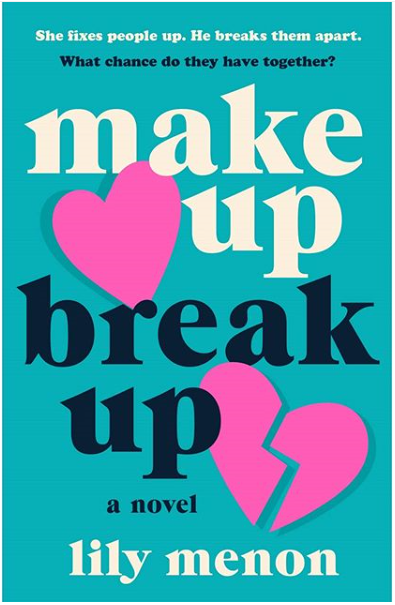
Make Up Break Up
Love, romance, second chances, fairy-tale endings…these are the things Annika Dev believes in. Her app, Make Up, has been called the “Google Translate for failing relationships.”
High efficiency break-ups, flashy start-ups, penthouses, fast cars…these are the things Hudson Craft believes in. His app, Break Up, is known as the “Uber for break-ups.” It’s wildly successful—and anathema to Annika’s life philosophy.
Which wouldn’t be a problem if they’d gone their separate ways after that summer fling in Las Vegas, never to see each other again. Unfortunately for Annika, Hudson’s moving not just into her office building, but into the office right next to hers. And he’ll be competing at the prestigious EPIC investment pitch A contest Annika needs to win if she wants to keep Make Up afloat. As if it’s not bad enough seeing his irritatingly perfect face on magazine covers when her own business is failing. As if knowing he stole her idea and twisted it into something vile—and monumentally more successful—didn’t already make her stomach churn.
As the two rival app developers clash again and again—and again—Annika finds herself drawn into Hudson Craft’s fast-paced, high velocity, utterly shallow world. Only, from up close, he doesn’t seem all that shallow. Could it be that everything she thought about Hudson is completely wrong? Could the creator of Break Up teach her what true love’s really about?
High efficiency break-ups, flashy start-ups, penthouses, fast cars…these are the things Hudson Craft believes in. His app, Break Up, is known as the “Uber for break-ups.” It’s wildly successful—and anathema to Annika’s life philosophy.
Which wouldn’t be a problem if they’d gone their separate ways after that summer fling in Las Vegas, never to see each other again. Unfortunately for Annika, Hudson’s moving not just into her office building, but into the office right next to hers. And he’ll be competing at the prestigious EPIC investment pitch A contest Annika needs to win if she wants to keep Make Up afloat. As if it’s not bad enough seeing his irritatingly perfect face on magazine covers when her own business is failing. As if knowing he stole her idea and twisted it into something vile—and monumentally more successful—didn’t already make her stomach churn.
As the two rival app developers clash again and again—and again—Annika finds herself drawn into Hudson Craft’s fast-paced, high velocity, utterly shallow world. Only, from up close, he doesn’t seem all that shallow. Could it be that everything she thought about Hudson is completely wrong? Could the creator of Break Up teach her what true love’s really about?
336 pages, Kindle Edition
First published February 2, 2021
Ratings & Reviews
Friends & Following
Create a free account to discover what your friends think of this book!
Community Reviews
Displaying 1 - 30 of 1,031 reviews

February 8, 2021
i’ll take insufferable heroines for $200, alex

August 20, 2020
OMG! I loved this book so much! The passion and smoking chemistry between the characters, their sassy, hot, smart banters, the high tension enemies to lovers premise stole my heart!
I couldn’t put it down. It was so much better than so many romantic comedies that I’ve lately read. There is reasonable angst parts, lots of misunderstandings, clever pranks both of MCs pull on each other. It’s emotional, funny, passionate, intriguing.
What if your worst enemy who ruined your career and stole your idea would be your office neighbor next door? The very same enemy you’ve spent one week with in Vegas ( the passionate one week reminds you of Basinger and Rourke’s 9 and 1/2 weeks)! Yes, let the hating games begin!!!
Annika is smart, determined, hard worker, proud. She believes true love, happy endings and second chances. That’s why she created “Make Up” to fix the failing relationships and give them a new chance.
And Hudson Craft, ambitious, playful, visionary, charismatic who designs “ Break Up” to end the failing relationships to get rid of emotional burdens easily. He sees relationships as business deals. Time is essence: no need to deal with relationship therapists or additional heartbreaking dramas. Just the agents they hire inform the other party that: things are over so both parties can move on without fights and getting things uglier. So robotic, logical, emotionless , cutthroat solution!
You keep chanting to the characters stop playing games and kiss each till they get out of breath! Their sizzling, pant melting, drooling chemistry may be the best thing about the book. Especially the part about their accidental yoga seance was hotter than hell! Okay, I’m stopping, no more spoilers!
There is upcoming EPIC Investment Pitch Contest and as you may imagine: both of them needs to win: Annika needs to prove her father she can chase her dreams without bankruptcy and eviction ( if she cannot win the prize of the contest, she will suffer from these situations) and she needs to prove Hudson, everything is not about money and power. She wants to change people’s lives by bringing back happiness they need.
I loved both of the characters and they were both strong, powerful but when it comes to face their own feelings, both of them are vulnerable.
Normally I would give four stars to this story because there are still some foreseeable cliches and immature attitudes of characters but I loved the dynamics of characters’ relationship and their fantastic chemistry melted my heart. So I’m giving extra half stars and rounding up my 4.5 stars to 5!
Well, another fastest romcom devouring just ended! I truly had wonderful time!
Special thanks to NetGalley and St. Martin’s Press/ St. Martin’s Griffin for sharing this incredible ARC with me in exchange my honest review.
blog
instagram
facebook
twitter
I couldn’t put it down. It was so much better than so many romantic comedies that I’ve lately read. There is reasonable angst parts, lots of misunderstandings, clever pranks both of MCs pull on each other. It’s emotional, funny, passionate, intriguing.
What if your worst enemy who ruined your career and stole your idea would be your office neighbor next door? The very same enemy you’ve spent one week with in Vegas ( the passionate one week reminds you of Basinger and Rourke’s 9 and 1/2 weeks)! Yes, let the hating games begin!!!
Annika is smart, determined, hard worker, proud. She believes true love, happy endings and second chances. That’s why she created “Make Up” to fix the failing relationships and give them a new chance.
And Hudson Craft, ambitious, playful, visionary, charismatic who designs “ Break Up” to end the failing relationships to get rid of emotional burdens easily. He sees relationships as business deals. Time is essence: no need to deal with relationship therapists or additional heartbreaking dramas. Just the agents they hire inform the other party that: things are over so both parties can move on without fights and getting things uglier. So robotic, logical, emotionless , cutthroat solution!
You keep chanting to the characters stop playing games and kiss each till they get out of breath! Their sizzling, pant melting, drooling chemistry may be the best thing about the book. Especially the part about their accidental yoga seance was hotter than hell! Okay, I’m stopping, no more spoilers!
There is upcoming EPIC Investment Pitch Contest and as you may imagine: both of them needs to win: Annika needs to prove her father she can chase her dreams without bankruptcy and eviction ( if she cannot win the prize of the contest, she will suffer from these situations) and she needs to prove Hudson, everything is not about money and power. She wants to change people’s lives by bringing back happiness they need.
I loved both of the characters and they were both strong, powerful but when it comes to face their own feelings, both of them are vulnerable.
Normally I would give four stars to this story because there are still some foreseeable cliches and immature attitudes of characters but I loved the dynamics of characters’ relationship and their fantastic chemistry melted my heart. So I’m giving extra half stars and rounding up my 4.5 stars to 5!
Well, another fastest romcom devouring just ended! I truly had wonderful time!
Special thanks to NetGalley and St. Martin’s Press/ St. Martin’s Griffin for sharing this incredible ARC with me in exchange my honest review.
blog

February 3, 2021
2.5 stars. This book was... not a great fit for me, if I'm being honest. I wanted so badly to love this, but I found myself so bored through most of it, and in the few moments where I wasn't super bored, I was extremely frustrated by the actions of the characters and the undercooked plot. The biggest womp :c
CW: car accidents, terminal illness, death of a loved one
CW: car accidents, terminal illness, death of a loved one

September 26, 2020
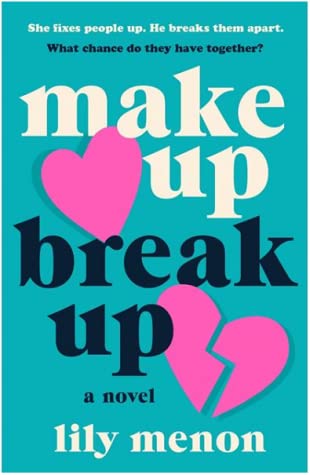
What happens when your summer hookup steals your ideas, becomes more popular than you, and then moves next to your office?
Yes, this it's exactly what happens to Annika Dev. When she finds out, she wants to hurt Hudson!
Annika believes in love and in getting a second chance. At least, she believes her new app can do it. Make Up is the app that could bring couples together. She knows it can be successful. Yet, she is in dire straights. Financially, her company is a mess. She needs an influx of money or she will have to admit bankruptcy. On top of everything else, she can't forget her time with Hudson in Las Vegas.
Hudson is at the top of his game. His app Break Up is a success and money is rolling in. He has accomplished so much in such a short time. The phone won't stop ringing and even famous magazines want to interview him.
Then, a chance to pitch their apps against each other comes up, and neither want to lose the opportunity of gaining the support and money this contest will bring. But can these enemies who have been lovers continue on this path?
~~
I hate to say it but I couldn’t connect with the main characters. I thought Annika was too tough on Hudson all the time.
In addition, the resolution of their conflict was a weak one and I felt Hudson lost too much in the bargain.
I did enjoy the secondary characters and their relationship. It was a plus to the story.
Cliffhanger: No
2/5 Fangs
A complimentary copy was provided by St. Martin's Griffin via Netgalley in exchange for an honest review.
MrsLeif's Two Fangs About It | Facebook | Twitter | Instagram

February 6, 2021
Make Up Break Up was the perfect light read. I loved the characters and was entertained from the first page. Annika is very independent and will do anything to save her company. However, she will not take money from her family or employee. Developing the Make Up app is her passion and she won’t let anyone convince her to give up. She is convinced Hudson is a bad person because of the Break Up app. However, Hudson is always there for her and except for their friendly pranks is always nice to her. Annika struggles with her dad not supporting her dream and pushing for her to go to medical school instead. Annika doesn’t let this discourage her. Hudson is a kind person and his reasons for developing the Break Up app are not as cruel as Annika assumes. Hudson has many different sides that are shown throughout the book but he always has integrity. Hudson has other passions besides Break Up but with Break Up’s success he spends most of his time on that. This story was cute with many funny parts. I liked the emphasis on following your dreams in this book. I recommend Make Up Break Up to fans of romantic comedy novels.
Thank you St. Martin’s Press and NetGalley for Make Up Break Up.
Full Review: https://justreadingjess.wordpress.com...
Thank you St. Martin’s Press and NetGalley for Make Up Break Up.
Full Review: https://justreadingjess.wordpress.com...

May 15, 2020
As excited as I was to read an adult romance debut by a YA author, the romance here didn’t work too well for me. If we had the hero’s POV, I feel like it would’ve helped and made my connection with the romance stronger. I did enjoy the writing and appreciated seeing female characters working in tech - but the story/romance itself I just felt a bit bored with and found myself skimming. I wish I could’ve loved this more! 2.5-3 stars.

April 2, 2021
**2.5-stars rounded up**
Make Up Break Up is Sandhya Menon's Adult Romance debut; here writing under the name, Lily Menon.
Most people know Menon from her cutesy YA Contemporary novels, When Dimple Met Rishi, From Twinkle, with Love and There's Something About Sweetie.

In Make Up Break Up, our protagonist is Annika Dev, the creator of a relationship app, Make Up. Even though the app is floundering, Annika believes she can make her 'Google translate for failing relationships' work.
When a rival app, Break Up, created by the admittedly charming, Hudson Craft, moves into the office space next to Make Up, Annika is rattled.

Since their short fling in Las Vegas the previous year, Annika has watched Hudson's star rise using an idea she feels he stole from her.
He essentially took Make Up, flipped it on its head, and Break Up was born. Most infuriating of all, he seems to be having an easier time getting his app off the ground than she is.

Now that their offices are next door to one another, they bump into each other all the time. He clearly isn't as offended by her presence as she is by his.
In fact, he seems to be either trying to charm her, or get under her skin. He's devious, it's tough to exactly determine his intentions, but Annika's head is swimming because of it.
Making matters worse, the two companies are set to compete against one another at the prestigious EPIC investment pitch contest. Make Up needs to win in order to continue. Annika must put her head down and focus, but Hudson is making that really difficult.
I like stories set in the tech world, so this definitely checked that box. Plus, having women in tech is always nice to see.

The flow of the narrative was smooth and it did have some solid, dramatic moments, as well as some light humor.
With this being said, I was never sold on the romance. Annika and Hudson, I just didn't buy it. I knew I was supposed to be rooting for them to get together, but I wasn't. I didn't feel anything for either of them.
I'm sort of ambivalent about the whole thing. It didn't really impact me one way, or another.
It also seemed to end rather abruptly, after a long-slow build-up. We finally begin to get some resolution and the credits start to roll. That's it.

Overall, I think this is a good story, it just wasn't one that I personally connected with. I am sure a lot of people will, however, and I hope Menon continues expanding into this space.
Thank you so much to the publisher, St. Martin's Griffin, for providing me with a copy of this to read and review. I appreciate it.

Make Up Break Up is Sandhya Menon's Adult Romance debut; here writing under the name, Lily Menon.
Most people know Menon from her cutesy YA Contemporary novels, When Dimple Met Rishi, From Twinkle, with Love and There's Something About Sweetie.
In Make Up Break Up, our protagonist is Annika Dev, the creator of a relationship app, Make Up. Even though the app is floundering, Annika believes she can make her 'Google translate for failing relationships' work.
When a rival app, Break Up, created by the admittedly charming, Hudson Craft, moves into the office space next to Make Up, Annika is rattled.
Since their short fling in Las Vegas the previous year, Annika has watched Hudson's star rise using an idea she feels he stole from her.
He essentially took Make Up, flipped it on its head, and Break Up was born. Most infuriating of all, he seems to be having an easier time getting his app off the ground than she is.
Now that their offices are next door to one another, they bump into each other all the time. He clearly isn't as offended by her presence as she is by his.
In fact, he seems to be either trying to charm her, or get under her skin. He's devious, it's tough to exactly determine his intentions, but Annika's head is swimming because of it.
Making matters worse, the two companies are set to compete against one another at the prestigious EPIC investment pitch contest. Make Up needs to win in order to continue. Annika must put her head down and focus, but Hudson is making that really difficult.
I like stories set in the tech world, so this definitely checked that box. Plus, having women in tech is always nice to see.
The flow of the narrative was smooth and it did have some solid, dramatic moments, as well as some light humor.
With this being said, I was never sold on the romance. Annika and Hudson, I just didn't buy it. I knew I was supposed to be rooting for them to get together, but I wasn't. I didn't feel anything for either of them.
I'm sort of ambivalent about the whole thing. It didn't really impact me one way, or another.
It also seemed to end rather abruptly, after a long-slow build-up. We finally begin to get some resolution and the credits start to roll. That's it.
Overall, I think this is a good story, it just wasn't one that I personally connected with. I am sure a lot of people will, however, and I hope Menon continues expanding into this space.
Thank you so much to the publisher, St. Martin's Griffin, for providing me with a copy of this to read and review. I appreciate it.

November 10, 2020
Well. This is a massive disappointment. Having loved all of Sandhya Menon's YA romances, I was so pumped to read her adult debut. I thought for sure she'd nail it, but here I am even months after I've read this book, completely baffled at how this is a book that came from one of my favorite authors of all-time. I have only myself to blame for having so much hope. There's nothing obviously wrong with Make Up Break Up - it's simply a boring book with irritating characters and a bland romance that didn't work for me. I think the big issue here for me is the storyline with Annika's app. She is clearly a driven woman and I always enjoy reading about characters who are driven and I love even more to actually see what they are passionate about. I feel like in this book, the focus on the app development was too much and it was at the expense of the romantic development. Annika also drove me batty because I didn't completely understand her annoyance towards Hudson, especially after he clarifies her misunderstanding. It made no sense and I felt like she was just looking for an excuse to hate him. I can't believe I'm even saying this because this is a privileged white man but I felt like she was unnecessarily rude to Hudson in her attempt to one-up him (they are both competing for the same investment pitch). Frankly, she was way too stubborn. Her issues with and her handling of money was also a big source of frustration for me, but I don't want to get too much into that. With all the focus on the tech aspects of their careers, I also didn't feel like we got to know Hudson all that much. He was just ... there and I had no real feelings towards him. Menon could not have written a more basic white boy. Ultimately, this romance just felt very awkward to me and there was no real chemistry between the couple. I'm not convinced these two lasted past the HEA. I should have DNFed, but since this is an author I've enjoyed immensely in the past, I pushed through hoping it would get better. Anyways, if you are new to Menon, skip this one and read her YA books instead - they are superior.
Relationship disclosure: Lily Menon and I are mutuals on social media.

December 30, 2020
I'm really conflicted over Make Up Break Up after having just finished it. This book had a lot of potential. The set up was really strong and promising, I thought it was going to be great. This is a enemies'ish, hate to love'ish romance between Annika and Hudson. Emphasis on 'ish because for real, I have no idea what it is.
Annika and Hudson had a week long situationship in Vegas once upon a time at a tech conference. She spilled her heart to Hudson about her idea to start an app that helped couples get second chances for their happily ever after named Make Up. She eventually ghosts him and eventually becomes pissed when she learns he has launched an app called Break Up which helps people who can't find the words or bring themselves to break up with the person they've been dating. When we meet Annika in the beginning, homegirl is hell bent, fully believes Hudson took her idea, twisted it around and ran with it. Now he's super successful and she's about to become evicted from her workspace. Oh and then he moves into the workspace next door!
What I liked- I loved seeing the drive and determination we get with Annika and her bff/developer, June. They are 20something year old women, determined to get their app off the ground, spread some happily ever after out into the world and change the world for the better. I liked the idea of their app and I actually really enjoyed hearing about all the technology stuff..the data they wanted to use to better help couples communicate with one another. The few tech heavy romances I've read before focus on how male dominated a world it is-and while I get that, it was also refreshing to read a story that didn't focus on that but focused more on two women who loved what they did and wanted to use that love to help other people.
So, I hate to say it, but I didn't really like Annika. Homegirl read like the brattiest of brattiest YA heroines and she really made the story a slog. So I think the aim was to make this an enemies to lovers romance but it was so one sided. As soon as Hudson enters the picture it is blatantly obvious that he's head over heels crazy about Annika and the more he talks-you get the vibe that he's hurt by something she did! Like it's a misunderstanding that you wait the entire book to get down to the bottom of because Annika is so busy trying to one up this guy. It was cool that she kept her focus on her business even as she began to let her guard down a bit but really what everything boiled down to was Annika had made things into something that they actually weren't. Homegirl was hard on Hudson in scenarios where it was honestly uncalled for. I wanted to be that girlfriend to yell at her to CHILL OUT! She was doing the most.
Stories like this have the potential to be so refreshing and timely.Dating apps are pretty freaking popular and I like seeing romance incorporate this very real way that people are dating nowadays. I loved reading about a FEMALE CEO, hustling to get her business off the ground. The wrap up at the end was..cool. I guess. I haven't read any of the other titles by this author but I hear they are all really good. I hope she continues writing adult romance but this one was just middle of the road.
Annika and Hudson had a week long situationship in Vegas once upon a time at a tech conference. She spilled her heart to Hudson about her idea to start an app that helped couples get second chances for their happily ever after named Make Up. She eventually ghosts him and eventually becomes pissed when she learns he has launched an app called Break Up which helps people who can't find the words or bring themselves to break up with the person they've been dating. When we meet Annika in the beginning, homegirl is hell bent, fully believes Hudson took her idea, twisted it around and ran with it. Now he's super successful and she's about to become evicted from her workspace. Oh and then he moves into the workspace next door!
What I liked- I loved seeing the drive and determination we get with Annika and her bff/developer, June. They are 20something year old women, determined to get their app off the ground, spread some happily ever after out into the world and change the world for the better. I liked the idea of their app and I actually really enjoyed hearing about all the technology stuff..the data they wanted to use to better help couples communicate with one another. The few tech heavy romances I've read before focus on how male dominated a world it is-and while I get that, it was also refreshing to read a story that didn't focus on that but focused more on two women who loved what they did and wanted to use that love to help other people.
So, I hate to say it, but I didn't really like Annika. Homegirl read like the brattiest of brattiest YA heroines and she really made the story a slog. So I think the aim was to make this an enemies to lovers romance but it was so one sided. As soon as Hudson enters the picture it is blatantly obvious that he's head over heels crazy about Annika and the more he talks-you get the vibe that he's hurt by something she did! Like it's a misunderstanding that you wait the entire book to get down to the bottom of because Annika is so busy trying to one up this guy. It was cool that she kept her focus on her business even as she began to let her guard down a bit but really what everything boiled down to was Annika had made things into something that they actually weren't. Homegirl was hard on Hudson in scenarios where it was honestly uncalled for. I wanted to be that girlfriend to yell at her to CHILL OUT! She was doing the most.
Stories like this have the potential to be so refreshing and timely.Dating apps are pretty freaking popular and I like seeing romance incorporate this very real way that people are dating nowadays. I loved reading about a FEMALE CEO, hustling to get her business off the ground. The wrap up at the end was..cool. I guess. I haven't read any of the other titles by this author but I hear they are all really good. I hope she continues writing adult romance but this one was just middle of the road.

March 16, 2021
Make Up Break Up is a fine example of how to write hate to love romance. The plot, the banter and moral messages are real. Misses Menon writes a realistic story with setting in modern time.
There are so much moral messages in the story. Gender equality, family, pride and prejudice. And most of all the chemistry between Anika and Hudson. Their prank is funny and real. Their connection is also hot even though I wish for more deeper drama between them.
Overall this is a wonderful story.
4 stars
There are so much moral messages in the story. Gender equality, family, pride and prejudice. And most of all the chemistry between Anika and Hudson. Their prank is funny and real. Their connection is also hot even though I wish for more deeper drama between them.
Overall this is a wonderful story.
4 stars
August 28, 2021
3.5
I really wanted to give this a 4, and honestly I think if there'd been smut I possibly would have done, but on the characters and story alone I'm not sure! It was good fun and did get me invested, but overall was a little mediocre and didn't do a lot for me!
I really wanted to give this a 4, and honestly I think if there'd been smut I possibly would have done, but on the characters and story alone I'm not sure! It was good fun and did get me invested, but overall was a little mediocre and didn't do a lot for me!

February 10, 2021
Note: Many (belated) thank yous to St. Martin's Griffin for the e-arc!
Enemies to lovers still isn't my favorite trope but I would read Lily's grocery list tbh. I adore the close dad + daughter relationship and female friendships in this, and of course the dedication. Swoon Squad for life 🥰
And all the YAAAAAY for badass WOC in the STE(A)M field!!
Content warning: racism, sexism, hospitalization of a loved one, cancer, death of a parent (off page)
Enemies to lovers still isn't my favorite trope but I would read Lily's grocery list tbh. I adore the close dad + daughter relationship and female friendships in this, and of course the dedication. Swoon Squad for life 🥰
And all the YAAAAAY for badass WOC in the STE(A)M field!!
Content warning: racism, sexism, hospitalization of a loved one, cancer, death of a parent (off page)

February 13, 2021
Rating 2.5 stars
The reason behind the creation of his app was very predictable and the whole story was based on miscommunication. Everything was formulaic and it was boring because of it. However, Lily/Sandhya Menon writes really well and is able to convey a lot of emotions. I love her writing so, therefore, I will continue reading her books.
The reason behind the creation of his app was very predictable and the whole story was based on miscommunication. Everything was formulaic and it was boring because of it. However, Lily/Sandhya Menon writes really well and is able to convey a lot of emotions. I love her writing so, therefore, I will continue reading her books.

January 28, 2021
This book has been compared to The Hating Game (like lots of books now!), but the similarities are superficial at best, and so reader beware that this book lacks the charm and wit that really elevates Sally Thorne's novel. Annika and Hudson are rivals in the same industry, and both secretly harbor an attraction to each other that is derailed by their work competitiveness.
Both Annika and Hudson devise apps to make dating convenient and more successful. While Hudson focuses on how to break up with someone more easily in order to find true love (flashbacks to Carrie Bradshaw getting a post-it note from her scoundrel-beau), Annika is portrayed as the sensitive soul who wants people to be able to plug in key data to more quickly determine compatibility. The story is partially marketed as "girl power" given her representation in STEM and the excitement everyone in this story feels about her app: i.e. we're supposed to accept that there's so much heart involved in wanting to find true love that has supportive scientific data. There is even a scene where Hudson gives her a standing ovation with plenty of vigorous clapping, as she discusses her belief in girl power in front of an audience. Hudson's app is actually though the more successful one for much of the book, even while it classifies him as cad from page one. His defense that breaking up should be quick and efficient has some merits if one buys into the belief that love needs to be reliable and *convenient*. This isn't a book that dwells in ambiguities. Hudson is defined as the cad in Annika's eyes, and since it's her perspective that shapes so much of this story, I felt a disconnect between her portrayal and my response to her and my response to the conflict at the center of the book. In short, I didn't ever buy into the belief that these dating apps had much functionality, and I failed to believe in the morality supposedly attached to them.
As much as I wanted to enjoy Annika's character, I more or less didn't. Like many heroines, she's unreliable in that she can't see the obvious feelings the hero carries around for her. Hopefully romance authors can portray with charm a character's obliviousness about the object of their affection's feelings, but in Annika's case, her lack of awareness leads her to be kind of mean and even cruel at times to Hudson. Most of his actions are viewed in the worst light possible, and even when he tries to fix problems, she still somehow manages to be the victim. For instance, the novel begins with an interesting concept, which is that told in flashback the main characters had a brief affair at a Las Vegas conference and for reasons unknown, separated after a week long "one night stand" never to see each other again until they find themselves working in the same office building next door. We wait until the final pages of the novel to find out why Hudson was so hurt by their affair and why Annika felt victimized by it, and the reasons are so flimsy and one-sided that there was simply no way to vindicate the heroine's self-righteousness that propels her through this story. There is also a disconcerting aspect of their present-day relationship that never sat well with me, which is that Hudson wants to attempt a relationship with Annika even though they are industry rivals, but Annika cannot be with someone whose product is morally problematic or who might take that morally problematic product and defeat her in their competition. I can imagine that it would be difficult to be in a relationship with a rival, but I also couldn't help coming away from this story without feeling that Hudson is the more mature and wiser person and deserves better. His sacrifices along the way to win the woman of his dreams left me with a decidedly hollow feeling.
Secondary characters here were more charming and fun to read, and I found that I was looking forward to the secondary romance between the main characters' best friends. Otherwise, this book was a push to get through.
Both Annika and Hudson devise apps to make dating convenient and more successful. While Hudson focuses on how to break up with someone more easily in order to find true love (flashbacks to Carrie Bradshaw getting a post-it note from her scoundrel-beau), Annika is portrayed as the sensitive soul who wants people to be able to plug in key data to more quickly determine compatibility. The story is partially marketed as "girl power" given her representation in STEM and the excitement everyone in this story feels about her app: i.e. we're supposed to accept that there's so much heart involved in wanting to find true love that has supportive scientific data. There is even a scene where Hudson gives her a standing ovation with plenty of vigorous clapping, as she discusses her belief in girl power in front of an audience. Hudson's app is actually though the more successful one for much of the book, even while it classifies him as cad from page one. His defense that breaking up should be quick and efficient has some merits if one buys into the belief that love needs to be reliable and *convenient*. This isn't a book that dwells in ambiguities. Hudson is defined as the cad in Annika's eyes, and since it's her perspective that shapes so much of this story, I felt a disconnect between her portrayal and my response to her and my response to the conflict at the center of the book. In short, I didn't ever buy into the belief that these dating apps had much functionality, and I failed to believe in the morality supposedly attached to them.
As much as I wanted to enjoy Annika's character, I more or less didn't. Like many heroines, she's unreliable in that she can't see the obvious feelings the hero carries around for her. Hopefully romance authors can portray with charm a character's obliviousness about the object of their affection's feelings, but in Annika's case, her lack of awareness leads her to be kind of mean and even cruel at times to Hudson. Most of his actions are viewed in the worst light possible, and even when he tries to fix problems, she still somehow manages to be the victim. For instance, the novel begins with an interesting concept, which is that told in flashback the main characters had a brief affair at a Las Vegas conference and for reasons unknown, separated after a week long "one night stand" never to see each other again until they find themselves working in the same office building next door. We wait until the final pages of the novel to find out why Hudson was so hurt by their affair and why Annika felt victimized by it, and the reasons are so flimsy and one-sided that there was simply no way to vindicate the heroine's self-righteousness that propels her through this story. There is also a disconcerting aspect of their present-day relationship that never sat well with me, which is that Hudson wants to attempt a relationship with Annika even though they are industry rivals, but Annika cannot be with someone whose product is morally problematic or who might take that morally problematic product and defeat her in their competition. I can imagine that it would be difficult to be in a relationship with a rival, but I also couldn't help coming away from this story without feeling that Hudson is the more mature and wiser person and deserves better. His sacrifices along the way to win the woman of his dreams left me with a decidedly hollow feeling.
Secondary characters here were more charming and fun to read, and I found that I was looking forward to the secondary romance between the main characters' best friends. Otherwise, this book was a push to get through.

January 17, 2021
➵ as a debut adult romance by an author who has given young adult gems like
10 things i hate about pinky
, this story not only delivers on what is expected from an entertaining love story established on a summer fling and moral rivalry, but also gives an ardent recognition to young women in the tech industry. a lighthearted tale filled with fun banter and a miscommunication trope that doesn't read frustratingly, this fiction acknowledges and even appreciates significant differences between the protagonists, not just on where their ambitious compasses point but even on the inevitable distinctness that exists in interracial relationships. though, the characterization often turned a little irrational in it's effort to be idealistic and that led to underwhelming explanations. a quick read with some great insight into BIPOC women navigating the tech and entrepreneurial landscape while also tackling familial expectations.
17.01.2021 yes to adult romance books with a desi character.
↣ digital copy received via the netgalley ↢
17.01.2021 yes to adult romance books with a desi character.
February 12, 2021
3.5 Love to Hate You Stars!

A while back, I saw this book pop up on a list for Romance reads not to miss in 2021. So when I saw it on NetGalley, I had to request it.
I thoroughly enjoyed the majority of this book. Working in the corporate world myself, I loved reading about a business savvy heroine who pulls no punches when it comes to achieving her goals. This book manages to pull off both an enemies-to-lovers trope as well as second chance love.
Annika and Hudson met at a tech conference that took place about a year before the book begins. They had one hot week together that we get bit and pieces of throughout the book. But they also shared an intense connection... However, a year later and they both head up opposing tech firms. Annika is convinced that Hudson stole her business idea and is none too thrilled when he pops up as her new office tenant next door. She runs an app that brings couples together; he runs an app that facilitates break ups.
I have to say, my favorite part of this book was Hudson. Right from the get go, it was obvious that he wasn't as cold and unfeeling as Annika wanted to think. We could tell there was A LOT he wasn't saying. This kept me turning the pages because I just had to know what the heck really went down between these two the summer before and why it crashed and burned.
I thought the plot was well thought out and very original. I enjoyed the author's writing style. I was a bit worried about the steamy times because I'd read that this was the author's Adult Romance debut, having been a YA author up until now. But, HAVE NO FEAR... the steam DELIVERED!! Very spicy and sensual. My pervy self approves!
I did struggle with how ruthlessly hard Annika was on Hudson. And there was really a lack of an arc in her character's growth and transition when it came to him. Her thoughts never progressed about him, who he was, and her feelings for him until literally the last scene of the book (despite some major sacrifices and acts of love on his part).
Additionally, once again, another book with a super abrupt and stunted ending combined with the lack of epilogue, knocked this one down to 3.5 stars for me. I still really enjoyed it overall, but the missed opportunities were frustrating. There was a lot "left on the table" and so much potential that, had it been cashed in, would've EASILY taken this book to 5 stars.
Would definitely check this author out again. Fingers crossed that she reads some of the constructive criticism provided in these reviews or has some different beta readers next time, because really, with a few tweaks, she could easily hit a home run.

I was provided with an advanced copy of this book by NetGalley and Hodder & Stoughton in exchange for an honest review.
"Do I unsettle you, Ms. Dev?"
A while back, I saw this book pop up on a list for Romance reads not to miss in 2021. So when I saw it on NetGalley, I had to request it.
I thoroughly enjoyed the majority of this book. Working in the corporate world myself, I loved reading about a business savvy heroine who pulls no punches when it comes to achieving her goals. This book manages to pull off both an enemies-to-lovers trope as well as second chance love.
Annika and Hudson met at a tech conference that took place about a year before the book begins. They had one hot week together that we get bit and pieces of throughout the book. But they also shared an intense connection... However, a year later and they both head up opposing tech firms. Annika is convinced that Hudson stole her business idea and is none too thrilled when he pops up as her new office tenant next door. She runs an app that brings couples together; he runs an app that facilitates break ups.
I have to say, my favorite part of this book was Hudson. Right from the get go, it was obvious that he wasn't as cold and unfeeling as Annika wanted to think. We could tell there was A LOT he wasn't saying. This kept me turning the pages because I just had to know what the heck really went down between these two the summer before and why it crashed and burned.
"You were the best and worst thing about that summer."
I thought the plot was well thought out and very original. I enjoyed the author's writing style. I was a bit worried about the steamy times because I'd read that this was the author's Adult Romance debut, having been a YA author up until now. But, HAVE NO FEAR... the steam DELIVERED!! Very spicy and sensual. My pervy self approves!
"Do you know how long I've wanted to do this? Do you know how crazy you've been driving me, pushing me away and drawing me close? He ran a hand through her hair, pulling her head back with just the right amount of force so he could nip at her throat."
I did struggle with how ruthlessly hard Annika was on Hudson. And there was really a lack of an arc in her character's growth and transition when it came to him. Her thoughts never progressed about him, who he was, and her feelings for him until literally the last scene of the book (despite some major sacrifices and acts of love on his part).
Additionally, once again, another book with a super abrupt and stunted ending combined with the lack of epilogue, knocked this one down to 3.5 stars for me. I still really enjoyed it overall, but the missed opportunities were frustrating. There was a lot "left on the table" and so much potential that, had it been cashed in, would've EASILY taken this book to 5 stars.
Would definitely check this author out again. Fingers crossed that she reads some of the constructive criticism provided in these reviews or has some different beta readers next time, because really, with a few tweaks, she could easily hit a home run.
"I fell for you then and I fell for you now and I'm still falling."
I was provided with an advanced copy of this book by NetGalley and Hodder & Stoughton in exchange for an honest review.

November 9, 2020
The enemy to lovers trope has always been a favorite and Make Up Break Up took that love and amped it up by about 1000. The tension between these two was so deliciously sweet. In fact at times it was heart pounding make you want to fan your face hot. The pages were burning with what you could feel between these two and the more they battled it out, the hotter it got.
And while I loved these two together and all that delicious sexual tension, there were things about this that didn't quite sit right with me. I'm all for making sacrifices for those we love but some of the pre-judgments and all that the hero had to sacrifice felt wrong sometimes. I know if the roles had been reversed, there would be tons of people crying out about women being strong and not letting men push them around and give up their dreams, etc., etc,. so yes, at times, I didn't absolutely love this and some of the messages it portrayed.
But overall, this really was a cute love story with a trope that a lot of us love and a lot of us will really enjoy.
*ARC provided by the publisher in exchange for an honest review.*
And while I loved these two together and all that delicious sexual tension, there were things about this that didn't quite sit right with me. I'm all for making sacrifices for those we love but some of the pre-judgments and all that the hero had to sacrifice felt wrong sometimes. I know if the roles had been reversed, there would be tons of people crying out about women being strong and not letting men push them around and give up their dreams, etc., etc,. so yes, at times, I didn't absolutely love this and some of the messages it portrayed.
But overall, this really was a cute love story with a trope that a lot of us love and a lot of us will really enjoy.
*ARC provided by the publisher in exchange for an honest review.*

March 13, 2021
I need Netflix to adapt this book stat. This would make such a delightful romcom! And I mean, that's exactly what it was in book form too. I read this almost in one sitting and that turned out to be an excellent way to spend my Saturday.
If you've enjoyed Sandhya Menon's YA romances, and you enjoy reading adult romance, you absolutely need to read this!
If you've enjoyed Sandhya Menon's YA romances, and you enjoy reading adult romance, you absolutely need to read this!

September 28, 2020
A cute new enemies-to-lovers Rom-Com from YA romance writer, Sandhya Menon!
As two rival app developers clash again and again—and again—in this contemporary romance, optimist Annika Dev finds herself drawn into enemy Hudson Craft’s fast-paced, high velocity, utterly shallow world. Only, from up close, he doesn’t seem all that shallow. Could it be that everything she thought about Hudson is completely wrong?
This was a cute, quick read! Because it was kinda short, there's not much to say. With the third POV, I did find it hard to connect with the characters and the overall story. There wasn’t a lot of depth, and I found the main character wanting. Her inner dialogue just didn’t seem very real, and I wished we learn more about the history behind the two lovebirds 😂 I will say her friendship with June was endearing. If you’ve never read adult romance, and are looking for a great transition from YA romance to adult romance - or perhaps generally enjoy the lower half of YA - this could be a good starter book for you!
Thank you to St. Martin’s Press for sending me an ARC copy of this book!
As two rival app developers clash again and again—and again—in this contemporary romance, optimist Annika Dev finds herself drawn into enemy Hudson Craft’s fast-paced, high velocity, utterly shallow world. Only, from up close, he doesn’t seem all that shallow. Could it be that everything she thought about Hudson is completely wrong?
This was a cute, quick read! Because it was kinda short, there's not much to say. With the third POV, I did find it hard to connect with the characters and the overall story. There wasn’t a lot of depth, and I found the main character wanting. Her inner dialogue just didn’t seem very real, and I wished we learn more about the history behind the two lovebirds 😂 I will say her friendship with June was endearing. If you’ve never read adult romance, and are looking for a great transition from YA romance to adult romance - or perhaps generally enjoy the lower half of YA - this could be a good starter book for you!
Thank you to St. Martin’s Press for sending me an ARC copy of this book!
Read
October 13, 2020the first 2021 book I have read!
if you like
- enemies-to-lovers, rivals-to-lovers, whatever it's called
- heroines who may be a little bit judgmental & impulsive
- hero who okay, are a little bit confusing but have good intentions (and really nice pecs)
- last ditch attempts to save a business
- next door (work) neighbor shenanigans
- tech vibes & women in STEM
definitely check out Make Up Break Up! it has the tropes for you!
if you like
- enemies-to-lovers, rivals-to-lovers, whatever it's called
- heroines who may be a little bit judgmental & impulsive
- hero who okay, are a little bit confusing but have good intentions (and really nice pecs)
- last ditch attempts to save a business
- next door (work) neighbor shenanigans
- tech vibes & women in STEM
definitely check out Make Up Break Up! it has the tropes for you!

January 28, 2021
Read to 40%, then skipped around
I had such high hopes for this one and was so very disappointed.
I couldn’t connect to either of these characters. Annika is smart, Hudson is charming, together they have so much potential and yet, it’s all pettiness and ridiculous behavior. There are a few secondary characters, but it didn’t seem like we got to know them.
Plot wise, it’s a lot of back and forth and about a million percent more inner monologue than I would have liked. The story moved slowly and I couldn’t get invested in any part of it. It breaks my heart to say that I could have set this down and never finished.
Overall, the idiots to lovers is my favorite trope, but this one didn’t work for me.
**Huge thanks to St. Martin’s Griffin for providing the arc free of charge**
I had such high hopes for this one and was so very disappointed.
I couldn’t connect to either of these characters. Annika is smart, Hudson is charming, together they have so much potential and yet, it’s all pettiness and ridiculous behavior. There are a few secondary characters, but it didn’t seem like we got to know them.
Plot wise, it’s a lot of back and forth and about a million percent more inner monologue than I would have liked. The story moved slowly and I couldn’t get invested in any part of it. It breaks my heart to say that I could have set this down and never finished.
Overall, the idiots to lovers is my favorite trope, but this one didn’t work for me.
**Huge thanks to St. Martin’s Griffin for providing the arc free of charge**
January 14, 2021
3.5/ 5 stars
Make Up Break Up is YA author Sandhya Menon's first adult romance written under the pen name Lily Menon.
Make Up Break Up is a romantic comedy that takes place in Los Angeles, California. The narrator is 24 year old Annika Dev (3rd person POV). She has created a new app called Make Up. Her arch rival Hudson has created a new app called Break Up.
I really loved the idea of this book. I loved that Annika and her best friend June were creating a new tech business. I adored June. And I also really liked Annika's dad.
I'm less sure about the trope used in this book (enemies). The story was cute. And I think that many people will enjoy it. But I just wanted more. Something less predictable.
There were parts of this book that were cute. And honestly there was nothing wrong with the book. It was an easy read. And it was enjoyable enough. I just don't really like reading about people hating each other. And I spent most of the book not caring about the romance.
I loved that Annika was Indian American. But I wish that aspect and been a bigger part of the story. I honestly didn't realize her ethnicity until I was quite a bit into the book (although her last name was a clue).
Overall, the end was good. It left me with a pretty good feeling about the book. But the last chapter felt very rushed. And the last lines were a bit cheesy. But it was a cute romance.
Thanks to netgalley and St. Martin's Press for allowing me to read this book.
Make Up Break Up is YA author Sandhya Menon's first adult romance written under the pen name Lily Menon.
Make Up Break Up is a romantic comedy that takes place in Los Angeles, California. The narrator is 24 year old Annika Dev (3rd person POV). She has created a new app called Make Up. Her arch rival Hudson has created a new app called Break Up.
I really loved the idea of this book. I loved that Annika and her best friend June were creating a new tech business. I adored June. And I also really liked Annika's dad.
I'm less sure about the trope used in this book (enemies). The story was cute. And I think that many people will enjoy it. But I just wanted more. Something less predictable.
There were parts of this book that were cute. And honestly there was nothing wrong with the book. It was an easy read. And it was enjoyable enough. I just don't really like reading about people hating each other. And I spent most of the book not caring about the romance.
I loved that Annika was Indian American. But I wish that aspect and been a bigger part of the story. I honestly didn't realize her ethnicity until I was quite a bit into the book (although her last name was a clue).
Overall, the end was good. It left me with a pretty good feeling about the book. But the last chapter felt very rushed. And the last lines were a bit cheesy. But it was a cute romance.
Thanks to netgalley and St. Martin's Press for allowing me to read this book.

May 15, 2020
This was just what I needed. Cute, heartwarming, relatable and so fricking fun 💜 Annika and Hudson, you have my heart! I cannot wait for more adult novels from Sandhya!
I’m so thankful to have been approved for an arc and if anyone here is part of Swoon Squad pls say hi!
Full review:
I adored the back and fourth between Annika and Hudson, and their alluring chemistry made you want to rush through the pages and see them together and happy. The start-up backdrop provided the perfect setting for this hate-to-love romance, the rooftop networking parties and the lead up to the big pitch had me constantly nervous and excited to see what would happen next. However, I actually wish we'd seen a bit more of the techy side of the start-up process, its so interesting to see how an app is actually made.
I really loved June-bug and Ziggy and I hope we get a short story/ spinoff with them as every time they were on the page I was intrigued to know more about their whirlwind romance too, highly adorable! I think the friendship between June and Annika was very real, they were there to uplift each other but also seeing Annika sometimes feel bitter that June was getting everything she had wanted in love was actually something that hit hard. Annika was so happy for June but as the same time wishing she could have that ease in love; it added such a realistic angle to their dynamic. I adored them and I'm all here for this women in tech movement and all the girl power.
Annika and her dad were definitely the source of gut-punches in this book. Familial relationships are complex and messy and beautiful. Seeing Annika's dad accepting his daughter's dreams and also understanding why he was so reluctant to accept it speaks a lot about how immigrant parents just want their children not to face the same struggles they did. Coming from an Indian-British background and understand that side of things made me love the father-daughter scenes a lot.
And finally the man of the hour, Hudson Craft i.e backstabbing evil idea stealing (but not really) hot (annoyingly so) love interest of Miss Annika Dev. I have to say, I really enjoyed seeing the build up to this romance. Seeing Hudson's actual feelings and vulnerable side come through and understanding what happened in Vegas come to light, although I already had an inkling, I still liked seeing it unravel on the page. My favourite scene was definitely the fountain scene and the one at Hudson's party, it was so swoony and Sandhya/Lily wrote the tension perfectly.
(Slight spoilers for this paragraph) Although the ending took a turn I wasn't expecting with Anni's dad (cries), I kind of wished we saw Annika and Hudson face off in that final pitch or even do a joint venture where they could've combined their companies, like a more humane break-up. I wish we could've gotten an epilogue of what Anni and Hudson were up to (I hope on some cool business trip somewhere with Ziggy and June).
Overall, this is worth reading and I cannot wait to see what more Lily does in the adult romance world! She writes like magic and her bringing own voices into this genre so seamlessly and realistically makes me so happy as an Indian reader. I hope we see more of this.
Thank you Netgalley and the publishers for making this arc available to read, it was an honour to be able to read this early and I hope everyone adores it as much as I did!
I’m so thankful to have been approved for an arc and if anyone here is part of Swoon Squad pls say hi!
Full review:
I adored the back and fourth between Annika and Hudson, and their alluring chemistry made you want to rush through the pages and see them together and happy. The start-up backdrop provided the perfect setting for this hate-to-love romance, the rooftop networking parties and the lead up to the big pitch had me constantly nervous and excited to see what would happen next. However, I actually wish we'd seen a bit more of the techy side of the start-up process, its so interesting to see how an app is actually made.
I really loved June-bug and Ziggy and I hope we get a short story/ spinoff with them as every time they were on the page I was intrigued to know more about their whirlwind romance too, highly adorable! I think the friendship between June and Annika was very real, they were there to uplift each other but also seeing Annika sometimes feel bitter that June was getting everything she had wanted in love was actually something that hit hard. Annika was so happy for June but as the same time wishing she could have that ease in love; it added such a realistic angle to their dynamic. I adored them and I'm all here for this women in tech movement and all the girl power.
Annika and her dad were definitely the source of gut-punches in this book. Familial relationships are complex and messy and beautiful. Seeing Annika's dad accepting his daughter's dreams and also understanding why he was so reluctant to accept it speaks a lot about how immigrant parents just want their children not to face the same struggles they did. Coming from an Indian-British background and understand that side of things made me love the father-daughter scenes a lot.
And finally the man of the hour, Hudson Craft i.e backstabbing evil idea stealing (but not really) hot (annoyingly so) love interest of Miss Annika Dev. I have to say, I really enjoyed seeing the build up to this romance. Seeing Hudson's actual feelings and vulnerable side come through and understanding what happened in Vegas come to light, although I already had an inkling, I still liked seeing it unravel on the page. My favourite scene was definitely the fountain scene and the one at Hudson's party, it was so swoony and Sandhya/Lily wrote the tension perfectly.
(Slight spoilers for this paragraph) Although the ending took a turn I wasn't expecting with Anni's dad (cries), I kind of wished we saw Annika and Hudson face off in that final pitch or even do a joint venture where they could've combined their companies, like a more humane break-up. I wish we could've gotten an epilogue of what Anni and Hudson were up to (I hope on some cool business trip somewhere with Ziggy and June).
Overall, this is worth reading and I cannot wait to see what more Lily does in the adult romance world! She writes like magic and her bringing own voices into this genre so seamlessly and realistically makes me so happy as an Indian reader. I hope we see more of this.
Thank you Netgalley and the publishers for making this arc available to read, it was an honour to be able to read this early and I hope everyone adores it as much as I did!

April 8, 2021
"Detest" was a strong word. So were "abhor" and "despise" and "loathe". Annika, being a pacifist, preferred a different term - something her yoga teacher had said that struck a much more civil cord.
"I am elementally unaligned with you, Hudson Craft,"
Make Up Break Up Follows Annika Dev, a young female app developer as she competes with her arch enemy, Hudson Craft, at a pitch competition for a massive investment. The catch? Hudson Craft and his business, Break Up, have moved into the office next to hers. Oh, and they also had sex last summer at a conference. And... he may have stolen her app idea.
As a romance, this was a fairly straightforward book. Very predictable. Nothing butterfly-inducing (for me), which is one of my main criteria when rating a romance, especially the god-tier trope of enemies-to-lovers. Hudson was at least a little cheeky and we saw a bit of his many sides, but Annika felt verrryyy flat. This is clearly a new adult book but if it weren't for the swearing and the sex, I would think Annika was 16. She was petty, stubborn, and most of the time, immature. I didn't really understand her motivations for messing with Hudson, particularly after it's made clear that he .
We LOVE to see women thriving in tech... but Make Up Break Up falls a bit short of any truly meaningful commentary on the barriers women face in the tech world. We get a snippet of it when Annika and Hudson go talk about their businesses at a school, but even then, we only get one line saying ~You can do it! Don't let anyone tell you you can't!~. It didn't go into any detail about the casual sexism women in tech face - especially a character like Annika, being a woman of colour. There is a much deeper story that could have been told here - Annika, a young Indian American woman struggling to find investors for her revolutionary dating app, while her white, male counterpart coasts in on an idea she thinks he stole, gets all the funding he needs, millions of downloads and users and dollars. It was really a missed opportunity.
Still, a quick read that had some cute chapters. Didn't end the way I thought it would -
3 stars. It's was okay, not the best book I've ever written, but not so unenjoyable that it warrants a 2 star.
(though that cover needs a revamp, bad. This came out in Feb 2021 and it looks like a teen book circa 2014).

January 18, 2021
I was quite excited when the author announced that she was writing an adult romcom because despite adoring her YA novels, I seem to prefer the adult books more these days. So I was very happy when I got the arc very early.
The writing is very easy to breeze through, it’s fast paced and so easy to find myself lost in the story. The signature Sandhya’s charm and banter is all over in the dialogue, which I really enjoyed. I liked both the main characters Annika and Hudson too, though I would have preferred a dual POV. Only seeing everything through Annika’s eyes felt a little dissatisfying, especially when she got on my nerves a little. Hudson seemed to have lot of shades to himself and it was interesting getting to know him better. I also adored the side characters June and Mr. Dev who were so supportive and just there for Annika at all times. The romance could probably be called a slow burn but there is also a yearning aspect throughout, which kept me on my toes. I never could guess how the next scene would go - if it would be more flirty banter or aggressive rivalry - and that helped me finish the book very quickly.
To conclude, the book was definitely enjoyable with a good set of characters but it just wasn’t very special. I also didn’t like the way the issues between the main characters got resolved towards the end - it felt like a cop out and I was quite frustrated. But it’s also not a bad book, just something that is entertaining enough to read once.
The writing is very easy to breeze through, it’s fast paced and so easy to find myself lost in the story. The signature Sandhya’s charm and banter is all over in the dialogue, which I really enjoyed. I liked both the main characters Annika and Hudson too, though I would have preferred a dual POV. Only seeing everything through Annika’s eyes felt a little dissatisfying, especially when she got on my nerves a little. Hudson seemed to have lot of shades to himself and it was interesting getting to know him better. I also adored the side characters June and Mr. Dev who were so supportive and just there for Annika at all times. The romance could probably be called a slow burn but there is also a yearning aspect throughout, which kept me on my toes. I never could guess how the next scene would go - if it would be more flirty banter or aggressive rivalry - and that helped me finish the book very quickly.
To conclude, the book was definitely enjoyable with a good set of characters but it just wasn’t very special. I also didn’t like the way the issues between the main characters got resolved towards the end - it felt like a cop out and I was quite frustrated. But it’s also not a bad book, just something that is entertaining enough to read once.

February 6, 2021
I love this recent surge of romance novels set in a tech world, the modern take on finding love is endlessly fascinating for me, and when it features a badass, strong woman in the tech world, I’m even happier. Annika was all of that and more and I just loved her as a character, in fact she’s what made me like this one so much.
If you like both second chance romances AND enemies to lovers this one has both, so fun! Annika and Hudson had a steamy vacation romance that didn’t work out and then when he seemingly steals her app idea he goes from lover to mortal enemy. I loved the way these two tortured each other, think silly pranks and their chemistry was fantastic. This is a true slow burn, nothing physical happens between the two until late in the book, but for me this was worth the wait. Besides their great dynamic Annika’s best friend, June was a delight and I also enjoyed her relationship with her father. Overall a fun and entertaining romance read for me.
If you like both second chance romances AND enemies to lovers this one has both, so fun! Annika and Hudson had a steamy vacation romance that didn’t work out and then when he seemingly steals her app idea he goes from lover to mortal enemy. I loved the way these two tortured each other, think silly pranks and their chemistry was fantastic. This is a true slow burn, nothing physical happens between the two until late in the book, but for me this was worth the wait. Besides their great dynamic Annika’s best friend, June was a delight and I also enjoyed her relationship with her father. Overall a fun and entertaining romance read for me.

February 24, 2021
Annika Dev's app Make Up is in direct competition with her nemesis app Break Up. After her week with Hudson a year ago Annika vowed she'd never let him break her heart again. Now that he's moved into the office down the hall she finds herself running into him at the most inopportune times and each time she doesn't let him hear the end of her opinion regarding his app Break Up. Who would create something that allowed people to break up with their significant others without giving the relationship a full chance? That's what Annika's app Make Up is all about and she's confident the pitch she's going to make at the Epic Conference is going to gain her the funding she needs to get it off the ground.
This is a classic case of miscommunications and misunderstandings. I enjoyed the banter between Annika and Hudson throughout their encounters with each other. I also loved Annika's friend June. She cracked me up and was always there to give Annika the hard truths. I also liked the relationship between Annika and her father.
If you're looking for a fun adult rom-com than I would definitely recommend this one!
This is a classic case of miscommunications and misunderstandings. I enjoyed the banter between Annika and Hudson throughout their encounters with each other. I also loved Annika's friend June. She cracked me up and was always there to give Annika the hard truths. I also liked the relationship between Annika and her father.
If you're looking for a fun adult rom-com than I would definitely recommend this one!

October 30, 2020
4.5 stars

What's crazy is that when I first tried to read this book, I was struggling to get through the first chapter and thought for sure I wasn't going to enjoy it much. But then I got passed that first chapter and my god, this book was so good!
There is just something about Lily's writing style that I love so much! I've read her YA books (written under a different pen name) and it's the one thing I always remember. That she has a way of making you feel so invested in her characters and their story in a way that a lot of author's struggle with. I was rooting for Annika from the very beginning and I just found her character to be so relatable and human. She's just trying so hard to make her dreams come true and it feels like life is constantly throwing her curveballs. That's relatable in itself because life never makes things easy and if you want something, sometimes it feels like you're trying even when the universe is telling you the answer is no.
I really loved the romance between Annika and Hudson! They have such great second chance/rivals to lovers vibes and this book really builds the sexual tension between them. Hudson is so soft, by the way! I mean he definitely has some alpha male vibes and is so sexy in this obvious way but also this quiet way that somehow makes him like 10x more attractive in my opinion. But also, it's obvious to the readers from almost the beginning that he is soft as hell for the heroine and she is just so oblivious to his feelings and it's the *best*.
I think my one complaint about this book is that I feel like the romance could've used more development. I feel like we spend so much of this book just waiting for them to *finally* admit their feelings and then when they do, the book just...ends. I wish we got to see them together as a real couple, more chapters of them in that domestic bliss stage. But instead, we never really get that. We don't even get an epilogue though I guess in some ways, you could say we do if you look at a certain hint but I wanted it explicitly said, like, with an epilogue.
Overall though, this book was too perfect for me to give it anything less than 5 stars. It made me stay up way passed my bedtime, telling myself "just one more chapter" for hours and I honestly cannot say that another book has made me feel that way in months. Read this book if you're looking for a book that gives you all the things I state above but also, this book gave me some "The Hating Game" vibes so if you liked that book, definitely check this book out!
arc given in exchange for an honest review. Thank you!!
What's crazy is that when I first tried to read this book, I was struggling to get through the first chapter and thought for sure I wasn't going to enjoy it much. But then I got passed that first chapter and my god, this book was so good!
There is just something about Lily's writing style that I love so much! I've read her YA books (written under a different pen name) and it's the one thing I always remember. That she has a way of making you feel so invested in her characters and their story in a way that a lot of author's struggle with. I was rooting for Annika from the very beginning and I just found her character to be so relatable and human. She's just trying so hard to make her dreams come true and it feels like life is constantly throwing her curveballs. That's relatable in itself because life never makes things easy and if you want something, sometimes it feels like you're trying even when the universe is telling you the answer is no.
I really loved the romance between Annika and Hudson! They have such great second chance/rivals to lovers vibes and this book really builds the sexual tension between them. Hudson is so soft, by the way! I mean he definitely has some alpha male vibes and is so sexy in this obvious way but also this quiet way that somehow makes him like 10x more attractive in my opinion. But also, it's obvious to the readers from almost the beginning that he is soft as hell for the heroine and she is just so oblivious to his feelings and it's the *best*.
I think my one complaint about this book is that I feel like the romance could've used more development. I feel like we spend so much of this book just waiting for them to *finally* admit their feelings and then when they do, the book just...ends. I wish we got to see them together as a real couple, more chapters of them in that domestic bliss stage. But instead, we never really get that. We don't even get an epilogue though I guess in some ways, you could say we do if you look at a certain hint but I wanted it explicitly said, like, with an epilogue.
Overall though, this book was too perfect for me to give it anything less than 5 stars. It made me stay up way passed my bedtime, telling myself "just one more chapter" for hours and I honestly cannot say that another book has made me feel that way in months. Read this book if you're looking for a book that gives you all the things I state above but also, this book gave me some "The Hating Game" vibes so if you liked that book, definitely check this book out!
arc given in exchange for an honest review. Thank you!!

Did Not Finish
November 6, 2020I usually love Sandhya Menon books but this was a huge disappointment to me. DNF'd at 50% in when I realised nothing the love interest did would redeem him for me.

January 6, 2021
They say, "what happens in Vegas, stays in Vegas," but Annika found out sometimes it doesn't. They met at a week-long convention last year, and Annika thought she would never see Hudson again. That was until he became her new neighbor. Now, Annika, who was in the business of helping couples make up, must fight her attraction to this man, who helps couples break up.
Though I found the ending quite abrupt and wish I had been able to spend more time with these two as a couple, I did enjoy this book. I will admit, I did not feel that the romance took center stage most of the time, but there were many rom-com moments, which were lots of fun, as well as some steamy and intense ones too.
I think some people may find Annika a bit intense, but I sort of admired her drive and ambition. She had worked so hard to create Make Up and was so close to having it ready. Due to delays, cashflow was becoming an issue, and she was on the verge of losing it all. I totally understood the importance of her winning the investment contest as it was a make it or break it moment for her.
This was a hate-to-love romance, which are hit or miss for me, but I was happy with the execution in this book. Sometimes the pranks are too mean or the hate goes on for too long. Here, the pranks here were fun and the pace of Annika's feelings towards Hudson morphing was just right. Hudson's layers were revealed bit by bit, and you could see Annika slowly collecting those pieces and reconstructing her idea of him until she saw the man underneath the slick Break Up veneer.
I love Menon's work, and this book had a lot of the charm, warmth, and wit I adore in her YA books. I did want more from the ending, but overall, I still enjoyed getting to see these two get their HEA.
*ARC provided in exchange for an honest review.
BLOG | INSTAGRAM |TWITTER | BLOGLOVIN | FRIEND ME ON GOODREADS
Though I found the ending quite abrupt and wish I had been able to spend more time with these two as a couple, I did enjoy this book. I will admit, I did not feel that the romance took center stage most of the time, but there were many rom-com moments, which were lots of fun, as well as some steamy and intense ones too.
I think some people may find Annika a bit intense, but I sort of admired her drive and ambition. She had worked so hard to create Make Up and was so close to having it ready. Due to delays, cashflow was becoming an issue, and she was on the verge of losing it all. I totally understood the importance of her winning the investment contest as it was a make it or break it moment for her.
This was a hate-to-love romance, which are hit or miss for me, but I was happy with the execution in this book. Sometimes the pranks are too mean or the hate goes on for too long. Here, the pranks here were fun and the pace of Annika's feelings towards Hudson morphing was just right. Hudson's layers were revealed bit by bit, and you could see Annika slowly collecting those pieces and reconstructing her idea of him until she saw the man underneath the slick Break Up veneer.
I love Menon's work, and this book had a lot of the charm, warmth, and wit I adore in her YA books. I did want more from the ending, but overall, I still enjoyed getting to see these two get their HEA.
*ARC provided in exchange for an honest review.
BLOG | INSTAGRAM |TWITTER | BLOGLOVIN | FRIEND ME ON GOODREADS
Displaying 1 - 30 of 1,031 reviews