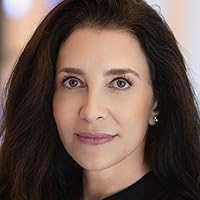
By the national bestselling author of The War on Cops a provocative account of the erosion of humanities and the rise of intolerance
The American university is in crisis and taking the rest of society with it. Toxic ideas promulgated by higher education are undermining the classical values of the humanities, fueling intolerance, and widening, rather than healing divisions, and rapidly infecting our larger culture. Students emerge into the world believing that human beings are defined by their skin color, gender, and sexual preference, and that oppression based on these characteristics defines the American experience.
The Diversity Delusion argues that the root of this problem is our reckless pursuit of diversity, at the cost of a truly liberal education. Heather Mac Donald argues that today's university culture is remaking the world in its image, with destructive results for students, potential employers, and society in general. Mac Donald punctures the victimology cult by telling the truth about the university: there has never been a more welcoming, opportunity-filled environment; far from being oppressed, American college students are among the most privileged individuals in human history.
The Diversity Delusion calls for a return to learning that broadens the mind and takes students outside of their narrow selves. Unless the victimology university is dismantled, American society will grow ever more fractured and thought ever less free.
Heather Mac Donald is the Thomas W. Smith Fellow at the Manhattan Institute, a contributing editor of City Journal, and a New York Times bestselling author. She is a recipient of the 2005 Bradley Prize. Mac Donald’s work at City Journal has covered a range of topics, including higher education, immigration, policing, homelessness and homeless advocacy, criminal-justice reform, and race relations. Her writing has appeared in the Wall Street Journal, Washington Post, New York Times, Los Angeles Times, The New Republic, and The New Criterion. Mac Donald's newest book, The Diversity Delusion: How Race and Gender Pandering Corrupt the University and Undermine Our Culture (2018), argues that toxic ideas first spread by higher education have undermined humanistic values, fueled intolerance, and widened divisions in our larger culture.
Mac Donald’s The War on Cops (2016), a New York Times bestseller, warns that raced-based attacks on the criminal-justice system, from the White House on down, are eroding the authority of law and putting lives at risk. Other previous works include The Burden of Bad Ideas (2001), a collection of Mac Donald’s City Journal essays, details the effects of the 1960s counterculture’s destructive march through America’s institutions. In The Immigration Solution: A Better Plan than Today’s (2007), coauthored with Victor Davis Hanson and Steven Malanga, she chronicles the effects of broken immigration laws and proposes a practical solution to securing the country’s porous borders. In Are Cops Racist? (2010), another City Journal anthology, Mac Donald investigates the workings of the police, the controversy over so-called racial profiling, and the anti-profiling lobby’s harmful effects on black Americans.
A nonpracticing lawyer, Mac Donald clerked for the Honorable Stephen Reinhardt, U.S. Court of Appeals for the Ninth Circuit, and was an attorney-advisor in the Office of the General Counsel of the U.S. Environmental Protection Agency and a volunteer with the Natural Resources Defense Council. She has frequently testified before U.S. House and Senate Committees. In 1998, Mac Donald was appointed to Mayor Rudolph Giuliani’s task force on the City University of New York.
A frequent guest on Fox News and other TV and radio programs, Mac Donald holds a B.A. in English from Yale University, graduating with a Mellon Fellowship to Cambridge University, where she earned an M.A. in English and studied in Italy through a Clare College study grant. She holds a J.D. from Stanford University Law School.
At the Criminal Justice Legal Foundation's 2018 annual meeting in downtown Los Angeles, U.S. Attorney General Jeff Sessions called Mac Donald, “the greatest thinker on criminal justice in America today.”
There is a crisis happening right now in our universities, and their faculties are at fault. Gender and race pandering, in the form of affirmative action and kowtowing to unreasonable demands, has paved the way to failure for many students, especially the ones they feel are the most vulnerable. Works by Milton and Aristotle have been replaced by contemporary activists who are trying to push an agenda in many classrooms. How did this all unfold? Mac Donald traces the problem to decades of bowing down to demands by radical students to change university policies in a way that affects everyone. What we are witnessing right now is the product of listening to those demands.
This book was good but it would’ve been nice if Mac Donald had focused more on the consequences of affirmative action like she did in the first couple of chapters.
A sheltered white man enters his first year of college. Having grown up in a culture where his beliefs about white male superiority are never questioned, the white man is shocked and horrified when an academic and/or fellow student challenges his views with facts and data. In response, the white man throws a veritable temper tantrum, running around screaming that universities are mean to him. Using his cultural power as a white man, he succeeds in getting professors fired and students expelled for disagreeing with him and sucks his college campus into the white male safe space that is the United States, where hurting a white man's feelings is the ultimate crime.
This, in a nutshell, is the story behind the right-wing smear campaign against higher education. As someone who has actually attended a left-leaning university during this so-called "campus free speech crisis," I can confirm that the vast majority of students are not interested in fighting culture wars. Rather, they are focused on getting their degrees, the most popular of which are business administration and nursing, in order to obtain employment. The frontlines of these culture wars are populated almost solely by a minority of entitled, spoiled, identity-politics-obsessed white men desperate to impose white male supremacy on college campuses.
During the 2016 presidential election, I recall a small contingent of white male Trump supporters standing in the middle of campus with signs that read "Homos, Muslims and Jews: Repent or Burn in Hell." The university police not only protected the Trump supporters but also repeatedly threatened to arrest a person holding a "Love Trumps Hate" poster for "disturbing the peace." Indeed, as the narrative of the campus free speech crisis took hold, I witnessed the freedom to voice any criticism of such backwards views become increasingly restricted, by both the police and the university. I saw professors and students remain silent as white male Trump supporters raged about "low-IQ blacks" and "transgender freaks," lest they wanted the Trump supporters to run to the administrators and get them fired/expelled. I also saw two professors get fired for criticizing white supremacy. In fact, a data analysis by Georgetown University found that 75% of professors who are fired or denied promotion for political views are politically left. Thus, contrary to the book's claims, it is left-wing speech, or any speech critical of the far-right, that is under threat on college campuses across the United States.
The book argues that universities churn out a class of left-wing victims who see tyranny and oppression around every corner, while simultaneously painting a hysterical portrait of universities as left-wing tyrannies out to victimize white male conservatives. The fictitious free speech crisis on college campuses is entirely rooted in the right's false sense of victimization. I'm a victim because a black person took the spot to which I felt entitled. I'm a victim because someone criticized my ignorant views. I'm a victim because my professor taught me facts about American history that hurt my feelings. I'm a victim because my lame joke didn't get a laugh. I'm a victim because a woman I violently raped dared to file a report against me. I'm a victim because my perspective, for the first time in my life, isn't always treated as the correct one.
Interestingly, while the book rants and raves endlessly about affirmative action, it never once mentions legacy admissions, in which wealthy white parents bribe universities into admitting their children, an epidemic that has recently been catapulted into the national spotlight. The classism endemic to the right-wing assault on higher education cannot be overlooked.
In sum, the notion that conservative speech is under attack on college campuses is in actuality a sinister right-wing plot to discredit, silence and purge leftist and minority voices on college campuses and transform universities into far-right indoctrination centers where white men comprise 80% of the student body and where ideas questioning the status quo are forbidden. In the name of free speech, the right aims to destroy free speech.
Sometimes hysterical, openly biased, often dripping with scorn and irony, this is still a fair take on today's academic holy grail, racial and gender equity.
Mac Donald's thesis is diametrically opposed to the ways I have been taught to understand diversity, so when I began reading I was both curious and apprehensive ... curious about her data, worried about her attitude. The author carefully refrains from political name-calling (I don't recall seeing the word "liberal" used once with its political definition) and pretty much sticks to the facts as she understands them, which makes the book readable. Indeed, I was riveted. Her style is extremely smooth and her occasional self-indulgent venting is more amusing than offensive. I couldn't help but be a little charmed, for example, by Mac Donald's old-fashioned, pointed insistence on using the masculine pronoun in gender-neutral situations. She chooses every word with care and purpose, a fact I appreciated even if I rolled my eyes from time to time (as when she refers to this "era of twerking and drunken hookups." Oh, please).
Overall, I am very glad I read this book. I truly appreciated her generally level-headed, sometimes truly incisive, well-constructed arguments. Her style may be rhetorically self-indulgent at times, but her arguments are substantive and supported by plenty of cited evidence. I highly recommend this book, especially to readers who like the idea of diversity and racial & gender equity, because it provides an excellent rebuttal and good food for thought, in an interesting, readable way.
I decided to read this book thinking it was going to be an unbiased look at where our country has gone wrong in trying to diversify our schools, workplaces, government, and other areas. What I read instead was an individuals personal perspective, from a pro-Trump, white supremacy view of why they think everyone is trying to take from whites and not have to contribute. In the final chapters she blatantly states that there are no racists professors on college campuses. She also says many times that if white Americans can’t understand what someone has written, it’s because that person’s writing is beneath them and the person should study harder. She speaks constantly of victimhood, while constantly trying to argue for the victimization of the white race, especially the white male. She speaks of so many studies which show lower academic education for minority’s, but ignorantly states that this is due entirely to their own causations. Never does she deal with slavery, Jim Crow, or any of these American issues which have affected generations of minority Americans. She could have done so much with this topic. And yet, this is a book for a specific audience, that wants to feel victimized by people of color and other minorities. Instead of being the scholarly work I was hoping for, it’s a piece of trash!
I will quote a previous review that I thought embodied my thought
"Sometimes hysterical, openly biased, often dripping with scorn and irony, this is a unique take on today's academic system, racial and gender equity."
This book holds so many strawman arguments, you would think this author had already had a conclusion from the outset of doing her research for her book. She seems to pick the most fringe and most unpopular view and claims it as the mainstream of most colleges.
Beyond me to describe this author's experiences and her pure bravery taking on the current "we think" of the title subjects.
How these faculty and supposedly wise elite university administrations and assorted tenured "teachers" prime these people with such ire, mean-spirited and in some cases sadistic self-hate identity issues as core of an education for a "better" life? Beyond despicable!
Her witness and empirical data both are probably the most depressive non-fiction I've read this year. And I've heard and seen the mobs of likewise screeching myself just recently.
Thank God I did all my schooling in 4 different decades with at one juncture of pause that was at least 25 years. But every portion of it was in a good will hospitality "feel" environs where the 1st Amendment was not just quoted but lived. And opportunity and outcome (both) were more tied to the content of the character rather than the color of the skin.
If you are not a fan of political correctness you will love this book. Heather MacDonald takes it all on—full frontal! And she does so with an abundance of research and data that can’t be just swept aside.
Her primary targets are the bastions of secondary education. She writes, “…the characteristic academic traits of our time: narcissism, an obsession with victimhood, and a relentless determination to reduce the stunning complexity of the past to the shallow categories of identity and class politics.”
If you don’t share MacDonald’s conservative politics, and I don’t, some of the book is painful to read. But that doesn’t mean she doesn’t have a point. She does. The irony is that our humanity, which MacDonald claims to be defending, is exactly why we often, as a society, take good intentions too far.
The author spends a lot of ink arguing that the under representation of minority groups at our top universities is a function of skill gaps, not racism, and we do those individuals no favors, she claims, by lowering the bar of admission. But why do those skill gaps exist? On that front, the book is largely silent.
The other irony she does bring to light is the fact that the push for diversity, which I fully support, is often a thinly disguised push for conformity. Gender, racial, and religious diversity is a worthy goal for sure. But if we obtain it by insisting that every member of these underrepresented groups has the same political and worldview, it is not diversity we have achieved.
The result of this insistence on conformity is that every issue becomes a false dilemma fallacy offering only an either/or choice. Every choice is considered either for or against. There is no middle ground, precluding any possibility of productive discussion and debate.
The author’s most unsettling claims is that the humanities (i.e. Shakespeare, Mozart, Plato, etc.) are being suppressed on college campuses today because they were products of the white male patriarchy of their era, suggesting that we are all indelibly defined by the era in which we were born.
Science exists in context. And the liberal arts explore that context. Science without philosophy is empty. Mile markers have meaning only if we have a destination in mind. We may choose to disagree with the great minds of the past, but we shouldn’t ignore them.
In the end, this is a book that should be widely discussed. But it won’t be. The subjects are just too controversial. And that is the real problem here. We need solutions and those are unlikely without meaningful dialogue.
This was a great book. And published in 2018 so current. It really is shocking and disappointing how major colleges (including my own alma mater UCLA) have given over their curriculum to identity politics and given up on western civilization as racist and unworthy of study. She makes a pretty bold point that the lowering of admission standards in order to diversify the student body has hurt the people they are trying to help by not setting them up for success.
It's important to read this well-cited book no matter which side of the spectrum you are on. Almost don't want to send my kid to college.
Folly and delusion are a common feature in the fall of civilizations. In order to ameliorate the sense of sadness that ensues from reading this book, a learned reader may want to find solace in conjuring historical analogs to this decadence: the Cultural Revolution in China, the subprime mortgage crisis, etc. etc. etc. Things can go bad, very bad, and then sometimes, things get better. When will the decay in higher educations reach its nadir? The book makes no forecast. The book is not for the faint of heart.
A surprise bonus for me was the chapter about a company called "The Great Courses" (formerly "The Teaching Company"). I have been a customer since its founding, in 1992. Very cleverly, MacDonald's investigates how the market leads to educational products different from that offered in degree programs in higher education. Why the dearth of female and minority professors in the products? Reason: such professors are not satisfied with the meager pay; white males work cheaply, for the love of the subject matter. Very clever for MacDonald to notice the dearth, and go to the company to get the authoritative answer. Also, the lack of PC in the offerings. Reason: customers are repulsed by it. It doesn't sell. I managed to find one chuckle in the book: a PC professor was ranting into the recording the way he would to his captive University audience. The master tapes needed to be destroyed so that "no further copies would ship out, even accidentally." Customers don't appreciate accusations about "presumed racism and sexism". They would spend their dollars for knowledge elsewhere.
I was disappointed. I do believe one should read works that oppose their views. I read this for class and was throughly intrigued. I am going to point certain points in a straight forward way
-I do believe she made some valid arguments but they were weak in her light citations which made much of her statements seem like assumptions and speculations. She never cited Mary Koch's research and even alters the study's data to prove her point.
-Many reviews claimed she didn't do politically correctionness but what I got was a lot of condescending language and ridicule. Her use of quotations on certain words was useful in portraying how she doesn't take that word seriously.
-Her use of statements in parenthesis was weird and unnecessary. I have never seen this before. Also whoever edited the copy of her book I bought needs to be fired. The countless misspellings, symbols typed into the words, etc. Like, was Heather was in a rush typing and no one cared to clean it up.
-When discussing race and admissions, I do appreciate her calling out affirmative action and the silence of folks she interviewed. But she also likes to ask why certain groups can't just act like Asians. She was stereotyping an entire race that is made of mutiple ethnicities, even Chinese people, whom she loved referencing, have different ethnicities. I'm glad one of her interviewees called her for it but she completely missed point.
-Gender was disappointing. It seemed like a big rant. I appreciate her discussing false cases because they do exist, but why not talk about cases that were proven true but the universitie did nothing. She solely stays talking about women, rape culture, and how fake it is. She says that if someone was actually raped, they would feel it is important to report it but damn all the research that states most rapes go unreported. I do agree that we need to be careful with victim-favoring but blaming the victims doesn't help either. She offers no solutions that didn't require some form of ridicule.
-She provided a whole chapter about a business which could've been a few paragraphs. I appreciate this new knowledge of programs but it felt like somebody was getting paid.
-I really do appreciate her love for the classics but this is an argument in education currently . Though I do think we should learn about Shakespeare, and Milton. I think we can also learn from other sources and cultures. She says we shouldn't be so critical about things we know nothing about but we've been exposed to many of these authors prior to college. Part of learning is being critical. You cannot grow agreeing with everything because someone else says it is.
Honestly, I believe her work could've been stronger. And I think it's comical that she says universities are pandering to their students, which in some cases is true, but she is doing it herself. This is first book I've read and I look forward to see her further discussions.
Eye-opening yet depressing read about the dire state of American universities — particularly the humanities. The classical educational model (which has produced some of our greatest achievements and thinkers) is being tossed out like so much garbage in favor of generating a body of race- and gender-obsessed warriors. Academic standards are lowered in service of this approach; efforts to teach the classical canon are met with screeching hordes of infantile students claiming they will “LIKE, LITERALLY DIE” if required to study such racist and sexist oppressors as Shakespeare, Milton, and Aristotle; and the Baby Boomers who ushered in this deleterious new model and now occupy the faculty and administrative offices indulge these childish demands and behavior. Thus, growing numbers of humanities students graduate with an embarrassing ignorance of the foundation of modern civilization and how it matters for humanity at large, a narcissism that is wholly unjustified in view of the shallow degree of knowledge and wisdom they have attained, and a concomitant small-minded intolerance of any viewpoint that dares to see the world (or any issue therein) through any lens in which race and gender do not reign supreme. Mac Donald is fearless and biting in her critique and as such, those who are unwilling to endure a harsh and politically incorrect indictment of our universities will likely not appreciate this book. Though I originally gave the book 4 stars, I upgraded it to 5 because it has inspired me to improve my own knowledge and re-read the classical works from my university days not so long ago — when such works still mattered enough to be taught.
Amazing, wonderful, a breath of fresh air, I'm not sure I'll be able to find enough superlatives to express my enjoyment of this book. My only regret with the work is that while the Western canon of literature is certainly a better foundation than anything anyone's come up within the last 100 years, it's sand compared to the Bible, but the canon is of course downstream from the Biblical headwaters.
I have taught in universities since 1987. First as a PhD student at a large flagship state school, then at a premier HBCU while finishing my PhD, then at a small campus of the SUNY system (tenured), and now as an associate professor at another campus of a state-affiliated system. What is in her book is true. Period.
Experiences vary at different schools, and at different departments within schools. If you're teaching at a smaller state school you won't see as much of the worst of what's described here. The lunatic left often hasn't completely taken over the asylum yet, and the students by and large come from working class families, and are honestly trying to get ahead in life. You'll still see the various "initiatives" and pressures brought to bear on non-conforming speech and attitudes, but the most egregious offenders are often concentrated in given departments. Thankfully I'm tenured, and work in a department with generally open-minded people. I know people at "the other end of the building" who live in terror of being fired or not promoted because of their political views.
At "elite" (read: expensive) private schools with a heavy liberal arts focus, the problem is worse. At some of the major campuses in regions suffering mass psychosis (parts of CA, MA, NY, etc.) it's even worse.
My own smallish campus is a victim of the "diversity push". Students who quite frankly don't have the academic background to succeed are brought in because they add to "diversity". In my classes, one of three outcomes is likely: (1) they will struggle with the material, not pass, and rack up thousands in debt, and end up failing out and perhaps discouraged from trying again; (2) I lower expectations and the level of instruction to accommodate them, lowering the standards of the school and the level of instruction provided to students who are actually qualified, or (3) I give them a passing grade anyway. They then go out into the labor market and show that they don't know what they're expected to know, which ends up causing people to make unfortunate generalizations.
This was great. Heather MacDonald provides a data-driven thorough dismantling of the PC idiocy that has taken over much of academia, pop culture, and silicone valley. She starts with "The Hysterical Campus", and continues along with affirmative action, microaggressions, unconscious bias, the disparity in academic performance between the races, feminism, and the #MeToo movement, among others. This book reads as a work of fiction. In that; if you gave it to someone unfamiliar with the current social and political climate, or someone 30 years ago, they might find the content ridiculous and hyperbolic. It's tragically not, obviously, and this book should be a sobering look at the current state of victim culture gone pathological. This book is sure to trigger most of the hysterical "progressive" left it takes aim at, which is a decent enough reason alone to read it. Check out some of the other reviews here to read the manufactured blasphemous leftist outrage. I would recommend this book to anyone following or fighting in the culture war, or anyone fed up with the PC authoritarians, and the left's current secular non-diest religion of "diversity". It is very well researched and written.
what a trash book written by a trash person. white people and white women need to stop with their feigned victimization and white tears and stop upholding white supremacy.
It’s tempting for me to dismiss this book as absolutely absurd, or the author as crazy, but unfortunately that would belittle how dangerous her arguments really are, given that she is mainly reaching an audience that wholly agrees with everything she says. This book was clearly carefully researched and written, and since I’m going to read a lot about social justice x higher ed this semester for my independent study i figured I may as well read some perspectives that are different than (in fact, opposite of) mine. Her assumptions that higher education should be (in my words) ~to propagate the greatness of western civilization/ western thought~ are seriously so unfounded and flawed that i am deeply frightened and near laughter at the same time bc this just reads like one giant Onion article. It’s really interesting (but also very exhausting) to see how the same set of data, a series of quotes, or a course description can be interpreted SO differently by people who are so set on the idea that racism doesnt exist… or that their view of history is the only right one… i am begging you, conservative white woman, to see and understand the existence of multigenerational and systemic effects of oppression pLEASE
A good look at how the belief in diversity is not what it purports to be, especially on campuses and inside organizations. Students equate nonconforming ideas with hate speech. Safe spaces imply that some places on college aren’t safe. This is soft totalitarianism. Mac Donald places a lot of the blame on faculty and administrators on campuses. When speakers need police escort on and off campuses, alarm bell should be going off. If the right blocked Elizabeth Warren from speaking on campus, they’d be labeled fascists. Greg Lukianoff of FIRE, and Jonathan Haidt of NYU, take the activists’ claims of psychological injury at face value, and propose cognitive behavioral therapy to preserve mental health in the face of differing opinions. But campus intolerance is at root not a psychological phenomenon, but an ideological one. Google, is supposedly based on “science-based thinking,” but it makes universities look like an open marketplace of ideas. Mentioning, let alone researching, sex differences has become verboten. Affirmative action has had a host of unintended consequences: mismatching of students to institution, stigmatization of students, etc. Asians, of course, are not considered persons of color, for reasons no one can explain. All the over-paid diversity officers in colleges won’t have an effect on inadequate academic skills being taught in high schools. She also debunks “implicit bias,” which started in 1998 with the Implicit Association Test, and has spawned a multimillion-dollar consulting industry. Yet this test doesn’t pass the reliability and validity hallmarks of real science. Are we to believe that companies today still discriminate against minorities if a qualified candidate appears? Implicit bias has been conjured up as identifying real victims of discrimination has become harder and harder. She takes on the campus rape movement (one-in-five or -four statistic is pure bunk). To the extent that sexual incidents have increased, feminists can only blame themselves, since they are the ones that believe there are no differences between men and women. And alcohol does not absolve women of responsibility; but if it does, it turns men into guardians of female well-being. Regret doesn’t equal rape. As she says, “Guys who push themselves on women at keggers are after one thing only, and it’s not a reinstatement of the patriarchy.” There’s a good discussion at the end on the purpose of universities: knowledge. Have they abdicated their purpose? Read the book and draw your own conclusion.
I am up for equal treatment & equal opportunities for all the people - regardless of their origin, race, gender, sexual orientation, religion, etc. I have got plenty of friends who come from different cultures, background, geographies - neither of "options" here was never an issue. The same applies to my professional contacts & relationships. Yes, all people are different - in particular: have different level of competency or potential BUT these differences are not determined by their race, gender, etc. In addition - I do have a daughter which I'd wish will be able to do whatever what she wants in future - in my opinion all the paths should be open for her with the same entry criteria other people face and will be facing.
Nevertheless, I think that America has went bananas. From one extreme (of slavery and racial inequalities decades ago) to another one (where words like "racist" or "white supremacist" are the most powerful weapons on the surface of the planet - because they stick like glue, without any chance for substantive discussion). And that's why I've decided to read this book (regardless of all the public accusation of Mac Donald being a nazi, fascist, etc.).
To cut the long story short - I agree with 90-95% of what's written there. The remaining part is either statistics I can't/don't have time to validate or statements that are too "technocratic" (in other words: ones that ignore more social/psychological aspects of the topic) - e.g. HMD several times states that how is it possible to feel uncomfortable/threatened in Yale/Harvard where it's a privilege to learn in - apparently she doesn't understand that the social exclusion can make you (potentially) feel unwanted & paranoid even in paradise.
Anyway: * 1st part (about the race) is VERY good - I think it perfectly pinpoints the hysteria & massive delusion of "microaggressions"; I can't even state how ridiculous some of quoted cases are * 2nd part (about gender) is more tricky - I agree with a lot of rhetoric, but I don't have data to refer to numbers and statistics * parts 3 & 4 can IMHO be treated together - what has resonated most with me was the aspect of cultural heritage - surprisingly HMD becomes less "substantial" here, she pivots and refers more to reader's feelings & sentiments - nevertheless I agree, but I can imagine that there are people who do have different prime principles in their lives
What is worth emphasizing, HMD is very respectful & tactful across the whole book - she doesn't insult/belittle/ridicule the opponents. Yes, there's some irony here & there, but it doesn't cross the delicate border.
IMHO the topic of this book is one of the most important & relevant ones in 2019 - everyone should read this book & make her/his mind on what to do with it (yes, I respect ones that disagree with it too).
P.S. I've edited the review to fix all the typos - that's what happens if you try to type something fast on your mobile :)
A gut punch of reality. It’s hard to not get frustrated reading of what has happened to our education system. The author discusses diversity indoctrination and numerous agendas at work to control the universities. To me, her examples of actual events highlight the hypocrisy of the Diversity cabal and their attempts to rewrite history and culture.
This is an essential read about the new religion that has taken hold of our society: diversity ideology. Regardless of how assiduously one may read The Chronicle of Higher Education, some of this material will be new since MacDonald is drawing on extensive resource from various sources as well as her own experience. Critical race and gender theory have become orthodoxy and any heretic who dares challenge any of its tenets will not pilloried.
MacDonald divides the book in four sections: Race, Gender, The Bureaucracy, and The Purpose of the University. Despite the lowered standards and the billion dollar industry devoted to making academe and various industries --especially the supposedly lucrative STEM fields-- more welcoming and equalizing access, women and Blacks claim victimhood and demand equality of outcomes and representation. MacDonald proves in case after case that lowering the bar to access for Blacks has not resulted in increased representation because entrants are simply not prepared for the work.
The gender section needed a bit more care. MacDonald lumps all feminists in one group, when we are most certainly not monolithic. Feminists of my age and Camille Paglia and former Barnard president Deborah Spar know that women have to take responsibility for ourselves and abhor this embracing of victimhood by young women who don't seem to comprehend the biological differences between women and men. No, you can't expect to drink to excess and go to a male's room and be absolutely safe from any harm. Moreover, sexual dynamics are not all about power, they can be about sex. However, for MacDonald to state, "No woman who has actually been raped would think that the rape was not serious enough to report," is simply inaccurate and ignores the research.
In the third section on The Bureaucracy, we see how the organizational frameworks of in academe and corporations like Google are supporting the diversocracy without sufficient thought as to why. "The more resources that US companies spend on engineering diversity while global competing firms base themselves on meritocracy, the more we blunt our scientific edge." To say that we need diversity is to ignore the discoveries that were made over the course of millennia by non-diverse scientists, most of whom were wealthy enough to have the leisure time to devote to experimentation.
After piling on outrage after outrage, we arrive at the final section duly horrified. MacDonald doesn't exactly proffer hope, but at least provides a mollifying voice of reason by affirming the purpose of the university (and education) as the transmission of knowledge, not merely the deconstructionist postmodern methodology of gender, race and class analysis. Rather than the classical humanities, "the characteristic academic traits of our time: narcissism, an obsession with victimhood, and a relentless determination to reduce the stunning complexity of the past to the shallow categories of identity and class politics. Sitting atop an entire civilization of aesthetic wonders, the contemporary academic wants only to study oppression, preferably his own, defined reductively according to gonads and melanin."
Speaking as one who was steeped in, later taught this stuff for nearly a decade, then recanted, I can attest to the truth here. It really is as bad as she presents it and worse. Logic and reason are presented as tools of the oppressor. We must stop this nonsense before we hurtle headlong into another Dark Age.
As someone who works in research and academia I am disturbed, although not totally surprised by the way a highly credentialed “intellectual” can take on delicate subject matter and absolutely butcher it with no remorse. The tone is petty and trivial. The “facts” are never tested against any counter arguments and are often spouted off in great chunks and are not really helpful for the academic or the layman in the way they are presented. The rambling begins early and is totally self indulgent. The structure is loose at best. No one will read this and get anything from it. If you’re in the bubble this will reinforce what you want to hear and that will be that. If you’re in the other bubble you will be so offended you will not be able to see anything positive whatsoever.
Spoiler: no conclusions are made. What a waste of time. If it wasn’t for the fact that this was picked for a book club where I very vehemently wanted to disprove some of these claims I don’t think I could have stomached it.
It reads pretty dystopian to me, if the fiction were dry and witless. Another spoiler for you, it’s not rape unless you are literally clubbed over the head and dragged into a back alley. So if you have ever been assaulted (and are not one of the countless liars who just make up an account of rape to fill up their free time like the author suggests) you may want to skip this book as a good third of it will be triggering.
Anyway. It isn’t that I need to agree with a book to see its value, I honestly tried to go in with an open mind. Even if there were a shred of good information, the writing style and lack of organization alone could put you off. I would give it zero stars if I could.
Specious environmental reasoning regarding the 'academic achievement gap' between ethnic groups (disregarding group mean differences and the heritability of g), which the author believes can be rectified by intense early childhood intervention for the 'underrepresented minorities' (viz. Asians and Jews are overrepresented) (p 198) and similar small gaffes throughout mar an otherwise very good overview of the subjects of SJWism (the triumvirate of race, feminism, gender identity metamorphosed in to myriad fissiparous neo-tribes), and intersectionality. The book is a good introduction to the pomo identity left (the best remaining in wide circulation after the February-March 2019 Amazon book-burning), but has little to offer the student of postmaterial leftism who is acquainted with deeper dives in to the topics given only individual chapters here.
Highly recommended for novices and those with little time for studies alongside Farron's 'The Affirmative Action Hoax'.
If you want to know the structural reasons and the 'why' behind the happenings analyzed herein, read MacDonald's 'Culture of Critique', as the movers behind these developments are never mentioned in 'Diversity Delusion'.
This book is largely complementary to, and not overlapping with, 'The Victims' Revolution', and like that other title, has an excellent concluding chapter which is a step above the rest of the work.
If there's one person who can give Donald Trump a run for the most triggerings generated, it's surely Heather Mac Donald. Indeed, that is how The Diversity Delusion begins, with Mac Donald recounting her experiences being confronted and harrassed on college campuses by students and faculty incensed by her opinions.
Mac Donald, previously the author of The War on Cops: How the New Attack on Law and Order Makes Everyone Less Safe, has long been a thorn in the side of the grievance industry, that segment of society that sees oppression, especially that emanating from the traditional institutions of Western Civilization, always at work, most notably in the disparate outcomes experienced by favored victim groups. She continues that challenge to popular perceptions in The Diversity Delusion, broadening her focus to the source of many of those perceptions, the American university.
The Diversity Delusion is separated into four sections. The first focuses on issues related to race, primarily the racial oppression that is alleged to pervade universities, from the selection of students to classroom instruction. Mac Donald shows, however, that universities, far from denying opportunities to ethnic minorities, bend over backwards to find students who meet those criteria, even when it means reducing the academic qualifications for entry. Such an idea seems innocuous, even humanitarian, but Mac Donald shows how unintended consequences flow from such policies.
Like Thomas Sowell before her, Mac Donald points out that admitting students on the basis of ethnicity instead of qualifications not only denies entry to more qualified but less ethnically diverse students, it reduces the likelihood of success of students who are the supposed beneficiaries - those who are admitted to colleges the demands of which they have not been academically prepared for. Perversely, such students are then taught by a grievance-mongering academic culture that their struggles are the result of a system that is oriented towards their oppression and failure. Of this Mac Donald find no evidence, despite the overwhelming attempt to cast American colleges, and American society more broadly, as irredeemably racist.
Also in this section Mac Donald includes a chapter on the Implicit Association Test (IAT), which purports to identify unconscious bias that is alleged to lurk in the minds of us all. Mac Donald not only challenges the method by which this bias is said to be found (measuring nanoseconds of difference in associating images of different faces with good or bad feelings), but also the entire politically- and ideologically-oriented project that it is based on. This chapter is particularly useful for those skeptical of such projects because, as Mac Donald notes, this test, while developed on campuses, has made the leap to businesses and law enforcement, and is thus likely to be increasingly encountered by an unsuspecting public.
The book's second section addresses the fraught world of gender on college campuses. Here, Mac Donald points out that the problems of so-called "rape culture" in colleges is vastly overblown, and is often the result of the natural emotional consequences of allegedly consequence-free, frequently alcohol-fueled sex. Mac Donald draws a direct line from the loosening of cultural taboos surrounding sex in the 1960s to the emotional and psychological distress that plague what she calls "hookup culture." Ironically, it is these consequences of destroying cultural taboos that have created the need today to rebuild them.
But herein lies a problem for the feminist-dominated world of modern sexuality. The old taboos, says Mac Donald, were based on an understanding that men and women are biologically different in general, and particularly in their libidos, relied on the concepts of male chivalry and female chastity, which resulted in "no" being the default answer to a man's desire for sex. Feminism, which posits that there are no biological differences and that women are every bit as sexually insatiable as men, creates a default "yes," thus making it more difficult for women to make the choice that may come more naturally, and thus creating emotional conflict when they yes when they'd rather say no. On this point I am reminded of Tucker Carlson's comment in Ship of Fools: How a Selfish Ruling Class Is Bringing America to the Brink of Revolution that at some point the alleged aim of feminism, to improve the lives of women, needs to be judged against whether or not it is achieving that goal.
So, the feminist-dominated campus, faced with the consequences of its prior policies but unable to admit the bankruptcy of its premise, is left to trying to replace the old cultural restrictions on sex, which protected women and set standards of decent conduct for men, with awkward contractual language put out by college administrations that attempt to formalize the rules of sexual conduct. Here, as in previous efforts, liberalism shows itself incapable of improving on or even sufficiently replacing the old traditions that it considered oppressive. One is tempted, given these repeated failures, to wonder if restraints built up over a long period of human experience should be accorded a higher degree of respect than the rationalists who are ever in a hurry to destroy them suggest. Perhaps these restraints protect as well as limit. Liberals, I am sure, will perish the thought.
The one benefit of all of this, Mac Donald suggests, is that this bureaucratic meddling in the bedroom (or the dorm room) will have the general effect of making both male and female college students more reluctant to engage in casual sex on campus and more likely to concentrate on things that matter - namely the education that they or their parents are paying through the nose to get.
The third section includes chapters dealing with the growing academic bureaucracy that is dedicated to diversity (people who Mac Donald has labeled "diversocrats"). Here, as elsewhere, she notes how the pursuit of diversity has led to the lowering of academic standards and the ignoring of the possibility that different people pursue and are successful in different subjects differently. The lack of women in STEM fields, for instance, does not appear to be due to exclusion or discrimination on the part of universities, but rather to the relatively smaller number of highly-qualified female applicants for STEM programs and professorships. Men, Mac Donald notes, have for decades had higher scores on math-intensive tests, which goes a long way towards explaining why men tend to dominate these occupations. She notes further that even women who do score highly on math tests also tend to score higher than men on verbal skills, which has the overall tendency of leading them to make different career choices than their male counterparts.
Again echoing Sowell, Mac Donald wonders why the diversity industry assumes that there should or can be exactly equal representation in these fields as compared to the population at large when there is no empirical or philosophical reason to assume that distributions of anything exactly match the distribution of populations. And Mac Donald further wonders why such concern over diversity isn't reflected in a push for more female HVAC technicians or appliance installers, also male-dominated fields.
Finally, Mac Donald addresses how all of the aforementioned focus on intersectional oppression has wrecked the ability of higher-ed to actually educate students. She states explicitly what she has implied throughout the rest of the book: that "the characteristic academic traits of our time [are] narcissism, an obsession with victimhood, and a relentless determination to reduce the stunning complexity of the past to the shallow categories of identity and class politics."
"The contemporary academic," she adds, "seeks only to confirm his own worldview and the political imperatives of the moment in whatever he studies." Thus the decisions by humanities departments to replace the study of "white European men" in traditional curricula with the highly-politicized, diversity-obsessed programs of the social justice-obsessed campus. Here the reader can sense a shift in tone for Mac Donald, who often seems annoyed at the misrepresentation of data, but is clearly perplexed at the destruction of the cultural legacy of Western Civilization. Our civilization, she writes, is not the sole domain of "dead white men" - it is available to all people, regardless of race, ethnicity, or gender. She cites Frederick Douglass, W. E. B. DuBois, and Ralph Ellison as historical figures who today would be told that the Western canon holds no importance for them, but who in their time were inspired by the cultural, moral, and political accretions of the West. Clearly, our cultural inheritance is both vital to our societies, and under attack from within them. How ironic that it is the leftist elites, who have for so long presumed to be culturally superior to benighted conservatives, who are dealing this inheritance its coup de grace.
All may not be lost, however, as Mac Donald notes the success of The Great Courses, a for-profit company that offers introductory-level courses on a wide range of traditional academic topics. The effort may not be perfect, she concludes, but it represents a market-based response to the resilient desire of people for knowledge, beauty, and understanding. These represent the true purpose of higher education, a purpose that the university now routinely abjures in favor of the siren song of diversity.
And this is the main point of the book. In the past, Mac Donald writes in the book's concluding paragraph, scholars "invited students to the life of the mind. But today "The diversocrats who have commandeered the American university invite students to a cultural reeducation camp where they can confess their political sins or perfect their sense of victimhood." The loss, again, is mainly to the students who "Rather than emerging with minds broadened and informed by the best that our heritage offers...increasingly are narrowed into groups defined by grievance." What happens when these students enter the real world we now see playing out before our eyes, on the streets, on the editorial page of The New York Times, in corporate boardrooms, and in city, state, and federal governments.
Overall, for those not swayed by the modern, ideologically-driven project of manufactured diversity, there is much to appreciate and little (but not nothing) to criticize in The Diversity Delusion. The book, like her previous work, is a collections of articles that Mac Donald has previously written and as such lacks a certain degree of cohesiveness. I further found Mac Donald, a conservative secularist, to be a bit too overawed by the vision of Enlightenment-era philosophers as the fons et origo of Western freedom. However, these are fairly minor criticisms of an otherwise excellent and necessary book. The more that the ideas addressed herein journey from the campus to the culture, the more vital people like Heather Mac Donald, those who value both reasoned criticism and our tradition, become.
Heather MacDonald has written a great book. It is difficult to read for a man of my age (64) because the state of education today is a sorry substitute for the education that I was able to enjoy. The book is a sobering reminder that we are in for a very rough ride in the future.
What are we to make of today’s university culture where students may not be subjected to spoken or written words that make them feel uncomfortable, where diversity is achieved by abolishing objective standards not just in the social sciences but in the STEM fields as well, and where the diversity bureaucracy is actively undermining the centuries-old mission of higher education. That is a big subject, but in The Diversity Delusion Heather Mac Donald breaks it down into its constituent parts and exposes the naked underbelly of the attack on Western Civilization that is taking place in our most esteemed universities and colleges.
Citing example after example, statistic after statistic, Mac Donald explains the origins of race and gender pandering and details its destructive impact, both on the production of knowledge and the preparation of young people for adulthood.
One is hard-pressed to select the most egregious example of this destructive environment. Is it preventing conservatives like Mac Donald from speaking to student groups? Is the destroying the reputations and careers of faculty who deviate from the new norm? Is the absurdity of rewarding claims of microaggression by privileged students at Yale, Brown, and Princeton with safe spaces, non-objective grading, and high-paying jobs as diversity counselors and administrators? Is it turning colleges into re-education centers for anyone who might honor color blindness, merit or hard work?
Not Just the Ivies
Mac Donald tells us the problem doesn’t just exist at the Ivies and on California campuses. It has spread to places like Evergreen State College in the state of Washington where a professor was physically attacked when he failed to obey students’ demand that white faculty cancel their classes at the bequest of minority students, and at Middlebury College in Vermont, students physically assaulted a professor, giving her a concussion. Her “crime?” Having supported the invitation of a conservative to speak on campus.
Mac Donald tackles race and gender diversity pandering separately, then focuses on the bureaucratization of victimhood followed by an overview on the subversion of the true mission of higher education.
Enforcing Equality
Affirmative action seemed necessary and logical when it first instituted fifty years ago, but today it has grown into an industry that suppresses evidence of its failures and punishes businesses as well as colleges if they cannot find a sufficient number of qualified minority applicants for student enrollment and faculty positions. The worst example of this might be the University of California system, which ignores the 1996 initiative passed by the state’s voters that bans race and gender preferences in government and education. California not only insists minorities (and women) be hired but refuses to accept objective measurements of candidates’ qualifications, all but asserting that minority status alone means the candidate is qualified for the job.
That is bad, but what makes matters worse is that minority students can ruin careers simply by claiming an instructor has used words or taught concepts that make them feel victimized. When any such accusation is levied, university administrators automatically treat the accused as guilty. Due process is flawed if practiced at all and when the accusations border on absurdity, as in the case of the professor who was censured for issuing t-shirts with his picture for a class softball game, the administration typically thanks the students for calling out the offender. The source of the professor’s aggression? His picture reminded someone that he was the author of a study that challenged the effectiveness of affirmative action, even though his study was never successfully refuted. The idea of challenging a politically protected policy has become unacceptable in today’s university.
The damage being done by the fiction that American universities are dangerous places for minority students who must be protected even if it means certain authors cannot be read, certain subjects cannot be taught, and objective grading must be dispensed with, is uncalculable. Advocates for minority advancement ought to be challenging these excesses for they are damaging to minority students and to society as a whole.
Sex Toys and Victimhood
While ethnic minorities clamor for more representation, Mac Donald reports that a majority population in our colleges continues to claim victimhood at the expense of fact and reason. That group is women.
Spurred by an under-reported problem of sexual misconduct on some campuses thirty years ago, universities responded by manufacturing a campus rape crisis where the definition of rape is whatever each campus perceives it to be. In response to the “crisis,” bureaucracies have mushroomed resulting in dozens of high-paid positions with heavily-staffed rape crisis centers designed to serve an artificially-created population of victims.
Undermining the rape crisis claim is another bureaucrat-enriched activity on college campuses: support for unbridled sex. While “freshman counselors organize games of Sex Jeopardy and pass out tips for condom and dental dam use,” (p. 117) rape crisis counselors encourage women to report attempted and actual rapes even when the victims had been having consensual sex with the accused for months. While one part of the academic bureaucracy promotes a promiscuous hookup culture the other claims one in five women are subjected to rape or attempted rape during their college years.
Oddly, the proponents of doing more to protect women do not want rape cases to be handled by America’s criminal justice system. The reason for this might have something to do with the fact that few such cases gain convictions and many turn out to be frauds, such as the infamous Duke lacrosse gang-rape case, the University of Virginia Rolling Stone case, or Columbia University’s ‘mattress girl.’
Mac Donald reports that the campus rape crisis has spread into the workplace where ‘overly broad definitions of what constitutes sexual misconduct are now being legitimized,’ in the words of a female attorney who has dealt with these cases. Ironically, as Mac Donald points out “[w]estern culture is in fact the least patriarchal society in human history.” (p. 159) Echoing the bureaucratization on campus, the #MeToo movement has spawned a campaign to fill businesses with counseling staffs and to guarantee woman are given priority in hiring decisions without regard for qualifications.
The Ideology of Victimhood
The transformation of academia into centers for political indoctrination has been advanced by an ideology that justifies the institutionalization of their claims. Intersectionality is the theory that everything wrong in the world comes from an interconnected historical enemy headquartered in the U.S.––namely, white males and capitalism. This is the source of slavery and racism, of patriarchy and misogyny, and of climate change and exploitation of minorities and women.
That teaching young adults to think of themselves as victims is the opposite of what they need to learn seems lost to the bureaucrats whose jobs depend on their finding more and more examples of the oppression. At institution after institution, diversity offices and counselors mushroom as salaries out-pace those paid tenured professors. Administrators join the chorus, advancing the thesis that their institutions have done much harm to women and minorities in the past and must make amends. Many, like Yale’s Peter Salovey, give in to any outrage outbreak with more money for diversity programs and mandatory diversity indoctrination.
As Mac Donald stresses, the mission of every academic institution ought to be the “transmission of knowledge, pure and simple.” There’s plenty of evidence that students arrive on college campuses ignorant of the fields of knowledge that underlay our civilization. Unfortunately, many leave in worse shape than when they entered, having been indoctrinated by faculty steeped in the “hermeneutics of suspicion”––the assumption that all language carries hidden meanings that either subvert or reinforce power structures.
Mac Donald challenges the assumption that transmitting knowledge once featured in Western Civilization courses is dangerous to minorities and women by quoting Frederick Douglas and W.E.B. Du Bois––two of the heroes of black liberation, who pay tribute to the men whose ideas inspired them and gave them the intellectual courage to state their piece.
Heather MacDonald’s study is so thorough and irrefutable that it cannot get fair treatment by the mainstream media. Don’t look for her book to be listed under the Washington Post’s 50 Best Non-Fiction Books of the Year or to be reviewed by the New York Times. Yet, it should be required reading for members of Congress, the bureaucrats at all state and federal education departments, and students studying to become school administrators. It’s time to go back to doing what colleges and universities were created to do, which ironically will benefit minorities and women much more than coddling, indoctrination, and unmerited advancement.
I don't think I've ever highlighted as many passages in a book as I have this one. If it does nothing else, this book makes you think about the direction of our college campuses and our society in general. The most concerning part is the attack on free speech. Particularly on campuses where free thought and considering other people's true position in a reasonable discussion should be the goal, instead we see an attack on thought and discussion and a complete shut-down of any type of non-pc thought. It's as if we just can't even consider the other side at all. Worst of all, this type of one-sided thought policing leads to detrimental policies for the very people it purports to protect. Without actual consideration of the other side, how are we to make changes, improve lives, grow? Mac Donald is a polarizing figure, mostly due to the fact that people refuse to look at what she actually says. I truly hope some people will pick up this book and really give it a chance, but I fear most are far too entrenched to do so fairly. I'm not saying the book is perfect, but there are serious questions raised here that really should be considered.
A very important book ripping off the covers of Political Correctness. Heather describes in depressing detail the collapse and economic ruin of the University of California education system. UC has completely lost its way as they worry about Identity Politics and a victim under every rock syndrome. UC spends CA and federal tax dollars like a bunch of drunken sailors (no offense to drunken sailors).
The book is a delight as is all that MacDonald writes. The reservation is the content. To read what is happening in the US (as an ex-pat for 27 years) is dispiriting. It is worth the wait as is awaiting her next article or book.