

What do you think?
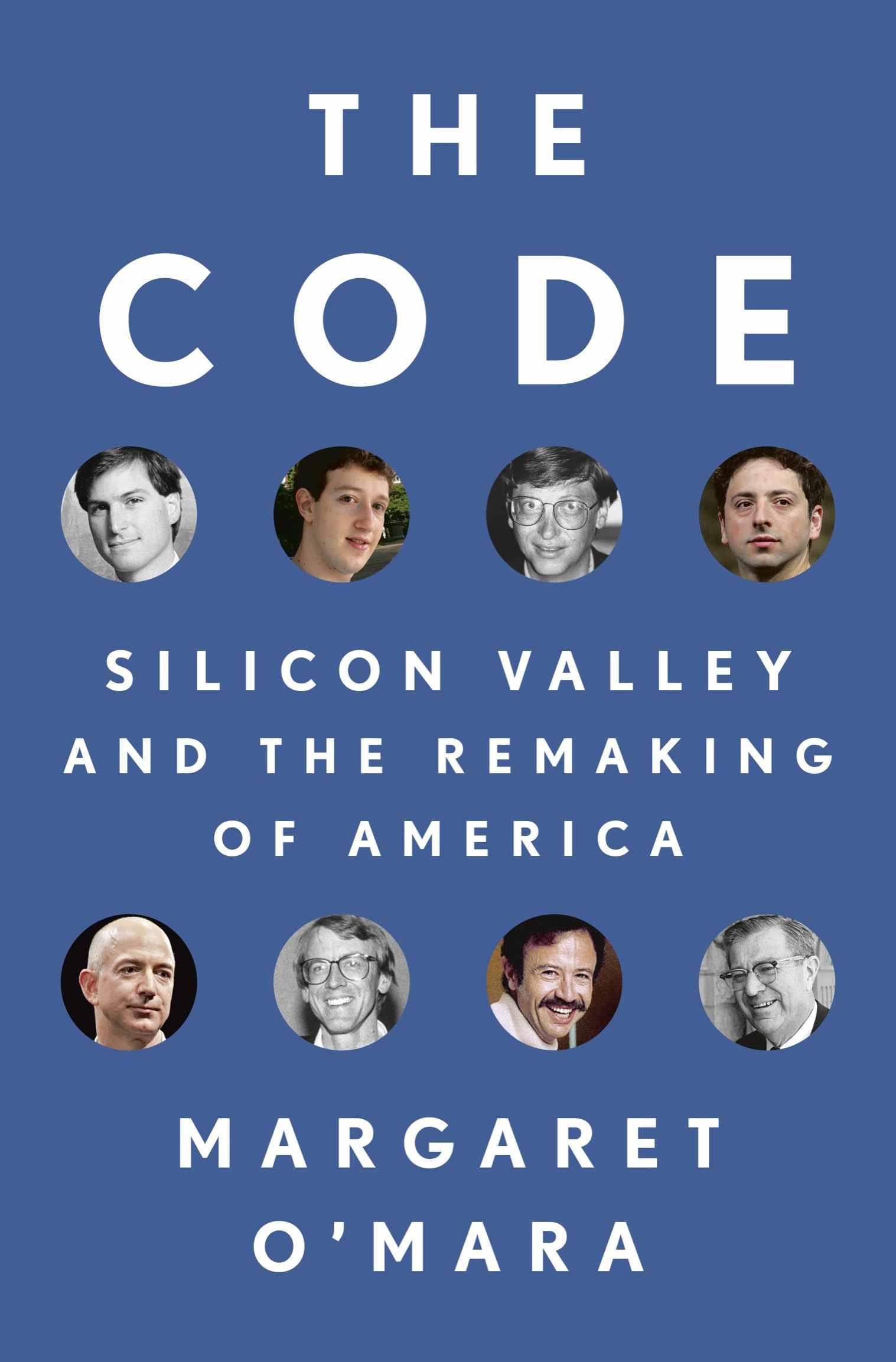
The Code: Silicon Valley and the Remaking of America
One of New York Magazine's best books on Silicon Valley!The true, behind-the-scenes history of the people who built Silicon Valley and shaped Big Tech in America Long before Margaret O'Mara became one of our most consequential historians of the American-led digital revolution, she worked in the White House of Bill Clinton and Al Gore in the earliest days of the commercial Internet. There she saw firsthand how deeply intertwined Silicon Valley was with the federal government--and always had been--and how shallow the common understanding of the secrets of the Valley's success actually was. Now, after almost five years of pioneering research, O'Mara has produced the definitive history of Silicon Valley for our time, the story of mavericks and visionaries, but also of powerful institutions creating the framework for innovation, from the Pentagon to Stanford University. It is also a story of a community that started off remarkably homogeneous and tight-knit and stayed that way, and whose belief in its own mythology has deepened into a collective hubris that has led to astonishing triumphs as well as devastating second-order effects.Deploying a wonderfully rich and diverse cast of protagonists, from the justly famous to the unjustly obscure, across four generations of explosive growth in the Valley, from the forties to the present, O'Mara has wrestled one of the most fateful developments in modern American history into magnificent narrative form. She is on the ground with all of the key tech companies, chronicling the evolution in their offerings through each successive era, and she has a profound fingertip feel for the politics of the sector and its relation to the larger cultural narrative about tech as it has evolved over the years. Perhaps most impressive, O'Mara has penetrated the inner kingdom of tech venture capital firms, the insular and still remarkably old-boy world that became the cockpit of American capitalism and the crucible for bringing technological innovation to market, or not. The transformation of big tech into the engine room of the American economy and the nexus of so many of our hopes and dreams--and, increasingly, our nightmares--can be understood, in Margaret O'Mara's masterful hands, as the story of one California valley. As her majestic history makes clear, its fate is the fate of us all.
512 pages, Kindle Edition
First published July 9, 2019
Ratings & Reviews
Friends & Following
Create a free account to discover what your friends think of this book!
Community Reviews
Displaying 1 - 30 of 152 reviews

July 19, 2019
Super interesting history of the innovators, the politicians, academics, and money guys who built silicon valley. O'Mara is not a biased observer. She does a great job not idolizing the "geniuses" but also not painting them as villains. On the political side, she's very clear that SV is not just a product of the free markets (as Peter Theil might believe), but also not just a product of defense department contracting as others have claimed. I highly recommend this to anyone interested in SV, the history of public-private partnerships, laws, regulations, and these tech companies.

August 14, 2019
This is a very thorough and commendable history of the rise of Silicon Valley as the center of the computer/tech world. As somewhat of a techie, I found the story interesting, but the narrative is not exactly scintillating. No doubt, she has done her homework, and has written a fine history.

February 4, 2025
Well written but quickpaced and cursory. Appreciate the emphasis on SV’s defense tech origins, though the book falls short on describing Silicon Valley outside the Valley itself - offshoring, supply chains, and global labor underneath the prosperity of Santa Clara County’s corporate campuses.

July 24, 2020
I lived through all of the monumental changes described in this fascinating book, yet much of the politics and inside information had totally escaped me.
I was surprised at the monumental role Stanford University played in the foundation of Silicon Valley. As money poured out of the federal government to support all sorts of military projects during the hot war and then the cold, the university moved to become an engineering school, to the consternation of the Humanities faculty. They developed one of the first research parks, that became a magnet for tech companies like Hewlett-Packard and many others. They were fortunate to have a huge land grant from their founder, some 9,000 acres, that was becoming prime land worth a fortune. Tech companies were thrilled to have top engineers at the university whose motto was becoming turning that intellectual capital into engineering real products, at that time mostly military.
Stanford also became the home of the Hoover Institute (Herbert had spent the last few decades of his life there) lavishly supported by Packard one of the original occupants of the research park. A strong proponent of free market capitalism and anti-Communism they were myopic in refusing to see how the government through military grants and contracts was its own form of Marxism. The Valley was also lily white. It was populated almost exclusively by men in white shirts and thin ties who had engineering degrees. Even the blue-collar workers in the assembly plants were close to 100% male and white.
Meanwhile, progress was being made on interconnecting people to mainframes, along with the development of mini computers like those made by DEC. Without the earthshaking FCC decision of 1968, however, most of that would have remained small. The CarterFone was invented by Thomas Carter, a Texas rancher who needed some way to communicate with the employees on the vast expanses of his ranch. It was a device that connected the standard AT&T telephone set to a wireless radio. He may have gotten the idea from phone patches used by Amateur Radio operators (I am WB9VEG and used to entertain the kids while traveling by using my equipment to call a phone patch and then connect to the local phone network to call relatives thus avoiding toll calls; it was a precursor to car phones, all made obsolete by cell phones.) in the early sixties. His invention worked well but Ma Bell insisted that only equipment they made could be connected to their network so they sued. (Hams had been frowned on but were such a small community and experimental they were probably ignored.) Carter fought back and in 1968 the FCC ruled that AT&T could not have a monopoly on equipment and third parties could connect different devices to the network. The Carterfone looked a lot like the phone modems we used to connect to in the eighties to send digital signals over the networks that became the internet. It converted digital signals into analog and vice versa. This ruling unleashed a tidal wave of innovation and progress that would never have happened without that ruling. (The story of the Carterfone is really interesting and more can be found at https://digitalcommons.law.scu.edu/cg....)
Venture capitalists played a huge role in building the area. For women, many of whom had been "computers" during and following the war, so it wasn't a question of skill or knowledge, there was no support, mostly because they virtually did not exist. It was a white, male dominated world. The boys all knew each other, had gone to school together, thought the same way, and supported each other.
There were four other factors that provided a fertile ground for the technology explosion: cheap land, changes in the immigration law, non-enforcement of non-compete clauses, and the development of a high quality education system. Cheap land is self-evident. The sweeping changes under Johnson in the sixties removed the old quota system by country and made merit and skills the primary determinant for entry into the U.S. The technology centers profited immensely as bright, determined, and skilled immigrants flooded the U.S. Governors Pat Brown and Earl Warren, of opposite parties, both believed education was important to growth and the system they developed was soon the envy of the world and provided Silicon Valley with a steady stream of well-educated recruits. The factor that surprised me was that California was virtually the only state that would not enforce non-compete clauses. This meant that engineers could jump ship and start their own little company using the skills and knowledge they had acquired at their previous company. This created an incredibly competitive and productive and fast-growing environment that produced new technologies almost overnight.
One quibble is the emphasis on hardware development when I think the most important part of technological advances came from software. Just as Visicalc provided the impetus for businesses to acquire personal computers, the development of LANs and GUIs moved controlled out of the MIS departments into the personal realm, although as we now have seen, in the corporate and educational spheres connectivity is now back in the hands of IT. It's also important to recognize that without the massive infusions of government money almost all of the development would have gone nowhere.
Very enjoyable read.
I was surprised at the monumental role Stanford University played in the foundation of Silicon Valley. As money poured out of the federal government to support all sorts of military projects during the hot war and then the cold, the university moved to become an engineering school, to the consternation of the Humanities faculty. They developed one of the first research parks, that became a magnet for tech companies like Hewlett-Packard and many others. They were fortunate to have a huge land grant from their founder, some 9,000 acres, that was becoming prime land worth a fortune. Tech companies were thrilled to have top engineers at the university whose motto was becoming turning that intellectual capital into engineering real products, at that time mostly military.
Stanford also became the home of the Hoover Institute (Herbert had spent the last few decades of his life there) lavishly supported by Packard one of the original occupants of the research park. A strong proponent of free market capitalism and anti-Communism they were myopic in refusing to see how the government through military grants and contracts was its own form of Marxism. The Valley was also lily white. It was populated almost exclusively by men in white shirts and thin ties who had engineering degrees. Even the blue-collar workers in the assembly plants were close to 100% male and white.
Meanwhile, progress was being made on interconnecting people to mainframes, along with the development of mini computers like those made by DEC. Without the earthshaking FCC decision of 1968, however, most of that would have remained small. The CarterFone was invented by Thomas Carter, a Texas rancher who needed some way to communicate with the employees on the vast expanses of his ranch. It was a device that connected the standard AT&T telephone set to a wireless radio. He may have gotten the idea from phone patches used by Amateur Radio operators (I am WB9VEG and used to entertain the kids while traveling by using my equipment to call a phone patch and then connect to the local phone network to call relatives thus avoiding toll calls; it was a precursor to car phones, all made obsolete by cell phones.) in the early sixties. His invention worked well but Ma Bell insisted that only equipment they made could be connected to their network so they sued. (Hams had been frowned on but were such a small community and experimental they were probably ignored.) Carter fought back and in 1968 the FCC ruled that AT&T could not have a monopoly on equipment and third parties could connect different devices to the network. The Carterfone looked a lot like the phone modems we used to connect to in the eighties to send digital signals over the networks that became the internet. It converted digital signals into analog and vice versa. This ruling unleashed a tidal wave of innovation and progress that would never have happened without that ruling. (The story of the Carterfone is really interesting and more can be found at https://digitalcommons.law.scu.edu/cg....)
Venture capitalists played a huge role in building the area. For women, many of whom had been "computers" during and following the war, so it wasn't a question of skill or knowledge, there was no support, mostly because they virtually did not exist. It was a white, male dominated world. The boys all knew each other, had gone to school together, thought the same way, and supported each other.
There were four other factors that provided a fertile ground for the technology explosion: cheap land, changes in the immigration law, non-enforcement of non-compete clauses, and the development of a high quality education system. Cheap land is self-evident. The sweeping changes under Johnson in the sixties removed the old quota system by country and made merit and skills the primary determinant for entry into the U.S. The technology centers profited immensely as bright, determined, and skilled immigrants flooded the U.S. Governors Pat Brown and Earl Warren, of opposite parties, both believed education was important to growth and the system they developed was soon the envy of the world and provided Silicon Valley with a steady stream of well-educated recruits. The factor that surprised me was that California was virtually the only state that would not enforce non-compete clauses. This meant that engineers could jump ship and start their own little company using the skills and knowledge they had acquired at their previous company. This created an incredibly competitive and productive and fast-growing environment that produced new technologies almost overnight.
One quibble is the emphasis on hardware development when I think the most important part of technological advances came from software. Just as Visicalc provided the impetus for businesses to acquire personal computers, the development of LANs and GUIs moved controlled out of the MIS departments into the personal realm, although as we now have seen, in the corporate and educational spheres connectivity is now back in the hands of IT. It's also important to recognize that without the massive infusions of government money almost all of the development would have gone nowhere.
Very enjoyable read.

August 16, 2019
The book is an ambitious effort to explain the economic rise and prominence of the Silicon Valley. For the most part the effort pays off. The importance of the Valley to California and to the nation should not be underestimated. California’s personal income tax relies on about 400 taxpayers most of whom live in the area o’Mara is writing about, so this is a story about more than technology. O’Mara’s attempt is to chronicle the history.
At the outset let me make two minuscule gripes - I am big on fact checking in books. O’Mara makes at least two errors - first Clifford Hansen, the co-author of the 1978 Capital Gains tax cut, was a Republican not a Democrat from Wyoming. Second, Stanford’s campus is 8180 acres not 2000. I know that is picky but both points suggest some sloppy research assistants.
But let’s get to the heart of a very good book. The author does a great job of developing a narrative about how this small area of California became the Silicon Valley. But she also weaves in national trends and even international ones to put the growth of this patch of land in context. I believe that she could have done a bit more on why Route 128 firms (including Wang, DEC, and Data General) were not successful in innovating as technology began to advance rapidly. Culture and government funding had a large part of that story. The Silicon Valley part is an exciting and complex story and the author winds together a great many strings.
O’Mara does a mostly chronological exposition of how the Valley grew by describing the many players who made it happen. She also weaves in why Seattle should really be considered a part of the Valley infrastructure. For example, why would Amazon locate in Washington when most of its early customers were in California(sales tax). There are some places where I would have liked to have a bit more detail - but had all those rabbit holes been explored - the book would be twice its 511 pages.
Her discussions of the transition from WEB 1.0 to 2.0 are thorough as are the descriptions of the growth of Google and Facebook. The chronological approach helps describe what was a very dynamic period of about a decade.
Where I have a dispute with her narrative is the role of the government in developing the technologies that drive the valley. Clearly, Vannevar Bush’s open letter had a profound effect on the growth of universities - but it should be balanced more with the entrepreneurial efforts of people like Fred Terman the legendary dean of the Stanford Engineering school; who was there from 1926 thought the 1970s and developed Stanford’s unique approach to the integration of university work and commerce. While she discuses Terman in depth she credits most of the developments in technology to government interventions. That may be more true for aerospace - which was part of the Valley’s early allure - but I believe the electronics area development was much more complex. California’s style, which was based in part on climate and part on remoteness from East Coast traditions, may have had as much to do with the growth of the Valley as government policy. Terman’s vision, to integrate basic and applied research and to encourage companies to come close to the campus, was unique.
She argues that ARPA (Later DARPA) was the catalyst for the internet, But there are many other explanations. In the Valley there were time sharing computer systems which basically exploited the cycling of early machines. Their problem was scalability (they were limited in range and how many machines could be paired) and incompatibility of these systems to talk to each other. But there are numerous instances where those types problems are solved by entrepreneurs. There are a lot of writers who claim that government founded the internet - but the internet did not begin to bloom until the Netscape IPO.
A second example is her limited discussion of SEMATECH. I believe SEMATECH (which was the bastard stepchild of the furor over industrial policy) should be a short story. A lot of new democrats, when our semiconductor companies were being competed against by Japanese companies, asked the government to set up a public-private consortium to help do industrial planning on the model of MITI in Japan. At the time that Sematech was being debated, T.J. Rogers, the founder of Cypress Semiconductor, wrote a wonderful piece poking fun a both the notion and the reality of centralized planning efforts. Sematech was set up and I think continues today but the big promise of centralized planning was never realized. It was an absurd idea. MITI, after a rush of authors had sung it praises, soon got exposed as a bungling entity that actually slowed the ability of Japanese companies to innovate. The supporters of the government as seedling developer should read Hayek’s “The Uses of Knowledge in Society.” I remember in the late seventies reading a couple of books on the Japanese Miracle and then finding a guy named Joel Kotkin - wrote a book pointing out all the flaws in the model. The Valley grew because its participants were much better prepared to accept that innovation involves failure(my first computer was an Osborne 1).
One of the key issues here is whether industrial policy, which O’Mara seems favorably inclined to, is good for the rest of us. Sematech is a good example of where it was not. But government interventions are also negative in other areas. In the 1990s some in the security community proposed that every computer install “clipper chips” in new computers (proposed in 1993 and disposed in 1996). Luckily the proposal was stopped. The government’s two attempts to use anti-trust (with IBM and with Microsoft twice - which admittedly came from rivals who were whining about “unfair” competition) against tech in the modern age demonstrate that a) government is incompetent to judge issues like fair competition and b) has only limited understanding fo the interactions of technology which is advancing quickly. Microsoft was a big ugly bear in its two grapples with the feds but I would contend that consumers did not benefit from either decision. One could also look at the government’s attempt to hack the San Bernardino terrorist’s iPhone - and the subsequent decision by Apple to tell the FBI to stuff it (a decision which I agree with!).
There are a couple of final points here. First, the entrepreneurs of Silicon Valley are no less prone to use government interventions in terms of tax breaks, and regulatory interventions than any other industry. They are a modern day example of what Adam Smith described as the natural propensity of business people to collude. Second, just as in other industries, the technology industry has been a disruptive force to normal government activity. Third, the pat description of government as benign nurturer in the development of technology is not dispositive.
One thing which O’Mara points out very well is that the Valley is no less prone to making naive assumptions about the positive and negative effects of governmental interventions. And that asking government to help on issues of competition often leads to unexpected results. Maybe T.J. Rogers was right.
I realize this is a long review. But the book is well worth the time.
At the outset let me make two minuscule gripes - I am big on fact checking in books. O’Mara makes at least two errors - first Clifford Hansen, the co-author of the 1978 Capital Gains tax cut, was a Republican not a Democrat from Wyoming. Second, Stanford’s campus is 8180 acres not 2000. I know that is picky but both points suggest some sloppy research assistants.
But let’s get to the heart of a very good book. The author does a great job of developing a narrative about how this small area of California became the Silicon Valley. But she also weaves in national trends and even international ones to put the growth of this patch of land in context. I believe that she could have done a bit more on why Route 128 firms (including Wang, DEC, and Data General) were not successful in innovating as technology began to advance rapidly. Culture and government funding had a large part of that story. The Silicon Valley part is an exciting and complex story and the author winds together a great many strings.
O’Mara does a mostly chronological exposition of how the Valley grew by describing the many players who made it happen. She also weaves in why Seattle should really be considered a part of the Valley infrastructure. For example, why would Amazon locate in Washington when most of its early customers were in California(sales tax). There are some places where I would have liked to have a bit more detail - but had all those rabbit holes been explored - the book would be twice its 511 pages.
Her discussions of the transition from WEB 1.0 to 2.0 are thorough as are the descriptions of the growth of Google and Facebook. The chronological approach helps describe what was a very dynamic period of about a decade.
Where I have a dispute with her narrative is the role of the government in developing the technologies that drive the valley. Clearly, Vannevar Bush’s open letter had a profound effect on the growth of universities - but it should be balanced more with the entrepreneurial efforts of people like Fred Terman the legendary dean of the Stanford Engineering school; who was there from 1926 thought the 1970s and developed Stanford’s unique approach to the integration of university work and commerce. While she discuses Terman in depth she credits most of the developments in technology to government interventions. That may be more true for aerospace - which was part of the Valley’s early allure - but I believe the electronics area development was much more complex. California’s style, which was based in part on climate and part on remoteness from East Coast traditions, may have had as much to do with the growth of the Valley as government policy. Terman’s vision, to integrate basic and applied research and to encourage companies to come close to the campus, was unique.
She argues that ARPA (Later DARPA) was the catalyst for the internet, But there are many other explanations. In the Valley there were time sharing computer systems which basically exploited the cycling of early machines. Their problem was scalability (they were limited in range and how many machines could be paired) and incompatibility of these systems to talk to each other. But there are numerous instances where those types problems are solved by entrepreneurs. There are a lot of writers who claim that government founded the internet - but the internet did not begin to bloom until the Netscape IPO.
A second example is her limited discussion of SEMATECH. I believe SEMATECH (which was the bastard stepchild of the furor over industrial policy) should be a short story. A lot of new democrats, when our semiconductor companies were being competed against by Japanese companies, asked the government to set up a public-private consortium to help do industrial planning on the model of MITI in Japan. At the time that Sematech was being debated, T.J. Rogers, the founder of Cypress Semiconductor, wrote a wonderful piece poking fun a both the notion and the reality of centralized planning efforts. Sematech was set up and I think continues today but the big promise of centralized planning was never realized. It was an absurd idea. MITI, after a rush of authors had sung it praises, soon got exposed as a bungling entity that actually slowed the ability of Japanese companies to innovate. The supporters of the government as seedling developer should read Hayek’s “The Uses of Knowledge in Society.” I remember in the late seventies reading a couple of books on the Japanese Miracle and then finding a guy named Joel Kotkin - wrote a book pointing out all the flaws in the model. The Valley grew because its participants were much better prepared to accept that innovation involves failure(my first computer was an Osborne 1).
One of the key issues here is whether industrial policy, which O’Mara seems favorably inclined to, is good for the rest of us. Sematech is a good example of where it was not. But government interventions are also negative in other areas. In the 1990s some in the security community proposed that every computer install “clipper chips” in new computers (proposed in 1993 and disposed in 1996). Luckily the proposal was stopped. The government’s two attempts to use anti-trust (with IBM and with Microsoft twice - which admittedly came from rivals who were whining about “unfair” competition) against tech in the modern age demonstrate that a) government is incompetent to judge issues like fair competition and b) has only limited understanding fo the interactions of technology which is advancing quickly. Microsoft was a big ugly bear in its two grapples with the feds but I would contend that consumers did not benefit from either decision. One could also look at the government’s attempt to hack the San Bernardino terrorist’s iPhone - and the subsequent decision by Apple to tell the FBI to stuff it (a decision which I agree with!).
There are a couple of final points here. First, the entrepreneurs of Silicon Valley are no less prone to use government interventions in terms of tax breaks, and regulatory interventions than any other industry. They are a modern day example of what Adam Smith described as the natural propensity of business people to collude. Second, just as in other industries, the technology industry has been a disruptive force to normal government activity. Third, the pat description of government as benign nurturer in the development of technology is not dispositive.
One thing which O’Mara points out very well is that the Valley is no less prone to making naive assumptions about the positive and negative effects of governmental interventions. And that asking government to help on issues of competition often leads to unexpected results. Maybe T.J. Rogers was right.
I realize this is a long review. But the book is well worth the time.

August 27, 2019
The Code is an attempt to cast a far-reaching net to construct a long view perspective on the rise of Silicon Valley as a culture and society in its own right. O'Mara provides a superbly readable and fresh look at an area demonstrably not previously explored in such detail. The depth of research and careful craft involved in parsing such an ambitious scope into an approachable volume is successfully accomplished. Although I found it a slightly longer read than necessary at times, it brought forth tantalising previously unexposed tales as she worked towards demonstrating the unique confluence of time, place and personality that all came together to bring us to the technologically entwined society of today. She explores the nature of periodic cycles of investment in the military-industrial complex and its deep relationship with specific academic bodies in the US. At times I have to admit that her attempts to bring to light what has been termed 'unjustly ignored' contributions by women and minorities seems somewhat contrived - the importance of undertaking this search and identifying these previously unrecognised contributions is critical.
This is a worthy read and I thoroughly enjoyed it.
This is a worthy read and I thoroughly enjoyed it.

July 26, 2019
A well-researched an evenhanded history of the rise of Silicon Valley. As someone who was there for three decades, reading the book triggered lots of memories of people, places, and times and I noted only a few small errors. This isn't a book about technology, if anything, it's more about money. Who provided it, who got it, and what they did with it. It gives lie to the myth of the entrepreneur creating new worlds from scratch by documenting how much of the valley's history was driven by the government, either in the form of contracts, policy, or institutions.
As a book that covers such a large chunk of time, there are many stories that go untold. I would have liked to see more about the software industry, for example. There are also many stories (e.g., Apple) that are very familiar. However, seeing them in context and seeing the same names reappearing as movers and shakers gives you a very good sense of how interconnected the people and companies are.
As a book that covers such a large chunk of time, there are many stories that go untold. I would have liked to see more about the software industry, for example. There are also many stories (e.g., Apple) that are very familiar. However, seeing them in context and seeing the same names reappearing as movers and shakers gives you a very good sense of how interconnected the people and companies are.
August 25, 2019
This is a truly enjoyable read, although probably not for everyone. It is the history of the tech industry over seven decades and it held my interest from the very first page.

March 11, 2021
This book is a quick-paced history of Silicon Valley from the Cold War to the present. Despite the audiobook being 21 hours long, it felt like a quick read because it covered so much ground so speedily. Events & people who deserve entire books of their own received a page or two of discussion. It felt like on every other page a new epoch-making character—Fred Terman, Vannevar Bush, JCR Licklider, Hewlett & Packard, William Shockey, Steve Jobs, Jeff Bezos, Mark Andreesen—was introduced, discussed for a page and a half, and then dismissed because something else was going on.
When it comes to books about history, the high-level details and important events often feel less important than the hyper-specific questions: how *exactly* did Silicon Valley elites lobby Congress to change the tax code? What *specific* innovations made the personal computer possible, and how did that stuff actually work? What was the physical experience of using a computer like in the 1960s, 1980s, and 1990s? What did it *feel like* to be on the inside of one of these companies?
I suppose that's why I really loved Uncanny Valley (which I started reading while halfway through The Code, and finished in a day): it helps you really feel the subjective experience of working in Silicon Valley. In retrospect, I should have appreciated this feature of The Soul of a New Machine: it shows in graphic detail what it's like to be an engineer keeping up with the blistering pace of technological progress in the 1980s.
(I think I suffer from Making of the Atomic Bomb-itis: Richard Rhodes' opus looms so large in my psyche that other books on scientific/technological achievements feel amateurish by comparison. I don't know the cure!!)
When it comes to books about history, the high-level details and important events often feel less important than the hyper-specific questions: how *exactly* did Silicon Valley elites lobby Congress to change the tax code? What *specific* innovations made the personal computer possible, and how did that stuff actually work? What was the physical experience of using a computer like in the 1960s, 1980s, and 1990s? What did it *feel like* to be on the inside of one of these companies?
I suppose that's why I really loved Uncanny Valley (which I started reading while halfway through The Code, and finished in a day): it helps you really feel the subjective experience of working in Silicon Valley. In retrospect, I should have appreciated this feature of The Soul of a New Machine: it shows in graphic detail what it's like to be an engineer keeping up with the blistering pace of technological progress in the 1980s.
(I think I suffer from Making of the Atomic Bomb-itis: Richard Rhodes' opus looms so large in my psyche that other books on scientific/technological achievements feel amateurish by comparison. I don't know the cure!!)

January 18, 2020
This was an eye opening history of silicon valley. In this book you explore all aspects of silicon valley from where it is, to the racial and gender inequalities that exist as a part of the culture. I personally really enjoyed learning about the origins. I had no idea that WWII inadvertantly caused silicon valley to be. I gave this 3 stars because it seemed to drag at points, which made me not want to pick it up, and Additionally the book was a bit dry at times, and while this may be a nonfiction it is not a textbook so it shouldn't be dry. Though this may or may not be a critique depending on how you look at it. I would recommend to anyone who is remotely interested in tech.

April 30, 2020
A very well-researched book, explaining the detailed history of Silicon Valley. The book emphasizes the 20th-century history, with a short step into the 21st-century. Terrific connection of government policies, social forces, technical innovations, and the rise of tech business stars.
The Valley is not a product of government or free market - it is both. The Valley's secret? "West Coast investors aren't bolder because they're irresponsible cowboys, or because the good weather makes them optimistic. They're bolder because they know what they're doing." - Paul Graham.
The Valley is not a product of government or free market - it is both. The Valley's secret? "West Coast investors aren't bolder because they're irresponsible cowboys, or because the good weather makes them optimistic. They're bolder because they know what they're doing." - Paul Graham.

August 21, 2022
The first half of the book is a four or five. The authors’s explanation of the genesis of the relationship between the government and Silicon Valley is fascinating. But the book really dragged toward the end, especially if you’re not a tech person and don’t care about Facebook, Google, or Apple 😳

September 17, 2019
From Apple to Facebook, the Silicon Valley has come to dominate our lives in ways that perhaps not everyone understands, either from the SV's humble beginnings to the powerhouse of a region it is today. Author O'Mara took us through the very humble beginnings to the modern day, looking at some of the dominant players, some lesser known (or unknown!) names, its role in history, the role of history had on SV and more.
It was interesting. It helped put a lot of information in context, from how and why the SV came to be, to how it began to become more "political," to why other places have tried hard to replicate the same concept (to varying degrees of success), and more. You might not realize the role the Clinton administration played or how important the post WWII era was, etc.
I do agree that it might be tough if you're not at all familiar with any of the names, concepts, region, history, etc. It's very much an overview, so if you're looking for specifics on say Amazon you might want to try 'The Everything Store' or on Apple/Steve Jobs you might want to try 'Steve Jobs' by Walter Isaacson, etc.
Some of the sections are definitely dry and hard to read, so I'd say 3.5 is the real rating for me but decided to bump this up.
Library borrow was definitely best, but if you're a technie or are interested and do have some knowledge, it might not be a bad vacation read to occupy your time.
It was interesting. It helped put a lot of information in context, from how and why the SV came to be, to how it began to become more "political," to why other places have tried hard to replicate the same concept (to varying degrees of success), and more. You might not realize the role the Clinton administration played or how important the post WWII era was, etc.
I do agree that it might be tough if you're not at all familiar with any of the names, concepts, region, history, etc. It's very much an overview, so if you're looking for specifics on say Amazon you might want to try 'The Everything Store' or on Apple/Steve Jobs you might want to try 'Steve Jobs' by Walter Isaacson, etc.
Some of the sections are definitely dry and hard to read, so I'd say 3.5 is the real rating for me but decided to bump this up.
Library borrow was definitely best, but if you're a technie or are interested and do have some knowledge, it might not be a bad vacation read to occupy your time.

March 13, 2021
(ฟังหนังสือเสียงภาษาอังกฤษ)
สนุกดี เล่าประวัติศาสตร์ Silicon Valley อย่างละเอียดลออตั้งแต่ยุครุ่งอรุณอิเล็กทรอนิกส์ถึงปัจจุบัน กินเวลาทั้งหมดหลายทศวรรษ ใครที่เคยอ่านประวัติบริษัท Silicon Valley ดังๆ อย่าง Sun, Facebook, HP, Google ฯลฯ คงรู้เรื่องเกร็ดสนุกๆ เกี่ยวกับผู้ก่อตั้งและบริษัทเหล่านี้อยู่แล้ว แต่สิ่งที่ The Code เล่มนี้ทำได้ดีมากและแตกต่างจากหนังสือประวัติบริษัท คือ การฉาย “ภาพกว้าง” ของวงการ ให้เห็นปัจจัยต่างๆ ที่สำคัญต่อการเติบโต โดยเฉพาะบทบาทของรัฐ มหาวิทยาลัย และนักลงทุนในบริษัทเกิดใหม่หรือ venture capitalists ทั้งหลาย
ตอนที่ชอบเป็นพิเศษในหนังสือคือตอนที่อธิบายว่าทำไมควรนับเมืองซีแอตเติล (บ้านเกิด Microsoft) เป็นส่วนหนึ่งของ Silicon Valley ด้วย และช่วงที่อธิบายว่ามหาวิทยาลัยสแตนฟอร์ดกลายมามีบทบาทนำได้อย่างไร ส่วนหนึ่งต้องขอบคุณวิสัยทัศน์ของ Frederick Terman คณบดีคณะวิศวกรรมศาสตร์ ที่ดึงดูดบริษัทใหญ่ๆ ให้มาตั้งใกล้กับมหาวิทยาลัย ควรค่ากับสมญานาม “บิดาแห่ง Silicon Valley” ด้วยประการทั้งปวง
สนุกดี เล่าประวัติศาสตร์ Silicon Valley อย่างละเอียดลออตั้งแต่ยุครุ่งอรุณอิเล็กทรอนิกส์ถึงปัจจุบัน กินเวลาทั้งหมดหลายทศวรรษ ใครที่เคยอ่านประวัติบริษัท Silicon Valley ดังๆ อย่าง Sun, Facebook, HP, Google ฯลฯ คงรู้เรื่องเกร็ดสนุกๆ เกี่ยวกับผู้ก่อตั้งและบริษัทเหล่านี้อยู่แล้ว แต่สิ่งที่ The Code เล่มนี้ทำได้ดีมากและแตกต่างจากหนังสือประวัติบริษัท คือ การฉาย “ภาพกว้าง” ของวงการ ให้เห็นปัจจัยต่างๆ ที่สำคัญต่อการเติบโต โดยเฉพาะบทบาทของรัฐ มหาวิทยาลัย และนักลงทุนในบริษัทเกิดใหม่หรือ venture capitalists ทั้งหลาย
ตอนที่ชอบเป็นพิเศษในหนังสือคือตอนที่อธิบายว่าทำไมควรนับเมืองซีแอตเติล (บ้านเกิด Microsoft) เป็นส่วนหนึ่งของ Silicon Valley ด้วย และช่วงที่อธิบายว่ามหาวิทยาลัยสแตนฟอร์ดกลายมามีบทบาทนำได้อย่างไร ส่วนหนึ่งต้องขอบคุณวิสัยทัศน์ของ Frederick Terman คณบดีคณะวิศวกรรมศาสตร์ ที่ดึงดูดบริษัทใหญ่ๆ ให้มาตั้งใกล้กับมหาวิทยาลัย ควรค่ากับสมญานาม “บิดาแห่ง Silicon Valley” ด้วยประการทั้งปวง
December 30, 2022
There are lots of good books on the history and development of Silicon Valley. But the Code nonetheless is worthy of readers’ time, given its extensive discussion on the genesis of modern technology breeding ground riding the R&D benefits from the military industrial complex. O’Mara is quick to point out the outsized impact Stanford has had to the Valley, and a noteworthy section of the book is dedicated on the rise of the institution - for good reasons.
This is an easy to read book serving as an opener for further research for those interested. The final chapter on the notes on sources is also a place I’d draw for future reading material. Overall, a well written book that is not pedestrian nor pedantic, well worth a read.
This is an easy to read book serving as an opener for further research for those interested. The final chapter on the notes on sources is also a place I’d draw for future reading material. Overall, a well written book that is not pedestrian nor pedantic, well worth a read.

September 16, 2019
A must read, from government activity in the 50's, Silcon Valley, the politics of the 80's that fueled the internet & dot.com boom, to Apple, Microsoft, Netscale, Yahoo, Google, through Facebook, Twitter, PayPal.
All very interesting..
Glad to have read, glad to have this book to read.
Thank you for publishing.
All very interesting..
Glad to have read, glad to have this book to read.
Thank you for publishing.

January 23, 2021
Бидний мэдэх "Цахиурын Хөндий" гайхалтай санаа өвөртөлсөн introvert залуучаадаас бүтээгүй гэдгийг түүхийн хуудас сөхөн нэг бүрчлэн танилцуулсан нь сонирхолтой байлаа.
Америк орныг энэ жижигхэн газар төсөөлдөг залууст их хэмжээний мэдлэг баялаг чуулсан тус газар нь олон жилийн судалгаа, өөр өөр төслүүдийн үр дүн тэдний санхүүжилтийн ачаар дайны үес үсрэнгүй хөгжсөн нь үнэхээр гайхалтай.
Америк орныг энэ жижигхэн газар төсөөлдөг залууст их хэмжээний мэдлэг баялаг чуулсан тус газар нь олон жилийн судалгаа, өөр өөр төслүүдийн үр дүн тэдний санхүүжилтийн ачаар дайны үес үсрэнгүй хөгжсөн нь үнэхээр гайхалтай.

January 10, 2021
I have recently read several Silicon Valley related books. This must be one of the best. In fact, it takes the history back to post-WWII and provides a more accurate scene. One can sense how Silicon Valley is inherently owing its existence to government resources and how some of its (gender) bias was there from the outset. Again, the tension between counter cultural tendencies and establishment was always there. In any case, this is very thorough historiography.

December 23, 2021
Honestly, I'm not a huge history book fan, but this one failed to pull me in. Even as a Stanford student familiar with many of the names and locations cited, I had trouble following the cast of characters as O'Mara traversed time and space alike. The book IS well-written and absolutely may appeal to those who have a better knowledge of the history of the tech industry to begin with.

November 8, 2023
Sehr detaillierte Rekonstruktion mit starkem Focus auf Personengeschichte. Positiv hervorzuheben ist, dass auch Personen und politische Hintergründe beleuchtet werden, die bei den sonst üblichen Business-Genie-Heldenepen übersehen oder herausgefiltert werden.

July 23, 2024
super dense but a learning book for me. i realize i have no idea how the internet used to work and how much has changed in our lifetimes. i found comfort in knowing that any time a major tech revolution gained traction (PC, cloud) peopled freaked out like we are in the AI era - but i’m still scared

September 30, 2020
The best single volume history on tech and Silicon Valley. A must read for anyone interested. Highest recommendation.

December 31, 2025
A captivating history of how Silicon Valley came to be and how over the last 50 years it has come to transform the world.

September 7, 2019
I have read many books on the history of technology and silicon valley. This one was definitely one of the best. It spans the time from the ascent of computing to todays ambitions for driverless autonomous cars. It expands the core story of technology with excursions into the world of government, policy, defense, venture capitalism and entrepreneurialism. It touches on all major events, but does not and cannot provide depths into any of these. But despite all this, it is a fantastic read.

September 17, 2025
Idolatry

February 29, 2020
two stars for merit plus one for the hard work and the contribution.
If you wanted to write a single-volume history of a huge event, like say, World War II, you would really need to be an expert to discern the critical elements and crucial turning points required to tell the story in a concise narrative.
Ms. O'Mara has done a truly admirable job of chronicling the rise of technology in America. The amount of research and organization that went into this book must have been staggering. So chapeau for that.
However, the book has several deep flaws.
For one, Ms. O'Mara does not quite have command of the topic, confusing what some of the basic building blocks (transistors and integrated circuits) really do. The parts of the story that I know from having lived it are often not quite right in their telling, which of course makes me suspicious of the parts I don't know from experience. That's forgivable, I think, but history-by-kitchen-sink method results in absolutely tortuous timelines. The second and third fifths of the book are so repetitive that I almost bailed.
Another thing that's irksome early in book but wore off as the book went along (or maybe I just got used to it) was a marked over-reliance on cliche. We're talking sleepy town, pointy-head intellectyual, flying colors, perfect storm, world was his oyster, etc. ad nauseum (sic - sorry). She is even drawn to cliche in the quotes of others, like: "It was a top-shelf organization," he said.
And the gender thing. At times, the prose moves past gender awareness, past gender sensitivity, past even gender preoccupation, and on to gender hysteria. Typically it hovers around gender hypersensitivity. Nowhere is this more evident in the rant that suggests that the word 'mount' to activate a drive was derived from a specific room full of male engineers working with servers having female names. Let's take a breath; mounting a drive (a memory device) is derived from mounting a tape (an early memory device) by hanging it vertically on a spindle, as you would mount a picture on the wall. Golly!
Two items that did not get their due in my opinion were local area networks, and more importantly, the Request For Comment (RFC). To me the obvious question about the web, hyper-text, TCP/IP, and email protocols is: how did the world come up with them and agree to such non-proprietary standards? To me the answer is the RFC; I would love to hear more about how it came to be the method that built the open technology universe.
If you wanted to write a single-volume history of a huge event, like say, World War II, you would really need to be an expert to discern the critical elements and crucial turning points required to tell the story in a concise narrative.
Ms. O'Mara has done a truly admirable job of chronicling the rise of technology in America. The amount of research and organization that went into this book must have been staggering. So chapeau for that.
However, the book has several deep flaws.
For one, Ms. O'Mara does not quite have command of the topic, confusing what some of the basic building blocks (transistors and integrated circuits) really do. The parts of the story that I know from having lived it are often not quite right in their telling, which of course makes me suspicious of the parts I don't know from experience. That's forgivable, I think, but history-by-kitchen-sink method results in absolutely tortuous timelines. The second and third fifths of the book are so repetitive that I almost bailed.
Another thing that's irksome early in book but wore off as the book went along (or maybe I just got used to it) was a marked over-reliance on cliche. We're talking sleepy town, pointy-head intellectyual, flying colors, perfect storm, world was his oyster, etc. ad nauseum (sic - sorry). She is even drawn to cliche in the quotes of others, like: "It was a top-shelf organization," he said.
And the gender thing. At times, the prose moves past gender awareness, past gender sensitivity, past even gender preoccupation, and on to gender hysteria. Typically it hovers around gender hypersensitivity. Nowhere is this more evident in the rant that suggests that the word 'mount' to activate a drive was derived from a specific room full of male engineers working with servers having female names. Let's take a breath; mounting a drive (a memory device) is derived from mounting a tape (an early memory device) by hanging it vertically on a spindle, as you would mount a picture on the wall. Golly!
Two items that did not get their due in my opinion were local area networks, and more importantly, the Request For Comment (RFC). To me the obvious question about the web, hyper-text, TCP/IP, and email protocols is: how did the world come up with them and agree to such non-proprietary standards? To me the answer is the RFC; I would love to hear more about how it came to be the method that built the open technology universe.

December 22, 2019
This is a very well-researched and insightful book about Silicon Valley’s history. As someone who lives and breathes in tech @ Silicon Valley, I appreciate that this book offers me different and profound perspectives.
Oftentimes we have been overly focused on the technology side of things, or the movers and shakers of the business. Yet “success came not just from their talent, but from their circumstances and timing.” In particular, I found the inner stories about how policies help shape the Valley and how the Valley strategically play with DC fascinating. I had never given a thought about the profound impact of such things as: the absence of non-compete clauses, capital gain tax, rules of pension fund investing, stock options accounting rules, the horse race with Sputnik and then later shock by Japan, ... It’s a timely reminder that tech world is not just about the technology, but interwoven with geopolitics, regulations, academics, education, culture, humanity, .... literally everything. The historical understanding definitely sheds light on current days, when discussions around privacy, security, ML fairness etc abound.
I would have given the book 5 stars, but I took 1 off for its not being an easy read. With ~70 years of rich history woven in the narrative, there were so many characters and multiple threads seemingly progressing in parallel with one another, sometimes dropped in a loose end and then unexpectedly picked up much later. What’s more, the language was metaphor-rich — more like literature rather than layman’s style (or the clear simplistic tech-writing). As a result, I often lost track while on audiobook, and had to rely on Kindle’s X-ray to refer back-and-forth. Maybe that’s just my personal experience. Anyway, I recommend this book.
Oftentimes we have been overly focused on the technology side of things, or the movers and shakers of the business. Yet “success came not just from their talent, but from their circumstances and timing.” In particular, I found the inner stories about how policies help shape the Valley and how the Valley strategically play with DC fascinating. I had never given a thought about the profound impact of such things as: the absence of non-compete clauses, capital gain tax, rules of pension fund investing, stock options accounting rules, the horse race with Sputnik and then later shock by Japan, ... It’s a timely reminder that tech world is not just about the technology, but interwoven with geopolitics, regulations, academics, education, culture, humanity, .... literally everything. The historical understanding definitely sheds light on current days, when discussions around privacy, security, ML fairness etc abound.
I would have given the book 5 stars, but I took 1 off for its not being an easy read. With ~70 years of rich history woven in the narrative, there were so many characters and multiple threads seemingly progressing in parallel with one another, sometimes dropped in a loose end and then unexpectedly picked up much later. What’s more, the language was metaphor-rich — more like literature rather than layman’s style (or the clear simplistic tech-writing). As a result, I often lost track while on audiobook, and had to rely on Kindle’s X-ray to refer back-and-forth. Maybe that’s just my personal experience. Anyway, I recommend this book.

January 28, 2022
The book is a comprehensive history of Silicon Valley from its humble beginnings as a military outpost (among many other similar cities) to the technology, political and economic juggernaut that it is today. The book is vast in its scope and while I have read a lot of books on the companies in the valley, the early history was still new to me. The biggest takeaway for me was the intertwining of govt and private enterprise and politics from the starting stages of the valley. We tend to think of that as a recent phenomenon (though the lobbying part came later thanks to SV's disdain for govt).
Silicon Valley was built upon layers and layers of expertise from the phoenix of killed companies in various booms and busts, each wave of technology making the power, reach and impact of silicon valley on the world stronger. But also underlying is the underdog status of the valley - an almost insecure strain that runs through it as can be seen from the quote from the book - "Silicon Valley, a self-important place with a chip on its shoulder about whether outsiders could ever properly recognize its greatness". So this schizophrenia can be seen through the book.
The first half of the book was excellent but the second half dragged and became repetitive possibly also because the same was covered by many other recent books and also the trade press. Overall 3.5 stars feels right.
Silicon Valley was built upon layers and layers of expertise from the phoenix of killed companies in various booms and busts, each wave of technology making the power, reach and impact of silicon valley on the world stronger. But also underlying is the underdog status of the valley - an almost insecure strain that runs through it as can be seen from the quote from the book - "Silicon Valley, a self-important place with a chip on its shoulder about whether outsiders could ever properly recognize its greatness". So this schizophrenia can be seen through the book.
The first half of the book was excellent but the second half dragged and became repetitive possibly also because the same was covered by many other recent books and also the trade press. Overall 3.5 stars feels right.

July 30, 2019
In a word, wow. This is a remarkably comprehensive, informative, and and well written text.
Over the years, I've read many books on eBay, Amazon, Google, Facebook, Microsoft, and other companies mentioned in the book. That is to say that my knowledge base was far from zero when I picked it up. It's now much greater thanks to this excellent and informative tome.
I particularly enjoyed how O'Mara calls out the hypocrisy of Thiel, Perot, McNeeley, and other "libertarians." They claim that they want little or no government—expect when they need to sell services or, in the case of McNeely, need protection from Microsoft in the 1990s. No, The Code isn't a political book, but the author isn't afraid to detail the many contradictions of some of its key players.
Great job.
Over the years, I've read many books on eBay, Amazon, Google, Facebook, Microsoft, and other companies mentioned in the book. That is to say that my knowledge base was far from zero when I picked it up. It's now much greater thanks to this excellent and informative tome.
I particularly enjoyed how O'Mara calls out the hypocrisy of Thiel, Perot, McNeeley, and other "libertarians." They claim that they want little or no government—expect when they need to sell services or, in the case of McNeely, need protection from Microsoft in the 1990s. No, The Code isn't a political book, but the author isn't afraid to detail the many contradictions of some of its key players.
Great job.

July 29, 2019
The Code is an excellent complement to Walter Isaacson's The Innovators. While Isaacson focuses on the details of the technology produced during the last 60+ years in Silicon Valley, O'Mara does a much needed deep dive on the Valley's defense-centric origins and the critical role federal funding and lobbying played in producing the companies and norms we recognize today. Above all, The Code is a reminder that the Valley did not grow out of a pure free market ideology.
Displaying 1 - 30 of 152 reviews