Ninth century Iceland. Three explorers from the far future have a daunting mission: to save humanity, they must build a craft capable of reaching the stars.
The Voyage of the Iron Dragon is the third installment in the 5-part Saga of the Iron Dragon.
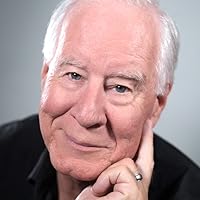
Robert Kroese's sense of irony was honed growing up in Grand Rapids, Michigan - home of the Amway Corporation and the Gerald R. Ford Museum, and the first city in the United States to fluoridate its water supply. In second grade, he wrote his first novel, the saga of Captain Bill and his spaceship Thee Eagle. This turned out to be the high point of his academic career. After barely graduating from Calvin College in 1992 with a philosophy degree, he was fired from a variety of jobs before moving to California, where he stumbled into software development. As this job required neither punctuality nor a sense of direction, he excelled at it. In 2009, he called upon his extensive knowledge of useless information and love of explosions to write his first novel, Mercury Falls. Since then, he has written 18 more books.
This is the finish to a phenomenal theory. I remember when the author was developing this fun idea of having to build a spaceship in the time of the Vikings. A concept that surprisingly goes way beyond a fun idea into a solid theory that reads as both a SF novel and a historical one. The execution is pitch perfect. While appropriately, there is a lot of "how to overcome technical problems", it is done with the characters and historical background to make it entertaining. A lesser author might do a lot of hand-waving to try to pull the concept off, here though you just keep thinking cool instead of "no way".
This is the last book in the series. The spacemen are chased all over North America by their enemies but they settle in the Caribbean and are able to launch a Titan rocket in 900AD. A great story and I know that I did not do a great job of describing this book. All I can say is you need to read these books!
Really solid meh. I finished it because I'd read the first two. I'm not even going to bother writing a detailed review here. It felt like the book was just trying to wrap up the story the whole time, and it felt like the author wasn't even enjoying the whole "how they did it" part by the end, which is kind of the whole point, right? Fanciful situation, but really just an excuse to do a thought experiment on how people living in medieval times could go to space? I don't know. And then there were like two seconds at the end where we got back to the interstellar war part of the story, and they introduced a whole new separate civilization of advanced humans that were going to come help save the day (wtf) and then didn't even follow up with telling the story of the rescue. This series really just missed the mark with me.
I couldn’t resist the premise of the Iron Dragon trilogy—using advanced knowledge to build a space program from scratch in Viking Europe. I very much enjoyed book one and book two. But those books tended to be heavier on human-human and human-alien conflict relative to the technical challenges of the Dark Ages spaceship program than I would have liked. The human and alien threats remain, but The Voyage of the Iron Dragon really focuses on the technical challenges. Finally!
In The Wheel of Time series, Aginor, one of the Forsaken, is the man responsible for Trollocs and Fades and various other nasty things that go bump in a Randland night. At least he did during the War of Power, and those things are still around 3,000 years later when the events of the series take place. He returns (twice) but makes no new monsters. He can’t. He is a brilliant man, but lacks the tools necessary to do so. And the tools to make the tools. And the tools to make the tools to make the tools.
That is the problem the spacemen in The Voyage of the Iron Dragon have. They have all the technical knowledge necessary to build a spaceship, but they lack the tools necessary to do so. And the tools to make the tools. And the . . . you get the idea. Even once they manage to get to a point where they get the project up and running without serious interference, it is still a decades-long effort.
I am here for that! It does, for a brief time, devolve into long lists of technical specs, but mostly it very much works, with the drama of the technical mission punctuated by intermittent bouts of violence. Writing a decades-long story is a challenge—one that Kroese largely deferred to the third and final book of the trilogy—but it works and The Voyage of the Iron Dragon has the advantage of a payoff from the buildup of the first two books as well.
The Iron Dragon trilogy has two framing stories. In the outermost framing story, a U.S. military representative learns of what seems to be a space helmet from over a thousand years ago found in Iceland. In the inner framing story, the spacemen who serve as our protagonists flee from alien pursuers with a weapon that will allow humanity to win a war and survive as a species. Both return as book three draws to a close. Obviously just achieving liftoff won’t win an interstellar war. Kroese could have satisfactorily ended the book there. Instead, he adds some sequel bait that shifted me toward picking up the next book without sullying my enjoyment of this trilogy. I had almost forgotten the outermost framing story, but he cleverly pulls it back in as well, adding a twist to a trilogy of time travel rules without undercutting them.
Sometimes I'm struck by how nuts this book is. Not the subject matter per se but the fact that it's essentially a 2,000 page novel and I'm only 1,200 pages through it!
I had the sense of getting a little bogged in this one during the oil drilling sections, but I think what it was was just physical tiredness because I wanted to finish this 3 days or more ago when I got to the climax of this book, but I couldn't stay awake.
The fun continues as our intrepid time travelers, Vikings and Amerinds struggle to build a simple space ship, all so they can rendezvous with a damaged but sophisticated space ship that might take them to potential allies for a war that starts in about a millennium.
There's a lot of cool stuff here, and the way the story unfolds, characters that you grow to love necessarily die. But unlike some authors, the deaths are never gratuitous or sensational, although they are sometimes fated. Because we're still in that whole "can you or can't you change the future?" biz. And it seems like you can't...as long as anyone knows about it.
Anachronisms do exist, of course. (I remember reading Henry Ford saying something like "There's probably a railroad track at the bottom of the ocean" though not surprisingly, you won't find it on any of the official sites.) And they are largely dismissed because, I guess, it's too much to bear to think that human beings of done this dance of progress over and over again because, if true, it obviously never ends well.
Fortunately, we don't have to worry about this right now, and I don't know if Kroese is going that way, though there certainly seem to be some hints. Point is, the adventure continues, the plot thickens, and the moose is on the loose, or something.
1.0 out of 5 stars Quit at 21% – Not as Bad as Expected, But Bad Enough May 05, 2021
Two years ago, I finished the 2nd book in this series and, since it was so bad, quit reading any more of it. But, having nothing else to read and having already bought this one, I figured I'd see if Robert Kroese's 2019 novel [[ASIN:B07JG3MNVL "Saga of the Iron Dragon, Book 3: Voyage of the Iron Dragon"]] was as bad as I expected it to be. Not quite. But, at the 21% point, I gave up. In one sense, this book is a bit better than the previous one. It at least focuses on the project instead of on roaming about Europe for no purpose. Unfortunately, it's still missing the boat by neglecting the science/engineering problems that would need solving and focusing on the social aspects. Similarly to the previous book, this one also suffers from giving 9th century people the same mindset as today's people. This came to a head when an itinerant priest wandering around the hicks of Scotland saw a protagonist using a steam shovel and showed up in Rome a few months later to talk to the Pope about seeing someone using a machine like that. No. Sorry. I'm not even sure that someone from that time period would even recognize such a thing as a "machine." Nor do I have any idea why he would go to Rome to report it to the Pope, how he would manage to get there in that time, how he would afford passage, or how he would get anywhere near the Pope. It's just ridiculous. So, as with the previous book, I'm rating this one at a Ridiculous 1 star out of 5.
Kroese does a really good job on the third book. Even now, a day after reading it, I'm still taken with the ending. It's obvious that Kroese has done his research and sufficiently covers all his bases. At times, keeping track of the multiple camps can be confusing but this is easily mitigated by looking them up using the Kindle. This series was great overall. He kept us guessing throughout the entire saga. Even up until the end, I was still guessing what the outcome would be. I wholeheartedly recommend this series to anyone who enjoys sci-fi or historical fiction. As a bonus, I learned more about 8th century Europe than I ever thought I would know. There was one thing that I thought was to much. Kroese, at one point, went way to deep into the tech stuff on how things were done. But that was only 5 or 6 pages.
Figuring this was the final book, the ending that I thought was the ending, really isn't....lol We move on from a lot of the characters but the story continues .
This volume of the series dragged a lot, due to far too much telling about the space project and too little showing of characters doing stuff. When there was a story and action, it was good, and some of it was on a par with the large-scale action of the previous books. The twist at the end, while weird and convenient, was still a fun twist holding out promise for the next volume having a lot more action, too, so I'm not giving up yet.
There were also some plot holes, like not taking some obvious military advantages of their later inventions, and never accounting for what humans were supposed to eat, drink, and breathe for four years aboard an alien scout ship designed to use a gateway network for far shorter trips.
The Iron Dragon series closes with a blast of a book. The author keeps placing on one obstacle after another in front of our heroes -- so many that I was starting to wonder if there was room left in the book for a satisfying wrap-up. Well, there was and then some.
I'm not one for trilogies that will take us well over 1000 pages, but Kroese is an author I've learned to trust, so I went along for the ride and am glad I did.
Hopefully, there will be more stories in this setting. It's a big space, and there are plenty of avenues he can explore.
Kroese completes his three part refutation of Poul Anderson's The Man Who Came Early. Like the earlier two books, this was quite readable, although sometimes drifting into lectures about how technology was developed or deployed.
You read science fiction / fantasy/ alternate history right? So by now you know you need to suspend your skepticism at times. And some of those times may extend for quite a while. Given that, and supposing that "alternate history operas" are your thing, you'll probably like this series.
This was such a great series! I loved all three books, they definitely kept me hooked, never got slow or dull. And the concepts was soo enjoyable! Human Spaceman from a future time end up accidentally traveling to the past (around 930ad I believe) and try to build a spaceship to get back to their own time and place. I definitely recommend this series to anyone-not just sci-fi fans. Most of the story takes place on earth during the Viking era, so it feels like historical fiction.
It's a very clever book with a lot of twists and turns once it gets going. I admit it took a bit of setting up before it really hooked me but once I had taken the bait I cheerfully read it to a very satisfying end. The story of the Iron Dragon is such a mix of old and new, sci-fi and historical fiction that it's an absolute delight. It would make a wonderful high buck series on HBO or Netflix. I highly recommend it.
Things are starting to come together in the series! It isn't quite what I expected at the outset but it is still a good read and great story. Very few, almost none, grammatical or spelling mistakes. This matters to me. The technical specifications in the middle of the book needed to be either fewer words or better explained / woven into the stories. Still, I have appreciated the characters and the plot and I am headed to the next book.
What a great and satisfying finish to this exciting and thought provoking alternate (or is it) history. This story has adventure, conflict, battles, history, and heart. I'm telling you, Netflix needs to option this as a series. I would binge watch it over and over again, just like I plan to read the books over again!
I have read the first two books recently and the third in the series was released a couple of weeks ago. I jumped on it and read a little each day. It draws on the plot and characters from the two pervious books. Good ending to a good series if you like a compilation of Vikings and spacemen,
I loved all three books in the trilogy and it took me a week to read them. Granted I had the flu all week but it was time well spent. An incredibly well thought out, well composed series. The time travel twists are handled incredibly well as well as the historical accuracy, the politics and the technology. I was hoping at the end of bookthree that there’d be a sequel. Will there be?
Three great books, with a nice, complex, and engaging story (as long as you can get past multiple extremely improbable coincidences used to advance the plot)... That are ultimately ruined at the end by a dues ex machina and two randomly invented, intertwined, and unresolved time travel paradoxes, which are introduced only in literally the last few pages (although the prologue of book one serves as the background for one of the paradoxes).
I had been wondering as the book drew to a close how he was going to wrap up the plot with so few pages left. I got my answer, and all I could say was 'WTF'?
It's a shame, really, as I otherwise enjoyed the story thoroughly.
I enjoyed it quite a bit but it was rough. For every two steps forward, there was one step back. You really were rooting for the IDJ-lins and it became stressful given all the obstacles that came their way. That said, it was a fitting conclusion to the trilogy. Even until the end, I was riveted.
The time jump between book 2 and 3 is a bit jarring at first, but soon enough it becomes commonplace as you get to grips with the scale of time it takes for the characters to get where they're going and execute their projects with the technology they have. I'd say this is the biggest roller coaster in the series so far.
Didn't quite enjoy this one as much of the other books. Story felt more of just a checklist of things they need to do with some predictable obstacles in their path. I do like the series, just didn't enjoy this one as much.
I had a love hate relationship with this series. Very interesting, but I felt the author was too mean to his heroes. But a week after finishing the last book, which ended with me tearing up, I am starting to really miss those characters and their situations. Very clever ending by the way.
As with any really great book, we readers become a bit invested in certain characters and whenever something good or bad happens we feel it. This book gave me those feelings. I am thoroughly enjoying this ride.b
The Iron Dragon series is a wonderful blend of alternative history, time travel, hard science fiction (in the 20th century sense), and space opera. I wish it had been ten books.
Some of the finest indie sci-fi out there, I enjoy Rob's imagination. His handle of history and science are great too, this is both high-brow and high-speed at the same time.
Audiobook. Amazing. Drop everything and read this series today. Narration is excellent as well. And hello when are the next 2 books going to be available on audio???