

What do you think?

A Season on Earth
What he had been searching for was not the perfect religious order but the perfect landscape…From that moment on he was a poet in search of his ideal landscape.
Lost to the world for more than four decades, A Season on Earth is the essential link between two acknowledged masterpieces by Gerald Murnane: the lyrical account of boyhood in his debut novel, Tamarisk Row, and the revolutionary prose of The Plains.
A Season on Earth is Murnane’s second novel as it was intended to be, bringing together all of its four sections—the first two of which were published as A Lifetime on Clouds in 1976 and the last two of which have never been in print.
A hilarious tale of a lustful teenager in 1950s Melbourne, A Lifetime on Clouds has been considered an outlier in Murnane’s fiction. That is because, as Murnane writes in his foreword, it is ‘only half a book and Adrian Sherd only half a character’.
Here, at last, is sixteen-year-old Adrian’s journey in full, from fantasies about orgies with American film stars and idealised visions of suburban marital bliss to his struggles as a Catholic novice, and finally a burgeoning sense of the boundless imaginative possibilities to be found in literature and landscapes.
Adrian Sherd is one of the great comic creations in Australian writing, and A Season on Earth is a revelatory portrait of the artist as a young man.
Lost to the world for more than four decades, A Season on Earth is the essential link between two acknowledged masterpieces by Gerald Murnane: the lyrical account of boyhood in his debut novel, Tamarisk Row, and the revolutionary prose of The Plains.
A Season on Earth is Murnane’s second novel as it was intended to be, bringing together all of its four sections—the first two of which were published as A Lifetime on Clouds in 1976 and the last two of which have never been in print.
A hilarious tale of a lustful teenager in 1950s Melbourne, A Lifetime on Clouds has been considered an outlier in Murnane’s fiction. That is because, as Murnane writes in his foreword, it is ‘only half a book and Adrian Sherd only half a character’.
Here, at last, is sixteen-year-old Adrian’s journey in full, from fantasies about orgies with American film stars and idealised visions of suburban marital bliss to his struggles as a Catholic novice, and finally a burgeoning sense of the boundless imaginative possibilities to be found in literature and landscapes.
Adrian Sherd is one of the great comic creations in Australian writing, and A Season on Earth is a revelatory portrait of the artist as a young man.
485 pages, Hardcover
First published February 5, 2019
About the author
Gerald Murnane
33 books431 followersMurnane's first two books, Tamarisk Row (1974) and A Lifetime on Clouds (1976), seem to be semi-autobiographical accounts of his childhood and adolescence. Both are composed largely of very long but grammatical sentences.
In 1982, he attained his mature style with The Plains, a short novel about a young filmmaker who travels to a fictive country far within Australia, where his failure to make a film is perhaps his most profound achievement. The novel is both a metaphysical parable about appearance and reality, and a parodic examination of traditions and cultural horizons. The novel depicts an abstracted Australia, akin to something out of mythology or fable. The novel was followed by: Landscape With Landscape (1985), Inland (1988), Velvet Waters (1990), and Emerald Blue (1995). A book of essays, Invisible Yet Enduring Lilacs, appeared in 2005, and a new work of fiction, Barley Patch, was released in 2009. All of these books are concerned with the relation between memory, image, and landscape, and frequently with the relation between fiction and non-fiction.
Murnane is mainly known within Australia. A seminar was held on his work at the University of Newcastle in 2001. Murnane does, however, also have a following in other countries, especially Sweden and the United States, where The Plains was published in 1985 and reprinted in 2004 (New Issues Poetry & Prose), and where Dalkey Archive Press has recently issued Barley Patch and will be reprinting Inland in 2012. In 2011, The Plains' was translated into French and published in France by P.O.L, and in 2012 will be published in Hungarian. In July/August 2017, The Plains was the number 1 book recommendation of South West German Radio (SWR2). His works have been translated into Italian (Velvet Waters as Una Melodia), German (The Plains as Die Ebenen, Border Districts as Grenzbezirke, Landscape With Landscape as Landschaft mit Landschaft, all publ. Suhrkamp Verlag), Spanish (The Plains as Las llanuras, and Something for the Pain as Una vida en las carreras, all published by Editorial Minúscula), Catalan (The Plains as Les planes, also published by Editorial Minúscula), Swedish (Inland as Inlandet, The Plains as Slätterna, Velvet Waters as Sammetsvatten and Barley Patch as Korntäppa) and Serbian (The Plains as Ravnice; Inland as Unutrašnjost, both published by Blum izdavaštvo 2025).
In 1982, he attained his mature style with The Plains, a short novel about a young filmmaker who travels to a fictive country far within Australia, where his failure to make a film is perhaps his most profound achievement. The novel is both a metaphysical parable about appearance and reality, and a parodic examination of traditions and cultural horizons. The novel depicts an abstracted Australia, akin to something out of mythology or fable. The novel was followed by: Landscape With Landscape (1985), Inland (1988), Velvet Waters (1990), and Emerald Blue (1995). A book of essays, Invisible Yet Enduring Lilacs, appeared in 2005, and a new work of fiction, Barley Patch, was released in 2009. All of these books are concerned with the relation between memory, image, and landscape, and frequently with the relation between fiction and non-fiction.
Murnane is mainly known within Australia. A seminar was held on his work at the University of Newcastle in 2001. Murnane does, however, also have a following in other countries, especially Sweden and the United States, where The Plains was published in 1985 and reprinted in 2004 (New Issues Poetry & Prose), and where Dalkey Archive Press has recently issued Barley Patch and will be reprinting Inland in 2012. In 2011, The Plains' was translated into French and published in France by P.O.L, and in 2012 will be published in Hungarian. In July/August 2017, The Plains was the number 1 book recommendation of South West German Radio (SWR2). His works have been translated into Italian (Velvet Waters as Una Melodia), German (The Plains as Die Ebenen, Border Districts as Grenzbezirke, Landscape With Landscape as Landschaft mit Landschaft, all publ. Suhrkamp Verlag), Spanish (The Plains as Las llanuras, and Something for the Pain as Una vida en las carreras, all published by Editorial Minúscula), Catalan (The Plains as Les planes, also published by Editorial Minúscula), Swedish (Inland as Inlandet, The Plains as Slätterna, Velvet Waters as Sammetsvatten and Barley Patch as Korntäppa) and Serbian (The Plains as Ravnice; Inland as Unutrašnjost, both published by Blum izdavaštvo 2025).
Ratings & Reviews
Friends & Following
Create a free account to discover what your friends think of this book!
Community Reviews
Displaying 1 - 22 of 22 reviews

June 14, 2024
The title of the novel A Season on Earth is a sardonic allusion to Arthur Rimbaud’s poem A Season in Hell.
An adolescent hero of the novel has a strictly catholic upbringing so his thoughts are somewhat tendentiously unscrewed…
After a visit of a secular priest to his school he decides to devote himself to religion… Now he is exalted with his schemes to sow good, righteousness and holiness for the rest of his life…
So after the summer holidays the boy departs for the junior seminary… There he starts posing as being holier than thou… And he fantasizes of becoming a prominent priest worshipped by everyone… Isn’t it pride? Temptations keep pursuing him… He lives a live of hypocrite…
Suddenly he is grabbed by an idea to join the Cistercians just because the landscape around their monastery presumably looks better… He leaves the seminary… Returning home he at last decides that his soul is too poetic for any religious vocation…
Any indoctrination, with the however best intentions, is evil.
An adolescent hero of the novel has a strictly catholic upbringing so his thoughts are somewhat tendentiously unscrewed…
It was only logical that there were also Catholic and non-Catholic pudenda. Although Adrian had got out of the habit of thinking of such things, he allowed himself to distinguish briefly between a modest shrinking Catholic kind and another kind that was somehow a little the worse for wear.
After a visit of a secular priest to his school he decides to devote himself to religion… Now he is exalted with his schemes to sow good, righteousness and holiness for the rest of his life…
‘There are three vows – poverty, chastity and obedience. Their purpose is to perfect a man spiritually.’ Adrian was embarrassed, but he offered up his discomfort to God and told himself he was acquiring the virtue of humility.
The doctor said, ‘Poverty and obedience too? They drive a hard bargain, don’t they?’
So after the summer holidays the boy departs for the junior seminary… There he starts posing as being holier than thou… And he fantasizes of becoming a prominent priest worshipped by everyone… Isn’t it pride? Temptations keep pursuing him… He lives a live of hypocrite…
The last of his three temptations had been his scheme for a life of debauchery beginning with his pursuit of female students at Melbourne University. The trouble had started on the beach when Adrian was doing his best to guard his eyes.
Suddenly he is grabbed by an idea to join the Cistercians just because the landscape around their monastery presumably looks better… He leaves the seminary… Returning home he at last decides that his soul is too poetic for any religious vocation…
Any indoctrination, with the however best intentions, is evil.

April 3, 2024
It was a shock, coming to this from Murnane's first, Tamarisk Row. Not that there aren't ongoing themes, young male experience, Roman Catholicism, gambling, isolation from culture. But this one is very focussed on the teenage boy and therefore on sex: how it fits in with RC and gambling is the overarching story of A Season on Earth. I do wonder if people now can read this, especially since Roman Catholicism is so marginal to life in Anglo-Saxon countries, not least here in Australia. The shock, though, is the style. Where Tamarisk Row was a struggle - pleasurable, but nonetheless difficult - A Season on Earth is easy. If you don't want to read a lot about Roman Catholicism and the teenage boy's relationship with it, this book is not for you. But there is always humour, or something approaching humour there, it is not a story of dour epiphany. Recalling my primary school attempts to fast-track sainthood whilst avoiding any pain, which involved much research to find saints who had nice lives (needles in a haystack), it was easy to empathise with the young protagonist's attempts to negotiate the facts of a teenager's desires, if not urges, with his supposed religious feeling. It's here that the gambling comes out and that involves deal-making with God, another RC habit which will be familiar to those brought up in that unkind religion.
Still shaking my head about this one and have put it on my 'I'm moving on but I can't get you out of my mind'. Perhaps that's a recommendation to read it.
Still shaking my head about this one and have put it on my 'I'm moving on but I can't get you out of my mind'. Perhaps that's a recommendation to read it.
July 1, 2026
A Portrait of the Autist as Young Man

April 19, 2019
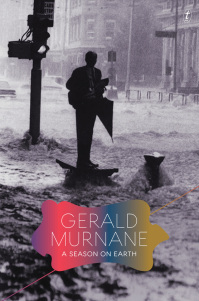 The image on the cover of Gerald Murnane's A Season on Earth is immediately recognisable to Melburnians of a certain age. A quick Google search reveals its provenance: the photo is by Neville Bowler from The Age newspaper in 1972 when the CBD in flood was front page news. Chosen by the inimitable W H Chong for the cover image, this photo of a man alone, stranded high and dry yet apparently calm, is just perfect for this book...
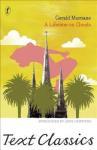 As Murnane explains in the introduction, A Season on Earth has history. It was originally published in 1976 as A Lifetime on Clouds by Heinemann – in truncated form with just two of the four sections from the original manuscript. Indeed this the form in which I bought the 2013 Text Classics edition at the Boyd Community Library in Southbank. I had gone to hear Murnane in conversation with Andy Griffith, who wrote the introduction. (Although the book is now available in its entirety, I shan't be jettisoning A Lifetime on Clouds because I like the introduction. And I wish I'd asked Murnane to autograph it when I had the chance!)
The story, such as it is, comprises the droll activities of a character called Adrian Sherd. What's this? you may ask, since Murnane is so adamant in his later books that it is facile to expect characters (or plots) in fiction. Well, A Season on Earth is Murnane's second novel, for all that its publication is his 15th published work. It's a bildungsroman, and in the first section Adrian in the 1950s seems a lot like an adolescent 'character', one who is obsessed with elaborate sexual fantasies which take place in America. The second section reveals his marriage to a good Catholic woman of extraordinary fertility – but like his sizzling sexual experiences in America from Part One, none of it is real. It's all his vivid imagination, struggling to reconcile his strict religious upbringing in a mundane suburb of Melbourne with his adolescent sexuality. This is followed by the two sections excised from A Lifetime on Clouds: Adrian joins a religious order but discovers it's not his vocation. As we learn in Part Four, it's writing that is his vocation, and the whole book has been about his intellectual and emotional journey towards a creative life.
But I'm minded here to quote the New York Times, cited on the Text Publishing website because it describes exactly how I read Murnane. When I first read his fiction it was new to me and I tried to make it fit into my experience of reading. I don't do that now: I let my mind wander where it will, as suggested by the NYT:
‘Reading Murnane, one cares less about what is happening in the story and more about what one is thinking about as one reads. The effect of his writing is to induce images in the reader’s own mind, and to hold the reader inside a world in which the reader is at every turn encouraged to turn his or her attention to those fast flocking images.’
Since A Season on Earth is an early work, reading it is less like having images triggered by the text and more like a 'story'. The reader is never in doubt about what's real and what's not, even though Adrian himself has difficulty separating his fantasy life from the real one. Nevertheless some of the images are catalysts for a good chuckle:
After he had set the table for tea, Adrian read the sporting pages of The Argus and then glanced through the front pages for the cheesecake picture that was always somewhere among the important news. It was usually a photograph of a young woman in bathers leaning far forward and smiling at the camera.
If the woman was an American film star he studied her carefully. He was always looking for photogenic starlets to play small roles in his American adventures.
If she was only a young Australian woman he read the caption ('Attractive Julie Starr found Melbourne's autumn sunshine too tempting to resist. The breeze was chilly, but Julie, a telephonist aged eighteen, braved the shallows at Elwood in her lunch hour and brought back memories of summer') and spent a few minutes trying to work out the size and shape of her breasts. Then he folded up the paper and forgot about her. He wanted no Melbourne typists and telephonists on his American journeys. He would feel uncomfortable if he saw on the train one morning some woman who had shared his American secrets only the night before. (p.16)
To read the rest of my review please visit https://anzlitlovers.com/2019/04/19/a...

April 13, 2019
It's not often that you get to experience the original vision of a writer more than forty years after an adulterated version of their work was published. Writers often succumb to the wishes of editors and publishers and change their work so that it will be published and sometimes, if they get famous enough, they're able to revisit and republish their work with changes (John Barth did this with his first novel, The Floating Opera, which had had a changed happy ending forced on it).
In this case, though, we're talking half of a novel, some 250 pages of a nearly 500 page work. A Lifetime on Clouds was Murnane's second novel and his editor and publisher (both of whom come in for significant criticism in a foreword) insisted that he publish the first half of it only under that title, with the prospect that the other half could come out later as a sequel, something that Mundane suspected at the time would never happen. It was only through the interest of Michael Heyward, publisher at Text, after he saw the original manuscript in Murnane's archives in 2012 that we now have the full original novel to read.
A Lifetime on Clouds didn't feel like just half a novel, but now that it's been restored to its full length the development seems natural and important for the central character of Adrian Sherd.
A Season on Earth is divided into four, roughly equal parts, the first two of which made up A Lifetime on Clouds. In the first part Adrian Sherd is a Catholic high school student in an unexciting suburb of Melbourne who develops a rich fantasy life to fuel his masturbatory habits. In his mind he has encounters with film stars in the landscapes of America. He is infused with a hefty dose of Catholic guilt, though and worries about the state of his soul. In the second part he becomes fixated on a Catholic schoolgirl at sees at mass one morning and watches her on the train, never speaking with her. In his mind, though, he fantasises about the development of their relationship leading to their eventual marriage. He comes up with games of chance to determine how often they'll have sex and how many babies they'll have. It's a pure Catholic marriage that he envisages, and he feels like he's been cured from his sins of impurity.
All of this is frequently hilarious: the callow imaginings of a schoolboy trying to conceptualise what sex and adult relationships will be like, having imaginary conversations with his 'future wife' where he explains sexual matters to her.
The two additional sections that have now been published take the story further. In the third, Adrian decides to become a priest, inspired by Thomas Merton amongst others, and joins a 'junior seminary' in New South Wales for a strict (and fictional, I believe) religious order. He still inhabits a fantasy world, though, and imagines himself into what he believes is a holy state. In the fourth section he abandons the priesthood, gets a job in the Education Department and tries to imagine himself into being a poet. He keeps on seizing on new models for his way of life based on their biographies more than their literary achievements and does little actual writing himself.
These two sections give a darker element to the first two: we now see someone who is entering the fulness of adulthood who is very ill-suited to life and something of a failure in all of his endeavours.
The novel is, I think, extraordinarily well-observed and this fuller version of Adrian Sherd is a complex creation. It's something of a steeping stone to Murnane's later work (his next novel would be The Plains) but it's also somewhat unique in his oeuvre. I'm very glad that I got to read it.
In this case, though, we're talking half of a novel, some 250 pages of a nearly 500 page work. A Lifetime on Clouds was Murnane's second novel and his editor and publisher (both of whom come in for significant criticism in a foreword) insisted that he publish the first half of it only under that title, with the prospect that the other half could come out later as a sequel, something that Mundane suspected at the time would never happen. It was only through the interest of Michael Heyward, publisher at Text, after he saw the original manuscript in Murnane's archives in 2012 that we now have the full original novel to read.
A Lifetime on Clouds didn't feel like just half a novel, but now that it's been restored to its full length the development seems natural and important for the central character of Adrian Sherd.
A Season on Earth is divided into four, roughly equal parts, the first two of which made up A Lifetime on Clouds. In the first part Adrian Sherd is a Catholic high school student in an unexciting suburb of Melbourne who develops a rich fantasy life to fuel his masturbatory habits. In his mind he has encounters with film stars in the landscapes of America. He is infused with a hefty dose of Catholic guilt, though and worries about the state of his soul. In the second part he becomes fixated on a Catholic schoolgirl at sees at mass one morning and watches her on the train, never speaking with her. In his mind, though, he fantasises about the development of their relationship leading to their eventual marriage. He comes up with games of chance to determine how often they'll have sex and how many babies they'll have. It's a pure Catholic marriage that he envisages, and he feels like he's been cured from his sins of impurity.
All of this is frequently hilarious: the callow imaginings of a schoolboy trying to conceptualise what sex and adult relationships will be like, having imaginary conversations with his 'future wife' where he explains sexual matters to her.
The two additional sections that have now been published take the story further. In the third, Adrian decides to become a priest, inspired by Thomas Merton amongst others, and joins a 'junior seminary' in New South Wales for a strict (and fictional, I believe) religious order. He still inhabits a fantasy world, though, and imagines himself into what he believes is a holy state. In the fourth section he abandons the priesthood, gets a job in the Education Department and tries to imagine himself into being a poet. He keeps on seizing on new models for his way of life based on their biographies more than their literary achievements and does little actual writing himself.
These two sections give a darker element to the first two: we now see someone who is entering the fulness of adulthood who is very ill-suited to life and something of a failure in all of his endeavours.
The novel is, I think, extraordinarily well-observed and this fuller version of Adrian Sherd is a complex creation. It's something of a steeping stone to Murnane's later work (his next novel would be The Plains) but it's also somewhat unique in his oeuvre. I'm very glad that I got to read it.

Read
March 1, 2019‘... at last the trajectory closes between Murnane’s account of his childhood in Tamarisk Row and his lifelong quest to find meaning in the deep connection between words, landscape and mental processes.’
SA Weekend
‘A Lifetime on Clouds has tended to be regarded as a lesser work in the context of Murnane’s remarkable oeuvre...In its complete version as A Season on Earth, it reveals itself as a major novel, essential to the understanding of Murnane’s development as a writer…It is Murnane’s version of A Portrait of the Artist as a Young Man…Murnane has, belatedly, come to be widely recognised as one of the finest and most original writers Australia has produced. A Season on Earth is easily his longest novel, but it is among his most accessible, and in many respects it can be regarded as a foundational text. It provides a key to the imaginative riches of his substantial body of work…The restoration of this important early novel to its original form is an event to be celebrated.’
Australian
‘Gerald Murnane seems to be winning the wider regard his devotees have always known he deserved…A Season on Earth is more like other novels, or more like a novel, than the fictions to come, but Murnane is already determined to make his own forms…[It is] not simply an idiosyncratic take on the Australian Catholic upbringing, but a portrait of an artist as a young man, in which one false vocation has to die so that a true vocation can take its place.’
Age
‘A Season on Earth recalls us to the truth that Murnane’s avant-gardism emerges out of a resolutely conventional soul…Now that [the novel’s] excised half has been returned, we’re granted a fuller sense of Murnane’s original aims…The comedy here is no less wicked in deployment, but the edge is sharpened…Ludicrous and hectic as [Adrian] Sherd’s casting around for some stable sense of self may be, there is something moving in the efforts he makes…We see an artist inventing himself from scratch…[By the end] Sherd has not yet pinpointed those regions his mature art would explore. What he has learned is that they lie somewhere in the inland empire of his imagination.’
Monthly
'This is a lengthy work, yet not one word is wasted…worth the wait.’
Herald Sun
SA Weekend
‘A Lifetime on Clouds has tended to be regarded as a lesser work in the context of Murnane’s remarkable oeuvre...In its complete version as A Season on Earth, it reveals itself as a major novel, essential to the understanding of Murnane’s development as a writer…It is Murnane’s version of A Portrait of the Artist as a Young Man…Murnane has, belatedly, come to be widely recognised as one of the finest and most original writers Australia has produced. A Season on Earth is easily his longest novel, but it is among his most accessible, and in many respects it can be regarded as a foundational text. It provides a key to the imaginative riches of his substantial body of work…The restoration of this important early novel to its original form is an event to be celebrated.’
Australian
‘Gerald Murnane seems to be winning the wider regard his devotees have always known he deserved…A Season on Earth is more like other novels, or more like a novel, than the fictions to come, but Murnane is already determined to make his own forms…[It is] not simply an idiosyncratic take on the Australian Catholic upbringing, but a portrait of an artist as a young man, in which one false vocation has to die so that a true vocation can take its place.’
Age
‘A Season on Earth recalls us to the truth that Murnane’s avant-gardism emerges out of a resolutely conventional soul…Now that [the novel’s] excised half has been returned, we’re granted a fuller sense of Murnane’s original aims…The comedy here is no less wicked in deployment, but the edge is sharpened…Ludicrous and hectic as [Adrian] Sherd’s casting around for some stable sense of self may be, there is something moving in the efforts he makes…We see an artist inventing himself from scratch…[By the end] Sherd has not yet pinpointed those regions his mature art would explore. What he has learned is that they lie somewhere in the inland empire of his imagination.’
Monthly
'This is a lengthy work, yet not one word is wasted…worth the wait.’
Herald Sun

January 28, 2020
This is a very strange book. On the other hand there is something very realistic about it. We often talk of “dreamy youths,” but I’m not aware of any novelist who has taken the dreaminess of youth to such extremes. Adrian Sherd has a rather unique idea of “actual experience.” Murnane narrates his inner quest in a spare and tactful way. There aren’t really any other characters around Sherd, but persons appear who intrude on his dreams and suggest that reality is both there and somewhere else. This is one of the most skilful deconstructions of the idea of inner experience I’ve ever read. Either that or Murnane is simply a total eccentric.

February 13, 2019
For those of us who have long admired the work of Gerald Murnane, this is an important book. It narrows (but note, does not close) the gap between A Lifetime on Clouds (1976) and The Plains (1982). Readers new to Murnane may not quite appreciate what we are now offered. As Murnane tells us in his Foreword, this is the four-part manuscript he submitted to his publisher in the mid-1970s. They offered to publish the first half, with the rest (pts 3 & 4) to follow as a sequel. A Lifetime on Clouds duly appeared, but the sequel remained in one of Murnane’s filing cabinets. That it has taken 43 years for the whole novel to be published, says a lot about the dim world of mainstream Australian publishing. Even now, it is apparently only increasing international appreciation of Murnane that has seen the old wrong righted.
A Lifetime on Clouds has been described as a comic masterpiece – but what is hilarious over the shorter term, parts 1 & 2 of A Season on Earth, shrinks to something like an increasingly painful, fixed grin as some unpleasant chickens come home to roost in parts 3 & 4. Adrian Sherd, the protagonist, remains a comic character, but he is steadily and pitilessly shown as a dysfunctional misfit who has reduced his life to “meditation” in an old wardrobe in a backyard shed. A fantasist without the least grounding, he becomes so feckless that his life’s course is dramatically changed by momentary whims or impressions. This is not a portrait of the artist as a young man; rather, as a gormless adolescent with a deeply flawed sense of consequences. Comic, yes, but in the end: Who’s laughing now?
The novel is set in Melbourne and south-east Australia in the mid-1950s. Murnane’s detailed descriptions of those times, his casual evocation of various now half-forgotten everyday things – the diet and habits of the era before television and frozen foods – speaks directly to my generation; but I am sure younger readers from other cultures will also get the picture. I was surprised, however, there was no mention of the 1956 Melbourne Olympics – believe me, it was a big deal.
The looming and claustrophobic presence of the Roman Catholic Church is, of course, a central feature. That the Church was very active politically is dealt with in passing, but its teachings on sexual matters are the principal focus. To say these things are satirized (and they are) does not convey the author’s more subtle method of steady erosion by allowing young Adrian to glibly parrot doctrines that clearly do not address his own pressing experience or needs.
Some readers may be somewhat mystified that Murnane did not so much as glance at the sexual misconduct of the clergy, which was, according to many who lived through those repressed times, all too frequent. Perhaps he felt it was just too big and ugly a subject to address in an already heavily laden book. No doubt, he shall be asked.
That aside, you have to wince at how close to the bone Murnane can cut. And this, ultimately, is the novel’s strength. This is an audacious book, now as much as when it was written. Extending through masturbation fantasies, Catholic marriage fantasies, celibacy priesthood fantasies to those of becoming a poet, it remains clear-eyed throughout its long and preordained arc. Murnane does not flinch – you get the full catastrophe of sterile doctrine, right between the eyes.
A Lifetime on Clouds has been described as a comic masterpiece – but what is hilarious over the shorter term, parts 1 & 2 of A Season on Earth, shrinks to something like an increasingly painful, fixed grin as some unpleasant chickens come home to roost in parts 3 & 4. Adrian Sherd, the protagonist, remains a comic character, but he is steadily and pitilessly shown as a dysfunctional misfit who has reduced his life to “meditation” in an old wardrobe in a backyard shed. A fantasist without the least grounding, he becomes so feckless that his life’s course is dramatically changed by momentary whims or impressions. This is not a portrait of the artist as a young man; rather, as a gormless adolescent with a deeply flawed sense of consequences. Comic, yes, but in the end: Who’s laughing now?
The novel is set in Melbourne and south-east Australia in the mid-1950s. Murnane’s detailed descriptions of those times, his casual evocation of various now half-forgotten everyday things – the diet and habits of the era before television and frozen foods – speaks directly to my generation; but I am sure younger readers from other cultures will also get the picture. I was surprised, however, there was no mention of the 1956 Melbourne Olympics – believe me, it was a big deal.
The looming and claustrophobic presence of the Roman Catholic Church is, of course, a central feature. That the Church was very active politically is dealt with in passing, but its teachings on sexual matters are the principal focus. To say these things are satirized (and they are) does not convey the author’s more subtle method of steady erosion by allowing young Adrian to glibly parrot doctrines that clearly do not address his own pressing experience or needs.
Some readers may be somewhat mystified that Murnane did not so much as glance at the sexual misconduct of the clergy, which was, according to many who lived through those repressed times, all too frequent. Perhaps he felt it was just too big and ugly a subject to address in an already heavily laden book. No doubt, he shall be asked.
That aside, you have to wince at how close to the bone Murnane can cut. And this, ultimately, is the novel’s strength. This is an audacious book, now as much as when it was written. Extending through masturbation fantasies, Catholic marriage fantasies, celibacy priesthood fantasies to those of becoming a poet, it remains clear-eyed throughout its long and preordained arc. Murnane does not flinch – you get the full catastrophe of sterile doctrine, right between the eyes.

October 2, 2020
I don't understand quantum theory, or for that matter math or physics, but the perspective I took away is that unless there is an observer a 'thing' doesn't exist--similar to the proverbial tree falling in the woods and no one hears it. Moreover, the observer, in order to transmit their vision must have other observers who share their observation. Entering Murnane's world is similar to the holographic principle of the universe, one which postulates the universe as having only surface area, but where volume is illusory. In general, unless of course one is a 'flat-earther', we perceive the universe the same as we perceive our day to day world, as three-dimensional. Intelligent beings, praise humans flatter themselves with, after all, no one has challenged us yet, (though our dog makes me wonder: he never has to put on clothes, he gets us to feed him, and when he poops he doesn't need toilet paper) may exist who see two-dimensions only and who may theorize that the world is actually three-dimensional. Also, it may be conceivable, in the 'quantum universe', that the 'uncertainty principle' and 'entanglement' act as the norm for beings that we can't even imagine, beings for who 'quantum teleportation' is how they live and for whom other 'intelligent beings' similar to earthlings exist only in theory, I'll leave that to the science fiction writers.
For some reason, at least in my mind, this relates to Murnane's "A Season on Earth". Though Murnane makes no mention of quantum mechanics, nor for that matter anything to do with physics, he does lay bare, at least for a presumptive reviewer, the idea of how facile our ideas regarding ethical systems and their supporting myths are. I'm not saying this is or is not intentional on his part, but for myself, especially having been raised on the fringes of the Catholic religious cult, his tale was insightful as to how mythology can bind people to a fantastical system of beliefs. Once the absurd premise of a central 'god-figure', one who is pathologically avid for worship and praise, which if not received condemns non-believers to eternal damnation--once this horse manure is swallowed the rest of the nonsense seems acceptable, if not entirely logical. Maybe every belief is like this. I judge religion harshly because it is clearly a mechanism of control of one class over another and has been used to perform what seems unnecessarily 'cruel means' to the questionable ends of enslaving others' labor for personal gain. This maybe an inevitable result of over-population and therefore excess labor. My distaste for this system maybe just sentimentality on my part. But one thing I'm certain of: God doesn't give a damn.
Science on the other hand, though used to create anthropomorphic devices, is not in itself a tool of control, or at least not at the theoretical level. Similarly, certain sub-cults of Catholicism may argue that theirs is strictly a metaphysical practice, which is consistent with what Murnane sees as the final goal of Adrian's struggle to find his own identity. Murnane's evolution as a writer, and as a person, seem to begin with this book and end in the realization of later works that the story elements are not final meaning of writing. In the meantime, he has seen the fallacy of the literary elements of character, dialog, and plot--and now lives his real life in a cinder-block shack in a backyard; not surprisingly, the backyard of his son whom he describes as a hermit. The long twisted arm of Catholicism affects succeeding generations.
Murnane's later work now becomes more understandable. The process by which he came to eschew plot, named characters, and dialog becomes clear. Adrian's (quixotic!) search is not endless, it is resolved through meditation and self realization.
As Clifford Geertz famously observed: "Man is an animal suspended in webs of significance that he himself has spun." Murnane's later work exposes the structure of 'story', illuminating the 'web' itself as the heart of all writing. A "Season on Earth" shows the reader a critical piece in his journey to this profound discovery.
For some reason, at least in my mind, this relates to Murnane's "A Season on Earth". Though Murnane makes no mention of quantum mechanics, nor for that matter anything to do with physics, he does lay bare, at least for a presumptive reviewer, the idea of how facile our ideas regarding ethical systems and their supporting myths are. I'm not saying this is or is not intentional on his part, but for myself, especially having been raised on the fringes of the Catholic religious cult, his tale was insightful as to how mythology can bind people to a fantastical system of beliefs. Once the absurd premise of a central 'god-figure', one who is pathologically avid for worship and praise, which if not received condemns non-believers to eternal damnation--once this horse manure is swallowed the rest of the nonsense seems acceptable, if not entirely logical. Maybe every belief is like this. I judge religion harshly because it is clearly a mechanism of control of one class over another and has been used to perform what seems unnecessarily 'cruel means' to the questionable ends of enslaving others' labor for personal gain. This maybe an inevitable result of over-population and therefore excess labor. My distaste for this system maybe just sentimentality on my part. But one thing I'm certain of: God doesn't give a damn.
Science on the other hand, though used to create anthropomorphic devices, is not in itself a tool of control, or at least not at the theoretical level. Similarly, certain sub-cults of Catholicism may argue that theirs is strictly a metaphysical practice, which is consistent with what Murnane sees as the final goal of Adrian's struggle to find his own identity. Murnane's evolution as a writer, and as a person, seem to begin with this book and end in the realization of later works that the story elements are not final meaning of writing. In the meantime, he has seen the fallacy of the literary elements of character, dialog, and plot--and now lives his real life in a cinder-block shack in a backyard; not surprisingly, the backyard of his son whom he describes as a hermit. The long twisted arm of Catholicism affects succeeding generations.
Murnane's later work now becomes more understandable. The process by which he came to eschew plot, named characters, and dialog becomes clear. Adrian's (quixotic!) search is not endless, it is resolved through meditation and self realization.
As Clifford Geertz famously observed: "Man is an animal suspended in webs of significance that he himself has spun." Murnane's later work exposes the structure of 'story', illuminating the 'web' itself as the heart of all writing. A "Season on Earth" shows the reader a critical piece in his journey to this profound discovery.
February 8, 2020
In an interview I watched on youtube, Gerald Murnane said he has thought of some of his writing as being:
"True fiction: Not a report of the truth as we usually use that expression. True fiction for me meant the report of the contents of a mind, the mind being the author’s mind…What I was able to do that others may not have even tried to do was to absolutely track down and follow in their wanderings and their divergences and their turnings back on themselves to follow the chains of imagery and impulses of feelings that make up the thing that, for convenience, I call my mind."
This sums up the style of this book well but I didn't really like it much.
"True fiction: Not a report of the truth as we usually use that expression. True fiction for me meant the report of the contents of a mind, the mind being the author’s mind…What I was able to do that others may not have even tried to do was to absolutely track down and follow in their wanderings and their divergences and their turnings back on themselves to follow the chains of imagery and impulses of feelings that make up the thing that, for convenience, I call my mind."
This sums up the style of this book well but I didn't really like it much.

May 29, 2022
A Season on Earth is an autumnal addition to Murnane’s body of work. First (partly) published in 1976 under the title A Lifetime on Clouds, A Season on Earth completes and finally unites the four sections of Adrian Sherd’s passage through puberty. The final two sections had been unpublished until A Season’s publication in 2019. Here, for the first time, Adrian Sherd’s saga is shown to be a variegated, wandering, swerving passage - a passing season rather than a life.
A Season on Earth chronicles the coming of age of a Catholic boy, in four parts. Each part portrays Adrian Sherd steering by an obsession, stemming from a more or less identical impulse: to be whole again, whatever that means. Adrian Sherd is erroneously wandering throughout as obsession seamlessly succeeds obsession.
To me, the novel is one part Portnoy’s Complaint and one part “Pierre Menard, Author of the Quixote”. The novel is a riotous blend of Roth and Borges. In the first half, Adrian Sherd is struggling to rhyme his Catholic context with his budding sexuality. He religiously gives himself over to sexual fantasy, which obsession is eventually sublimated by an erotically driven religiosity. Then, in the second half, parts three and four, Sherd harnesses context, through asceticism (first religious, then poetic), and starts to live what he wants to become. Throughout, Sherd’s obsessions are single and form an all-consuming guiding principle, to which he dedicates himself fully.
Concerning the first two sections, those that compose A Life, Murnane writes: “Adrian Sherd is only half a character” (xvi). By the end, the four seasons or sherds of Adrian’s life – such as it is, up to that point – add up to what constitutes a particularly seasonal part of any life on this earth: the search for a part to play and a place to occupy that is puberty.
A Season on Earth chronicles the coming of age of a Catholic boy, in four parts. Each part portrays Adrian Sherd steering by an obsession, stemming from a more or less identical impulse: to be whole again, whatever that means. Adrian Sherd is erroneously wandering throughout as obsession seamlessly succeeds obsession.
To me, the novel is one part Portnoy’s Complaint and one part “Pierre Menard, Author of the Quixote”. The novel is a riotous blend of Roth and Borges. In the first half, Adrian Sherd is struggling to rhyme his Catholic context with his budding sexuality. He religiously gives himself over to sexual fantasy, which obsession is eventually sublimated by an erotically driven religiosity. Then, in the second half, parts three and four, Sherd harnesses context, through asceticism (first religious, then poetic), and starts to live what he wants to become. Throughout, Sherd’s obsessions are single and form an all-consuming guiding principle, to which he dedicates himself fully.
Concerning the first two sections, those that compose A Life, Murnane writes: “Adrian Sherd is only half a character” (xvi). By the end, the four seasons or sherds of Adrian’s life – such as it is, up to that point – add up to what constitutes a particularly seasonal part of any life on this earth: the search for a part to play and a place to occupy that is puberty.
May 1, 2023
A strange novel about a strange boy/young man in 1950s Melbourne. Funny, if a little tragic, guilt-ridden description of a socially conservative childhood and brief attempt to join a monastery

December 28, 2019
Extraordinary in every way. Mind boggling to realize that a publisher and an editor kept half of this book invisible for decades.
November 3, 2019
Not What you would think or expect--didn't seem to be a coming of age story, kept expecting it to break out of the mold, but it went on. Our hero seems not too bright, or is that his age and restricted upbringing, the facts of his education? Eventually there was room for a sense of humor (the father certainly has one), and the section on landscapes was truly lovely.

October 16, 2021
This was potentially an interesting story set in 1950s Melbourne about a naive, simple boy with a rich interior life being indoctrinated by extreme Catholicism, growing up and spiralling darkly into a life of isolation and delusion.
“Adrian looked at the dark-red roofs and grey-green treetops and the mass of rain clouds above them. He knew it was wrong to gloat over the fate of thousands of people who had never deliberately done him harm. But he whispered into the trees blowing past the tram that they were all doomed. And he saw the end of the world like grey rain bearing down on suburb after suburb - Oglethorpe by its winding creek, Glen Iris on its far hills, yes, and even Camberwell, the leafiest of them all - and the people in their last agony crying out that if only they could have had a Catholic secondary education they might have seen it coming.”
Murnane excels with the way fantasies and maladaptive daydreams are interwoven within the real present action and are further transformed by superstition and misinformation. One particularly hilarious section is when school-aged Adrian invents an imaginary future Catholic wife, whose name and image is appropriated from a girl on a tram, and essentially plays D&D with the outcomes of his marriage and children, his schoolteachers unknowingly playing the part of dungeon master.
Unfortunately the book is bloated with a lot of unnecessary scenes and minutiae that hammer the same point across. Murnane goes for quantity over quality writing. This is especially evident in the 150 pages of redundant and detailed scenes of the main protagonist’s masturbatory exploits as well as a further 150 pages of long, drawn out Catholic lessons that we have to sit through word-for-word. This makes for a tedious reading experience with only a handful of bursts of brilliant writing and the whole book could easily have been reduced by 50%.
“Adrian looked at the dark-red roofs and grey-green treetops and the mass of rain clouds above them. He knew it was wrong to gloat over the fate of thousands of people who had never deliberately done him harm. But he whispered into the trees blowing past the tram that they were all doomed. And he saw the end of the world like grey rain bearing down on suburb after suburb - Oglethorpe by its winding creek, Glen Iris on its far hills, yes, and even Camberwell, the leafiest of them all - and the people in their last agony crying out that if only they could have had a Catholic secondary education they might have seen it coming.”
Murnane excels with the way fantasies and maladaptive daydreams are interwoven within the real present action and are further transformed by superstition and misinformation. One particularly hilarious section is when school-aged Adrian invents an imaginary future Catholic wife, whose name and image is appropriated from a girl on a tram, and essentially plays D&D with the outcomes of his marriage and children, his schoolteachers unknowingly playing the part of dungeon master.
Unfortunately the book is bloated with a lot of unnecessary scenes and minutiae that hammer the same point across. Murnane goes for quantity over quality writing. This is especially evident in the 150 pages of redundant and detailed scenes of the main protagonist’s masturbatory exploits as well as a further 150 pages of long, drawn out Catholic lessons that we have to sit through word-for-word. This makes for a tedious reading experience with only a handful of bursts of brilliant writing and the whole book could easily have been reduced by 50%.
November 27, 2023
Perhaps a bygone Melbourne of the 1950s' answer to Tom Kenneally. A surprisingly honest and, at least initially, realistic account of a highly introspective Catholic teenage boy of the period. Factually and theologically it is very correct, making this a time capsule of Catholic life of the period in which it is set, however unlikely the moralising and mindset may appear to the modern reader.
Progressively, our protagonist Adrian Sherd becomes a prisoner of his own, particularly fantastical, imagination. Torn between faith and reason, he attempts by turns to rationalise the world, love, and the meaning of life; his chances of ever reaching his destination or at least some form of enlightenment seem ever to become only less and less likely. The fourth and final part of this tome becomes somewhat tiresome to read as it wends its way inevitably towards its devastatingly ultimate scene.
Progressively, our protagonist Adrian Sherd becomes a prisoner of his own, particularly fantastical, imagination. Torn between faith and reason, he attempts by turns to rationalise the world, love, and the meaning of life; his chances of ever reaching his destination or at least some form of enlightenment seem ever to become only less and less likely. The fourth and final part of this tome becomes somewhat tiresome to read as it wends its way inevitably towards its devastatingly ultimate scene.
This entire review has been hidden because of spoilers.

August 24, 2025
To a degree this is a study of neurosis (religiously imposed, on the surface, but this is a simple psychic condensation of the Thing, which comes into focus the longer you read), except it is more of a representation than a study. The only thing that truly interested me here was the acute seriousness of Adrian's fantasies, which speak to an almost comical level of repression if it didn't manifest in his life as materially asocial tendencies (thinking of his bizarre feelings of superiority over others in the final stretch of the novel). Mixed bag! Glad it's been restored to its original heft but I don't really know if it does the narrative any favours.

June 1, 2020
Unfortunately very dated to a time when being Catholic (or not) mattered. While I know this was an important theme in post-war Australia until the mid 1970s, I found I just could not engage with the (presumably deliberate) repetition & excruciating detail of what it means to be Catholic. The best aspect is getting into the head of someone who is profoundly deluded & hallucinating. Maybe this book would have been better if edited in half while retaining the full arc? Boring as hell.

June 16, 2026
I really enjoyed this book, set in Melb with some real & some fictitious suburbs which added to its appeal (I'm a sucker for a local writer). Big tome of a book but largely faintly ridiculous so an easy quick read not mentally draining at all.

September 8, 2020
Copius detail of a teenage boy's flights of fancy, as he misguidedly strives for the perfect inner life, but at the cost of a real one. Inane.
December 20, 2022
highly excerpted from previous work, most of which is fantastic, unique.

December 17, 2020
Read my review in English on Whichbook.net: https://www.whichbook.net/book/12660/...
Displaying 1 - 22 of 22 reviews