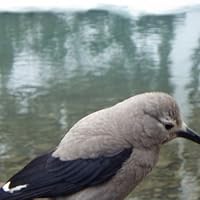
With intimacy and humour award-winning poet Ariel Gordon walks us through the streets of Winnipeg and into the urban forest that is, to her, the city's heart. Along the way she shares with us the lives of these urban trees, from the grackles and cankerworms of the spring, to the flush of mushrooms on stumps in the summer and through to the red-stemmed dogwood of the winter. After grounding us in native elms and ashes, Gordon travels to BC's northern Rockies, to Banff National Park and a cattle farm in rural Manitoba, and helps us to consider what we expect of nature. Whether it is the effects of climate change on the urban forest or foraging in the city, Dutch elm disease in the trees or squirrels in the living room, Gordon delves into our relationships with the natural world with heart and style. In the end, the essays circle back to the forest, where the weather is always better and where the reader can see how to remake even the trees that are lost.
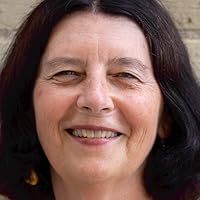
Ariel Gordon (she/her) is a Winnipeg/Treaty 1 territory-based writer, editor, and enthusiast. She is the ringleader of Writes of Spring, a National Poetry Month project with Plume Winnipeg that appears in the Winnipeg Free Press. She is the author of seven books, the most recent of which are the essay collection Fungal: Foraging in the Urban Forest (Wolsak & Wynn, 2024) and the epistolary spec-fic novel Blood Letters, co-authored with graphic novelist GMB Chomichuk (Great Plains Press, 2025). Her work appeared in Best Canadian Essays 2025, edited by Emily Urquhart, and will be in Best Canadian Poetry 2026, edited by Mary Dalton.
Really enjoyed this book. Ariel, who is a poet, writes a collection of essays about trees, and walking, and urban forests and many other forest wonders, like mushrooms. This was a great, contemplative collection, and it gave me a lot of food for thought. I learned a lot about urban forests and forestry and nature, and really enjoyed Ariel's perspective. I know I'll be recommending this to a few people.
I treated myself to this book a few essays at a time over the course of a few months, and I'm so glad I took the time with it that I did. Each visit was a delight. I love Ariel's curiosity, her tenacity, her voice. The weaving of her explorations with the other strands of her life is skilful and relateable. Simply put, I loved this.
Manitoba writer Ariel Gordon loves nature and her non-fiction book Treed: Walking in Canada's Urban Forest proves it. Pressed like elm and ash and chokecherry leaves between 296 pages are 16 diverse and personal essays rooted in a mulch of rich history, researched facts, and heart-felt emotions. From her opening lines: "I want to go walking in Winnipeg's Assiniboine Forest. I want to go walking in the forest whenever and however I can." to her final paragraph where she concludes: "I stand and outstretch my arms. I reach for the sun.", she uses her humour plus journalistic and poetic skills to touch on various tree-related issues such as climate change, invasive species, and even urban sprawl.
At times, her writing feels like field notes, jumping from one topic to another. (Personally, I would have left out the references to Pokemon GO and her menstrual concerns. This may be a generational gap issue.) Other times, her storytelling and passion for studying mushrooms, the elm tree in front of her home, and all the living and growing elements of her neighborhood urban forest and beyond make her words glisten through the changing seasons of rain, snow and sunshine. She is both observer and guide. I like how her first person narrative encourages readers to be part of her journey and to walk along beside her.
There is something about the way Ariel writes that feels like you're speaking with a long-time friend, you can just feel her personality jump from the page, as well as her passion for nature and reciprocity within her home. It makes for reading her work deeply cozy and comforting. I've never wanted to go on a tour through Assiniboine Forest with a cup of the sweetest, creamiest tea more than right about now.
I loved this book, likely because of all the references to people, places, and themes familiar to me. Having heard the author speak at a recent conference session, I picked up this book with little expectation for what it would contain. With her references to familiar faces like Ben Gadd and John Vaillant, lovely descriptions of Assiniboine Forest and Banff National Park, both of which I’ve spent time in, and detailed information on urban forestry (my career path), this was such a great perspective on city trees and forests. Would recommend getting lost in the vignettes presented in the book.
Originally reviewed by Jody Baltessen for Prairie Fire's Book Reviews Program. prairiefire.ca
I began reading Ariel Gordon’s Treed a day or two before October’s unseasonal and devastating storm. This storm, which dropped heavy wet snow all over Manitoba, had an immediate and destructive impact on our trees, trees that had been coming to life for me in Gordon’s essays and meditations on their place in our environment and their meaning in our lives.
Gordon begins Treed with something of a personal manifesto. Reflecting on years spent walking in Winnipeg’s Assiniboine Forest, she writes, “… the best version of myself lives in its 287 hectares of aspen/oak parkland …”. (1) This despite–or perhaps because of–the challenges endured by an urban forest and the presence of those whose intentions are less than admirable. In the essays that follow, she examines “this best-version thing” (1) against a backdrop of particular trees and their stories, their long tenure on the land, and their ever more apparent fragility in the face of urban expansion, invasive species, disease, and the effects of climate change so evident everywhere. Her writing throughout is personal, informed, and humorous, though deeply committed to encouraging meaningful engagement with the environments that surround us.
Among the most compelling features of Gordon’s book is her focus on the local–be it in Winnipeg or in the other localities she visits while writing the book–and the long and sometimes unknown histories that so enliven place. In “Boulevarding,” which documents the history of Winnipeg’s boulevard trees, Gordon engages with the Icelandic-Métis writer Jónína Kirton to tell us about Kirton’s great-great-aunt Mary Ann Kirton Good who lived on land that would later become part of Winnipeg’s Wolseley neighbourhood. Kirton Good, began planting trees in and around her home some fifty years before the Winnipeg Parks Board established its program of planting boulevard trees to transition the “‘bald, wind-swept prairie’ to something that resembled ‘those finished pleasures of southern England where nature is in one of her mellowest and friendliest moods’” … (p. 78). In telling us Good’s story, Gordon maps out the essential elements of the Métis Scrip system implemented by the Canadian government after the Red River Resistance, and the ways in which this bureaucratic system served colonial interests and displaced so many Red River Métis. Colonial processes are also present in “Outage”, an essay that relates Gordon’s week-long stay in a farmhouse on a farm established circa 1907 on Treaty 1 lands.
In addition to relating these histories, Gordon writes about the flora and fauna unique to a neighbourhood, a stand of woods, a farmyard, an open field, or a mountain in the wilds of British Columbia. Of her own neighbourhood, she writes, “… I was crossing the street and passed a neighbour’s boulevard garden that surrounds a big elm stump. It had orange velvet foot mushrooms on it, which are both beautiful and edible, the wild ancestors of enoki mushrooms. If I’d been alone, I would have gone to peer at them and maybe taken a picture, but since the homeowner was outside, weeding the little plot, I just said, ‘Nice mushrooms!’” (258) Hearing this, the neighbour confessed that she had been removing them, but that she might now leave them to grow. These encounters and exchanges are the heart and soul of Gordon’s book. Indeed, they get at the “best-version thing” she opens with, the idea that we are better when we are aware of and in harmony with our surroundings.
It might be said that trees are having a “moment” in literature–think of Peter Wohlleben’s The Hidden Life of Trees, Richard Powers’ The Overstory, and Fiona Stafford’s The Long Long Life of Trees. Gordon’s book adds a fresh voice and perspective to this larger conversation. And, it makes you want to get out and take a walk in the woods!
I loved not only the tidbits, facts, and heartwarming and often funny parts of each story contained within this collection centred on trees, but also how I felt reading. I have never had a book that had me think of where I was and what I was experiencing during the dated entries, nor reflect on my relationship with nature, as much as I did while reading this book. This book was a welcome pause, that I could go back to time and again, where I could enjoy a quiet moment to myself, or read aloud to my daughter.
This book slowly reaffirms that trees comfort all of us. My" favourite tree", paused me to think of what one it is. A tree from my childhood in Kelowna, a plum, a tree from my visits to Montana- tamarack. Ariel's sensitive view of the trees and her walks in the forest are sensual and awakening. She's woken me up to trust my intuition again. I want to be the shadow of the tree by stump-standing. A great natural enlightening read.
As a tree lover and a walker, I'm familiar with many of the Winnipeg settings in this book. I liked how the author treated what I consider my everyday tree friends like the treasures that they surely are. I learned quite a bit about my treed community and a bit about mushrooms. The history fascinated me too . . . and somehow she also expertly weaves in science, the nuances of weather and family dynamics. Great book about Winnipeg!
With this wonderful, erudite and passionate book, Ariel Gordon has found a way to bring her love of trees and the natural world - her concern for its future and ours - to what I hope will be an army of readers. Not just by investigating and writing the natural history, but by doing what great writers do - mining her own life and experience and sharing it, openly and generously, with her readers. A must read.
Ariel is the kind of person who takes note of every living thing that shares her space. In one chapter of her book, she is staying in a house in Langruth Manitoba and she writes about how she notices the exoskeletons of three orange ladybugs on the carpet, the buzzing flies on the walls, the swooping blackbirds and trembling aspens outside her window, the lowing of the neighbour's cows and the golden raptor hovering over their stubble field. I think one of the most important things I learned from Ariel's book was to take more deliberate notice of the living things all around me. Treed has many chapters that relate to Winnipeg trees. Ariel writes about the delights of the Assiniboine Forest, the history of Winnipeg's famous Wolseley Elm, the fate of the trees in Central Park, weaving baskets from bark collected from dogwood trees on the banks of the Red River, the 11,000 Christmas trees the city recycles each year, the fact our city's hydro poles come from trees and both how Winnipeg's urban forest impacts climate change and how climate change impacts the urban forest. In my very favourite passage in the book, Ariel compares her relationship with her husband Mike to the seasonal cycle of a crabapple tree that stood in the yard of her childhood home. For my full review go to https://maryloudriedger2.wordpress.co...
I enjoy reading Ariel's writing in the Wpg Free Press, and so when I met her selling this book at our local farmer's market, I bought a copy. I learned new things about Winnipeg's trees, and even found myself looking for certain local trees that she wrote about. I gained a new respect for Winnipeg's elm tree urban forest, and with her I'm mourning its demise due to dutch elm disease. I also enjoyed reading her ongoing reflections from decades of hiking Winnipeg's Assiniboine Forest.
Where I thought the book could have been stronger was that in my opinion it could have used more editing. Too many details, or copy/pasted emails or articles from people, made it feel less than tight at times.
Overall though, an enjoyable read for a fellow "tree nerd". And I LOVED the cover art.
While the book started out slowly and I thought of it as a bit of navel gazing, the book actually worked in the end. The many threads and half thoughts or comments seemed to eventually connect and draw myself into the narrative. The urban landscape was centred on one urban woods, but the author wandered further afield and then tied the travels and thoughts back to her specific urban landscape by the end of the book. Thoughtful.
I really enjoyed this!! Just finished and I have the feeling of gratitude that Ariel Gordon shared so much insight into her life and mind. I am attending a nature walk with her on Saturday so I am excited to see her!! You need to give it time but you will have a new understanding of nature and life when you are finished. ❤️🌳
My first time reading a collection of essays, and what a treat it was! Because of Ariel’s beautiful work I now find myself slowing down more often to observe and reflect on Winnipeg’s urban forest. Never thought I’d get excited to see mushrooms growing off a stump, but here I am!