

What do you think?

Pierrot Mon Ami
Pierrot Mon Ami, is considered by many to be one of Raymond Queneau's finest achievements, it's a quirky coming-of-age novel concerning a young man's initiation into a world filled with deceit, fraud, and manipulation. From his short-lived job at a Paris amusement park where he helps to raise women's skirts to the delight of an unruly audience, to his frustrated and unsuccessful love of Yvonne, to his failed assignment to care for the tomb of the shadowy Prince Luigi of Poldevia, Pierrot stumbles about, nearly immune to the effects of duplicity.
This "innocent" implies how his story, at almost every turn, undermines, upsets, and plays upon our expectations, leaving us with more questions than answers, and doing so in a gloriously skewed style (admirably re-created by Barbara Wright, Queneau's principle translator).
This "innocent" implies how his story, at almost every turn, undermines, upsets, and plays upon our expectations, leaving us with more questions than answers, and doing so in a gloriously skewed style (admirably re-created by Barbara Wright, Queneau's principle translator).
160 pages, Paperback
First published January 1, 1942
About the author
Raymond Queneau
221 books612 followersNovelist, poet, and critic Raymond Queneau, was born in Le Havre in 1903, and went to Paris when he was 17. For some time he joined André Breton's Surrealist group, but after only a brief stint he dissociated himself. Now, seeing Queneau's work in retrospect, it seems inevitable. The Surrealists tried to achieve a sort of pure expression from the unconscious, without mediation of the author's self-aware "persona." Queneau's texts, on the contrary, are quite deliberate products of the author's conscious mind, of his memory, and his intentionality.
Although Queneau's novels give an impression of enormous spontaneity, they were in fact painstakingly conceived in every small detail. He even once remarked that he simply could not leave to hazard the task of determining the number of chapters of a book. Talking about his first novel, Le Chiendent (usually translated as The Bark Tree), he pointed out that it had 91 sections, because 91 was the sum of the first 13 numbers, and also the product of two numbers he was particularly fond of: 7 and 13.
Although Queneau's novels give an impression of enormous spontaneity, they were in fact painstakingly conceived in every small detail. He even once remarked that he simply could not leave to hazard the task of determining the number of chapters of a book. Talking about his first novel, Le Chiendent (usually translated as The Bark Tree), he pointed out that it had 91 sections, because 91 was the sum of the first 13 numbers, and also the product of two numbers he was particularly fond of: 7 and 13.
Ratings & Reviews
Friends & Following
Create a free account to discover what your friends think of this book!
Community Reviews
Displaying 1 - 30 of 82 reviews

February 27, 2020
The late medieval times… Commedia dell’arte is a farcical fair theatre of masks… And Pierrot is a sad clown…
The modern times… Pierrot Mon Ami is a farcical mystery… A fairground is a background… And Pierrot is a sad clown…
Personas scheme and intrigue… They’re playing roles… They’re wearing masks.
Pierrot stays outside… He doesn’t participate… He doesn’t conform… He is a witness.
Just live for today, take it as it comes and you’ll be happy.
The modern times… Pierrot Mon Ami is a farcical mystery… A fairground is a background… And Pierrot is a sad clown…
…there was the hubbub of the crowds enjoying themselves, the clamor of the charlatans and clowns doing their tricks, and the rumble of the machines wearing themselves out. Pierrot had no particular opinion on public morals, or the future of civilization. No one had ever told him that he was intelligent. He had frequently been told, rather, that he behaved like an idiot or that he bore some resemblance to the moon. At all events, here and now, he was happy, and content, vaguely.
Personas scheme and intrigue… They’re playing roles… They’re wearing masks.
Pierrot stays outside… He doesn’t participate… He doesn’t conform… He is a witness.
Pierrot, as he emptied his bottle of red, felt his interior twilight traversed from time to time by philosophical fulgurations, such as: “Life is worth living,” or: “Existence has its good sides”; and, on another theme: “Life is funny,” or “What a strange thing existence is.”
Just live for today, take it as it comes and you’ll be happy.

March 19, 2020
RAYMOND AMICO MIO
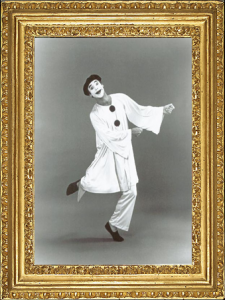
Pofferbacco (esclamazione à la Cidrolin, quello de I fiori blu), questa volta la trama è perfino più complicata del solito.
Volendola riassumere, posso rimandare alla quarta di copertina, che, riassumendo, non racconta nulla, ma suggerisce chiavi di lettura (una magnifica: questo romanzo inteso come “educazione sentimentale”).
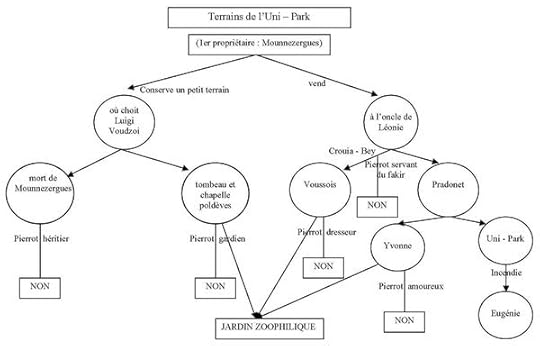
Schema della trama.
D’altronde, cosa conta la trama all’interno di un romanzo di Queneau che nasce per raccontare altro che fatti, che si basa principalmente (unicamente) sullo stile e la scrittura adottati?
Comunque, qui si indaga sulla morte di un principe poldavo. E la Poldavia è uno stato immaginario dei Balcani che s’incontra anche nelle storie e a fumetti di Tin Tin.

Tra l’altro, messa così questa storia sembra un giallo: indagine sulla morte di. E in un giallo la storia è già successa, quello che si fa è scoprire a volte perché, per lo più come è successa.
C’è un luna park, c’è un circo, c’è un pagliaccio, c’è la bella di turno che fa innamorare il clown, ed è ovviamente amore infelice perché lei non ricambia il sentimento (e come potrebbe?).

Io che odio il circo, lo trovo triste e noioso, un clown mi devasta di sconforto, non sopporto gli animali ammaestrati (neppure quella volta che da bambino per sbaglio sono finito nel cunicolo che li portava in scena, e gli ultimi a passare erano stati i leoni), l’equilibrista sul filo mi fa rimpiangere Philippe Petit, e anche per questo non sono mai andato d’accordo con Fellini, questa volta, grazie a Raymond, mi sono riconciliato con il tendone della mestizia e per una volta l’ho percepito regno della spensieratezza. E Pierrot è stato il mio eroe per le centottanta pagine di questo scoppiettante romanzo, tutto meno che noioso.
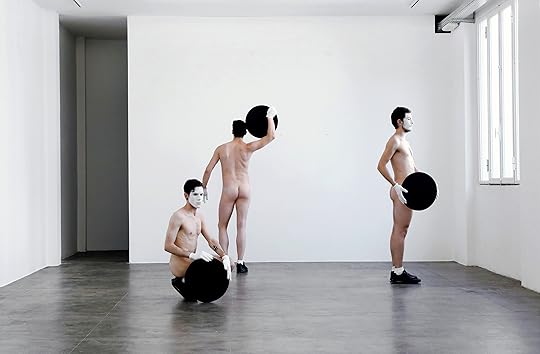
- D’accordo – disse Pierrot. – Arrivederci, signora.
Lei richiuse la porta.
Dopo un ultimo sguardo ai due recipienti, Pierrot se ne andò.
Arrivato all’angolo della strada, si fermò. Si mise a ridere.
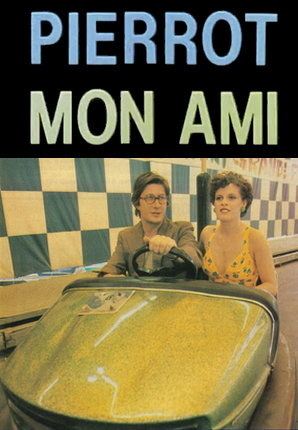
Il film omonimo per la tv francese con Jacques Dutronc nel ruolo di Pierrot, diretto da François Leterrier nel 1979.
Pofferbacco (esclamazione à la Cidrolin, quello de I fiori blu), questa volta la trama è perfino più complicata del solito.
Volendola riassumere, posso rimandare alla quarta di copertina, che, riassumendo, non racconta nulla, ma suggerisce chiavi di lettura (una magnifica: questo romanzo inteso come “educazione sentimentale”).
Schema della trama.
D’altronde, cosa conta la trama all’interno di un romanzo di Queneau che nasce per raccontare altro che fatti, che si basa principalmente (unicamente) sullo stile e la scrittura adottati?
Comunque, qui si indaga sulla morte di un principe poldavo. E la Poldavia è uno stato immaginario dei Balcani che s’incontra anche nelle storie e a fumetti di Tin Tin.
Tra l’altro, messa così questa storia sembra un giallo: indagine sulla morte di. E in un giallo la storia è già successa, quello che si fa è scoprire a volte perché, per lo più come è successa.
C’è un luna park, c’è un circo, c’è un pagliaccio, c’è la bella di turno che fa innamorare il clown, ed è ovviamente amore infelice perché lei non ricambia il sentimento (e come potrebbe?).
Io che odio il circo, lo trovo triste e noioso, un clown mi devasta di sconforto, non sopporto gli animali ammaestrati (neppure quella volta che da bambino per sbaglio sono finito nel cunicolo che li portava in scena, e gli ultimi a passare erano stati i leoni), l’equilibrista sul filo mi fa rimpiangere Philippe Petit, e anche per questo non sono mai andato d’accordo con Fellini, questa volta, grazie a Raymond, mi sono riconciliato con il tendone della mestizia e per una volta l’ho percepito regno della spensieratezza. E Pierrot è stato il mio eroe per le centottanta pagine di questo scoppiettante romanzo, tutto meno che noioso.
- D’accordo – disse Pierrot. – Arrivederci, signora.
Lei richiuse la porta.
Dopo un ultimo sguardo ai due recipienti, Pierrot se ne andò.
Arrivato all’angolo della strada, si fermò. Si mise a ridere.
Il film omonimo per la tv francese con Jacques Dutronc nel ruolo di Pierrot, diretto da François Leterrier nel 1979.

August 18, 2026
I’ve been moderately curious about the novels of Raymond Queneau, but I had been reticent about trying to read him in translation. By reputation he used an “everyday” French rather than formal language, and the tone and rhythm of his writing were important to him. The translator’s note for this novel comments that “Queneau delights in an apparently chaotic change of tenses back and forth within the same sentence,…” In that respect I can perhaps claim to be on the same level as the author, although in my case, the changes are not intentional.
Back in 2021 I read a French novel called The Waitress was New by Dominique Fabre, in which the protagonist, who is called Pierre, has internal monologues where he addresses himself as “Pierrot mon ami.” He also says that he must get round to reading that novel one day, which led me to think the same. I dropped the idea until the start of the World Cup in June. When Scotland played against Haiti one of the Haitian players was listed as “Frantzdy Pierrot,” which of course immediately made me think, “Ah, Pierrot mon ami” even though he was definitely not “mon ami” for the duration of that fixture. I was reminded of the book again recently when I watched the 1940s film of “Brighton Rock” on TV – the film features one scene with a group of “Pierrot” characters. I concluded that the fates have been sending me messages to read this book.
This rather whimsical novel opens with Pierrot working on a ride at an amusement park, together with colleagues nicknamed “Petit-Pouce” and “Paradis.” Actually there are a lot of names in the book beginning with “P,” other examples being Pradonet, Prouillot, Pansoult, Perdrix, and Paroudant. I assume this was just Queneau playing with language? (There are other characters whose names don’t start with “p.”). There is also a Poldevian chapel, situated next to the amusement park, within which lies a prince of that country, killed in an accident in Paris. The chapel is an important part of the story, and the reference to Poldevia would have been lost on me but for an explanatory note. There was apparently a real-life hoax carried out in 1929, in which a number of French parliamentarians were persuaded to join a campaign to protest against the cruel treatment being meted out to the inhabitants of Poldevia, even though no such country existed. (It would seem the knowledge base of the average politician hasn’t changed much over the last century). The choice of Poldevia for the nationality of the deceased prince leads the reader to question whether he ever existed, or whether he is just a cover for something else.
The blurb at the top of the book’s GR page comments that Pierrot is caught in a world “filled with deceit, fraud and manipulation.” Pierrot is simultaneously at the edges of these events, featuring the other characters, but also at the centre of them, since he connects them via a series of coincidences.
He is though someone who faces the slings and arrows of fortune with equanimity, or as Queneau puts it, he faces life “without manifesting the agitation appropriate only to rather obtuse souls who don’t know how to defend themselves against the mobility of fate.” The overall tone of the book is light, perhaps playful. It would exaggerating to describe it as surrealist, but at times it borders on that. The novel, and Pierrot, really grew on me as I went along.
This book was apparently published in 1942, from which I surmise that Queneau wanted to write something that was as far away as possible from what was actually going on in Paris at that time.
Back in 2021 I read a French novel called The Waitress was New by Dominique Fabre, in which the protagonist, who is called Pierre, has internal monologues where he addresses himself as “Pierrot mon ami.” He also says that he must get round to reading that novel one day, which led me to think the same. I dropped the idea until the start of the World Cup in June. When Scotland played against Haiti one of the Haitian players was listed as “Frantzdy Pierrot,” which of course immediately made me think, “Ah, Pierrot mon ami” even though he was definitely not “mon ami” for the duration of that fixture. I was reminded of the book again recently when I watched the 1940s film of “Brighton Rock” on TV – the film features one scene with a group of “Pierrot” characters. I concluded that the fates have been sending me messages to read this book.
This rather whimsical novel opens with Pierrot working on a ride at an amusement park, together with colleagues nicknamed “Petit-Pouce” and “Paradis.” Actually there are a lot of names in the book beginning with “P,” other examples being Pradonet, Prouillot, Pansoult, Perdrix, and Paroudant. I assume this was just Queneau playing with language? (There are other characters whose names don’t start with “p.”). There is also a Poldevian chapel, situated next to the amusement park, within which lies a prince of that country, killed in an accident in Paris. The chapel is an important part of the story, and the reference to Poldevia would have been lost on me but for an explanatory note. There was apparently a real-life hoax carried out in 1929, in which a number of French parliamentarians were persuaded to join a campaign to protest against the cruel treatment being meted out to the inhabitants of Poldevia, even though no such country existed. (It would seem the knowledge base of the average politician hasn’t changed much over the last century). The choice of Poldevia for the nationality of the deceased prince leads the reader to question whether he ever existed, or whether he is just a cover for something else.
The blurb at the top of the book’s GR page comments that Pierrot is caught in a world “filled with deceit, fraud and manipulation.” Pierrot is simultaneously at the edges of these events, featuring the other characters, but also at the centre of them, since he connects them via a series of coincidences.
He is though someone who faces the slings and arrows of fortune with equanimity, or as Queneau puts it, he faces life “without manifesting the agitation appropriate only to rather obtuse souls who don’t know how to defend themselves against the mobility of fate.” The overall tone of the book is light, perhaps playful. It would exaggerating to describe it as surrealist, but at times it borders on that. The novel, and Pierrot, really grew on me as I went along.
This book was apparently published in 1942, from which I surmise that Queneau wanted to write something that was as far away as possible from what was actually going on in Paris at that time.

January 19, 2012
Pierrot, the classical Pierrot, from the Commedia dell'arte, always loses the girl in the end to the more physically beguiling and wily Harlequin. Pierrot is a little more naive and bumbling than Harlequin anyway, what with H’s acrobatics, lithe body, and fancy diamond-emblazoned costume. Pierrot is always clownishly decked in his white body-suit with frilly collar, not too manly to say the least, and while Watteau did him justice, he never really received the grand oil and canvas fame that Harlequin got from the likes of Cezanne and Picasso. Still, one seems to root for poor little Pierrot, although we know that in the end the pretty girl never really wanted him anyway, and though Harlequin always comes away with the prize, there is something about the suffering-in-solitude of Pierrot that is a bit more endearing, I mean in the whole life-as-pantomime deal.*
Pierrot Mon Ami was my first Queneau, and I’m hooked. In addition to this being one of the sweetest, most charming little books I’ve read, it is also strikingly intelligent. Queneau (and of course when I say Queneau you must understand I am also speaking of Barbara Wright, who did this lovely translation) can go from phrases like “socked him in the kisser” and “cake hole” to words like “pilosity”, “dorsal”, and “crepitating” within the same paragraph, and it all seems a natural progression. Queneau’s brilliance isn’t showy, it’s all in the service of a very achingly human story here, and a strange, unique one at that; there is something of a sadness resonating behind all the funny little coincidences and encounters, such as in a scene where Pierrot finds Yvonne by chance in a small town outside of Paris, and a little beam of starlight, described as tired from its thousands of years of journeying, hits her on the nose and reveals her identity to the lost and wandering protagonist. It’s things like that, little subtleties of romanticism, that are daubed here and there throughout this tale that give it a lovely radiance.
There’s this kind of meandering melancholic joy that occurs in some good French storytelling- I’m thinking of Truffaut’s Doinel series, or especially Jacques Tati’s Monsieur Hulot films (a contemporary incarnation I suppose would be something like “Amelie”, don’t know why all my examples are cinematic, but Pierrot did say he mainly liked going to the movies)- that Queneau’s Pierrot gets perfect here. It’s not resignation or indifference really, it’s a kind of wandering through life’s obstacles, obscurities, frustrations, oddities- bad luck, good luck, richness and poorness- with a kind of straight-faced not giving a damn, or letting the giving a damn subside to the wonder at the flow of events. Maybe it’s actually longing for something we can’t have, or never could have had, but that seems all around us all the time, and the longing being enough? I don’t know, read this book. It’s wonderful.
*Jed Perl wrote a brilliant book on this and all things Watteau called Antoine’s Alphabet: Watteau and His World. Check it out, it’s beautiful.
Pierrot Mon Ami was my first Queneau, and I’m hooked. In addition to this being one of the sweetest, most charming little books I’ve read, it is also strikingly intelligent. Queneau (and of course when I say Queneau you must understand I am also speaking of Barbara Wright, who did this lovely translation) can go from phrases like “socked him in the kisser” and “cake hole” to words like “pilosity”, “dorsal”, and “crepitating” within the same paragraph, and it all seems a natural progression. Queneau’s brilliance isn’t showy, it’s all in the service of a very achingly human story here, and a strange, unique one at that; there is something of a sadness resonating behind all the funny little coincidences and encounters, such as in a scene where Pierrot finds Yvonne by chance in a small town outside of Paris, and a little beam of starlight, described as tired from its thousands of years of journeying, hits her on the nose and reveals her identity to the lost and wandering protagonist. It’s things like that, little subtleties of romanticism, that are daubed here and there throughout this tale that give it a lovely radiance.
There’s this kind of meandering melancholic joy that occurs in some good French storytelling- I’m thinking of Truffaut’s Doinel series, or especially Jacques Tati’s Monsieur Hulot films (a contemporary incarnation I suppose would be something like “Amelie”, don’t know why all my examples are cinematic, but Pierrot did say he mainly liked going to the movies)- that Queneau’s Pierrot gets perfect here. It’s not resignation or indifference really, it’s a kind of wandering through life’s obstacles, obscurities, frustrations, oddities- bad luck, good luck, richness and poorness- with a kind of straight-faced not giving a damn, or letting the giving a damn subside to the wonder at the flow of events. Maybe it’s actually longing for something we can’t have, or never could have had, but that seems all around us all the time, and the longing being enough? I don’t know, read this book. It’s wonderful.
*Jed Perl wrote a brilliant book on this and all things Watteau called Antoine’s Alphabet: Watteau and His World. Check it out, it’s beautiful.

October 24, 2019
An amazingly fun novel by Queneau, and really well written (and translated).
People are scum, but you can laugh at them!
People are scum, but you can laugh at them!

April 17, 2014
A precursor to the madcap ZAZIE, a Thomas Pynchon novel 20 years avant la lettre, a melancholy circus story of shifting identities, a sideways stylist's delight, and a side-splitting refutation of fate. Among other things. Surely one of M. Queneau's best.

December 17, 2010
A charming and beautiful novel with an aching undercurrent of melancholy. The story has a meandering quality but is tightly hewn through Queneau's formally strict structures. The eight chapters in this novel correspond to the eight teardrops on a Prince's crest, and the language is rife in puns and neologisms and glorious prose. Queneau is a strange and unique genius.
I should add that the design of this book is SUBLIME. The artwork is credited to N.J. Furl, who specialises in these baroque and gothic covers. See also Things in the Night and Bornholm Night-ferry.
I should add that the design of this book is SUBLIME. The artwork is credited to N.J. Furl, who specialises in these baroque and gothic covers. See also Things in the Night and Bornholm Night-ferry.

June 14, 2012
“In Old Chicago”, the only film mentioned in Pierrot Mon Ami, starts with slow character development and builds interest through conflict towards a cathartic climax that will pave the way for one of the greatest cities in the world to rise from the ashes. The joy comes after the last frame of the film when the survivors can sense what has survived the fire will be stronger. In many ways Pierrot works as a modern response to plot the devices of this film. The burn in Pierrot doesn't mean progression, it just means variation truer to the actual flow of most lives. Pierrot's characters don't enchant each other from elevated stages but instead infect admiration from seemingly aleatory comingling. The movements aren’t marches – they are more synchronous with the entertainment focused gyrations of the attractions of an amusement park. The steps Queneau's characters manage to make are in pants bound for cycling like Jarry's with the sole exception in the case of Marcel Schwob's funeral. Never too far out of step with Jarry and Rabelais, Queneau's joy of language is masterfully handled by Barbara Wright and serves as the greatest feature of this highly esteemed masterpiece amongst Queneau's writings. That’s probably the best reason to read Queneau – the wisdom is there – clearly on display in this work – but it’s the wordplay that is most rewarding here.
In Old Chicago's opening scene involves a man foolishly racing a steam train with a horse drawn carriage full of children. They are all laughing as they keep pace with the train until the whistle spooks the horses and the father/driver is thrown to his death in front of his children. In Queneau's Pierrot – an animal-moving truck is outpaced by all other vehicles on the slow road to delivery. There's no goal of happiness or progress for Pierrot - instead he's like the dead father - chasing a seemingly superficial reward with little insight but lots of passion as his delivery job is only seen as a temporary distraction from pleasure seeking. Any Queneau, Jarry, or Rabelais I've read has never been focused on a linear conclusion or specific plot thankfully as all three seem so much more focused on enriching each current moment with maximum signification, the essence of the experience, (or fennel) instead of foolishly chasing some intended impact. Panurge and Pere Ubu both make you wish they'd just stop trying and shut up many times to great effect and Queneau flips this device to endear readers to Pierrot, a character that will never display a habit of a highly effective person. A less doomed and reflective Lilliom, Pierrot is one of the most likeable of all Queneau's creations - he's a person you'd love to have as a friend. Pierrot My Friend indeed.
Bob Watson who played Pee Wee in Boys Town rides on that doomed wagon in the opening scene of Old Chicago, which got me thinking about how Pee Wee's Boys Town hero Whitey also commits the sin of progress and is a complete failure until he learns to detach from desire and focus on harmony and pleasure instead - resulting in one of the most deliciously sweet scenes in film making as Whitey cries himself happy. I wonder if Queneau saw Boys Town.
I really enjoyed reading Pierrot Mon Ami just as much as I love: Chicago, Boys Town, Spencer Tracey, Mickey Rooney, Father Flannigan, Studs Lonigain, Gargantua, Pantagruel, Pierrot, Mrs. O'Leary's kicking cow, her milk-maid's poorly acted German accent, Etienne, Cidrolin, Chicago’s Water Tower, Bose de Nage, Faustroll and Queneau. And such a sentimental response is perfectly justified after reading such a joyous and affirming coming of age modern French book.
I'm looking forward to reading it again, many agains really and I suspect that each reaction will be something different because the way I see it - Queneau respected curious and intelligent readers that demanded intensity and richness of experience instead of any banal Ubuesque pedagogy. He packed his books with rich and interesting language and like the Henri Rousseau painting that beautifully covers my edition – there’s a comfortable and non-professional but amazingly intuitive skill on refulgent display inside Pierrot Mon Ami as well. You could spend a wonderful afternoon sitting on front of a Rousseau or reading Queneau.
In Old Chicago's opening scene involves a man foolishly racing a steam train with a horse drawn carriage full of children. They are all laughing as they keep pace with the train until the whistle spooks the horses and the father/driver is thrown to his death in front of his children. In Queneau's Pierrot – an animal-moving truck is outpaced by all other vehicles on the slow road to delivery. There's no goal of happiness or progress for Pierrot - instead he's like the dead father - chasing a seemingly superficial reward with little insight but lots of passion as his delivery job is only seen as a temporary distraction from pleasure seeking. Any Queneau, Jarry, or Rabelais I've read has never been focused on a linear conclusion or specific plot thankfully as all three seem so much more focused on enriching each current moment with maximum signification, the essence of the experience, (or fennel) instead of foolishly chasing some intended impact. Panurge and Pere Ubu both make you wish they'd just stop trying and shut up many times to great effect and Queneau flips this device to endear readers to Pierrot, a character that will never display a habit of a highly effective person. A less doomed and reflective Lilliom, Pierrot is one of the most likeable of all Queneau's creations - he's a person you'd love to have as a friend. Pierrot My Friend indeed.
Bob Watson who played Pee Wee in Boys Town rides on that doomed wagon in the opening scene of Old Chicago, which got me thinking about how Pee Wee's Boys Town hero Whitey also commits the sin of progress and is a complete failure until he learns to detach from desire and focus on harmony and pleasure instead - resulting in one of the most deliciously sweet scenes in film making as Whitey cries himself happy. I wonder if Queneau saw Boys Town.
I really enjoyed reading Pierrot Mon Ami just as much as I love: Chicago, Boys Town, Spencer Tracey, Mickey Rooney, Father Flannigan, Studs Lonigain, Gargantua, Pantagruel, Pierrot, Mrs. O'Leary's kicking cow, her milk-maid's poorly acted German accent, Etienne, Cidrolin, Chicago’s Water Tower, Bose de Nage, Faustroll and Queneau. And such a sentimental response is perfectly justified after reading such a joyous and affirming coming of age modern French book.
I'm looking forward to reading it again, many agains really and I suspect that each reaction will be something different because the way I see it - Queneau respected curious and intelligent readers that demanded intensity and richness of experience instead of any banal Ubuesque pedagogy. He packed his books with rich and interesting language and like the Henri Rousseau painting that beautifully covers my edition – there’s a comfortable and non-professional but amazingly intuitive skill on refulgent display inside Pierrot Mon Ami as well. You could spend a wonderful afternoon sitting on front of a Rousseau or reading Queneau.

January 8, 2013
I don't know what this book is about and I don't understand what's great about it. I've made it the requisite 50% of the way through but, finding myself now completely indifferent to how it ends, I'm going to put it aside. Maybe it's too subtle for me in the hyper-emotional state in which I find myself, or maybe I'll just never relate to such an apparently lightweight, whimsical and banally dialogue-driven way of telling a tale.

September 9, 2024
Another enjoyable novel from Queneau. A light-hearted tale of young Pierrot and his serial failure in odd jobs centred around a fairground and circus in Paris

April 1, 2019
A novel of near adventure and intrigue that denies that casually denies such to be necessary, allowing those elements to collapse into the background of day to day interactions, moments, details. I've always wanted to enjoy Queneau much more than I do, but here, it all comes together, mysteriously somewhere off the page that I can't quite account for. The events may be comic trifles, but the tone is more ambiguous, blending the promise and sadness of life and extending from the mere synopsis unaccountably deep roots that brush something further.

April 7, 2019
Pierot, slavný to nanuk z Francie, v tomhle díle dělá v lunaparku, kde mu to jde asi jako mě salsa nebo sex. Za dva dny ho dvakrát vyhodí a tak se Pierot poflakuje okolo a kamarádí se s lidma. Otřesná představa. Jestli je něco blbější než květák, pak to jsou lidi. Z toho se vyvrbí zamotaný spletenec obsahující fakíry, hrobku, nějakýho knížete co spadl z koně a dohromady to dává asi takovej smysl, jako pořídit si popelník na motorku, nebo přilepit si banán na plynovej kotel. Všechno to pak nějak taky skončí, ale moc uspokojivě ne. Kdybych to měl k něčemu přirovnat, tak asi k tomu, když jdete kadit, sedíte tam půl hodiny, ale pak když se zvednete, není tam vůbec nic. To mě vždycky rozpálí do běla - a proto jsem taky běloch. Takhle mimochodem vznikli černoši.
Já dávám 7/10, pořád mi tam u toho Qvujenoeouea něco chybí.
Já dávám 7/10, pořád mi tam u toho Qvujenoeouea něco chybí.

April 30, 2021
La quarta di copertina lo definisce "Un poliziesco senza delitto. Una love story senza amore", e sono felice, per una volta, di constatare come sia una definizione piuttosto azzeccata.
In Pierrot amico mio ci sono tante cose, ma tutte un po' al contrario di come ce le si potrebbe aspettare. Compaiono anche tutti gli elementi che poi si ritroveranno in Zazie nel metro o I fiori blu, in forma forse meno incisiva che nei libri successivi ma comunque sempre graditi.
E' un romanzo divertente, scorrevole, che si legge con piacere e che può presentare numerose chiavi di lettura (di cui dà un assaggio la postfazione presente in questa edizione). Mi ha entusiasmato meno di altri romanzi di Queneau, ma resta sempre bello leggere Queneau.
In Pierrot amico mio ci sono tante cose, ma tutte un po' al contrario di come ce le si potrebbe aspettare. Compaiono anche tutti gli elementi che poi si ritroveranno in Zazie nel metro o I fiori blu, in forma forse meno incisiva che nei libri successivi ma comunque sempre graditi.
E' un romanzo divertente, scorrevole, che si legge con piacere e che può presentare numerose chiavi di lettura (di cui dà un assaggio la postfazione presente in questa edizione). Mi ha entusiasmato meno di altri romanzi di Queneau, ma resta sempre bello leggere Queneau.

February 27, 2019
if you like this review, i now have website: www.michaelkamakana.com
260219: late review. this is five. why. because it is fun. comic, droll, ironic, poetic, direct... simple plot concealing great structure revealed only on thought. not much happens and everything happens. pierrot (petey) is innocent, chaplinesque, the only one who knows/interacts with everyone, but this often seems only coincidental, irrelevant, incidental even as it unifies his adventures from which he as character learns nothing but we as readers learn everything. how to live, how to persist, how to laugh. pierrot is wise innocent as 'mon ami'...
260219: late review. this is five. why. because it is fun. comic, droll, ironic, poetic, direct... simple plot concealing great structure revealed only on thought. not much happens and everything happens. pierrot (petey) is innocent, chaplinesque, the only one who knows/interacts with everyone, but this often seems only coincidental, irrelevant, incidental even as it unifies his adventures from which he as character learns nothing but we as readers learn everything. how to live, how to persist, how to laugh. pierrot is wise innocent as 'mon ami'...

September 1, 2020
Not as hyper-psycho Looney Tunes as Zazie Dans La Metro, this may be a better novel in that it's about a Keaton/Chaplin sad sack angel with a Harry Langdon hobo from Heaven vibe who wants to get the girl at the amusement park, but quelle damage, her parents are demons from Hell.
There's an interesting chapter where Pierrot's two male friends are substituted by two wild animals that he still takes to the bistro, which takes the novel into surrealist territory. After reading Pierrot Mon Ami I'm going to read a lot more Raymond Queneau.
There's an interesting chapter where Pierrot's two male friends are substituted by two wild animals that he still takes to the bistro, which takes the novel into surrealist territory. After reading Pierrot Mon Ami I'm going to read a lot more Raymond Queneau.

May 19, 2012
Here we have the story of a disconnected Perriot who floats rather than stumbles through his own odd story, more like a mime than a clown. But Queneau doesn't let us forget Perriot's classic character origins:
"No one had ever told him that he was intelligent. He had frequently been told, rather, that he behaved like an idiot or that he bore some resemblance to the moon."
Perriot works at an amusement park for a short time, and one can't help reading the description of the amusements without realizing that it describes the events in the novel and perhaps even life in general:
"On this one you go round in circles and on that one you fall from a great height, on this one you travel at speed and on that one all askew, here you get jostled and there you get bumped, everywhere you get your innards churned up and you laugh, you grope a bit of prat and you feel a bit of tit, you try your skill and you measure your strength, and you laugh, you let yourself go, you eat dust."
At the end of the novel, Perriot reflects upon the events of, now, a year ago, and decides that the novel it would have made wouldn't have added up to what you might have thought - "a novel so shorn of artifice that it was quite impossible to know whether it contained a riddle to be solved or whether it did not, a novel in which everything might have been interlinked according to police plans but which was in fact totally depleted of all the pleasures by an entertainment, an activity of that sort." But there is no randomness or senselessness here - instead, the novel is a sort of airy look at how we create or ignore our own destinies.
"No one had ever told him that he was intelligent. He had frequently been told, rather, that he behaved like an idiot or that he bore some resemblance to the moon."
Perriot works at an amusement park for a short time, and one can't help reading the description of the amusements without realizing that it describes the events in the novel and perhaps even life in general:
"On this one you go round in circles and on that one you fall from a great height, on this one you travel at speed and on that one all askew, here you get jostled and there you get bumped, everywhere you get your innards churned up and you laugh, you grope a bit of prat and you feel a bit of tit, you try your skill and you measure your strength, and you laugh, you let yourself go, you eat dust."
At the end of the novel, Perriot reflects upon the events of, now, a year ago, and decides that the novel it would have made wouldn't have added up to what you might have thought - "a novel so shorn of artifice that it was quite impossible to know whether it contained a riddle to be solved or whether it did not, a novel in which everything might have been interlinked according to police plans but which was in fact totally depleted of all the pleasures by an entertainment, an activity of that sort." But there is no randomness or senselessness here - instead, the novel is a sort of airy look at how we create or ignore our own destinies.

January 3, 2011
A witty take on the picaresque novel from a member of the influential French literary movement, Oulipo. The Ouvroir de littérature potentielle included Calvino and Perec, and brought an attitude of experimentation, playfulness and sheer linguistic self-indulgence to the art of writing. Perec has the highest profile outside France, especially for his novel 'The Void', written without the letter 'e' and later translated into English under the same stricture.
Pierrot tells the story of a Parisian casual labourer and his attempts to hold down a series of faintly bizarre jobs,describing as it does so the interconnected circle of characters through whose lives he moves. Quenau's eye and ear for characterisation are applied to great wryly comic effect, and the novel is made more unusual and interesting by the application of deliberately surprising or incongrous language, so that a cat is described as 'often grey' and at one point characters 'found themslves obliged to slide on their dorsa.'. As the very good, brief introduction points out, Queneau also uses rhythm and repetition to great effect.
The whole book is a pean to the absurd and glorious eccentricities of human behaviour, and never wavers from brilliance as it weaves between satire, pathos and humanity.
Pierrot tells the story of a Parisian casual labourer and his attempts to hold down a series of faintly bizarre jobs,describing as it does so the interconnected circle of characters through whose lives he moves. Quenau's eye and ear for characterisation are applied to great wryly comic effect, and the novel is made more unusual and interesting by the application of deliberately surprising or incongrous language, so that a cat is described as 'often grey' and at one point characters 'found themslves obliged to slide on their dorsa.'. As the very good, brief introduction points out, Queneau also uses rhythm and repetition to great effect.
The whole book is a pean to the absurd and glorious eccentricities of human behaviour, and never wavers from brilliance as it weaves between satire, pathos and humanity.

May 19, 2009
This is my favorite book, and I remember that every time I read it. It is much like me in its thinking and attitude on life. Pierrot is the work that spawned my own The Summer Log. It's a book I want everyone to read. It's a damn shame it hasn't spread like wild fire. I sure do love European Modernist fiction. Always a treat. Always about the human, abandoning all other realms of reality. This book is fun, it's funny, witty, playful, warm-hearted, well-intentioned, kindly. I love everything about it. No one could better represent my idea of the idea adolescent than Pierrot, who, as it turns out is actually a little older than we'd thought. But this doesn't change too much. At least I hadn't noticed such changes when I hit that spot this read around.
If I entertain you, so will Pierrot.
Note: This is my third or fourth read, but my first on goodreads.
If I entertain you, so will Pierrot.
Note: This is my third or fourth read, but my first on goodreads.

October 1, 2007
One of those books that makes me wish I could read the native language. This translation was great (as far as I could inexpertly tell), preserving Queneau's often bizarre vocabulary and abbreviated slang dialogue. Queaneau is one of those writers who is well aware that his work is a book and it is being read and it is just a story and consequently his style is very intelligent and sort of removed, jumping from viewpoint to viewpoint, consciously playing with the reader. If you're willing to play back, his work is very rewarding.

January 17, 2013
His mind contained nothing but a mental, light, and almost luminous mist, like the fog on a beautiful morning, nothing but a flight of anonymous midges.I'm interested in mist. Not the mist rising up off the moors in the seeping light of dawn, though I do like that, too. What I'm talking about is the mist in people's minds. I've found references to this mist in many of my recent reads. Maybe it's like how once you become aware of something, find it the first time, you start seeing it everywhere. This happens with birding. One develops 'nemesis' birds that remain elusive for months or even years, but then after finally catching a first glimpse of this bird, it begins to regularly show up in one's field of vision. I have made myself open to and aware of the idea of mist and it now envelops me. But this is just an aside.
Raymond Queneau influenced modern French literature like no other writer: surrealism, OuLiPo, he touched it all. He was a fantastic writer. He wrote sentences whose construction and turns of phrase awe me, literally leaving me with my mouth hanging open. His command of language is staggering. I kept a list of words I didn't know. Of course this is a translation from the French, and Barbara Wright has mad translating skills. I still couldn't find some of these words. Queneau was known for making them up. I guess Wright just left those untranslated.
Pierrot's head is full of mist. At one point, he retorts to his irksome interlocutor, “I'm no more of a moron than the next person.” He confesses to being caught thinking about nothing on more than one occasion. Having just read The Tanners, I saw some similarity to Simon, and in fact Pierrot is very much like a Robert Walser character. He is a wanderer letting the world happen to him, and yet he is reluctant to get too involved in anything. His nature is to keep things at arm's length. His small world is peopled with drifters, hustlers, and self-absorbed flakes. Queneau's prose is crisp and his dialogue snaps, peppered with healthy doses of keen French wit. The plot is taut even in its unreliability and the pacing zips along (which can't really be said for Walser).
Pierrot loves Yvonne but she is a flake. She consistently fails to recognize him when they keep running into each other in strange locales. While this is humorous, it also makes one sad for Pierrot, who loves Yvonne so blindly and innocently. But she is a Mean Girl type, and he is sort of the nerdy nice guy.
Some lines in this novel put a catch in my throat. Like when Pierrot is out walking late, pining a bit for Yvonne, and a cat crossing the street "was often grey," despite Robert Smith's assertion that "all cats are grey," presumably at all times. But Smith's song was inspired by Mervyn Peake's Gormenghast novels, not Queneau's Pierrot, so I let it slide.
This book can be read as a mystery, a study of individuality, a celebration of life's absurdity and coincidental wonders, or simply as another variation on a classic Pierrot tale.

October 19, 2010
As usual with Queneau, there is a great deal of fun with language. Ten dollar words sit next to ten cent words. The story leads you to think it will go in one direction, and then doesn't. I enjoy this sort of thing, though I've found it more fun in other books by him.
If ever an idea is repeated, it won't be in the same words. Example, one woman is described with "In those days, she was dancing in a nightclub." In the following paragraphs, that becomes: "... used to shake a leg in a honky-tonk." then "... used to kick up her heels in a gaff" then "... used to hoof it in a café-concert. "
In one chapter, Pierrot is driving with 2 companions, and he takes them to eat in a restaurant and gets them a room in a hotel. And yet it is not explicitly revealed until later that they weren't human: “The little wild boar was very sweet,” said Yvonne, “but the ape, what a swine!”
There are the makings of several types of story, such as romance and detective story, but it isn't really any such thing.
The game that Queneau was playing here is best summed up by the main character, thinking to himself in the epilogue:
I found it not completely "depleted of all pleasures", but it still isn't the most fun of Queneau's books.
(Translation by Barbara Wright.)
If ever an idea is repeated, it won't be in the same words. Example, one woman is described with "In those days, she was dancing in a nightclub." In the following paragraphs, that becomes: "... used to shake a leg in a honky-tonk." then "... used to kick up her heels in a gaff" then "... used to hoof it in a café-concert. "
In one chapter, Pierrot is driving with 2 companions, and he takes them to eat in a restaurant and gets them a room in a hotel. And yet it is not explicitly revealed until later that they weren't human: “The little wild boar was very sweet,” said Yvonne, “but the ape, what a swine!”
There are the makings of several types of story, such as romance and detective story, but it isn't really any such thing.
The game that Queneau was playing here is best summed up by the main character, thinking to himself in the epilogue:
"he saw clearly how all its constituent elements could have been combined into an adventure that might have developed into a mystery, later to be solved like a problem in algebra in which there are as many equations as there are unknowns, and he saw how it had not turned out like that. He saw too the novel it could have made, a detective novel with a crime, a guilty party and a detective, and the requisite interplay between the different asperities of the demonstration, and he saw the novel that it had become, a novel so shorn of artifice that it was quite impossible to know whether it contained a riddle to be solved or whether it did not, a novel in which everything might have been interlinked according to police plans but which was in fact totally depleted of all the pleasures provided by an entertainment, an activity of that order."
I found it not completely "depleted of all pleasures", but it still isn't the most fun of Queneau's books.
(Translation by Barbara Wright.)

December 20, 2008
Woe be to the poor person who cannot return to such a brilliant book merely to be disappointed that the novelty has worn off. Queneau's style is delightful and so specific to him that it cannot be summed up by novelty. Reread Queneau means to play a game, and even knowing all the movements in advance doesn't relinquish the task of its engagement.

March 18, 2026
Funny and good and also funny

July 27, 2012
Queneau is a master of character, often sacrificing plot for the creation of personalities for the reader to connect with. As a writer who has often been criticized for the same "flaws," I've always been drawn to Queneau's work. The thing many people don't understand about novels that focus more on character than plot is that the world revolves around the character because he or she is the only one aware of what is going on in. In that way the character becomes a stand-in for the author, observing the world with a reluctance to get involved. Pierrot is such a character in this novel.
It follows one summer in the life of a young man. And though much happens around him, there is no central plot. He falls in love, though there is no relationship. He gets a job, loses a job, gets another job, loses another job; all in two days time. There is a spectacular fire, a phoney prince with a tomb erected in his honor, and a short car trip with a trained ape and boar. And while Pierrot exists on the periphery of all of these events, he is never truly engaged. There is a moment near the end of the book where Pierrot reflects on his adventure, referring to it as a sort of current that carried him into chance encounters. During this reflection, Queneau writes:
"He saw too the novel it could have made, a detective novel with a crime, a guilty party and a detective, and the requisite interplay between the different asperities of the demonstration, and he saw the novel that it had become, a novel so shorn of artifice that it was quite impossible to know whether it contained a riddle to be solved or whether it did not..."
As one of the voices of the French "new novel," Queneau refused to force life into the confines of a novel plot. Life doesn't fit into nice packages. Sometimes things that happen simply come to nothing. But that doesn't mean there isn't something one can take away from a story such as this one. It's an enjoyable, often humorous tale of young man who has no direction and no idea what his future holds. And like many his age, he doesn't much care, willing to just go with the flow. And though there is no climatic moment, or defining turn of events, Pierrot shows growth. Somewhere in his journey, the insecure, slightly nervous figure from the opening becomes a more confident person able to laugh at the absurdities of life.
This is a subtle novel, and one that really doesn't leave much of an impact until it's been absorbed in its entirety. I wasn't sure that I truly liked it until I was finished, but once I was, everything sort of came together for me.

September 23, 2021
I have to chuckle when I see accolades like "finest achievement" attached to one of Queneau's books. His body of work resembles that of the Marx Brothers in that it is comprised of pieces which compose a larger & unified universe both strange & familiar, & tho one may have favorites, there is no definitive masterpiece that stands out among them. They are all essential for the additional details, characters & situations they provide, & visiting them is always a unique thrill for me since I love those universes so much, & spending time in them is so beneficial, so rewarding, so nourishing. Here we have simply more of what makes Queneau so great: a set of characters, actions & motivations simultaneously ordinary & recognizable yet also nudged into an indescribably otherworldly realm.. occupations just slightly on the wrong side of plausible, a collection of people whose names inexplicably all begin with P, a scene where humans are replaced by animals with barely a discernible difference, & thru it all the threads of duty, desire & desultory existence presented so calmly & cleanly. Thank the Godz for Queneau & the beautifully warped mirror he holds up to our eternally unfolding Human Comedy!

September 24, 2012
This 1950 translation by the British novelist Julian MacLaren-Ross was a let down. You can't turn colloquial Parisian French into Cockney, complete with rhyming slang, without losing the essence of an author like Queneau. Beyond that, I found this to be a delightfully odd novel that is light, happy, even somewhat distracted at times. Pierrot is a young man hopelessly frustrated in work and love, and Queneau breezes his hero through some bizarre events that include fleeting elements of mystery and magic. A couple of coincidences toward the end are a bit hard to swallow though.
Sentus Libri 100 word reviews of overlooked books.
Sentus Libri 100 word reviews of overlooked books.
April 1, 2012
I think I was expecting this to be something like A Confederacy of Dunces, but it turned out to be tiresome and I did not enjoy it at all. I think I should blame the translation. This was supposed to be good French fiction from the mid 20th century. The original French is supposedly highly colloquial. The translation is in 1940’s British slang. It just didn’t do it for me.

February 11, 2021
indifférence/20 mais un bon point pour le style de Queneau que j'ai vraiment adoré dans certains passages
September 26, 2024
What can I say…🐐
August 4, 2025
Just when you think this book is gonna zig… it zags. This one left me a little baffled the whole time I was reading but I guess… that’s the point? Pierrot stumbles through his life coming just to the precipice of being involved in a tangled web of intrigue, plotting, affairs, and revenge. It’s as though the “main character” is doing everything in his power to avoid being the main character. As the comical, farcical “almost-plots” unfold, we’re just along for the ride, but Queneau’s playful writing style makes it quite an enjoyable ride.
Displaying 1 - 30 of 82 reviews