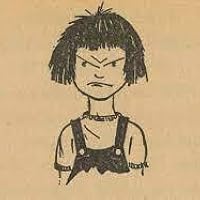
"Joseph Payne Brennan is one of the most effective writers in the horror genre, and he is certainly one of the writers I have patterned my own career upon," declared Stephen King. This new edition of an increasingly rare compilation presents 12 of Brennan's most chillingly memorable tales, including "Diary of a Werewolf," "The Horror at Chilton Castle," and "Canavan's Back Yard."
Joseph Payne Brennan was an American writer of fantasy and horror fiction, and also a poet. Brennan's first professional sale came in December 1940 with the publication of the poem, "When Snow Is Hung", which appeared in the Christian Science Monitor Home Forum, and he continued writing poetry up until the time of his death.
He is the father of Noel-Anne Brennan who has published several fantasy novels.
This was a short but fun anthology featuring stories of madness, sorrowful memories, and murder. My favorites were Diary of a Werewolf in which a recovering drug addict begins to feel a strong compulsion to run wild in the woods, and Pavilion in which a murderer returns to the scene of his crime. The rest were just ok reads for me, though others may enjoy them more than I did. If you are into short horror stories give this one a read.
Stephen King introduction. Stephen King recommended book. Noted as "important to the genre we have been discussing" from Danse Macabre.
King said Slime is a "wonderful novella." It is included in this compilation.
10/22/12: It is a darned shame that this anthology is out-of-print. Except for one story, I thought that all the stories were remarkably well-written and imaginative. I had to pay an arm and a leg for a used copy of this from Amazon. The Stephen King introduction is a hoot, especially since it was written in 1979 when King was still coming up in the world. If you can get your hands on a copy of this book, it is well worth the read.
This slim collection took very little to be over with. It contains the following stories~ 1. Diary of a Werewolf; 2. The Corpse of Charlie Rull; 3. The Pavilion; 4. House of Memory; 5. The Willow Platform; 6. Who Was He? 7. Disappearance. These seven were fairly formulaic well-written stories, without anything special. But then came two sharp tales that etched deep grooves in the mind. They were~ 8. The Horror at Chilton Castle; 9. The Impulse to Kill. To round-off, there was another fairly prosaic tale~ 10. The House on Hazel Street. Overall, this was a readable and fair collection. Lovers of old-fashioned chills would enjoy it.
3.5 stars if GoodReads worked the way I'd like it to.
I picked up 'The Shapes Of Midnight' because Stephen King acknowledged Joseph Payne Brennan as a horror writer on whom King had patterned his own stories and because these are stories from an earlier generation of horror writers, that pre-date the saturation of popular culture with Slasher movies and Final Girls and Creature Features.
The ten stories in the collection cover a lot of ground from weird werewolves to calm psychopaths, from gothic castles with dark secrets on stormy nights, to hospital corridors with a deadly stalker. Some of them felt as if I was reading M R James or Edgar Alan Poe. Others felt like they would have been perfect for 'The Twilight Zone'.
This was a refreshing read that brought me back to the basics of how to tell a horror story in the first-person and deliver anything from unease at the uncanny to fear of the truly monstrous.
I've commented on each of the ten stories below.
DIARY OF A WEREWOLF
As the title suggests, most of this story is in the form of a diary written by a werewolf. Set in rural New England in 1958, it describes the descent into violent madness of a man who left New York City on the advice of his doctor who warned that the man's many 'dissipations' would lead to physical and mental ruin, to live in Hemlock House which stands on the edge of a small village amid 300 acres of deep forest. It turns out not to have been a wise choice.
The setting and the content of the story are classic gothic horror. The diary format gives the gothic a modern twist by providing an insight into the man's mental decline and inherent amorality. The language of the diary seemed to owe more to the start of the century than the middle of it, but this added to the Gothic feel of the story and might be accounted for by the man's age. What I liked most was that our werewolf's transformations were mental rather than physical and seemed more like the release of a darkness he'd brought with him to the woods.
THE CORPSE OF CHARLIE RILL
A great example of a simple but effective monster story. The monster here is the reanimated corpse of Charlie Rill. The corpse part is important. This isn't Charlie coming back to life. This is a dead thing, unnaturally animated. It has no thoughts, no desires. It is powered entirely by an instinctive compulsive to tear apart every living thing it meets. It's a linear tale of pointless bloody destruction and it is wonderfully, perfectly horrific.
THE PAVILLION
I love the directness and simplicity of this story. The beach pavilion in a winter storm becomes not a pleasure palace but a gloomy, watersoaked, storm-damaged tomb. The main character is slowly pushed from cold-blooded calm to frantic mind-voiding terror by the environment and what he finds, and doesn't find there. This reminded me of Edgar Allan Poe. I think this is how he might have written a sequel to 'The Cask Of Amontillado' with Montesor returning to check that Fortunato was still behind the wall.
HOUSE OF MEMORY
This story walks the border between it-was-all-in-my-imagination and sometimes-wierd things happen. It's a low-key personal encounter with an event that rippled the surface of reality as the person understood it and demonstrated the power of obsession.
THE WILLOW PLATFORM
This story had the sort of atmosphere that I expect of an M R James ghost story. Care was taken to base it in a credible contemporary rural locale populated with believable people so as to increase the impact of the supernatural event at the heat of the story. The supernatural element didn't stir me but I liked the description of the time and place.
WHO WAS HE?
At first, the slight tale of a recuperating man's strange encounter on the cardiac ward had me shrugging and going 'Meh... not horror' But I kept thinking about it and I realised how jaded my tastes have become. It's not horror in the horror-movie-made-me-jump way but, if this had happened to me, if I was the man recounting this tale, I know I'd be haunted by it. I think that's a flavour of horror that's worth preserving.
DISAPPEARANCE
The punchline to this story is telegraphed about halfway through but that doesn't really diminish the impact as the story seems really to be about how rural life works - what people accept and what they question and how eccentricity to slide into something darker unremarked.
I admire how the tone of the story pulls the reader into the mindset, establishing the narrator as a reasonable man with a story to tell and inviting you to sit awhile and listen. Here's how it starts:
"AT THE TIME of Dan Mellemer's disappearance I happened to be a deputy, and Sheriff Kellington asked me to accompany him when we drove over to the Mellmer place to investigate."
The rhythm of that sentence, unhurried and full of promise is so perfectly judged that it triggers a "Did I ever tell you about the time that...?' sense of intimacy.
THE HORROR AT CHILTON CASTLE
This is a full-blown Gothic nightmare complete with a stranger at a deserted village inn, a thunderstorm with fierce winds and flashes of lightning that serve as the only illumination of the Norman castle that lours over the village, a chance encounter leading to a dour mission reluctantly agreed to and a monstrous secret walled-in to a room in the deep bowels of the keep. Wonderful images delivered in straight-from-the-shoulder prose with no compromises.
THE IMPULSE TO KILL
This time the narrator is a psychopath for whom only face-to-face killing can bring relief. What makes the story chilling is that the narrator is not crazed or out of control. He's calm, patient, cunning and completely convinced that he's only doing what's natural. This story has the impact of seeing a shark's fin cutting through the waves at a beach. It's not evil or even malicious, just relentlessly, implacably hungry and perfectly equipped to feed.
THE HOUSE ON HAZEL STREET
This is an intriguing and original idea. I liked the set-up and the atmosphere but the ending felt abrupt. It's an odd story to end the collection on. I'd have used THE IMPULSE TO KILL as the last story, bookending the collection with two murderous narrators.
This was a great collection. I was unfamiliar with the author, but he started writing I believe back in the 50s and was a contemporary of Lovecraft, August Derleth and other "Arkham House" authors as I like to refer to them.
This collection was published in 1980 but the stories are from the 50s, 60s and 70s. It's horror without pretension, as it doesn't have the thick prose of Lovecraft or some of the other authors that wrote this type of "Weird Tales" fiction.
Overall I enjoyed every story, although as usual some were better than others.
If this sounds like something you'd like to read, then you'd probably enjoy it.
Diary of a Werewolf ⭐⭐⭐ 1/2 The Corpse of Charlie Rull ⭐⭐⭐⭐ The Pavillion ⭐⭐ 1/2 House of Memory ⭐⭐ The Willow Platform ⭐⭐⭐ 1/2 Who Was He? ⭐⭐ Disappearance ⭐⭐⭐ The Horror at Chilton Castle ⭐⭐⭐ 1/2 The Impulse to Kill ⭐⭐⭐ The House on Hazel Street ⭐⭐⭐
Decent little short horror story collection. The Corpse of Charlie Rull was definitely my favorite. It takes a lot to shock me and that did it. Honorable mention for The Willow Platform, a story about someone messing with forces beyond their control.
This collection of short horror stories by Joseph Payne Brennan would have had a lot more historical significance if it had included all of the book’s original stories. Instead, the publisher opted to remove two of them, thereby making it an incomplete set.
Aside from that, Brennan’s work provides an interesting time capsule of the horror writing style of the late ‘70s/early ‘80s. Stephen King once raved about this book, which actually seems really odd now since Brennan continuously broke King’s rules for writing. For instance. in one sentence, Brennan somehow managed to cram three adverbs, passive voice, and showing instead of telling.
These qualities, combined with a bit of casual racism and the general vibe of telling scary stories around a campfire, really dates the book.
It was an interesting read as a horror time capsule, but it lacks the compelling, literary nature of the genre’s classics. It also falls short in the gore department, meaning it doesn’t quite connect with either of the two main types of horror readers.
Thank you to the publisher and NetGalley for providing a copy of this book. This review contains my honest, unbiased opinion.
A clearly-told and nastily effective collection of stories, with a couple of absolute standouts. I read the 1980 Berkley books original, not the modern Dover reprint, which omits two of the strongest stories: Slime and Canavan's Back Yard. This would be a much less interesting collection without them, and I'd recommend picking up the original edition if at all possible.
Marvellous collection of pulp and terror, with only a couple of stories being middling in their appeal. A range of horrors are taken, played with, and unleashed to the reader, with the additional appeal of turning things like an overgrown garden into a nightmare. Excellent stuff.
I received an ARC of this book thanks to Net Galley and publisher Dover Publications in exchange for an honest review.
Horror anthologies can be so hit or miss for me. I tend to avoid collections published by one author unless I know their work because I have specific tastes for horror and I dislike the ambiguous short stories the genre often results in. I made an exception for The Shapes of Midnight and I am so glad I did!
This is a VERY short collection (~100 pages) of horror stories which are mostly basic in concept but are executed really well. The first two were my least favourite and the most straightforward of the bunch but it was all uphill from there. If you could plot my ratings of these on a graph, it would almost be a perfect bell curve because I felt the middle stories were definitely the strongest. My Kindle ARC was sadly missing two stories (Canavan’s Back Yard and Slime) which might also be why it felt so short to me.
No of stories: 10 (12 in actual collection)
Diary of a Werewolf-What it says on the tin. This was definitely one the weaker ones. It wasn't bad but it was very straightforward and there were no surprises or depth to it.
The Corpse of Charlie Rull-A man dies in a radioactive river and comes back to life. Slightly better than the one above because I couldn't tell where it was going and it was less of a standard plot. I also loved the way this opened, it had a fantastic style to it.
The Pavilion-A very creepy story about a man who murders his friend and returns to check if the body has been dislodged by the sea. This grabbed my attention and kept me excited to see what was going to happen next.
House of Memory-A different type of horror story to most and a refreshing addition to the collection. A woman is forced out of her childhood home and refuses to accept it has been demolished, much to the confusion of her family. Another very decent and enjoyable one.
The Willow Platform-A man in a small town finds an evil demon book. The writing style of this was very entertaining but I wasn't a fan of the story topic itself, which is probably just personal preference.
Who Was He?-A man in hospital keeps getting visits from a hospital barber. This was hands down my favourite of the whole bunch. I read it late at night and was genuinely very scared by it.
Disappearance-Another very strong story about a man whose brother has gone missing and the narrator suspects he killed him. The 'twist' of this was very easy to guess but it was still entertaining and possibly my second favourite.
The Horror at Chilton Castle-A man lives near a castle which has a secret sealed room, the contents of which are only shown to the heirs of Earls. This started off strong but the actual contents of the room turned it into not my type of horror story. It was still one of the best and definitely had some good horror moments.
The Impulse to Kill-A man who has the urge to kill devises a way to do so without being arrested for it. This is a neat enough idea for a story and it was well-written but it suffers from being very linear and not having a lot beyond the basic concept.
The House on Hazel Street-Upon entering a house, a man realises he has no memory of why he is there. The occupant of the house has a specific request of him. This story has one of the more unique concepts in the anthology and it was good but not one of my absolute favourites.
I debated between 3.5 and 4 stars for a while but I felt 4 stars was right since I enjoyed almost every story in here and the writing style was consistently strong throughout. At points Brennan has almost a Lemony Snicket-esque narration style and this was very enjoyable when it cropped up. This collection is very short in the form I received but that was minus two stories so I decided to not lower the rating due to that. Overall, this was a wonderful horror anthology and I would definitely want to read more by this author.
The Shapes of Midnight is a horror collection by Joseph Payne Brennan originally released in 1980, to be re-released this year by Dover Publications. The Dover version collects ten of his best tales, which range from explorations of madness ("Diary of a Werewolf", "The Impulse to Kill"), to the shifting nature of time ("House of Memory", "The House on Hazel Street").
Easily readable in a single sitting, this collection is sufficiently disturbing, albeit leaning a bit towards prose and structure somewhat more geared to the younger horror reader. The influences are right up front as well for horror fans (the Lovecraftian nature of "The Willow Platform" and "The Horror at Chilton Castle", Poe style unreliable narrators in "Diary of a Werewolf" and "The Impulse to Kill", even an appearance of an Algernon Blackwood-esque Wendigo). Regardless, this is a fun way to spend a couple of hours and get a quick fix of horror.
As a postscript, it would appear the reprint leaves out two stories from the original collection, "Slime" and "Canavan's Back Yard", which are included in Dover's reprint of Nine Horrors and a Dream.
**I was given a copy of this book by the publisher via NetGalley in exchange for an honest review. My thanks to Dover Publications.**
Dover has reprinted 1980's The Shapes of Midnight... minus two stories.
1. Diary of a Werewolf - A recovering New York heroin addict moves to Juniper Hill on the advice of his doctor for a little rest and relaxtion. After moving into Hemlock House, he begins to keep a diary of his experiences in town. He feels a strong disdain for the locals, but feels strangely drawn to the old woods near his new dwelling, and begins to feel the compulsion to run around on all fours... and to kill. Soon he becomes convinced he is a werewolf, and begins to prey on the inhabitants of Juniper Hill, all while trying to learn more about his condition, real or imagined, and stay one step ahead of county lawman Sheriff Macelin and his men.
2. The Corpse of Charlie Rull - Homeless man Charlie Rull suffers a fatal heart attack and falls into a swampy pond. Ordinarily, that would've been the end of his story. But fate, in the form of an accident at a nearby laboratory, had other ideas. Drop by drop, radioactive liquids from the lab seep into the groundwater and contaminate the pond where Charlie's dead body floats. The radioactive chemicals infuse every cell in his body and bring him back to life. In unimaginable pain from the energy surging through him and filled with a burning hatred for all life, the newly misanthropic zombie proceeds to go on a killing spree through the nearby town of Newbridge.
3. The Pavilion - Niles Glendon has a problem. It isn't that he murdered his best friend Kurt Resinger over a matter of a loan refused and buried the corpse under the pavilion down by the beach. It's the fact recent storms have been disturbing the beach, and may uncover Kurt's corpse. Time to move it. Unfortunately, when Niles gets to where he could've sworn he'd buried Kurt, the body isn't there. Is it too late? Has Kurt been found? Perhaps Kurt wasn't as dead as Niles thought he was. Or perhaps something even more sinister is afoot. Either way, Niles is about to get a lot more than he bargained for when he obsessively goes digging around under the pavilion in a desperate attempt to locate the body... if he can.
4. House of Memory - Tara Sutter has been perpetually ill ever since her family moved out of her childhood home and the new owners of the property tore the house down, a fact Tara refuses to accept. When family friends come over for an overnight get-together, Tara mysterious vanishes from the party, and her family and friends fear she may have wandered off to go visit the old house, where nothing but an empty cellar hole remains. Desperate to prevent her from falling in, they rush out to retrieve her, but none of them are prepared for what they'll witness when they eventually catch up to Tara at the old Sutter property...
5. The Willow Platform - While exploring the ruins of the old Trobish house, Juniper Hill resident Henry Crotell found an old and a ring with a flat black stone hidden in an old lockbox. The untitled book is written entirely in Latin, prompting Henry to start trying to learn the dead language. Postmaster Dave Baines (from "The Mail for Juniper Hill") and his writer friend become concerned about Henry's obsession with the ancient book when schoolteacher Ms. Winnis, who got a look at its contents, reports that it was written by someone pretending to be a sorcerer. And when the book directs Henry to begin building a platform out of willow saplings for an unknown purpose, Baines and the rest of the town begin worrying that perhaps the author wasn't pretending, and that Henry might be getting in way over his head...
6. Who Was He? - A man recovering from heart surgery refuses a haircut from the hospital barber. Not long after, another patient at the hospital dies of fright. The next day, the same barber returns, and the protagonist again turns down his offer of a haircut... after which the barber departs and a second patient dies under mysterious circumstances. The protagonist begins to suspect that the barber is a serial killer, but the facts are even stranger than that once he gets the whole story from the hospital security guard...
7. Disappearance - Dan Mellmer disappeared years ago, survived by his identical twin brother Russell. Sheriff Kellington and his deputy always suspected foul play, as there'd always been an element of bad blood between the Mellmer twins. But it's only after Russell Mellmer dies that the police learn the awful truth.
8. The Horror at Chilton Castle - A scientist visiting Chilton Castle in Ireland is invited to witness the secret Rite of Passage which Frederick Chilton-Payne must undergo following the death of his father Robert, the Thirteenth Earl of Chilton.
9. The Impulse to Kill - A man starts getting urges to commit murder, and begins deliberately luring criminals to his house in order to kill them, justifying it to the authorities as self-defense. But can he keep it up?
10. The House on Hazel Street - A man starts becoming weirdly obsessed with the Old, Dark House he passes by every day. One day, the front door opens and the owner, an elderly man named Jonathan Sellerby, invites him in.
There were originally twelve stories in this collection back when it was first published in 1980. "Canavan's Back Yard" and "Slime," the third and twelfth stories, respectively, have been omitted for reasons unknown. Nearest I can figure is Dover considered them redundant since they're also in Nine Horrors and a Dream, another Joseph Payne Brennan short story collection which they reprinted last month, but I would've preferred that The Shapes of Midnight be republished as-is. Without "Canavan's Back Yard" and "Slime" (especially the latter), the collection ends on a whimper with the underwhelming "The House on Hazel Street," which has always been my least favorite of the stories between the two collections.
Also absent is the original 80s introduction from Stephen King. I guess Dover couldn't (or wouldn't) get permission from King or whoever to republish that. My hope with this edition of The Shapes of Midnight was that it'd replace the 80s version of the book, which commands high prices and, including "Canavan's Back Yard" and "Slime," a much better assortment of stories vs. the earlier Nine Horrors and a Dream. By omitting these two stories, Dover's edition of The Shapes of Midnight is not a replacement at all, but effectively a forced companion piece to their reprint of Nine Horrors and a Dream, as opposed to both books being able to stand on their own. Before, it felt like you could get either or. Now, it feels like you have to get both, and, redundant or not, The Shapes of Midnight feels incomplete without "Canavan's Back Yard" and "Slime."
“Diary of a Werewolf” (1960) ✭✭✭½ “The Corpse of Charlie Rull” (1959) ✭✭✭½ “The Pavillion” (1959) ✭✭✭ “House of Memory” (1967) ✭✭½ “The Willow Platform” (1973) ✭✭✭½ “Who Was He?” (1969) ✭✭✭✭ “Disappearance” (1959) ✭✭½ “The Horror at Chilton Castle” (1963) ✭✭✭✭ “The Impulse to Kill” (1959) ✭½ “The House on Hazel Street” (1961) ✭✭✭
This 2019 Dover edition contains 10 of the stories included in the original 1980 Berkley Books edition.
I would have liked this when I was 12. I often find myself saying words similar to those when I read horror books now. Stories of crazed madmen and mysterious circumstances were just more appealing to me in the throes of middle school awkwardness and high school angst. But, in this case, it's because of the writing style.
In the intro, Stephen King calls Brennan's prose "unadorned." I call it "boring." He gives you nothing but the most basic story, forcing you to come up with the atmosphere. And to me, atmosphere is what horror is made of. Brennan tells you it's a swamp. There's trees and water and stuff. You want more? You want glittering stars in a velvet sky, winking sinisterly down on the innocents? You want a thick, putrid miasma of humidity and bog-water fumes, choking the air from all who pass in gasps and sputters? Do you want to see how the blood paints the weathered rocks and tree bark with vermillion splatters? Well, you ain't gettin' shit. There's a crazy guy and he kills some people. The end. This simplification made me feel like I was reading tween fiction, as does the [very fantastic] cover art, which looks like a less cartoony Goosebumps cover.
A problem with single author anthologies is they often show how repetitive a writer is. A lot of these stories feature people whose original mindsets are replaced with something outside their control, leaving them viscous and violent. Another common repetition is having some events occur and then having a character explain what might have happened at the end. There's also an excessive use of disposable homeless men and swamps.
There were a few ideas I thought were quite good, like a serial killer who lures criminals to his house by boasting about his sound sleep and showing off his massive, cash-packed wallet. Another one about a strange family duty/inheritance was fun. The last story, Slime, is responsible for the mass-that-consumes-everything idea that gave birth to The Blob and King's The Raft. But the telling was just so lifeless. I immediately started forgetting this as soon as I finished it.
I went into this book blind. I did not know who the author was, or when the book was written, only that the cover looked interesting and it was in one of my favorite genres (the horror anthology). I am very glad that I did, because it was like some kind of mirror into my own reading history.
In the afterword, there is a quote from Stephen King that calls Brennan "one of the most effective writers in the horror genre" and I have to agree. Not because of the actual chills in the stories (honestly, I didn't find that many) but because of the obvious influence he had on the genre, particularly Stephen King himself.
Reading the book, unaware of the history behind it, I felt myself thinking "This would have been perfect for Weird Tales." more than once. I was, of course, 100% right. Brennan wrote hundreds of stories for that classic magazine. I also found myself thinking, "This guy loved him some Stephen King." It turns out I had it backwards!
These stories are nothing all that unique to the experienced reader of horror, and the "twists" in them are not twists at all, today. But this is because Brennan literally created many of them.
Of the stories in this collection, I found I liked The Pavillion best. A story of murder, guilt, and revenge(?) from beyond the grave, I found myself imagining it shot for shot in some early 80s horror anthology movie (Creepshow, of course).
Disappearance is another proto-King story. Indeed, I can see direct influences of several King stories here--the taciturn farmer with a secret, the missing family member, the grisly discovery. They all seem buried deep in our horror conscience now, thanks to stories like this.
As horror, honestly, there probably isn't much here for the modern fan, but as a glimpse into the roots of the genre this is a very interesting (and still quite fun!) read.
I'd like to thank the publisher for the review copy!
I received a digital copy of this classic collection for review from NetGalley . Reading this anthology again was a nostalgic return to my youth. I discovered Brennan (and many other of the 20th century masters) during the 1980s. Included in this collection are ten of his best stories, including "Diary of a Werewolf," "The Pavilion," "Disappearance," and the chilling "The Horror at Chilton Castle." The latter piece is remarkable for its evocation of a gothic atmosphere as well as an utterly visceral horror. It's a story so disturbing that the great Ramsey Campbell included it in a collection of tales that, by his own admission, frightened even him.(See his anthology Fine Frights). Another great inclusion is the somewhat-Lovecraftian "The Willow Platform," a personal favorite from my first discovery of Brennan all those years ago. A couple of stories suffer from one-dimensional plots with little or no resolution, especially the "radioactive zombie goes on a killing rampage" of "The Corpse of Charlie Rull," but the stories are entertaining nonetheless. The collection really only suffers in that it's incomplete; the original edition included the stories "Slime" and "Canavan's Back Yard," a tale which could be Brennan's masterpiece. The omission of these two tales from this edition is puzzling and is the only reason for my rating of 4 rather than 5 stars. Stephen King's introduction to the Berkeley edition would also have been a welcome addition. Nevertheless, this is an excellent collection of tales and would be well worth purchasing. My thanks to the publishers for providing me with a copy.
This is a collection of short stories that was originally published in 1980, but re-released and I hadn't seen it before or heard of the author. There was some fairly gruesome Horror, but presented with unusual perspectives and very well-written.
The first story, Diary of a Werewolf, definitely grabbed my attention and made me wonder what else lay in store through the collection. This was followed by an original take on a zombie theme, clueing me in that we were going to cover several sub-genres of Horror before we were done.
The stories are generally of a high calibre and cover a variety of supernatural entities as well as the odd murder story, always with a creep factor. It's hard to choose a stand-out in a collection all written by the same author, but The Willow Platform stuck in my mind and Horror at Chiltern Castle was a truly horrific tale in the Gothic vein. I liked the final story too, which was a time slip called The House on Hazel Street.
Joseph Payne Brennan wrote uncomplicated tales of terror, and although some of them could only charitably be described as “stories” — more like ghoulish anecdotes — I’d be fibbing if I said I didn’t crack a smile while whipping through these. Brennan is by no means an amazing stylist or anything like that, but his writing is far more competent than almost any of the story concepts in this book deserve, and he occasionally manages to elevate the material with impressive descriptions, a striking turn of phrase, or even just an unnerving detail, here and there, to give the stories some color.
I think I might have tired of these much more quickly if I hadn’t been craving exactly this type of junk, but it actually hit the spot nicely; as always, your mileage may vary.
Looking for scary reads this October? Then check out The Shapes of Midnight by Joseph Payne Brennan. The Impulse To Kill shows how a wealthy man with too much free time turns to murder and reminds me of Stephen Paddock and the very real recent horror of the Las Vegas Shooting. In both, the men are likable, respected, have everything they could want and yet harbor a dark side that burns with the desire to kill. Another favorite is Slime a 50's creature feature/blob type story that will having you running towards the light and away from a hideous black shape moving in the dark. So enjoy a collection of horror stories so well written that I read this book in two days.
When at a local bookstore, I happened to recognize the name from the appendix to Danse Macabre, and decided to pick it up. A reprint of an earlier volume, this edition apparently omits two stories; fortunately for me, they were the only two from this book that I had already read (I think that I have also read a few more by the author in various anthologies, but none of those are in this book). In any case, it's a decent collection of pulp horror fiction, nothing particularly unusual, but with a good atmosphere.
Solid, if unspectacular collection of rather short horror stories, generally with a rural feel. Some are not at all supernatural, and feel a bit more like "true crime," except for the atmosphere which Brennan does well. Good craft, and interesting as a reaction to what he seemed to feel were H. P. Lovecraft's excesses.
The stories in this collection were top notch. The cover of this vintage paperback was awesome, and the book included a great introduction by Stephen King before he was a household name. Previously I’d never heard of Brennan and it turns out he’s from the early 1900s, but I’ll still have to see if there’s anything else out there he’s authored.
This collection is like an adult version of "Scary Stories to Tell in the Dark". The stories were fine, nothing mind-blowing and kind of predictable, but Brennan's writing was good and kept me reading. Also, as I read, I kept thinking that these stories would have been more effective in graphic novel form.
If you like short horror stories then this book is for you! This book was originally published in the 1980's. The stories still resonate today as pure horror. Thank you to NetGalley, the publisher and author for this ARC.















![Profile Image for [on hiatus, probably forever] The rockabilly werewolf from Mars.](https://i.gr-assets.com/images/S/compressed.photo.goodreads.com/users/1592110608p8/94590224._SX200_SY200_.jpg)