

What do you think?

Democracy
Inez Victor knows that the major casualty of the political life is memory. But the people around Inez have made careers out of losing track. Her senator husband wants to forget the failure of his last bid for the presidency. Her husband's handler would like the press to forget that Inez's father is a murderer. And, in 1975, the year in which much of this bitterly funny novel is set, America is doing its best to lose track of its one-time client, the lethally hemorrhaging republic of South Vietnam.As conceived by Joan Didion, these personages and events constitute the terminal fallout of democracy, a fallout that also includes fact-finding junkets, senatorial groupies, the international arms market, and the Orwellian newspeak of the political class. Moving deftly from Honolulu to Jakarta, between romance, farce, and tragedy, Democracy is a tour de force from a writer who can dissect an entire society with a single phrase.
234 pages, Paperback
First published January 1, 1984
About the author
Joan Didion
121 books18.7k followersJoan Didion was an American writer and journalist. She is considered one of the pioneers of New Journalism along with Gay Talese, Hunter S. Thompson, and Tom Wolfe.
Didion's career began in the 1950s after she won an essay contest sponsored by Vogue magazine. Over the course of her career, Didion wrote essays for many magazines, including The Saturday Evening Post, Life, Esquire, The New York Review of Books and The New Yorker. Her writing during the 1960s through the late 1970s engaged audiences in the realities of the counterculture of the 1960s, the Hollywood lifestyle, and the history and culture of California. Didion's political writing in the 1980s and 1990s often concentrated on the subtext of political rhetoric and the United States's foreign policy in Latin America. In 1991, she wrote the earliest mainstream media article to suggest the Central Park Five had been wrongfully convicted. In 2005, Didion won the National Book Award for Nonfiction and was a finalist for both the National Book Critics Circle Award and the Pulitzer Prize for The Year of Magical Thinking, a memoir of the year following the death of her husband, writer John Gregory Dunne. She later adapted the book into a play that premiered on Broadway in 2007. In 2013, she was awarded the National Humanities Medal by president Barack Obama. Didion was profiled in the Netflix documentary The Center Will Not Hold, directed by her nephew Griffin Dunne, in 2017.
Didion's career began in the 1950s after she won an essay contest sponsored by Vogue magazine. Over the course of her career, Didion wrote essays for many magazines, including The Saturday Evening Post, Life, Esquire, The New York Review of Books and The New Yorker. Her writing during the 1960s through the late 1970s engaged audiences in the realities of the counterculture of the 1960s, the Hollywood lifestyle, and the history and culture of California. Didion's political writing in the 1980s and 1990s often concentrated on the subtext of political rhetoric and the United States's foreign policy in Latin America. In 1991, she wrote the earliest mainstream media article to suggest the Central Park Five had been wrongfully convicted. In 2005, Didion won the National Book Award for Nonfiction and was a finalist for both the National Book Critics Circle Award and the Pulitzer Prize for The Year of Magical Thinking, a memoir of the year following the death of her husband, writer John Gregory Dunne. She later adapted the book into a play that premiered on Broadway in 2007. In 2013, she was awarded the National Humanities Medal by president Barack Obama. Didion was profiled in the Netflix documentary The Center Will Not Hold, directed by her nephew Griffin Dunne, in 2017.
Ratings & Reviews
Friends & Following
Create a free account to discover what your friends think of this book!
Community Reviews
Displaying 1 - 30 of 631 reviews

September 12, 2014
LA PAROLA PERFETTA
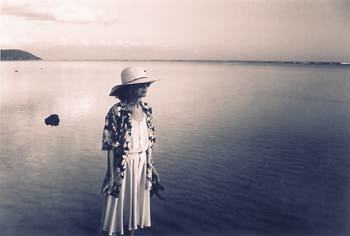
Pubblicato nel 1984, ‘Democracy' è il quarto romanzo di Joan Didion, da molti considerato il suo migliore.
Forse il migliore lo è davvero, ma è comunque una bella gara, sono uno più bello dell’altro.
Scrive Edoardo Nesi:
Non sono mai stato capace di decidere se dell'opera narrativa di Joan Didion ammiro più l'esattezza chirurgica dello stile o il distante calore delle lievi, sospese trame; le esemplari descrizioni dei cieli e del sole e delle albe o la glaciale delicatezza con cui sa raccontare il dolore che riempie le tenere e durissime storie d'amore perduto che sempre riempiono e definiscono le sue eroine - perché, com'è giusto, è sempre una donna il personaggio più importante dei suoi romanzi.
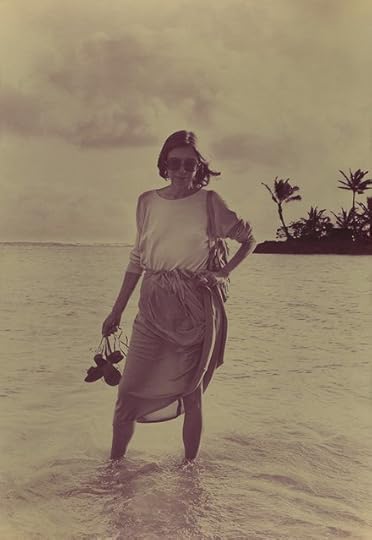
Isole e palme e mare e cieli cangianti (non solo per i tramonti, anche per gli esperimenti atomici).
Condivido pienamente l’entusiasmo di Nesi per questa scrittrice, per questa artista il cui stile è come il canto di una sirena, con la sua insistita incessante riscrittura, alla ricerca della parola perfetta (le mot juste, avrebbe detto Flaubert), con quel suo incedere da mantra in effetto stereofonia.
In fondo (in fondo!) si tratta di storie d’amore, per lo più amore perduto, amore sofferto, amore incerto, amore incompreso, amore combattuto. Tragedie romantiche.
E, sempre, al centro dell’obiettivo, perfettamente a fuoco, c’è una donna.
O due, come qui, come anche in ‘Diglielo da parte mia’, la protagonista e la narratrice.

In questo caso, la narratrice è proprio Joan Didion: si presenta, si annuncia, rende esplicito che sta scrivendo un libro su Inez e la sua lunga storia con Jack, interviene, commenta, è presente all’interno della storia, incontra i protagonisti, li intervista, o meglio, li ascolta parlare, e li ascolta tacere, esprime la sua incertezza nel riempire le informazioni e i dettagli mancanti.
Conosco le convenzioni e so rispettarle, so riempire il canovaccio che io stessa ho preparato; so come raccontarvi cosa disse lui e cosa disse lei e soprattutto, dato che il cuore del racconto è un’ellissi calcolata, un contratto tra lo scrittore che promette di sorprendervi e i lettori che accettano di essere sorpresi, so come non dirvi quello che voi non volete ancora sapere.
[Non è puro cinema questo?]
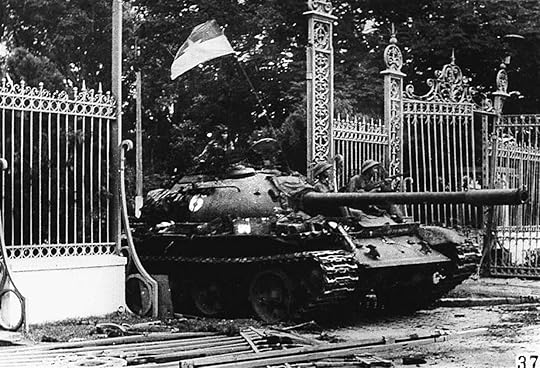
Poi, certo, oltre l’amore (oltre!), c’è tanto altro: anche ‘Democracy’ ci porta indietro agli anni Settanta, alla fine della guerra del Vietnam (l’evacuazione americana di Saigon, la più grande evacuazione della storia compiuta con gli elicotteri, è del marzo 1975) e ci fa viaggiare per il Pacifico e il sudest asiatico, in paesaggi pieni di isole e palme e mare e cieli cangianti (anche per gli esperimenti atomici).
Pagine che fanno riferimento alla politica dell’epoca, alle campagne presidenziali, alle proteste studentesche, ai magheggi della politica e dell’industria delle armi, ai servizi segreti, forse deviati sicuramente contorti, ai rapporti familiari, alle università, alla droga, a ….
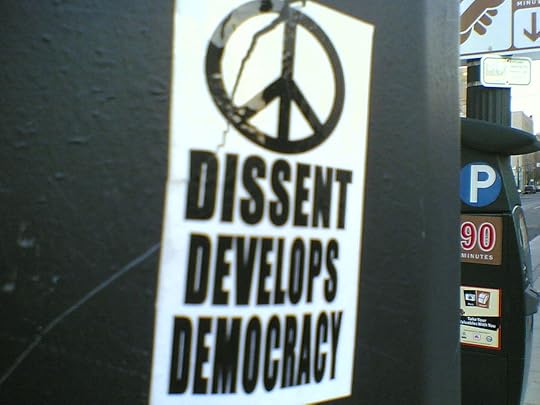
Sempre del tutto interna e contemporaneamente esterna ai fatti che narra, criptica, misteriosa, enigmatica, forse anche reticente e ambigua, distante e vicina, fredda e appassionata, Didion costruisce attesa e suspense, comunica una sensazione di ghiaccio bollente, di tango glaciale, di Grande Bellezza.
La storia d’amore di Inez con Jack è un esempio illuminante: non si parla mai dei corpi, del sesso, la stessa parola amore non sono certo venga mai espressa - eppure, la loro è una storia incandescente, piena di sensualità, al calor bianco.
Come altri, mi sono trovato a fare ricerche su Google per saperne di più sui personaggi e scoprire che sono creature di fantasia e finzione, mai realmente esistiti.
Romanzo perché i personaggi sono inventati, pur risultando più veri del vero? Memoir perché l’autrice è parte della storia? In stile New Journalism, o autofiction?
A me sembra talento: uno splendido talento.
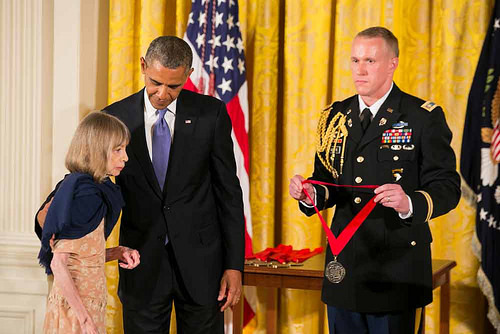
L'11 luglio del 2013 Barack Obama ha consegnato a Joan Didion una onorificenza per la sua attività nel campo delle arti.
Pubblicato nel 1984, ‘Democracy' è il quarto romanzo di Joan Didion, da molti considerato il suo migliore.
Forse il migliore lo è davvero, ma è comunque una bella gara, sono uno più bello dell’altro.
Scrive Edoardo Nesi:
Non sono mai stato capace di decidere se dell'opera narrativa di Joan Didion ammiro più l'esattezza chirurgica dello stile o il distante calore delle lievi, sospese trame; le esemplari descrizioni dei cieli e del sole e delle albe o la glaciale delicatezza con cui sa raccontare il dolore che riempie le tenere e durissime storie d'amore perduto che sempre riempiono e definiscono le sue eroine - perché, com'è giusto, è sempre una donna il personaggio più importante dei suoi romanzi.
Isole e palme e mare e cieli cangianti (non solo per i tramonti, anche per gli esperimenti atomici).
Condivido pienamente l’entusiasmo di Nesi per questa scrittrice, per questa artista il cui stile è come il canto di una sirena, con la sua insistita incessante riscrittura, alla ricerca della parola perfetta (le mot juste, avrebbe detto Flaubert), con quel suo incedere da mantra in effetto stereofonia.
In fondo (in fondo!) si tratta di storie d’amore, per lo più amore perduto, amore sofferto, amore incerto, amore incompreso, amore combattuto. Tragedie romantiche.
E, sempre, al centro dell’obiettivo, perfettamente a fuoco, c’è una donna.
O due, come qui, come anche in ‘Diglielo da parte mia’, la protagonista e la narratrice.
In questo caso, la narratrice è proprio Joan Didion: si presenta, si annuncia, rende esplicito che sta scrivendo un libro su Inez e la sua lunga storia con Jack, interviene, commenta, è presente all’interno della storia, incontra i protagonisti, li intervista, o meglio, li ascolta parlare, e li ascolta tacere, esprime la sua incertezza nel riempire le informazioni e i dettagli mancanti.
Conosco le convenzioni e so rispettarle, so riempire il canovaccio che io stessa ho preparato; so come raccontarvi cosa disse lui e cosa disse lei e soprattutto, dato che il cuore del racconto è un’ellissi calcolata, un contratto tra lo scrittore che promette di sorprendervi e i lettori che accettano di essere sorpresi, so come non dirvi quello che voi non volete ancora sapere.
[Non è puro cinema questo?]
Poi, certo, oltre l’amore (oltre!), c’è tanto altro: anche ‘Democracy’ ci porta indietro agli anni Settanta, alla fine della guerra del Vietnam (l’evacuazione americana di Saigon, la più grande evacuazione della storia compiuta con gli elicotteri, è del marzo 1975) e ci fa viaggiare per il Pacifico e il sudest asiatico, in paesaggi pieni di isole e palme e mare e cieli cangianti (anche per gli esperimenti atomici).
Pagine che fanno riferimento alla politica dell’epoca, alle campagne presidenziali, alle proteste studentesche, ai magheggi della politica e dell’industria delle armi, ai servizi segreti, forse deviati sicuramente contorti, ai rapporti familiari, alle università, alla droga, a ….
Sempre del tutto interna e contemporaneamente esterna ai fatti che narra, criptica, misteriosa, enigmatica, forse anche reticente e ambigua, distante e vicina, fredda e appassionata, Didion costruisce attesa e suspense, comunica una sensazione di ghiaccio bollente, di tango glaciale, di Grande Bellezza.
La storia d’amore di Inez con Jack è un esempio illuminante: non si parla mai dei corpi, del sesso, la stessa parola amore non sono certo venga mai espressa - eppure, la loro è una storia incandescente, piena di sensualità, al calor bianco.
Come altri, mi sono trovato a fare ricerche su Google per saperne di più sui personaggi e scoprire che sono creature di fantasia e finzione, mai realmente esistiti.
Romanzo perché i personaggi sono inventati, pur risultando più veri del vero? Memoir perché l’autrice è parte della storia? In stile New Journalism, o autofiction?
A me sembra talento: uno splendido talento.
L'11 luglio del 2013 Barack Obama ha consegnato a Joan Didion una onorificenza per la sua attività nel campo delle arti.

March 20, 2011
Damn, so many of the reviews for this book are terrible. I kind of want to get a gazillion votes for this review just so that it will come before some of the nonsense in the other reviews. Any talk of post-modernism or meta-fiction or there being too many characters in this novel (there aren't that many, more than say the one in certain Beckett works, but less than in a Dickens or Pynchon novel), also plug the ears in your head that listen when you are reading to any of cries that the book is dull or that harp too heavily upon the plot for better or for worse. Just ignore all that stuff (and probably most of what I'm going to say too, but not really because I want you to read this and I want your vote, it's important to me to get ahead of these other reviews). The only thing you need to know about this book is that it is crushingly beautiful. Not flowery pretty, or the literary equivalent of some replaceable blond starlet that graces the cover of gossip mags; but awkwardly gorgeous, insert your own parallelism to the blond starlet here.
The book starts:
The light at dawn during those Pacific tests was something to see.
Something to behold.
Something that could almost make you think you saw God, he said.
He said to her.
Jack Lovett said to Inez Victor.
Inez Victor who was born Inez Christian.
These short sentence long paragraphs could have been condensed into something like, "The light at dawn during those Pacific tests was something to see. They were something to behold and almost make you think you saw God," Jack Lovett said to Inez Victor (nee Christian). Instead, Didion pulls the reader immediately into an intimacy between the two characters. Without having to say it the signals are present that these people share a closeness, it's like some of the great opening sentences from Raymond Carver stories that paint whole nuanced paintings with broadly sparse paint strokes. It's never said where Jack Lovett says these words to Inez Victor, who was born Inez Christian, but the repetitions that move slowly in on to the subjects being said feel like an intimacy of two people laying close to one another, as opposed to the simple way I rewrote this section to read like something someone is saying to someone someplace that could be anyone and anywhere.
I love the way she opens this book, and I'd go quoting a bit more, but at the next line she pulls back the perspective a little and gives a longer paragraph describing parts of the scene surrounding a the atomic bomb tests, and I don't really like quoting long blocks of text. Throughout the book, Didion moves between different perspectives, controlling them through the way she chooses to write, instead of always having to explicitly state what she is trying to achieve. She does get explicit at times, and some reviewers seemed to find this annoying since she inserts herself, as the author, into the work, but I'd argue it isn't a literary trick she's pulling but uses it as a way to move about the themes of the novel. If the story were told from a traditional third person point of view quite a bit would be lost. Partially this is a novel about perspective, about the past and history and stories and it's about myths, and where the truth lies between all of what I just rambled out like a grocery list. I feel like I'm sort of rewriting my defense of the narrator for the YA book, The Book Thief. I guess I am. Good read that review for some more on this I guess.
This isn't an exciting book. The basic plot of the whole novel is given in the first couple of chapters. Most of the story the reader knows before the book is half-way through. Roughly it's about some events that happen in the Spring of 1975 as the United States is preparing to evacuate from Vietnam. The historical events taking place are mixed with the personal lives of the characters and the reader is left to draw the lines between macro and micro happenings and can use the books title Democracy as an ideal and an irony when applied to an export to third world countries at the barrel of a gun to construct a myriad of themes. There are quite a few different readings this book could be given, and for such a short novel Didion manages to pack a lot of big Ideas into the work. Even though there are a lot of big Ideas at work Didion never grabs the reader and forces him or her to have to confront them. The novel could be enjoyed as a love story, or a family tragedy; or as a slightly more humanist perspective to the world that James Ellroy's Blood's a Rover frolics in.
But none of that last paragraph is really that important to know. What is important to know is that the book is gorgeous. It's the kind of book that can be savored for the way the author deftly moves along, I guess like literature for literatures sake. I'd almost not want to recommend other people to read it, I might feel hurt if they didn't find it as good as I did, but I will recommend it. But only to readers who I know aren't reading novels just to get from point A to point B.
P.S. I kind of want to read everything by Joan Didion now. I think she might even move into my favorite writers category. Sort of like Don DeLillo and Cynthia Ozick, I just didn't pay much attention to her and now I think I might have been depriving myself of something awesome. I'm going to cautiously call her an up and coming favorite of mine until I read a couple of more books. It makes me so happy when I realize there are great writers whom I never paid much attention to and now I can look forward to reading them.
The book starts:
The light at dawn during those Pacific tests was something to see.
Something to behold.
Something that could almost make you think you saw God, he said.
He said to her.
Jack Lovett said to Inez Victor.
Inez Victor who was born Inez Christian.
These short sentence long paragraphs could have been condensed into something like, "The light at dawn during those Pacific tests was something to see. They were something to behold and almost make you think you saw God," Jack Lovett said to Inez Victor (nee Christian). Instead, Didion pulls the reader immediately into an intimacy between the two characters. Without having to say it the signals are present that these people share a closeness, it's like some of the great opening sentences from Raymond Carver stories that paint whole nuanced paintings with broadly sparse paint strokes. It's never said where Jack Lovett says these words to Inez Victor, who was born Inez Christian, but the repetitions that move slowly in on to the subjects being said feel like an intimacy of two people laying close to one another, as opposed to the simple way I rewrote this section to read like something someone is saying to someone someplace that could be anyone and anywhere.
I love the way she opens this book, and I'd go quoting a bit more, but at the next line she pulls back the perspective a little and gives a longer paragraph describing parts of the scene surrounding a the atomic bomb tests, and I don't really like quoting long blocks of text. Throughout the book, Didion moves between different perspectives, controlling them through the way she chooses to write, instead of always having to explicitly state what she is trying to achieve. She does get explicit at times, and some reviewers seemed to find this annoying since she inserts herself, as the author, into the work, but I'd argue it isn't a literary trick she's pulling but uses it as a way to move about the themes of the novel. If the story were told from a traditional third person point of view quite a bit would be lost. Partially this is a novel about perspective, about the past and history and stories and it's about myths, and where the truth lies between all of what I just rambled out like a grocery list. I feel like I'm sort of rewriting my defense of the narrator for the YA book, The Book Thief. I guess I am. Good read that review for some more on this I guess.
This isn't an exciting book. The basic plot of the whole novel is given in the first couple of chapters. Most of the story the reader knows before the book is half-way through. Roughly it's about some events that happen in the Spring of 1975 as the United States is preparing to evacuate from Vietnam. The historical events taking place are mixed with the personal lives of the characters and the reader is left to draw the lines between macro and micro happenings and can use the books title Democracy as an ideal and an irony when applied to an export to third world countries at the barrel of a gun to construct a myriad of themes. There are quite a few different readings this book could be given, and for such a short novel Didion manages to pack a lot of big Ideas into the work. Even though there are a lot of big Ideas at work Didion never grabs the reader and forces him or her to have to confront them. The novel could be enjoyed as a love story, or a family tragedy; or as a slightly more humanist perspective to the world that James Ellroy's Blood's a Rover frolics in.
But none of that last paragraph is really that important to know. What is important to know is that the book is gorgeous. It's the kind of book that can be savored for the way the author deftly moves along, I guess like literature for literatures sake. I'd almost not want to recommend other people to read it, I might feel hurt if they didn't find it as good as I did, but I will recommend it. But only to readers who I know aren't reading novels just to get from point A to point B.
P.S. I kind of want to read everything by Joan Didion now. I think she might even move into my favorite writers category. Sort of like Don DeLillo and Cynthia Ozick, I just didn't pay much attention to her and now I think I might have been depriving myself of something awesome. I'm going to cautiously call her an up and coming favorite of mine until I read a couple of more books. It makes me so happy when I realize there are great writers whom I never paid much attention to and now I can look forward to reading them.

Want to Read
August 14, 2024not enough books are by joan didion

July 9, 2017
At first sight the words charm and harm differ in one letter only but the contrast in their meaning is dramatic. Strangely enough, 'Democracy' by Joan Didion has charmed me and harmed me at the same time.
‘Democracy’ has charmed me.
The first thing that enchanted me instantly was Joan Didion’s writing style. I’ve never experienced anything like that before. The unsettling, highly addictive rhythm of her sentences, with many cadenced repetitions and anaphoras, resonated with me like music which goes smoothly straight to your heart.
I was flabbergasted by Didion’s ability to affect me so much with so few words. Isaac Babel points out, 'No iron can stab the heart with such force as a period put just at the right place' and it seems so true in Joan Didion's case also.
Although 'Democracy' provokes strong emotions, it’s far from sentimental. Her style is harsh at times, like her characters. Ah, the way she depicts the feelings flowing between Inez and Jack every time they meet! It made me think of 'Casablanca': scarce words, extreme tension.
The descriptions in "Democracy' are concise but the world she paints with words bursts with colours and smells: 'When Inez remembered that week in Jakarta in 1969 she remembered mainly the cloud cover that hung low over the city and trapped the fumes of sewage and automobile exhaust and rotting vegetation as in a fetid greenhouse. She remembered the cloud cover and she remembered lightning flickering on the horizon before dawn and she remembered rain washing wild orchids into the milky waste ditches.'
Trying to analyze the mechanisms Joan Didion uses to make her prose so original and mesmerizing, would be like catching her words in the net and pinning them like exotic butterflies. Sorry, I’m not going to do that. I prefer to let them float around me and watch them in awe and just sense them with delight.
As for topics and genres, “Democracy” reminds me of a multilayered cake. Don’t expect any sweetness though! It’s more like a strong espresso which will burn your lips and make your heart pulsate faster. You will discover many floors of Didion's amazing construction. Politics, modern history, family, love, writing a novel, being a writer, to name just a few.
It’s a novel, a love story, a crime story, a reportage and an essay at the same time. The narrator is Joan Didion herself who happens to know some characters in person and who shares thoughts about creating this novel and writing in general. The structure of 'Democracy' made me also think of a film. Gosh, the scene in the bar could be dazzling, with Inez dancing not as 'you or I or the agency that regulated dancing in bars might have defined dancing'.
My experience with this novel proves that reaching out of comfort zone can be extremely rewarding. It was Orsodimondo, who got me interested in Joan Didion’s works, and I am very grateful for his encouragement.
‘Democracy’ has harmed me.
Everything I try to read now seems tasteless and colourless compared to Joan Didion’s novel.
‘Democracy’ has charmed me.
The first thing that enchanted me instantly was Joan Didion’s writing style. I’ve never experienced anything like that before. The unsettling, highly addictive rhythm of her sentences, with many cadenced repetitions and anaphoras, resonated with me like music which goes smoothly straight to your heart.
I was flabbergasted by Didion’s ability to affect me so much with so few words. Isaac Babel points out, 'No iron can stab the heart with such force as a period put just at the right place' and it seems so true in Joan Didion's case also.
Although 'Democracy' provokes strong emotions, it’s far from sentimental. Her style is harsh at times, like her characters. Ah, the way she depicts the feelings flowing between Inez and Jack every time they meet! It made me think of 'Casablanca': scarce words, extreme tension.
The descriptions in "Democracy' are concise but the world she paints with words bursts with colours and smells: 'When Inez remembered that week in Jakarta in 1969 she remembered mainly the cloud cover that hung low over the city and trapped the fumes of sewage and automobile exhaust and rotting vegetation as in a fetid greenhouse. She remembered the cloud cover and she remembered lightning flickering on the horizon before dawn and she remembered rain washing wild orchids into the milky waste ditches.'
Trying to analyze the mechanisms Joan Didion uses to make her prose so original and mesmerizing, would be like catching her words in the net and pinning them like exotic butterflies. Sorry, I’m not going to do that. I prefer to let them float around me and watch them in awe and just sense them with delight.
As for topics and genres, “Democracy” reminds me of a multilayered cake. Don’t expect any sweetness though! It’s more like a strong espresso which will burn your lips and make your heart pulsate faster. You will discover many floors of Didion's amazing construction. Politics, modern history, family, love, writing a novel, being a writer, to name just a few.
It’s a novel, a love story, a crime story, a reportage and an essay at the same time. The narrator is Joan Didion herself who happens to know some characters in person and who shares thoughts about creating this novel and writing in general. The structure of 'Democracy' made me also think of a film. Gosh, the scene in the bar could be dazzling, with Inez dancing not as 'you or I or the agency that regulated dancing in bars might have defined dancing'.
My experience with this novel proves that reaching out of comfort zone can be extremely rewarding. It was Orsodimondo, who got me interested in Joan Didion’s works, and I am very grateful for his encouragement.
‘Democracy’ has harmed me.
Everything I try to read now seems tasteless and colourless compared to Joan Didion’s novel.

September 7, 2012
When I first read this book in 1984 I was absolutely staggered. Immediately, I flipped back to the beginning and read it again. I'm sure I've read it a couple of more times since, and this latest re-read has merely confirmed that this must be my all-time favorite book. Although I've been land-locked for the past number of years, I am -- in essence -- a person of the Pacific, and Didion's book IS the Pacific.
Still, it's a complicated little book and demands more from the reader than most. One must pay attention to all the tiny details and have more than a passing knowledge of the locales -- from Hawaii, to Southeast Asia, Hong Kong, the Philippines, and the scattered islands in between (Guam, Kwajalein, Johnston) -- including the names of the airports, the capitals and the history of these places in the 50s, 60s, 70s.
The title is curious. I've never heard a definitive explanation for it, only hints of it being compared to Henry Adams' book of the same title. My take is that it's an ironic title. The book is actually about American colonialism -- our original takeover of Hawaii and our hubris in thinking a war in Vietnam was 1) winnable and 2) appreciated by that country.
[2021 edit -- the pink cover of the dust jacket gives it away -- a book of colonialism, pink being the navy blue (fashion-wise) of India and Inez's sister Janet having a closet-full, more than a dozen pink dresses. Especially when juxtaposed (in Jakarta) to Frances Landau's outfit that mimicked military fatigues.]
But mostly I love this book for the sound of it -- the prose is like poetry and begs to be read aloud. It is, in fact, a mystery, a romance, and a political critique -- but clothed in shear elegance.
Still, it's a complicated little book and demands more from the reader than most. One must pay attention to all the tiny details and have more than a passing knowledge of the locales -- from Hawaii, to Southeast Asia, Hong Kong, the Philippines, and the scattered islands in between (Guam, Kwajalein, Johnston) -- including the names of the airports, the capitals and the history of these places in the 50s, 60s, 70s.
The title is curious. I've never heard a definitive explanation for it, only hints of it being compared to Henry Adams' book of the same title. My take is that it's an ironic title. The book is actually about American colonialism -- our original takeover of Hawaii and our hubris in thinking a war in Vietnam was 1) winnable and 2) appreciated by that country.
[2021 edit -- the pink cover of the dust jacket gives it away -- a book of colonialism, pink being the navy blue (fashion-wise) of India and Inez's sister Janet having a closet-full, more than a dozen pink dresses. Especially when juxtaposed (in Jakarta) to Frances Landau's outfit that mimicked military fatigues.]
But mostly I love this book for the sound of it -- the prose is like poetry and begs to be read aloud. It is, in fact, a mystery, a romance, and a political critique -- but clothed in shear elegance.

January 18, 2020
This book is so strange, but if you're a writer you should read it.

November 22, 2025
Joan Didion's 1984 novel Democracy is most unusual. It simultaneously tells a story and of the author’s composition of the story. Inez Victor is the wife of a U.S. Senator but has had a decades-long relationship with Jack Lovett, a covert operative she has known since her youth. Their connection spans the 1950s through the fall of Saigon in 1975, when Inez abandons her husband's presidential campaign to join Lovett in Southeast Asia. Didion inserts chapters where she treats herself as a character who interviews Inez and researches the story. The author frequently breaks the fourth wall to discuss her compositional choices, what material she has decided to include or omit, and uncertainty about certain details. She is treating it as if it were a true story, but it is entirety fictional. It is a very creative approach. It is a bit difficult to engage emotionally but certainly occupies the brain and I quite enjoyed it overall.

March 3, 2024
Notes on a Novel: A Novel. A deconstruction. A romance of the islands. Which islands? Many islands, from Hawaii to Johnston to Indonesia. A love story in the way that the The English Patient is a love story. About Jack Lovett and Inez Christian. Together all their lives, if you count thinking about it. Democracy follows the same blueprint as both A Book of Common Prayer and The Last Thing He Wanted but it is more conventionally novelistic than either. More emotionally present. Domesticated. Motivivations not quite so mysterious. Full of family drama peppered with vicious barbs worthy of August: Osage County and this time the "I" cobbling the story together is identifed as Joan Didion herself. Oh, and Vietnam. My third Joan Didion novel. The second I devoured within 48 hours. First-rate as with everything Joan Didion ever wrote.

April 29, 2015
The first meeting of Inez Christian and Jack Lovett at the ballet - the beginning of Lovett's "grave attraction" that would last over twenty years - is the sexiest scene I've read in a while:
Cissy Christian smoking a cigarette in her white jade holder. Inez, wearing dark glasses...pinning and repinning a gardenia in her damp hair. This is our niece, Inez, Dwight Christian said. Inez, Major Lovett. Jack. Inez, Mrs. Lovett. Carla. A breath of air, a cigarette. This champagne is lukewarm. One glass won't hurt you, Inez, it's your birthday. Inez's birthday. Inez is seventeen. Inez's evening, really. Inez is our balletomane.
"Why are you wearing sunglasses," Jack Lovett said.
Inez Christian, startled, touched her glasses as if to remove them and then, looking at Jack Lovett, brushed her hair back instead, loosening the pins that held the gardenia.
Inez Christian smiled.
The gardenia fell into the wet grass.
"I used to know all the generals at Schofield," Cissy Christian said. "Great fun out there. Then."
"I'm sure." Jack Lovett did not take his eyes from Inez.
"Great polo players, some of them," Cissy Christian said. "I don't suppose you get much time to play."
"I don't play," Jack Lovett said.
Inez Christian closed her eyes.
Carla Lovett drained her paper cup and crushed it in her hand.
"Inez is seventeen," Dwight Christian repeated.
"I think I want a real drink," Carla Lovett said.
Cissy Christian smoking a cigarette in her white jade holder. Inez, wearing dark glasses...pinning and repinning a gardenia in her damp hair. This is our niece, Inez, Dwight Christian said. Inez, Major Lovett. Jack. Inez, Mrs. Lovett. Carla. A breath of air, a cigarette. This champagne is lukewarm. One glass won't hurt you, Inez, it's your birthday. Inez's birthday. Inez is seventeen. Inez's evening, really. Inez is our balletomane.
"Why are you wearing sunglasses," Jack Lovett said.
Inez Christian, startled, touched her glasses as if to remove them and then, looking at Jack Lovett, brushed her hair back instead, loosening the pins that held the gardenia.
Inez Christian smiled.
The gardenia fell into the wet grass.
"I used to know all the generals at Schofield," Cissy Christian said. "Great fun out there. Then."
"I'm sure." Jack Lovett did not take his eyes from Inez.
"Great polo players, some of them," Cissy Christian said. "I don't suppose you get much time to play."
"I don't play," Jack Lovett said.
Inez Christian closed her eyes.
Carla Lovett drained her paper cup and crushed it in her hand.
"Inez is seventeen," Dwight Christian repeated.
"I think I want a real drink," Carla Lovett said.

February 18, 2021
In a review of another book by Joan Dodion, I said if one was willing to go back and re-read parts of the book that didn't make much sense, or simply re-read the entire book one might truly realize how great a book it was. The same can be said for her book, "Democracy." The first fifteen to twenty pages of this book were quite confusing, made especially so by the author switching from first person to third person narrative.
But once this reviewer went back and re-read those pages, I was surprisingly enlightened by the author's approach. There are other difficult passages throughout the book, but I simply went back and re-read them and understood their importance. Now, this might seem a little too much for a lot of readers and I totally understand.
Yet, for me, the inconvenience was worth the reward, and in the end I loved this book and the craftsmanship and the scope of the book I found fascinating. She deftly connects the political, with the military, and the corruption, and the black market used to peddle drugs and weapons toward the end of the Vietnam war. The characters are somewhat offbeat, but that is how they are able to survive in this devious world and in the professions they have chosen. There are code names for everyone and everything and nothing appears completely transparent. A Fascinating Book.
But once this reviewer went back and re-read those pages, I was surprisingly enlightened by the author's approach. There are other difficult passages throughout the book, but I simply went back and re-read them and understood their importance. Now, this might seem a little too much for a lot of readers and I totally understand.
Yet, for me, the inconvenience was worth the reward, and in the end I loved this book and the craftsmanship and the scope of the book I found fascinating. She deftly connects the political, with the military, and the corruption, and the black market used to peddle drugs and weapons toward the end of the Vietnam war. The characters are somewhat offbeat, but that is how they are able to survive in this devious world and in the professions they have chosen. There are code names for everyone and everything and nothing appears completely transparent. A Fascinating Book.

December 19, 2019
Chinetosi
Guarda, Joan Didion la dice meglio di tutti, questa cosa, mi pare in Democracy... La so a memoria, senti... Comunque siamo stati insieme. Siamo stati insieme tutta la vita. Se conti anche tutto il tempo che abbiamo passato a pensarci. (La mia ombra è tua - E. Nesi)
Ecco, questa è la mia carta d’imbarco, Edoardo Nesi mi ha preceduto a bordo. Già all’inizio non ero contento del dialogo che l’autrice dava adito di voler tenere con i lettori interrompendo la narrazione per spiegare come intendeva condurla (Kundera fa qualcosa di simile ne “L’insostenibile leggerezza dell’essere” ma con ben altra dialettica). Andando avanti ho accusato i primi sintomi di mal di mare, un sacco di chiacchiere a vuoto, lo sfoggio dei personaggi e degli avvenimenti a gimcana. Il malessere è aumentato man mano che scorrevano le pagine. Ma di che cosa parla? Candidati alle elezioni americane, Vietnam. Lei (Joan) è uno dei personaggi? Inez e Janet Christian sono donne realmente vissute? Un aspetto di questo libro iper politicizzato ricorda il tratto peggiore de “Le Correzioni” di Franzen: la puntigliosità. Con lo stomaco in subbuglio mi son sorbito trattati su questioni trascurabili a scapito di qualsiasi ritmo e piacevolezza di lettura. All’ennesimo inserto in cui inscenava un dialogo con il lettore
Conosco le convenzioni e so rispettarle, so riempire il canovaccio che io stessa ho preparato; so come raccontarvi cosa disse lui e cosa disse lei e soprattutto, dato che il cuore del racconto è un’ellissi calcolata, un contratto tacito fra lo scrittore che promette di sorprendere e i lettori che accettano di essere sorpresi, so come non dirvi quello che voi non volete ancora sapere. Comprendo il ruolo che i particolari giocano in questo tipo di racconto: non è solo il pasticcio di pollo o il tempo (a me piace il tempo, ma il tempo è facile)..
ho sbottato e mi sono appuntato:
Finiscila di farci capire quanto sei brava ed adoprati per esserlo, togli tutti quei dettagli inutili, perché troppi particolari giocano a sfavore come pochi particolari. Raccontacela questa storia invece di raccontartela.
Una scrittrice piena di sé, se non altro in questo romanzo, dove anche la citazione pilota riportata da Nesi, una volta contestualizzata, perde buona parte del suo fascino perché non è una dichiarazione diretta ma una riflessione ad alta voce. Joan Didion fa in modo di divenirne depositaria anziché inserirla in un dialogo fra i due protagonisti.
Nella postfazione ci sono alcune direttive per inquadrare meglio la scrittrice
-Joan Didion è considerata universalmente la più grande giornalista americana vivente e una delle voci più importanti del New Journalism.
-Il rapporto della Didion con la politica fu travagliato. Da giovane pare abbia votato per i repubblicani (più avanti negli anni avrebbe sostenuto i democratici)
Ho letto Norman Mailer, giornalista anche lui, la Didion deve esser la più grande solo perché lui è deceduto nel 2007 (c’è un abisso fra loro). Ho visto che nella produzione di Joan spicca il memoir “L’anno del pensiero magico”, chissà se in futuro gli darò una chance, al momento scendo con lo stomaco rovesciato e non ho intenzione di risalire.
Guarda, Joan Didion la dice meglio di tutti, questa cosa, mi pare in Democracy... La so a memoria, senti... Comunque siamo stati insieme. Siamo stati insieme tutta la vita. Se conti anche tutto il tempo che abbiamo passato a pensarci. (La mia ombra è tua - E. Nesi)
Ecco, questa è la mia carta d’imbarco, Edoardo Nesi mi ha preceduto a bordo. Già all’inizio non ero contento del dialogo che l’autrice dava adito di voler tenere con i lettori interrompendo la narrazione per spiegare come intendeva condurla (Kundera fa qualcosa di simile ne “L’insostenibile leggerezza dell’essere” ma con ben altra dialettica). Andando avanti ho accusato i primi sintomi di mal di mare, un sacco di chiacchiere a vuoto, lo sfoggio dei personaggi e degli avvenimenti a gimcana. Il malessere è aumentato man mano che scorrevano le pagine. Ma di che cosa parla? Candidati alle elezioni americane, Vietnam. Lei (Joan) è uno dei personaggi? Inez e Janet Christian sono donne realmente vissute? Un aspetto di questo libro iper politicizzato ricorda il tratto peggiore de “Le Correzioni” di Franzen: la puntigliosità. Con lo stomaco in subbuglio mi son sorbito trattati su questioni trascurabili a scapito di qualsiasi ritmo e piacevolezza di lettura. All’ennesimo inserto in cui inscenava un dialogo con il lettore
Conosco le convenzioni e so rispettarle, so riempire il canovaccio che io stessa ho preparato; so come raccontarvi cosa disse lui e cosa disse lei e soprattutto, dato che il cuore del racconto è un’ellissi calcolata, un contratto tacito fra lo scrittore che promette di sorprendere e i lettori che accettano di essere sorpresi, so come non dirvi quello che voi non volete ancora sapere. Comprendo il ruolo che i particolari giocano in questo tipo di racconto: non è solo il pasticcio di pollo o il tempo (a me piace il tempo, ma il tempo è facile)..
ho sbottato e mi sono appuntato:
Finiscila di farci capire quanto sei brava ed adoprati per esserlo, togli tutti quei dettagli inutili, perché troppi particolari giocano a sfavore come pochi particolari. Raccontacela questa storia invece di raccontartela.
Una scrittrice piena di sé, se non altro in questo romanzo, dove anche la citazione pilota riportata da Nesi, una volta contestualizzata, perde buona parte del suo fascino perché non è una dichiarazione diretta ma una riflessione ad alta voce. Joan Didion fa in modo di divenirne depositaria anziché inserirla in un dialogo fra i due protagonisti.
Nella postfazione ci sono alcune direttive per inquadrare meglio la scrittrice
-Joan Didion è considerata universalmente la più grande giornalista americana vivente e una delle voci più importanti del New Journalism.
-Il rapporto della Didion con la politica fu travagliato. Da giovane pare abbia votato per i repubblicani (più avanti negli anni avrebbe sostenuto i democratici)
Ho letto Norman Mailer, giornalista anche lui, la Didion deve esser la più grande solo perché lui è deceduto nel 2007 (c’è un abisso fra loro). Ho visto che nella produzione di Joan spicca il memoir “L’anno del pensiero magico”, chissà se in futuro gli darò una chance, al momento scendo con lo stomaco rovesciato e non ho intenzione di risalire.

February 14, 2019
At nearly the halfway point (the Intermission?) of Democracy Didion, in a meta moment warns (or reminds) the reader with "I am resisting narrative here." She's not lying. Actually, the reader is placed on notice as early as chapter 2 where the author seems triggered by some images from a Wallace Stevens' poem toward writing, in a half assed way, a novel. But, "[c]ards on the table," she informs the reader she's at a point in her life where she (Didion) lacks "certainty." But Vietnam, even ten years out (Democracy came out in 1984) would be hard to sort out. Maybe it was writer's block, maybe she was hoping to write another zeitgeist novel, like her terrific send-up of the sixties, Play It as It Lays. Who knows?
All of that said, Didion then launches the construction of her main characters, soldier of fortune type, Jack Lovett and (the very Didion-like) Inez Victor, wife of a failed politician. She actually gets off to an interesting and evocative start with family history, money, clothes (lots of them), but as this short novel unfolds Didion relies more and more on fast-moving dialogue (she's a master), and quickly changing events without the necessary connective tissue of narrative. There's a murder or two, and on the periphery of things the fall of Vietnam (it's 1975). I suppose there could be a metaphor in there, but I don't really care. The novel fails, and if it wasn't for Didion's name and fame, this book would have long faded from memory as an out-of-print item. Yes, I did give it two stars. Didion is a first-rate writer with a bad novel. You can still find some great moments and conversations, even if as a whole the novel is thin and unsatisfying. If you want a savage and excellent home-front book on Vietnam and its moral costs, I recommend Dog Soldiers by Robert Stone.
All of that said, Didion then launches the construction of her main characters, soldier of fortune type, Jack Lovett and (the very Didion-like) Inez Victor, wife of a failed politician. She actually gets off to an interesting and evocative start with family history, money, clothes (lots of them), but as this short novel unfolds Didion relies more and more on fast-moving dialogue (she's a master), and quickly changing events without the necessary connective tissue of narrative. There's a murder or two, and on the periphery of things the fall of Vietnam (it's 1975). I suppose there could be a metaphor in there, but I don't really care. The novel fails, and if it wasn't for Didion's name and fame, this book would have long faded from memory as an out-of-print item. Yes, I did give it two stars. Didion is a first-rate writer with a bad novel. You can still find some great moments and conversations, even if as a whole the novel is thin and unsatisfying. If you want a savage and excellent home-front book on Vietnam and its moral costs, I recommend Dog Soldiers by Robert Stone.

January 29, 2012
As much as I am a fan of "Slouching Toward Bethlehem," I think that this is my favorite Joan Didion book. It presumes so much on the part of the reader -- that we already know about the intricacies of the characters' lives and the underbelly of the Vietnam War, and more so, that we care about any of it. In this book, Didion does not seem to write at all for the reader. She seems to be writing to answer some question whispering to her inside her own thoughts. While the novel "The Descendants" (I read the book and saw the movie) clearly strives to explain/explore/speak to the bizarre aristocracy/social hierarchies of the Hawaiian Islands, "Democracy" is the book to turn to if a person wants a truly insightful view into this world (not to mention the worlds of politics and dysfunctional families). Because, as with any insider, this book does not give away all of its secrets. It builds a (very loose) foundation based on the murder of the daughter of a prominent Hawaii family (she is also the sister-in-law of a prominent senator), then skims and skirts around this event with a litheness and absolute disinterest in me as the reader that makes me green with envy.

June 23, 2017
This is a novel about memory, personal and political. It is a masterpiece. Democracy is Joan Didion’s fourth novel, preceded by Run River, Play It As It Lays and A Book of Common Prayer. It was published in 1984. The novel takes place between Honolulu and Jakarta at the hemorrhaging end of the Vietnam War.
It is written as a kind of memoir of Inez Victor, wife of U.S. Senator Harry Victor, told from the perspective of a peculiar narrator. The narrator is none other than Joan Didion.
She is also the self-conscious author of the novel and explains to the reader how this narrative could have been written differently, interjecting the authorial voice within its narrative.
It is a stunning literary achievement and this device is remarkably effective. I found myself reading passages twice as she talks about how they were constructed and why. The technique is so effective that you’ll be craving its craftiness in whatever you read next.
It is written as a kind of memoir of Inez Victor, wife of U.S. Senator Harry Victor, told from the perspective of a peculiar narrator. The narrator is none other than Joan Didion.
She is also the self-conscious author of the novel and explains to the reader how this narrative could have been written differently, interjecting the authorial voice within its narrative.
It is a stunning literary achievement and this device is remarkably effective. I found myself reading passages twice as she talks about how they were constructed and why. The technique is so effective that you’ll be craving its craftiness in whatever you read next.

February 16, 2021
4.5 rounded up
One to re-read and re-visit for sure, but I found Didion's 1984 novel Democracy to be smart, perceptive and more multilayered than it perhaps first comes across. Apparently the novel takes it's name from Henry Adams novel of the same title which tackles corruption under the second Adam's administration, and I think if you're familiar with the political climate of 1970s America and the Vietnam War then you'll likely "get" this novel more than I did. Regardless, Didion's writing shines, and because of this and the clever structure it's possible to get enjoyment out of the Democracy without this knowledge.
One to re-read and re-visit for sure, but I found Didion's 1984 novel Democracy to be smart, perceptive and more multilayered than it perhaps first comes across. Apparently the novel takes it's name from Henry Adams novel of the same title which tackles corruption under the second Adam's administration, and I think if you're familiar with the political climate of 1970s America and the Vietnam War then you'll likely "get" this novel more than I did. Regardless, Didion's writing shines, and because of this and the clever structure it's possible to get enjoyment out of the Democracy without this knowledge.

March 24, 2019
Solitudine emotiva
Dal punto di vista estetico, il libro è piacevolissimo, scritto in modo ricercato ma molto scorrevole. Le frasi sono brevi e quella che segue spesso definisce meglio la precedente, lasciando il tempo al lettore di assaporare l'immagine o l'idea.
Si vede bella gente che si muove in splendide ville con giardini e piscine o alberghi di lusso, su sfondi tropicali.
Le difficoltà della vita sono smussate da amici e collaboratori che offrono drink e cercano voli e sistemazioni discrete. Tutto gradevole e garbato. Mi è piaciuto. Mi sono sfuggite completamente le intenzioni dell'autrice. Come mai mescola il ritiro USA da Saigon con una storia di sguardi fra una giovane possibile first lady e un affascinante uomo d'affari che conosce tutti e del quale sembra che non ci sia nulla da sapere. Perchè ci propone il deus ex machina della signora Inez Victor, nata Christian, come un sobrio gentleman pieno di ottime qualità organizzative e relazionali, come se noi potessimo immaginare un trafficante d'armi solo in abiti stazzonati, avvolto nel fumo del sigaro e dai modi grossolani? Noi non lo pensiamo. Poi addirittura mi viene in mente un altro libro ambientato a Saigon, Niente e così sia, e il minimo che io possa dire è che c'è una certa diversità di spessore, ma sono sicura che Didion ha scritto quello che voleva scrivere. Non un reportage ma una storia che raccontasse uno stato d'animo di distacco, post smobilitazione di Saigon, post tutto. Probabilmente a suo modo aveva intenti provocatori, dato che in piena era No nukes ricorda con elegia il rosa del cielo sugli atolli prima degli esperimenti atomici: nel corso degli anni gli intenti sono un po' svaporati, lasciandosi dietro un'idea di americano sull'albero. Ho dimenticato di chiederle perchè Democracy: il contenuto suggerisce di più Oligarchy. Forse, i postumi del sarcasmo.
Dal punto di vista estetico, il libro è piacevolissimo, scritto in modo ricercato ma molto scorrevole. Le frasi sono brevi e quella che segue spesso definisce meglio la precedente, lasciando il tempo al lettore di assaporare l'immagine o l'idea.
Si vede bella gente che si muove in splendide ville con giardini e piscine o alberghi di lusso, su sfondi tropicali.
Le difficoltà della vita sono smussate da amici e collaboratori che offrono drink e cercano voli e sistemazioni discrete. Tutto gradevole e garbato. Mi è piaciuto. Mi sono sfuggite completamente le intenzioni dell'autrice. Come mai mescola il ritiro USA da Saigon con una storia di sguardi fra una giovane possibile first lady e un affascinante uomo d'affari che conosce tutti e del quale sembra che non ci sia nulla da sapere. Perchè ci propone il deus ex machina della signora Inez Victor, nata Christian, come un sobrio gentleman pieno di ottime qualità organizzative e relazionali, come se noi potessimo immaginare un trafficante d'armi solo in abiti stazzonati, avvolto nel fumo del sigaro e dai modi grossolani? Noi non lo pensiamo. Poi addirittura mi viene in mente un altro libro ambientato a Saigon, Niente e così sia, e il minimo che io possa dire è che c'è una certa diversità di spessore, ma sono sicura che Didion ha scritto quello che voleva scrivere. Non un reportage ma una storia che raccontasse uno stato d'animo di distacco, post smobilitazione di Saigon, post tutto. Probabilmente a suo modo aveva intenti provocatori, dato che in piena era No nukes ricorda con elegia il rosa del cielo sugli atolli prima degli esperimenti atomici: nel corso degli anni gli intenti sono un po' svaporati, lasciandosi dietro un'idea di americano sull'albero. Ho dimenticato di chiederle perchè Democracy: il contenuto suggerisce di più Oligarchy. Forse, i postumi del sarcasmo.

June 9, 2016
Aloha oe
Sofisticata, enigmatica, esotica, raffinata.
Questa potrebbe essere la descrizione di Inez Victor, la protagonista di «Democracy».
Ma si potrebbe dire le stesso di Honolulu, teatro di gran parte della storia.
O di Saigon.
O di Giacarta.
O anche, per certi versi, di Joan Didion.
O della sua scrittura.
Affascinante, affascinanti.
Succede a Honolulu, dunque, ma non solo, e la sensazione predominante, quella che resta, quella che lascia un retrogusto amaro, è di aver assistito a una rappresentazione da dietro le quinte, di aver osservato dal backstage il muoversi degli attori, e di aver alzato, Joan Didion per noi, un velo.
L'epoca è quella, enigmatica anch'essa, in cui in Vietnam, come in Cambogia, come a Giacarta, alle ingerenze nelle questioni di politica interna, nelle guerre civili o negli interventi ufficiali, gli Stati Uniti affiancano l'intervento, nell'ombra, di strani faccendieri, forse agenti segreti, che ufficialmente si occupano di "estrarre" i cittadini USA da nazioni ormai diventate pericolose, per riportarli in patria, mentre nella realtà (ma sapremo mai, noi, la realtà delle cose, chi era veramente Jack Lovett e qual è la realtà in questa storia?) trafficano (in armi, in denaro), forse, intrigano con il governo (ma quale governo e da che parte stanno?) e poi, come ogni spia che si rispetti finiscono per innamorarsi della persona sbagliata (ma poi qual è la persona giusta?).
E poi c'è Inez Victor, protagonista defilata, centro decentrato, ma luminoso e sfaccettato diamante dell'universo di «Democracy», moglie di Harry Victor, senatore del congresso, eterno candidato alla presidenza; irrequieta, defilata, inseguita dalla stampa alla quale riesce quasi sempre a sottrarsi: bella, conturbante, figlia di una ricca famiglia di Honolulu, la cui storia è altrettanto conturbante, irrequieta, inseguita dalla stampa.
Joan Didion irrompe nel romanzo sin dall'inizio con un coup de théâtre, esibisce da subito gli strumenti del mestiere, mette le carte in tavola, le scopre, e poi abilmente le scombina con il suo disordinato andare avanti e indietro nel tempo, facendole apparire e scomparire dove il lettore non si aspetterebbe di vederglielo fare; si diverte (già, chi non ha aperto Google in cerca di notizie su…dove...quando?) a mantenere la storia in equilibrio fra fiction e non fiction, fra romanzo e reportage, a creare l'illusione, nel lettore, di essere finalmente riuscito a svelare un mistero, di avere assistito a una parte di storia fino a quel momento negata a tutti. A tutti coloro che non fanno parte della storia, quella dei cocktail e delle luci a bordo piscina, degli aerei privati che decollano nelle notti profumate delle Hawaii, delle residenze coloniali dove arrivano attutite le notizie di fughe, di incendi, di esplosioni, di morte, dietro quella patina fatta di abiti leggeri e impalpabili, di sorrisi tirati, di verità conosciute da nessuno ma sussurrate da tutti.
E poi vira, Joan Didion, vira sul porpora, quando racconta di Inez e di Jack Lovett, di quel magnetismo che solo le sue parole, e i loro sguardi, riescono a narrare, regalando alla storia una storia d'amore (o di magnetismo?) che ha il profumo di gardenie e jacaranda, la carezza dei venti tropicali, il respiro di una passione che, come già quella che Graham Green raccontava in Un Americano Tranquillo, ha i colori cupi di una fine che sembra già annunciata.
Ma con Joan Didion ormai, l'ho capito, l'abbiamo capito, non c'è mai niente di veramente annunciato, nemmeno quando la storia inizia dalla sua fine: perché la fine è nota, ma non è detto.
«Comunque siamo stati insieme» disse. «Siamo stati insieme tutta la vita. Se conta il pensiero.»
https://youtu.be/XZiX0oO_3Ls
Sofisticata, enigmatica, esotica, raffinata.
Questa potrebbe essere la descrizione di Inez Victor, la protagonista di «Democracy».
Ma si potrebbe dire le stesso di Honolulu, teatro di gran parte della storia.
O di Saigon.
O di Giacarta.
O anche, per certi versi, di Joan Didion.
O della sua scrittura.
Affascinante, affascinanti.
Succede a Honolulu, dunque, ma non solo, e la sensazione predominante, quella che resta, quella che lascia un retrogusto amaro, è di aver assistito a una rappresentazione da dietro le quinte, di aver osservato dal backstage il muoversi degli attori, e di aver alzato, Joan Didion per noi, un velo.
L'epoca è quella, enigmatica anch'essa, in cui in Vietnam, come in Cambogia, come a Giacarta, alle ingerenze nelle questioni di politica interna, nelle guerre civili o negli interventi ufficiali, gli Stati Uniti affiancano l'intervento, nell'ombra, di strani faccendieri, forse agenti segreti, che ufficialmente si occupano di "estrarre" i cittadini USA da nazioni ormai diventate pericolose, per riportarli in patria, mentre nella realtà (ma sapremo mai, noi, la realtà delle cose, chi era veramente Jack Lovett e qual è la realtà in questa storia?) trafficano (in armi, in denaro), forse, intrigano con il governo (ma quale governo e da che parte stanno?) e poi, come ogni spia che si rispetti finiscono per innamorarsi della persona sbagliata (ma poi qual è la persona giusta?).
E poi c'è Inez Victor, protagonista defilata, centro decentrato, ma luminoso e sfaccettato diamante dell'universo di «Democracy», moglie di Harry Victor, senatore del congresso, eterno candidato alla presidenza; irrequieta, defilata, inseguita dalla stampa alla quale riesce quasi sempre a sottrarsi: bella, conturbante, figlia di una ricca famiglia di Honolulu, la cui storia è altrettanto conturbante, irrequieta, inseguita dalla stampa.
Joan Didion irrompe nel romanzo sin dall'inizio con un coup de théâtre, esibisce da subito gli strumenti del mestiere, mette le carte in tavola, le scopre, e poi abilmente le scombina con il suo disordinato andare avanti e indietro nel tempo, facendole apparire e scomparire dove il lettore non si aspetterebbe di vederglielo fare; si diverte (già, chi non ha aperto Google in cerca di notizie su…dove...quando?) a mantenere la storia in equilibrio fra fiction e non fiction, fra romanzo e reportage, a creare l'illusione, nel lettore, di essere finalmente riuscito a svelare un mistero, di avere assistito a una parte di storia fino a quel momento negata a tutti. A tutti coloro che non fanno parte della storia, quella dei cocktail e delle luci a bordo piscina, degli aerei privati che decollano nelle notti profumate delle Hawaii, delle residenze coloniali dove arrivano attutite le notizie di fughe, di incendi, di esplosioni, di morte, dietro quella patina fatta di abiti leggeri e impalpabili, di sorrisi tirati, di verità conosciute da nessuno ma sussurrate da tutti.
E poi vira, Joan Didion, vira sul porpora, quando racconta di Inez e di Jack Lovett, di quel magnetismo che solo le sue parole, e i loro sguardi, riescono a narrare, regalando alla storia una storia d'amore (o di magnetismo?) che ha il profumo di gardenie e jacaranda, la carezza dei venti tropicali, il respiro di una passione che, come già quella che Graham Green raccontava in Un Americano Tranquillo, ha i colori cupi di una fine che sembra già annunciata.
Ma con Joan Didion ormai, l'ho capito, l'abbiamo capito, non c'è mai niente di veramente annunciato, nemmeno quando la storia inizia dalla sua fine: perché la fine è nota, ma non è detto.
«Comunque siamo stati insieme» disse. «Siamo stati insieme tutta la vita. Se conta il pensiero.»
https://youtu.be/XZiX0oO_3Ls

April 6, 2026
A fascinating experiment in playing with form, using a fictional writer named Didion writing the novel in real time that provides a look behind the curtain into the real Didion's process. In a less talented author's hands, this framework may have come across as clunky or hokey, but from Didion it feels sly and stridently self-aware.
The story itself isn't particularly noteworthy - rich people in positions of power making questionable decisions in the boardroom, at the bar (room) and in the bedroom is sort of Didion's calling card- but placing the story at the tail end of the Vietnam War as American exceptionalism was forced to reckon with its failings in living colour added a layer of complexity and left me with much to think about!
The story itself isn't particularly noteworthy - rich people in positions of power making questionable decisions in the boardroom, at the bar (room) and in the bedroom is sort of Didion's calling card- but placing the story at the tail end of the Vietnam War as American exceptionalism was forced to reckon with its failings in living colour added a layer of complexity and left me with much to think about!

June 22, 2018
This was my first and last Joan Didion book. Ugh is all I have to say!
I suppose her writing style must appeal to some people. To me it was irritating and pretentious and felt too much like she was writing to show herself off to herself. I could never just get interested in the story without the overbearing presence of the author.
Actually, I'm not even sure what the story was. It was something like this: Inez Christian, who was married to someone else whose name I forget, had an affair with Jack Lovett. Also, Inez's father shot her sister and a Japanese politician. I'm not sure why. And the whole thing had something to do with Hawaii. That is the sum total of my understanding of the story after reading it.
It was more or less readable, and not sheer torture the whole time I was reading it, but it surely wasn't enjoyable.
I suppose her writing style must appeal to some people. To me it was irritating and pretentious and felt too much like she was writing to show herself off to herself. I could never just get interested in the story without the overbearing presence of the author.
Actually, I'm not even sure what the story was. It was something like this: Inez Christian, who was married to someone else whose name I forget, had an affair with Jack Lovett. Also, Inez's father shot her sister and a Japanese politician. I'm not sure why. And the whole thing had something to do with Hawaii. That is the sum total of my understanding of the story after reading it.
It was more or less readable, and not sheer torture the whole time I was reading it, but it surely wasn't enjoyable.

June 20, 2022
Fascinující posun románu do reportážní polohy.
Jen mám dojem, že by si překlad zasloužil pečlivější redakci.
Jen mám dojem, že by si překlad zasloužil pečlivější redakci.

November 1, 2022
joan wrote this one especially for me
June 6, 2018
Not to be a lesbian, but I love Joan Didion.

Read
March 1, 2021“fourteen pink dresses all hanging next to each other. didn’t anybody ever tell her? she didn’t look good in pink?”

April 1, 2026
hmm. This era of Didion has me in a bind. I am impressed by how her writing continues to develop, and, in Democracy, she is really able to flex her skills as a writer. This plot is complicated and requires a high level of attention from the reader. However, even when I found myself losing “the wire” as the literal self insert Didion (which, by the way, is so iconic) refers to it, she includes hints in the text that brought me back to understanding which I admired. She really made me work for it but didn’t leave me stranded. I’m not sure I’ll remember as many scenes from this one as A Book of Common Prayer for instance, but I will certainly remember these characters and the writing. The book is a character study of a senator’s wife and her personality (of some levels of disorder) grounded in Hawaii and a smattering of SEA like Indonesia, Vietnam, and Malaysia. In fact, the back drop of the novel is of the Vietnam War. I would say she did a good job of capturing the hysteria of “democracy” from Inez’s perspective… an equally good job as she did capturing the hysteria of colony through Charlotte Douglas in A Book of Common Prayer. I can’t help but wish there were more plot to hold onto though. Impressed nonetheless. 3.5

March 25, 2022
i read like mj from the spider-man trilogy: https://youtu.be/6H4iKjHSVgA
it took me some time to get into this one, but once i did i thoroughly enjoyed it. i especially liked the fact that our narrator was something of a character within the story themselves.
it took me some time to get into this one, but once i did i thoroughly enjoyed it. i especially liked the fact that our narrator was something of a character within the story themselves.

February 16, 2025
This book read like a political Wes Anderson movie when I was visualizing it. Very quirky and weird; an eccentric twist on fictionalized (based on actual) foreign policy during the Vietnam War. Would recommend if you’re into that, like me!

August 23, 2018
I imagine the book was innovative and creative even when it was published, but it's still pretty creative and clever. Didion is a brilliant writer and a pleasure to read.

Read
December 20, 2024Overall I'm glad I read this book. I liked the writing style, it was unique and evocative. I enjoyed the parts where Didion directly talks to the reader, and discusses stuff like the nature of writing, the contract between writer and reader... It's an interesting and cool effect.
I didn't necessarily emotionally connect with the characters that much, it kind of felt like just a lot of things that happened. Maybe you can say the emotional blunting is an intentional choice to mirror the perspectives of the characters?
I'm also a little uncomfortable with the politics of the book. It reads as pro intervention to protect American interests, it is not really that critical of the Vietnam War. But at the same time that stuff is kind of a backdrop to a more personal and character driven story.
Regardless, it's good to read things from different perspectives. I will have to check out more Didion in the future!
I didn't necessarily emotionally connect with the characters that much, it kind of felt like just a lot of things that happened. Maybe you can say the emotional blunting is an intentional choice to mirror the perspectives of the characters?
I'm also a little uncomfortable with the politics of the book. It reads as pro intervention to protect American interests, it is not really that critical of the Vietnam War. But at the same time that stuff is kind of a backdrop to a more personal and character driven story.
Regardless, it's good to read things from different perspectives. I will have to check out more Didion in the future!

July 22, 2025
"Mother wants you to call home."
!!!!!!!!!
Not sure how my summer turned into a mission to read Joan Didion's entire bibliography, but I can't turn back now, and I can't get enough. Loved loved loved Democracy, apparently one of her more dividing books. Very similar to A Book of Common Prayer and The Last Thing He Wanted , but distilled into the most Didion gossamer — eerie, evocative, dancing at a firm distance from deadly events. Better yet, it’s funny. Paul’s grousing about canned tuna was so unexpected and silly.
Very disappointed that the cover on my library book is not catalogued on Goodreads because it's truly a marvel of graphic design. Red-to-white ombré background with different reds and whites blaring through in the other design elements. Three fonts, each horrible in their own unique way: serif and curvy block and spindly thin letters. Inconsistent capitalizations, letters overlapping and spilling out of their prescribed areas of the cover. The centerpiece is a massive, ugly white flower, just off-center enough to be noticeable. I love it.
!!!!!!!!!
Not sure how my summer turned into a mission to read Joan Didion's entire bibliography, but I can't turn back now, and I can't get enough. Loved loved loved Democracy, apparently one of her more dividing books. Very similar to A Book of Common Prayer and The Last Thing He Wanted , but distilled into the most Didion gossamer — eerie, evocative, dancing at a firm distance from deadly events. Better yet, it’s funny. Paul’s grousing about canned tuna was so unexpected and silly.
Very disappointed that the cover on my library book is not catalogued on Goodreads because it's truly a marvel of graphic design. Red-to-white ombré background with different reds and whites blaring through in the other design elements. Three fonts, each horrible in their own unique way: serif and curvy block and spindly thin letters. Inconsistent capitalizations, letters overlapping and spilling out of their prescribed areas of the cover. The centerpiece is a massive, ugly white flower, just off-center enough to be noticeable. I love it.

December 30, 2025
Best feeling ever: reading a book and it IMMEDIATELY making it to my top 5. I LOVE Didion’s writing so so so so so much it’s insane. AND the story kinda reminded me of the great gatsby which is another one of my faves.
I’ll admit I would have loved to read a bit more of Inez and Jack’s love but it does make sense that since it’s Didion herself recounting the story she couldn’t delve too much into it
I’ll admit I would have loved to read a bit more of Inez and Jack’s love but it does make sense that since it’s Didion herself recounting the story she couldn’t delve too much into it
Displaying 1 - 30 of 631 reviews