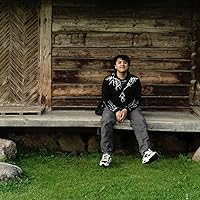
Arenas was born in the countryside, in the northern part of the Province of Oriente, Cuba, and later moved to the city of Holguín. In 1963, he moved to Havana to enroll in the School of Planification and, later, in the Faculty of Letters at the Universidad de La Habana, where he studied philosophy and literature without completing a degree. The following year, he began working at the Biblioteca Nacional José Martí. While there, his talent was noticed and he was awarded prizes at Cirilo Villaverde National Competition held by UNEAC (National Union of Cuban Writers and Artists). His Hallucinations was awarded "first Honorable Mention" in 1966 although, as the judges could find no better entry, no First Prize was awarded that year.
His writings and openly gay lifestyle were, by 1967, bringing him into conflict with the Communist government. He left the Biblioteca Nacional and became an editor for the Cuban Book Institute until 1968. From 1968 to 1974 he was a journalist and editor for the literary magazine La Gaceta de Cuba. In 1973, he was sent to prison after being charged and convicted of 'ideological deviation' and for publishing abroad without official consent.
He escaped from prison and tried to leave Cuba by launching himself from the shore on a tire inner tube. The attempt failed and he was rearrested near Lenin Park and imprisoned at the notorious El Morro Castle alongside murderers and rapists. He survived by helping the inmates to write letters to wives and lovers. He was able to collect enough paper this way to continue his writing. However, his attempts to smuggle his work out of prison were discovered and he was severely punished. Threatened with death, he was forced to renounce his work and was released in 1976. In 1980, as part of the Mariel Boatlift, he fled to the United States. He came on the boat San Lazaro captained by Cuban immigrant Roberto Aguero.
In 1987, Arenas was diagnosed with AIDS; he continued to write and speak out against the Cuban government. He mentored many Cuban exile writers, including John O'Donnell-Rosales. After battling AIDS, Arenas died of an intentional overdose of drugs and alcohol on December 7, 1990, in New York City. In a suicide letter written for publication, Arenas wrote: "Due to my delicate state of health and to the terrible depression that causes me not to be able to continue writing and struggling for the freedom of Cuba, I am ending my life... I want to encourage the Cuban people abroad as well as on the Island to continue fighting for freedom... Cuba will be free. I already am."
In 2012 Arenas was inducted into the Legacy Walk, an outdoor public display which celebrates LGBT history and people
Não é prosa, é antes poesia. No posfácio, o autor refere-se ao livro como 'poema'. É estranho, algo violento, com muitas vozes e muitos tempos. É um desabafo e simultaneamente um grito de revolta, emotivo e emocionante Ao lê-lo, ouvia na minha cabeça a voz de Javier Barden que interpretou a personagem de Reynaldo Arenas no filme 'Antes que Anoiteça' e que, nesse papel, leu trechos da obra do autor. Ler trechos do livro em voz alta a uma colega de trabalho foi mesmo uma revelação: o texto ganha força, ritmo, momento, e a minha própria voz parecia outra. Descobri (ou recordei) que é assim que devo ler poesia.
Segundo Arenas, mergulhar na história é mergulhar na merda, nos confins das nossas latrinas. O Engenho é um mergulhar na história podre da escravidão na produção de açúcar. Arenas remonta aos tempos dos descobrimentos espanhóis para contar as histórias tresloucadas de sofrimento e morte dos escravos. Tudo para que um ocidental qualquer possa mexer o seu café calmamente no outro lado do mundo.
"Afinal, o que podemos nós esperar desta juventude // que a perseguição amestrou, // habituada a ordens inexoráveis, // à lentidão de discursos altissonantes, // ao trabalho obrigatório e inútil, // à insegurança permanente? // Nada, na verdade não podemos esperar nada desta juventude. "
Je ne peux pas dire que j'ai vraiment aimé, il s'agit d'un poème et la sensation globale à la lecture est une vague incompréhension, mais l'émotion est forte, le sujet poignant, vibrant... Ce livre ne peut pas être noté en dessous de 4 étoiles même si je ne suis probablement une bonne lectrice de cette œuvre.
Fantástico poema que cruza a escravatura na central, engenho de açúcar, com o recrutamento forçado de jovens para trabalhar nas plantações de cana durante a revolução cubana.