Jump to ratings and reviews
Rate this book

The Invention of Morel and Other Stories

Rate this book
When The Invention of Morel was first published in Argentina, Jorge Luis Borges rejoiced that the author had brought "a new genre to our land and language." This fine translation of Adolfo Bioy Casares' novella demonstrates that it is equally unique when transformed into English.

The Invention of Morel won for its author in 1941 the Primer Premio Municipal Award in Buenos Aires. It is joined in this volume by six equally arresting short stories originally published together in a book entitled La trama celeste.

The Invention of Morel is the offspring of a fantastic, sometimes perverse, always persuasive imagination. Borges, perhaps Argentina's greatest writer, says in his Prologue to the story that its plot is of such superior quality that "to classify it as perfect is neither an imprecision nor a hyperbole."

Bioy Casares' indisputable originality, so apparent in the novella, is equally evident in the six short stories, all of which have a strong affinity with The invention. Each story is an achievement of realism with curious surrealist overtones. In each, as in the novella, the author employs suspense delicately and with mounting tension. In style, narrative technique, and off-beat imaginative insight, they coalesce to make a book which is bound to have a powerful unified impact on the reader.

The translator, Ruth L. C. Simms, has traveled extensively in South America and is well acquainted with Spanish and Latin American literature; her sensitive use of the English language has enabled her to transfer these unusual stories into English with their unique qualities unimpaired.

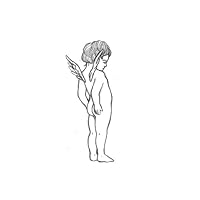
This volume is enhanced by drawings by Norah Borges de Torre, sister of Jorge Luis Borges.

237 pages, Hardcover

Published January 1, 1964

4 people are currently reading
211 people want to read

About the author

Adolfo Bioy Casares

233 books870 followers
Adolfo Vicente Perfecto Bioy Casares (1914-1999) was born in Buenos Aires, the child of wealthy parents. He began to write in the early Thirties, and his stories appeared in the influential magazine Sur, through which he met his wife, the painter and writer Silvina Ocampo, as well Jorge Luis Borges, who was to become his mentor, friend, and collaborator. In 1940, after writing several novice works, Bioy published the novella The Invention of Morel, the first of his books to satisfy him, and the first in which he hit his characteristic note of uncanny and unexpectedly harrowing humor. Later publications include stories and novels, among them A Plan for Escape, A Dream of Heroes, and Asleep in the Sun. Bioy also collaborated with Borges on an Anthology of Fantastic Literature and a series of satirical sketches written under the pseudonym of H. Bustos Domecq.

Ratings & Reviews

What do you think?
Rate this book

Friends & Following

Create a free account to discover what your friends think of this book!

Community Reviews

5 stars
48 (34%)
4 stars
63 (45%)
3 stars
23 (16%)
2 stars
3 (2%)
1 star
1 (<1%)
Displaying 1 - 30 of 31 reviews
Profile Image for Jim.
2,415 reviews799 followers
March 17, 2015
I have always loved the work of Argentinian author Jorge Luis Borges. Toward the last three decades of his life, during which he became totally blind, he collaborated with Adolfo Bioy Casares on several collections of stories. His collaborator was also known for his own novels and short stories, perhaps the best known (at least in the English-speaking world) of which appear in The Invention of Morel and Other Stories, from La Trama Celeste.

His most famous work is the novelette "The Invention of Morel," which was first published in 1940. It deals with a runaway from the law who ends up on a strange uninhabited South Pacific island. At least it seemed to be uninhabited at first. Suddenly it is full of people, including a Frenchwoman named Faustine with whom he becomes infatuated. She ignores him. In fact all the people ignore him. Why they do is a surprise which I do not wish to divulge at this point.

Many of the following stories, particularly "The Future Kings," "The Idol," and "The Celestial Plot." In these stories, he writes in a way that is highly reminiscent of Borges without being in any way imitative. At one point, he writes:
I felt horrified by all the objects, all the manifestations of the matter that was ambushing me and pursuing me like an infallible hunter. I discovered (or thought I discovered) that to be alive is to flee, in an ephemeral and paradoxical way, from matter; and that the fear that assailed me then was the fear of death.
If you like Borges as much as I do, I suggest that you try Bioy Casares, and also his wife Silvina Ocampo, whose poetry and fiction is just now being reprinted in the U.S.
Profile Image for Mmars.
525 reviews119 followers
August 17, 2012
Thus far, I have only read the novella "Invention of Morel." My rating for that is 5 stars. However, I don't think it would not be prudent to give book 5 stars without reading it in its entirety.

Also, I would have preferred to read the NYBR translation, but it was unavailable and I cannot speak for how well this is translated.

From here on my review will """"""""""CONTAIN SPOILERS"""""""""""""""" and I think it the less you know, the better read this novella is. So turn away, dear reader, read the 90 pages first.

As my thoughts churn around this story, they start to fixate on how this could have been an episode on the "Twilight Zone." Casares' story is so well crafted. From the onset you sense an unreliable narrator, one whose sanity is in question. All sorts of scenarios come to mind...hallucination, ghosts - both the narrator and the others on the island. I reread many passages and pages. Both for pleasure of description and for clarity of the bizarre nature of the narrator's descriptions. The writing has the feel of a literary classic, but the denouement of contemporary technology. Today's 3D technology, in a sense, does what Casares imagined. Of course those who are filmed don't lose their skin and die, but they do seem real.

Excellent, excellent story for people who enjoy literary science fiction.
Profile Image for Mir.
4,974 reviews5,333 followers
March 27, 2010
Nothing is certain in this odd tale of a fugitive on an island.

I had not heard of this until it was re-released a few years ago, but my copy is actually a 60s hardback with a short but excellent introduction by Borges arguing for the value of the adventure story.
Profile Image for Ed Erwin.
1,193 reviews129 followers
May 1, 2019
An interesting mid-point between Sci-Fi and Magical Realism. The story "The Invention of Morel" was loved by Borges and by Garcia-Marquez and somehow inspired the film and book "Last Year at Marienbad" (though it is quite different). It itself seems inspired by "The Island of Dr. Moreau". With that great pedigree, it is sad to say that I didn't enjoy it very much. I was quick to figure out things that took the protagonist too long to find, and I didn't enjoy listening to his thoughts.
Profile Image for Troy.
300 reviews190 followers
January 7, 2010
I'd heard a lot about this book. I heard that it was inspired by the author's obsession with Louise Brooks. I heard that it was the inspiration for Last Year at Merinbad. I heard that it was deeply influential to a generation of Latin American writers. I heard that it is a dreamlike precursor to magical realism. But what I heard, as usual, wasn't right - or it was only partially right - this book is it's own trip. It's different from Last Year..., magical realism, Borges and other S. American writers, and, well, I would have never got the Louise Brooks reference.

To me, this book was more of a sci-fi novella like something S. Lem or P. K. Dick would have wrote. It IS dream like, but it's also grounded in a type of reality that is still rational. The magic is somewhat explained, even if it seems deeply strange. It seems like the type of book Baudrillard would have creamed his jeans over - a story about a criminal lost on an island in love with an image, letting the image become more real than reality and letting himself die for the image. The simulacra, the desert of the real, the hyperreal.

That said, I didn't love it. Almost gave it three stars. It's beautiful in parts and at times has a certain type of unreal beauty that is perfect for the story, but... well I don't know why I wrote 'but.' It's good. Really good. But it didn't grab me and blow me away. Not sure why.
Profile Image for lisa_emily.
365 reviews102 followers
May 12, 2008
I came to Invention of Morel through its reference in Last Year at Marienbad. Published in 1940, it is a tale of of that blur images and reality. Of course, now in these ages, such tales are commonplace, but even IoM takes surprising turns and draws in some strange influences. Like Borges, Casares writes of speculative possibilities, but with e science fiction bent.
Profile Image for Savior Sullivan.
Author 1 book96 followers
December 2, 2023
"The Invention of Morel" by Adolfo Bioy Casares – now, here's a book that’ll twist your brain in the best way possible! It's like a sci-fi, mystery, and romance novel all rolled into one neat, mind-bending package. Published in 1940, this book is a hidden gem that deserves a shoutout.

Introduction
Picture this: a guy on the run ends up on a deserted island (classic start, right?). But then, things get weird – like, really weird. He finds this odd group of people who don’t even notice him (rude, much?). It turns into this wild ride of love, obsession, and a crazy sci-fi twist that’ll make you go, “Wait, what just happened?” Casares blends all this into a story that’s not just about a mysterious invention but also dives deep into themes like reality, existence, and the human heart.

Pros
👍 **Mind-Bending Plot**: Just when you think you know what’s up, the story flips and leaves you reeling.
👍 **Tight Writing**: Casares doesn’t waste a word. The storytelling is sharp and to the point, which makes the craziness even more impactful.
👍 **Way Ahead of Its Time**: This book was talking about stuff like virtual reality before it was cool. It’s like vintage sci-fi that still feels fresh.
👍 **Romantic in a Weird Way**: Amidst all the sci-fi stuff, there’s this bittersweet love story that adds a whole new layer to the book.

Cons
👎 **Can Be Confusing**: There are moments where you might need to pause and go back a few pages to keep up.
👎 **Not Your Typical Characters**: If you’re looking for deeply fleshed-out characters, this might not hit the mark. They’re more like intriguing pieces of a puzzle.
👎 **Short and Sweet**: Some might feel the story’s too short and leaves you wanting more.
👎 **Heavy on the Sci-Fi Jargon**: If sci-fi isn’t your thing, the tech talk might seem a bit much.

Rating
⭐⭐⭐⭐☆

I’m giving "The Invention of Morel" a solid 4 out of 5 stars. It’s a compact, powerful story that packs a big punch. Not perfect for everyone, but if you dig a good mind-bender, it’s a must-read!

Reading Suggestions Similar to This Book
1. "Solaris" by Stanisław Lem: Dive into another sci-fi story that mixes reality, humanity, and some serious space weirdness.
2. "Blindness" by José Saramago: If you liked the mix of deep themes with a unique narrative, check out this one.
3. "Chantilly" by Savior Sullivan : For a modern read with twists and a touch of the surreal, give this a shot.
Profile Image for Sabina .
4 reviews3 followers
March 20, 2025
“There are probably infinite identical worlds, infinite worlds with slight variations, infinite different worlds.”

At Bioy, time and space lose their real value and follow the game of his phantastic imagination. There is a shortened space, the duality of the world, of the time and the myth of eternal return:

“In his story Morris gives some distinct characteristics of the world he visited. In that world for example, there is no Wales: street with Welsh names do not exist in that Buenos Aires: Bynnon becomes Marquez and Morris in the labyrinths of the night and his own obfuscation, looks in vain for Owen way. Viera, Kramer, Margaride, Faverio and I exist there because we are not of Welsh origin: General Huet and Ireneus Morris himself, both of Welsh” descent, do not exist (he merely came there by accident).”

His heroes are often writers, and the genre of writing is a letter, a diary or a report. None of his heroes has a single model in real life:

“The possibility of meeting a new version of myself is not what would induce me to travel to that other Buenos Aires. The idea of seeing a reflection of myself, like the picture on my bookplates, or of knowing myself, like the motto inscribed on them – this things do not interest me.”

“Here we are in Bauli, near Pozzuoli; do you think that now, in a infinite number of exactly identical places, there may be people, who have the same names as we, who have received the same honors, who have experienced the same things, and in mind, age, and appearance or identical to ourselves, who are discussing this same subject together, as we are doing now? “

I prefered The Celestial Plot more than The Invention of Morel. Bioy does not judge: he does not condemn evil or defend it, there is no exaggeration in it. His heroes are real people, whom happen extraordinary things in extreme situations.

The phantastic world of Bioy Casares is unique. I strongly recommend this book to the reader.
Profile Image for William.
1,232 reviews5 followers
November 7, 2021
I appreciate the erudition of the other reviews. I'm not sure how I feel about this collection of Bioy Caseres' writings, and have never read anything like this. The stories are very realistic in an unreal sense; that is, they make perfect sense in a world of parallel universes, and less in our normal one. They are reminiscent of science fiction, except they all occur in the world in which we live and don't involve other planets or time travel.

The writing is excellent; no way to tell if that is the achievement of the author or the translator, of course. The stories are meticulously constructed, and have their own rationality, even if it involves the irrational. Each is sort of like a typical mystery story. I kind of liked that, except I found the explanations which occur at the end of each one to be a bit confusing.

Certainly worth reading, if one is drawn as I am to fiction which makes you think.

Profile Image for Nathaniel Houser.
91 reviews1 follower
April 3, 2022
An excellent Novella and collection of short stories. This collection of stories are perfectly written. Timeless tales in so many ways on death and love. Stories crafted like myths. Myths that describe mortality with scientific and culture details. Stories full of beautiful adjectives that describe an island as a place of escape, seclusion, and desire. The novella focuses on the themes of mortality and immortality and describes living forever as a image trapped on the screen or trapped by the camera to be displayed as a repetitive, and living being. The camera can capture the soul. The short stories talk of death and murder as if it is a dream and reality. I highly recommend this book to everyone. An excellent book that I will be reading again for sure.
Profile Image for Chris.
254 reviews11 followers
December 15, 2022
These tales are highly influenced by the author's friendship and collaboration with Jorge Luis Borges, but they are also reminiscent of the best of Rod Serling and his Twilight Zone. The Invention of Morel and all the short stories are told from a first person perspective, most often in the form of a manuscript from the narrator. Like the Twilight Zone, the narrator of each tale faces a dilemma or mystery that has him questioning reality. Add in an occasional unreliable narrator, and the reader gets to bask in mind-bending creepiness.
Profile Image for Emily Constance.
160 reviews4 followers
September 29, 2023
The Invention of Morel was "okay" compared to most of the other stories in this collection—especially the last three ("The Celestial Plot," "The Other Labyrinth," and "The Perjury of the Snow") which were my favorites. It's kind of giving Kafka mixed with Poe mixed with Rulfo, mixed with—I'd assume, anyway—Borges (he did write the prologue after all). Spooky and unsettling and fun, and very inventive! Hence, the title. Also, reminded me that I like short stories.
143 reviews
October 19, 2024
Weird and cool collection of magical realism stories. The first (“The Invention of Morel”) was my favorite.
Profile Image for Chelle.
160 reviews3 followers
February 18, 2025
4.5 Excellent short stories with surrealist undertones
Profile Image for Therese.
186 reviews15 followers
Read
December 5, 2025
capped at ‘the idol’ at p. 143 because my library loan was due :,) but thank you cal see you next year!!!!!
Profile Image for Richard Thompson.
2,939 reviews167 followers
February 16, 2019
I don't know. I don't know. These stories leave me in a state of confusion, though perhaps that was exactly Bioy's intention. I was glad to have read an edition of The Invention of Morel that also included other stories, because they all seem to follow a common structural pattern that sheds some light on their curiousity. All of the stories start with elements that create a sense of alienation and disorientation. We have an anonymous narrator cast into the middle of inexplicable circumstances, characters unable to fully communicate with one another, broken relationships, a sense of a world out of kilter. Then we are given a rational explanation for what happened, but the explanation always seems to be flawed in some way, so the sense of disorientation remains. The explanation feels like after the fact story telling. It is an attempt to impose a pattern that does not really exist onto a world that is inherently irrational and inexplicable. The stories all go on a further step beyond the rational explanation, so that the endings are open. There are no satisfying conclusions, just a feeling of disconnection and uncertainty.

Seen within this structure, the strange preface by Borges begins to make some sense. Borges writes about how the psychological novel with no plot has come into vogue, that the typical psychological novel is formless, but Bioy has given us plots worthy of classic adventure novels, which is of course precisely not the case. The plots of these stories, such as they exist at all, are part of the false explanation, the uncertain framework that dissolves under close examination. Borges comes much closer to what I saw as the truth of Bioy's work when he refers to "'unutterable and self-repeating infinities' in fables comparable to Kafka's." But maybe Borges' preface is like another of Bioy's stories in minature in that it presents an explanation that it not an explanation, which is ultimately unsatisfactory and just leaves you reeling in a place of confusion and dissatisfaction.

I couldn't read stories like this all the time. Part of storytelling is an attempt to put structure and meaning on to a world that otherwise defies structure and meaning. Bioy gives us an appearance of structure and then rips it out from under us. It is a cruel but effective trick. Another part of storytelling is getting us to see the world in a different way. It may not be satisfying; it may not be the world that we want to see, but if it is a world that opens our minds to other possibilities, as Bioy does, then it has succeeded.
Profile Image for Indran.
231 reviews22 followers
January 11, 2020
Methodical, detail oriented stories with obscure historical and literary references,. supernatural/metaphysical elements are folded into the mix in a way that's tasteful, mysterious, and always in service to the plot. None of the stories went 100% over my head, though most felt like they were attempting to do so at least some of the time. I came to enjoy how Casares often wraps up a tale by analyzing- in surgical detail- aforementioned minutiae of the plot, in order to resolve a mystery or uncover a plot twist in a satisfying way. I won't lie, some pages felt too dense to be at all memorable, and the last story (as well as the one about the friggin seals, that was weird as hell...) was particularly hard to follow at times. But the one involving the antiques collector / interior designer was quite interesting, and the title story remains one of my favorite works of literature. Plenty of really fascinating twists and turns, and ultimately an annotated version would have hurt more than it helped.

I liked, above all, the complex, enigmatic tone that pervaded these stories. They weren't out for cheap thrills.. I felt as if I was drinking wine from a goblet in some shady ancient room to accompany a fine meal, with a bit of an occult, Eyes Wide Shut vibe, and a bit of a Scooby Doo end-of-the-episode recap kind of vibe, and the strangeness of Welcome to Nightvale but more "highbrow" and less comedic.

I'm a little confused but, above all, really pleased with this meticulous, wildly imaginative author..
Profile Image for Chuck Kollars.
135 reviews8 followers
October 18, 2016
(I read the main story only, not the other stories in the last half of this volume)

(definitely much shorter than a "novel" [or even a "chapter book"], but significantly longer than what we think of as a "short story" nowadays too - probably cannot be read all in one sitting)

Reread, mainly to refresh my memory. Same reaction as the first time: rolicking good, highly imaginative and somewhat philosophical story, told in sophisticated (yet simple) literary language.

As the events require a fair amount of imagination, it's easy to see this as "science fiction". But stylistically it doesn't feel like it - in fact it feels more like modernist fictional literature. And it's pretty plain that several of the ideas it played with made their way into Alain Robbe-Grillet's fiction and thence into the film 'Last Year at Marienbad'.
Profile Image for Shauna Mahana.
17 reviews2 followers
August 22, 2008
The main character has some serious mental roller coasters and his emotions flip on and off with the tiniest little provcations. Understandably so at times, but it can me a little frustrating when he goes ballistic over nothing.

Beside that point, this story, and those following it, are definitely going to catch you off-guard. I especially thought the short story about the statue and seals very trippy.

Some have likened this to "The Island of Dr. Morreu" in that it takes place in an isolated 'arena' and that the story is the result of a crazed scientist.

I strongly recommend this to those who like unusual short stories (like O. Henry).
Profile Image for Joseph Carrabis.
Author 57 books119 followers
Read
November 30, 2020
All but the last two stories in this collection are amazing reads from a culture I know of and have no direct contact with. Fascinating, fascinating, fascinating, not to mention learning a style of writing many folks find uncomfortable.
What impressed me the most was how rapidly I got involved in each story (save the last two. In the library volume I read, some of the last pages weren't cut completely; an indication others found those last two stories are boring as I). Inventive and unique, and deeply psychologic and personal in their narrative style, they intrigued and delighted.
Strongly recommended (save those last two).
Profile Image for Nam.
36 reviews4 followers
April 28, 2008
Had never heard of this author until recently.
Adolfo was a close friend of Borges and his writing is in that tradition of Latin American mystical realism..
The stories are basically normal and everything about them seems typical except for undercurrents of unexplained dread or other mysterious phenomenon. However, eventually the events are explained and the answer or causal solution is always something from left field.
Many of the characters are writers, poets or dilettantes.

My favorite of the stories was Future Kings.
Profile Image for Ben.
184 reviews290 followers
March 24, 2008
I actually liked the short stories better than the novella. In particular the last two, "The Other Labyrinth" and "The Perjury of the Snow" were quite good and at times came near to the quality of Casares's friend Borges's own stories. I think that though never really achieves that quality, mostly because he's too engaged in telling a story and not engaged enough in his ideas. But that's alright. Not everyone can/should be Borges. Definitely worth reading.
Profile Image for Bob.
99 reviews5 followers
August 18, 2008
A fantastic collection of stories from the famous Argentinian writer and sometime collaborator of Jorge Luis Borges (I personally like his writing better than that of Borges). The title story of the collection, THE INVENTION OF MOREL, is a tale of fantasy and even terror, as a man on an island comes to the realization that all of the people he sees are recordings (three-dimensional, with sound and even smell), but indistinguishable from reality.
5 reviews9 followers
January 14, 2009
Good collection and decent translation of some hard-to-find stuff from Casares. "The Invention of Morel" is a terrific story about mind/body duality, immortality, and memory, and was almost certainly ripped off by Robbe-Grillet for "Last Year at Marienbad".
Profile Image for Lauren.
115 reviews54 followers
Read
September 1, 2010
A friend of Borges, and why he's lesser known is beyond me. Title story is a classic of all that's lovely, strange, & magical in literature. I know it inspired the film Last Year at Marienbad, but the feel is more L'Avventura.
Profile Image for Mike.
65 reviews
December 14, 2009
Seeing as how I love Borges and the tv show Lost, how did I not come to this book before?
Profile Image for Hal.
649 reviews2 followers
March 6, 2017
It starts off awfully slow, but picks up. I also thought "In Memory of Pauline" was fabulous.
Displaying 1 - 30 of 31 reviews

Can't find what you're looking for?

Get help and learn more about the design.