

What do you think?

Museo de la Novela de la Eterna
La obra de Macedonio Fernández encarna la autonomía de la plena ficción. Su influencia en el joven Borges fue definitiva. Dos intuiciones la obsesión por la obra dentro de la propia obra y la concepción onírica de la realidad. Y así comenzó la leyenda de Macedonio Fernández cuya genealogía aún debemos descifrar en Borges. En el "Museo de la Novela de la Eterna" encierra el autor el laberíntico entramado de su formulación estética más rotunda. Novela ajena al concepto de realidad canonizado por la tradición literaria está centrada en la cuestión de la verosimilitud de experiencias mentales confundidas en el texto como un itinerario de digresiones en torno a un único el lector.
424 pages, Paperback
First published January 1, 1967
About the author
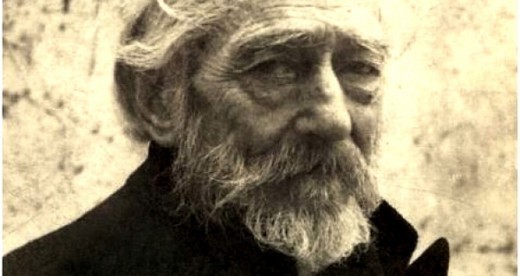
Macedonio Fernández
68 books150 followersMacedonio Fernández was an Argentine writer, humorist, and philosopher. His writings included novels, stories, poetry, journalism, and works not easily classified. He was a mentor to Jorge Luis Borges and other avant-garde Argentine writers. Seventeen years of his correspondence with Borges was published in 2000. He also published poetry, including "Creía yo" ("I believed").
Ratings & Reviews
Friends & Following
Create a free account to discover what your friends think of this book!
Community Reviews
Displaying 1 - 30 of 113 reviews

February 2, 2017
Macedonio Fernández deals in paradoxes so I at once fell for his book…
Writing sixty prefaces, prologues, preambles and prolegomena to his novel Macedonio Fernández literally turned the stream of consciousness into the “total commotion of consciousness”, both author’s and reader’s.
What actually is the nature of novel and what is the nature of literary characters?
And what is the author’s task?
The Museum of Eterna’s Novel is a literature of literature – the sort of literary Gnosticism… What do the characters of a novel do when neither the author nor readers are around? They write and read novels…
A Romanian woman once sang me a phrase of folk music and I have since found it tens of times in different works from different composers of the past four hundred years. Indubitably: things do not begin; or they don’t begin when they are created. Or the world was created old.
Writing sixty prefaces, prologues, preambles and prolegomena to his novel Macedonio Fernández literally turned the stream of consciousness into the “total commotion of consciousness”, both author’s and reader’s.
What actually is the nature of novel and what is the nature of literary characters?
It’ll be necessary that some of them have altercations and even become enemies, as is obvious, considering the close quarters they share, living in the same novel: characters destined to be permanent rivals, or those who are so only for a moment, must both conduct themselves as people who nevertheless share the same death, at the same place and time: the end of the book.
And what is the author’s task?
Author: I shouldn’t say to the reader, ‘Come into my novel,’ but rather save him from life indirectly. My quest is that every reader should enter my novel and lose himself in it; the novel will take him in, bewitch him, empty him out.
The Museum of Eterna’s Novel is a literature of literature – the sort of literary Gnosticism… What do the characters of a novel do when neither the author nor readers are around? They write and read novels…
![Profile Image for s.penkevich [hiatus-will return-miss you all].](https://i.gr-assets.com/images/S/compressed.photo.goodreads.com/users/1735525095i/6431467._UX200_CR0,11,200,200_.jpg)
May 7, 2012
‘He who imagines will never know non-being.’
Jorge Luis Borges, the friend and protégé of Macedonio Fernández (1874-1952), once wrote that his mentor ‘is metaphysics, is literature. Whoever preceded him might shine in history, but they were all rough drafts of Macedonio.’ Despite leaving such a legacy and impression upon Borges, The Museum of Eterna’s Novel (The First Good Novel) started in 1925, was not published until after Macedonio's death. However, this book, far ahead of its time, proved his worth by challenging the standard constructs of novels while being a sort of anti-novel. Consisting of what Macedonio claims are two novels, the first good novel and the last bad novel shuffled together in random order, the reader finds themselves lured in and trapped as a character among Macedonio’s characters living together in La Novela. Beginning with 120pgs of prologues (or are they?) that refuse to end and continually probe the ideas of plot, character and novels in general, and followed by a cast of characters all making demands upon their author, Macedonio has created a tool-kit for his readers to build a bright future of literature.
Macedonio has created a tool-kit of sorts for his readers. Found inside his book is an assortment of scene and character sketches, essays, prologues, and other musings that come together to form this ‘novelty of novels.’ Dedicating the book to the ‘skip-around reader’, Macedonio rejects any conventional form, as well as almost any novelistic conventions altogether, to create a sense of skipping around through a book although the reader goes in page order from start to finish. In fact, the culmination of the actual plot (playing loosely with that term in order to rope the actions of the characters over the course of the novel into a literary term for the sake of easily handling and examining them) is discussed in the prologues and the author even mocks a reader who would desire any sort of completion or cohesive plot.
The prologues focus primarily upon the mechanics of literature through which Macedonio allows his characters to play out their written-on-paper lives. He explores the psychology behind the consciousness in each character, the implications of his metaphysical ideas, and most importantly, the striving of an artist to create their work. ‘The artist is he who loves everything and speaks everything,’ writes MF. The pure love for his creations pours from every page of the book, and he cannot help but constantly break the fourth wall and allow himself and his characters to address the reader. In fact, the novel is an enormous plea to the reader to subsequently create their own stories and novels. He even goes as far as urging the reader to simply edit and improve upon his own novel, provided the reader at least leave behind some small indication of the original, and from this plea it can be argued that we today have such metafictional gems as the works Jorge Luis Borges and Julio Cortázar, At Swim-Two-Birds, or even If on a Winter's Night a Traveler. Macedonio admits to being unable to achieve total perfection, but insists that true beauty awaits those who strive for it. Addressing his own critics, he offers several concessionary apologies for failing to achieve perfection while still delivering his final condescending remarks to critics saying, ‘I realized that all you really know is what Perfection is not.’
The reader-author relationship is critical to the novel, so much so that the reader is given their very own character to voice opinions throughout the novel, usually at moments where MF is sure to have agitated the reader through stagnation of the story from constant digressions, or due to his lofty philosophical discussions (he even goes as far as offering footnotes asserting that certain topics are sure to be indicative of a ’62 reader drop-out’). Through every cutting remark from ‘the reader’, MF assures them that there is a bigger picture behind each detail and that he is putting his whole heart and soul into the expression of ideas.
Not only does the author, or one of his many authorial personas, break the fourth wall, but his characters as well. Much of the aforementioned plot, and even the prologues, consist of the characters making demands upon the author and his anxiety in being unable to meet them. He is even thwarted by characters he must leave out of the novel; the Cook, for example, was left out of the novel, so she creates her own restaurant next to the train station that would take readers to the novel (notice how metafictionally spiraling this book becomes) out of spite, causing many readers to miss their train because they cannot pry themselves away from her delicious foods. Maybegenius, a character thusly named out of MF’s insistence that an author cannot properly write a genius character in his novel if he himself is not a genius in order to provide them with the insight and wit befitting such a status of intelligence, is forever frustrated by his name as the authors own limitations are the limitations imposed upon a consciousness that should be capable of higher levels of thought. The biggest complaint lodged against the authorial creator however, is his inability to give them actual Life.
To accurately address this conundrum faced by the characters, MF spends a great many pages scattered throughout the prologues and ‘novel’ to explain his theories of metaphysics and existence. The premises in which the novel is grounded are those that imply that all thought, be them dreams, the imagination or stories and novels, that contain characters (including the author/dreamer which must be a character in their own creation as a Creator character) must take place within their own space. To put it simply, and with my apologies to MF for debasing his abstruse ideas, the ideas in our head have an actual life on some plane of reality; that there is space within abstract space so that the characters we invent truly exist in a lesser form than we do on this plane of reality we create for them. Following this premise, MF argues that we can achieve eternity and defeat death as long as some part of us can still exist in the memories of others and the stories they tell. This is a rather uplifting, positive outlook, and in a way MF has immortalized himself through his book if we the reader are perceiving him as the author character who speaks to us through the book and therefore still exists in the metaphysical space created in our thoughts. Still with me? Once again, sorry for misconstruing a much greater and involved concept, however, this is the existence in which the characters living in La Novela find themselves. We are treated to interesting characters such as The Man Who Feigned To Live, a character that is often mentioned as not being in the novel, but our knowledge of his non-existence is what actually gives him existence. It is then assumed that as long as we have imagination, then we can never not exist, which leads to a further prologue on the nature of non-existence and the difficulties of explaining such concepts as that and ‘nothing’ proceeding along the basis of ‘how can we truly understand ‘nothing’ if thinking of ‘nothing’ produces some thought and is therefore not-nothing’, etc. Some of these concepts are difficult to swallow, and often the reader is sure to disagree and desire an argument. MF, being a good sport, disputes his own ideas (he gives Immanuel Kant his moment in a prologue by briefly pointing out how Kant’s ideas oppose his own) through the characters of Eterna and The Lover, both of whom see death as a finality and that only by entering a state of non-existence can life and love have any meaning. It is often difficult to ascertain MF’s true opinions on his wide barrage of ideas as he often contradicts them in other prologues and writes from multiple author-personas. Occasionally he comes across as arrogant and self-assured, and other times as sad, apologetic and frustrated.
An interesting concept that springs from the melancholy of the character due to their lack of actual living, breathing Life, is that by subsequently creating their own stories, they too become a Creator. By telling stories and writing their own novels (they find the notes for the President’s book, which is a metafictional reshaping of the novel the reader currently holds in their hands) they are able to experience ‘the birth pangs’ of life for a brief interval. These ideas lead to exciting discourses on the nature of being a character, which is argued to be different than playing a role as an actor, illustrating how it can be both freeing and frustrating to be under the control of a higher power and the importance of being able to create their own stories as well. These characters are forever trapped within MF’s novel, and he insists that once the novel has ended, they all must die with the finality of ‘reading in the present’. However, they still exist in our memories, and this is his major reason why it is important to create memorable works in order for our characters to live on, and so we too as the reader/author can live on forever in the minds of our own readers. The more of ourselves we give, the more of us there is to live on beyond death, much like how a character grows and becomes more three-dimensional with each passing page adding to the growing ‘past’ of the characters. Each new action creates a sharper image of them and makes them more lifelike, yet they can never remove themselves from the page and walk around with you and I and that is their ultimate, sad fate.
While The Museum of Eterna’s Novel can be rather cumbersome and difficult with the wide range of philosophical and psychological inquires that appear in random order throughout the book, as well as having no real plot to latch onto, it is still an enduring work of literature that shatters all preconceived notions of what a novel should be. By addressing what makes a novel, and by consequently not having many of those aspects in the novel at hand, Macedonio explores the possibilities in literature. Despite the thin plot, he manages to create a story that is by turns humorous and tragic, moving and romantic, as he demonstrates his characters abilities. This book is a must-read for any fans of the great Borges, or anyone with a taste for the avant-garde, metafictional or just enjoys exploring the mechanics of a book and the places such techniques can take us. From discussions of love, death, suicide and literary criticism, this novel has something for everyone. This truly is a writer’s tool-box.
5/5
‘And now I search your portrait for the trace not of your being, but of how you are, because you are however we see you and know you.’
I highly recommend exploring his Wiki page.
Jorge Luis Borges, the friend and protégé of Macedonio Fernández (1874-1952), once wrote that his mentor ‘is metaphysics, is literature. Whoever preceded him might shine in history, but they were all rough drafts of Macedonio.’ Despite leaving such a legacy and impression upon Borges, The Museum of Eterna’s Novel (The First Good Novel) started in 1925, was not published until after Macedonio's death. However, this book, far ahead of its time, proved his worth by challenging the standard constructs of novels while being a sort of anti-novel. Consisting of what Macedonio claims are two novels, the first good novel and the last bad novel shuffled together in random order, the reader finds themselves lured in and trapped as a character among Macedonio’s characters living together in La Novela. Beginning with 120pgs of prologues (or are they?) that refuse to end and continually probe the ideas of plot, character and novels in general, and followed by a cast of characters all making demands upon their author, Macedonio has created a tool-kit for his readers to build a bright future of literature.
Macedonio has created a tool-kit of sorts for his readers. Found inside his book is an assortment of scene and character sketches, essays, prologues, and other musings that come together to form this ‘novelty of novels.’ Dedicating the book to the ‘skip-around reader’, Macedonio rejects any conventional form, as well as almost any novelistic conventions altogether, to create a sense of skipping around through a book although the reader goes in page order from start to finish. In fact, the culmination of the actual plot (playing loosely with that term in order to rope the actions of the characters over the course of the novel into a literary term for the sake of easily handling and examining them) is discussed in the prologues and the author even mocks a reader who would desire any sort of completion or cohesive plot.
’The reader who won’t read my novel if he can’t know all of it first is my kind of reader, he’s an artist, because he who reads only seeking the final resolution is seeking what art should not provide, his interest is in the merely vital, not in a state of consciousness: the only artistic reader is the one who does not seek resolution.’For Macedonio, the true purpose behind any work of art is the creation of it, the mechanics that build and function within it. The President residing in La Novela – a character who may or may not be the author himself, reflects such ideals by having removed all paintings from his walls and in there place set up small art studios easels so as to be able to admire the creation of art as opposed to the final piece.
The prologues focus primarily upon the mechanics of literature through which Macedonio allows his characters to play out their written-on-paper lives. He explores the psychology behind the consciousness in each character, the implications of his metaphysical ideas, and most importantly, the striving of an artist to create their work. ‘The artist is he who loves everything and speaks everything,’ writes MF. The pure love for his creations pours from every page of the book, and he cannot help but constantly break the fourth wall and allow himself and his characters to address the reader. In fact, the novel is an enormous plea to the reader to subsequently create their own stories and novels. He even goes as far as urging the reader to simply edit and improve upon his own novel, provided the reader at least leave behind some small indication of the original, and from this plea it can be argued that we today have such metafictional gems as the works Jorge Luis Borges and Julio Cortázar, At Swim-Two-Birds, or even If on a Winter's Night a Traveler. Macedonio admits to being unable to achieve total perfection, but insists that true beauty awaits those who strive for it. Addressing his own critics, he offers several concessionary apologies for failing to achieve perfection while still delivering his final condescending remarks to critics saying, ‘I realized that all you really know is what Perfection is not.’
The reader-author relationship is critical to the novel, so much so that the reader is given their very own character to voice opinions throughout the novel, usually at moments where MF is sure to have agitated the reader through stagnation of the story from constant digressions, or due to his lofty philosophical discussions (he even goes as far as offering footnotes asserting that certain topics are sure to be indicative of a ’62 reader drop-out’). Through every cutting remark from ‘the reader’, MF assures them that there is a bigger picture behind each detail and that he is putting his whole heart and soul into the expression of ideas.
Not only does the author, or one of his many authorial personas, break the fourth wall, but his characters as well. Much of the aforementioned plot, and even the prologues, consist of the characters making demands upon the author and his anxiety in being unable to meet them. He is even thwarted by characters he must leave out of the novel; the Cook, for example, was left out of the novel, so she creates her own restaurant next to the train station that would take readers to the novel (notice how metafictionally spiraling this book becomes) out of spite, causing many readers to miss their train because they cannot pry themselves away from her delicious foods. Maybegenius, a character thusly named out of MF’s insistence that an author cannot properly write a genius character in his novel if he himself is not a genius in order to provide them with the insight and wit befitting such a status of intelligence, is forever frustrated by his name as the authors own limitations are the limitations imposed upon a consciousness that should be capable of higher levels of thought. The biggest complaint lodged against the authorial creator however, is his inability to give them actual Life.
To accurately address this conundrum faced by the characters, MF spends a great many pages scattered throughout the prologues and ‘novel’ to explain his theories of metaphysics and existence. The premises in which the novel is grounded are those that imply that all thought, be them dreams, the imagination or stories and novels, that contain characters (including the author/dreamer which must be a character in their own creation as a Creator character) must take place within their own space. To put it simply, and with my apologies to MF for debasing his abstruse ideas, the ideas in our head have an actual life on some plane of reality; that there is space within abstract space so that the characters we invent truly exist in a lesser form than we do on this plane of reality we create for them. Following this premise, MF argues that we can achieve eternity and defeat death as long as some part of us can still exist in the memories of others and the stories they tell. This is a rather uplifting, positive outlook, and in a way MF has immortalized himself through his book if we the reader are perceiving him as the author character who speaks to us through the book and therefore still exists in the metaphysical space created in our thoughts. Still with me? Once again, sorry for misconstruing a much greater and involved concept, however, this is the existence in which the characters living in La Novela find themselves. We are treated to interesting characters such as The Man Who Feigned To Live, a character that is often mentioned as not being in the novel, but our knowledge of his non-existence is what actually gives him existence. It is then assumed that as long as we have imagination, then we can never not exist, which leads to a further prologue on the nature of non-existence and the difficulties of explaining such concepts as that and ‘nothing’ proceeding along the basis of ‘how can we truly understand ‘nothing’ if thinking of ‘nothing’ produces some thought and is therefore not-nothing’, etc. Some of these concepts are difficult to swallow, and often the reader is sure to disagree and desire an argument. MF, being a good sport, disputes his own ideas (he gives Immanuel Kant his moment in a prologue by briefly pointing out how Kant’s ideas oppose his own) through the characters of Eterna and The Lover, both of whom see death as a finality and that only by entering a state of non-existence can life and love have any meaning. It is often difficult to ascertain MF’s true opinions on his wide barrage of ideas as he often contradicts them in other prologues and writes from multiple author-personas. Occasionally he comes across as arrogant and self-assured, and other times as sad, apologetic and frustrated.
An interesting concept that springs from the melancholy of the character due to their lack of actual living, breathing Life, is that by subsequently creating their own stories, they too become a Creator. By telling stories and writing their own novels (they find the notes for the President’s book, which is a metafictional reshaping of the novel the reader currently holds in their hands) they are able to experience ‘the birth pangs’ of life for a brief interval. These ideas lead to exciting discourses on the nature of being a character, which is argued to be different than playing a role as an actor, illustrating how it can be both freeing and frustrating to be under the control of a higher power and the importance of being able to create their own stories as well. These characters are forever trapped within MF’s novel, and he insists that once the novel has ended, they all must die with the finality of ‘reading in the present’. However, they still exist in our memories, and this is his major reason why it is important to create memorable works in order for our characters to live on, and so we too as the reader/author can live on forever in the minds of our own readers. The more of ourselves we give, the more of us there is to live on beyond death, much like how a character grows and becomes more three-dimensional with each passing page adding to the growing ‘past’ of the characters. Each new action creates a sharper image of them and makes them more lifelike, yet they can never remove themselves from the page and walk around with you and I and that is their ultimate, sad fate.
While The Museum of Eterna’s Novel can be rather cumbersome and difficult with the wide range of philosophical and psychological inquires that appear in random order throughout the book, as well as having no real plot to latch onto, it is still an enduring work of literature that shatters all preconceived notions of what a novel should be. By addressing what makes a novel, and by consequently not having many of those aspects in the novel at hand, Macedonio explores the possibilities in literature. Despite the thin plot, he manages to create a story that is by turns humorous and tragic, moving and romantic, as he demonstrates his characters abilities. This book is a must-read for any fans of the great Borges, or anyone with a taste for the avant-garde, metafictional or just enjoys exploring the mechanics of a book and the places such techniques can take us. From discussions of love, death, suicide and literary criticism, this novel has something for everyone. This truly is a writer’s tool-box.
5/5
‘And now I search your portrait for the trace not of your being, but of how you are, because you are however we see you and know you.’
I highly recommend exploring his Wiki page.

Read
December 21, 2012> Metafiction as a Strategy to Avoid Pain
It is amazing to “discover” such an important novel: Fernández was a friend, mentor, inspiration, and precursor to Borges. This novel, the work of over 25 years, is one of the first and still one of the most complex anti-novels ever written. I am delighted to have discovered it only 60 years late. (It was written between 1925 and 1952.)
I have found that in reading and re-reading The Museum of Eterna’s Novel (The First Good Novel) (and re-reading is the only way to read: the novel itself theorizes its possible readings extensively, inventively, repetitively, exhaustively) I find my thoughts divide into two currents. First is the mechanics and proposals of the anti-novel; then there is the psychology, the mood, or the affect that emerges from so many layers of anti-realism. The former develops mostly in the first half of the book, which is comprised of fifty prologues to the novel. The latter emerges mainly in the second half, which is the novel, and is titled “Were Those Prologues? And Is This The Novel?.”
1. The mechanics of the anti-novel.
In terms of the ways it articulates its relation to reality and fiction, this book is more sophisticated than many that have followed it. It ends many times (there is a chapter that declares “a minute more, or a minute less” remains of the novel), and it talks continuously about itself (there are prologues that meditate on the blank pages that publishers still print before and after the text). It describes all possible sorts of readers: the one who reads straight through; the one who helps write the book itself; and the “skiparound” reader, who is both essential and wrong. (p. 119) The very idea of narrative, of plot, is theorized as a matter of memory. If something “big and new” doesn’t happen, he says, after a character “dies” (in quotation marks because characters don’t die, but move from one fiction to another), then we will always see her as she was, because “without new things happening there’s no forgetting, because there’s no Time—which is nothing—outside of events, which weaken our images of the past.” Such a thing would be “a formula for unforgetfulness.” (p. 117)
There are moments when all this is fairly programmatic, and Fernández seems to be writing a fragmentary manifesto of literary modernism (“the first good novel”). “For my pages,” he says, “I want constant fantasy” in order to “avoid the hallucination of reality, which is a blemish on the face of art.” (p. 36) One of his characters, the Traveler, “functions exclusively as the extinguisher of the hallucination that menaces the story with realism.” The only “frustration or abortion of a character” in the novel is that he appears to live. (p. 35) At his least interesting, Fernández is doctrinaire in his anti-realism. “There is a reader with whom I cannot reconcile myself,” he says in a prologue “about the doctrine of art”: “the reader who wants what all novelists have coveted, to their shame: Hallucination.” (p. 32) Most of the time, Fernández’s paradoxes of realism and anti-realism are inventive and labyrinthine enough to keep me fairly amused. But none of this is what kept me reading and re-reading The Museum of Eterna’s Novel.
2. The mood, the feeling of the novel.
What ends up mattering is the emerging sense of the implied author and the moods that seem to have impelled him. At first it appears the dominating aesthetics of the book may be early twentieth-century idealism and aestheticism. At the end of the book, the President speaks of “Ugliness’s long reign” in Buenos Aires, and how he wanted to “abolish civil ugliness.” (p. 236) It’s true the book bears the stamp of its time, and even—as the translator reports—uses archaic language in places. But there's more to it than that. Throughout the book characters speak of their distances from one another, and the story turns on people coming together in a frail and unrepeatable gathering, and going apart again in separate journeys. The President invites each of them “to choose a path that would take them farthest from the others, so as to assure, at least, that no one had to experience in another that other farewell, death.” (p. 231) I think it is central to Fernández’s imagination that the sight of death, and ultimately anything at all like it, has to be kept away. Here the President is a novelist, imagining a world in which characters can be moved around in such a way that they suffer and die alone, offstage, as far away in their own worlds as possible.
There is an amazing short essay on suicide, about a character named Suicide: it begins in such an abstract way that Fernández apologizes and starts again. It must have been a difficult couple of pages for him to write, because it tries so hard to think away the experience. (p. 171)
And why does Fernández want to be a character? Partly because he feels that if he has not experienced love, or when he does not experience love, his only hope of happiness is to be fictional. (p. 229) Being a character is not just a way of juggling the real and the imaginary, or playing with novelistic conventions. It is a way of existing as a trace, in a trance. “She is… exquisite,” he writes, “no one can tell the difference between seeing her and thinking of her.” (p. 143) A character can “feel nothing,” but be read. A reader is “moved” by such a character. (p. 130) For the character, such an existence is “enviable”: it is like living at a distance from yourself and from life. (p. 141)
Ultimately the point of the anti-novelistic experiments in this book is to live without pain. Fernández says “each person” in the estancia was “moved by this double impression: ‘I entered La Novela, and I entered the novel.’” (p. 136) That is not a definition of the modern novel: that's the mirroring that he hopes will save him.
The Museum of Eterna’s Novel (The First Good Novel) is, in the end, not a piece of experimental fiction as much as a concerted dream of a life without pain: Fernández was neurasthenic and exquisitely afraid of suffering, and he slowly dreamed his this book as an Eden, a museum, and in a perverse and impossible way, also a novel. The affect is strong, but in retrospect, thinking back on my re-re-reading, the anti-realist, metafictional apparatus that supports it is distracting because it then appears as insufficiently metabolized unhappiness.
It is amazing to “discover” such an important novel: Fernández was a friend, mentor, inspiration, and precursor to Borges. This novel, the work of over 25 years, is one of the first and still one of the most complex anti-novels ever written. I am delighted to have discovered it only 60 years late. (It was written between 1925 and 1952.)
I have found that in reading and re-reading The Museum of Eterna’s Novel (The First Good Novel) (and re-reading is the only way to read: the novel itself theorizes its possible readings extensively, inventively, repetitively, exhaustively) I find my thoughts divide into two currents. First is the mechanics and proposals of the anti-novel; then there is the psychology, the mood, or the affect that emerges from so many layers of anti-realism. The former develops mostly in the first half of the book, which is comprised of fifty prologues to the novel. The latter emerges mainly in the second half, which is the novel, and is titled “Were Those Prologues? And Is This The Novel?.”
1. The mechanics of the anti-novel.
In terms of the ways it articulates its relation to reality and fiction, this book is more sophisticated than many that have followed it. It ends many times (there is a chapter that declares “a minute more, or a minute less” remains of the novel), and it talks continuously about itself (there are prologues that meditate on the blank pages that publishers still print before and after the text). It describes all possible sorts of readers: the one who reads straight through; the one who helps write the book itself; and the “skiparound” reader, who is both essential and wrong. (p. 119) The very idea of narrative, of plot, is theorized as a matter of memory. If something “big and new” doesn’t happen, he says, after a character “dies” (in quotation marks because characters don’t die, but move from one fiction to another), then we will always see her as she was, because “without new things happening there’s no forgetting, because there’s no Time—which is nothing—outside of events, which weaken our images of the past.” Such a thing would be “a formula for unforgetfulness.” (p. 117)
There are moments when all this is fairly programmatic, and Fernández seems to be writing a fragmentary manifesto of literary modernism (“the first good novel”). “For my pages,” he says, “I want constant fantasy” in order to “avoid the hallucination of reality, which is a blemish on the face of art.” (p. 36) One of his characters, the Traveler, “functions exclusively as the extinguisher of the hallucination that menaces the story with realism.” The only “frustration or abortion of a character” in the novel is that he appears to live. (p. 35) At his least interesting, Fernández is doctrinaire in his anti-realism. “There is a reader with whom I cannot reconcile myself,” he says in a prologue “about the doctrine of art”: “the reader who wants what all novelists have coveted, to their shame: Hallucination.” (p. 32) Most of the time, Fernández’s paradoxes of realism and anti-realism are inventive and labyrinthine enough to keep me fairly amused. But none of this is what kept me reading and re-reading The Museum of Eterna’s Novel.
2. The mood, the feeling of the novel.
What ends up mattering is the emerging sense of the implied author and the moods that seem to have impelled him. At first it appears the dominating aesthetics of the book may be early twentieth-century idealism and aestheticism. At the end of the book, the President speaks of “Ugliness’s long reign” in Buenos Aires, and how he wanted to “abolish civil ugliness.” (p. 236) It’s true the book bears the stamp of its time, and even—as the translator reports—uses archaic language in places. But there's more to it than that. Throughout the book characters speak of their distances from one another, and the story turns on people coming together in a frail and unrepeatable gathering, and going apart again in separate journeys. The President invites each of them “to choose a path that would take them farthest from the others, so as to assure, at least, that no one had to experience in another that other farewell, death.” (p. 231) I think it is central to Fernández’s imagination that the sight of death, and ultimately anything at all like it, has to be kept away. Here the President is a novelist, imagining a world in which characters can be moved around in such a way that they suffer and die alone, offstage, as far away in their own worlds as possible.
There is an amazing short essay on suicide, about a character named Suicide: it begins in such an abstract way that Fernández apologizes and starts again. It must have been a difficult couple of pages for him to write, because it tries so hard to think away the experience. (p. 171)
And why does Fernández want to be a character? Partly because he feels that if he has not experienced love, or when he does not experience love, his only hope of happiness is to be fictional. (p. 229) Being a character is not just a way of juggling the real and the imaginary, or playing with novelistic conventions. It is a way of existing as a trace, in a trance. “She is… exquisite,” he writes, “no one can tell the difference between seeing her and thinking of her.” (p. 143) A character can “feel nothing,” but be read. A reader is “moved” by such a character. (p. 130) For the character, such an existence is “enviable”: it is like living at a distance from yourself and from life. (p. 141)
Ultimately the point of the anti-novelistic experiments in this book is to live without pain. Fernández says “each person” in the estancia was “moved by this double impression: ‘I entered La Novela, and I entered the novel.’” (p. 136) That is not a definition of the modern novel: that's the mirroring that he hopes will save him.
The Museum of Eterna’s Novel (The First Good Novel) is, in the end, not a piece of experimental fiction as much as a concerted dream of a life without pain: Fernández was neurasthenic and exquisitely afraid of suffering, and he slowly dreamed his this book as an Eden, a museum, and in a perverse and impossible way, also a novel. The affect is strong, but in retrospect, thinking back on my re-re-reading, the anti-realist, metafictional apparatus that supports it is distracting because it then appears as insufficiently metabolized unhappiness.

July 17, 2010
I felt very ambivalent for the book itself, but I am happy the book exists.
Today while dealing once again with the results of my colossal irresponsibility I spent quite a bit of time thinking about what I would say here. I didn't really like the book. I liked some of the prologues, and bits and pieces of the novel, but as a whole the book didn't work for me. I think it's a failure, a very ambitious failure. Just because the book is a failure though doesn't mean that I hated it, or that I feel it should be raged against. For the sake of gathering up votes it would be more strategic to hate the book and hurl anger because how dare a writer create something that a) I don't enjoy and b) that doesn't succeed. I could rage against the book, and then top off the review with claiming that anyone who does enjoy the book has something wrong with them. I'd get more votes for doing this. But it wasn't that kind of book for me.
This book has the potential to be maddening. But, if you find a book with a hundred pages of prologues annoying, just for the sake of it's 'cuteness' or quirkiness at having a hundred pages of prologues, well you have no reason to complain. The copy on the back of the book makes it pretty clear what you are getting yourself into. If you can read that and then get annoyed at the authors style, well you should really work on those critical faculties of yours. Actually, if you find that that consistently you read books you don't enjoy and are constantly being let-down with books then you should also have a look at your critical faculties and realize that you've been lied to by commonsense / folk sayings. As opposed to what you've been told, generally you can judge a book by its cover, and pretty accurately too. Anyway, where was I? I don't remember. Let's just start a new train of thought.
I love (not like anymore) that this book exists. I love that sometime in the early part of the 20th Century some dude gave up his comfortable existence, lived in boarding homes and flophouses, and spent his life writing books that he had no interest in publishing in his lifetime. I like that he helped inspire Borges, and that maybe through his example, Borges realized that the type of idea he and Macedonio shared were suited for the novel, but were better explored in the short story. I love, capital el oh vee ee, LOVE, that this poor quirky lawyer turned street metaphysican wrote a novel in the first half of the 20th century that foresaw the theories of Barthes and Focault but worked out all this 'hip post-modern' type stuff while still firmly encased in a modern framework. Or in other words kept all of the old time Metaphysical stuff while doing all the stuff that supposedly was only done on the grave of metaphysics. Or to put it another way, this book I think shows that there is a fundamental error to the frameworks of post-structuralism, in respects to it's approach to literature at least, and that this novel may not be the most disciplined and rigorous way of going through all of the questions involved in 'the death of the author', the role of the reader, etc., etc., it does show that there is something missing from the whole po-mo enterprise. And this something is shown in the book's failure.
I can't put this exactly to words. I don't know exactly what all of this means.
This is an interesting metaphysical book. Maybe re-reading the book and taking lots of notes would help me figure out exactly what I'm thinking the novel is pointing to in failure.
I'm curious to hear what David and Karen think of the book. David, because I need to know exactly what I should think of the book. Seriously though, I would like to see what people who aren't going to get hung up on the philosophy would think of this. It is possible that they would get more enjoyment out of this book, not being weighed down with the same thoughts as I was, and able to enter into the absurdist world of "La Novelia" and it's fifty-seven to sixty prologues, depending on what you count as a prologue.
Today while dealing once again with the results of my colossal irresponsibility I spent quite a bit of time thinking about what I would say here. I didn't really like the book. I liked some of the prologues, and bits and pieces of the novel, but as a whole the book didn't work for me. I think it's a failure, a very ambitious failure. Just because the book is a failure though doesn't mean that I hated it, or that I feel it should be raged against. For the sake of gathering up votes it would be more strategic to hate the book and hurl anger because how dare a writer create something that a) I don't enjoy and b) that doesn't succeed. I could rage against the book, and then top off the review with claiming that anyone who does enjoy the book has something wrong with them. I'd get more votes for doing this. But it wasn't that kind of book for me.
This book has the potential to be maddening. But, if you find a book with a hundred pages of prologues annoying, just for the sake of it's 'cuteness' or quirkiness at having a hundred pages of prologues, well you have no reason to complain. The copy on the back of the book makes it pretty clear what you are getting yourself into. If you can read that and then get annoyed at the authors style, well you should really work on those critical faculties of yours. Actually, if you find that that consistently you read books you don't enjoy and are constantly being let-down with books then you should also have a look at your critical faculties and realize that you've been lied to by commonsense / folk sayings. As opposed to what you've been told, generally you can judge a book by its cover, and pretty accurately too. Anyway, where was I? I don't remember. Let's just start a new train of thought.
I love (not like anymore) that this book exists. I love that sometime in the early part of the 20th Century some dude gave up his comfortable existence, lived in boarding homes and flophouses, and spent his life writing books that he had no interest in publishing in his lifetime. I like that he helped inspire Borges, and that maybe through his example, Borges realized that the type of idea he and Macedonio shared were suited for the novel, but were better explored in the short story. I love, capital el oh vee ee, LOVE, that this poor quirky lawyer turned street metaphysican wrote a novel in the first half of the 20th century that foresaw the theories of Barthes and Focault but worked out all this 'hip post-modern' type stuff while still firmly encased in a modern framework. Or in other words kept all of the old time Metaphysical stuff while doing all the stuff that supposedly was only done on the grave of metaphysics. Or to put it another way, this book I think shows that there is a fundamental error to the frameworks of post-structuralism, in respects to it's approach to literature at least, and that this novel may not be the most disciplined and rigorous way of going through all of the questions involved in 'the death of the author', the role of the reader, etc., etc., it does show that there is something missing from the whole po-mo enterprise. And this something is shown in the book's failure.
I can't put this exactly to words. I don't know exactly what all of this means.
This is an interesting metaphysical book. Maybe re-reading the book and taking lots of notes would help me figure out exactly what I'm thinking the novel is pointing to in failure.
I'm curious to hear what David and Karen think of the book. David, because I need to know exactly what I should think of the book. Seriously though, I would like to see what people who aren't going to get hung up on the philosophy would think of this. It is possible that they would get more enjoyment out of this book, not being weighed down with the same thoughts as I was, and able to enter into the absurdist world of "La Novelia" and it's fifty-seven to sixty prologues, depending on what you count as a prologue.

January 12, 2016
There's no more artistic moment than the fullness of reading in the present."
This feat boasts or threatens of sporting 50 prologues, a series of checkpoints, a Gaza of apprehensions, anterior doors leading to further intermediary spaces, an endless qualification and interrogation of the novelistic enterprise, a Sorrentino sortie into narrative madness. . .or maybe it wasn't. Signature bells and whistles remind the reader incessantly -- this is a novel, nothing but. Disquisitions follow on Love and Suicide and Buenos Aires is redeemed. One can't ask for much more. (unless one prefers an arc of narrative, rounded empathetic characters and a sense of episodic closure.)
This feat boasts or threatens of sporting 50 prologues, a series of checkpoints, a Gaza of apprehensions, anterior doors leading to further intermediary spaces, an endless qualification and interrogation of the novelistic enterprise, a Sorrentino sortie into narrative madness. . .or maybe it wasn't. Signature bells and whistles remind the reader incessantly -- this is a novel, nothing but. Disquisitions follow on Love and Suicide and Buenos Aires is redeemed. One can't ask for much more. (unless one prefers an arc of narrative, rounded empathetic characters and a sense of episodic closure.)

February 26, 2022
"Esta será la novela que más veces habrá sido arrojada con violencia al suelo, y otras tantas recogida com avidez. ¿Qué otro autor podría gloriarse de ello?"
Creo que esta frase resume un poco mi reacción al leer "Museo de la novela eterna".
No llegué a tal reacción pero lamentablemente no logré conectar con Macedonio o tal vez la metafísica no es definitivamente lo mío.
Tenía fundadas expectativas teniendo en cuenta la admiración que le profesaba Borges, Cortázar y Onetti entre otros y que era uno de lo maestros literarios de Ricardo Piglia pero bueno, no siempre ciertas literaturas están escritas para todos los lectores. Al menos en mi caso.
Pero esto para nada significa que la obra de Macedonio no encante a otros lectores.
Creo que esta frase resume un poco mi reacción al leer "Museo de la novela eterna".
No llegué a tal reacción pero lamentablemente no logré conectar con Macedonio o tal vez la metafísica no es definitivamente lo mío.
Tenía fundadas expectativas teniendo en cuenta la admiración que le profesaba Borges, Cortázar y Onetti entre otros y que era uno de lo maestros literarios de Ricardo Piglia pero bueno, no siempre ciertas literaturas están escritas para todos los lectores. Al menos en mi caso.
Pero esto para nada significa que la obra de Macedonio no encante a otros lectores.

September 21, 2012
As a reader I should not be deceived by "imitations of reality" (or should it be "limitations"?) in which The Museum of Eterna´s Novel falls ill or (un-) realistic, neither should I question the inconsistencies, nor submit anything that corresponds with those what is supposed to be "familiar". I shall not fall into the illusion that there is a logical intrinsication into a literary text which explains clear imbalances into which the characters and also the author are falling, even there is a deep awareness of (non-) existence on a metaphysical level.
The First Good Novel (or The Last Bad Novel) has 57 prologues (or 60, depending on whether one counts the post-prologues, the blank pages dedicated for the readers indecision as well) and open/ends - while the novel postpones itself - pointing to a kind of "interactive reader" who is "coming out of the novel". Should I accept the fragments of this narrative (in-) conviences? I am trying. The Museum of Eterna´s Novel is the home of non-existence, about the unseen, about the absent like the Traveler who is on a constant journey and hence not appearing as a character in the novel, even if he is "there". Clearly he is taking his character role seriously. And although there are characters who fail to enter the "narrative scene", they are certainly part of the novel and live within the boundaries of it.
-The character who appears when the novel ends and visits in his capacity as a "newbie", happy to have come out of non-existence.
-The character who has participated in other novels in the forefront and do not risk being second in the following.
-The character as "employee" of the novel, with the insecurities and fears of his own dependent relationship.
-The character called or discarded through newspaper advertisements.
and lets not forget the Gentleman who does not exist.
Macedonio Fernandez questions the position of the author (aka proclaimed dictator of his own words) and gave the novel away to a new character - the reader, who has the right to discuss the authors words within the novel. While the author-narrator, unbalanced and cynical (who does not hide from his own reader, as he himself invents ...) make us "ideal readers" ( and not "real" ...) to ensnare us in his own game. In this game of self-referentiality Macedonio also shares himself as his own invention, both as a writer-narrator but also as a character.
Under those circumstances where the characters talk to each other (OK, that is not so unusual, but...) and refuses to act for the novel, the reader will become insecure. It is needless to skip pages like in Hopscotch, but simply follow the course of the novel to fall into a lucid and irremediable fragmentation. Furthermore, the familiarity with which the author address the reader, making him (me) the last character of this very same novel only to be read by others who are finding themselves in the same situation. Every time someone begins this novel, a new character - the very same reader - will be admitted as a character in the novel. And every time someone finishes this novel a new co-author will come up in the creation for the indispensable eternal run-on course of The Museum of Eterna´s Novel. It remains open in this way. Interactivity allows it to become an exercise that all the time can be done and re-done and that discards the reader.
The language, however, falls short in trying to clarify the interplay/-dependence between the author and the reader, and the reader as a character. In the universe of Macedonio Fernandez existence is because the subject is perceived, but the subject is because others perceive it. Before ones own existence others maintained the reality of their existence (and one was simply not there) and when one dies (as Macedonio managed to do) the last to die is the one who remembers the time before ones non-existence and because of that there is a good chance that one didnt exist at all.
Even I have said previously the language falls short in trying to clarify things, which is I assume done so for a reason, there is a strong play with language that ends up bogging the novel at almost every aspect of traditional literature. Macedonio reflects on his craft, his inventions, on possible scathing comments or of course that a reader feels bored and mocks him.
Everything has been written, everything has been said, everything has been done. I am torn between to call it an epic failure or a literary masterpiece. Both is right, both is (probably) wrong.
The First Good Novel (or The Last Bad Novel) has 57 prologues (or 60, depending on whether one counts the post-prologues, the blank pages dedicated for the readers indecision as well) and open/ends - while the novel postpones itself - pointing to a kind of "interactive reader" who is "coming out of the novel". Should I accept the fragments of this narrative (in-) conviences? I am trying. The Museum of Eterna´s Novel is the home of non-existence, about the unseen, about the absent like the Traveler who is on a constant journey and hence not appearing as a character in the novel, even if he is "there". Clearly he is taking his character role seriously. And although there are characters who fail to enter the "narrative scene", they are certainly part of the novel and live within the boundaries of it.
-The character who appears when the novel ends and visits in his capacity as a "newbie", happy to have come out of non-existence.
-The character who has participated in other novels in the forefront and do not risk being second in the following.
-The character as "employee" of the novel, with the insecurities and fears of his own dependent relationship.
-The character called or discarded through newspaper advertisements.
and lets not forget the Gentleman who does not exist.
Macedonio Fernandez questions the position of the author (aka proclaimed dictator of his own words) and gave the novel away to a new character - the reader, who has the right to discuss the authors words within the novel. While the author-narrator, unbalanced and cynical (who does not hide from his own reader, as he himself invents ...) make us "ideal readers" ( and not "real" ...) to ensnare us in his own game. In this game of self-referentiality Macedonio also shares himself as his own invention, both as a writer-narrator but also as a character.
Under those circumstances where the characters talk to each other (OK, that is not so unusual, but...) and refuses to act for the novel, the reader will become insecure. It is needless to skip pages like in Hopscotch, but simply follow the course of the novel to fall into a lucid and irremediable fragmentation. Furthermore, the familiarity with which the author address the reader, making him (me) the last character of this very same novel only to be read by others who are finding themselves in the same situation. Every time someone begins this novel, a new character - the very same reader - will be admitted as a character in the novel. And every time someone finishes this novel a new co-author will come up in the creation for the indispensable eternal run-on course of The Museum of Eterna´s Novel. It remains open in this way. Interactivity allows it to become an exercise that all the time can be done and re-done and that discards the reader.
The language, however, falls short in trying to clarify the interplay/-dependence between the author and the reader, and the reader as a character. In the universe of Macedonio Fernandez existence is because the subject is perceived, but the subject is because others perceive it. Before ones own existence others maintained the reality of their existence (and one was simply not there) and when one dies (as Macedonio managed to do) the last to die is the one who remembers the time before ones non-existence and because of that there is a good chance that one didnt exist at all.
Even I have said previously the language falls short in trying to clarify things, which is I assume done so for a reason, there is a strong play with language that ends up bogging the novel at almost every aspect of traditional literature. Macedonio reflects on his craft, his inventions, on possible scathing comments or of course that a reader feels bored and mocks him.
Everything has been written, everything has been said, everything has been done. I am torn between to call it an epic failure or a literary masterpiece. Both is right, both is (probably) wrong.

November 7, 2018
Have you never heard of Macedonio Fernández? I fear that means you have not read your Borges carefully enough.
You have heard of him! Dare I ask where? The Translator’s Introduction to the novel contains a paragraph that warmed my heart and is most likely to warm yours:
That one Borgesian reference was sufficient to lead me to Eterna.
Half of this work consists of fifty-odd prologues addressing different people, introducing characters, speaking on behalf of the author. Here are some of the titles: Salutation; A home for non-existence; Introducing Eterna; Perspective; To the critics; For those not expert in metaphysics; Prologue of indecision; This novel began by losing Nicolasa, its “cook character,” who resigned for the noblest of reasons.
In these prologues, Fernández is keen on exploring what his novel is or could be, in the most avant-guard sense of “being”:
For all this I believe, as Author, to have credited myself with the following novelistic specialities:
He also focuses heavily on the reader’s role:
And let’s not forget the characters (each category is followed by names of the characters in the novel once it starts, though I did not copy them out):
By the time you reach the actual “beginning” of the novel, you are more than ready for it to begin. Literally. You are beyond patience, interest, or desire to read anything resembling a plot with characters. (You do read it, and make little of it—the prologues were more sensible, after all.)
In seeking metaphysical consolation, Fernández (independently?) comes across the cyclical idea that perpetuate life (Kierkegaard, Nietzsche, Camus) and applies it to his unique set of prologues, which are designed to blend the two worlds separated by the page: that of the real with that of the written. Fernández deconstructs the concept of the reader as a continuous entity existing outside of the novel and reconstructs it as he sees fit: inside the novel, back-to-front, randomised, discontinuous, twined with lives of his characters, beginning where they end, and ending never-ever. He seeks to give the reader immortality, as much as he seeks for himself the liberation from the idea of death.
He proceeds to “establish the nothingness of Time and Space”.
Two ideas taken together—the general view that writing is a calcification or embalming of a particular moment in an eternal present and the idea that Fernández wishes to essentially entrap the reader’s identity within the text—yield a similar statement to that of Wittegenstein’s on eternity:
Exploration of these topics is reason enough to pick up Eterna, but let me leave you with a title from Chapter XV, as a hint of the lyrical elements you may expect (deliberately unpunctuated, because the book is open-ended, as is Etenrity):
You have heard of him! Dare I ask where? The Translator’s Introduction to the novel contains a paragraph that warmed my heart and is most likely to warm yours:
Like most people, I also came to Fernández through Borges, in the wistful question that ends his prose poem “The Witness:” “What will die with me when I die? What pathetic or fragile form will the world lose? The voice of Macedonio Fernández, the image of a roan horse on the vacant lot at Serrano and Charcas, a bar of sulphur in the drawer of a mahogany desk?”
That one Borgesian reference was sufficient to lead me to Eterna.
Half of this work consists of fifty-odd prologues addressing different people, introducing characters, speaking on behalf of the author. Here are some of the titles: Salutation; A home for non-existence; Introducing Eterna; Perspective; To the critics; For those not expert in metaphysics; Prologue of indecision; This novel began by losing Nicolasa, its “cook character,” who resigned for the noblest of reasons.
In these prologues, Fernández is keen on exploring what his novel is or could be, in the most avant-guard sense of “being”:
For all this I believe, as Author, to have credited myself with the following novelistic specialities:
The Novel That Begins
The Frustrated Novel (a manufacturing defect)
The Novel That Went Out In The Street, with all its characters, to write itself.
The Prologue-Novel, whose story plays out, concealed from the reader in prologues.
The Novel Written by its Characters.
The Inexpert Novel, which sets itself the task of killing off its “characters” separately, ignorant that creatures of literature always die together at the End of a reading.
The Novel in Stages
The Last Bad Novel–The First Good Novel–The Obligatory Novel.
He also focuses heavily on the reader’s role:
The “for-all-of-us-artists-gifted-with-daydreams” Reader.
The “often-dreamed-of” Reader; The “who-the-authoer-dreams-is-reading-his-dreams” Reader.
The “who-the-art-of-writing-wants-to-be-real-more-than-merely-real-reader-of-dreams” Reader.
The “only-real-that-art-recognizes” reader of dreams.
The “less-real, he-who-dreams-the-dreams-of-the-other,-and-stronger-in-reality,-since-he-does-not-lose-it-although-they-won’t-let-him-dream-them-but-only-re-dream” Reader.
I believe I have identified the reader who addresses himself to me, and I have obtained hte proper adjectivalization of his entire being, after so much fragmentation and some false adjectives.
And let’s not forget the characters (each category is followed by names of the characters in the novel once it starts, though I did not copy them out):
Real Characters:
Fragile Characters, owing to their vocation in life, because they believe they can be happy:
Nonexistent Characters (with presence):
Perfect Character, owing to a genuine vocation for being content to be a character:
End of the Chapter Character:
Absent Chapter Character, or Absence as character:
Smart, theoretical Character:
Thwarted Character, and Candidate for Character:
Unknown Character (the only celebrity appearing in the Novel).
Awaited Character:
Characters by absurdity:
Characters rejected ab intio
By the time you reach the actual “beginning” of the novel, you are more than ready for it to begin. Literally. You are beyond patience, interest, or desire to read anything resembling a plot with characters. (You do read it, and make little of it—the prologues were more sensible, after all.)
Never yet have I found the woman from whom I wanted children, except for this woman whom I love: for I love you, O Eternity!
For I love you, O Eternity.
—Nietzche’s Zarathustra, harking back to Diotima’s speech to Socrates in Plato’s Symposium.
In seeking metaphysical consolation, Fernández (independently?) comes across the cyclical idea that perpetuate life (Kierkegaard, Nietzsche, Camus) and applies it to his unique set of prologues, which are designed to blend the two worlds separated by the page: that of the real with that of the written. Fernández deconstructs the concept of the reader as a continuous entity existing outside of the novel and reconstructs it as he sees fit: inside the novel, back-to-front, randomised, discontinuous, twined with lives of his characters, beginning where they end, and ending never-ever. He seeks to give the reader immortality, as much as he seeks for himself the liberation from the idea of death.
It’s very subtle and patient work, getting quite of the self, disrupting interiors and identities. In all my writing I’ve only achieved eight or ten minutes in which two or three lines disrupted the stability, the unity of someone, even at times, I believe, disrupting the self-sameness of the reader. Nevertheless, I still believe that Literature does not exist, because it hasn’t dedicated itself solely to this Effect of dis-identification, the only thing that would justify its existence and that only Belarte can achieve. Perhaps Painting or Dance could also attempt it.
He proceeds to “establish the nothingness of Time and Space”.
Space is unreal, the world has no magnitude, given that what we can encounter with our widest gaze, the plains and the sky, fit in our memories, that is, in an image.
…Duration is merely the sum of the changes that must occur…
Two ideas taken together—the general view that writing is a calcification or embalming of a particular moment in an eternal present and the idea that Fernández wishes to essentially entrap the reader’s identity within the text—yield a similar statement to that of Wittegenstein’s on eternity:
6.4311 If by eternity is understood not endless temporal duration but timelessness, then he lives eternally who lives in the present.
Our life is endless in the way that our visual field is without limit.
(Tractatus Logico-Philosophicus)
Exploration of these topics is reason enough to pick up Eterna, but let me leave you with a title from Chapter XV, as a hint of the lyrical elements you may expect (deliberately unpunctuated, because the book is open-ended, as is Etenrity):
Night is the beauty in which it pleased you to dress yesterday

January 19, 2017
The Book of all books, the set of all sets, timeless, eternal, without beginning or end: That is The Museum of Eterna’s Novel. Is that all I have to say: No, but in the future I will speak around it, for all that there is, is contained within those 238 pages, a kind of infinity that reminds one of a circle or a sphere or a hypersphere. I must admit that I have not actually completed the reading of La Novela because it is impossible, for as soon as a page or chapter or section or sentence is read, one is changed by it, and so the sentence or chapter or section or page is also changed.
Some might ask the very real question: How can all books be included in one single book (somewhat reminiscent of Borges’ The Library of Babel); how can books that came before be in this book?
Aha, have you noticed that humans always speak in terms of beginnings and endings, but creation knows nothing of time; creation knows nothing of beginnings and endings.
Since I read this book, at least in the beginning stages, on a train that spent a long time sitting on the tracks for various reasons to which we poor beleaguered passengers were either not privy as in dead silence or merely lied to since as it seems to me more and more every day, humans only open their mouths to lie that being their favorite occupation. And there was another train running parallel, a passenger train as well but composed of cars into which one could look briefly as the two trains were forever jockeying for position in this infinite race to nowhere, one could catch glimpses of stories proceeding, creating a desire to know but there was hardly any time to draw conclusions. Where am I going with this? The Museum of Eterna’s Novel creates a desire to know the answer, a lot like life, but doesn’t bother to spoon-feed us with those luscious predigested baby bananas we so desperately desire. What does it, or better still, what can it achieve through these methods: confusion for starters but then again there are those beautiful moments of clarity when the reader feels spoken to, and those are the greatest moments in one’s life or nonlife depending on whether the reader is a character in La Novela or simply an innocent bystander.
A Warning to prospective Readers of Eterna: Once the line is crossed, there’s no going back; there’s no escape; kinda like a blackhole, but then again, there being no such thing as time, well truly the Reader must have always been in La Novela without knowing it and every book the world has ever known must be no more or less than a book review of The Museum of Eterna’s Novel.
Good Luck!
Some might ask the very real question: How can all books be included in one single book (somewhat reminiscent of Borges’ The Library of Babel); how can books that came before be in this book?
Aha, have you noticed that humans always speak in terms of beginnings and endings, but creation knows nothing of time; creation knows nothing of beginnings and endings.
Since I read this book, at least in the beginning stages, on a train that spent a long time sitting on the tracks for various reasons to which we poor beleaguered passengers were either not privy as in dead silence or merely lied to since as it seems to me more and more every day, humans only open their mouths to lie that being their favorite occupation. And there was another train running parallel, a passenger train as well but composed of cars into which one could look briefly as the two trains were forever jockeying for position in this infinite race to nowhere, one could catch glimpses of stories proceeding, creating a desire to know but there was hardly any time to draw conclusions. Where am I going with this? The Museum of Eterna’s Novel creates a desire to know the answer, a lot like life, but doesn’t bother to spoon-feed us with those luscious predigested baby bananas we so desperately desire. What does it, or better still, what can it achieve through these methods: confusion for starters but then again there are those beautiful moments of clarity when the reader feels spoken to, and those are the greatest moments in one’s life or nonlife depending on whether the reader is a character in La Novela or simply an innocent bystander.
A Warning to prospective Readers of Eterna: Once the line is crossed, there’s no going back; there’s no escape; kinda like a blackhole, but then again, there being no such thing as time, well truly the Reader must have always been in La Novela without knowing it and every book the world has ever known must be no more or less than a book review of The Museum of Eterna’s Novel.
Good Luck!

July 25, 2022
"He who imagines will never know non-being."
Тази книга е фантастична, макар на моменти трудно да се поглъща, да ти пари на ума от нея. Кара те да се чудиш от коя нейна страна се намира истинският свят и кой те е написал тебе, по дяволите, и какво си е мислил, правейки го. Имаш чувството, че ставаш свидетел на раждането на вселената, бил си поканен специално от демиурга, за да ти вдъхне кураж и надежда, че нищо никога не умира наистина, а само за кратко се скрива от погледа. И как може да бъде иначе - след тези двайсет и девет пролога, заживяваш друг живот. Литературата се превръща в битие, само тя ти се струва достоверна, не можеш да излезеш от нея, защото биваш всмукан все по-навътре в спиралата на написаното. Започваш добре да разбираш какво е имал предвид Борхес, наричайки Македонио Фернандес манифестация на литературата.
Цялата тази метафизична история води началото си от едно събитие - загубата на любим човек (факт, от който не може да избяга никой дори когато става дума за голямата любов), която може да погълне всички очаквания за бъдещето, защото то е предварително определено от нашето биологично безсилие пред ограниченото време. Македонио Фернандес поема по дългия път към измислянето на идея за вечност, за да бъдат освободени дните ни от мъката по невъзможното безсмъртие на хората и нещата, включително на спомена. Неговата цел е да отрече смъртта като неизбежен финал на всяка история. Но той отива една стъпка по-нататък, избирайки за най-съвършено онова съществуване, което се намира в света на идеите. Нашето спасение се крие в това да измисляме истории, които нямат край, или са с отворен такъв, и да ставаме част от такива истории. За да ни улесни Македонио Фернандес в нелеката задача да скъсаме с действителността, той ни дава пример, като често избира да скъса с лингвистичните закони. Вълшебните светове се градят от вълшебни думи и в тях правилата отсъстват. Освен това той не оставя читателят сам и често разговаря с него или насърчава героите си да разговарят с него, тъй като всички тези литературни субкти започват да споделят една съдба. Чрез процеса на прочита читателят бива запазен завинаги между страниците на книгата и се превръща в част от нейната митология.
Когато е пишел прегърбен над листите си, палил е цигарата си от тях, заравял е написаното из куфари, които после е забравял на разни места, предполагал ли е Македонио Фернандес, не само, че ще бъде преведен на английски, но и че един ден, малък герой като мене ще изразява възхищението си от него на български. И ако това не е доказателство, че животът е една фикция, не знам какво друго може да бъде.
Тази книга е фантастична, макар на моменти трудно да се поглъща, да ти пари на ума от нея. Кара те да се чудиш от коя нейна страна се намира истинският свят и кой те е написал тебе, по дяволите, и какво си е мислил, правейки го. Имаш чувството, че ставаш свидетел на раждането на вселената, бил си поканен специално от демиурга, за да ти вдъхне кураж и надежда, че нищо никога не умира наистина, а само за кратко се скрива от погледа. И как може да бъде иначе - след тези двайсет и девет пролога, заживяваш друг живот. Литературата се превръща в битие, само тя ти се струва достоверна, не можеш да излезеш от нея, защото биваш всмукан все по-навътре в спиралата на написаното. Започваш добре да разбираш какво е имал предвид Борхес, наричайки Македонио Фернандес манифестация на литературата.
Цялата тази метафизична история води началото си от едно събитие - загубата на любим човек (факт, от който не може да избяга никой дори когато става дума за голямата любов), която може да погълне всички очаквания за бъдещето, защото то е предварително определено от нашето биологично безсилие пред ограниченото време. Македонио Фернандес поема по дългия път към измислянето на идея за вечност, за да бъдат освободени дните ни от мъката по невъзможното безсмъртие на хората и нещата, включително на спомена. Неговата цел е да отрече смъртта като неизбежен финал на всяка история. Но той отива една стъпка по-нататък, избирайки за най-съвършено онова съществуване, което се намира в света на идеите. Нашето спасение се крие в това да измисляме истории, които нямат край, или са с отворен такъв, и да ставаме част от такива истории. За да ни улесни Македонио Фернандес в нелеката задача да скъсаме с действителността, той ни дава пример, като често избира да скъса с лингвистичните закони. Вълшебните светове се градят от вълшебни думи и в тях правилата отсъстват. Освен това той не оставя читателят сам и често разговаря с него или насърчава героите си да разговарят с него, тъй като всички тези литературни субкти започват да споделят една съдба. Чрез процеса на прочита читателят бива запазен завинаги между страниците на книгата и се превръща в част от нейната митология.
Когато е пишел прегърбен над листите си, палил е цигарата си от тях, заравял е написаното из куфари, които после е забравял на разни места, предполагал ли е Македонио Фернандес, не само, че ще бъде преведен на английски, но и че един ден, малък герой като мене ще изразява възхищението си от него на български. И ако това не е доказателство, че животът е една фикция, не знам какво друго може да бъде.

July 27, 2021
Este libro es simplemente increíble.
En él, Macedonio Fernández trabaja y configura su poética de: escritura, autor y lector. Una obra que empieza a escribir en 1925 y que le llevará toda la vida. Sobre Macedonio se ha dicho mucho, la mayor parte del tiempo en conjunto con la figura de Borges, para quien Macedonio era su maestro. Tal es esta relación, y la poca presencia de Fernández en la vida pública, que se llegó a especular que Macedonio era un personaje de Borges.
Sin embargo, el valor y calidad propias de la escritura de Macedonio brillan por sí mismas.
Museo de la Novela de la Eterna está conformada por 57 prólogos, que no hacen sino reforzar una de las ideas centrales del libro: la espera. Y es que se trata de una labor consciente de escritura, lectura y representación.
Un libro sobre el amor puro y no correspondido, sobre la esperanza, el dolor y la tristeza; un libro sobre la trascendencia y la imaginación. Ya sé que todo suena sumamente abstracto, pero es que se opta por un tratamiento metafísico en muchas partes, por un tratamiento irónico y lúdico, en otras.
Es, desde mi lectura, un ejercicio de reflexión sobre puntos como: la novela en pos de una propuesta en contra de El Realismo, muy en boga para la época; la cual le ofrece al escritor argentino la posibilidad de crear un sistema totalmente lúdico que tienda un puente entre: los personajes (El Presidente, la Eterna, Dulce-Persona, Deunamor, Quizagénio, Simple, etc.), el mismo Presidente (que se presenta como la persona que está escribiendo la historia que leemos), el Autor (que aparece como quien escribe lo que escribe el Presidente) y el Lector (que irrumpe y crea el vértigo para nosotros como lectores en un mundo físico). Esta estructura me recordó a Niebla, de Miguel de Unamuno, sin embargo, en la novela de Macedonio me parece mejor lograda por la profundidad y las opciones que maneja.
Estos personajes habitan una estancia: la Novela. Se saben personajes y anhelan la Vida, respirar, sentir. Todos conviven bajo un concepto ficcional, pero también realizan conjeturas respecto a la existencia, el amor, el miedo, la tristeza.
Sobra decir que este libro es innovador tanto en estructura, tratamiento y estilo, como en concepción de aspectos tan arraigados a la tradición como: Novela, Autor, Lector, Tiempo narrativo, Espacio narrativo. Y algo que me pareció muy preciso: en este libro se considera el sentimiento provocado por la lectura y las expectativas generadas durante el proceso; en otras palabras, la escritura tiene en cuenta lo que es para la experiencia del lector encontrarse con la palabra FIN, por eso añade dos apartados que buscan (y lo lograron al menos en mí) darle un seguimiento a este sentimiento.
Hay una parte donde se explica que la intención es formar a un nuevo lector, un lector que no esté a la espera de que el narrador le diga todo, que no quede pasivo ante lo que se le cuenta; sino que busque, que cuestione y que participe de la lectura y la escritura, que entienda al libro como algo sin terminar. Y esto me cuaja mucho porque muchas obras de la literatura latinoamericana que le precedieron siguieron este camino: Borges, por supuesto, Rayuela, de Cortázar, la obra de Marechal y Piglia, por mencionar algunos.
Ya para terminar, porque claro que mi reseña no abarcará jamás el libro, quisiera puntualizar en que Macedonio Fernández se rige bajo parámetros muy precisos en cuanto a su poética, por lo mismo suele ser un autor difícil en un principio, pero una vez que toma ritmo y comienza a hacer uso de los mecanismos lúdicos y de reflexión, se torna una lectura que te deja pensando otras tantas cuestiones literarias y personales, que es al fin y al cabo para lo que uno lee.
Es, por mucho, mi libro favorito de este año.
En él, Macedonio Fernández trabaja y configura su poética de: escritura, autor y lector. Una obra que empieza a escribir en 1925 y que le llevará toda la vida. Sobre Macedonio se ha dicho mucho, la mayor parte del tiempo en conjunto con la figura de Borges, para quien Macedonio era su maestro. Tal es esta relación, y la poca presencia de Fernández en la vida pública, que se llegó a especular que Macedonio era un personaje de Borges.
Sin embargo, el valor y calidad propias de la escritura de Macedonio brillan por sí mismas.
Museo de la Novela de la Eterna está conformada por 57 prólogos, que no hacen sino reforzar una de las ideas centrales del libro: la espera. Y es que se trata de una labor consciente de escritura, lectura y representación.
Un libro sobre el amor puro y no correspondido, sobre la esperanza, el dolor y la tristeza; un libro sobre la trascendencia y la imaginación. Ya sé que todo suena sumamente abstracto, pero es que se opta por un tratamiento metafísico en muchas partes, por un tratamiento irónico y lúdico, en otras.
Es, desde mi lectura, un ejercicio de reflexión sobre puntos como: la novela en pos de una propuesta en contra de El Realismo, muy en boga para la época; la cual le ofrece al escritor argentino la posibilidad de crear un sistema totalmente lúdico que tienda un puente entre: los personajes (El Presidente, la Eterna, Dulce-Persona, Deunamor, Quizagénio, Simple, etc.), el mismo Presidente (que se presenta como la persona que está escribiendo la historia que leemos), el Autor (que aparece como quien escribe lo que escribe el Presidente) y el Lector (que irrumpe y crea el vértigo para nosotros como lectores en un mundo físico). Esta estructura me recordó a Niebla, de Miguel de Unamuno, sin embargo, en la novela de Macedonio me parece mejor lograda por la profundidad y las opciones que maneja.
Estos personajes habitan una estancia: la Novela. Se saben personajes y anhelan la Vida, respirar, sentir. Todos conviven bajo un concepto ficcional, pero también realizan conjeturas respecto a la existencia, el amor, el miedo, la tristeza.
Sobra decir que este libro es innovador tanto en estructura, tratamiento y estilo, como en concepción de aspectos tan arraigados a la tradición como: Novela, Autor, Lector, Tiempo narrativo, Espacio narrativo. Y algo que me pareció muy preciso: en este libro se considera el sentimiento provocado por la lectura y las expectativas generadas durante el proceso; en otras palabras, la escritura tiene en cuenta lo que es para la experiencia del lector encontrarse con la palabra FIN, por eso añade dos apartados que buscan (y lo lograron al menos en mí) darle un seguimiento a este sentimiento.
Hay una parte donde se explica que la intención es formar a un nuevo lector, un lector que no esté a la espera de que el narrador le diga todo, que no quede pasivo ante lo que se le cuenta; sino que busque, que cuestione y que participe de la lectura y la escritura, que entienda al libro como algo sin terminar. Y esto me cuaja mucho porque muchas obras de la literatura latinoamericana que le precedieron siguieron este camino: Borges, por supuesto, Rayuela, de Cortázar, la obra de Marechal y Piglia, por mencionar algunos.
Ya para terminar, porque claro que mi reseña no abarcará jamás el libro, quisiera puntualizar en que Macedonio Fernández se rige bajo parámetros muy precisos en cuanto a su poética, por lo mismo suele ser un autor difícil en un principio, pero una vez que toma ritmo y comienza a hacer uso de los mecanismos lúdicos y de reflexión, se torna una lectura que te deja pensando otras tantas cuestiones literarias y personales, que es al fin y al cabo para lo que uno lee.
Es, por mucho, mi libro favorito de este año.

April 17, 2014
All the characters are under obligation to dream of being, which is their proper way of being, inaccessible to living people, and the only genuine stuff of Art.
I like Macedonio Fernandez for sentences like this. For concepts of fiction and the novel that find accord in me. For a way of thinking about fiction that seems to me incisive and imaginative.
Ever since I’ve been an author I’ve looked on in envy at the audience there is for auto accidents. I sometimes dream that certain passages in the novel had such a throng of readers that they obstructed the progression of the plot, running the risk that the difficulties and catastrophes of the interior of the novel would appear in the forward, among mangled bodies.
Nice, huh?
BUT
I do not like Fernandez for his charade that this is a novel. I chafe at every hint of story here, every attempt at character. I could accept this book as anything it wanted to call itself, if only it would jettison those last vestiges of the old novel (which is not his forte) completely.
Reader, I need you to breathe on this breathless page. Lean in more; all existence is so sad.
Sorry, Macedonio, I’m out of breath. An interesting book to dip into, and yes, I can see the seeds of Borges. But I’ve got enough virtual novels of my own to worry about without having to breathe life into yours.

July 16, 2010
"The Museum of Eterna's Novel" is a novel that doesn't want to begin because in our beginning is our end"
This is possibly the best blurb ever.
First I wanted to finish this before greg, then I was really hoping that greg would review it before me.
I am not sure if I got the first one, I didn't get the second one.
I finished the last sentence of this book as the subway doors were opening to take me home, this seems mildly important.
I am reasonably sure that whoever found this manuscript forgot to include the actual novel.
I find the author to be a pathological liar, and find the reader's responses to the author unsettling.
I think this is a book like bolano that I will look back on and remember liking, but that reading it did not seem quite as good an experience.
This is possibly the best blurb ever.
First I wanted to finish this before greg, then I was really hoping that greg would review it before me.
I am not sure if I got the first one, I didn't get the second one.
I finished the last sentence of this book as the subway doors were opening to take me home, this seems mildly important.
I am reasonably sure that whoever found this manuscript forgot to include the actual novel.
I find the author to be a pathological liar, and find the reader's responses to the author unsettling.
I think this is a book like bolano that I will look back on and remember liking, but that reading it did not seem quite as good an experience.

February 28, 2010
DISCLAIMER: I am the publisher of the book and thus spent approximately two years reading and editing and working on it. So take my review with a grain of salt, or the understanding that I am deeply invested in this text and know it quite well. Also, I would really appreciate it if you would purchase this book, since it would benefit Open Letter directly.
January 17, 2021
A hundred title-readers are calculated for each book reader; text-titles and cover-books do not mistake the reader; they are often brilliant Literature's only hope for a wide radius of influence, since these titles are not content with the modest title of cherished and secret Literature.There's a thin line between tongue-in-cheek discoursing and self-vindicating ramblings. One takes on what it knows to be quite the impossible task, but doesn't set itself up so highly in realms that it obviously has no real understanding of that it can no longer poke fun at itself and its efforts. The other seems to promise such, but eventually gets so bogged down in the kinds of tirades born out of preferring mail order catalogues and social intercourse with only the 'right' kinds of folks to the real world that it's not only impossible to take them seriously, but also impossible to find them entertaining. Perhaps I would have gotten a truer idea of how I would actually engage with this work if I had payed less attention to talk of 'proto-Borges' and more so to mentions of themes of suicide, but I doubt I had the self awareness for such when I added this work eight years ago. For Fernández, for all his metafictional blustering, has a bone to pick with various ideologies of his day, and the conclusions that he ends up drawing from both the texts considered cutting edge in his time and his personal experiences are so neurotypical in their tone that they're mostly irrelevant to my reading concerns and tedious otherwise. It's a shame, cause when he sticks to topics that he's not nearly so self-righteously judgmental on, such as the state of marketing and publication of literature, he's quite charming in a manner reminiscent of the best of de Assis. Beyond that, there's a fundamental level of dishonesty fueling his entire 'anti-novel' project here that would have been softened, if not completely done away with, if he had had the simple habit of honestly discoursing with certain people who cohabitated with him for literal decades. Considering how the work turned out, it's safe to say that those conversations never happened, and, given the circumstances, those would have been greater intellectual feats than any of pulling of ideas from William James, Cervantes, and Shakespeare that ended up occurring in their place.
This isn't the first time that I've read something that goes full force into playing with the relationship between author and reader, and it won't be the last. As such, I was fully prepared to take on the concerns of the work, and during the time of the prologues, I more or less found the material engaging in the manner, if not on par with the likes of de Assis or Calvino. Still, if this writing had been less obnoxious about certain topics, I wouldn't have paid as much attention to the author's personal history as I did. A small hiccup regarding "insanity" and the realism novel signaled that the author was keen on separating his thought experiments from more demonized mundanities, and when the text seemingly moved on from its endless prologues, only to be immediately marked by the intimation of a father, as a result of being stressed by the state of his personal finances, "punishing" his daughter by raping her (I'd love for someone to explain what else 'Father recalled in horror the moment in which, it was true, he had thought about making a mark on his daughter that no one could erase. He thought: "Happily I cannot commit that act which is motivated by desire, and never hatred,"' could imply), I grew exhausted with the idea of plowing through another work of that predictably voyeuristic yet self-congratulatory breed. Add in the litany of faceless female forms that were set to suffer in contrast to the male figures who were there to change/rule/inspire the world, and you have a work that truly could have been something else if it hadn't been so predictable otherwise. As it were, I'm in the habit of plowing through all of a work in page number order, so I had sifted through the two introductions before getting into the main text, and both covered, to a greater or lesser extent, the author's coming to be as an author, as it were: the comfortably middle to upper class training, the bureaucratic position, the beginnings of a typical nuclear family, the early death of the wife, the mental breakdown, and the subsequent complete imbibement of the personality of bohemian philosopher. What comes next, aka what enables this work and much else of Fernández' oeuvre to come into being as it does, is not what you're going to easily find by doing simple searches on the Internet. For, much as if Borges had been forced to properly do his job there would be little to no "literature" Borges, and similar to how if Tolkien had been forced to properly teach his lectures there would be little to no 'Lord of the Rings,' if there had been no Consuelo Bosch de Sáenz Valiente, there would be practically no "literature" Macedonio Fernández, period.
For whatever reason, this extremely wealthy heiress, when he was 51 and she was 31, lodged, deferred to, and "copied out by hand—largely from his dictation—the entire first manuscript of The Museum of Eterna's Novel" and possibly much else for 27 years until both of their deaths. Considering how obsessed this work is with ideals of womanhood, various females in various refrigerators, suicide, insanity, and a lack of reconciliation with finalities while always chasing after various sensationalisms embodied by static feminine figures, it certainly reads as if the author were so desperate to simultaneously distance himself from his mental breakdown in the aftermath of his wife's death while also trying to cope with the inevitable traumatic fallout that he sunk himself deeply into theoretical texts at the expense of honestly communicating with those around him. Add in financial support that clearly didn't do much to add some fiber in his diet of gender relations, and you have a big brained entity that'll break the fourth wall all the livelong day but go into vindictive hysterics at the thought of being considered insane. Aka, knowledge without maturity. Course, this could all be hypothetical nonsense on my part, but considering all the onanistic nonsense the author put forth about 'insane' characters and suicidal impulses while simultaneously trumpeting that he was anything but, even if it weren't true, this work still wouldn't be engaging. It might have been if I were interested in pulling apart the ideas and tracing their relations to various ancestors and descendants, but I'll leave that to the kind of people who are prone to coming up with theories like 'killing the father' and whatnot. I'm much more interested in how this work's efforts were purportedly concerned with bringing one character to life, when that character is so empty in the usual manner of her kind that her real life rendition would be little more than a blow up doll propped up on a Segway. So, was the author truly trying? Or was it another pipe dream, like gaining true love without true effort, that he didn't even have the presence of mind to poke fun at.
So. Experimental? Sure. Pushing the envelope in regards to anything else of the author's time? Not really. I don't know whether, in contrast to the likes of the aforementioned Tolkien and Borges, Fernández either took on too much, didn't commit enough, or had no particular reason to venture outside his comfort zone in a way that didn't consist of yet another express book order from Europe (someone said something about him 'giving everything up' in living in flophouses, and...that's really not how it went at all), but I don't see this author sustaining himself as more than the footnote he currently is. Like I said already, he's a useful marker on the chronology of literature during the time when pre-neuroscience thinkers were constantly churning out psychology fanfiction, and certain readers are going to love him to bits, but the divide in quality between the theoretical and the actual in his writing is so sharp that you'll either have to assume he didn't invest anything of himself in this work, or that he truly believed in what he was writing at certain points. Certain blurbs of his look great on paper, and I'm sure it was one of those couple of sentences hooks that persuade me to look for a copy for as long as I did, but there's just too much of the same kind of laziness I've seen in other highfalutin works, and there's plenty else you could read that has all of the great parts with little to none of the tropes. A mix of good and eh, then. In any case, at least it was relatively short.
When the world hadn't yet been created and there was only nothingness, God heard it said: it's all been written, it's all been said, it's all been done. "Maybe that's already been said, too," he perhaps replied out of the ancient, yawning Void. And he began.If you want in depth talk about the metafiction, or the influences, or Open Letter Books (a wonderful project that I'm keen on following regardless of this first experience with their work), there are plenty of positive reviews out there that cover such. I simply prefer being able to read experimental works without being constantly reminded how some folks vastly prefer being able to understand the fake rather than the real.

April 12, 2014
It's so strange that having been so influential for Borges, Macedonio Fernández is one of the most overlooked names in our literature, at least in the popular knowledge the average argentine reader is supposed to have.
Being mostly reminiscent of Cortázar's style for me, this book has gone through the same path of what I'm enjoying the most lately. Writings that defy the reader's conception of fiction, and that do not leave everything told so one can sleep quietly at night, having understood.
Now, the question will arise: but how can anyone like a book without having understood it beforehand? I guess it's a product of several readings what gets us to enjoy and try to understand a book more and more each time. It's a process.
Maybe the several prologues and the idea that the author doesn't do anything but merely laugh at our expectations might be discouraging for some. As the novel goes, what's going on is never clear, and at the same time, the most prevalent idea is that in fact, nothing is going on at all.
The mutability of characters and events, the several shifts in the way of narrative and writing style, as well as the inner references to characters and the plot even before the action develops, the constat reflection on what's being told, all of this can be very frustrating. But I say, it's still worth the try.
Being mostly reminiscent of Cortázar's style for me, this book has gone through the same path of what I'm enjoying the most lately. Writings that defy the reader's conception of fiction, and that do not leave everything told so one can sleep quietly at night, having understood.
Now, the question will arise: but how can anyone like a book without having understood it beforehand? I guess it's a product of several readings what gets us to enjoy and try to understand a book more and more each time. It's a process.
Maybe the several prologues and the idea that the author doesn't do anything but merely laugh at our expectations might be discouraging for some. As the novel goes, what's going on is never clear, and at the same time, the most prevalent idea is that in fact, nothing is going on at all.
The mutability of characters and events, the several shifts in the way of narrative and writing style, as well as the inner references to characters and the plot even before the action develops, the constat reflection on what's being told, all of this can be very frustrating. But I say, it's still worth the try.

September 5, 2014
Potere a Macedonio!
Come per altri scrittori interessati alla riflessione filosofica e inclini al dispiegamento enciclopedico, si può dire che il progetto di Macedonio fosse la dissoluzione della figura dell'autore.
Padre di tutta la letteratura portena, anarchico e utopico, disegna qui una costellazione di segni metafisici tendente all'infinito, nella quale il lettore, singhiozzante o ininterrotto, viene letto a sua volta mentre ogni finzione nasconde un'altra finzione fino all'ultimo occultamento che è la non vita. In pagine ispirate da un'ironia furente e da tenace umorismo, cerca di dimostrare l'assurdo e insegue l'amore per manipolare i suoi quasi personaggi in una Buenos Aires tragica e piena di speranza, dove la passione è la chiave poetica per leggere ogni vita. Si ricorda quanto scrisse di lui l'amico e ammiratore J.L. Borges, che ammise di imitarlo fino al plagio:
“Scrivere non era un'occupazione degna di Macedonio Fernàndez. Viveva (più che altra persona a me nota) per pensare”.
Come per altri scrittori interessati alla riflessione filosofica e inclini al dispiegamento enciclopedico, si può dire che il progetto di Macedonio fosse la dissoluzione della figura dell'autore.
Padre di tutta la letteratura portena, anarchico e utopico, disegna qui una costellazione di segni metafisici tendente all'infinito, nella quale il lettore, singhiozzante o ininterrotto, viene letto a sua volta mentre ogni finzione nasconde un'altra finzione fino all'ultimo occultamento che è la non vita. In pagine ispirate da un'ironia furente e da tenace umorismo, cerca di dimostrare l'assurdo e insegue l'amore per manipolare i suoi quasi personaggi in una Buenos Aires tragica e piena di speranza, dove la passione è la chiave poetica per leggere ogni vita. Si ricorda quanto scrisse di lui l'amico e ammiratore J.L. Borges, che ammise di imitarlo fino al plagio:
“Scrivere non era un'occupazione degna di Macedonio Fernàndez. Viveva (più che altra persona a me nota) per pensare”.

Read
October 12, 2024I legit feel shitty about not liking this. Feranandez is someone I should naturally adore. Aside from being Borges’ bro, he truly aimed to break down the foundations of what constitutes the novel and create a new idiom. But was this new idiom that great? No, not really. The blurb makes comparisons to Flann O’Brien’s At Swim Two Birds, and I couldn’t agree more. I also didn’t get much out of that book, and I likewise felt shitty about that. Oh well.

July 25, 2024
I honestly thought I was tired of metafiction, but then something magical happened when I was reading one of the 60 prefaces (which make up the majority of this novel) where the Author rails against readers who skip to the last page, and I took the hint and flipped to the back of the book where I found yet another preface. You may be tempted to compare the structure of this book to that of Pale Fire – the primary literature and its fictional exegesis – but here I would go as far as categorizing the prefaces as the primary text and the novel of Eterna as a further elaboration. The book can be said to be the play of the absurdity between the two: the Author’s artistic ambition is to make the perfect apollonian jewel which is entirely contained and self sufficient containing no reference to anything but itself, however the Author keeps continually failing to prevent the tide of the contingent and consequent from contaminating his perfect novel. The prefaces are emergency Authorial interventions, yet as interventions undermine the goal in itself. The Author in prefaces expresses his personal dislike for epistolary literature, and during the novel section you can’t help but notice his Author-character President writing florid letters to Eterna (here a personification of his goal of the beautiful/true/good who also somehow happens to be a rich bored socialite). Characters conspire with each other to experience character development behind the Author’s back. The Author-character President argues with the Author to mention Eterna more often. In enumerating his characters, the Author realizes that they all have to eat so he inserts a cook character who he then realizes won’t appear in the novel due to spending time in the kitchen cooking for the characters. The Author truly believes in the worthiness of his ideal of art, but Macedonio’s novel here is the comic foiling of that aim; though with Macedonio’s novel being such a tangled knot of self reference it does strangely come asymptote-close to the Author’s ideal. That’s what’s exciting about this book to me. Nabokov was ultimately an author of the ideal however much he played with it, and by contrast here Macedonio flouts that aestheticism and fealty to aesthetic convention to produce something loose, comic, contradictory, and more interesting than the perfect jewel. It's the same kind of rule breaking I adore Ferdydurke for.

November 29, 2020
There is nothing more than not-being; the character's non-being, the non-being of fantasy, or of what's imagined. He who imagines will never know non-being.
This classic Argentinian novel is somewhat of an oddity in the whole gamut of twentieth century world literature. Call it an enigma. An inscrutable piece of literary inventionism. Or even a metaphysical tour-de-force. It is all of these and more packed into its two hundred and odd pages. Frankly speaking, at one point of time the metaphysical rantings and aesthetical asides of the author got into my nerves, so much so that at one point of time I was waiting for it to end. It tired me out. The lines that end the novel (and those are the very ones I have chosen to write in italics as a starting place for my review) seem to encapsulate (albeit vaguely and with somewhat of a maleficent glee at the prophetic concern of the novel's outpourings!) the very essence of this piece of work. The writer choses to interpret the novel's narrative from the point of view of novelistic purpose as opposed to that of the novel's characters. There is a certain warm semblance in the way the author seeks to engulf the reader (who is here a participant in the narrative proceedings thanks to the graciousness of the author!) with the role and aesthetic sense of each of the characters in the narrative- especially in the second half of the novel. The reader is himself a participant along with the author. The first half of the novel consists of a series of prologues and introductions as to the novel's grand purpose and designs. And when the narrative really gets underway it is with an introduction to the characters as if the author were enacting an elaborate Shakespearean act. You would seek in vain for an unifying plot, for the novel is entirely plotless. Macedonio Fernandez was, indeed, ahead of his time in imagining a sort of novel that will redefine twentieth century world literature- a novel where the entire notion of plot and narrative has been redefined, where the role of the characters has been chosen not to sustain the narrative but to address certain key aspects of narrative fiction. You can very well judge for yourself and chose to compare it with Sterne's great masterpiece Tristram Shandy for indeed it rambles and carries on its rantings into metaphysics of an nth degree. But the purpose that Tristram Shandy served to redefine the modern novel is missing here. And it only remains as a quandary- a persistent edifice in the annals of novelistic conundrum.
This classic Argentinian novel is somewhat of an oddity in the whole gamut of twentieth century world literature. Call it an enigma. An inscrutable piece of literary inventionism. Or even a metaphysical tour-de-force. It is all of these and more packed into its two hundred and odd pages. Frankly speaking, at one point of time the metaphysical rantings and aesthetical asides of the author got into my nerves, so much so that at one point of time I was waiting for it to end. It tired me out. The lines that end the novel (and those are the very ones I have chosen to write in italics as a starting place for my review) seem to encapsulate (albeit vaguely and with somewhat of a maleficent glee at the prophetic concern of the novel's outpourings!) the very essence of this piece of work. The writer choses to interpret the novel's narrative from the point of view of novelistic purpose as opposed to that of the novel's characters. There is a certain warm semblance in the way the author seeks to engulf the reader (who is here a participant in the narrative proceedings thanks to the graciousness of the author!) with the role and aesthetic sense of each of the characters in the narrative- especially in the second half of the novel. The reader is himself a participant along with the author. The first half of the novel consists of a series of prologues and introductions as to the novel's grand purpose and designs. And when the narrative really gets underway it is with an introduction to the characters as if the author were enacting an elaborate Shakespearean act. You would seek in vain for an unifying plot, for the novel is entirely plotless. Macedonio Fernandez was, indeed, ahead of his time in imagining a sort of novel that will redefine twentieth century world literature- a novel where the entire notion of plot and narrative has been redefined, where the role of the characters has been chosen not to sustain the narrative but to address certain key aspects of narrative fiction. You can very well judge for yourself and chose to compare it with Sterne's great masterpiece Tristram Shandy for indeed it rambles and carries on its rantings into metaphysics of an nth degree. But the purpose that Tristram Shandy served to redefine the modern novel is missing here. And it only remains as a quandary- a persistent edifice in the annals of novelistic conundrum.

September 5, 2022
Extravagario de preguntas fundamentales (Reseña, 2022)
(También disponible en: https://cuadernosdeunbibliofago.wordp... )
Entre los muchos motivos que puede cualquiera elegir para justificar su decisión de dedicarse a la escritura, elección que cada vez menos necesita justificación alguna, Macedonio Fernández optó por la respuesta más sencilla: escribía para demostrar, más allá de cualquier duda o réplica, que era posible que la muerte fuera imposible.
Tal motivación tiene la ventaja de que su trascendental vehemencia la convierte, por ley de las transfiguraciones de opuestos, en una broma. Así que, sin importar que cada página de sus libros sirva de testimonio a la verdad, cuando Macedonio contestaba al impertinente que había preguntado por la motivación tras su escritura es probable que recibiera, como respuesta a su respuesta, una carcajada, un encogimiento de hombros, y un gesto que podía significar algo como “¡escritores!, ¿qué otra cosa podía uno esperar?”.
Y, sin embargo, insisto: bastaría leer con cuidado una sola página de Macedonio para comprender que hablaba completamente en serio, y que además sabía la dificultad de su tarea, lo extravagante de su motivación, los obstáculos de comunicación que iban a presentársele. Eligió, y cualquier otra elección habría hecho fracasar su cometido, multiplicar dificultad, extravagancia y obstáculos.
La ofrenda resultante es una novela generosa en prólogos que parece no empezar nunca y que aparenta nunca acabarse. Entre esas dos apariencias, Museo de la Novela de la Eterna tensiona un embrollo argumental (y argumentativo) que sintetiza las razones y sin razones que hacen posible la imposibilidad de la muerte. Ojo: el juego de palabras anterior no es un juego. Estoy diciendo que a Macedonio no le interesaba demostrar que la muerte era imposible, sino que era posible que fuera imposible, lo que siendo similar no es, no puede serlo, lo mismo.
Quien en este punto decida abandonar la lectura de esta reseña decidiendo, además, no leer nunca Museo de la Novela de la Eterna hará bien, y habré hecho, también yo, bien mi papel de comentador de libros al ahorrarles, al libro y a quien decidió no leerlo, una posible gran decepción. De igual manera, quien haya saltado desde el primer párrafo hasta el texto de Macedonio más cercano, será una gota de gozo. Escribo sabiendo que lo que sigue será para ojos relectores o curiosos: gracias por su mirada.
No encontrarán en la novela ni inicio, ni nudo, ni desenlace, aunque tenga un inicio, un nudo y un desenlace. No encontrarán personajes cuyos arcos dramáticos los conmuevan, aunque tenga personajes con arcos dramáticos conmovedores. No encontrarán tampoco un experimento como el del teatro de Pirandello, aunque les pueda parecer que en algo se asemeja a la experimentación de Pirandello. No encontrarán vanguardia, aunque toda la narrativa posterior corra tras este libro.
Encontrarán a Macedonio, y les demostrará que es posible que la muerte sea imposible, porque de otro modo cómo podría estar él junto a Elena contándoles lo que les cuenta con Elena junto a él.
No será fácil, no será sencillo, no será fluido; porque él mismo ha multiplicado la dificultad, la extravagancia, y los obstáculos de su cometido. Necesitaba hacerlo para poder cumplirlo. Necesitó hacerlo para convencerse a sí mismo cuando Elena murió.
Ya tendrán oportunidad de decirle si estaba o no en lo cierto.
(También disponible en: https://cuadernosdeunbibliofago.wordp... )
Entre los muchos motivos que puede cualquiera elegir para justificar su decisión de dedicarse a la escritura, elección que cada vez menos necesita justificación alguna, Macedonio Fernández optó por la respuesta más sencilla: escribía para demostrar, más allá de cualquier duda o réplica, que era posible que la muerte fuera imposible.
Tal motivación tiene la ventaja de que su trascendental vehemencia la convierte, por ley de las transfiguraciones de opuestos, en una broma. Así que, sin importar que cada página de sus libros sirva de testimonio a la verdad, cuando Macedonio contestaba al impertinente que había preguntado por la motivación tras su escritura es probable que recibiera, como respuesta a su respuesta, una carcajada, un encogimiento de hombros, y un gesto que podía significar algo como “¡escritores!, ¿qué otra cosa podía uno esperar?”.
Y, sin embargo, insisto: bastaría leer con cuidado una sola página de Macedonio para comprender que hablaba completamente en serio, y que además sabía la dificultad de su tarea, lo extravagante de su motivación, los obstáculos de comunicación que iban a presentársele. Eligió, y cualquier otra elección habría hecho fracasar su cometido, multiplicar dificultad, extravagancia y obstáculos.
La ofrenda resultante es una novela generosa en prólogos que parece no empezar nunca y que aparenta nunca acabarse. Entre esas dos apariencias, Museo de la Novela de la Eterna tensiona un embrollo argumental (y argumentativo) que sintetiza las razones y sin razones que hacen posible la imposibilidad de la muerte. Ojo: el juego de palabras anterior no es un juego. Estoy diciendo que a Macedonio no le interesaba demostrar que la muerte era imposible, sino que era posible que fuera imposible, lo que siendo similar no es, no puede serlo, lo mismo.
Quien en este punto decida abandonar la lectura de esta reseña decidiendo, además, no leer nunca Museo de la Novela de la Eterna hará bien, y habré hecho, también yo, bien mi papel de comentador de libros al ahorrarles, al libro y a quien decidió no leerlo, una posible gran decepción. De igual manera, quien haya saltado desde el primer párrafo hasta el texto de Macedonio más cercano, será una gota de gozo. Escribo sabiendo que lo que sigue será para ojos relectores o curiosos: gracias por su mirada.
No encontrarán en la novela ni inicio, ni nudo, ni desenlace, aunque tenga un inicio, un nudo y un desenlace. No encontrarán personajes cuyos arcos dramáticos los conmuevan, aunque tenga personajes con arcos dramáticos conmovedores. No encontrarán tampoco un experimento como el del teatro de Pirandello, aunque les pueda parecer que en algo se asemeja a la experimentación de Pirandello. No encontrarán vanguardia, aunque toda la narrativa posterior corra tras este libro.
Encontrarán a Macedonio, y les demostrará que es posible que la muerte sea imposible, porque de otro modo cómo podría estar él junto a Elena contándoles lo que les cuenta con Elena junto a él.
No será fácil, no será sencillo, no será fluido; porque él mismo ha multiplicado la dificultad, la extravagancia, y los obstáculos de su cometido. Necesitaba hacerlo para poder cumplirlo. Necesitó hacerlo para convencerse a sí mismo cuando Elena murió.
Ya tendrán oportunidad de decirle si estaba o no en lo cierto.

Read
May 7, 2010Macedonio Fernández writes:
It’s very subtle and patient work, getting quit of the self, disrupting interiors and identities. In all my writing I’ve only achieved eight or ten minutes in which two or three lines disrupted the stability, the unity of someone, even at times, I believe, disrupting the self-sameness of the reader. Nevertheless, I still believe that Literature does not exist, because it hasn’t dedicated itself solely to the Effect of dis-identification, the only thing that would justify its existence…
and:
The beauty of non-History came about; all homage to captains, generals, litigators, and governors was abolished – not a single recollection of a mother’s magnificent act, nor a childhood grace, nor the dark suicide of a youth overwhelmed by life; death was left to the dead and people spoke only of the living: soup, the tablecloth, the sofa, the hearth, nasty medicine, little shoes, the steps, the nest, the fig tree, the pine tree, gold, a cloud, the dog, Soon!, roses, a hat, laughter, violets, the teruteru bird (there’s nothing sweeter than to use children’s nonsense to speak of Happiness); plazas and parks that bear the names of superlative human lives, but with no last names; streets named The Bride, Remembrance, the Prince, Retirement, Hope, Silence, Peace, Life and Death, Miracles, Hours, Night, Thought, Youth, Rumor, Breasts, Happiness, Shadow, Eyes, Patience, Love, Mystery, Maternity, Soul.
All the statues that saddened the plazas were evicted, and in their place grew the best roses; the only exception was that the statue of José de San Martín was replaced by another statue symbolizing “Giving, and Leaving.” In the end, something happened to non-flowing time, like history, and there was only a fluid Present, whose only memory was of what returns to being daily, and not what simply repeats, like birthdays. That’s why the city almanac has 365 days with only one name: “Today,” and the city’s main street is also named “Today.”
Many other small things were also accomplished, whose tiny sorrows might fill a life with horror, like what was spared, for example: the half-full glass, or the little lamp with hoarded light, or the twisted tie, or artificial flowers on tombs.
I also truly love the first line of this book:
Today we release to the public the last bad novel and the first good novel.
.
It’s very subtle and patient work, getting quit of the self, disrupting interiors and identities. In all my writing I’ve only achieved eight or ten minutes in which two or three lines disrupted the stability, the unity of someone, even at times, I believe, disrupting the self-sameness of the reader. Nevertheless, I still believe that Literature does not exist, because it hasn’t dedicated itself solely to the Effect of dis-identification, the only thing that would justify its existence…
and:
The beauty of non-History came about; all homage to captains, generals, litigators, and governors was abolished – not a single recollection of a mother’s magnificent act, nor a childhood grace, nor the dark suicide of a youth overwhelmed by life; death was left to the dead and people spoke only of the living: soup, the tablecloth, the sofa, the hearth, nasty medicine, little shoes, the steps, the nest, the fig tree, the pine tree, gold, a cloud, the dog, Soon!, roses, a hat, laughter, violets, the teruteru bird (there’s nothing sweeter than to use children’s nonsense to speak of Happiness); plazas and parks that bear the names of superlative human lives, but with no last names; streets named The Bride, Remembrance, the Prince, Retirement, Hope, Silence, Peace, Life and Death, Miracles, Hours, Night, Thought, Youth, Rumor, Breasts, Happiness, Shadow, Eyes, Patience, Love, Mystery, Maternity, Soul.
All the statues that saddened the plazas were evicted, and in their place grew the best roses; the only exception was that the statue of José de San Martín was replaced by another statue symbolizing “Giving, and Leaving.” In the end, something happened to non-flowing time, like history, and there was only a fluid Present, whose only memory was of what returns to being daily, and not what simply repeats, like birthdays. That’s why the city almanac has 365 days with only one name: “Today,” and the city’s main street is also named “Today.”
Many other small things were also accomplished, whose tiny sorrows might fill a life with horror, like what was spared, for example: the half-full glass, or the little lamp with hoarded light, or the twisted tie, or artificial flowers on tombs.
I also truly love the first line of this book:
Today we release to the public the last bad novel and the first good novel.
.

October 9, 2015
Too much metaphysics, not enough novel! Macedonio Fernández's The Museum of Eterna's Novel is subtitled "The First Good Novel." Well, perhaps it is the author's first good novel, in which case I will probably not be investigating his bad ones.
The characters are all allegorically named, from The President (of what? not Argentina!), Eterna, Maybegenius, Sweetheart, the Gentleman Who Doesn't Exist, and the Lover. They might be good standees for metaphysical notions, but they couldn't hold their own in a real story -- which this novel does not contain.
Apparently, Jorge Luis Borges considers himself to be a plagiarist of Fernandez's ideas. Perhaps he was, but he was able to make them work. Fernandez's Museum is just that, one of those quixotic museums which commemorate vague things. Too bad!
The characters are all allegorically named, from The President (of what? not Argentina!), Eterna, Maybegenius, Sweetheart, the Gentleman Who Doesn't Exist, and the Lover. They might be good standees for metaphysical notions, but they couldn't hold their own in a real story -- which this novel does not contain.
Apparently, Jorge Luis Borges considers himself to be a plagiarist of Fernandez's ideas. Perhaps he was, but he was able to make them work. Fernandez's Museum is just that, one of those quixotic museums which commemorate vague things. Too bad!

Read
October 7, 2015“Si una novela como la así sintetizada cree usted que tenga probabilidades de gustarle, léala. Y permítame que yo ejerza de artista mientras la lee, pues esa novela puede agradarle sin tener nada de artístico y ningún valor para mí. Pero me será útil para que yo ejerza sobre su espíritu el único operar artístico. Usted sentirá oscuramente primero y después claramente la emoción artística, lo que yo he querido suscitar.
El lector que no lee mi novela si primero no la sabe toda es mi lector, ése es artista, porque el que busca leyendo la solución final, busca lo que el arte no debe dar, tiene un interés de lo vital, no un estado de la conciencia: sólo el que no busca una solución es el lector artista”
El lector que no lee mi novela si primero no la sabe toda es mi lector, ése es artista, porque el que busca leyendo la solución final, busca lo que el arte no debe dar, tiene un interés de lo vital, no un estado de la conciencia: sólo el que no busca una solución es el lector artista”

July 15, 2019
around the first 50% of this book is prologues where macedonio talks about why he's writing the book, and how he thinks fiction should work(spoiler: it shouldn't be realist!), and explanations for why some characters won't be able to actually appear in the book, and some other cool stuff like that with a few jokes. then you get to the actual book part and there are some characters and they do a few things but there are also parts where macedonio talks to the reader, or just starts talking about philosophy, or goes off on some tangent. that's all cool and his writing style is wonderful but i'm not giving it 5 stars because some of the more philosophical stuff about Being was too confusing for me. see ya
May 23, 2013
Relatively unknown in the USA, he's one of the most underrated writers I've encountered in many years. I find generally that most serious American readers are pretty well up on the names of top European or world writers, but for some reason South and Central America is forgotten. For every Bolano, Marquez and Llosa, there are Macedonio Fernandez's, Severo Sarduy's, Osman Lins's, Fernando del Paso's and Nelida Pinon's. Maybe Clarice Lispector broke through.
I'm responding this way because I'm trying to figure out how I'm coming to Fernandez so late, and what took so long to translate this. It's astonishing.
I'm responding this way because I'm trying to figure out how I'm coming to Fernandez so late, and what took so long to translate this. It's astonishing.
June 6, 2026
The many prologues cover all range of things from philosophy to discussing characters habits as if they’re hired actors. The prologues were perhaps the most interesting part of it.
The novel itself is borderline incoherent- a dream of frustrated lovers and characters wanting to become real and readers falling into the book. The sort of book that has to be studied, because to be honest I didn’t really understand it. Slightly pretentious but if you like that thing then it’s perfect.
The novel itself is borderline incoherent- a dream of frustrated lovers and characters wanting to become real and readers falling into the book. The sort of book that has to be studied, because to be honest I didn’t really understand it. Slightly pretentious but if you like that thing then it’s perfect.

Read
November 27, 2024“We are a limitless dream and only a dream.
We cannot, therefore, have any idea
Of what not-dreaming may be.
Every existence, every time, is a sensation, and each one of us is only this, always and forever…
Only our eternity, an infinite dream identical to the present, is certain.”
Museum of Eterna’s Novel
What a strange collection of pages. This book really kicked my ass, and not in a good way. It killed a lot of momentum I had reading this year, and I stubbornly trudged through it because I refused to admit I was not smart enough to read it.
I had no idea what I was getting into, I just knew Borges looked up to this man, and he was a mysterious author whose work was only known many years after his death. I did not realize I was about to enter the mind of a truly demented person convinced they have something incredible to say, and taking their sweet time to get there. There were long sequences where I had to fight for every word, me physically grasping for meaning in a bottomless bowl of word salad. About 150 pages in, I threw my hands up, and wound up running the whole thing back, trying to latch on to any sense. At this time, I read the lengthy introduction and translator’s note, which I otherwise have not been reading lately because I just had a book’s ending be ruined by one (Third Policeman).
The translator’s note was fucking insightful, specifically how Margaret Schwartz went to his son’s apartment and re-assembled this text by hand, mostly from hand-written notes and scraps of paper. Her quixotic goal in translating this text was to “carry with it the sort of delicate intimacy of a first draft…demand[ing] a certain tenderness; just as it will teach you how to read it, it taught me how to render it, as I listened for the traces of the remarkable man who built an ardent structure of his grief and, ultimately, his belief in the redemptive power of love.”
Within this preface to the book’s infinite prefaces, I found this line, which I shall be thinking about for quite some time:
“The marks are not always intelligible or identifiable: they are ciphers. The only certainty is that Macedonio once held his living hands to these pages. It’s like laying one’s ear to a train track to listen for the vibrations of a train that passed fifty years ago. Microscopically, they are there–and knowing that is the thrill that keeps your ear pressed to the track.”
On my usual method: I will often read through a novel and annotate on a first read, then once I’ve finished, read the introductions, and anything else attached to the book, and then skim through all of the passages I have noted on my first read through, basically revisiting every part I have pointed out, out of the book. This dual-reading system I think is a great way to capture the free-will and malleability of the first-read-through, while then hitting all the moments that stood out as the deterministic framework emerges on a second read-through. I figured out this method earlier this year and it has worked for me since. That shit didn’t really work this time.
It took me until like halfway through to realize, this book is quite literally a museum. That’s the only way I could make sense of it. So there’s Eterna’s “Novel”, if you can call it that. And that is the ‘novel’ part, that starts like 140 pages in. And before that are little exhibits, that you can almost spatially move through. Fernandez encourages skipping around and reading out of order. Which is easier said than done.
But here’s the only way I could make sense of the novel itself, after over 100 preambles to the text: The novel itself is a play. It’s like a theater of the absurd, eternally-recurring stageplay where these archetypes (not even characters) are interacting, pontificating, philosophizing against one another etc. Only later do we realize that none of these characters speak to each other, instead communing through some ancient and subconscious telepathy:
“The characters in this novel do not have physical bodies, organs or cosmos. Their communications are direct without words (which the author will have to invent and attribute); they are nothing but direct psychism operating from consciousness to consciousness. The nearness of one consciousness might feel to another is not distanced, but consciousness causation between consciousnesses. The characters must live on ideas and psychic states- they are psychic individuals. This wordless novel seeks to dissolve the supposed causality that the cosmos exercise over consciousness that, if without tigers, that we could feel a tiger wound and maul us, we could feel what we feel without a cosmos's color, sounds, odors. There is an original series of phenomena and conscious phenomenology."Got it.
The only way I could make sense of this kind of gesturing was to relate it to the prolegomena of metaphysics he sets up, whereby he lays out an Instant of Radical Unfamiliarity, decades before Sartre.
“This novel is not content to be separate from eternity, it wants to feel the breeze of the eternal on its face; its metaphysics have not abandoned it…”
Here are a couple quotes from this metaphysics section I am writing down to come back to, and I believe these quotes are quite literally the philosophical backbone upon which the rest of the novel rests :
“When physicists constructed their visual, tactile world out of atoms, they believed that they could say something, understand something, with the invisible and the impalpable in the same way. They unconcernedly invented the apparition of consciousness and the heart of these precious recombinations of the insensible and the unconscious: matter…
On the other hand, they found it senseless that idealism should deny time, space, and the self matter. That it should affirm the sensible State, my current sensory state, as its only object of intellection. This is how I name and define being eternally: Auto-existing. The eternal mystical and the intellection, which is not to say the category "being" is not fleeting and cannot be lost a time without world… A not-being of being is an impossible notion…
When I want to think of nothing, the image arise in my mind that can capture this thought if an image arises. I'm thinking of something and not nothing. If there isn't an image then I'm not thinking. It's true that we have the word nothing which alludes to something. It's a conditioned-negation or a partial conditioned existence…
Space is unreal. The world has no magnitude. Given that we can encounter with our widest gaze, the planes and sky fit in our memories. That is in an image. Thus it shows that one the exterior is not intrinsically extensive too. The mind psyche, consciousness, soul sensibility all essentially synonyms for subjectivity- has no extension, position, or station anywhere; that immensity, the cosmos, is therefore a point or better the autonomous involuntary Image, the contingent and spontaneous that we face with our will. In other words, everything that exists is an image. Some voluntary, others are involuntary– dreams and reality intermingling and giving rise to the same emotions and acts when they are equally vivid…
An object that we call distance can offer us a tactile sensation is an effect of space and its only reality. Likewise, with regard to time, it's reality resides in its effect: that a waiting is required which is to say a series of events so that there's a desired or feared outcome after one of those changes or states of things which we call the present.
Size (space) and duration (time) are not real but inferences with respect to the effect of the muscular work of transposition or the mental work of hope. Uncertainty, desire, duration, is merely the sum of the changes that must occur that must make themselves actual before another change happens; this before and this make itself actual are not temporal implications which would be tautological in this case but psychological correlatives: so The Actual is a state when the feeling- fear or desire- which is tied to it culminates in an insensibility: the fear of something as fear is naturally always actual or present. But the represented or perceived scene is only real when the fear reaches its limit…
I've said all this to establish the nothingness of time and space. These are abstractions which can only tell us what happens in terms of representations of scenes or events which in perception or reality bring us pain or pleasure which nevertheless are given in our minds several times sometimes giving rise to emotion and drives…This is the metaphysical certainty of my novel.”
It’s pretty funny that the one chapter there should actually be action, Fernandez just kind of shrugs and gestures towards action such as hijacking all of Buenos Aires’ mirrors (?), replacing the symbolism behind given statues (?), and playing practical jokes (?). At some point, “something happened to non-flowing time, like history, and there was only a fluid present, whose only memory was of what returns to being daily, and not what simply repeats…”. Fernandez explains this by saying in a footnote,
“Perhaps some readers will find the much-vaunted Conquest of Buenos Aires by Beauty and Mystery to be less than lucid…If the author had made this chapter robust and gracious, he would have misrepresented the psychology of this action. For the rest, I will satisfy my incredulous and clever reader by confessing that the chapter is simply the work of a dried-up writer, who can do no more.”
Which is hilarious.
Here are some interesting words from this book:
Intellection
Recombinations
Estancia
Pampero
Wisteria
Plenitude
Exegesis
Caesura
Hystericization
Sonorousness
Versify
Adjectivalization
Tureen
Concomitance
Impalpable
Polygraphy
Analgesic
cognoscenti
Belarte
Gustatory
Geometers
Hematomas
aperçus
Dolorous
Doctrinaire
Autoexistence
Autoprologuery
Unflappability
Trollop
Lagomorph
Sartorial
Vortices
Filial
Laxity
Peregrination
Versifier
Perfidious
Monad-being
Peripherals
Centripedalism
Sensorium
Longevistic
Automatism
Phenotypic
Ablation
Dolmans
Bestarredness
Illumined
Vanquishment
Limpid
inconclusions
Enervation
Myopic
Segismundo
Vacillates
Fechner
Ensconced
Psychism
Posthumia
Confusionism
Fantasmagoricalism
Provenance
Porteno
Roan
Flophouse
Supplementarity
Vanguardists
Grand vieux
Abnegation
Fulminous
Succor
Engladdening
Vinagrol
Intemperate
Sacristan
Altruexistence
Palimpsests
Vegetalism
Roughshod
Protonovels
adamantine
Thingliness
Purloined
Proto-post-modernism
& Here are Some quotes:
“When life has for us an Eterna in whom all beauty finds expression, heartbeat, breath; to look towards art is like using a flashlight during the day…”
“I, who once upon a time imagined himself a man of complete good fortune, a man who elbowed his way through the multitude shouting Make way for a happy man!...”
“I can't give the anxious young person what he longs for– a certain understanding or power to achieve an ambition or a steady, secure direction in the darkness of being nothing concrete, just a sign in the sky, a tree in Africa, a strange affinity a turnstone a shadow profile that raising or retaining itself in the mind will signify to him that the act or intuition that he had in his mind. The moment he found it must continue on and is in fact would let him to the attainment of this desire, but I can send him down the path of such promising thoughts so ripe with total possibility that is eternity so heady with mystery that they will create for him an interior world so strong that no reality can have the power of sadness or impossibility or limitation for him that it is over. Someone who hasn't managed to construct thought fascinations to accompany him always. We can all cultivate this constant and powerful daydream that does the sharpness of an adverse reality. Religions, patriotism, humanism all do this in some way.”
“Here an elegant praying mantis has paused in front of my manuscript, undecided as to whether he would like to enter the novel.”
“We feel the emptiness of the world of the geometrical and physical presentation of things of the universe and the fullness and unique certainty of passion essential being without plurality. You'll smile as if spellbound by this void from a window that seems to look over an immense and immovable external reality that quickly reduces to a point. If you think for a moment, how the image of a scene you dream or imagine when you think yourself awake at night might contain the entire world and nevertheless it fits in your mind or Spirit if you like and the vibration of an imperceptible molecule of gray matter. As physiologists say, if, having taken in a panoramic view of the sun, earth, sky Forest River seas, river banks buildings later, you'll think or dream that you have exactly the same immense image closed in a point of your mind of your soul, or if you like in a microscopic nervous cell in your brain. Moreover, the same gray matter and the entire brand is an image in your mind since you wouldn't know it existed if it weren't for the images you have of its form, color division sketches, views and your images of contact temperature etc…This extension is what creates the illusion of plurality that isn't applicable to the only reality of being sensibility”
“Sweetheart’s innocent and sensual curves one could see Buenos Aires gleaming–that supreme city prowling through the shadows of the limitless land living in the darkness without destiny like an ocean liner illuminated in the vast darkness of the sea whose hearted cleaves; both live directionless and a fullness of the present. When one lives historically, there's nowhere for passion to go. This is the progress of humanity, which is the emphasis of History. Once one has been experienced and The Passion of the present progress and the future become pointless, the depraved notion of progress exists only in historical writing, not within any heart. Passion does not think of situation or time. Comparatively, each lives the same present continuum, the insatiable notion of progress is always empty. Always nothing.”
“Either art has nothing to do with reality or it's more than that. That's the only way it can be real, just as elements of reality are not copies of one another. All artistic realism seems to arise from the coincidence that there are reflective surfaces in the world. Therefore, literature was invented by copyists. What is called art looks more like the work of a mirror salesman driven to obsession who insinuates himself into people's houses, pressuring them to put his mission into action with mirrors, not things”
ANYWAY
Once inside the novel, there were two chapters that really stood out to me as being interesting philosophical asides. One on suicide, and the other on phenomenology. These chapters reference characters in the story, but really seem to be a confluence of hand-scribbled notes and tinfoil hat insane philosophical ramblings. They could have been prefaces. Moreover, once the actual book begins, he is straight up just talking to himself., entire chapters of prose poetry towards Eterna. This makes sense for a self-described “novel whose incoherencies of plot are patched together with transversal cuts that show what all the characters of the novel are doing at every moment.”
All of this brings me to maybe the most important aspect of this book: it was published 25 years after his death. Margaret Schwartz’s introduction and method of translating his handwritten notes scattered around his son’s apartment told me everything about how abstract and scatter-brained the production of the novel was, and gave me a better idea of what to expect. Or maybe not probably. It’s not cohesive, but an ontology emerges, maybe.
Throughout the novel, in footnotes, Macedonio subtracts his potential readership by pointing out frustrations he shares with his readers about his own text. He will do something silly, or point out that the structure doesn’t work, and point out that many sane people would just put down the book at this point. By page 201, he writes “From here on, the author continues alone. The last readers have dropped him.” He proceeds onward nevertheless, and anyone who has made it this far will probably have to finish with him, even out of sheer stubborn-ness, as was my case. But here is the interesting part to me, because he was always writing for himself, in a pure, unadulterated way. Reports of Fernandez say he always held his gifts in the present tense. His primary art form was conversation. This is why it’s so incredible when someone like Borges says something like
“Macedonio is metaphysics. Is literature. Whoever preceded him might shine in history, but they were all rough drafts of Macedonio.”
What emerges is a mythology of a man truly eccentric, truly in his own mind, and able to express that only to those around him. Everything else is abstracted from that. And that is why this book became interesting to me. He knew the novel could not contain the ideas he wanted to express, to the woman who may have been a stand-in for his wife who passed away: Eterna. He sees this, and prefaces the novel itself with over 100 conditions, definitions, letters to potential readers, critics,
In this novel I see myself. I see any frustrated creative who doesn’t quite understand how to express themselves given what mediums the world has provided. Fernandez's “Action with no object”. It is futile to judge a book like this on any standards of literary review because the novel just as well could have died with him. All we can do is be happy it exists, and try to meet this unfinished, ambitious, yet veritably fucking insane metaphysic where it lies and try to get as much wisdom out of it as possible. It’s incredible we even get to peek into this mind at all. I can’t say it was an enjoyable read, and I can’t say it was as rewarding proportionate to how much I struggled with the text, but I find this book very fascinating and now that I finished it I am glad I read it. I think. I can say that this is one of the most unique texts I have ever tried to read and one of the most off-the-wall "proto-post-modernist" "novel" I have ever attempted. I think it is the kind of book that will help me read other books. Maybe.

May 2, 2023
Comenzada su escritura hacia 1904 y seguida durante toda una vida, armada, desarmada, aumentada, refutada, publicada parcialmente en revistas, prologada incesantemente, la obra maestra de Macedonio y una de las más grandes, influyentes y disruptivas de toda la literatura argentina se publicó completa de forma póstuma, recién en 1967. Novela extrema y experimental compuesta solo a través del Arte, o Belarte (como lo llamaba Macedonio), rechaza lo referencial, lo mimético, la copia o imitación de la realidad en la literatura, para afirmar categóricamente la primacía de la invención absoluta. Novela que se sabe Novela, que pretende que su lector sepa todo el tiempo que se halla frente a una Novela, una obra artística, y no algo semejante a la realidad. Novela de personajes tipificados que se saben personajes de novela: Deunamor el Inexistente Caballero, Quizagenio, Dulce-Persona, el Presidente, el Viajero (que siempre está yéndose de La Novela), y por supuesto, La Eterna, que tiene el poder de reinventar el Pasado. Con iguales dosis de filosofía, metafísica, ironía y humor (lindante con el absurdo), construida a partir de sesenta prólogos y veinte capítulos, lo que le ha valido las calificaciones de novela-prólogo o anti-novela, esta es una obra original, desafiante, única e imprescindible.

January 24, 2019
El imaginador no conocerá nunca el no ser. Qué sé yo, tardé meses en terminara, la dejé en stand by porque no es una novela como pa leerla en el medio de la vorágine del año pero hasta hoy no supe como proseguirla. Triste que las primeras reseñas que aparezcan en esta página sean en inglés, de personas que solo pueden conocer el contexto de Macedonio por libros traducidos que apenas saben traducir algo de la textura que caracteriza a la escritura de su época. ¿Patrioterimo? Puede ser un poco, antiimperialismo también, qué se meten a opinar persona que lo leyeron traducido o lo leyeron sin que el español sea su lengua madre. Me duele un poco que sea apreciado más por foráneos que por nosotros mismos.
Es una novela vanguardista, valiosísima porque el escritor sabe bien que está jugando y no teme, ahí está su valor. Siento que directa o indirectamente, el guante que tira en la penúltima página es tomado por Julio en su 62/Modelo para armar. Gran maestro Macedonio.
Es una novela vanguardista, valiosísima porque el escritor sabe bien que está jugando y no teme, ahí está su valor. Siento que directa o indirectamente, el guante que tira en la penúltima página es tomado por Julio en su 62/Modelo para armar. Gran maestro Macedonio.
Displaying 1 - 30 of 113 reviews