Jump to ratings and reviews
Rate this book

Memento Mori

Rate this book
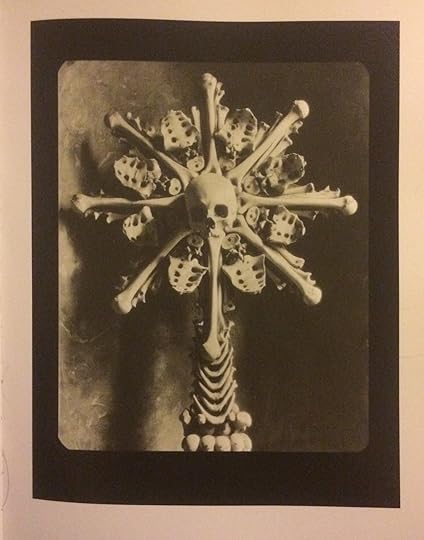
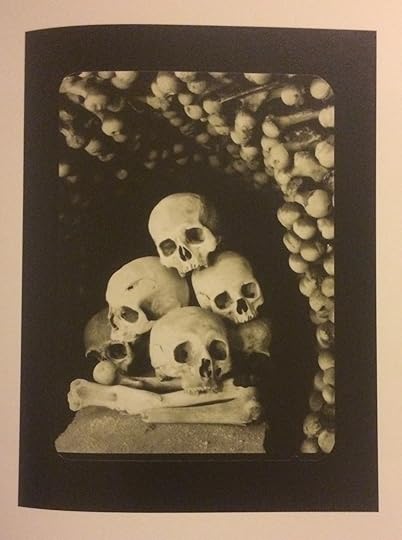
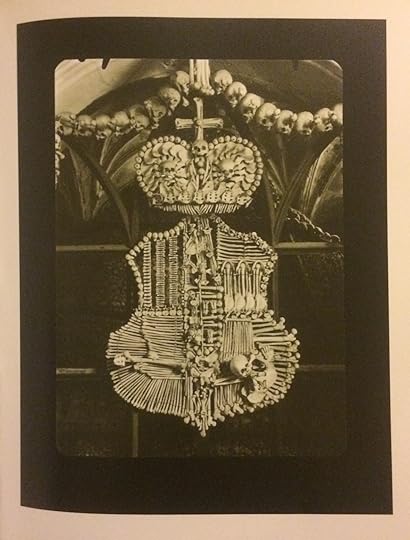
The ossuary at the church of All Saints in Sedlec, near the Bohemian town of Kutna Hora, is one of the most remarkable Baroque monuments in the Czech Republic and is on the UNESCO list of protected architectural sites. The photographs in this book capture the monument shortly before its restoration in the 1990s.

180 pages, Hardcover

First published August 15, 2001

54 people want to read

About the author

Bohdan Chlíbec

10 books1 follower

Ratings & Reviews

What do you think?
Rate this book

Friends & Following

Create a free account to discover what your friends think of this book!

Community Reviews

5 stars
7 (77%)
4 stars
1 (11%)
3 stars
1 (11%)
2 stars
0 (0%)
1 star
0 (0%)
Displaying 1 - 4 of 4 reviews
Profile Image for Loren.
Author 55 books338 followers
May 26, 2011
Mason bought me this beautiful book at the Franz Kafka Bookstore on the Old Town Square in Prague. It’s listed on Amazon.com for $140, but let me tell you, this is one beautiful book!

Memento Mori focuses solely on the Sedlec ossuary outside of Kutná Hora in the Czech Republic. In 44 plates, the book obsessively documents the Church of All Saints and the bone decor inside. Each photograph floats atop a deeply black mat and is faced by a stark white page, so your attention is focused again and again on the exquisite artistry with which Rint organized the dead.

The photographers were given over a year, using only natural light, to capture the images in these black and white photos. The long exposures required to shoot the dim ossuary give the bones -- especially the skulls -- a luminous quality. Often it seems that a spiritual glow infuses the images, radiating from the bones themselves or streaming in through the opaque windows. The photographs imply that this is a holy space.

The photographers were allowed access unavailable to your average tourist with a $2 photo pass. They slipped behind the iron grates fencing off the pyramids to reveal the cant of disintegrating geometry as the skulls rolled out of place. They climbed over the rail into the sacred alcove to shoot the monstrance lens to eye socket. They documented cobwebs and shattered skulls and the crumbling plaster of the walls, revealing the sadness and decay behind the breathtaking chandelier and chalice. Words are unnecessary when you view these photographs.

However, explanatory text is provided. First in Czech, then in English, finally in German, the essayists address the chronicle of the ossuary and debate the impact of its artistry. In his first essay, Mojmír Horyna details the history of the Cistercian order and discusses the artistic motifs of the ossuary design. He finds that the skull and crossbones is the most effective compositional element of the ossuary. In fact, garlands of skulls and crossbones do swoop across the groined ceiling of the church. However, Horyna claims that Rint’s “Romantic” decoration transformed the church into the empire of death triumphant, having stripped the “vanity of life of its beauty and joy.” I can’t disagree with him more. I found the ossuary almost indescribably beautiful. My confrontation with all those skulls left me feeling buoyed, full of joy that I am still alive. Perhaps there’s a large gap in our ages?

I suspect from his second essay (“Place of the Triumph of Death and of Hope in the Resurrection”), Horyna is a staunch Catholic, and perhaps a priest. He discusses briefly the 19th century slogans of praxis and will, defining the Romantic Movement as fascinated and horrified by death. He claims Rint “tuned” the ossuary “into the macabre tones of a hymn of death.” Proceeding onward, he claims that the modern pilgrim cannot possibly discover the ossuary in the manner in which it was intended. He’s pissed that the space is now a tourist attraction, to which modern visitors are drawn by curiosity. “Mass curiosity,” he writes, “operating under the slogan of demands for access to all facts, for the abolition of all secrets, and for the right to easy knowledge which, of necessity is superficial, leads to the banalisation of the world.” Whoa, buddy. Just because I didn’t grow up Catholic in Soviet Czechoslovakia does not mean that I cannot understand or appreciate what I’ve seen. In fact, I’m insulted by the insinuation that tourism, which is now funding the current renovation of the church, is evil in any way. Without my admission money, pal, your cultural icon would crumble to dust.

Probably, in Horyna’s opinion, those of you reading this review would not appreciate these spectacular photographs in a manner of which he would approve. I say, fuck ’im. If you can track this lovely book down, it is very worth owning.

This review initially appeared in Morbid Curiosity #3.
Profile Image for Juliana.
17 reviews29 followers
May 30, 2016
beautiful words and photography, I wish I owned this book.

"How infinitely silent is the wonder of the man who calls out in vertigo at the glimpse of the abyss: 'The dead do not exist, there are only the living.' Horror vacui - one day my skull too will be laid aside, and the end weighs heavy upon all present joys. And he sweetens this pain with the temptation of horror. Gloom pervades the walls beyond the range of the eye, and the one who passed this way lit his path with the lime of a bleached skull. And there is no will to think that the most living thing among the living is an unfinished decision, the most living process of life. The darkness that needs no source might be infinite but it - it alone - imposes itself beyond eternity.

And there is no will to know what a man after death is not one more alive, but one already undying. That life cannot be more alive, but only undying and infinitely deepened. That bones are - for this moment and this place - death laid aside, and thus the sign of a possible victory: departure for undying, a prelude to the desire for a new body, which can be kissed only through the angels. Life and death will never again embrace in a human existence - there will be one or the other.

My hidden form, which the gaze has avoided, is visible in this black-and-white mirror; an amalgam of darkness, which wants only one thing, only one thing will appease it - white bones. 'And this apparition has bewitched me and lures me into madness. As one blind with terror I walk through the flowerbeds of tombs.' Until the moment when I see a living body..."


Profile Image for David.
10 reviews
April 25, 2014
Beautiful photographs taken at one of the most interesting places on earth.
Displaying 1 - 4 of 4 reviews