Jump to ratings and reviews
Rate this book

Was ist der Mensch?

Rate this book
Was heißt es, Mensch zu sein?
Nobelpreisträger Eric Kandel über die Grundlagen unserer Identität

Was genau geschieht, wenn unser Gehirn nicht mehr „normal“ funktioniert? Wenn es in Unordnung geraten ist, durch Störungen oder Krankheiten wie Alzheimer, Depression oder posttraumatischen Stress? Eric Kandel, einer der weltweit führenden Experten der Gehirn- und Gedächtnisforschung, hat sich in seiner Arbeit immer wieder mit der Frage beschäftigt, inwiefern komplexe menschliche Verhaltensweisen biologische Ursachen haben. In seinem neuen Buch zeigt er an vielen Beispielen, von Angstzuständen bis zur Schizophrenie, von Sucht bis Bipolarität, wie sehr biologische Prozesse unsere Identität prägen. Denn gerade die Störungen, die Abweichungen und Anomalien machen auf beeindruckende Weise sichtbar, was es heißt, Mensch zu sein.

Der Titel ist durchgehend vierfarbig und reichhaltig bebildert.


369 pages, Kindle Edition

First published August 28, 2018

747 people are currently reading
9726 people want to read

About the author

Eric R. Kandel

39 books590 followers
Eric Richard Kandel is an Austrian-born American medical doctor who specialized in psychiatry, a neuroscientist and a professor of biochemistry and biophysics at the College of Physicians and Surgeons at Columbia University. He was a recipient of the 2000 Nobel Prize in Physiology or Medicine for his research on the physiological basis of memory storage in neurons. He shared the prize with Arvid Carlsson and Paul Greengard.
Kandel was from 1984 to 2022 a Senior Investigator in the Howard Hughes Medical Institute. He was in 1975 the founding director of the Center for Neurobiology and Behavior, which is now the Department of Neuroscience at Columbia University. He currently serves on the Scientific Council of the Brain & Behavior Research Foundation. Kandel's popularized account chronicling his life and research, In Search of Memory: The Emergence of a New Science of Mind, was awarded the 2006 Los Angeles Times Book Prize for Science and Technology.

Ratings & Reviews

What do you think?
Rate this book

Friends & Following

Create a free account to discover what your friends think of this book!

Community Reviews

5 stars
1,068 (37%)
4 stars
1,182 (41%)
3 stars
493 (17%)
2 stars
75 (2%)
1 star
20 (<1%)
Displaying 1 - 30 of 325 reviews
Profile Image for Woman Reading  (is away exploring).
470 reviews376 followers
February 12, 2021
4.5 ☆

The Disordered Mind is fascinating and mostly accessible to readers outside of this field. A physician and neuroscientist, Kandel received the Nobel prize in 2000 for his research on how the brain stores memory.

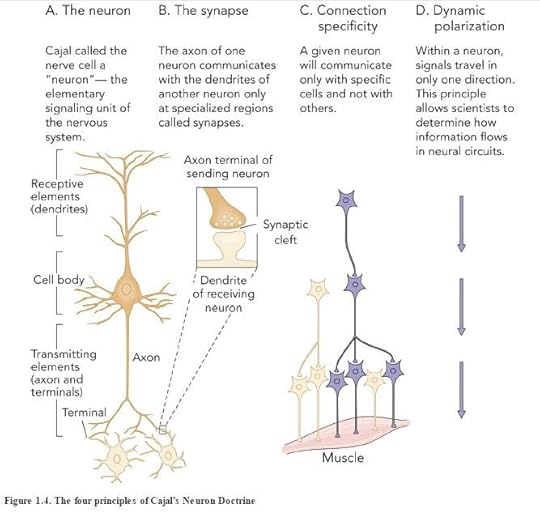
The brain is distinctive from the rest of the body. The human body has about 37.2 trillion cells, but the brain's 86 billion cells are fashioned into more complicated arrangements called neurons. A neuron has a cell body, and at one end are the dendrites, which are receptive elements that resemble tree branches. At the opposite end of the cell body are the transmitting elements, consisting of an axon and its terminals. The axon of neuron #1 communicates via electric pulse with the dendrites of neuron #2 only at specialized regions called synapses.

Spanish scientist Santiago Ramón y Cajal formulated the Neuron Doctrine in the late 1800s, and this holds true today.
The first principle is that each neuron is a discrete element that serves as the fundamental building block and signaling unit of the brain.
The second is that neurons interact with one another only at the synapses.
The third principle is that neurons form connections only with particular target neurons at particular sites. This
connection specificity accounts for the astonishingly precise circuitry that underlies the complex tasks of perception, action, and thought.
The fourth principle ... is that information flows in one direction only - from the dendrites to the cell body to the axon, then along the axon to the synapse.

We all derive our sense of self from what we know, think, feel, believe, and how we act. So how does the brain's neural activity lead to a person's distinctive sense of self? Kandel acknowledges that there is a spectrum for what's considered healthy and normal. But when the precise connections among neurons are disrupted, brain disorders or diseases can arise. Kandel wrote with the layperson in mind to answer this question -
what happens to our sense of self when the brain does not function properly, when it is beset by trauma or disease?
Kandel examines various mental disorders to highlight specific aspects that contribute to one's sense of self. The study of autism reveals abnormalities in the development of a person's social nature. Depression and anxiety disorders like PTSD show the role of emotions. Schizophrenia impacts the ability to think, make, and carry out decisions. Dementia reflects memory for in good measure, we are what we have learned and remember. Personal accounts from people who have been diagnosed with the disorders are included and this prevents the book from reading like a dry medical textbook. Kandel also writes about physical movement, creativity, and addictions. In the penultimate chapter, Kandel digresses from brain disorders to discuss the sexual differentiation of the brain and gender identity. The final chapter is about what he regards as the great remaining mystery of the brain - consciousness or our awareness of self (ie. the link between the physical brain and one's mind).

Prior to the 1970s, there was a hard split between psychiatrists and neurologists. The former treated those with problems of the mind and the latter dealt with the physical manifestations of brain disorders such as Parkinson's and Huntington's diseases. With the advancements in genetic research, animal modeling, and medical imaging technology like MRIs, the demarcation between the two fields have blurred because there is physical evidence for mental disorders.

Kandel wrote The Disordered Mind in a neutral manner. Nonetheless, my most significant takeaway is that mental disorders need to be de-stigmatized. More often than not, there is a genetic, ie. biological / physical, basis that got triggered by environmental factors and together this generated the disorder. In other words, mental health problems are not all in the sufferers' heads, and they can't just "snap out of it" or stop "acting out" or exercise "more willpower." If you know people across a broad range of ages, then you will likely know someone who has received a diagnosis in one of the disorders Kandel described. To my surprise, I personally know enough people such that half of this book is highly relevant. Given how mental illness is commonly regarded, society clearly has not yet reached the same understanding as the medical field and that needs to change.
Profile Image for Terri.
276 reviews
March 9, 2019
I do not come from a science background. This book was recommended to me from a family friend who is a neuroscience doctor. He suggested this book because he respects the renowned Dr. Eric Kandel. Also he thought this was a good book for a lay person to understand some of the cutting edge brain research that is being done. Dr. Kandel won the Nobel prize in 2000 for his research of memory storage in neurons. I wanted to understand how the memory works especially after my dear father was diagnosed with dementia. I am reading as many books about this subject and trying get a grasp on a very complicated subject that effects all of us. The difference between normal memory loss and Alzheimers is fascinating.
I like how the informative book chapters were laid out for the reader and found some of the information easy to understand. I do think it helps to have a good understanding of neuroscience. I also listened to his lecture on PBS (Great Conversations) which I highly recommend.
Profile Image for Molly.
1 review1 follower
December 6, 2018
Received a review copy in exchange for my review. I wish I could leave a better one. The book is full of animal testing and psychiatric binaries of sick and well. It lacks an ethical framework in its treatment of humans and nonhuman animals necessary for the subject. There is some decent knowledge but not much that is new. I would not recommend this book to the layman or to someone with a background in psychology or neuroscience.
Profile Image for Bonnie.
630 reviews16 followers
October 14, 2018
I found this book very disappointing. There wasn't a lot that was new. The subtitle, "What Unusual Brains Tell Us About Ourselves," makes a promise that is unfulfilled. He never says what disorders like Alzheimer's, addiction, autism, schizophrenia, etc. tell us about normal brains (except that they don't have these disorders). He has little to say about consciousness, and how it relates to brain activity, except to say that it's a mystery. When he discusses addiction, he mixes science with normative claims (like how important it is not to stigmatize addicts as weak-willed). He thinks we know that addiction is a disease because the brain scans of addicts are different from non-addicts. Has anyone scanned the brains of weak-willed persons? Maybe their brains are different too.

Kandel is no Oliver Sacks.
Profile Image for Cathy.
97 reviews
December 10, 2018
Fascinating brain stuff here. Eric is certainly an expert. Some things I've already heard, but a lot of new information also. I like how well he explains the inner workings of our mystery organ.
Profile Image for Camelia Rose.
894 reviews115 followers
June 21, 2021
3.5 round up.

Eric R. Kandel is a Nobel Prize winner in Physiology for his research on the memory storage in neurons. The Disordered Mind: What Unusual Brains Tell Us about Ourselves is a summary of history and latest research of brain disorders. Since the development of neuroscience from 1970s onwards, the line between neurology and psychiatry has become blurred. There are no profound differences between neurological and psychiatrical diseases.

This book covers following topics:
1. Social brain and Autism spectrum
2. Mood disorder (depression and bipolar)
3. Schizophrenia
4. Memory, memory loss and Dementia (Age related memory lost, Alzheimer, Frontotemporal Dementia)
5. Creativity (brain disorder and art)
6. Movement Disorder (Parkinson Disease and Huntington Disease)
7. The interplay of conscious and unconscious emotions (PTSD and anxiety, etc...)
8. Addictions
9. Sexual differentiation of the brain and gender identity
10. Consciousness

My takeaways:
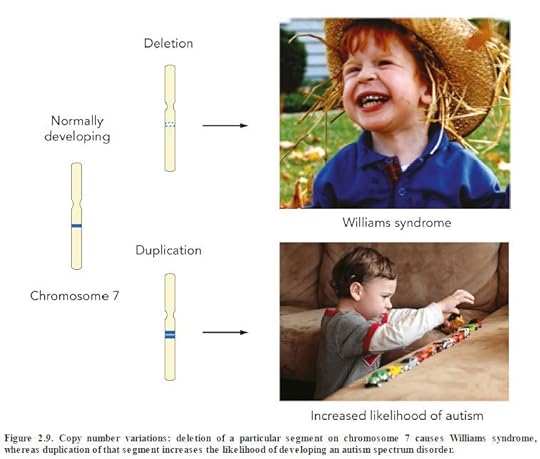
-- Genetics play an important role in mental functions. Your DNA can tell if you have predispositions to many disorders, such as Autism, Schizophrenia, mood disorders, and the likelihood of addiction if you'd ever being exposed to. Each of these brain disorders is associated with not single, but many genes. The same gene mutation may be associated with several brain disorders, such as bipolar and Schizophrenia, at the same time.
-- The older the father is, the higher the number of de novo (spontaneous) mutations occur in sperms. De novo mutation in sperms contribute to 10% of Autism cases.
-- Too much synaptic pruning is related to Schizophrenia, too little to Autism
-- There is an association between creativity and mental disorder, but creativity is not dependent upon disorders.
-- Sex hormones released during fetal development influence gender-specific behavior independent to chromosomal sex and anatomic sex.

Because of the amount of topics included in this 304 pages book, each topic can only get limited attention. His presentation of the Trolley Problem is too brief. He says, "some philosophers argue it's immoral not to intervene", but without giving his own opinion.

My biggest issue lies in Chapter 10 (sexual differentiation of the brain and gender identity). He quotes Ben Barres, a transgender scientist, who says gender is biologically bimodal because of the evolution, but gender differences are not all about social-construct, and there is hormonal differences too. I agree with this view. However, the author does not address the "sex is a spectrum"(note: biological sex, not gender) argument popular among transgender activists. He acknowledges that the longterm affects of puberty blockers are still unknown, yet he quotes "some practitioners" claim it is "immoral" not to treat transgender youth with puberty blockers. The recent Keira Bell vs NHS case (https://www.bbc.com/news/health-51676020) has highlighted the physical and psychological damage to the youth because puberty blockers were given prematurely. The author says transgender is not influenced socially and transgender youth rarely change their mind. These arguments have become questionable in recent years. With the surge of transgender teens (https://www.theguardian.com/society/2...), there comes the surge of de-transitioners too. Yet, no scientific research has been carried out to study these new phenomena. I am interested to know if the surge of transgender teens (mostly from biological girls) has anything to do with the gender discriminations and stigma towards homosexuals.
Profile Image for Graeme Newell.
464 reviews236 followers
January 31, 2020
This book did a great job explaining the brain science behind many of the most serious brain disorders society faces today: depression, schizophrenia, PTSD, addiction, Alzheimers and many other brain maladies. The Nobel prize winning author did an admirable job of keeping the brain science approachable for a non-scientific audience.

I learned a lot and better understand the causes and possible treatments of these brain diseases.
Profile Image for Ben Zimmerman.
175 reviews13 followers
February 1, 2020
The Disordered Mind is a thoughtful, well-researched, and modern overview of how scientific research into the physiology of diseases in the brain has led to insights to understanding the mind. It kind of reminded me of an Oliver Sacks book in its scope, except that it focused on progress in broad research areas, summarizing hundreds of seminal papers, rather than highlighting features through interesting case studies. The result is that it is perhaps a little drier than the personal narratives that Sacks provides. But it is still very interesting, especially in providing a good background for understanding the context of current brain research.

The things I appreciated most about this book were highlighted to me in the contrast to many other scientists that I’ve encountered. First, Kandel stays impressively up-to-date as areas of scientific research evolve, and I think he did a good job incorporating new findings, while not dismissing or forgetting to mention the classics. At the same time, he avoids making current research feel confusing or muddled and does a great job synthesizing the big ideas. Secondly, and perhaps my favorite thing about Kandel, is that his humanity and compassion comes through in spades. I love that he does not dismiss the humanities, but rather integrates them into his narrative. For instance, I like that he points out disappointments with the evolution of psychoanalysis, but rather than alienating the field, instead calls for a partnership with neuroscience. And I can honestly say that the largest factor contributing to my own appreciation of visual art comes from Kandel’s books. He just makes me feel like we’re all on the same team, and he maintains such a good balance between deep, critical analysis of other’s work and praise, appreciation, and constructive insight.
Profile Image for Melise.
481 reviews1 follower
May 27, 2018
I read an ARC from NetGalley and Farrah, Straus And Giroux. Thanks!

I am always interested in reading about the intersection of brain physiology and psychology/behavior. This book was a great overview of some of the most recent discoveries that shed light on physiological findings within the brains of people who have a number of diseases, such as Alzheimer’s, Parkinson’s, schizophrenia or Huntington’s, who suffer from depression or anxiety, or who experience life in non-neurotypical ways, including people with autism or gender nonconformity.

The author did a good job of clearly explaining these complex scientific issues for a lay reader and I, like the author find it very interesting how seemingly unrelated symptoms can be caused by similar physiological changes in the brain, such as the role that synaptic pruning plays in both schizophrenia and autism.

The one element that seemed to be missing for me, however, was a stronger synthesis and suggestions about where these findings might lead in the future. There was a bit of this in the conclusion, but I would have liked to have read more.

All in all, a good overview that helped me understand current discoveries in brain functioning.
Profile Image for Daniel.
Author 1 book58 followers
September 19, 2018
This book does not pretend to be a comprehensive treatise on brain disorders. It is more like a multi-course tasting menu of interesting topics in cognitive neuroscience and should be savored as such.
Profile Image for Amy.
1,757 reviews173 followers
December 11, 2019
I learned a lot from this one. I'm not super into science so I was worried it would be 'over my head' but it wasn't at all. Concepts were explained well. A lot of interesting stuff here!
Profile Image for Tracey.
1,178 reviews15 followers
November 18, 2018
This would be a really good text for someone who has some basic working knowledge about the brain/mind connection or the "new biology of the mind" as Kandel refers to it. I clearly have read far more about this topic than I realized when I picked this up, because I was familiar with much of the content of this book, including many of the specific case studies he cites, so there were chapters I blazed through because of familiarity. Reading this did remind me how resistant I am to the argument that the mind is purely a biological function, because when Kandel would press hard in that direction, I would find my inner skeptic rising; however, he would then acknowledge that we don't fully understand the impact of environment on shaping what we call the mind, so the inner skeptic would then calm itself. He cites many philosophers and scientists that I respect, some of which he praises for getting it right before technology could back up those claims (way to go, William James!), but he also pretty much dismisses some as straight up "getting it wrong" (I'm looking at you, Decartes). I'm a both/and kind of thinker, so while I like some of the empirical evidence he provides, it didn't resolve any questions I had. I also caught some pruning of evidence to support his claim about biology and morality when he is discussing the trolley problem as it relates to Joshua Greene's research (yes, psychopaths have no problem pushing the fat man, but neither do Buddhist monks, which Kandel neglects to mention and it feels a bit deliberate in terms of positively positioning the claim being made). All that said, I would say a good primer for an overview on the topic written by a guy who has been a pioneer in the field (Nobel Prize Winner in 2000).
Profile Image for Sara.
343 reviews1 follower
November 5, 2018
Every chapter introduced fascinating concepts about how the brain works, and made me want to read more. Explanations were brief but sufficient to get a good overview. Focusing on disorders or rare brain conditions makes sense because that’s how neuroscience has traditionally advanced. This book didn’t use any flashy rhetorical devices but was straightforward and easy to read. It rises above high quality textbook by taking several clear positions on issues, such as the best way to treat addiction, based on the scientific evidence that has been presented.

I found this a clear and enlightening introduction to neurobiology.
Profile Image for Sherif Nagib.
91 reviews396 followers
December 13, 2019
إريك كاندل طبيب وباحث وحاصل على جائزة نوبل في الطب عن أبحاثه في الذاكرة. رغم ثقل الكتاب وامتلائه بالمصطلحات الطبية المعقدة، إلا إنه كان فعلاً ممتع، خصوصاً أنه بيتكلم عن المخ، واحد من أسرار الكون اللي لحد دلوقتي الطب لسه قدامه كتير على ما يتوصل لها. الكلام الأكثر إثارة للاهتمام بالنسبة لي كان عن علاقة المخ، بشكله وتكوينه المادي في الجسم، بالعقل والوعي، أو ما يمكن أن نسميه الروح. وازاي الطب بيحاول يتوصل للرابط بين الاثنين. وأيضاً الكلام عن علاقة الطب النفسي بطب المخ والأعصاب، وازاي الاتنين في طريقهم للاندماج في علم واحد. عنوان الكتاب خادع بعض الشئ، أحياناً كان مُشتت شوية. أحياناً كان صعب ومتوغل في معلومات طبية لم تهمني تفاصيلها، لكنه كان فعلاً ممتع.
Profile Image for Anna Holubecki.
28 reviews11 followers
October 4, 2018
Good book for an overview, especially for those not in the field! Appreciated how Kandel would redefine concepts and terms as they came up instead of forcing readers to remember them from before. Also liked how the chapters were organized by processes that make up our mind, paired with disorders that result from abnormalities in those processes.
Profile Image for Cav.
907 reviews205 followers
November 13, 2021
"Having escaped from Vienna as a young boy soon after Hitler occupied it, I was preoccupied with one of the great mysteries of human existence: How can one of the most advanced and cultured societies on earth turn its efforts so rapidly toward evil? How do individuals, when faced with a moral dilemma, make choices? Can the splintered self be healed through skilled human interaction? I became a psychiatrist in hopes of understanding and acting on these difficult problems..."

The Disordered Mind was an excellent look into the topic. The subject of mental illness is an extremely interesting one, and I'll read just about any science-driven book on the topic that I come across. The author drops the quote above in the introduction.

Author Eric Richard Kandel is an Austrian-born American University Professor and the Fred Kavli Professor at Columbia University, and a Senior Investigator at the Howard Hughes Medical Institute. He is the recipient of the 2000 Nobel Prize in Physiology or Medicine for his studies of learning and memory.

Eric R. Kandel:


Kandel opens the book with a very good introduction, setting the pace for the writing that was to follow. He begins Chapter One with a brief bit on the "hard problem" of consciousness, before moving on to a short history of psychiatry and psychology.

Kandel's writing here is excellent. He writes with an easy, engaging style that ensures this one be very accessible, even to the scientifically illiterate layperson.
The book also has great formatting, too. It is broken into well-defined chapters; and each chapter, into segmented writing with relevant headers at the top. I really like books presented in this fashion, as I find it much easier to retain the information presented. There also are many illustrations throughout, which really helps bring some context to the reader. Well done!

Kandel can also be commended for the great brief summary of neurochemistry and neuroanatomy that he provides the reader with early on here. All too many science books I've read seem to take a fairly high degree of literacy among its potential readers for granted, and I always penalize them for it when they do.

Kandel includes an illustration of the neuron here:


He also covers an early history of the scientific look into mental illnesses. He drops this interesting quote:
"Pathologists were struck by the fact that most psychiatric disorders—namely, schizophrenia, depression, bipolar disorder, and anxiety states—did not produce visibly dead cells or holes in the brain. Since they did not see any obvious damage, they assumed that these disorders were either extracorporeal (disorders of mind rather than the body) or too subtle to detect.
Because psychiatric and addictive disorders did not produce obvious damage in the brain, they were considered to be behavioral in nature and thus essentially under the individual’s control—the moralistic, non-medical view that Pinel deplored. This view led psychiatrists to conclude that the social and functional determinants of mental disorders act on a different “level of the mind” than do the biological determinants of neurological disorders. The same was held to be true, at that time, of any deviation from the accepted norms of heterosexual attraction, feeling, and behavior.
Many psychiatrists considered the brain and mind to be separate entities, so psychiatrists and addiction researchers did not look for a connection between their patients’ emotional and behavioral difficulties and the dysfunction or variation of neural circuits in the brain. Thus, for decades psychiatrists had difficulty seeing how the study of electrical circuits could help them explain the complexity of human behavior and consciousness. In fact, it was customary as late as 1990 to classify psychiatric illnesses as either organic or functional, and some people still use this outdated terminology. Descartes’s mind-body dualism has proved hard to shake because it reflects the way we experience ourselves..."
The scope of the book is quite broad, and Kandel covers quite a lot of ground here. Fortunately, he does this in a super-interesting and effective manner that holds the reader's attention well. He covers this very technical material in a straightforward, yet engaging manner.
The book also features some great writing about autism; including a history of misdiagnosis, and some possible biological causes.


The book talks about much of the newer research in the fields of psychiatry and psychology. Kandel intersplices this writing with many case studies of people affected by each disorder covered. He includes quotes from actual patients who talk about what it's like to live with these conditions. This really helped to convey the human side of these disorders to the reader, IMO. Nicely done, again.


Some more of what is covered in here includes:
Williams syndrome; basically the "opposite of autism."
• Depression; ketamine treatment. Cognitive Behavioural Therapy.
• Schizophrenia; Thorazine treatment. The dopamine hypothesis of schizophrenia. Excessive synaptic pruning.
• Memory, dementia. The loss "of the self."
• Brain disorders and art. He says "The idea that creativity is correlated with mental illness is a Romantic fallacy. Creativity does not stem from mental illness; it is an inherent part of human nature."
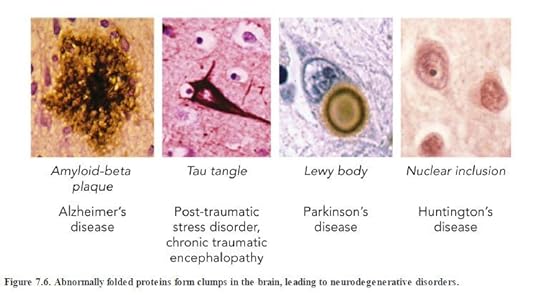
• The protein folding disorders; Parkinson's Huntington's, Lewy Body Dementia, Alzheimer's.
• Emotions: decision making, morality, psychopathy.
• The biology of addictions; drugs.
• Sexual identity; transgendered people.
• Consciousness; the "hard" and "easy" problems.

**************************

I wasn't sure what to expect from The Disordered Mind, to be honest...
I am happy to report that this book well exceeded any expectations I had of it going in. Kandel has produced some excellent content here, and my rating will reflect that.
I would definitely recommend this one to anyone interested.
An easy 5-star rating here, for an excellent overall presentation, especially considering that the author was almost 90 years old when he wrote the book! Good for him.
Profile Image for Fernando.
253 reviews27 followers
December 16, 2020
Para los que trabajamos en el área de salud mental este libro es de obligatoria lectura. El capítulo en el que se analiza la asociación entre las enfermedades mentales y el arte es de verdad interesantisimo. A pesar de que muchas de las cuestiones que se tratan son científicamente complejas, Kandel hace un trabajo excelente haciéndolas bastante asequibles. La más de las veces el libro es ameno y de lectura liviana. A veces me incomodó un poco la evidente y malintencionada mezquindad del autor ante las teorías freudianas y los aportes de Freud a la ciencia.
Profile Image for Derek Davis.
Author 4 books30 followers
October 23, 2018
Always like Kandel, from his textbooks to his personal revelations (the latter more so). As a rundown of the status of neuroscience today, this deserves a fifth star. He presents the material beautifully, so that even when technical terms (such as particular areas of the brain) are tossed in without full definition, the whole still carries you along with superb clarity.
My only reservation is his stance that certain mechanisms of the brain have been firmly established, when, from what I've read elsewhere, that's not necessarily the case. He's a staunch materialist (as am I), but I wonder if it doesn't make him want to believe that the neural and genetic foundations of the conditions he describes, such as Alzheimer’s, are solidly established and incontrovertible (are amyloid beta deposits definitely a cause of Alzheimer’s or a result or an association?).
But it's as good an up-to-date look at the state of neurophysics in the brain as you'll find anywhere. I gained a lot of new insights (for instance, that my cat has likely damage to the lateral nucleus of his amygdala – and here I thought he was just nuts).
Profile Image for Moh. Nasiri.
334 reviews108 followers
August 28, 2020
Brains that work abnormally can teach us how brains normally work.

All mental disorders are linked to changes in our brains, and therefore can teach us a lot about how our brains affect our thoughts, feelings, and behavior. Most mental disorders have both genetic and environmental causes. Some disorders like autism and schizophrenia involve anatomical changes in the brain, while others like depression and Parkinson’s initially affect the chemicals our brains use to communicate. 

Actionable advice: 

Exercise to keep your mind fit.

Did you know that our bones release a hormone? It’s called osteocalcin, and one of its functions is to promote the production of certain neurotransmitters in the brain, which in turn boost our memory. Scientists think that age-related memory loss could be linked to the decrease in bone density in old age. Since exercise promotes bone density, working out your body might help your mind stay sharp!

Blinkist.com
126 reviews
September 30, 2018
I won this book on Goodreads. This book is fascinating, the topics include Alzheimer's, gender identity, Parkinson's, PTSD, bipolar, schizophrenia, autism and several other disorders. It may not be of interest to all readers but those who may find it interesting are readers who are curious about medicine, psychology, and science. I am involved in those fields so the studies interest me a great deal. This book covers genes and chromosomes which show how some of the same genes (duplication or deletion, mutations) causes certain risks for disorders. A worthwhile read and the book is of high quality.
1,774 reviews8 followers
October 28, 2018
This is an informative book with insights into recent studies of the human brain. I'm not sure who the target audience is for this. It's not as accessible as Dr. Sacks' books, for example, and I think will require a background in biology or psychology at least. However, experts are likely to find it often vague and repetitive. There's not much effort to personalize the science with anecdotes or patient histories, which makes it somewhat slow-going and technical. It has some nice pictures and figures, and the construction is textbook-quality (the book is very heavy for its size).
250 reviews
November 9, 2018
Outstanding.
A clear overview of brain research up to the current day. A must read for anyone interested in the connection between the prescription of drugs and the use of psychotherapy in treating mental disorders and addiction. Kandel clear explains the difference between autism, bipolar disorders, schizophrenia, Parkinson's disease, and other conditions. There is a chapter on what comes into play when someone becomes addicted to opiates etc. It takes some time to read, but well worth the journey.
227 reviews1 follower
December 21, 2018
A fascinating book that really reads a bit like a textbook. Kandel describes how brain function affects people suffering from autism, depression, bi-polar disorders, schizophrenia, dementia, Parkinson's disease, Huntington's disease, etc. He also details the path that neuroscience has taken to explore these conditions with some detail. He has a very straight forward approach that makes most of the studies he discusses understandable even to a lay person such as myself.
Profile Image for Xavier Morales.
1 review
September 27, 2018
Being an Industrial-Organizational Psychology student, I was familiar with the content Kandell presents here, but not entirely savvy of the intricacies of mental disorder. I was mostly interested in the decision making portions of the book. In general, I think this book is a good overview of the topics it covers.
Profile Image for GONZA.
7,428 reviews124 followers
December 30, 2018
Absolutely interesting, and I read it too fast so I have to go back and read some parts again because it is brilliant and I could find some insights and tips for my new job.

Molto interessante e mi rendo conto di averlo letto troppo velocemente, infatti devo tornare indietro e rileggere delle parti che potrebbero essermi utili nel mio nuovo lavoro.
20 reviews
September 24, 2018
One of the best psychology books I have ever read. It goes into great detail about each disorder and how each disorder affects the person's life. It is a well-written book and it's not surprising when you learn the author wrote a Nobel peace prize. It really shows in his writing.
Profile Image for Ula Łupińska.
83 reviews100 followers
January 14, 2021
Eric Richard Kandel jest neurobiologiem, który w 2000 roku otrzymał Nagrodę Nobla w dziedzinie fizjologii lub medycyny. W „Zaburzonym umyśle” podsumowuje, co już wiemy (stan na ok. 2018 rok) na temat zaburzeń pracy mózgu. We wprowadzeniu przedstawia nam się tak:

Całe swoje życie zawodowe poświęciłem próbom zrozumienia wewnętrznych mechanizmów pracy mózgu oraz motywacji ludzkiego zachowania.


(W momencie wydania książki miał 90 lat!)

Pierwszy rozdział to właściwie skrócona lekcja (neuro-)biologii przygotowująca czytelnika do lektury. Później Kandel nie wraca do powtarzania wyjaśnień, i chwała mu za to, bo po co tracić czas. Kolejno omawia: spektrum autyzmu, depresję i chorobę afektywną dwubiegunową (jest tu też o psychoterapii), schizofrenię, zaburzenia pamięci, istotę kreatywności, problemy z poruszaniem się (parkinson, huntington), zaburzenia lękowe i PTSD, nałogi, kwestię płci (tożsamość płciowa vs płeć biologiczna), a kończy rozdziałem o świadomości. Od czasu do czasu wplata cytaty i wypowiedzi osób, które doświadczyły danego zaburzenia na własnej skórze – to bardzo wzbogaca jego naukowe wywody i ułatwia ich zrozumienie (choć rozdział o autyzmie mógłby być moim zdaniem trochę bardziej rozbudowany, w końcu to całe *spektrum*).

Jako osoba, która połowę życia leczy się psychiatrycznie i próbuje zrozumieć, co się dzieje w jej głowie – większość rozdziałów przeczytałam zafascynowana, zaznaczając czasem całe akapity. Nie wszystko było dla mnie nowe i nie zawsze było łatwo mi czytać; momentami czułam się „przygnieciona” przypomnieniem o nieodwracalności zaburzeń mojego mózgu. Czasami z tego powodu brakowało mi większego skupiania się na pozytywach danej sytuacji (takiego pogłaskania po główce), ale przecież nie po to tu się spotkaliśmy. Kandel przyszedł omówić, co jest *nie* tak i czy już wiemy, dlaczego tak jest (i czego nauka w najbliższych latach może jeszcze dokonać).

Podtytuł to najsłabsza część tej książki – trudno powiedzieć, czy człowiek, który go wymyślił, w ogóle ją czytał, ale wiadomo, tytuł ma sprzedawać.

Spora bibliografia dla ciekawskich.

4,75/5
Displaying 1 - 30 of 325 reviews

Can't find what you're looking for?

Get help and learn more about the design.