

What do you think?

X-Men: Grand Design #3-4
X-Men: Grand Design - Second Genesis
Collects X-Men: Grand Design - Second Genesis #1-2.
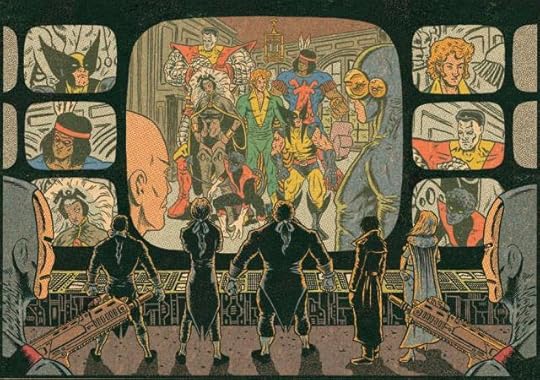
The sequel to the critical smash hit X-MEN: GRAND DESIGN is here — and it's all-new and all-different! Witness Wolverine, Storm, Colossus, Nightcrawler, Sunfire and Thunderbird suiting up as X-Men for the very first time — all over again! Plus: The return of Banshee! The arrival of the Shi'ar! The Brood! The Starjammers! Watch as Marvel's merry mutants take to the stars. See the first X-Men adventures of Kitty Pryde and Carol Danvers. And marvel at the grandeur and glory of the now-classic Dark Phoenix Saga! All through the lens of indie auteur Ed Piskor — who lovingly researches, writes, pencils, inks, colors and letters every page just for you! This volume also includes an issue of Giant-Size X-Men and pinups by Arthur Adams, Todd McFarlane, Jim Lee and Joe Madureira masterfully recolored by Ed.
The sequel to the critical smash hit X-MEN: GRAND DESIGN is here — and it's all-new and all-different! Witness Wolverine, Storm, Colossus, Nightcrawler, Sunfire and Thunderbird suiting up as X-Men for the very first time — all over again! Plus: The return of Banshee! The arrival of the Shi'ar! The Brood! The Starjammers! Watch as Marvel's merry mutants take to the stars. See the first X-Men adventures of Kitty Pryde and Carol Danvers. And marvel at the grandeur and glory of the now-classic Dark Phoenix Saga! All through the lens of indie auteur Ed Piskor — who lovingly researches, writes, pencils, inks, colors and letters every page just for you! This volume also includes an issue of Giant-Size X-Men and pinups by Arthur Adams, Todd McFarlane, Jim Lee and Joe Madureira masterfully recolored by Ed.
130 pages, Kindle Edition
First published October 30, 2018
About the author
Ed Piskor
84 books202 followersEd Piskor had been cartooning professionally in print form since 2005, starting off drawing American Splendor comics written by Harvey Pekar. The duo continued working together on 2 graphic novels, Macedonia, and The Beats. Ed began self publishing Wizzywig after developing a huge interest in the history of Hacking and Phone Phreaking. 3 volumes, making up 3/4 of the full story, have been published to date.
Recently Ed had designed the characters for the new Adult Swim series, Mongo Wrestling Alliance.
Recently Ed had designed the characters for the new Adult Swim series, Mongo Wrestling Alliance.
Ratings & Reviews
Friends & Following
Create a free account to discover what your friends think of this book!
Community Reviews
Displaying 1 - 30 of 104 reviews

March 3, 2019
While I liked but was sort of underwhelmed by X-Men: Grand Design (Piskor's first volume, about the original line-up's formation and early years) I found his follow-up / companion piece, Second Genesis, much more accessible and enjoyable. This edition focuses on writer Chris Claremont's long-running and legendary years (1975-1991) at the title's helm, and introduces those wonderfully diverse characters - Storm, Nightcrawler, Colossus, Wolverine, and Kitty 'Shadowcat' Pryde, among others - that now capably filled out the 'X' ranks. Honestly, these folks just seemed more interesting to me.
This volume just seemed lively - along with the requisite 'X' action and drama there was certainly more humor this time, and that made it a lot of fun to read. It is again presented in the 'treasury edition' format, with the aged-looking pages and artwork that is a throwback to the 70's style.
This volume just seemed lively - along with the requisite 'X' action and drama there was certainly more humor this time, and that made it a lot of fun to read. It is again presented in the 'treasury edition' format, with the aged-looking pages and artwork that is a throwback to the 70's style.

April 24, 2019
A great primer for anyone who's been interested in the X-Men's history but too intimidated by the sheer amount of it. This covers the introduction of the 2nd X-Men team and their adventures for the next 100 issues or so, from Giant size X-Men #1 to Uncanny X-Men #186. Some of the classic stories are during this time period like the Dark Phoenix Saga and Days of Future Past (which is curiously omitted). This was during Chris Claremont and John Byrne's heyday and I would encourage those interested to actually go back and read all these issues. Although Claremont can definitely sound wordy for modern comics, the 70's and 80's were the best time period for X-Men comics. They consistently knocked it out of the park. Pisker's art is a bit frowny for my taste and I'm definitely not a fan of the drab coloring. (Yes, I know it's supposed to look like an old comic.) the oversized treasury edition is great. I did think the Ed Piskor recolored version of Giant Size X-Men was superfluous and just a way to drive up the cost.

December 31, 2018
Good stuff, but not as good as the first volume.
Also, as someone who's read a bunch of early comics, I can tell you the utility for volume 1, which saves you the trouble of reading comics from the era when writers and artists were still figuring things out, is higher than this one. This one covers over some really good comics, still some of my favorites. While I'm heavily in favor of reading the first volume to skate through early X-Men history, which is more fun to talk about than actually read, this volume skates you through issues that are pretty great to read in full. The whole Dark Phoenix Saga is a really good X-Men story, tons of fun, and I'd recommend you go ahead and just read it.
I guess it's a Piskor thing, sometimes stuff skips around. You're in one story, then bam, you're in another. Seemed more pronounced in this one. The transitions could be smoother.
A good comic, a good project. I'd love to see this treatment on some of the very early issues of some other books.
Also, as someone who's read a bunch of early comics, I can tell you the utility for volume 1, which saves you the trouble of reading comics from the era when writers and artists were still figuring things out, is higher than this one. This one covers over some really good comics, still some of my favorites. While I'm heavily in favor of reading the first volume to skate through early X-Men history, which is more fun to talk about than actually read, this volume skates you through issues that are pretty great to read in full. The whole Dark Phoenix Saga is a really good X-Men story, tons of fun, and I'd recommend you go ahead and just read it.
I guess it's a Piskor thing, sometimes stuff skips around. You're in one story, then bam, you're in another. Seemed more pronounced in this one. The transitions could be smoother.
A good comic, a good project. I'd love to see this treatment on some of the very early issues of some other books.

March 29, 2023
Krakoa and Phoenix and Hellfire, oh my!

November 6, 2018
2.5
This book stinks. Literally.
I once lived downwind of a paper mill and this is exactly what this book's odor reminds me of. I thought it was an oddity with the copy of Vol. 1 I read but, here it is again, so it must be the ink or the paper used. And it really taints the reading experience.
Volume two covers X-Men history from issues 94-186. 30 issues more than the last volume and during a time when the stories were far richer than the punch-up of the month they had been before Claremont took over. The result is a mostly soulless retelling of some of the most memorable moments in the series with lot of bizarre changes. Days of Future Past is ignored entirely. Storm's mohawk becomes a reaction to losing her powers, rendering a powerful statement of self-expression into an emo tantrum. Every plot point is handled so perfunctorily and the pacing so fast that the whole book feels like a "Last time, on X-Men" montage.
Piskor does sprinkle some fun Easter eggs throughout, Like being Donald Pierce's cyborg arm being drawn as a Nintendo power glove, but the total package is still rushed and devoid of the emotional beats that made This era of the X-men so beloved.
This book stinks. Literally.
I once lived downwind of a paper mill and this is exactly what this book's odor reminds me of. I thought it was an oddity with the copy of Vol. 1 I read but, here it is again, so it must be the ink or the paper used. And it really taints the reading experience.
Volume two covers X-Men history from issues 94-186. 30 issues more than the last volume and during a time when the stories were far richer than the punch-up of the month they had been before Claremont took over. The result is a mostly soulless retelling of some of the most memorable moments in the series with lot of bizarre changes. Days of Future Past is ignored entirely. Storm's mohawk becomes a reaction to losing her powers, rendering a powerful statement of self-expression into an emo tantrum. Every plot point is handled so perfunctorily and the pacing so fast that the whole book feels like a "Last time, on X-Men" montage.
Piskor does sprinkle some fun Easter eggs throughout, Like being Donald Pierce's cyborg arm being drawn as a Nintendo power glove, but the total package is still rushed and devoid of the emotional beats that made This era of the X-men so beloved.
September 28, 2020
Classic 80s X-Men stories told with a quirky, off-beat art style? Sign me up.

January 13, 2019
Streamlines the canon for old fans and brings new readers into some of the best years of the X-men with style and includes a gorgeous re-colored edition of Giant Size X-Men #1, which holds up very well. If you read this and enjoy it I would highly recommend any of the late 70's/80's X-men or the spinoffs that these stories are taken from.

December 8, 2020
Wow this is a very nice retelling of the X-Men and all the various timeline additions that have the retconned into that timeline over the years. Great job by the writer making it all make sense. Very recommended

December 3, 2018
I admire what Piskor is trying to do here: take the X-men narrative and make it coherent in a style that reflects classic comics. This volume moves from the classic era of X-men's silver age to the Giant-sized reboot and into the Claremont era which defined the X-men for that point forever. The issue is that it feels rushed and plots that are were complicated are reduced, added too, and made more seamless. Piskor's art is interesting and very retro but lacks some of the strength of Cockrum and Byrne. Furthermore, that becomes slightly more obvious when Piskor's recoloring of Giant-sized one is included in the package. Furthermore, Piskor has to consolidate more: this covers Uncanny X-men 94-186 and covers some key Claremont works like the Pheonix and Dark Pheonix saga. Piskor does cover more issues which have a more complicated plot and character development in a similar space. While I do still appreciate Piskor's attempt to make a singular and definitive continuity, I would take the discontinuity of the whole and the developed arcs in the original as my definitive so far.

January 28, 2019
Like reading a condensed version of the early X-Men. Complete with semi-crappy pulp style art. It actually continues to work better than I think it should. Not sure how enjoyable it would be to those who this isn't a refresher. It was definitely readable if not amazing.

September 25, 2024
This is the second volume of Ed Piskor's Labor of Love detailing the history of the X-Men. In this second Giant-Sized volume we cover the history of the X-Men from introducing the new team members, to when the original ones get captured, and will take us through the Phoniex Saga.
The artwork excellently mirrors the style of the time period and the entire book has the same texture and feel that make this a gem. This Giant Sized version collects the 3rd and 4th issues of "Grand Design".
Highly recommended for anyone wishing to learn about the history of the X-Men.
The artwork excellently mirrors the style of the time period and the entire book has the same texture and feel that make this a gem. This Giant Sized version collects the 3rd and 4th issues of "Grand Design".
Highly recommended for anyone wishing to learn about the history of the X-Men.

October 22, 2020
Segundo tomo de la cronología “compactada” de los X-Men, siempre cargo de Ed Piskor, que comienza con la incorporación como ya todos sabemos, de nuevos integrantes al grupo, como Wolverine, Cíclope y Tormenta entre otros.
Un Piskor como autor total, en un gran trabajo donde se ocupa no solo de guiones y dibujo, sino que también de tintas y color.
Una gran admiración por personajes y autores, se desprende del tremendo trabajo de “investigación” y compaginación, cuyo resultado facilita el seguimiento del relato, a pesar de la complejidad de las tramas e historias originales.
Es de esperar que otros autores sigan su ejemplo y se ocupen en trabajos similares con otros personajes o grupos, me encantaría uno del Increíble Hulk, por ejemplo.
(Hay uno de “Los Cuatro Fantásticos” en camino, realizado por Tom Scioli)
Notable trabajo, indicado particularmente como decía en la reseña del primer volumen, para amantes de los “greatest hits” y resúmenes por el estilo.
Un Piskor como autor total, en un gran trabajo donde se ocupa no solo de guiones y dibujo, sino que también de tintas y color.
Una gran admiración por personajes y autores, se desprende del tremendo trabajo de “investigación” y compaginación, cuyo resultado facilita el seguimiento del relato, a pesar de la complejidad de las tramas e historias originales.
Es de esperar que otros autores sigan su ejemplo y se ocupen en trabajos similares con otros personajes o grupos, me encantaría uno del Increíble Hulk, por ejemplo.
(Hay uno de “Los Cuatro Fantásticos” en camino, realizado por Tom Scioli)
Notable trabajo, indicado particularmente como decía en la reseña del primer volumen, para amantes de los “greatest hits” y resúmenes por el estilo.

November 18, 2018
Piskor's narrative of a consolidated X-Men history stays strong as he dives into more familiar territory for the modern comic fan, even if some of the power and emotion from those original, groundbreaking stories are inevitably lost.

June 3, 2021
Piskor does a fascinating job weaving the ongoing serial of the X-Men's adventures together into one, wait for it, grand design. A way the story ebbs & flows is fascinating, and some tales get emphasised for how they fit into the larger story, and others get a panel or eliminated entirely. #JusticeForAlphaFlight

July 25, 2021
Grand Design je pořád skvělý take na historii X-Menů, ale oproti jedničce na mě nepůsobí tak dobře. Může za to hlavně fázování, protože Piskoř toho sem nacpal strašně moc a nic se ani trošku nerozvede, pořád skáčeme z události do události což jsem u jedničky vůbec necítil. Jinak vše ostatní je prostě boží.

March 27, 2019
See my comments on the first volume if you are curious about these books, but let me add that one of Mr. Piskor’s greatest feats here is the way he condenses years of issues into single pages or sometimes even single frames or panels. I didn’t read or follow much of what happened to/with the X-Men over many years, but I feel he’s made nice selections of what moments and events to feature and recreate in detail and what is best summarized. And he’s not done yet. This volume begins with the introduction of the new team from Giant-Sized X-Men #1 (which is reprinted at the end) and moves thru the Dark Phoenix saga by it’s midpoint. The latter half is much of what and why I fell away from reading this title, as it’s a bit of a soap-opera (although their personal lives and conflicts has always been a big part of the story) and a space-opera, with the Shi’ar empire. And does anyone like the Alien-like brood, or the Moorlocks? I’m not as familiar and therefore fond of those storylines, but that is what makes an overview like this a quick, enjoyable way to get thru these parts of the overall saga. And Mr. Piskor is not done yet. There is more of the “grand design” to reveal.

January 1, 2019
The Cockrum/Byrne/Smith year’s and the start of Romita jr. Soooo goood!

January 25, 2020
Though this book is packed with energetic art and an optimistic storyteller, the staccato pace makes for a highly unpleasant reading experience.
A dozen or more stories are told, or referenced, in this book. Some last 2-3 pages. Others, only a single panel. Once I have purchase on a theme or narrative, the rug is pulled out from under me. Characters come and go. Locations shift rapidly. The only unifying factor seems to be the retro color scheme, which gets tiresome about halfway through.
I prefer volume one because all its disparate parts coalesced into something intelligible. I finished this volume and all I have are a thousand random character/plot/setting details and none of them fit with each other.
A dozen or more stories are told, or referenced, in this book. Some last 2-3 pages. Others, only a single panel. Once I have purchase on a theme or narrative, the rug is pulled out from under me. Characters come and go. Locations shift rapidly. The only unifying factor seems to be the retro color scheme, which gets tiresome about halfway through.
I prefer volume one because all its disparate parts coalesced into something intelligible. I finished this volume and all I have are a thousand random character/plot/setting details and none of them fit with each other.

June 28, 2019
This second volume collects the stories from the 1980s: a decade when arguably the most interesting X-Men characters were introduced, the most memorable stories were told, and, thanks to creators like Chris Claremont and Art Adams, the series solidified itself as one of the most popular and recognizable comic book titles of all time.

March 21, 2021
I'm gonna be honest....I gave this four stars because Storm showed up and I loved how she was drawn here. Plus, I really liked how she drawn too. Also the amount of times Scott yelled for Jean was very amusing. 10 outta 10 in that aspect.
Everything else was chill I guess. But Storm (as always) top notch. Love to see her.
Everything else was chill I guess. But Storm (as always) top notch. Love to see her.

May 19, 2019
Much like Vol. 1, Piskor takes us on a journey through the history of the X-Men at breakneck speed. I enjoy the art and colouring but think that the story would have benefitted slowing it down and taking more time with some of these rich storylines. Dozens of issues are synthesized to pages here and unless you're familiar with the history, you might feel left behind.
Lots of fun easter eggs though. Here's Piskor dropping a Jay-Z reference on us.
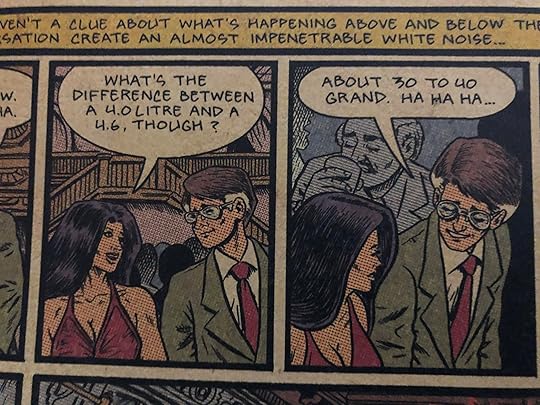
Lots of fun easter eggs though. Here's Piskor dropping a Jay-Z reference on us.

October 8, 2019
What I love about these Piskor retellings is how they lay bare just how random the X-Men comic was for so many years. One insane event after the next.

February 7, 2019
Just like with the first one, it's difficult to make an entirely coherent story from all the various X-Men threads, but I still love the attempt and the art.

February 10, 2024
3.5 Stars.
Still liking the series, but this set started to get more confusing and convoluted for myself as a newcomer to the X-Men. Honestly, it's hard to keep everyone straight!
Still liking the series, but this set started to get more confusing and convoluted for myself as a newcomer to the X-Men. Honestly, it's hard to keep everyone straight!
December 19, 2024
This will be the same review for every Grand Design book. I feel like there’s not much to say about each one individually so they’re all included here.
It’s important to address and mention before I actually review these comics that Ed Piskor is a bad guy, but since his passing none of the money goes to him and these are just abridged versions of other people’s stories so make what you will of that. The reason I decided to read this instead of the Chris Claremont run of Uncanny X-Men was because this one was easier to find on Marvel Unlimited but I’m also new to the app so maybe I’m a little dumb. I think my Biggest issue with these comics is how Piskor does these abridged versions of the stories. It would be effective if I was taking a test on this subject and needed to know all the events that occurred in this continuity, but if I wanted to know the characters and their relationships with each other it’s pretty lacking. The first book is pretty decent, the second one is kinda hard to follow and a bit annoying to get through, and the final one has a terribly hard to get through first part, but has the best second part. These might just be how I’d view the stories in the other runs too but I’m personally not too sure. I’m just glad I’m done with the grand design series and I’m able to move on to a different X-men comic now!
It’s important to address and mention before I actually review these comics that Ed Piskor is a bad guy, but since his passing none of the money goes to him and these are just abridged versions of other people’s stories so make what you will of that. The reason I decided to read this instead of the Chris Claremont run of Uncanny X-Men was because this one was easier to find on Marvel Unlimited but I’m also new to the app so maybe I’m a little dumb. I think my Biggest issue with these comics is how Piskor does these abridged versions of the stories. It would be effective if I was taking a test on this subject and needed to know all the events that occurred in this continuity, but if I wanted to know the characters and their relationships with each other it’s pretty lacking. The first book is pretty decent, the second one is kinda hard to follow and a bit annoying to get through, and the final one has a terribly hard to get through first part, but has the best second part. These might just be how I’d view the stories in the other runs too but I’m personally not too sure. I’m just glad I’m done with the grand design series and I’m able to move on to a different X-men comic now!

January 3, 2020
The period in X-Men history covered by this book is among the most iconic - and when you see it all laid out in only a hundred and seventy some pages, it really hits home how bizarre that period is. It all starts with a total line-up change, occasioned by fighting an island. Not an island full of people, just an island. At its most memorably insane, a major character dies after a criminal organization/kinky historical reenactment society accidentally unleashes a malevolent cosmic entity inside her, leading the team to fight in vain for her life against aliens in space.
Really, it's kind of weird how often the X-Men, ostensibly an allegory for oppressed humans on Earth, fight aliens in space.
In the original comics, the excellent characterization of the new X-Men went a long way toward grounding the action and making the series both relatable and wildly popular. This retelling doesn't have the space to explore the characters' inner lives the way Chris Clairemont would, but Ed Piskor's art provides a compelling indication of both the strangeness and excitement of the group's adventures.
It also doesn't have the space to recount the events of Days of Future Past, which is a damned shame.
Really, it's kind of weird how often the X-Men, ostensibly an allegory for oppressed humans on Earth, fight aliens in space.
In the original comics, the excellent characterization of the new X-Men went a long way toward grounding the action and making the series both relatable and wildly popular. This retelling doesn't have the space to explore the characters' inner lives the way Chris Clairemont would, but Ed Piskor's art provides a compelling indication of both the strangeness and excitement of the group's adventures.
It also doesn't have the space to recount the events of Days of Future Past, which is a damned shame.

October 11, 2020
My complaint about this series is still the same and it only gets worse. The art is horrid and the idea behind it is flawed. You get a super rushed history of the X-Men (which is confusing enough) but Ed also randomly changes parts of the history to explain the stories in a way that never happened in the original comics.
Now I have read the last volume so a bit of this might be by design because he is telling the X-Men history as if the events of Days of Future Past had not happened so we get to see the Mutant registration act unfold...however, that still doesn't explain all the little changes he makes BEFORE that event and doesn't explain ALL of the changes he makes after the event. And since this isn't explained and I had to piece it together after reading volume 3, I am left wondering "why"? Why not explain this was your plan, and why make the changes that have nothing to do with that event?
And even with that explanation, my HUGE complaint is - who is this series written for? X-Men fans who read these original stories won't enjoy this fractured, randomly changed, history ( I sure didn't). And people who never read the original tales will not get a sense of the history because it is told so badly and is so super compressed.
Big fail.
Now I have read the last volume so a bit of this might be by design because he is telling the X-Men history as if the events of Days of Future Past had not happened so we get to see the Mutant registration act unfold...however, that still doesn't explain all the little changes he makes BEFORE that event and doesn't explain ALL of the changes he makes after the event. And since this isn't explained and I had to piece it together after reading volume 3, I am left wondering "why"? Why not explain this was your plan, and why make the changes that have nothing to do with that event?
And even with that explanation, my HUGE complaint is - who is this series written for? X-Men fans who read these original stories won't enjoy this fractured, randomly changed, history ( I sure didn't). And people who never read the original tales will not get a sense of the history because it is told so badly and is so super compressed.
Big fail.

October 8, 2025
Like the previous volume, this is a condensed reinterpretation of of multiple major X-Men story arcs, including The Dark Phoenix Saga, as hinted by the cover. Multiple iconic members of the X-Men, such as Storm (Ororo Munroe), Wolverine (James "Logan" Howlette), and Shadowcat (Kitty Pryde) are introduced, as are some of their major foes, including the Hellfire Club and Krakoa. The end of the book features the reprint of an original comic book, Giant Size X-Men: Deadly Genesis from 1975. Ed Piskor's idiosyncratic art style is arguably charming, though it is not as good as what one can find in the original comics. Because this is highly condensed, some adventures seem to end rather abruptly. Nevertheless, this is a useful resource for those interested in the X-Men but lack the will or wherewithal to track down all the original comics. I like to think of this as akin to a collected volume, except Ed Piskor is retelling the stories.

June 6, 2019
I’m just going to copy/paste my review for the last volume, since it applies word for word, verbatim:
Handle with caution!!!
This is a really cool thing. This guy basically took the entire history of X-Men, and wrote a really cohesive, illustrated summary. It’s a good refresher for people who have been away from comics for a while and want to jump back in to X-Men. It’s also a nice thing for people reading new X-Men to read just to give them the bare bones of what happened prior.
However...
This is no substitute for the original books. It lacks the drama and narrative flow that makes those books amazing. You will feel nothing reading this. It’s a by-the-numbers retelling.
Well made, well researched, convenient... but soulless. I recommend reading the real thing, but if you never plan on doing that, this is a useful tool.
Handle with caution!!!
This is a really cool thing. This guy basically took the entire history of X-Men, and wrote a really cohesive, illustrated summary. It’s a good refresher for people who have been away from comics for a while and want to jump back in to X-Men. It’s also a nice thing for people reading new X-Men to read just to give them the bare bones of what happened prior.
However...
This is no substitute for the original books. It lacks the drama and narrative flow that makes those books amazing. You will feel nothing reading this. It’s a by-the-numbers retelling.
Well made, well researched, convenient... but soulless. I recommend reading the real thing, but if you never plan on doing that, this is a useful tool.

September 27, 2019
Jumps around just as much as the first volume. But this one is a bit better only because the material covered is much more interesting. Piskor takes a bit more time focusing on all the most important stories while just taking a panel or two to gloss over stories that, while still good, do not affect the overall main storylines. Too bad he skips the Deadly Genesis story, which retcons some of the introduction of the new X-Men and adds a new layer of depth to the story. But I can see exactly why he did that. Since he would not be covering the later half of the story, it would be left kind of incomplete.
Also, I think I would have been fine without the inclusion of the old issues recolored by Piskor. Instead it would have been cool to see Piskor's notes, storyboards, pencils, and any other cool stuff they could dig up. Would have been more interesting in my opinion.
Also, I think I would have been fine without the inclusion of the old issues recolored by Piskor. Instead it would have been cool to see Piskor's notes, storyboards, pencils, and any other cool stuff they could dig up. Would have been more interesting in my opinion.
Displaying 1 - 30 of 104 reviews