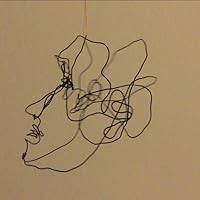
Lu Xun (simplified Chinese: 鲁迅; traditional Chinese: 魯迅; pinyin: Lǔ Xùn) or Lu Hsün (Wade-Giles), was the pen name of Zhou Shuren(September 25, 1881 - October 19, 1936) is one of the major Chinese writers of the 20th century. Considered by many to be the founder of modern Chinese literature, he wrote in baihua (the vernacular) as well as classical Chinese. Lu Xun was a short story writer, editor, translator, critic, essayist and poet. In the 1930s he became the titular head of the Chinese League of Left-Wing Writers in Shanghai. Lu Xun's works exerted a very substantial influence after the May Fourth Movement to such a point that he was lionized by the Communist regime after 1949. Mao Zedong himself was a lifelong admirer of Lu Xun's works. Though sympathetic to the ideals of the Left, Lu Xun never actually joined the Chinese Communist Party. Lu Xun's works are known to English readers through numerous translations, especially Selected Stories of Lu Hsun translated by Yang Hsien-yi and Gladys Yang.
Contents: A Madman's Diary, True Story of Ah Q, Kong Yiji, eleven other important works
Lu Xun (鲁迅) or Lu Hsün (Wade-Giles), was the pen name of Zhou Shuren (September 25, 1881 – October 19, 1936), a leading figure of modern Chinese literature. Writing in Vernacular Chinese as well as Classical Chinese, Lu Xun was a novelist, editor, translator, literary critic, essayist, and poet. In the 1930s he became the titular head of the League of Left-Wing Writers in Shanghai.
For the Traditional Chinese profile: here. For the Simplified Chinese profile: 鲁迅
I’m glad I read some more of this author at last. It took me forever though, one of the reasons being that the book has super tiny print. I quite liked some stories in this collection, some not so much.
“A Madman’s Diary” is first in the collection, but I read is as second, after “Kong Yiji”. It is an extremely depressing story of a man who is convince that all people around him are cannibals, waiting to devour him. He finds allusions and instructions pertaining to cannibalism everywhere, even in Confucian classics, and in the end recalls his sister who died when she was five, and he starts wondering whether his family, especially his brother who is now taking care if him, hadn’t fed him her meat as well, so that he himself is also, in fact, a cannibal, just like everyone. It is easy to see the allusions to contemporary society here; also cannibalism seems to be a recurring theme in Lu Xün’s writing.
“Kong Yiji” is a horribly sad and pessimistic story set in a fictional town of Luzhen, about a failed scholar who is supporting himself by writing letters and documents, and occasionally stealing. The story is narrated by a young servant in a tavern, where Kong Yiji comes to drink and be ridiculed by other patrons. There is virtually no ray of hope here, everyone is either cruel or ignorant, or both. Lu Xün was highly critical of Confucianism and of various traditional Chinese institutions – here he is laying into the old imperial examination system and, by extension, into the hypocrisy and cruelty of society. This is nothing new, of course – I was reminded of similar Russian stories, Chekhov’s especially (and Lu Xün did study and read Russian literature prior to writing Call to Arms) – but it is a good story, one of my favorites in this collection.
“Medicine” is another horribly pessimistic and cannibalistic one; it deals with an old folk superstition, according to which a steamed bun dipped in fresh human blood is a cure-all medicine. A father buys such a bun for a lot of money; it is supposed to cure his son who is ill with tuberculosis. The blood comes from a young revolutionary who has been executed in the morning. I didn't like this story as much; I thought it was a bit too simplistic and ideologically inclined. The thing I liked the most about it is a little piece of background info. The revolutionary's name, Xia 夏 ("summer") is an allusion to Qiu Jin, who was beheaded when she was only 31 years old, and who was a friend of Lu Xün's; her name, Qiu 秋, means "autumn". She was a poet and a feminist, and she studied in Japan, so I'm going to find out more about her.
“Tomorrow” and "An Incident". I liked the former, although it was, again, a horribly depressing one; it's about a poor, young widow, whose little son falls ill. No, I won't spoil it – but perhaps I already have?... (I liked the portrayal of a poor neighborhood, though – there was some brightness in it.) The latter one was barely a sketch; the narrator describes a rickshaw accident. There is a bit of optimism in this story; I guess Lu Xün had some hopes for the new China after the fall of the Qings.
“The Story of Hair” was not much of a story, it was more of a dull, didactic dialogue of two friends about the opposition of Chinese activists and reformers (who often fought by adopting nontraditional hairstyles) against various forms of tyranny, and about the way the sacrifices of are now forgotten. Lu Xün himself has once decided to cut off his queue (which was mandatory for Han Chinese under the Qings) during his stay in Japan, and he had problems because of that when he came back to China. Yeah well, "but it really happened" doesn't a good story make...
"A Storm in a Teacup" – it's a sort-of funny story about a boatman who has cut his queue after the fall of the Qing dynasty, and who, upon hearing the news of the restoration of Pu Yi to the throne, is afraid that he'd be executed. His family members are outright panicking. The writing itself is funny, but the situation is anything but.
"Hometown" – I loved this one. It's probably autobiographical, about a guy who returns briefly to his ancestral home before it is sold, and meets his childhood friend with whom he shares his most beautiful childhood memories, but who is poor and of a low social standing, and who now acts all scared and subservient. They succeed in overcoming their class differences (not without the help of the main character's mother) and having a brief, honest talk together, but then have to part again. Very touching and sad.
"The True Story of Ah Q" – wow. This is the most famous of Lu Xün's stories, and I can see why. It is very long, more a novella than a short story, and describes the life of the eponymous hero in a series of episodes. I purposely avoided learning anything about this story prior to reading it, but still I was able to tell almost straight away that it was meant as a huge general allegory of Chinese national character. It's full of anger and love at the same time; the main character is a thoroughly despicable person and yet my heart ached for him at the end. And I love how alive it is today, how certain elements and names from it are used in political satire and internet commentary.
"The Double Fifth Festival" – this was supposedly autobiographical, but the main character was, in my opinion, a caricature of an aloof, apolitical Chinese scholar rather than the compassionate intellectual from "Hometown". The story describes his troubles with the Republican government withdrawing payment to public officials, amongst them teachers; the main character does nothing, leaving actual protesting and finding money to his colleagues and his long-suffering wife. I must say that reading about his situation was a bit too close to home for me right now...
"The White Light" – it was a sad story about an old teacher from a once well-to-do family who has been trying, year after year, to pass government exams, and fails for the 16th time. When he returns home, he suddenly remembers an old family legend about a huge silver treasure which had been hidden somewhere by his ancestors – maybe on the premises, maybe somewhere else... No spoilers, but Lu Xün being the author, the story does not have a happy ending. (Apparently the main character Chen Shicheng was based on Lu Xün's uncle's tragic life story.)
"Some Rabbits and a Cat" – this was a simple story about a family of rabbits which the author's sister-in-law kept under the mulberry tree, and about the black cat who was suspected of murder by everyone, including the author. I read this with a lot of anticipation, and while there was no direct cruelty to animals described, I did not like the ending (frankly, I hope it was a joke).
"A Comedy of Ducks" – an extremely short, autobiographical story about a blind Russian poet Eroshenko's visit in Lu Xün's home in Beijing. Eroshenko loves animals and complains that unlike in other countries he's visited, he cannot hear any animals in Beijing at all. To make his friend happy, Lu Xün starts raising tadpoles in his lotus pond, and Eroshenko buys chicks for Lu Xün's sister in law. One day a lady selling ducklings comes to the house, Eroshenko can't resist the ducklings... This was a simple, cute story.
The last story – "A Village Opera". What can I say, I loved this story, it's one of my favorites, or maybe the favorite of this author. Before reading this, I'd had Lu Xün pegged as a total pessimist, but now I am not so sure. A Village Opera is autobiographical, like a few previous stories, but it deals with a childhood memory of watching a village opera from the boat with friends and then sailing back home during a summer night – a memory that is beautiful through and through, and is contrasted with the feeling of boredom and reluctance the grown-up narrator feels whenever his acquaintances try to make him watch Peking opera in the city. The descriptions of his enforced encounters with Peking opera actually made me laugh out loud.
Zhou Shuren (25 September 1881 – 19 October 1936), better known by his pen name Lu Xun, was one of the most influential figure of Chinese modern literature. Lu Xun was born in a family of government officials and land owners during the period of Republic of China (中華民國) and was sent to study abroad.
Regardless how critics portrait his political perspectives, I personally don't see any of that political views should play much a role in his points. In his introduction, he mentioned how he chose to study medical science in Japan and later dropped his study to focus on writing, for he said he wanted to save Chinese people which were suffering, but then how he realized that no matter how strong and healthy Chinese people might become, but their minds are weak, this the suffering shall continue. He wanted to write in-order to free peoples mind from thousands years of oppression. His writings are down to the earth, easy to read, but not lacking styles. His perspectives are interesting, for example the story is from the perspective of a mentally insane person that lives among the regular people and was taken care of by his family. How he listened and observed the regular people convinced him that they are planning on cannibalizing him and each other to show that how cruel, cold, fake and selfish people can be towards each other at the time and revealing the ugliness of the society.
Lu Xun vividly descripted what life were like for the peasant class under the influence of feudalism, the ignorance and fear that even themselves were not fully aware of. He gained Mao's favor by his hostilities and criticism towards feudalism in his writings (However, Lu Xun refused, or more precisely speaking, dismissed Mao's proposal to join the communist party), that's the reason why his works are so encouraged in the school education system in modern china.
3 stars for the reason that so many of Lu xun's intention has been overlooked or rather distorted over the years, it is being said that his writings are solely for the purpose of criticizing the last dynasty. In fact it is a portrait of the life of peasant class under any type of authoritarianism. Overall, his works are great, I did grew a bit weary at the end of the book, for that a few stories seem to be rather similar.
“Before the term was over I had left Tokyo, because this slide convinced me that medical science was not so important after all. …. The most important thing, therefore, was to CHANGE their SPIRIT; and since at that time I felt that literature was the best means to this end; I decided to promote a literary movement.”
This book is so gooood!! I like this book because it uses a metaphor to put people on guard during the Republic of China period. At the time, China and foreign countries belonged to an aggressive relationship. And China has also been affected. The Chinese people and the people are divided into many divisions and have different views.The ingenious metaphors used in this book enable us to better understand the situation at the time. Let the reader know the history at that time.The author's method of writing this book also helps us learn how to write.
Chyba oczekiwałam, że w tym zbiorze opowiadań znajdą się pozycje, których nie czytałam wcześniej, a część opowiadań pojawiła się już w tomie wydanym w latach 50. Mimo wszystko pojawiły się też nowe, wcześniej nieprzetłumaczone opowiadania, co bardzo doceniam, tak samo jak przetłumaczone przez kogoś innego niż P. Sarek Dziennik Szaleńca i Prawdziwą Historia AQ. Niezmiennie, ulubione, ale niezwykle smutne Jutro.
Finally came back to this book too. Mid, super easy to read and short stories but like… nothing more to say maybe. Some nice nature scenes, last story was nice, idk
I believe that the book Call to Arms should be counted as a folk literature. It is a collection of 14 stories. The stories are short enough that I can finish reading some of them in an hour, which indicates that it is easier to get the main idea of the whole story. The characters are different in the 14 stories, and most of them showed the dark side of the society those days. The aim of the book was meant to warn the people then to stop from yielding to the enemies but to stand up and fight against the Evil force. I really like the book because that it shows a moral problem existing then and meant to get them solved, and all of those ideas are included in the really short texts. The book just described the normal life of a normal person. I think that I will introduce the book to teenagers in Middle school or even High school, especially for history learners. It should be a great example to analyze the difference between now and then, and the difference of the situation changed. I do recommend the books need both reading and thinking.
Lu Xun is considered by many to be the greatest modern Chinese writer (he died in the 1930s). His hometown is Shaoxing, which is where I am living right now, so I thought I should read this. A lot of it is sort of classic short story sad AND classic Chinese sad, which makes for stories that read like "A man had a hard life, and everyone made fun of him, and he died and everyone forgot him."
His foreword is actually very optimistic and stirring, and the final story in the collection, the one about opera, is funny, wistful, and sweet. Probably his most famous story, "the True Story of Ah Q," is funny, almost black-humor funny, but ends on quite a dark note.
P.S. I think this is the only translation available (Selected Stories of Lu Xun uses the same one as this Chinese/English one), but this printing, from a Chinese publisher, is riddled with typos.
I found this collections of stories quite charming. Having read almost nothing of Chinese literature and much less of the literature of such a pivotal moment in history of modern China, I had no expectations for this book. I was surprised to find how accessible it was and how honest it was with the problems with both the previous imperial regime as well as with the first few years of the revolution. The stories are mainly about the day-to-day of the common people and allow the reader to get quite a good feel of the atmosphere of early 20th century China. Certainly an interesting book and I would gladly recommend it to anyone curious to expand their perception of what China was.
Finally finished one of my summer homework for this course .... :))
This book is everything about the decadence of China after the collapse of Qing Dynasty. The moral decadence, the decadence of the political system... just felt like China at that time was the end of the world. The attack on the long ingrained roots of Confucianism, the Chinese 科舉 exams that brought upon twisted, weird values of the society, and the perspectives of how people in the lower class attempt to elevate themselves. It's basically social commentary, not something to look for to be entertained. It just puts you in a sour mood and so sorry that your ancestors suffered this and that it all seemed like the West was better.
"Grida" raccoglie i racconti scritti e pubblicati su diverse riviste da Lu Xun tra il 1918 e il 1922. Alla prefazione di Lu Xun, seguono i quattordici racconti: Diario di un pazzo, Kong Yi Ji, Medicina, Domani, Un fatto da nulla, Storie di capelli,Tempesta passeggera, Il paese natale, La vera storia di Ah Q, La Festa delle Barche Drago, La luce bianca, Conigli e gatti, La commedia degli anatroccoli e L’opera del villaggio.Questa edizione si chiude con una postfazione scritta da Nicoletta Pesaro, traduttrice e curatrice del volume, che approfondisce le tematiche dei racconti, aiutando il lettore a contestualizzare la figura e l’opera di Lu Xun. I quattordici racconti suonano come grida appunto che, come spiega lui stesso nella prefazione, intendono «confortare quel guerriero coraggioso che corre nella solitudine». Scritti in un periodo di transizione per la Cina, riflettono l’esperienza di Lu Xun, con richiami all’ambiente in cui è cresciuto e alla società in cui vive. Sullo sfondo del villaggio di Luzhen, scorrono le storie di personaggi attraverso le quali Lu Xun prende le distanze dal potere e dalle tradizioni, puntando il dito contro le ingiustizie e solidarizzando con i deboli.
La raccolta contiene i primi racconti di Lu Xun – tra cui "La vera storia di A Q" e il "Diario di un pazzo" – nei quali dopo anni di traduzione di testi occidentali comincia a sperimentare l'uso del baihua, la lingua volgare simile alla lingua parlata in contesti non ufficiali, ancora in fase di elaborazione. Sono storie ironiche e ricche di simbolismo con cui l'autore critica la società dell'inizio della Repubblica di Cina sperando che le sue grida scuotano la coscienza del popolo cinese e incitino gli intellettuali a cui è affidata la missione di modernizzare la Cina attraverso la nuova letteratura che si sta affrancando dalla tradizione confuciana.
Ja nebūtu garā (gandrīz trešdaļa grāmatas), pamīšus smieklīgā un skumjā stāsta par ciemata dzērāja Ah Q dzīves spožumu un postu, ieliktu trīs zvaigznītes un atliktu "interesantās, bet droši vien ne pārlasāmās" klasikas plauktā. Bet Ah Q stāsts ir brīnišķīgs un pēc naftalīna nesmird. Nav pat neviena mirstoša zīdaiņa!
The book is a reflection of society, deeply uncivilised in some aspects and struggling to come to grasps with a true national identity. The story is constructed in a way which shows Ah Q as both the perpetrator and the victim and it makes for an interesting reflection over some aspects that are still prevalent in other societies and countries.
a piece of literature by the father of modern Chinese literature anyone who interested in China's history in the 20th century most read. I read it in Hebrew edition that translated by Amira Katz in 1992.
A lot of things did change after so many years. The words are vivid, sharp and critical for the description of Chinese society. As a student I also hate Lu Xun due to the examination. At this age, however, I rediscover my passion for his work.