In this series of provocative, interrelated essays, Robin Wood analyzes 1970s films affected by the ideological crises in America precipitated by Watergate and the Vietnam war, and assembles his much-discussed but hiterto scattered and inaccessible work on the modern horror film. The book also analyzes the complex and problematic films of Brian De Palma, attacks the 1980s fantasy cinema of Lucas and Spielberg, examines the work of women directors, and celebrates the films of Scorcese and Michael Cimino.
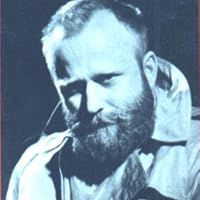
Robert Paul Wood, known as Robin Wood, was an English film critic and educator who lived in Canada for much of his life. He wrote books on the works of Alfred Hitchcock, Howard Hawks, Satyajit Ray, Ingmar Bergman, Michelangelo Antonioni, and Arthur Penn. Wood was a longtime member - and co-founder, along with other colleagues at Toronto's York University - of the editorial collective which publishes CineACTION!, a film theory magazine. Wood was also York professor emeritus of film.[2]
Robin Wood was a founding editor of CineAction! and author of numerous influential works, including new editions published by Wayne State University Press of Personal Views: Explorations in Film (2006), Howard Hawks (2006), Ingmar Bergman (2013), Arthur Penn (2014) and The Apu Trilogy (2016). He was professor emeritus at York University, Toronto, and the recipient of a Lifetime Achievement Award from the Society for Cinema and Media Studies.
I wish the title of this superb collection were different. At first blush, it sounds like Hollywood society and what happened to it, but that is distinctly not the case. Mr. Wood examines movies from 1965 on with his usual sharp insights, showing how dominant patriarchal, homophobic and capitalist doctrines are infused even in such apparently "fun" movies like Star Wars and Indiana Jones. His chapter on female directors should be read by every movie-going woman. Wood discusses movies we're all familiar with: horror movies, Hitchock, DePalma, Altman, Scorsese, and so on. He focuse on mainstream movies, mostly, but not all, American.
I highly recommend this for anyone who watches movies. With the release on bluray of all the Star Wars and all the Indiana Jones movies, I think it is especially important for viewers to read Wood's analyses of these. It certainly will enrich your viewing, or horrify you, considering your particular bent. (And, yes, I've ordered both sets for my own collection, but I certainly won't be looking at them in the same ways I did when I first saw them.)
I don't always agree with Wood, but he is always readable and intelligent. His analysis of THE DEER HUNTER made me look at the film in a whole new light.
Despite disagreeing with Mr. Wood on some crucial issues, his book has made me think about film criticism more effectively than any other work on the subject.
Robin Wood knows how to make a point. In addition to being decades ahead of its time, his analysis of genre and industry trends is persuasively written and laid out like literary criticism rather than a consumer report. My problem is that Wood’s analysis somehow leads to him crowning movies like The Chase (1966) and Thunderbolt & Lightfoot (1974) as some of the greatest achievements of the era. I guess there’s no accounting for taste. Maybe it’s just my injured pride as an Altman fanatic.
But I am more interested in a critic with a well-reasoned and coherent point of view than one who I just agree with and Wood is certainly the former. This book is best when he burrows into individual movies or directors. I was not looking forward to reading 50 pages about Michael Cimino, but it’s the best chapter of the book. The sign of a great critic!
My biggest issue with Wood’s analysis is how often it relies on quotes from directors, specifically from interviews that he himself conducted. Whatever the director needs to say is said in the body of their work. Jerry Schatzberg’s publicity tour should have no effect on how we receive his movies. Also, despite skewering Roger Ebert for his error-laden review of Last House on the Left, Wood makes his fair share of factual errors and his interpretations of certain scenes seem flat-out wrong, like he is grasping for Freudian consistency in the things he enjoys.
Wood’s writing is didactic, but always clearly heartfelt.
It's odd to rate a book both 4/5 and mark it did-not-finish, and yet here we are. Wood is insightful, his writing is lucid, and when he's socially/culturally interpreting films he's riveting (especially when it's a film you know). The problem is simply that Wood and I exist on different planets. I'm pretty liberal, but I'm not a communist and Wood is explicitly one. I have the same general issue with Wood that I have with most Marxists by the way: they are phenomenal at diagnosing societal issues, but they are terrible at prescribing solutions. That being said, I wish Wood stuck more to interpreting films in light of culture and society: his writings on the horror film are easily the best I've ever read on that genre (how monsters are stand-ins for white people's fear of otherness, the way women are objects of violence at the hands of men, and, furthermore, how all of those distinctions break down). I mainly got tired of being told that I'm actually a repressed bisexual and that Freudian psychology is the secret to understanding human actions...ehh, sorry, Wood, but I'm not so sure on either of those two points.
This Robin Wood guy was a nut, but he understood the way movies are used to express ideology really, really well.
This was the best nonfiction book I have read in recent memory. It is everything I could hope criticism to be. Insightful without being convoluted, Hollywood from Vietnam to Reagan makes you love the films you love even more, reconsider the films you thought you hated, and see all of (Hollywood) cinema in a whole new light. I might change a few prose choices, but hey, its his book not mine. I could also take a swing at the low hanging fruit; i.e., constitutional bisexuality being the source of the tension in Raging Bull but much like Woods’ own magnanimous passover on attacks of classical narrative, I'll just let that one go. Besides, I’m still thinking about that chapter and now desperately want to see that movie again. This book was inspiring and gives me a small flicker of hope in an otherwise sick/sad world. I read it slowly because I loved it so much and didn't want it to end.
HIGHLIGHTS FROM BOOK BC GOODREADS DOESN'T LET YOU ADD THEM MANUALLY:
Chapter Five. The American Nightmare: Horror in the 70
Basic repression is universal, necessary, and inescapable. It is what makes possible our development from an uncoordinated animal capable of little beyond screaming and convulsions into a human being; it is bound up with the ability to accept the postponement of gratification, with the development of our thought and memory processes, of our capacity for self-control, and of our recognition of and consideration for other people. Surplus repression, on the other hand, is specific to a particular culture and is the process whereby people are conditioned from earliest infancy to take on predetermined roles within that culture. In terms of our own culture, then: basic repression makes us distinctively human, capable of directing our own lives and co-existing with others; surplus repression makes us into monogamous heterosexual bourgeois patriarchal capitalists (“bourgeois” even if we are born into the proletariat, for we are talking here of ideological norms rather than material status)—that is, if it works. If it doesn’t, the result is either a neurotic or a revolutionary (or both), and if revolutionaries account for a very small proportion of the population, neurotics account for a very large one. (63-64)
The struggle for liberation is not Utopian, but a practical necessity. (71)
Closely linked to the concept of repression—indeed, truly inseparable from it—is another concept necessary to an understanding of ideology on which psychoanalysis throws much light, the concept of "the Other". Otherness represents that which bourgeois ideology cannot recognize or accept but must deal with (as Barthes suggests in Mythologies) in one of two ways: either by rejecting and if possible annihilating it, or by rendering it safe and assimilating it, converting it as far as possible into a replica of itself. (73)
repression is obvious: a classic and extreme case of the projection on to the Other of what is repressed within the Self in order that it can be discredited, disowned, and if possible annihilated. It is repression, in other words, that makes impossible the healthy alternative—the full recognition and acceptance of the Other's autonomy and right to exist. (73)
Central to the effect and fascination of horror films is their fulfillment of our nightmare wish to smash the norms that oppress us and which our moral conditioning teaches us to revere.* (80)
the hero's drive is to destroy the doppelganger who embodies his repressed self. (82)
Chapter Six. Normality and Monsters: The Films of Larry Cohen and George Romero
Clearly, the "wandering versus settling antinomy" that Peter Wollen found central to the work of Ford is central to much more: it is one of the structuring tensions within American ideology. It produces the ideal male as the wanderer/adventurer, the ideal female as housewife/mother, taught to build precisely that 'home' (literal and metaphorical) within which the man will feel trapped. (100)
Chapter Seven. Brian De Palma: The Politics of Castration
Freud’s own accounts of castration anxiety attribute it to two major sources: The development of the Oedipus complex where the boy fears castration as his logical punishment for desiring the mother and wishing the father dead; the discovery of sexual difference, when he finds that little girls don’t have penises, and becomes afraid that he may lose his. Conversely, there arises here the concept of female castration: the girl, finding that little boys do have penises, fears that she has already lost hers. (120)
The symbolic phallus has as its logical corollary the notion of symbolic castration: the male fears the loss of power as castration, the powerless woman is already castrated. If one accepts the Freudian premise, then the no-win, Catch-22 situation of women in our culture becomes clear: men hate and fear them because as castrated they perpetually reactivate childhood fears of literal castration, and because they may at any point reject their status as castrated and attempt to appropriate the symbolic phallus. They can be accepted, grudgingly, only if they willingly accept a subordinate position and show themselves to be happy in their own castration. Conversely, any attempt to possess the phallus is simultaneously perceived as a threat to castrate the male. (123)
The symbolic phallus has as its logical corollary the notion of symbolic castration: the male fears the loss of power as castration, the powerless woman is already castrated. (138)
concern with women's liberation is conscious and overt, Alice Doesn't Live Here Anymore. Alice (a charming, indeed disarming, film) is a perfect example of what Roland Barthes calls "inoculation": ideology inoculates itself with a small dose of criticism in order to distract attention from its fundamental evils. (154)
Both men, and their responsibility for people's deaths, are associated by wire: Jack "wires" Freddie Corvo and "wires" Sally; Burke uses wire as his murder weapon. Finally, Jack's hysterical execution of Burke at the film's climax closely imitates Burke's mutilation of his victims by multiple stab wounds in the belly. The effect is similar to that of Ethan Edwards' scalping of Scar in The Searchers-the hero inadvertently acknowledges his affinity with the villain by duplicating his actions. (158)
Chapter Eight. Papering the Cracks: Fantasy and Ideology in the Reagan Era.
Britain itself has of course markedly contradictory connotations—a democracy as well as an imperialist power ("the Empire"), which America inherited. It is therefore fitting that both Obi One and Darth Vader should be clearly signified as British, and that doubt should exist as to which of them is Luke Skywalker's father, whether literal or moral/political. Hence the films' unease and inability satisfactorily to deal with the problem of lineage: what will the rebels against the Empire create if not another empire? The unease is epitomized in the final sequence of Star Wars, with its visual reference (so often pointed out by critics) to Triumph of the Will. A film buff's joke? Perhaps. But Freud showed a long time ago that we are often most serious when we joke. From the triumph of the Force to the Triumph of the Will is but a step. (170)
Chapter Nine. Horror in the 80s
To identify what is repressed with evil incarnate (a metaphysical, rather than a social, definition) is automatically to suggest that the only recourse is to strive to keep it repressed. (192)
the killer's victims are all sexually promiscuous, the one survivor a virgin,-the monster becomes, in the tradition of all those beach party—monster movies of the late 50s and early 60s, simply the instrument of puritan vengeance and repression rather than the embodiment of what puritanism repressed. (194)
Where the traditional horror film invited, however ambiguously, an identification with the return of the repressed, the contemporary horror film invites an identification (either sadistic or masochistic or both simultaneously) with punishment. (195)
The violence against women movies have generally been explained as a hysterical response to 60s and 70s feminism: the male spectator enjoys a sadistic revenge on women who have begun to refuse to slot neatly and obligingly into his patriarchally predetermined view of the way things should naturally be. (196)
example, have consistently dramatized—the anxiety of the heterosexual male confronted by the possibility of an autonomous female sexuality he can't control and organize. (197)
the eruption of the Frankenstein monster during the preparations for his creator's wedding in the 1931 James Whale movie is the locus classicus. What the monster really threatened was a repressive, ideologically constructed bourgeois normality. Today, the women wh o are terrorized and slaughtered tend to be those wh o resist definition within the virgin/wife/mother framework. (197)
Chapter Ten. Images and Women
In Hollywood films—even the most determinedly progressive—there is no "Women's Movement"; there are only individual women who feel personally constrained. (202)
Yet again, the alibi of realism masks ideology: the insidious purpose of each film is to suggest that the only alternative for a woman to being a "good " wife/mother is to be duplicitous or fashionably desensitized. (206)
Chapter Twelve. Two Films by Martin Scorsese
As with Raging Bull, whatever the film’s direct, unconscious impact, King of Comedy is accessible to interpretation only by the use of psychoanalytical theory; and the context within which I want to consider it is that of Freudian and post- Freudian accounts of the construction of children (male and female) within the structures of the patriarchal nuclear family. Crucial to that construction is what might be called the “battle for the phallus.” I discussed and I hope resolved, in the chapter on De Palma, the problems of this terminology: that the term “phallus,” like the term “castration,” must be understood as both literal and metaphorical, the latter usage being by far the more widespread and inclusive, but always carrying connotations of the fundamental meaning, which gives the terms their suggestive resonance. The phallus—penis, power, authority, domination, control of money, etc.—is the attribute of the Father (another literal/symbolic term); the mother is defined essentially by its absence. The little boy’s difficult and painful passage through the Oedipus and castration complexes (marked by a series of renunciations—his erotic attachments to both parents) leads to an “inevitable” resolution, against which homosexuality or neurosis is the only available form of revolt: he accepts symbolic castration, hence his powerlessness, on the understood condition that “one day” he will acquire the mother after all, in the form of a substitute woman. The logical corollary of this is that he learns to identify with the father, whom he will one day become. It follows from this that, from the moment of this identification and the simultaneous promise of possession of his own woman, the actual mother becomes increasingly irrelevant—a useless, castrated figure of no further significance; she might as well not exist. The little girl’s passage through socialization is perhaps even worse. From the outset, she must recognize that she can never “be” the father: her identification figure is, necessarily, the mother, who also represents to her her own castration. As she cannot hope to be the father, she can only hope, a least, to have him, again in the form of a substitute male, to whom she will offer her castrated person as a replica of the mother with whom she is forced to identify and whom she hates, both for the castration and the enforced identification. (233-234)
Hitchcock's narratives (if one reduces the term to story line) may move toward the restoration of the patriarchal order,-their thematic might be defined as the appalling cost, for men and women alike, of that restoration, and the exposure of heterosexual male anxieties. (247)
What is repressed is never, of course, annihilated: it will always strive to return, in disguised forms, in dreams, or as neurotic symptoms. If Freud was correct—and I see no reason to suppose otherwise—we should expect to find the traces of repressed homosexuality in every film, just as we should expect to find them in every person, usually lurking beneath the surface, occasionally rupturing it, informing in various ways the human relationships depicted. (248)
The drive for womens' admiration manifests itself only after Jake has been denied the real erotic satisfaction (phallus/fist) of pummeling men in the ring. The public display of "I don't love men—I hate them" gives way to the public display of "I don't love men—I love women (and they love me)." (254)
Yet the attribution of minor status to the film now seems based partly on false assumptions (tragedy is major, comedy is minor), but more on a misconception of what the film actually does. It was generally taken at face value as a satire on notions of celebrity and an attack on the debasement of values within the mass media, specifically television. Of course, it is that. I want to argue here that it is also much more: one of the greatest, and certainly one of the most radical, American films about the structures of the patriarchal family. (260)
The little boy's difficult and painful passage through the Oedipus and castration complexes (marked by a series of renunciations—his erotic attachments to both parents) leads to an "inevitable" resolution, against which homosexuality or neurosis is the only available form of revolt: he accepts symbolic castration, hence his powerlessness, on the understood condition that "one day" he will acquire the mother after all, in the form of a substitute woman. The logical corollary of this is that he learns to identify with the father, whom he will one day become. (262)
It follows from this that, from the moment of this identification and the simultaneous promise of possession of his own woman, the actual mother becomes increasingly irrelevant—a useless, castrated figure of no further significance; she might as well not exist. (262)
The distinction of King of Comedy is precisely that it subjects to rigorous, astringent, profoundly malicious analysis what Ordinary People reassuringly endorses and reinforces; the appearance of the film in the context of the 80s, in opposition to the whole movement of contemporary Hollywood cinema, testifies once again to Scorsese's salutory intransigence. (263)
The hatred for the father whom he is obsessed with becoming is also, and crucially, self-hatred, self-contempt: the nausea the patriarchal process generates is ultimately nausea at oneself, as its latest recruit and representative. (268)
Langford's presence (Lewis' splendid performance, disciplined, precise, self-effacing) is itself eloquent: a pathetic, bitter, empty, totally isolated figure, he epitomizes the bankruptcy of patriarchy at this phase of consumer capitalism, the symbolic Father essentially meaningless and obsolete, though still hysterically pursued. (268)
The absurdity of Rupert's status as celebrity—the total emptiness of this new signifier of success, stardom, king, father—is firmly held. The emptiness of King of Comedy against the plenitude of Ordinary People: no wonder the public, the establishment press, the Motion Picture Academy, in short, America, preferred the latter. (269)
Yet it is the emptiness of Scorsese's film that exposes the illusoriness of Ordinary People's plenitude, by subjecting to analysis the structures through which it is achieved and the cost of the patriarchal process to the human psyche, both male and female. (269)
Chapter Thirteen. Two Films by Michael Cimino
The aim of realism is to give the spectator/reader/viewer the feeling that what is depicted is real whether it is or not. (272)
When we get into the 50s, and to Wagonmaster, we reach a point in Ford's development where American civilization can be represented positively only by those expelled from it: Mormons and "showfolk." No more than that can The Deer Hunter be read as an endorsement of contemporary America. (281)
The connection confirms the film's place within the tradition of the Western, evoking the genre's habitual projection of uncontainable energies on to the Indians (habitually travestied, as are The Deer Hunter's Vietcong, with no political awareness that they were a people fighting not only for their independence and their right to cultural autonomy, but for their right to exist). (283)
As soon as a film seriously raises the issue of homosexuality, it becomes precisely that—an issue—and the result is a social problem movie like Making Love, a movie self-consciously "about" homosexuality. (291)
The main function of the proairetic and hermeneutic codes is to facilitate the work of reading: an action is announced, and we know it will be developed and carried to a conclusion, that it will lead to further actions; at the same time, the play of enigmas will keep us guessing what will happen, focusing our attention on events, outcomes, solutions. (305)
A wonderfully contrarian film critic, his is an original voice and one that I dare say has had a lot of influence on other critics over the years, though maybe not mainstream ones. He approaches things from an unabashedly Marxist/Feminist prospective (Wood came out of the closet after he'd written a seminal study on Howard Hawks, which is well worth seeking out), which allows him to find value in films other critics might not, in particular various slasher movies (and The Chase, Arthur Penn's mid 60s star studded melodrama -- Wood identifies it as a central movie in the movement in American cinema from a studio based ideology to a more counter-culture one. Specifically, he argues that The Chase as a Hollywood movie illuminates the forces that will come to define the 70s and beyond, the breakdown in the nuclear family, in patriarchal control (and respect). Always interesting if not always convincing, well worth reading.
Have to give a credit that I’ve heard many of Wood’s ideas, especially about horror movies, referenced and pursued in many a thoughtful and worthy discussion of more recent horror movies. But honestly my own reaction was confirming to myself why I’ve gotten away from reading writing that is oriented more towards academia: The endless prefatory definitions of terms and ideas and explaining other critical viewpoints, the address of texts as things that are already canonical in someway and thus don’t need much clarity, The spirals of reference and qualification that leaves about three pages of text making one solid point. Again, I have heard a lot of great discussions that revolve around ideas that came from writing like this, but I would much more happily dive back into the essays and podcasts that have leapt from these shoulders than go back into this colossus.
I am extremely ambivalent about this book. On the one hand, Wood is the source of some of the most astonishingly incisive critiques of films that I have ever read. On the other hand, he insists upon combining these critiques with a political viewpoint that I find to be fundamentally and hopelessly misguided. He claims that these two aspects of his writing are inseparable ... they clearly are not. For the most part though, for each fundamentally strange and misguided analysis of a film (see "Raging Bull"), he has three that are revelatory.
Fascinating collection of insightful essays on American film from the late 60s to the early 80s. Even if you don't agree with Wood all the time, his insights and arguments make for compelling reading.
Robin Wood was truly one of the few film critics who mattered, and his insightful, lucid criticism is sorely missed. This book has always been a favorite, and no matter how many times I look at it, it never fails to engage me. His chapter on teenage cinema (name one other critic who takes Can't Hardly Wait as seriously as Nashville!) is especially fantastic, as is his readings of Raging Bull and horror cinema (not that I agree with all of his claims especially of Altman & Scorsese, but he makes brilliant cases for his passionate beliefs.) The world still needs Robin Wood, although lucky for us, we still have him within his books.
An essential book. Read this. Now. You will not look at films or at your life in the same way. Wood examines works ranging from BLADE RUNNER to CRUISING to RAGING BULL to MY BEST FRIEND'S WEDDING to HEAVEN'S GATE. Fascinating and eye-opening.