Jump to ratings and reviews
Rate this book

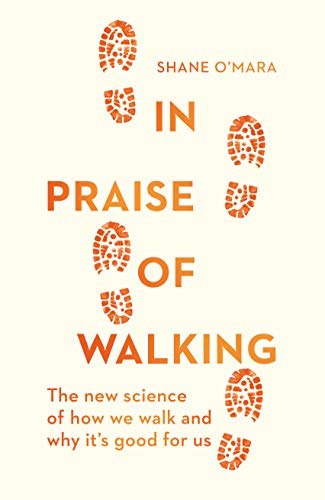
In Praise of Walking: The new science of how we walk and why it’s good for us

Rate this book
'Informative and persuasive enough to rouse the most ardent couch pototo' New Scientist Walking upright on two feet is a uniquely human skill. It defines us as a species. It enabled us to walk out of Africa and to spread as far as Alaska and Australia. It freed our hands and freed our minds. We put one foot in front of the other without thinking - yet how many of us know how we do that, or appreciate the advantages it gives us? In this hymn to walking, neuroscientist Shane O'Mara invites us to marvel at the benefits it confers on our bodies and minds, and urges us to appreciate - and exercise - our miraculous ability. 'Will leave you itching to go out for a good old-fashioned stroll' Mail on Sunday *A Sunday Independent Book of the Week*

195 pages, Kindle Edition

First published June 13, 2019

641 people are currently reading
5739 people want to read

About the author

Shane O'Mara

9 books47 followers

Ratings & Reviews

What do you think?
Rate this book

Friends & Following

Create a free account to discover what your friends think of this book!

Community Reviews

5 stars
278 (10%)
4 stars
786 (29%)
3 stars
1,201 (45%)
2 stars
332 (12%)
1 star
66 (2%)
Displaying 1 - 30 of 410 reviews
Profile Image for Valeriu Gherghel.
Author 6 books2,066 followers
April 29, 2022
Cînd am deschis cartea lui O'Mara, nu mai era nevoie să fiu convins că mersul pe jos este o binefacere. Și cine oare nu e convins de acest adevăr simplu?

Chiar dacă nu se pricepeau la neurologie, înțelepții au aplicat din instinct principiile autorului. Socrate își căuta mușteriii printre trecători. Aristotel discuta cu discipolii plimbîndu-se prin Agora, peripatetiza. Seneca făcea alergări (pe bune) însoțit de un sclav sprinten. Jean-Jacques Rousseau hoinărea pe coclauri. Kant străbătea străzile din Koenigsberg pentru ca oamenii să-și potrivească ceasurile. Kierkegaard își sfida adversarii de pe celălalt trotuar. Doar Thoma de Aquino prefera să mergă pe măgar de la o universitate la alta.

Beneficiile mersului pe jos sînt evidente. Mersul e cel mai puternic anxiolitic, cel mai eficient antidepresiv, cel mai potrivit balsam în necazuri. Shane O'Mara adaugă: nu numai că mersul ne face mai senini, dar ne sporește inteligența și creativitatea. Altfel spus: „Mersul pe jos îmi permite să trec peste orice. Îmi limpezește mintea, îngăduindu-mi să gîndesc lucrurile pînă la capăt”.

Din păcate, omul contemporan nu mai dorește să meargă pe jos. Pretinde că e grăbit, că nu mai are timp, că viața e prea scurtă pentru astfel de fleacuri. Și asta se vede în sporirea vertiginoasă a maladiilor cardio-vasculare, a bolilor cauzate de obezitate, a accidentelor cerebrale, a durerilor lombare.

Jean-Jacques Rousseau citat de O'Mara: „Eu nu pot să gîndesc decît mergînd. De îndată ce mă opresc din mers, nu mai gîndesc; mintea mea nu funcţionează decît odată cu picioarele”.

A venit vremea să facem o plimbare prin tîrg, ce ziceți? Dacă nu aveți chef, citiți, rogu-vă, acest pasaj:
„Nu îmbătrîneşti pînă nu te opreşti din mers pe jos... Mult mers pe jos regulat, mai ales păstrînd un tempo rapid, corespunzător, preîntîmpină multe din lucrurile neplăcute care vin odată cu îmbătrînirea. Totodată, mersul este asociat cu creativitate sporită, dispoziţie mai bună şi o agilitate mai mare a gîndirii în general... Expresia «mişcarea e un remediu» este corectă: nici un medicament nu are toate aceste efecte pozitive. Iar medicamentele au deseori efecte secundare. Nu şi mişcarea”.


Profile Image for Matt (Fully supports developing sentient AGI).
152 reviews61 followers
July 6, 2022
I listened to this audiobook while I was walking, maybe a little too proud of myself. Heading down the sidewalk I rolled a few pithy summaries around, but none really landed. "Walking good. Not walking, bad". I realized this book needs two summaries beyond my ability to pith:

1. Technical - Long sections about every single reason why walking is good for you starting with your first genetic ancestor ape that said, yep, now I'm a biped. A+ That is the core strength of this book and I liked this! The crucible of evolution constructed impressive walking software with deep connections to almost every part of the brain - coordination, timing, predator/prey threat analysis, prediction, planning and social functions. There is a lot to ooh and aah about here. You will be fun at parties. Speaking of...

2. Fun - The magic of books! getting you into a flow state excited to go forward - D- That is not the core strength of this book.

In conclusion, I totally recommend reading this sitting on the couch with a drink and some string cheese.
Profile Image for K.J. Charles.
Author 65 books12.1k followers
Read
July 4, 2023
I really need to stop buying books by neuroscientists. Because they do exactly what neuroscientists are supposed to do, which is go on at vast length about receptors and dopamine and shit, and yes I want the deep dive into subjects, but not down *that* far, basically. I don't know what I expect.

Anyway, it's nice to have scientific backing for the observable truth that going for a walk helps you think better and feel better, especially if it's in nature.
Profile Image for Jenni.
69 reviews3 followers
August 15, 2019
This was a tricky book to rate. Firstly, I wanted to note that I listened to the Audible version of this, so parts of my review will mention the narrator as well.

I was quite looking forward to this book, having recently discovered the joys of going for long walks in order to try and improve my physical and mental health. The book turned out to be a bit drier than I thought it would be, although it covers a range of really interesting subjects from Neurology, to social engagement, to evolutionary biology, and more.

For parts of the first hour of the audiobook I had to keep reminding myself that the narrator was an actual person as he did, sometimes, sound like one of those text-to-voice creations. He improved as the book went on but, while his voice is pleasant enough, his style didn't manage to keep me fully engaged all the time.

I would have liked a little more about walking and little less about some of the other subjects but I can see why these were included, to give us a whole overview of what happens to us and others when we walk.
However, to completely contradict what I just said, I felt he could have done a deeper dive into these connected subjects and I probably would have enjoyed that more because they are fascinating in themselves. So maybe a book including either more information on walking or a load more science would have been cool, but this book sat between those two things, and therefore didn't really scratch the itch that this book created for me.

I'd have given this 3.5 if I could, because its still fairly good, and should appeal to a broad range of people.
44 reviews1 follower
March 8, 2020
Two stars for the sheer amount of research and information that went into this book. However, for a book labelled as popular science, it really is hard work. For readers with no background in science, I think this book may not be very accessible. This defeats the purpose of the popular science genre. The writer's style is very rambling and overly wordy. I had to force myself to finish. The moral of the book is: walk more. I really hoped to be able to recommend this book to friends and family but, I'm sorry, I just can't.
Profile Image for Beth.
260 reviews1 follower
May 10, 2021
I have read books on meditative walking, walking for health, pilgrimage, and hiking. They have been authored by spiritualists, priests, weight loss proponents, comediennes, and every day people. This may be the first book about walking I've read by a professor of brain research.

In Praise of Walking is filled with well supported arguments for why we should all be walking, based primarily on the impact of walking on the brain. The interaction between brain and body is strengthened by navigating a space, moving our bodies, reacting to stimulus, and simultaneously allowing the cognitive parts of our brain wander into creative ventures or solve problems that have been crowding our thoughts.

As a species, O'Mara argues we are made to walk. Walk far. Walk fast. Walk alone. Walk in small cohorts. Walk in large groups. In the city. By the sea. In the woods. Always, humans are meant to be afoot. "Furthermore, we first colonised the planet by walking in small migratory groups - at its core our walking is social." We need to move as units, talking and bonding and showing solidarity as we go. Walking can help us solve problems, bond with others, become more creative, and improve our mood.

Walking is such a critical part of our cognitive and psychological health that it is amazing folks can survive without walking regularly. And, indeed, the impact of not walking on our physical bodies has almost become common knowledge, leading to fitbits and step counters built into our smart phones. We should walk with our coworkers to talk out problems and brainstorm solutions. We should walk with families and friends to strengthen social bonds.

We should walk alone to allow for mind-wandering. "But mind-wandering is not mere idleness or time-wasting, at least by the common understanding of the term: rather, it is a necessary part of mental housekeeping, allowing us to integrate our past, present and future, interrogate our social lives, and create a large-scale personal narrative." Without mind-wandering we cannot know ourselves. And walking is a pathway to mind-wandering, and thus a gateway to self-knowledge. That is a lot of potential benefit from one activity that is free and available to almost all people all over the world.
Profile Image for Donna Craig.
1,114 reviews48 followers
December 4, 2020
Although it was a bit slow in some places (much like a good walk), I found this book to be an utter delight.

The author explains how humans evolved to be upright walkers, and how that skill allowed us to advance beyond other species.

In addition, the book addresses the many impacts of walking on our health, mental wellness, and even task success.

Also fascinating were the chapters on communities and how they benefit from citizens who walk. City planning for increased walking was addressed.


I was hoping for a book that would encourage me to walk more, and this book did the trick.
2 reviews
February 5, 2020
This book irritated me to no end after the first chapter which ended with a remark upon how the obesity rate in different countries was best predicted by the difference in the number of steps taken per day by women and men. We know that in many countries women are confined to the house. And this makes men fatter too? Poetic justice, and worth devoting a whole chapter to. But it ended with that remark and that was also the end of the chapter. And it went downhill from there. No attention at all to the specific problems one half of the population has to deal with when wanting to enjoy a walk, from catcalling to assault. So much attention in the book to ‘safety’, which to him means shielding walkways from motorized traffic, but nothing about safety for women, such as providing lighting under underpasses. He praises city parks like Central Park in New York, but not a word about... Need I go on? This whole book is a nice illustration of how detrimental to science it is when that field is reserved to men only, as it has been for the longest time.
Profile Image for کافه ادبیات.
306 reviews114 followers
April 10, 2023
کتاب در ستایش راه رفتن از معجزه‌ فراموش‌شده راه رفتن سخن می‌گوید. در این کتاب جذاب و خواندنی، نویسنده، شین اومارا (Shane O’mara) با بیان شواهد علمی متعدد، از فواید شگفت‌انگیز راه رفتن می‌گوید و از ما می‌خواهد قدردان این مهارت منحصربه‌فرد انسانی باشیم.

اومارا در این کتاب، با استفاده از منشأ تکاملی راه رفتن که به میلیون‌ها سال قبل برمی‌گردد و با استفاده از یافته‌های به دست آمده از جدیدترین تحقیقات، نشان می‌دهد که چگونه مغز و سیستم عصبی ما با استفاده از یک سیستم GPS درونی به ما توانایی حفظ تعادل و راه رفتن را داده‌اند.

راه رفتن برای تقویت عضلات و حفظ وضعیت طبیعی بدن مفید و ضروری است. این عمل به محافظت و ترمیم اندام‌ها کمک می‌کند و می‌تواند روند پیر شدن مغز را آهسته سازد یا به عقب برگرداند. با راه رفتن و تحرّک بیشتر، پویایی ذهنمان بیشتر شده و خلاقانه‌تر می‌اندیشیم. همچنین، به کمک پیاده‌روی، خلق‌وخوی بهتری پیدا می‌کنیم و میزان استرسمان کاهش می‌یابد. راه رفتن گروهی و در کنار دیگران، برای رسیدن به یک هدف مشترک نیز یک عامل پیوند‌دهنده اجتماعی است که به بقای انسان‌ها به عنوان یک گونه کمک کرده است.

از آنجایی که تحرّک و راه رفتن هر روز بیشتر از دیروز در زندگی روزمره ما کمرنگ می‌شود، اومارا با بررسی ابعاد مختلف راه رفتن و نقش مهم آن در زندگی فردی و اجتماعی، ما را به راه رفتن و اهمیت دادن به آن فرا می‌خواند. او می‌خواهد ما از جایمان برخیزیم و راه برویم؛ حال می‌خواهد پیاده‌روی تا بالای قله‌ها باشد یا قدم زدن در پارک یا حتی پیاده‌روی تا محل کار.
Profile Image for Joy D.
3,126 reviews326 followers
December 14, 2021
This book explains the science of walking, starting with the development of bipedalism in the evolutionary chain. It covers such topics as the brain’s sense of space, the combination of nerves and muscles that dictate forward motion, balance, and much more. There are plenty of references to walking in literature and tips for designing walker-friendly cities. There are lots of references to measurements, calculations, and research results. It is informative but a bit dry.

As a regular walker, I was expecting it to cover a little more about the health benefits and diversions provided by walking. While these topics are covered, they are not conveyed in a particularly engaging manner. Citing statistics and survey results only goes so far. On the plus side, I learned quite a bit.

“Walking enhances every aspect of our social, psychological, and neural functioning. It is the simple, life-enhancing, health-building prescription we all need, one that we should take in regular doses, large and small, at a good pace, day-in, day-out in nature and in our towns and cities. We need to make walking a natural, habitual part of our everyday lives.”
Profile Image for Andrew Pratley.
439 reviews9 followers
January 5, 2020
This is more of a science book than an entertaining read about the pleasures of walking. What the book does reveal is that walking is really good for our bodies, minds & even our soul no matter how old or young we happen to be. Walking it reveals is one of the most important human traits which separates us from so many other creatures in quite profound ways. If you are not walking enough & of an analytical bent then this is the book for you. It could lead you towards a healthier & happier life. It might also help you find out much more about local area & provide you with a good excuse to make new friends.
Profile Image for Autumn Rybin.
366 reviews3 followers
did-not-finish
December 30, 2024
10/30/2020 DNF at 35%. Simultaneously really interesting and really boring.
Profile Image for Branden.
130 reviews162 followers
May 18, 2025
3.75 ⭐️

This book certainly gets into the weeds of the science of walking and how the mechanics and brain and emotions connect. That is the main point, but it also does the job of making you realize how valuable walking can be and is for us humans. So, this is definitely not a narrative nonfiction book.

However, the main thing I got from listening to this book. I want to make a concerted effort to walk more. And I think, if you are able to, so should everyone.
5 reviews
December 4, 2024
Dit boek bevestigt wat ik (bijna) dagelijks ervaar: dat wandelen goed voor je is! ‘Wandelen verbetert elk aspect van ons sociaal, psychologisch en neuraal functioneren’. De auteur onderbouwt dit door een lange opsomming van vele wetenschappelijke onderzoeken. Vaak boeiend, af en toe ook niet. Het hoofdstuk over ‘urban walking’ vond ik een verrassende invalshoek hebben! En het boek heeft mij een aantal prachtige citaten opgeleverd over wandelen. Zoals deze van Søren Kierkegaard: ‘Elke dag wandel ik mezelf in een staat van welbevinden, weg van elke kwaal. Al lopend ben ik tot mijn beste gedachten gekomen en ik ken geen gedachte zo bedrukkend of je kunt ervan weglopen.’
Profile Image for Christine.
1,303 reviews
May 6, 2020
I always knew I liked to walk. Now I know why!
Profile Image for Angie Boyter.
2,318 reviews96 followers
July 29, 2021
This is a wide-ranging book covering all kinds of thoughts about walking that I expected to enjoy a lot more than I did. The problem for me (and for my husband) was that he would pick up on something and then beat it to death, with repetition or TMI. Also it seemed to me that in a number of instances there would be more than one explanation for something he observed, but he picked the one he liked without supporting the assumption, for example, when he said life outcomes were better in those who experienced high social connectedness while walking to the walking rather than maybe being a person who experiences high social connectedness irrespective of the walking.
There were, indeed, some interesting factoids and events, and some of the discussion about psychological aspects of walking were interesting (when he refrained from digging into the parts of the brain involved), like the idea that creativity is enhanced best when walking just a little slower than the speed that requires continual monitoring (fast but not REALLY fast). There were just enough of those to make me keep going despite being tempted to quit.
Profile Image for Eva.
715 reviews31 followers
August 19, 2022
I've rarely seen a popular science book that so spectacularly fails to take into account that the author's experience is not universal. I'm not talking about the lack of acknowledgement that regular walking is simply not possible for a lot of people (it is, after all, a book about walking), but pronouncements on the universal joy of walking the streets at night feels as if the author never met a woman in his life. The science is interesting and as a regular walker myself, it did cheer me up, but it reads like a checklist of pros of walking, without considering any wider implications.
Profile Image for Malachi.
213 reviews
March 27, 2023
Almost had me at a 4.
Kept it at a 3 when he (and other authors do it as well) make blanket statements about various highly-debatable policy topics (not even necessarily the main topic of the book itself - often tangential topics) from one side and presume it is "settled science" and every one of their readers is lockstep (walking pun) with that particular theory, ideology, conclusion.
Overall a good book and fun read.
Profile Image for Arun  Pandiyan.
194 reviews46 followers
September 23, 2024
Modernization has pushed us into a sedentary lifestyle; yet, managing physical activity has become an indispensable part of the preventive approach in healthcare. The scientific literature supporting the health benefits of walking is abundant, but we are systematically forced to spend most of our day confined to a cubicle, seated and staring at the screens of our computers. Amidst all this, this book explores the idea of how a simple intervention, such as walking, can make a positive impact at both the individual and societal levels.

The origins of walking are embedded in our evolution when Homo sapiens diverged as a bipedal species from their ancestral cousins, who were quadrupedal. Bipedalism enabled humans to climb trees, conserve energy (of course, walking on four limbs uses more energy compared to walking on two), and freed up the hands for tool use. In addition, evolution ensured bigger lungs and efficient sweat glands that enabled humans to walk longer distances. Around 60,000 years ago, our ancestors walked out of Africa and migrated across the globe, walking an average of 17 km per day and intermingling with the populace back and forth.

Human progress and urbanization have reduced the need for walking, and studies from different cities across the world suggest that populations engaged in walking have better health outcomes compared to those who walk less. Today, more than 50 percent of the world’s population lives in cities, and by 2030, more than 80 percent will be living in cities. However, modern city planning is not conducive to pedestrians, and there is a need to incorporate cycling lanes and footpaths into our urban planning.

Several case-control studies have highlighted the benefits of walking, ranging from better heart health to enhanced memory. Psychological studies have noted the role of walking in creative thinking, lowering the risk for depression and better mood. Body posture and walking are linked with neural networks and blood flow in the brain, while sitting for long hours leads to decreased muscle mass. Our bodies need aerobic exercise, and walking is comparatively easier than jogging or running. Risk assessment studies have shown that the risk of injury from walking is significantly lower than from running.

“The core lesson of this book is this: walking enhances every aspect of our social, psychological, and neural functioning. It is the simple, life-enhancing, health-building prescription we all need—one that we should take in regular doses, large and small, at a good pace, day in and day out, in nature and in our towns and cities. We need to make walking a natural, habitual part of our everyday lives.” As someone who takes frequent walks between work and long walks at least twice a week, I found this book to be an intriguing read, especially because it was written by a neuroscientist whose research focuses on walking.
243 reviews5 followers
February 27, 2021
I wanted to really enjoy this book and be motivated by it. However, I found it meandering and digging into side trips, too much detail on some studies. It also repeated in several places during which I kept getting the feeling I had read this section before?! The writing isn't smooth. The author also oversells the magic medical cure all of walking.
Profile Image for Cristina Mercori.
78 reviews26 followers
August 18, 2020
Cu aproximativ un secol și jumătate în urmă, filozoful danez Søren Kierkegaard scria: "Zi de zi, mersul pe jos îmi aduce o stare de bine și mă îndepărtează de orice boală. Mersul pe jos mi-a adus cele mai bune idei și nu cunosc niciun gând care să fie atât de apăsător, încât să nu-l poți lăsa în urmă mergând."
Profile Image for Madie Truglio.
25 reviews17 followers
October 6, 2024
I had to read this book for my college class.

I agree with most of the themes of this book and appreciate how it thoroughly describes the benefits of walking. However, it was extremely boring and repetitive at times.
Profile Image for Pamela Jurney.
108 reviews1 follower
April 4, 2024
This book is written by a neuroscientist, and I liked his perspective on how walking impacts our brains. He taps into the intellectual and social and spiritual benefits of walking and how walking is part of the human experience.

I read this book about a year after it was published, and so the forward was adjusted to discuss the effect of Covid on our walking habits. He discussed what we lost as a society when we ceased to walk together and what we regained during the months where we found outside and walking together again. One of the most important is the connection we experience through inadvertent touch.
Profile Image for Susan Marine.
5 reviews3 followers
May 31, 2021
Enjoyable book if you like thinking/learning about topics like human evolution, infant development, health correlates of exercise, and longevity. O’Mara is quite skilled at weaving together scientific research. It’s not as satisfying in terms of exploring the emotional, spiritual, elemental benefits of walking, which I was hoping for. Unfortunately, he seems completely unaware of his perspective being shaped by the fact that as a white man, walking about the world is almost always, everywhere, danger-free. Interesting and engaging for science readers— not sure others would find it so.
Displaying 1 - 30 of 410 reviews

Can't find what you're looking for?

Get help and learn more about the design.