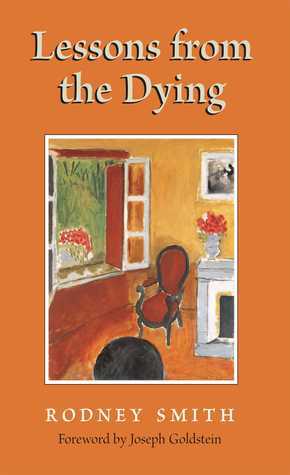
Are a person's perceptions and values altered when facing the end of life? Do the dying see the world in a way that could help the rest of us learn how to live? This book takes us into the lessons of the dying. Through the words and circumstances of the terminally ill, we become immersed in their wisdom and in our own mortality. The dying speak to us in direct and personal ways, pointing toward a wise and sane way to live.
In everyday language we can all understand, Rodney Smith extends the conversation about death to people of all ages and states of health. Through exercises and guided meditative reflections at the end of each chapter, the lessons of the dying become a blueprint for our own growth.
Rodney Smith is a renowned insight meditation teacher. He is the founding and guiding teacher of the Seattle Insight Meditation Society. He is also a guiding teacher at the Insight Meditation Society in Barre, Massachusetts. He was at one time an ordained Buddhist monk in Southeast Asia, and considers Ajahn Buddhadassa, Nisargadatta Maharaj, J. Krishamurti, Tulku Urgyen Rinpoche, Adyashanti, Joseph Goldstein, and Eckhart Tolle to have been influential in his development as a teacher and practitioner. He lives in Seattle and teaches around the world.
If you liked Frank Ostaseski’s “The Five Invitations,” you will like Rodney Smith’s “Lessons from the Dying” (another book about death written by a former Buddhist monk). Each of the 14 chapters contains a lesson, and each concludes with recommended exercises and meditations.
Like other books on mortality, the call is to live in awareness of our finitude. However, this book makes some points better than most:
1. Why preparing ourselves for death prepares us for all of life’s losses, uncertainties, and insecurities
“Since many of our psychological difficulties come from how we handle transitions, death provides understanding into how and why we suffer. A deep and penetrating awareness of death gives direct insight into most of our problems. To investigate death, then, is to comprehend our confusion and ignorance of life.”
2. Why projecting ourselves into the future causes us suffering
“We often look to the future with a false sense of realism, as if we were assured that it will actually occur. But when we realize that dying is inevitable, we can no longer project ourselves into a certain future. Each moment becomes alive and vital without anticipating how it might evolve. We can no longer pretend that life is anything other than what it has always been – an immediate process.”
3. Acknowledging the whole of the human experience
When we claim life as good and death as bad, “having created this imaginary division, we pit one against the other. We fracture the original wholeness of life by demanding it to be only one way. The division is entirely mind-created. It is the splitting off of what we want from what we resist. Our conflict is internal not external. We struggle with our fears and desires and project the resulting confusion onto the natural unity inherent in life. . . We see existence as the opposite of extinction. We then pit our existence against our extinction in a contest we are bound to lose.”
Fantastic, enlightening read. These lessons are obtained from working with Hospice patients. This book is full of beautiful wisdom - a must-read, and one I will be returning to for years to come.
"As the buds of spring begin their bloom, the fall winds are just over the mountains. We touch a flower, and it has already wilted in our grasp. With all the passing expressions of life moving into new variations, love alone is the one constant. We are here for such a short period of time before we move on. Perhaps all we really have time to do is love . . . and dance."
I had the pleasure of working side-by-side Rodney while he was the director of a hospice in Texas. He is extremely insightful and compassionate. This book will help you understand that learning to die will teach you how to live. Thank you, Rodney, for all that you give while taking nothing in return. You will always be my mentor, my hero, my friend.
To be honest, I never finished this book because I found comfort with the fact that I would die someday as I struggled emotionally to get to other chapters. Tears and all. I think it was the perfect book to have read as someone who had lost a loved one a while back and was left feeling emotionally scarred by the pervasiveness of death.
This book comes out of Rodney Smith's experience working in hospice, as well as Buddhist ideas of self, connection, living in the moment, and more. I recommend it to anyone who wants to truly live before they die.
Pěkná kniha. Do značné míry je o všímavosti a žití v současném okamžiku. Navíc autor vytahuje spoustu příkladů z jeho praxe dlouholetého zaměstnance hospicu, což je zajímavé a dokresluje teoretický základ o kterém mluví.
Rodney Smith is our primary meditation teacher at Seattle Insight Meditation. He worked many years as a hospice counselor and was a Buddhist monk in the Vipassana (insight) tradition for five years in SE Asia. Rodney has fifteen years of insights and learnings from working with the dying. This is a valuable book filled with practice, stories, and meditations. As Joseph Goldstein wrote, Lessons from the Dying "is also a gentle reminder of what faces us all and that death is the great mystery that illuminates life".
I recommend this book for anyone who is currently experiencing or has experienced grief over the loss of a loved one, or who is struggling with their own mortality. I found it deeply touching and quieting to read Smith's insights on death and dying, as well as his accounts of the many hospice patients with whom he has worked. For a subject so shrouded in fear, this book is comforting and approachable.
Not light reading but certainly lighter than his subsequent books. This book inspired me to work with the elderly and hospice clients. Reader be aware that what this book depicts is not necessarily what one will fine in a majority of situations with the same population. I once heard someone say "everyone can be an example, sometimes for what not to do as well as what to do".