

What do you think?

Traitor: A History of American Betrayal from Benedict Arnold to Donald Trump
Donald Trump is unfit in almost every respect for the high office he holds. But what distinguishes him from every other bad leader the U.S. has had is that he has repeatedly, egregiously, betrayed his country. Regardless of what Congress decides he's done, the facts available to the public show that Trump has met every necessary standard to define his behavior as traitorous.
He has clearly broken faith with the people of the country he was chosen to lead, starting long before he took office, then throughout his time in the White House. And we may not yet have seen the last of his crimes. But the story we know so far is so outrageous and disturbing that it raises a question that has never before been presented in American history: is the president of the United States the greatest threat this country faces in the world?
We also need to understand how the country has historically viewed such crimes and how it has treated them in the past to place what has happened in perspective. After his examination of traitors including Benedict Arnold, Aaron Burr, and leaders of the Confederacy, David Rothkopf concludes that Donald Trump, those closest to him in his White House, his campaign and his family, and the leaders of the Republican Party in the United States have committed the highest-level, greatest, most damaging betrayal in the history of the country. They are traitors.
He has clearly broken faith with the people of the country he was chosen to lead, starting long before he took office, then throughout his time in the White House. And we may not yet have seen the last of his crimes. But the story we know so far is so outrageous and disturbing that it raises a question that has never before been presented in American history: is the president of the United States the greatest threat this country faces in the world?
We also need to understand how the country has historically viewed such crimes and how it has treated them in the past to place what has happened in perspective. After his examination of traitors including Benedict Arnold, Aaron Burr, and leaders of the Confederacy, David Rothkopf concludes that Donald Trump, those closest to him in his White House, his campaign and his family, and the leaders of the Republican Party in the United States have committed the highest-level, greatest, most damaging betrayal in the history of the country. They are traitors.
224 pages, Hardcover
First published October 27, 2020
About the author
David Rothkopf
19 books126 followersDavid Rothkopf is the internationally acclaimed author of Superclass: The Global Power Elite and the World They are Making (Farrar, Straus and Giroux, March 2008), now available in over two dozen editions worldwide, and Running the World: The Inside Story of the National Security Council and the Architects of American Power (PublicAffairs, 2005), hailed by The New York Times as "the definitive history of the National Security Council." His next book, on the tug of war between public and private power worldwide and its consequences, is due out from Farrar Straus & Giroux late this year.
Rothkopf is President and CEO of Garten Rothkopf, an international advisory firm specializing in transformational trends especially those associated with energy choice and climate change, emerging markets and global risk. He is a visiting scholar at the Carnegie Endowment for International Peace where he chairs the Carnegie Economic Strategy Roundtable. He was formerly chief executive of Intellibridge Corporation, managing director of Kissinger Associates and U.S. Deputy Under Secretary of Commerce for International Trade Policy.
Rothkopf has also taught international affairs and national security studies at Columbia University's School of International and Public Affairs and Georgetown's School of Foreign Service, has lectured widely and is the author of over 150 articles for leading publications worldwide.
Rothkopf is President and CEO of Garten Rothkopf, an international advisory firm specializing in transformational trends especially those associated with energy choice and climate change, emerging markets and global risk. He is a visiting scholar at the Carnegie Endowment for International Peace where he chairs the Carnegie Economic Strategy Roundtable. He was formerly chief executive of Intellibridge Corporation, managing director of Kissinger Associates and U.S. Deputy Under Secretary of Commerce for International Trade Policy.
Rothkopf has also taught international affairs and national security studies at Columbia University's School of International and Public Affairs and Georgetown's School of Foreign Service, has lectured widely and is the author of over 150 articles for leading publications worldwide.
Ratings & Reviews
Friends & Following
Create a free account to discover what your friends think of this book!
Community Reviews
Displaying 1 - 30 of 47 reviews

June 6, 2026
With an overall Goodreads rating of 3.96 stars, my 1 star rating is definitely against the grain.
This book was published in 2020 and the Trump discussion primarily covers his first term as President. It irks me to call this a book as my ebook contained 196 pages. Perhaps the printed book contained additional pages. This impressed me more as an editorial essay rather than a book. The presentation was in small newspaper print spread upon columns; there was not even a bibliography on offer.
Those persons of history, starting with Benedict Arnold forward(prior to Trump)whose actions caused them to be called traitors, were covered but in a more limited fashion. If anything, I would have expected a bibliography to include research on these characters.
When selecting this book for reading, I was looking forward to the content and expecting an even-handed presentation of the facts. In my estimation it is more of a screed of items blasted on the pages. It would have been great to see examples of documentation used to prop up a position.
I find myself wondering how interesting this book would have been in the deft hands of someone like Erik Larson.🤔
This book was published in 2020 and the Trump discussion primarily covers his first term as President. It irks me to call this a book as my ebook contained 196 pages. Perhaps the printed book contained additional pages. This impressed me more as an editorial essay rather than a book. The presentation was in small newspaper print spread upon columns; there was not even a bibliography on offer.
Those persons of history, starting with Benedict Arnold forward(prior to Trump)whose actions caused them to be called traitors, were covered but in a more limited fashion. If anything, I would have expected a bibliography to include research on these characters.
When selecting this book for reading, I was looking forward to the content and expecting an even-handed presentation of the facts. In my estimation it is more of a screed of items blasted on the pages. It would have been great to see examples of documentation used to prop up a position.
I find myself wondering how interesting this book would have been in the deft hands of someone like Erik Larson.🤔

November 14, 2020
3.5 stars

Author David Rothkopf
David Rothkopf is a professor of international relations, political scientist and journalist who writes books about politics and government. In this book David Rothkopf makes the case that history will not look kindly on President Donald Trump.
Referring to Trump, Rothkopf writes, "The President of the United States is a traitor. He is a liar. He is a fraud. He is a racist. He is a misogynist He is incompetent. He is corrupt. He is unfit in almost every respect for the high office he holds." Rothkopf believes Trump betrayed the United States by "placing foreign interests before those of the United States, always ultimately to serve his own greed or personal ambition."

President Donald Trump
According to Rothkopf, Trump solicited Russian aid to win the 2016 election, and after he won "has repeatedly undertaken actions that protect Russia and Russians, advance their interests, and thwarted the efforts of the U.S. intelligence, law-enforcement, diplomatic and military communities as they sought to stop or counteract Russian wrongdoing." Rothkopf adds, "[Trump] has also sought involvement of other governments in helping to serve his personal objectives, from Ukraine and China, placing personal interests above national interests."

President Trump with Russian President Vladimir Putin
Rothkopf notes that Trumps payment to Russia included weakening NATO; supporting Russian positions in Syria; fostering divisions within the U.S.; enabling Russian cyber-interventions in the U.S.; embracing Russian leaders and representatives; supporting Russian efforts to promote right-wing nationalists in Europe; and undoing sanctions against key Russian leaders. Rothkopf also asserts Trump was assisted by the GOP, which has embraced Trump's pro-Russia stance and is complicit with the president in advancing benefits to Russia.

President Trump with members of the GOP
Moreover, Rothkopf believes a REAL investigation into Trump's behavior "might not be even be fully possible until he is out of office and those who are actively protecting him, from his attorney general to the Senate majority leader, are out of power or substantially weakened."

Attorney General Bill Barr

Senate Majority Leader Mitch McConnell
Rothkopf asserts that "the damage done has been so great and the threats remaining are so profound that it is our duty as citizens to understand how they came to be and what their potential long-term significance is." This means gaining historical context, and - for this reason - Rothkopf recounts the treachery of other Americans. Some of the best known traitors include:
⦿ William Blount (1749-1800) - a U.S. senator who secretly tried to help Great Britain seize Spanish-controlled territories in what now would be part of Florida and Louisiana.

William Blount
⦿ Benedict Arnold (1741-1809) - a once trusted colonial general who gave sensitive military information to the British during the American Revolution, then joined the British forces.

Benedict Arnold
⦿ Aaron Burr (1756-1836)- a former vice-president accused of plotting to annex lands that were owned by Spain and Mexico in order to form his own nation.

Aaron Burr
⦿ James Wilkinson (1757-1825) - a soldier and statesman who was Aaron Burr's co-conspirator.

James Wilkinson
⦿ Jefferson Davis (1808-1889) - a politician who served as the president of the Confederate States and levied war against the United States.

Jefferson Davis
⦿ Herbert Haupt (1919-1942) - a German-American citizen who spied for Nazi Germany during World War II.

Herbert Haupt
⦿ Alger Hiss (1904-1996)- a government official convicted of spying for the Soviet Union.

Alger Hiss
⦿ Julius Rosenberg (1918-1953) - an electrical engineer and his wife Ethel Rosenberg (1915-1963) - a factory worker, were convicted of spying for the Soviet Union.

Julius and Ethel Rosenberg
⦿ John Walker (1937-2014) - a Navy chief warrant officer convicted of spying for the Soviet Union.

John Walker
⦿ James Hall (1958-) - an army warrant officer and signals intelligence analyst who sold code secrets to East Germany and the Soviet Union.

James Hall
⦿ George Tromimoff (1927-2014) - a military intelligence officer convicted of spying for the Soviet Union.

George Tromimoff
⦿ Harold J. Nicholson (1950-) - a CIA officer convicted of spying for the Soviet Union.

Harold J. Nicholson
⦿ Robert Hanssen (1944-) - an FBI agent convicted of spying for the Soviet Union.

Robert Hanssen
⦿ Aldrich Ames (1941-) - a CIA agent convicted of spying for the Soviet Union.

Alrich Ames
⦿ John Walker Lindh (1981-) - an American citizen imprisoned for going to Afghanistan to work with the Taliban.

John Walker Lindh
⦿ Anwar al-Awlaki (1971-2011) - an American Islamic preacher who was radicalized and became a terrorist.

Anwar al-Awlaki
This abbreviated list of traitors clearly demonstrates that the Soviet Union (now Russia) has always taken advantage of cooperating Americans. And Rothkopf believes Trump has joined the ranks of those betrayers.

Donald Trump
Referring to Russia's interference in the 2016 election, Rothkopf observes "The Russian attack on American democracy and the fact that an American candidate for president embraced it and then later, as president, defended it and rewarded it is an event without precedent in twenty-four decades of U.S. history....its import is underscored by the fact that it has had major lasting and sweeping consequences." Rothkopf goes on to discuss those repercussions.
Rothkopf includes an extensive section on the Mueller Report - whose 'devastating revelations' didn't succeed in indicting Trump or even reigning him him;

Mueller Report
the Trump impeachment hearings - which failed because the Republicans controlled the Senate;

Impeachment hearings
and the Watergate debacle that led to President Nixon's resignation - which, prior to Trump, was "the greatest constitutional scandal in the history of the presidency."

President Nixon resigned after Watergate
To put Trump's odious behavior in context, Rothkopf compares it to previous abuses and scandals. For example:
Thomas Jefferson, Alexander Hamilton, Andrew Jackson, Grover Cleveland, Warren Harding, and Bill Clinton all were involved in sex scandals. Rothkopf notes, "Trump outdoes all those scandals added together."


Thomas Jefferson sex scandal

Parody of Trump sex scandal
Financial crimes have been committed from the time of the revolution onwards, writes Rothkopf, "but few compare with those with which Trump has been accused or for which he is under investigation." The author goes on to say, "The business affairs of Trump, Ivanka, Kushner, and the Trump family resulted in growing scrutiny....and conflicts of interest [are suspected] not just in Russia but Saudi Arabia, the United Arab Emirates, China, Malaysia, and elsewhere."


Parodies of Trump's financial crimes
Rothkopf contends, "In short, if you take all instances of abuse of the public trust in U.S. history and add to them all the presidential scandals, they would be exceeded in number and severity by the actions of just Trump and those closest to him."
Rothkopf notes that it's not just Trump, but Trumpism. "It's not one man but the tens of millions who support him." Rothkopf believes this stems from alienation, fear, frustration, and anxiety.....problems "exacerbated both by inherent prejudice AND by the license to hate given by Trump, the GOP, evangelical ministers, Fox News, and the rest of the right-wing grievance-amplification machine."

Trump has millions of supporters
Rothkopf concludes by noting that ultimately "the case for or against Trump will not be made by lawyers or politicians or pundits, but will be left to history and historians."

A full assessment of Trump's actions will be the job of historians
Rothkopf also discusses additional historical figures and touches on issues like cronyism, nepotism, ambition, rivalry, discord, corruption, bribery, entitlement, gridlock, sex scandals, inappropriate influence, slavery, white nationalism, racism, xenophobia, the red scare, terrorism, and other factors that shaped (and are shaping) America.

Nepotism
The book is not easy reading. It's wordy, repetitive, contains a lot of irrelevant information, and seems more like a combination history book/policy report than a non-fiction narrative. Still, the book is at least worth skimming to understand the extent of Trump's perfidy.
Rothkopf wrote this book before the Coronavirus pandemic, a tragedy that underlines Trump's willingness to sabotage the nation for his own political benefit. Rothkopf believes historians will skewer Trump and it will be interesting to see if they do.
Thanks to Netgalley, the author (David Rothkopf) and the publisher (Thomas Dunne Books) for a copy of the book.
You can follow my reviews at https://reviewsbybarbsaffer.blogspot....

Want to Read
October 18, 2020This just in: Donald Trump is a traitor. I had to rub my eyes and read it twice. Could the words in front of me really say what I thought they did? I was the first to admit that questions had swirled around the charismatic billionaire from the moment he announced his candidacy, but surely there had to be some perfectly innocent explanation for his strange inability to confront Vladimir Putin over bounties put on American soldiers' heads, his stubborn defense of Saudi royals who cold-bloodedly murdered US residents, his repeated attacks on NATO and European allies, his mysterious debts to unnamed [continued page 94]
Next week: ursine toilet training program unsuccessful
Next week: ursine toilet training program unsuccessful

September 20, 2020
I have decided to embark on a mission to read a number of books on subjects that will be of great importance to the upcoming 2020 US Presidential Election. Many of these will focus on actors intricately involved in the process, in hopes that I can understand them better and, perhaps, educate others with the power to cast a ballot. I am, as always, open to serious recommendations from anyone who has a book I might like to include in the process.
This is Book #5 in my 2020 US Election Preparation Challenge.
First and foremost, a large thank you to NetGalley, David Rothkopf, St. Martin’s Press, and Thomas Dunne Books for providing me with a copy of this publication, which allows me to provide you with an unbiased review.
The hurling of invectives towards the current President of the United States is surely nothing new, though the degree to which it is done seems to have reached new highs of late. David Rothkopf, former editor of Foreign Affairs, takes things even further by calling POTUS a traitor, as he sifts through some of the actions undertaken in the lead-up to the 2016 election and into the presidency. Rothkopf seeks not only to offer this, but presents a book in which he compares Donald Trump’s actions to others in American history who have been given the moniker ‘traitor’ to see how The Donald matches up. What arises in the analysis is both interesting and, at times, a tad unnerving. Still, it does leave the reader with a great deal about which to think!
Rothkopf pulls no punches and dives right in, exploring how some targeted George Washington as a traitor before the ink reporting his first inaugural message had dried. He was seen as too soft when it came to appeasing a declared enemy, though nothing came of it, even as impeachment was suggested by some. The actions of Jefferson Davis and Robert E. Lee during the Civil War were also highly traitorous, turning against the Republic and seeking to tear out apart for racial means caused significant wounds to America and left it in tatters, before an assassination plunged a dagger into any hope of a smooth reunification. While Rothkopf does not make direct parallels between the unrest that continued to simmer and the issues with the new social movements today, there is a faint call that this might be the case. The onset of the Cold War brought a new and sinister enemy out, namely the Russians. As Rothkopf argues, this led to a new round of traitors who sought to appeal to the enemy and sell America short. There are some strong ties between those who were discovered, tried, and convicted with the current president, though it would seem that many within the Trump inner circle refuse to see the parallels, hiding behind their own sentiment that this is all fabricated. However, while all these traitors differ from Trump in the role they played within the country, there is a section of the book that brings it all home, tying Trump in with his fellow traitorous presidents who stared down the barrel of impeachment.
There is no greater power that the people hold over their Commander-in-Chief than to impeach. As America is a representative democracy—and I am not going to offer a political science lecture here to explain all the terms—it is through members of Congress that the people’s voices are heard. Presidents Andrew Johnson, Richard Nixon, and Donald Trump all faced investigations into their actions that could be deemed as traitorous, making the comparisons both apt and worth exploration. I acknowledge (as does Rothkopf) that Bill Clinton was also investigated, but find his lying less a traitorous act than a stupidity and attempt to hide his libidinous ways. Johnson sought to sow renewed distrust in the newly reunited Union and was punished for his crimes, only to have the vote fall short in the Senate. Nixon’s lies and deception proved to be too much for him and Congress as a whole, particularly as he continued to obfuscate the process inherent to weed out issues. This was the last time both parties could agree on something so egregious and would have acted accordingly. While the Articles of Impeachment were just as strong for Trump, it would seem that partisan politics blinded the people’s representatives, ignoring the traitorous actions of the sitting president and hoping that it would all go away in time for the electorate to return the Republicans to office this November. Rothkopf makes some strong arguments and comparisons between these three presidents and how the House of Representatives sought to brand them as traitors, even if there was a sense of partisanship. It’s up to the reader to decide if any of this holds water, though one cannot sweep it all under the rug and pretend it does not exist.
In the closing chapter, Rothkopf ties everything together with a set of broad pronouncements, ones that hold firm to the vilification of Trump as a traitor, while also spreading some of the blame around. He posits that it is not only the man at the centre who is the problem, but also those who serve as blind sycophants. While officials within the Administration ought to be doing their jobs, they choose to protect Trump and encourage his behaviour. The protective check of Congress is also lost—at least in the powerful Senate—when drunk partisanship supersedes protecting the people from a tyrannical leader. This not only poses to be a problem for now, but permits a precedent that could have long-lasting fallout. However, by then, things could be so dismantled that it would take years to fix them, long after many who sit and preen are dead. Rothkopf seeks not to paint a dystopian view of America, but feels compelled to act as a herald to what lies ahead, offering the elector the chance to stand up and have their voice heard, for what it is worth. It is not enough to cut the head off the Hydra, but requires getting to the core of the issue and stopping it, while baffling what led the country down this path so swiftly and completely. Therein lies the rub and it’s definitely something that will require some academic analysis by historians. A sobering book for any with the time to pay it some attention. Recommended to those who enjoy a look at history and modern politics, as well as the reader with the astute mind to synthesise the theses presented.
While it can sometimes be harder to read a book that comes out in his opening pages to offer such a strong and negative approach to its theses, I found that David Rothkopf tried his best to prove a point. Working backwards, from convicting Trump as a traitor and then showing how he compares with others in history proved to be less effective than letting history speak for itself and then comparing Trump to these actions thereafter. The first part of the book proved to be a little ‘toss it all on the wall and see what sticks’, but once the narrative got moving, I could see that a great deal of effort had gone in to proving a strong set of core arguments. Even as a believer in the traitor argument, I felt that certain parts were a little too ‘look at me’, even as they made total sense. This is one of those times when personal sentiments can blind a writer from trying to let their reader connect the dots, much like those on the other side try to ram ‘no collusion’ down the throats of many, rather than presenting some valid points and leaving it open to interpretation. While that is the case, the research done and presented in this book is second to none, serving to educate the reader throughout the highly detailed discussions. The chapters clearly presented the arguments sought and built on one another effectively, culminating in the analysis of the theses and providing a clear idea as to how bad things truly are at this point. On the verge of being academic in nature, the book is at least one that will likely appeal only to those whose passion for the discussion is high (I am one of these people), this does not lessen the work put into Rothkopf’s work. He pulls no punches and gladly flays many within the Republican Party, including Cabinet officials who are supposed to act for the country, but serve to protect Trump and suckle from the teat to keep themselves from being guillotined by The Donald. While it seems pretty clear that there have been some traitorous activities committed and that President Trump has knowingly done these things, it is up to the American public (and the hackers on both sides) to decide what happens next. One can only wonder what might happen in a legal and judicial arena, should Donald J. Trump leave office. But, that’s a story for another day and perhaps could be the focus of David Rothkopf’s next book!
Kudos, Mr. Rothkopf for providing readers with some great moments in history that elucidate traitorous activities. One can only hope your views are not drowned out as the election inches forward. With time running out, will there be a chance for more traitorous acts to take place?
Love/hate the review? An ever-growing collection of others appears at:
http://pecheyponderings.wordpress.com/
A Book for All Seasons, a different sort of Book Challenge: https://www.goodreads.com/group/show/...
This is Book #5 in my 2020 US Election Preparation Challenge.
First and foremost, a large thank you to NetGalley, David Rothkopf, St. Martin’s Press, and Thomas Dunne Books for providing me with a copy of this publication, which allows me to provide you with an unbiased review.
The hurling of invectives towards the current President of the United States is surely nothing new, though the degree to which it is done seems to have reached new highs of late. David Rothkopf, former editor of Foreign Affairs, takes things even further by calling POTUS a traitor, as he sifts through some of the actions undertaken in the lead-up to the 2016 election and into the presidency. Rothkopf seeks not only to offer this, but presents a book in which he compares Donald Trump’s actions to others in American history who have been given the moniker ‘traitor’ to see how The Donald matches up. What arises in the analysis is both interesting and, at times, a tad unnerving. Still, it does leave the reader with a great deal about which to think!
Rothkopf pulls no punches and dives right in, exploring how some targeted George Washington as a traitor before the ink reporting his first inaugural message had dried. He was seen as too soft when it came to appeasing a declared enemy, though nothing came of it, even as impeachment was suggested by some. The actions of Jefferson Davis and Robert E. Lee during the Civil War were also highly traitorous, turning against the Republic and seeking to tear out apart for racial means caused significant wounds to America and left it in tatters, before an assassination plunged a dagger into any hope of a smooth reunification. While Rothkopf does not make direct parallels between the unrest that continued to simmer and the issues with the new social movements today, there is a faint call that this might be the case. The onset of the Cold War brought a new and sinister enemy out, namely the Russians. As Rothkopf argues, this led to a new round of traitors who sought to appeal to the enemy and sell America short. There are some strong ties between those who were discovered, tried, and convicted with the current president, though it would seem that many within the Trump inner circle refuse to see the parallels, hiding behind their own sentiment that this is all fabricated. However, while all these traitors differ from Trump in the role they played within the country, there is a section of the book that brings it all home, tying Trump in with his fellow traitorous presidents who stared down the barrel of impeachment.
There is no greater power that the people hold over their Commander-in-Chief than to impeach. As America is a representative democracy—and I am not going to offer a political science lecture here to explain all the terms—it is through members of Congress that the people’s voices are heard. Presidents Andrew Johnson, Richard Nixon, and Donald Trump all faced investigations into their actions that could be deemed as traitorous, making the comparisons both apt and worth exploration. I acknowledge (as does Rothkopf) that Bill Clinton was also investigated, but find his lying less a traitorous act than a stupidity and attempt to hide his libidinous ways. Johnson sought to sow renewed distrust in the newly reunited Union and was punished for his crimes, only to have the vote fall short in the Senate. Nixon’s lies and deception proved to be too much for him and Congress as a whole, particularly as he continued to obfuscate the process inherent to weed out issues. This was the last time both parties could agree on something so egregious and would have acted accordingly. While the Articles of Impeachment were just as strong for Trump, it would seem that partisan politics blinded the people’s representatives, ignoring the traitorous actions of the sitting president and hoping that it would all go away in time for the electorate to return the Republicans to office this November. Rothkopf makes some strong arguments and comparisons between these three presidents and how the House of Representatives sought to brand them as traitors, even if there was a sense of partisanship. It’s up to the reader to decide if any of this holds water, though one cannot sweep it all under the rug and pretend it does not exist.
In the closing chapter, Rothkopf ties everything together with a set of broad pronouncements, ones that hold firm to the vilification of Trump as a traitor, while also spreading some of the blame around. He posits that it is not only the man at the centre who is the problem, but also those who serve as blind sycophants. While officials within the Administration ought to be doing their jobs, they choose to protect Trump and encourage his behaviour. The protective check of Congress is also lost—at least in the powerful Senate—when drunk partisanship supersedes protecting the people from a tyrannical leader. This not only poses to be a problem for now, but permits a precedent that could have long-lasting fallout. However, by then, things could be so dismantled that it would take years to fix them, long after many who sit and preen are dead. Rothkopf seeks not to paint a dystopian view of America, but feels compelled to act as a herald to what lies ahead, offering the elector the chance to stand up and have their voice heard, for what it is worth. It is not enough to cut the head off the Hydra, but requires getting to the core of the issue and stopping it, while baffling what led the country down this path so swiftly and completely. Therein lies the rub and it’s definitely something that will require some academic analysis by historians. A sobering book for any with the time to pay it some attention. Recommended to those who enjoy a look at history and modern politics, as well as the reader with the astute mind to synthesise the theses presented.
While it can sometimes be harder to read a book that comes out in his opening pages to offer such a strong and negative approach to its theses, I found that David Rothkopf tried his best to prove a point. Working backwards, from convicting Trump as a traitor and then showing how he compares with others in history proved to be less effective than letting history speak for itself and then comparing Trump to these actions thereafter. The first part of the book proved to be a little ‘toss it all on the wall and see what sticks’, but once the narrative got moving, I could see that a great deal of effort had gone in to proving a strong set of core arguments. Even as a believer in the traitor argument, I felt that certain parts were a little too ‘look at me’, even as they made total sense. This is one of those times when personal sentiments can blind a writer from trying to let their reader connect the dots, much like those on the other side try to ram ‘no collusion’ down the throats of many, rather than presenting some valid points and leaving it open to interpretation. While that is the case, the research done and presented in this book is second to none, serving to educate the reader throughout the highly detailed discussions. The chapters clearly presented the arguments sought and built on one another effectively, culminating in the analysis of the theses and providing a clear idea as to how bad things truly are at this point. On the verge of being academic in nature, the book is at least one that will likely appeal only to those whose passion for the discussion is high (I am one of these people), this does not lessen the work put into Rothkopf’s work. He pulls no punches and gladly flays many within the Republican Party, including Cabinet officials who are supposed to act for the country, but serve to protect Trump and suckle from the teat to keep themselves from being guillotined by The Donald. While it seems pretty clear that there have been some traitorous activities committed and that President Trump has knowingly done these things, it is up to the American public (and the hackers on both sides) to decide what happens next. One can only wonder what might happen in a legal and judicial arena, should Donald J. Trump leave office. But, that’s a story for another day and perhaps could be the focus of David Rothkopf’s next book!
Kudos, Mr. Rothkopf for providing readers with some great moments in history that elucidate traitorous activities. One can only hope your views are not drowned out as the election inches forward. With time running out, will there be a chance for more traitorous acts to take place?
Love/hate the review? An ever-growing collection of others appears at:
http://pecheyponderings.wordpress.com/
A Book for All Seasons, a different sort of Book Challenge: https://www.goodreads.com/group/show/...

July 12, 2021
I’m pretty sure that the title of David Rothkopf’s book—-“Traitor: A History of American Betrayal from Benedict Arnold to Donald Trump”—-says it all, but in case it doesn’t, he includes about 223 pages of information to back it up. And this book is stuffed with info.
Yes, the book is an info-dump that can be a bit dry and wordy at times. Rothkopf, an excellent writer, can tend to sound a bit high-falutin’ and professorial. (Granted, he is a professor, so that makes sense.) The book’s chock-full of those big SAT words and run-on sentences that can go on forever. He’s also quite fond of legalese, and he frequently quotes from legal documents, sprinkled throughout the book like Easter eggs, except not the fun kind. Instead of chocolate, these eggs are filled with sadness and rage.
That said, this book is one of the most well-researched and well-articulated arguments as to why Trump was not only the worst president we have ever had but the president that has done the most to try to destroy Constitutional rights, the integrity of the office of the presidency, and democracy as it exists in this country.
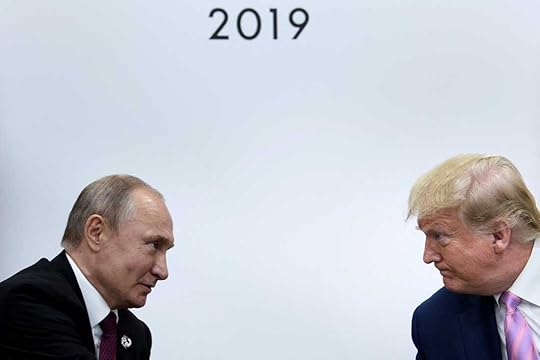
Interestingly, Rothkopf published this book before the ridiculous brouhaha of the November 2020 elections and the January 6 U.S. Capitol Riots. I’m sure he’s rushing to add several more chapters to bolster his argument for the paperback edition.
Don’t dismiss this book as just another anti-Trump diatribe or a Trump-bashing spectacle. Such a book would ultimately be counter-productive. No, this book’s only agenda is getting to the truth as to how damaging the Trump presidency was for our country, how we can start the healing process, and how we can ensure that something as disastrous as Trump doesn’t happen again.
He begins with a fascinating history lesson about the people who have committed, or been accused of, treason throughout the history of the U.S. It’s a tricky accusation, as the definition of treason, according to the Constitution, is actually very specific. Surprisingly, only a small group of people throughout American history have been accused of treason. Of those, only a handful have actually been sentenced, served prison time, or been executed. In some cases, sadly, some of those so-called “traitors” are today looked at as heroes or, at the very least, undeserving of the punishment that they received.
Rothkopf’s contention is that, unlike several of the famous traitors in our nation’s 200-plus-year history (Aaron Burr and Jefferson Davis, notably), Trump benefitted the most from his treasonous acts. Rising to become president was only the beginning. His treasonous behavior (receiving help from a foreign power—-Russia—to gain power, using his presidential powers for personal gain, and ignoring and disrupting the rule of Law, thinking he is above the Law) has resulted in the most divisive, and violent, partisan divide in history, an unprecedented escalation of hate crimes and racist white nationalist fervor in the country, and a Republican Party that has become so shattered and ineffectual as to seem beyond repair.
Sadly, Trump may be one of those former presidents who, like the war criminals George W. Bush or Richard Nixon, may never see the inside of a national tribunal. He may never serve the deserved jail time for his crimes. He may, like so many other presidents and politicians, “get away with it”.
But Rothkopf also believes that truth will, eventually, out. The Court of History will inevitably reveal Trump’s true colors.
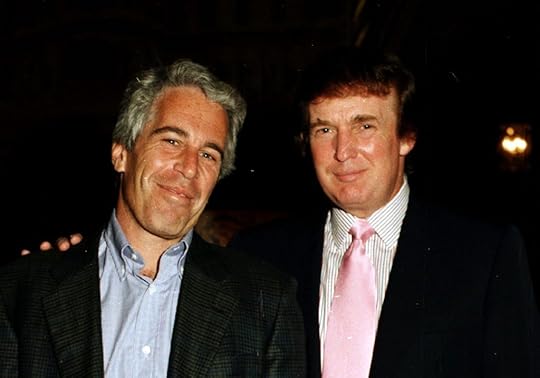
I’m pretty sure it will be mostly orange.
Yes, the book is an info-dump that can be a bit dry and wordy at times. Rothkopf, an excellent writer, can tend to sound a bit high-falutin’ and professorial. (Granted, he is a professor, so that makes sense.) The book’s chock-full of those big SAT words and run-on sentences that can go on forever. He’s also quite fond of legalese, and he frequently quotes from legal documents, sprinkled throughout the book like Easter eggs, except not the fun kind. Instead of chocolate, these eggs are filled with sadness and rage.
That said, this book is one of the most well-researched and well-articulated arguments as to why Trump was not only the worst president we have ever had but the president that has done the most to try to destroy Constitutional rights, the integrity of the office of the presidency, and democracy as it exists in this country.
Interestingly, Rothkopf published this book before the ridiculous brouhaha of the November 2020 elections and the January 6 U.S. Capitol Riots. I’m sure he’s rushing to add several more chapters to bolster his argument for the paperback edition.
Don’t dismiss this book as just another anti-Trump diatribe or a Trump-bashing spectacle. Such a book would ultimately be counter-productive. No, this book’s only agenda is getting to the truth as to how damaging the Trump presidency was for our country, how we can start the healing process, and how we can ensure that something as disastrous as Trump doesn’t happen again.
He begins with a fascinating history lesson about the people who have committed, or been accused of, treason throughout the history of the U.S. It’s a tricky accusation, as the definition of treason, according to the Constitution, is actually very specific. Surprisingly, only a small group of people throughout American history have been accused of treason. Of those, only a handful have actually been sentenced, served prison time, or been executed. In some cases, sadly, some of those so-called “traitors” are today looked at as heroes or, at the very least, undeserving of the punishment that they received.
Rothkopf’s contention is that, unlike several of the famous traitors in our nation’s 200-plus-year history (Aaron Burr and Jefferson Davis, notably), Trump benefitted the most from his treasonous acts. Rising to become president was only the beginning. His treasonous behavior (receiving help from a foreign power—-Russia—to gain power, using his presidential powers for personal gain, and ignoring and disrupting the rule of Law, thinking he is above the Law) has resulted in the most divisive, and violent, partisan divide in history, an unprecedented escalation of hate crimes and racist white nationalist fervor in the country, and a Republican Party that has become so shattered and ineffectual as to seem beyond repair.
Sadly, Trump may be one of those former presidents who, like the war criminals George W. Bush or Richard Nixon, may never see the inside of a national tribunal. He may never serve the deserved jail time for his crimes. He may, like so many other presidents and politicians, “get away with it”.
But Rothkopf also believes that truth will, eventually, out. The Court of History will inevitably reveal Trump’s true colors.
I’m pretty sure it will be mostly orange.

October 21, 2020
Donald J. Trump is a traitor.
There. I said it. And what a relief it is to speak truth.
Because we need to speak our truth, even if our voices are shaking [GOSH I miss RBG].
And this book helped me find my voice, to speak the truth I have known all along. And it shows that, much like Aaron Burr and Benedict Arnold and Andrew Johnson and Richard Nixon, our current administration is not only traitorous [and those who support him within his administration are duplicitous], but supported by people who have forgotten what it means to be "We, the People".
This book was very educational - there were quite a few things in here I didn't know about [I love learning new things] and some I did, but it still made for a very informative [if not frightening] read.
I felt the author did a very good job showing just why the current President is a traitor by taking us to the past and showing just what a traitor is, and just how dangerous the current administration is compared to traitors of the past. If you take all of the bad guys of the past and roll them into one, you will still not get someone who has flouted the rules, stomped on democracy [being "besties" with Russia is NOT a good thing folks] and preened over "getting away with it" like the current administration has and continues to do. It is rather mind boggling and I will admit by the end, I was a little "worn out" from all the information. But I am so glad I read this. It is an important read and everyone should be reading it. On both sides. Because, even if one person has their mind changed because of what they have learned in this book, it will be worth it.
"We will make it together, resist, offer a better alternative, embrace that alternative and the best leaders we can find -- or we will succumb, let the inertia of some among us mark the end of what for two and half centuries was an idea so compelling, it inspired the world. "
--David Rothkopf
Thank you to NetGalley, David Rothkopf, St. Martin Press/Thomas Dunne Books for providing this ARC in exchange for an honest review.
There. I said it. And what a relief it is to speak truth.
Because we need to speak our truth, even if our voices are shaking [GOSH I miss RBG].
And this book helped me find my voice, to speak the truth I have known all along. And it shows that, much like Aaron Burr and Benedict Arnold and Andrew Johnson and Richard Nixon, our current administration is not only traitorous [and those who support him within his administration are duplicitous], but supported by people who have forgotten what it means to be "We, the People".
This book was very educational - there were quite a few things in here I didn't know about [I love learning new things] and some I did, but it still made for a very informative [if not frightening] read.
I felt the author did a very good job showing just why the current President is a traitor by taking us to the past and showing just what a traitor is, and just how dangerous the current administration is compared to traitors of the past. If you take all of the bad guys of the past and roll them into one, you will still not get someone who has flouted the rules, stomped on democracy [being "besties" with Russia is NOT a good thing folks] and preened over "getting away with it" like the current administration has and continues to do. It is rather mind boggling and I will admit by the end, I was a little "worn out" from all the information. But I am so glad I read this. It is an important read and everyone should be reading it. On both sides. Because, even if one person has their mind changed because of what they have learned in this book, it will be worth it.
"We will make it together, resist, offer a better alternative, embrace that alternative and the best leaders we can find -- or we will succumb, let the inertia of some among us mark the end of what for two and half centuries was an idea so compelling, it inspired the world. "
--David Rothkopf
Thank you to NetGalley, David Rothkopf, St. Martin Press/Thomas Dunne Books for providing this ARC in exchange for an honest review.

wish-list
October 14, 2020

May 12, 2020
I hope everyone in politics and the Trump White House reads this because it is accurate and clearly details all of DTJ's narcissistic tendencies and actions spot on. I like how the book goes back to the beginning and starts with Benedict Arnold as the first and well known traitor to the United States. His name was just dragged through mud and ruined his career and ultimately became a pariah the rest of his life.
Other (dis)honorable mentions are Aaron Burr and the Continental Army. But the focus of this book is the atrocities of Donald Trump. I could go on about my feelings about him but I would be here for a week, the book does a good job of explaining how Americans should all be appalled at his behavior. In the meat of this book, it talks about Trump's behavior pre-White house and his business dealings. HIs erratic, shrewd/moronic thinking brought him into politics as someone who has no real knowledge of the subject and also zero comprehension about the Constitution. He cannot and should not be trusted as President of this country because his actions prove he is the wrong man for the job. China. North Korea. Russia. The 2016 election. His response and handling of Covid 19, Donald is clearly a lying, manipulative person and guilty of numerous traitorous acts upon the country. I wish someone could send him to Wuhan in a box?
This was well written, researched thoroughly and presented as a wake-up call to Trump supporters. How anyone can be so ignorant to Trump after this book and during the Covid response is beyond me. THIS IS A MUST READ TO EVERYONE IN AMERICA!!! I cant wait to get the hard copy when it is available.
Thanks to Netgalley, David Rothkopf for this book, and St Martin's Press for an ARC in exchange for an honest review.
Available: 10/27/20
Other (dis)honorable mentions are Aaron Burr and the Continental Army. But the focus of this book is the atrocities of Donald Trump. I could go on about my feelings about him but I would be here for a week, the book does a good job of explaining how Americans should all be appalled at his behavior. In the meat of this book, it talks about Trump's behavior pre-White house and his business dealings. HIs erratic, shrewd/moronic thinking brought him into politics as someone who has no real knowledge of the subject and also zero comprehension about the Constitution. He cannot and should not be trusted as President of this country because his actions prove he is the wrong man for the job. China. North Korea. Russia. The 2016 election. His response and handling of Covid 19, Donald is clearly a lying, manipulative person and guilty of numerous traitorous acts upon the country. I wish someone could send him to Wuhan in a box?
This was well written, researched thoroughly and presented as a wake-up call to Trump supporters. How anyone can be so ignorant to Trump after this book and during the Covid response is beyond me. THIS IS A MUST READ TO EVERYONE IN AMERICA!!! I cant wait to get the hard copy when it is available.
Thanks to Netgalley, David Rothkopf for this book, and St Martin's Press for an ARC in exchange for an honest review.
Available: 10/27/20

July 22, 2020
I've no love lost for Aaron Burr, the man who shot Alexander Hamilton and, oh yeah, effectively poisoned the water supply of all of New York and, oh, also was convicted of treason. Traitor did nothing to assuage my previous prejudices, instead reinforcing them.
The other thing this book reinforces (aside from the absolute treachery of the 45th President of the United States of America) is how interconnected the lives and stories of the early US were. The way it does it, though... leaves more than a little something to be desired. Rorthkopf hungers for an editor, as this book contains some of the longest, hardest-to-follow sentences I've ever read (or tried to read). He's also more than a little comma happy. And I make this point as someone who loves a long sentence with a lot of commas. But this book absolutely craves a red pen. It was hard for my brain to retain so much of the information within - information I'm legitimately interested in and want to know - due to the overexcited, long-winded writing style. I'd flip three pages and realize I had literally no recall for what I'd just read. That would be okay, except that it's a quick read - quick and information dense, so more than once I had to flip back and reread, which didn't exactly compel me to read for long spells.
This book is senior-level ideas with freshman-level writing. I wish I could say more about the actual information, but honestly, it's all lost in the commas.
The other thing this book reinforces (aside from the absolute treachery of the 45th President of the United States of America) is how interconnected the lives and stories of the early US were. The way it does it, though... leaves more than a little something to be desired. Rorthkopf hungers for an editor, as this book contains some of the longest, hardest-to-follow sentences I've ever read (or tried to read). He's also more than a little comma happy. And I make this point as someone who loves a long sentence with a lot of commas. But this book absolutely craves a red pen. It was hard for my brain to retain so much of the information within - information I'm legitimately interested in and want to know - due to the overexcited, long-winded writing style. I'd flip three pages and realize I had literally no recall for what I'd just read. That would be okay, except that it's a quick read - quick and information dense, so more than once I had to flip back and reread, which didn't exactly compel me to read for long spells.
This book is senior-level ideas with freshman-level writing. I wish I could say more about the actual information, but honestly, it's all lost in the commas.

November 28, 2020
3 stars out of 5
I'm a bit torn on this one. Do I agree that Trump is a traitor to his own country? Yes, absolutely I do. Did I need to read this book to figure that out? No, however, I did enjoy the historical look back at America's traitor's, and how the American democratic system always managed to keep these men in check. Also, how they related to Trump, now, was also interesting. Who knew the definition of treason was so vague.
Despite of what I enjoyed about this book, I really struggled A LOT with all of the run on sentences, as well as Rothkopf's tone. It is made very clear that Rohtkopf does not like Trump. Literally the first page has him calling Trump a liar, a racist, a traitor etc. So, the people who may pick up this book will be people who hate Trump (me), historians, and, maybe, some opened minded people. However, there is no way in hell a Trump supporter would pick up this book, and read it from cover to cover. And, yes, I get that this book maybe isn't for them, but maybe we all need to stop writing books like these, and try to figure out a way to tell almost 75 million people why Trump is a horrible person, and actually have them believe us. Because I really don't think this book does that job.
I don't know. Yes, I know this book was finished being written months ago, and now Trump is on his way out, but Rothkopf himself stated that Trumpism isn't going anywhere, so maybe we should focus less on what we already know about Trump, and focus more on reaching the millions of people who idolize him.
I'm a bit torn on this one. Do I agree that Trump is a traitor to his own country? Yes, absolutely I do. Did I need to read this book to figure that out? No, however, I did enjoy the historical look back at America's traitor's, and how the American democratic system always managed to keep these men in check. Also, how they related to Trump, now, was also interesting. Who knew the definition of treason was so vague.
Despite of what I enjoyed about this book, I really struggled A LOT with all of the run on sentences, as well as Rothkopf's tone. It is made very clear that Rohtkopf does not like Trump. Literally the first page has him calling Trump a liar, a racist, a traitor etc. So, the people who may pick up this book will be people who hate Trump (me), historians, and, maybe, some opened minded people. However, there is no way in hell a Trump supporter would pick up this book, and read it from cover to cover. And, yes, I get that this book maybe isn't for them, but maybe we all need to stop writing books like these, and try to figure out a way to tell almost 75 million people why Trump is a horrible person, and actually have them believe us. Because I really don't think this book does that job.
I don't know. Yes, I know this book was finished being written months ago, and now Trump is on his way out, but Rothkopf himself stated that Trumpism isn't going anywhere, so maybe we should focus less on what we already know about Trump, and focus more on reaching the millions of people who idolize him.
October 26, 2020
This book offers a lot of history, both past & current......& I learned something from it. I like history, so enjoy an opportunity to pick up a little more knowledge there. It also speaks to politics, & is sometimes kind of heavy with legalese..... which some might find makes for some slow/thick reading. I do think the author did a pretty good job of explaining the legal stuff in layman's terms, making that as palatable/readable as he could. If you're looking for a quick, simple read.....I wouldn't say this is it! It is a fairly short book, but you need to be paying attention.......but I'd also say that it was well worth the time spent with it. The title gives a good synopsis of the book.
I received a complimentary e-ARC of this book from St. Martin's Press/Thomas Dunne Books via NetGalley, in return for reading it & posting my own fair/honest review.
I received a complimentary e-ARC of this book from St. Martin's Press/Thomas Dunne Books via NetGalley, in return for reading it & posting my own fair/honest review.

November 28, 2020
The first paragraph of chapter 1, "Betrayal": "History is the highest court. Its jurisdiction knows no boundaries. Its final verdict cannot be appealed."
What author David Rothkopf does in this important book is to put Donald Trump's crimes and ethical violations in much-needed perspective. After almost four years (which, thanks be to all the fates, are coming to an end) of outrageous behavior and outraged reactions to all that outrageous behavior, it's hard to stand quietly on higher ground to take a longer view. That's what Rothkopf does in this extended essay (222 pp. in the edition I've been reading) on, as the subtitle puts it, the "history of American betrayal."
The outlines of Rothkopf's account will be familiar to most readers who are even casually acquainted with U.S. history, but once history, the highest court, has rendered its final verdict in any particular case much of the context falls away. This context is not only fascinating, it's illuminating. Benedict Arnold, for instance, whose name has come to be synonymous with treason, in his own time "was not tried nor was he punished. In fact, he was rewarded for his crimes and got away with them." Ditto Aaron Burr, a scuzzy individual best known for killing Alexander Hamilton in a duel. (It's worth noting that he was still vice president at the time, and also that Thomas Jefferson doesn't come off so well in that particular story.)
The converse is also true: that history has been kinder to many of those accused of treason in their own time. In the tumultuous Early National period, resistance to federal tax levies was deemed traitorous, but the names of those so charged and even convicted have been largely forgotten. In hindsight it becomes clearer that these rebellions largely happened because, in Rothkopf's words, "America was still getting its sea legs as a society" -- sorting out, among other things, the relative authority of the state and federal governments (an issue that remains contentious to this day, despite its role in our cataclysmic civil war).
History has also been far kinder to abolitionist John Brown, "who was hung for the treasonous act of advocating what was right and what would be the official motive behind the U.S. federal government's position in the war to follow." Interestingly enough, the only person punished for treason during the Civil War was one William Mumford, who was hanged for "trying to tear down the Union flag from a flagpole in New Orleans against the orders of the Union commander seizing the town." He was executed not for the enormity of the offense but as an example to others.
Rothkopf devotes several pages to the first impeachment in U.S. history, that of Andrew Johnson, Lincoln's successor. Johnson, unlike Lincoln, was a white supremacist; at this point in U.S. history the president and vice president could come from different parties, and Johnson was no fan of Reconstruction. Congress passed the "Tenure of Office Act," making it "illegal for the president to remove without Senate approval anyone from a high office who had been confirmed by the Senate." (Can you imagine??) Johnson nevertheless attempted twice to remove Secretary of War Edwin Stanton from office. The second time, Stanton locked himself in his office and refused to leave, and three days later the House voted to impeach Johnson.
To put President Trump's behavior in perspective, Traitor devotes chapter 5, "Adhering to Our Enemies," to spies who have betrayed the United States by conveying secrets and highly classified information to the nation's enemies, notably during the Cold War. Though much remains unknown, what is known puts Trump and his administration in a class with, among others, Julius Rosenberg, Robert Hanssen, and Aldrich Ames -- although it can and should be argued that Trump, because of the potential for damage that comes with his exalted position, belongs in a class by himself.
Writing before the election of 2020 evicted Trump from office (and gave him still more opportunities to prove his colossal unfitness for the presidency), Rothkopf concludes, unsurprisingly, that "Trump is a traitor." But he doesn't stop there. In several eloquent and unrelenting paragraphs, he lays out what else Trump is (and isn't) and what he's done (and not done), and notes that this "litany of crises and crimes is so long that many Americans are becoming numb. You have heard of the fog of war. This is the 'fog of Trump.'" And on the very last page he urges leaders, government employees, and indeed all of us "to resist and refuse to be complicit."
And no, it didn't end with the election. It won't end with Joe Biden's inauguration. The Republican Party (which is not, repeat not, the "party of Lincoln") has exacerbated Trump's excesses and instituted a few of their own, and can we forget for a moment that almost 74 million USians voted for another four years of this?
This is indeed "about whether the American experiment will succeed or fail, whether this moment does what two world wars, a civil war, and countless past misjudgments and missteps could not." And it really is up to us.
What author David Rothkopf does in this important book is to put Donald Trump's crimes and ethical violations in much-needed perspective. After almost four years (which, thanks be to all the fates, are coming to an end) of outrageous behavior and outraged reactions to all that outrageous behavior, it's hard to stand quietly on higher ground to take a longer view. That's what Rothkopf does in this extended essay (222 pp. in the edition I've been reading) on, as the subtitle puts it, the "history of American betrayal."
The outlines of Rothkopf's account will be familiar to most readers who are even casually acquainted with U.S. history, but once history, the highest court, has rendered its final verdict in any particular case much of the context falls away. This context is not only fascinating, it's illuminating. Benedict Arnold, for instance, whose name has come to be synonymous with treason, in his own time "was not tried nor was he punished. In fact, he was rewarded for his crimes and got away with them." Ditto Aaron Burr, a scuzzy individual best known for killing Alexander Hamilton in a duel. (It's worth noting that he was still vice president at the time, and also that Thomas Jefferson doesn't come off so well in that particular story.)
The converse is also true: that history has been kinder to many of those accused of treason in their own time. In the tumultuous Early National period, resistance to federal tax levies was deemed traitorous, but the names of those so charged and even convicted have been largely forgotten. In hindsight it becomes clearer that these rebellions largely happened because, in Rothkopf's words, "America was still getting its sea legs as a society" -- sorting out, among other things, the relative authority of the state and federal governments (an issue that remains contentious to this day, despite its role in our cataclysmic civil war).
History has also been far kinder to abolitionist John Brown, "who was hung for the treasonous act of advocating what was right and what would be the official motive behind the U.S. federal government's position in the war to follow." Interestingly enough, the only person punished for treason during the Civil War was one William Mumford, who was hanged for "trying to tear down the Union flag from a flagpole in New Orleans against the orders of the Union commander seizing the town." He was executed not for the enormity of the offense but as an example to others.
Rothkopf devotes several pages to the first impeachment in U.S. history, that of Andrew Johnson, Lincoln's successor. Johnson, unlike Lincoln, was a white supremacist; at this point in U.S. history the president and vice president could come from different parties, and Johnson was no fan of Reconstruction. Congress passed the "Tenure of Office Act," making it "illegal for the president to remove without Senate approval anyone from a high office who had been confirmed by the Senate." (Can you imagine??) Johnson nevertheless attempted twice to remove Secretary of War Edwin Stanton from office. The second time, Stanton locked himself in his office and refused to leave, and three days later the House voted to impeach Johnson.
To put President Trump's behavior in perspective, Traitor devotes chapter 5, "Adhering to Our Enemies," to spies who have betrayed the United States by conveying secrets and highly classified information to the nation's enemies, notably during the Cold War. Though much remains unknown, what is known puts Trump and his administration in a class with, among others, Julius Rosenberg, Robert Hanssen, and Aldrich Ames -- although it can and should be argued that Trump, because of the potential for damage that comes with his exalted position, belongs in a class by himself.
Writing before the election of 2020 evicted Trump from office (and gave him still more opportunities to prove his colossal unfitness for the presidency), Rothkopf concludes, unsurprisingly, that "Trump is a traitor." But he doesn't stop there. In several eloquent and unrelenting paragraphs, he lays out what else Trump is (and isn't) and what he's done (and not done), and notes that this "litany of crises and crimes is so long that many Americans are becoming numb. You have heard of the fog of war. This is the 'fog of Trump.'" And on the very last page he urges leaders, government employees, and indeed all of us "to resist and refuse to be complicit."
And no, it didn't end with the election. It won't end with Joe Biden's inauguration. The Republican Party (which is not, repeat not, the "party of Lincoln") has exacerbated Trump's excesses and instituted a few of their own, and can we forget for a moment that almost 74 million USians voted for another four years of this?
This is indeed "about whether the American experiment will succeed or fail, whether this moment does what two world wars, a civil war, and countless past misjudgments and missteps could not." And it really is up to us.

January 16, 2021
“The first duty of society is justice.” - Alexander Hamilton
A short, dry look at all American traitors (and who knew there were so freaking many?!) from 1776 through the present day. It’s amazing how the continental times were so much like small town politics - everyone knew everyone else and the close knit elite is borderline incestuous - but the tales told were engrossing: Burr, Andre, Arnold, Shippen. Then various miscellaneous traitors and rebellions before the civil war were considered “growing pains” for a young nation, with the greatest threat next realized being Lee, Stephens, (looks around), yes, the entire South. The two world wars also brought forth a plethora of traitors, most of whom were caught and tried under espionage and sedition laws as the Constitutional definition of treason is strictly narrowly construed: Tokyo Rose, the Rosenbergs, and their ilk. Then there came the Cold War, McCarthyism, and Roy Cohn. And finally: Trump. The author goes through all publicly known facts and issues his condemnation: Trump is a traitor.
The Mueller Report laid out irrefutable proof that “Trump and his associates knowingly collaborated with a foreign enemy in order to win the presidency, and that they then repeatedly not only defended that foreign power but rewarded it with benefits . . .”
“[T]he Russian achievements have been so great that their efforts to put him in office and use him to advance their goals has to be seen as perhaps the most successful international intelligence operation of modern times.”
Of course, the greatest threat to the country is not Trump himself, as he will soon be gone, but Trumpism, which must be addressed and excised from society before the country can recover (and please note the book was obviously written and published pre-coup: one can only imagine the author’s censure would now be much stronger).
Well researched, and well written, it still dragged a bit both because of the subject matter and because of the author’s clinical personality, but it is still a worthwhile foray into the American experience of men (and it is mostly white men) who unashamedly put personal interest over party, and party over country. Sociopaths, all.
Three (damning) stars.
A short, dry look at all American traitors (and who knew there were so freaking many?!) from 1776 through the present day. It’s amazing how the continental times were so much like small town politics - everyone knew everyone else and the close knit elite is borderline incestuous - but the tales told were engrossing: Burr, Andre, Arnold, Shippen. Then various miscellaneous traitors and rebellions before the civil war were considered “growing pains” for a young nation, with the greatest threat next realized being Lee, Stephens, (looks around), yes, the entire South. The two world wars also brought forth a plethora of traitors, most of whom were caught and tried under espionage and sedition laws as the Constitutional definition of treason is strictly narrowly construed: Tokyo Rose, the Rosenbergs, and their ilk. Then there came the Cold War, McCarthyism, and Roy Cohn. And finally: Trump. The author goes through all publicly known facts and issues his condemnation: Trump is a traitor.
The Mueller Report laid out irrefutable proof that “Trump and his associates knowingly collaborated with a foreign enemy in order to win the presidency, and that they then repeatedly not only defended that foreign power but rewarded it with benefits . . .”
“[T]he Russian achievements have been so great that their efforts to put him in office and use him to advance their goals has to be seen as perhaps the most successful international intelligence operation of modern times.”
Of course, the greatest threat to the country is not Trump himself, as he will soon be gone, but Trumpism, which must be addressed and excised from society before the country can recover (and please note the book was obviously written and published pre-coup: one can only imagine the author’s censure would now be much stronger).
Well researched, and well written, it still dragged a bit both because of the subject matter and because of the author’s clinical personality, but it is still a worthwhile foray into the American experience of men (and it is mostly white men) who unashamedly put personal interest over party, and party over country. Sociopaths, all.
Three (damning) stars.

March 4, 2021
This was a thoughtful, well-written piece, although I must admit some confirmation bias. It places Trump in perspective with past presidents, who were, or were not impeached for various wrong-doings. He definitely outclasses them all(Be Best!). One of my favorite parts, was a quote from H.L. Mencken, written during the 1920 election cycle, "As democracy is perfected, the office[of president] represents, more and more closely, the inner soul of the people. We move toward a lofty ideal. On some great and glorious day the plain folks of the land will reach their heart's desire at last, and the White House will be adorned by a downright moron". It certainly happened in 2016. The problem, is that it was only the inner soul of about 40% of the population.

December 27, 2020
Great and horrible. Good historical placement and analysis - if you are used to Rothkopf's other great books, and listen in to the DSR, you'll still appreciate this book and learn lots. If you don't know the other books or the DSR - what's wrong with you?!?! (Start w/ Running the World, and go get the podcasts.)

December 2, 2020
This book starts off very intense and you can feel the author's strong dislike for the President. I had to force myself to keep reading past the introduction until it started to build on the history of perceived traitors and actual traitors. I also had to look up the definition of the word traitor "a person who betrays someone or something, such as a friend, cause, or principle". This seems to be a little vague as in the context of the book. Because the book also discusses treason "the crime of betraying one's country, especially by attempting to kill or overthrow the sovereign or government" it seemed necessary to also look this up as well. Since the definition of traitor seemed vague to me I then looked up the legal definition for traitor "A person who is guilty of treason is known as a traitor. Treason is punishable by death if a traitor levies war against his state or country or supports its enemies, giving them aid and comfort. A traitor shall be convicted on the testimony of two witnesses to the same overt act, or on confession in an open court". This seemed more applicable in understanding and following the information provided. It is easy to romanticize the history of our leaders past and present. There is so much history for us to rely on to make future decisions in an effort to keep these situations from happening again. It is our responsibility to be alert to certain behaviors that should be obvious red flags and yet again we have another in the White House leaving shortly. There was a moment of awareness for me near the end of the book, it discusses about "the adopted view within the executive office and accepted by the Congress that the only way to charge a president with a crime, to hold him accountable for abuses, is via the mechanism of impeachment by the House and removal from office by the senate. Unfortunately, what that mechanism does, is grant immunity to any president who controls a sufficient number of senators to foreclose the possibility of a two-thirds vote to convict. In other words, if one party can control thirty-four seats in the Senate and that party protects on occupant of the White House of similar beliefs, that president is, in fact, beyond the reach of the law." Given this premise, the Senate is then complicit in its condoning of a president that has committed treason and are also traitors of the United States. Since they do not recognize the president's crimes they surely do not admit to their own. This very action violates the very oath that they have taken when being sworn into office. This isn't about a difference of opinion between political parties, this is about putting themselves above the law, and not upholding the Constitution, When will our supposed leaders start really representing the people's interests and put their political agendas aside.
This entire review has been hidden because of spoilers.

October 19, 2020
First, as a preface to my review, let me assure you that I am not attempting to sway anyone politically in any way. I am first and foremost a seeker of information on both sides of the aisle. I do not purport to know any more than anyone else nor do I expect anyone to share my views. Most importantly, I am not here to judge anyone's opinions, as that is not what I was put on this earth to do...
Now, with that disclaimer out of the way, perhaps you will indulge me as I review what will surely become a very controversial book...
In his newest book, David Rothkopf shares his hard-hitting, compelling argument in a treatise that commands attention. As he very clearly states, "the purpose of this book, after all, is to understand how history will view Donald Trump's presidency and to examine how his crimes and abuses may compare with those of others who betrayed the country in U.S. history."
Straight out of the gate, David Rothkopf comes on strong with his very first sentence, "The President of the United States is a traitor," in an attempt at a cogent analysis of the current President and what Mr. Rothkopf describes as his crimes. If I'm honest, I struggle with this forceful approach, as it is likely that the only people that will consider reading any further will be those whom already oppose Trump. Therefore, if the author is attempting in any way to sway citizens who have perhaps considered this theory, but are not yet fully convinced, this may be an initial turn-off.
What I most appreciated about Rothkopf is his description of historical events and his detailed account of how our country came to uphold our current political system. As a political historian and scientist, and professor of international relations, this is his greatest strength. The information he presents is meticulous, authentic, and well researched and his intellect lends credibility to his argument. I learned an exceptional amount, and was surprised to discover that some of my historical knowledge had been constructed from a melange of myth and sensationalized legend.
I will be honest, there is a lot of information to digest, and you must be in a "studious" mood to take it all in. However, if you are looking for a fascinating history lesson and an overview of our political landscape, along with a well-construed argument as to why the current president may, in fact, fit this rather harsh label, then get ready for the release of Traitor on October 27th.
Many thanks to NetGalley and St. Martin's Press for gifting me with an advanced copy in exchange for an honest review.
For more of my reviews, please visit my blog at https://mamasgottaread.blogspot.com/ , or follow me on Instagram @mamasgottaread .
Now, with that disclaimer out of the way, perhaps you will indulge me as I review what will surely become a very controversial book...
In his newest book, David Rothkopf shares his hard-hitting, compelling argument in a treatise that commands attention. As he very clearly states, "the purpose of this book, after all, is to understand how history will view Donald Trump's presidency and to examine how his crimes and abuses may compare with those of others who betrayed the country in U.S. history."
Straight out of the gate, David Rothkopf comes on strong with his very first sentence, "The President of the United States is a traitor," in an attempt at a cogent analysis of the current President and what Mr. Rothkopf describes as his crimes. If I'm honest, I struggle with this forceful approach, as it is likely that the only people that will consider reading any further will be those whom already oppose Trump. Therefore, if the author is attempting in any way to sway citizens who have perhaps considered this theory, but are not yet fully convinced, this may be an initial turn-off.
What I most appreciated about Rothkopf is his description of historical events and his detailed account of how our country came to uphold our current political system. As a political historian and scientist, and professor of international relations, this is his greatest strength. The information he presents is meticulous, authentic, and well researched and his intellect lends credibility to his argument. I learned an exceptional amount, and was surprised to discover that some of my historical knowledge had been constructed from a melange of myth and sensationalized legend.
I will be honest, there is a lot of information to digest, and you must be in a "studious" mood to take it all in. However, if you are looking for a fascinating history lesson and an overview of our political landscape, along with a well-construed argument as to why the current president may, in fact, fit this rather harsh label, then get ready for the release of Traitor on October 27th.
Many thanks to NetGalley and St. Martin's Press for gifting me with an advanced copy in exchange for an honest review.
For more of my reviews, please visit my blog at https://mamasgottaread.blogspot.com/ , or follow me on Instagram @mamasgottaread .

October 27, 2020
David Rothkopf argues that not only is Donald Trump a traitor, he is the worst traitor in a position of power in US history. No argument from this reader. One of the things that struck me most about this book was that I had difficulty enumerating the scandals and revelations since Rothkopf finished writing it about a year ago. Obviously, the pandemic is the biggest issue since then--not really an example of 45's traitorous behavior, but still proof of his tragic incompetence and inability to not only manage an emergency situation, but his determination to make it, like everything else, transactional. Withholding aid to Democrat-led states and cities seems as natural to him as treating all Americans as equals does to Joe Biden.
But I digress. Rarely do I underline in non-textbooks, but there were so many lines and entire passages in this book that I wanted to return to. *Everybody* should read this book before they vote, but with the election just a week away, and those who most need to learn what Rothkopf sets forth unlikely to read it, my advice will fall on deaf ears. Further, all the high school educated MAGAts would no doubt dismiss Rothkopf's arguments as fake news, left-wing conspiracy...whatever.
Most chillingly true is Rothkopf's assertion that voting Trump and Republicans out of office is only a short-term solution. The educational divide in our country must be overcome, or we will remain vulnerable to other would-be despots who appeal to those who are gullible, angry, uneducated, etc. #Traitor #NetGalley
But I digress. Rarely do I underline in non-textbooks, but there were so many lines and entire passages in this book that I wanted to return to. *Everybody* should read this book before they vote, but with the election just a week away, and those who most need to learn what Rothkopf sets forth unlikely to read it, my advice will fall on deaf ears. Further, all the high school educated MAGAts would no doubt dismiss Rothkopf's arguments as fake news, left-wing conspiracy...whatever.
Most chillingly true is Rothkopf's assertion that voting Trump and Republicans out of office is only a short-term solution. The educational divide in our country must be overcome, or we will remain vulnerable to other would-be despots who appeal to those who are gullible, angry, uneducated, etc. #Traitor #NetGalley

July 27, 2025
I don't disagree with the author's conclusions about both Trump's character and the dangers he poses to our democracy. Trump is a man-child who went through the same phase we all went through in our late teens when we were certain that we knew more than our teachers and our parents. Most of us got that nonsense kicked out of us, but if you're the bosses' son and heir apparent, nobody dares to tell you that you're talking gibberish. So here he is in his late seventies, still thinking that he knows more about everything than anybody. It's sad and dangerous. But the author's arguments "With their frequent repetitions, and their wild reverberations" reads more like a rant than a syllogism.
I must say, I learned much from his "warts and all" dissection of our founding fathers. They were flawed, to be sure, but not batshit crazy, like the 47th president. But as a matter of fact, I must disagree with his assertion on p40 that Jefferson was "a slave owner who ultimately freed his slaves". I live about four miles from Monticello. My understanding is that the only slaves that he freely manumitted were his own children by Sally Hemings, and that was on the foot of an agreement she made with him, to return to Virginia from France (where she was technically free). And even then, he put them to work until they reached their majority, and the agreement kicked in. Jefferson had huge debts when he died, and most of his slaves were sold, families broken up, by his (white) descendants to satisfy those debts.
I must say, I learned much from his "warts and all" dissection of our founding fathers. They were flawed, to be sure, but not batshit crazy, like the 47th president. But as a matter of fact, I must disagree with his assertion on p40 that Jefferson was "a slave owner who ultimately freed his slaves". I live about four miles from Monticello. My understanding is that the only slaves that he freely manumitted were his own children by Sally Hemings, and that was on the foot of an agreement she made with him, to return to Virginia from France (where she was technically free). And even then, he put them to work until they reached their majority, and the agreement kicked in. Jefferson had huge debts when he died, and most of his slaves were sold, families broken up, by his (white) descendants to satisfy those debts.
December 21, 2020
THE PEOPLE v. Trump, TRAITOR-In-CHIEF; a brief.
David Rothkopf's TRAITOR: A succinct, well-organised, evidence-based, rational accounting of treason in American history; what the Founders feared might happen, should a totally corrupt man become President; Trump's fulfilment of their worst fears; and the potential for Trumpism, not only Trump, if left unchecked, to destroy our country, Democracy, and ratiomal, compassionate life itself.
Published before the 2020 election, Rothkopf's work is a timely, and timeless, primer on how a Republic dies, when corruption, amorality, greed, ignorance, fear, and hatred create a MALIGNANT NORMALITY, a MASS PSYCHOSIS, a cult of rage, violence, grievance and death.
Aristotle described the descent of the Republic, born of idealism and hope, to Democracy, which when abused and corrupted by its leaders, its Senators, supported by elites, surrounded by an ignorant and complacent People, content with Bread and Circuses, to the inevitable Dictatorship of one man who places himself above them all, and the LAW.
Required reading for all Americans, now, and for the actions Rothkopf counsels for us all, in a Republic, if we intend to keep it
David Rothkopf's TRAITOR: A succinct, well-organised, evidence-based, rational accounting of treason in American history; what the Founders feared might happen, should a totally corrupt man become President; Trump's fulfilment of their worst fears; and the potential for Trumpism, not only Trump, if left unchecked, to destroy our country, Democracy, and ratiomal, compassionate life itself.
Published before the 2020 election, Rothkopf's work is a timely, and timeless, primer on how a Republic dies, when corruption, amorality, greed, ignorance, fear, and hatred create a MALIGNANT NORMALITY, a MASS PSYCHOSIS, a cult of rage, violence, grievance and death.
Aristotle described the descent of the Republic, born of idealism and hope, to Democracy, which when abused and corrupted by its leaders, its Senators, supported by elites, surrounded by an ignorant and complacent People, content with Bread and Circuses, to the inevitable Dictatorship of one man who places himself above them all, and the LAW.
Required reading for all Americans, now, and for the actions Rothkopf counsels for us all, in a Republic, if we intend to keep it

December 17, 2020
I would like to thank NetGalley and the author David Rothkopf for giving me the opportunity to read and review this book.
This book tries to determine whether the actions of US President Donald Trump can be considered acts of treason. Although strictly speaking by constitutional definition they appear not to be, through another perspective they may well be. The author makes comparison to historically similar situations to make the case that Trump’s actions are indeed acts of treason.
The author tries to help us understand not only why today’s situation is different than similar incidents in the country’s history but why it is more dangerous than perhaps any other the nation has faced, other than the civil war, and what, if anything, history suggests we can do about it.
The material has been well researched and the arguments are persuasive. Unfortunately, in the current deeply divided state of the public in the US half of the audience will love this book and the other half will hate it and consider it deeply misguided. Truth and facts are currently heavily undervalued. So much the pity. The author is to be commended for making a good effort.
This book tries to determine whether the actions of US President Donald Trump can be considered acts of treason. Although strictly speaking by constitutional definition they appear not to be, through another perspective they may well be. The author makes comparison to historically similar situations to make the case that Trump’s actions are indeed acts of treason.
The author tries to help us understand not only why today’s situation is different than similar incidents in the country’s history but why it is more dangerous than perhaps any other the nation has faced, other than the civil war, and what, if anything, history suggests we can do about it.
The material has been well researched and the arguments are persuasive. Unfortunately, in the current deeply divided state of the public in the US half of the audience will love this book and the other half will hate it and consider it deeply misguided. Truth and facts are currently heavily undervalued. So much the pity. The author is to be commended for making a good effort.

October 27, 2021
This book starts off fairly strong in the discussion of historical instances of betrayal, focusing on the obvious cases of Benedict Arnold, Aaron Burr and the Rosenbergs. There are others that Rothkopf mixes in and some are intriguing, but the tone is attempting to compare the events of the Trump Presidency, especially the Mueller report, to these historical examples. The bias, and I am one who tends to favor his viewpoint personally, is way too obvious and spoils what could be a strong and in-depth look into the issue of treason in history and today. I really struggled with the second half of the book, as I felt like the academic approach was abandoned and the political ideology and bias took over. Could have been much stronger if he went more into detail on the historical and modern instances of treason, the court precedents involved, and then laid out the facts of the Trump situations. This allows the reader to come to their own conclusions, even if he chose to write an epilogue of where he stands on the issue today. It was just too over-the-top for me.

November 15, 2020
I always enjoy reading books that present historical facts that do not whitewash our nation’s history by continually showing us that it wasn’t all milk and honey. It’s good to see that historians are beginning to show that our founding fathers were Human and prone to human mistakes, greed, avarice and bias. This is what makes American history much more interesting because despite all the human faults, this experiment of democracy continues to move forward. Although we continue to stutter step at times, i.e., this past four years of the Trump Criminal Administration, we continue to move forward with the original idea of what America has always stood for and continues to stand for regardless of the City of Light on the Hill just being a bit dim recently.

April 11, 2021
For those of us who are sure in our hearts that our current president should not have been “exonerated” by the U.S. Senate after his impeachment hearing, Rothkopt’s book is a reminder that there are historical reasons for our concern. Going back to the days of Benedict Arnold, moving up through Aaron Burr and leaders of the Confederacy, not only does he uphold the idea of the president’s likely guilt, but he puts the entire situation into context for us. Anyone who is following the ongoing threats to our democracy will want to add this title to their library. This is the picture behind the foregone conclusion that President Trump will not be remembered favorably by history, no matter what his followers believe.
I met this book at Auntie's Bookstore in Spokane, WA
I met this book at Auntie's Bookstore in Spokane, WA

October 3, 2020
Ultimately, the point of this book is to illustrate that Donald Trump is a terrible person and president. The author makes this claim, in part, by looking at traitors throughout US history (like Benedict Arnold), talking about the bad actions of past presidents, and claiming that Trump’s actions are pretty much as bad or worse than all of the others’ acts put together. While he does raise some interesting points, I don’t think it’s going to change anyone’s mind. People who don’t like Trump will agree, and people who like him won’t read it in the first place.
Thanks to NetGalley for the ARC.
Thanks to NetGalley for the ARC.

November 13, 2020
Maybe I'm biased as a huge fan of David Rothkopf's Deep State Radio podcast, but I found this to be really insightful and informative. It does an excellent job at its stated objective of placing the Trump administration's lawbreaking and betrayals of public trust in historical perspective. My only complaint is that at times I felt it was a bit rushed, and that there were parts that could have been tightened up or clarified. However, I think this book was at its strongest in the last 40 pages or so, where it really throws down the gauntlet and lays out a compelling, no-BS case about Trump's betrayals and Trumpism's dangers.

November 11, 2020
I have read several books about the Trump administration - and lived through it - so the notion that Donald Trump is a traitor to the USA is not exactly news to me. However, the point of this book is not to convince you of this, it's to put it into historical context. I learned a shocking amount, especially about the political intrigue and betrayals during the first decades of US history. Very quick and informative read.
I received a digital advance copy from #netgalley. This is my honest review.
I received a digital advance copy from #netgalley. This is my honest review.

September 1, 2021
Beyond the expected dissection of the 45th president’s many egregious offenses against the country he was elected to lead, Mr. Rothkopf gives a detailed refresher on previous offenders who portrayed similar flaws, discussing how they betrayed their country and the trust of those for whom they were responsible. The final pages give a guide map for averting future traitors’ ability to weaken or destroy this democratic republic.

September 17, 2021
Super interesting book but not why I expected or hoped.
I was hoping for a historical look at traitors in America and the parallels with Donald Trump. Instead it was a largely a case against Donald Trump as a traitor to the office and to the United Stars of America.
For what it was perhaps I’ve been a bit harsh in only giving it three stars. For what I was hoping or expecting, I was a bit disappointed.
I was hoping for a historical look at traitors in America and the parallels with Donald Trump. Instead it was a largely a case against Donald Trump as a traitor to the office and to the United Stars of America.
For what it was perhaps I’ve been a bit harsh in only giving it three stars. For what I was hoping or expecting, I was a bit disappointed.

December 22, 2022
I have no love for the 45th. But this so called "history" ignores the effect of slavery and white supremacy in lionizing the founders and comparing them with today. To do so ignores the profound legacy of white supremacy that undergrirds MAGA and thus profoundly misunderstands the reason Trump and his movement are dangerous and consistent - not contrary to - the white supremacist history baked into our founding.
Displaying 1 - 30 of 47 reviews