From award-winning poet Margarita Engle comes Dreams from Many Rivers, an middle grade verse history of Latinos in the United States, told through many voices, and featuring illustrations by Beatriz Gutierrez Hernandez.
From Juana Briones and Juan Ponce de León, to eighteenth century slaves and modern-day sixth graders, the many and varied people depicted in this moving narrative speak to the experiences and contributions of Latinos throughout the history of the United States, from the earliest known stories up to present day. It's a portrait of a great, enormously varied, and enduring heritage. A compelling treatment of an important topic.
Margarita Engle is a Cuban-American poet, novelist, and journalist whose work has been published in many countries. She lives with her husband in northern California.
This didn't seem like poetry to me, but what do I know? Poetry, like other artforms, is highly subjective. The format was not an issue at all. I very much enjoyed these as snippets of history told from marginalized voices who it is high time more people heard.
Listening to this book on audio was such a lovely experience. Both narrators did a great job illuminating the people and characters featured in these stories/poems. I honestly can't think of a single thing I disliked about this collection. It was a quick and extremely worthwhile read and I'm so glad I picked it up!
Poetry collection about the history of the Latinx community in the US. A mix of fiction and nonfictional people. It was a mix of things, really. I didn't like much how the book talked about Puerto Rico, for example, or how the book tends to romanticize the American military. But the illustrations were great.
I enjoyed this, but poetry is not my best mode for learning and absorbing, so depending on the work, it's often hit or miss for me. This was mostly a hit, but I definitely found myself having to relisten to some of the poems to figure out what they were talking about. Perhaps some of it is because I'm unfamiliar with the topic (Hispanic history), but some of it is just that poetry is usually not the best mode for transferring information into my brain. It's me not you, heh heh. And yet, some of the passages drew me in completely and I could picture the scene in front of me. So this was a really solid work and I can definitely see myself going back in and listening to some of the passages over.
As someone who never learned about Latina/o history this was very informational and great read. It was a wild ride and it was very interesting. I was bothered how it was more of a book with small anecdotes by so many different people than having a few stories of latina/o people talking about their experience.
Also, did not enjoy the poetry, but hell I loved the information it gave me.
Beautifully written, powerful and important. I just wish that we could have spent more time with each character, though at the same time I appreciated the different perspectives.
Margarita Engle takes us in a journey through time as we get a glimpse of U.S. history starting with the Taínos of Borikén (now Puerto Rico). Although I enjoyed the book, there was a glaring historical error in the section about Puerto Rico that made me wonder what else was incorrect about the other locales described in the poems.
Nonexistent caimans aside, this book fills a void in the historical and poetic canons. I just wished it had been a better researched one.
Margarita Engle wrote this compilation of poetry to represent the Hispanic history of the United States. A Newberry honor winning author, Engle shares an intense feeling and pride in her Hispanic culture using various Hispanic poets. Coupled with the artistic work by Beatriz Gutierrez Hernandez, Engle captures the life of Hispanics living in the United States. Poems featured in this book dates back as early as 1493, a year after Columbus was said to have come to the indigenous country and discovered it. There are topics that describe the feelings Hispanics regarding their living. Part One is the chapter on freedom with a focus on Puerto Rico. The foci here are conquests of other countries, discussing the history of family and cultural things that Hispanics experienced prior to being invaded. The other chapters are chronologically following the path of history that we are familiar with. However, the poets express their feeling of defiance, rebellion, cruelty, etc. to name a few. The Kirkus Review called it a “flawed but necessary history of a culture whose voices demand to be heard.” Flawed, in my opinion, is not an adequate description of the compilation of poetry. Instead, the compilation of poems gives voice to an unheard people that once had a culture that was considered flawless in their eye sights until they were attacked by a people that wanted to eradicate their existence. The book would serve as a great resource for teaching units about the Hispanic culture as well and adding to the history of the United States. Students can critically think about the voices within the poems and align them with the timeline that is presented in the history books they are given. One powerful poem in the book that stood out and represents how many students tend to feel about school is the line in the poem Transition (1965) and that is, “all I want now is peace at school.” This can be used as a social emotional piece that can be used to eradicate bullying – a dream that most students want to come to fruition.
History certainly is complicated. As rulers and borders change, it’s interesting to think about what principles remain true. I think Engle tried to get at this here, but her own multitude of voices illustrates (purposefully?) the contradictions inherent in the story of the US. Maybe other nations, too, but I’m most familiar with ours. This one’s hard to rate. Is it successful at expressing ideas? I’m not so sure. Does it give names and stories I’d like to learn more about? Yes. It also comes at the history with a strong aim to see it one way. That’s not necessarily a flaw—history is made of many people doing exactly that and wide reading helps with both complicating oversimplified narratives and giving a bigger framework for singular stories—but it is good to keep in mind.
Poetry tells the stories of Indigenous and Latinx people and their march through time (as they were marched over by Spaniards and other Europeans). This small volume moves quickly through time, 1491 to 2018, using a combination of fictional and biographical voices. An introductory note talks about what the author hoped to (and did) accomplish: “portray a few glimpses of a vast and complicated past.” It was beautiful in its depiction of the vicious history and left readers on a note of hope: “We have to be leaders, not followers, so that we’ll never again be herded like sheep toward a helpless slaughter. We are the hopeful future, triumphing over this country’s troubled past.”
There’s a lot of important history here, and it’s told beautifully. Poetry makes the information very accessible. The author uses fictional and historic figures to convey not only the who, what, where, and when of events but also the emotional impact. This is the kind of nonfiction reading that teaches you something and compels you to learn more.
While I did learn a lot, I wouldn’t say this is poetry, and I found myself wanting to know more about many of the figures who had just a snippet of their story shared in a few lines.
This book just ripped me apart. It needs to be read, studied, researched, and understood by every middle grade and high school classroom out there this year. I felt all the emotions; 😡😭☹️☺️🤯
THIS BOOK IS SO AMAZING AND IMPORTANT!! I covers over 400 years of history in the Americans in verse and manages to capture the stunning amount of diversity that exists in the Americas. The author does a great job of introducing in short paragraphs each new section of history (divided by century) and the introduction makes it clear that these poems are ONLY voices of Latinos, Mestizos, and Native peoples. And she seamlessly blends poems from the perspective of real, historical figures of importance and fictional characters to help create a fuller picture of diversity and history. She does not hide the ugliness of colonization and racism, but she also provides endless amounts of hope and stories of bravery and resistance in the face of white supremacy. Anyone 5th or 6th grade and up can and SHOULD read this book. For adults, it could easily be read in a couple hours and I fully intend to re-read it in the future because it was such a moving and impactful read.
Another great read! I am so impressed by this author's ability to take many perspectives, over large time periods and in many locations, and so many events, and boil things down to a hint, an essence, and a feeling.
This is a great read to show the many voices that tell a part of the Hispanic story of the United States. We will definitely be revisiting!
This book was very good. I don't normally read poetry, so this was something different for me. I think that that also plays into why I rated it 4 stars. The topics were very insightful and great for younger generations to learn about.
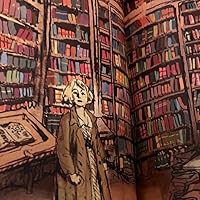
Dreams from Many Rivers is a middle grade nonfiction book told in verse that examines the history of Latinos in the United States. It is told in chronological order, beginning in 1491 and ending in 2018. Each poem is told in the voice of either a fictional or historical figure, and I feel this format worked really well to progress the history of the Latino people over time. In addition to the poems, there are so many beautiful illustrations interspersed throughout the book.
This book can easily be read in a matter of hours, so I recommend it if you’re looking for a quick glimpse into this particular area of history!
Just a couple of excerpts:
“Trading territories means exchanging one language for another.
Will it be possible for me to dream without my own familiar words?”
***
“My proud brown skin color from indios in my Mexican ancestry will determine my future — a voiceless life in this atmosphere of governmental arrogance, unless the laws are changed, and then enforced.”
Not my cup of tea. I borrowed this thinking I might learn something from it. It wasn’t long before I was sick to death of the constant whining, which was a HUGE distraction for me.
My first issue: “poetry” that has no hint of rhyming. Not for me.
Second: what I got out of it was that if you’re white or American you’re bad. The military is bad because when someone wants to kill you you’re supposed to feed and educate them, not defend yourself. Trump is bad because he wanted to build a wall to keep illegals out of this country. The Texas Rangers were bad because they were the law. Law enforcement and border patrol are bad because they deport illegals. White people are bad because they’re white. And on and on and on and on and on and on and on ad nauseam.
To be clear, I deplore racism in any form. I reject segregation of any sort. I believe a million percent in liberty for all, and I frankly DO NOT CARE what color anybody’s skin is. It doesn’t matter to me.
The parts of this that were true are a great blot on our national past.
However, this book was about as one-sided as it gets. I don’t believe the author even attempted to be objective.
To be perfectly honest, human nature being what it is, there will always be bigoted people OF EVERY RACE. The plain truth is that it doesn’t matter what the color of your skin is, at some point the ancestors of everybody who has ever lived suffered some form of injustice, racially motivated or not, and that is also true of just about every person alive. It will happen as long as people are people. Ever heard of poor white trash? Was that not a bigoted attitude? Black or white, rich or poor, educated or illiterate, SOMEBODY will always find SOMETHING to denigrate about others. I AM NOT DEFENDING RACISM. I am merely pointing out that the curse of slavery has always existed, and people of every skin tone have suffered because of it. There was nothing done in the American South that was worse than what the English inflicted upon the Irish, but we’re all just going to pretend that racism has always been solely white people mistreating black people? To quote the illustrious Biden: “Come on, man!” 😉
To be perfectly clear: I am not defending or excusing slavery of ANYBODY at ANY POINT in history, regardless of the color of their skin. Racism and slavery are always wrong. But at what point are we going to start being honest? At what point are we going to admit that there were black slave owners of white slaves? That whites have enslaved other whites and blacks other blacks since time immemorial? That racism and slavery are not a white problem, they are a human problem? This constant harping on a historical untruth does not help anybody.
This book, which started out in a rather promising manner, had me rolling my eyes, wincing at the sheer ridiculousness of some of it, and constantly checking to see how much of it was left.
Dreams From Many Rivers: A Hispanic History of the United States Told in Poems by Margarita Engle, art by Beatriz Gutierrez Hernandez, 198 pages. POETRY Henry Holt (MacMillan), 2019. $19.
Content: G.
BUYING ADVISORY: MS - ADVISABLE
AUDIENCE APPEAL: AVERAGE
Beginning in Puerto Rico in 1491, Engle uses many different voices - some historical, to show the relationship between history and the people who experienced it. The conquering of the indigenous, trading the islands as though they weren't independent countries, treating people who have lived in the US for generations like unwanted immigrants, splitting up families based on where they were born.
American History from the view of a marginalized community is an important topic - it's all about perspective. In school I only learned one story, it's time we heard about the others - the ones they don't teach about. Engle's short poetic voices are poignant, full of expression and heartfelt. I was reading about people rather than events. Well researched, includes an author's note with some source material. I'll certainly be featuring this title during Hispanic Heritage Month.
Dreams from Many Rivers offers only a bite-sized summary of each included event or subject, which makes sense since the book covers such a huge swath of time/history. I liked Engle's poetry, but her subjects were so interesting that I wanted more info.
My ideal book would be these poems set up as introductions to essays that cover each subject in more depth. I think this is one of those middle-grade books that is best suited for that age group—it works well to sow the seeds of interest in the subject.
Honestly, I don’t have words to describe how much I loved this book. I’m not exaggerating when I say I cried more than four times while reading and listening to the audiobook. This book was magic. It is a celebration of real history and the lost stories of brown people who have been so hidden by white-savior history. I need a physical copy of this book so I can post-it the heck out of it.
I got this as an audio and I think that was a mistake. As a collection of short insights into people from American history told from a Hispanic point of view, it probably works well. As poems, they dragged a bit. I thought the readers seemed a bit bored..