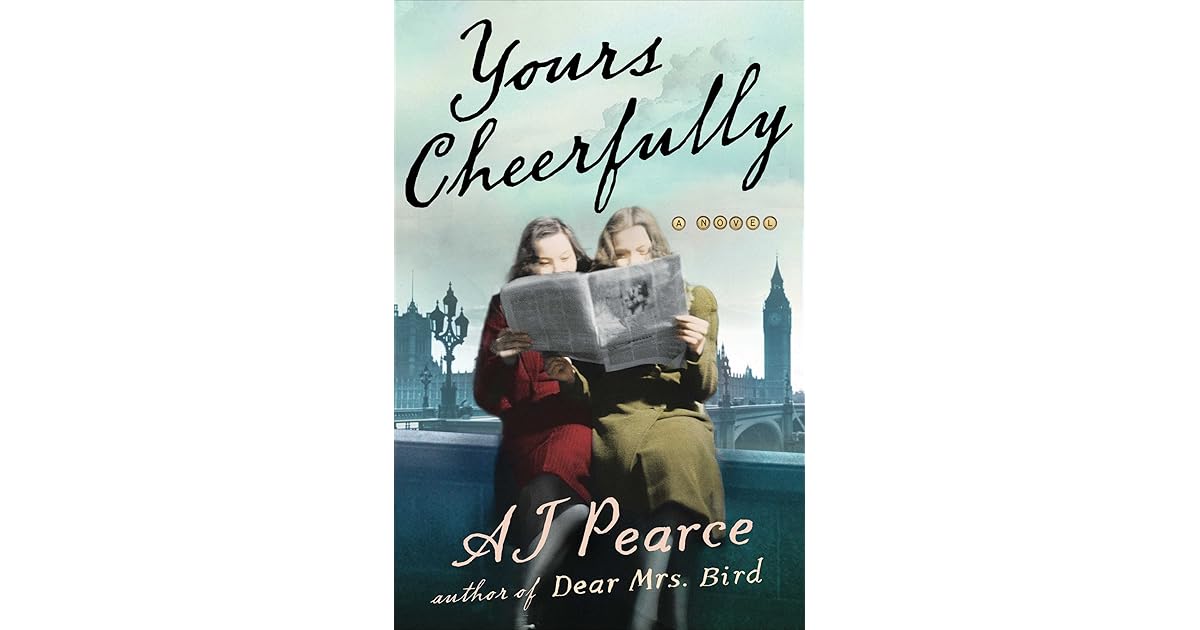
London, 1940. Emmeline Lake is Doing Her Bit for the war effort, volunteering as a telephone operator with the Auxiliary Fire Services. When Emmy sees an advertisement for a job at the London Evening Chronicle, her dreams of becoming a Lady War Correspondent suddenly seem achievable. But the job turns out to be working as a typist for the fierce and renowned advice columnist, Henrietta Bird. Emmy is disappointed, but gamely bucks up and buckles down.
Mrs. Bird is very clear: letters containing any Unpleasantness must go straight in the bin. But when Emmy reads poignant notes from women who may have Gone Too Far with the wrong men, or who can’t bear to let their children be evacuated, she is unable to resist responding. As the German planes make their nightly raids, and London picks up the smoldering pieces each morning, Emmy secretly begins to write back to the readers who have poured out their troubles.
Prepare to fall head over heels for Emmy and her best friend, Bunty, who are gutsy and spirited, even in the face of a terrible blow. The irrepressible Emmy keeps writing letters in this hilarious and enormously moving tale of friendship, the kindness of strangers, and ordinary people in extraordinary times.
AJ Pearce grew up in Hampshire in the south of England. She studied at the University of Sussex and Northwestern University. A chance discovery of a 1939 women's magazine became the inspiration for her historical series set in WW2, The Chronicles of Emmy Lake.
Funny, heartbreaking and always feel-good, if you're looking for uplifting novels about friendship and community, you've come to the right place.
You can find AJ on Instagram, FB and Threads @ajpearcewrites.
Dear Mrs. Bird (Dear Mrs. Bird #1) by A.J. Pearce (Author), Anna Popplewell (Narrator)
In preparation for reading Yours Cheerfully (Dear Mrs. Bird #2), I listened to the Dear Mrs. Bird audiobook. We follow Emmeline Lake through the perils of living in 1940 London. Everyone is hurting in one way or another. Bombs are dropping somewhere, every night. Food is scarce and everyone has lost someone they know. Twenty three year old Emma is doing her part of the war effort, working at her day job but also volunteering to answer phones at the fire station.
Emma dreams of becoming a lady war correspondent so she jumps at the chance to apply for a job at the London Evening Chronicle. In her excitement and over eagerness about the job she fails to ask any questions about it or really listen to what the interviewer is telling her so imagine her surprise when she gets the job and finds out it's not at all what she expected. One must go on, though, so she gets to work as a typist for the loud, brash, insensitive, overpowering, Mrs. Bird.
Feeling the draconian restraints that Mrs. Bird sets on the letters she will accept for her advice column, Emma chucks ethics to the wind and takes matters in her own hands with explosive results. But that's not the only part of her life that Emma demolishes. She's also fought with a good friend and has that weighing heavily on her mind. Everything is enhanced by all that living in wartime can bring to the table.
This story brings to mind black and white movies of old while overlaying the humor with the realities of WWII in London. Most of the characters are very likeable and funny, each in their own way. And then there is the sadness of seeing the bombed out buildings, knowing of the people who have lost friends and family, and not knowing when things will be over. I'm looking forward to reading the next book and watching Emma continue to navigate job and life in wartime 1941.
With a blend of lightheartedness and a dose of the heartbreaking reality of wartime, A.J. Pierce gives recognition to the women at home during WWII in this story taking place during the London blitz. Emmeline Lake’s lofty ambition to be a war correspondent isn’t meant to be when she finds out the job she applied for as a junior secretary for The Evening Chronicle was actually for a weekly magazine called Woman’s Friend, working for Henrietta Bird. She’s a straight laced advice columnist who will not respond to any letter that mentions: “Marital relations, Premarital relations, Extramarital relations, Physical relations, Sexual relations in general (all issues, mentions, suggestions, or results of), Illegal activities, Political activities and opinions (excl. queries regarding church groups and services), The war (excl. queries, regarding rationing, voluntary services, clubs, and practicalities) .” That is until Emmy decides to take things upon herself because she genuinely feels sorry for and wants to help these women who write in asking for advice that Mrs. Bird won’t think about giving.
This tribute to the the women remaining at home during wartime is not just reflected with Emmy who is also a volunteer with the Fire Brigade, answering calls each night as the bombings occur, but with those who lose loved ones, and those who write letters to Henrietta Bird seeking advice as they try to deal with their real problems. It also depicts what true friendship is about with Emmy and Bunty. It’s a quick read, funny and light at times, but sad and horrifying as we see the destruction and losses. A satisfying story I recommend.
I received an advanced copy of this book from Scribner through NetGalley and Edelweiss.
A fizzy, frothy little novel that takes place in London during WWII. That is, it’s frivolous until it isn’t. With bombings occurring nightly there is bound to be sadness and tears. The main character, Emmeline, is a shoe-in for Honeysuckle Weeks as Samantha Stewart in Foyle’s War. She has spunk to spare. Emmy lands a job and behaves in ways that are less than ethical despite her intention to be helpful. Filled with Britishisms of the 1940’s, I could have Done Without the capitalizations which I found patronizing and rather annoying. Otherwise this is humorous and enjoyable summer reading
Emmeline Lake takes the bus home from work carrying her handbag, gas mask, and an onion (for stew). She dreams of becoming a war correspondent or a journalist covering political intrigue. Discovering a newspaper ad for part-time work at The London Evening Chronicle, she believes the world is her oyster. Wrong! Part-time work will fit in with Emmy's job three nights a week as a volunteer telephone operator for the Auxiliary Fire Service. It is 1940. London is being blitzed regularly by the Luftwaffe. Emmy is dumbfounded when she finds out the job of her dreams is nothing more than a junior typist job. She has been hired to type responses written in a column of Woman's Friend Magazine. Cantankerous Mrs. Bird picks and chooses which letters are worthy of a written response in her column "Henrietta Helps".
Emmy has been hired to say nothing at all. Mrs. Bird maintains a list of "unacceptable" topics. Letters mentioning divorce, unhappiness and intimacy are among the unmentionables to be cut up and sent to the bin. But, war is hell on the home front,too! Emmy secretly decides to send kindly responses to women desperate enough to write in.
The gallantry of the Fire Brigade cannot go unnoticed. One evening, a fire blazes out of control in a building now teetering on collapse. Members of the Fire Brigade enter the rubble, pulling out a frightened little girl and her brother. Just seconds before total collapse of the structure, a fireman is pulled out with something shielded in a blanket. The little girl's doll.
"Dear Mrs. Bird" is a novel that runs the gamut of feelings and emotions experienced by our narrator, Emmy, in this work of historical fiction. Make no mistake, author A.J. Pearce, in her debut novel, possesses the gift of transporting us to wartime London. We are concerned for the well being and safety of its residents. "Dear Mrs. Bird" by A.J. Pearce is a lovely, heartfelt read that I highly recommend.
Thank you Scribner Publishing and Net Galley for the opportunity to read and review "Dear Mrs. Bird".
"Dear Mrs. Bird" by A.J. Pearce is a wonderful Historical Fiction story!
It's 1941 in London during the Blitz and bombs are dropped daily by the Luftwaffe. With dreams of becoming a Lady War Correspondent, Emmy Lake spots an ad for a part-time position at the London Evening Chronicle. Sharing this news with her roommate and BFF Bunty, both agree this is the job that's meant for Emmy!
Unfortunately, instead of accepting a job meant for her at the LEC, Emmy's discovers her position as a junior typist is with the magazine 'Women's Friend'. Her job is to screen all incoming letters to the advice column 'Henrietta Helps'. Sadly for Emmy, Mrs. Henrietta Bird is quite an old crotchety, quick-tempered, vociferous and set-in-her-ways sort of advice columnist. The Enforcer, so to speak!
Under the stern instructions of Mrs. Bird, Emmy is to ignore any letters containing unpleasantness. Letters with topics of divorce, unhappiness, intimacy and out-of-wedlock anything is to be placed in the trash immediately. Without exception! Mr. Bird's finds these unacceptable topics, from women who don't know how to handle their own lives, intolerable!
During a time when everyone is losing someone dear in their lives, how can Emmy ignore the outcry in these letters from those who need the most help? They are simply expected to stay strong and continue to live their lives under the most trying of times.
Emmy takes matters into her own hands and answers 'some' of the letters...on her own. It's a bit of an ethical breech and Emmy definitely crosses the line but she means well, right? Why shouldn't they get a little help through caring advice once in a while? What's the harm?
Oh, how I love this story! It is both sad and uplifting, with humor mixed in to help lighten what is easily a dark and disturbing backdrop: The Blitz. Realistic and tender moments have you reaching for a box of tissues through this sometimes humorous, yet poignant and heart-wrenching story.
With so many likeable characters, Emmy is definitely my favorite. She oozes enthusiasm, positivity and resilience even in the most difficult of situations. She's a young woman with hopes and dreams for her future during a time when so many have given up. What a beautifully written character!
Listening to the audiobook, rather than reading the words, brought this story to life for me. Narrator, Anna Popplewell did an amazing job as the voice of Emmy. Her voicing of all the characters was gender appropriate and the voice inflections reflected the many emotions that took place through the story.
The GREAT news is Book #2 in this series is due to publish on 8/10/21. I'll be reading the physical ARC soon. Be sure to look for my review next month!
4.5 stars rounded up! I highly recommend this book!
How did I miss this one when it first came out? I ABSOLUTELY loved this charming and "light" WWII novel. Although on the lighter side there were definitely some sad and emotional moments.
The lead character Emmeline (Emmy) takes on a job at a woman's magazine (mistakenly thinking she is working for the prestigious London Evening Chronical.) She begins working for the overpowering Mrs. Bird who is an old-fashioned advice columnist. Emmy must weed thru all the letters that Mrs. Bird receives and only narrow down the "acceptable" ones to answer. This is a hard thing for her to do!
I listened to this book and the performance was outstanding! Emmy and all her friends were very likeable. I just loved A.J. Pearce's writing style! I am very excited to read the second book now!
p.s. I really enjoyed the author's afternotes about how the old 1940's magazines gave her the idea to write this charming story!
When I was a boy and I would see scary things in the news, my mother would say to me, "Look for the helpers. You will always find people who are helping.” - Fred Rogers
All in all, this is a story about the helpers of World War 2 - amongst all the atrocities, there was a bit of light in those who came to the rescue of others.
The author drew inspiration for the book after finding an advice column in a women’s magazine from 1939 (love this so much!). AJ Pearce has done some beautiful justice to the people who had to experience the atrocities of the terrible bombings in London and the emotions they must have faced and the questions they must have had.
This is as delightful a book you will find that has a setting of a war. The characters are absolutely charming, you’ll be rooting for them all. And the language is brilliant - I absolutely loved the dialogue between the characters.
Definitely recommend!
A huge thank you to Picador Books for an advance copy. This book is currently available!
This was a light hearted romp in 1940’s London that centered around Emmeline (Emmy) Lake, a strong and determined young woman doing her part to help the war effort. Emmy finds herself employed as the typist for an eccentric and outrageous advice columnist, Mrs. Bird. While the job isn’t exactly what Emmy had hoped it would be, she puts forth her best effort and tries to help improve the columns dying fan base.
The novel gives interesting insight into a women’s side of the war effort. Women’s determination to stay strong and continue living their lives, all the while the horrendous wartime atrocities lingering in their minds. Their men gone to fight the brutal war with no end in sight, yet they continue on helping where they could while longing for their men to return home safely.
This was an entertaining story with likeable characters and witty humour. While I enjoyed the characters and their relationships, I didn’t feel completely invested in them or fully engrossed in their lives. It was more of a light, surface glimpse into their story without a true connection. The novel had a lot of sarcastic humour which had me chucking a few times, but for the most part, felt overdone. I enjoyed the advice column letters scattered throughout the novel and wished the story had a stronger focus on the column itself.
This was a Traveling Friends read. To find this review, along with the other Traveling Sister reviews, please visit our blog at:
DEAR MRS. BIRD by A.J. PEARCE was an absolutely wonderful, charming, fun, and for the most part an all around light-hearted read that immediately grabbed my attention and had me totally engaged right to the very end. Although there were definitely some very emotional, moving and heartbreaking scenes though that pulled at my heartstrings.
A.J. PEARCE delivers an intriguing and well-written tale here with very interesting, real, and loveable characters. The story was told from the perspective of Emmeline (Emmy) Lake and the setting takes you back to the streets of London during World War II. Emmy Lake was such a delightful and fun-loving character and I thoroughly enjoyed how optimistic, caring, kind and positive she was during such a heartbreaking time.
The storyline was extremely amusing at times and I thoroughly enjoyed the advice column aspects to it and everything that it entailed from the “inappropriate topics” to Mrs. Birds intense and no-nonsense character.
After reading the Author’s Note in the end and learning how the idea of this story began and that many of the letters in DEAR MRS. BIRD were inspired by actual letters and articles from wartime magazines always brings in another added layer to the story for me. So thought-provoking and touching!
Norma’s Stats: Cover: Somewhat intriguing, love the bright colors, the typeset and display of the title with the typewriter keys - very fitting! Title: Fits the story well and love how it also plays obscurely into the story. Writing/Prose: amusing, light, and empathically written. Plot: Engaging, steady-paced, held my attention and extremely enjoyable. Ending: Warming, touching, memorable and completely satisfying. Overall: An excellent, uplifting, delightful, and heartwarming read! Would recommend!
Thank you so much to NetGalley, Simon & Schuster Canada and A.J. Pearce for the opportunity to read an advanced copy of this book in exchange for a review.
I really expected and wanted to love this novel, as its main character is a young woman doing her bit for the war effort, during the WWII.
Unfortunately, I found it predictable, overwritten, over-explained, and, generally speaking, I found our heroine, Emmeline Lake, overbearing and too earnest.
Dear Mrs Bird should have been right up my alley and I was disappointed it wasn't the good lighter novel I was so desperate to find. I got bored and skimmed a lot.
I will say this, Dear Mrs Bird could easily be made into a BBC series, although come to think of it, there are plenty of similar stories that made it to the screen.
Quirky cast of characters... feisty courageous gals in wartime add charm to horrific true events during WWII.
Over 40,000 civilians were killed by Luftwaffe bombings during the war. Another 87,000 seriously injured... The Blitz was a German bombing against Britain in 1940 and 1941 during WWII. The Blitz was Hitler’s attempt to bring the British to their knees..... yet British ‘character’ and ‘women’ were underestimated. Hitler overlooked the countries secret weapon: the brave women who refused to give in. Women were true heroes... risking their lives, working, raising families in war zone.
Creating a ‘wartime romp’....out loud laughing...... with devastating nighttime bombings allowed me to think about the characteristics of the British....my appreciate of them. Brits that are tough as nails! Men and women. Ha... and to all my wonderful British friends on Goodreads... getting a glimpse of the history and culture—allows me a more clear window in ‘your’ British humor, strength, and loyalty.
Through the storytelling of “Dear Mrs. Bird”... ( funny & uplifting)....we see how many ‘young women’ found stoicism and strength they never knew they possessed during the war.
Camaraderie - joking - laughing - women friendships - and secrets - were tools of survival.
I like what this small book represents: ‘where there is darkness... lightness is nearby’.
The jolly spirit of AJ Pearce’s novel is a great tribute to the British women who didn’t have time to grieve. They rolled up their sleeves and did the right things to do.
This wartime tragicomedy is a darn good contribution to WWII stories. Jolly good fun - as the British might say. Another WWII war story reminder of things not to forget. 🇬🇧 👵🏻🧔🏼💕
This story shows us the rolls of women in wartime Britain during the early 1940’s. A young Emmeline, who works a couple part time jobs, one at the fire station to answer calls after bombs from Hitler go off on the city. She gets a third job at a newspaper in hopes of it being as a wartime journalist, but she is disappointed when it is to help out a Mrs Bird who writes an advice column to people who send in letters. This is also a story of friendship, and you get a good feel for what everyday life was like for the Brits in the city during WWll. This was just an ok read for me, I found myself starting to skim through several areas of the book.
Thank you to Netgalley and Simon and Schuster for the eGalley!
A charming story about Emmeline Lake who accidentally takes the wrong job.
I think Emmy's enthusiasm for becoming a reputable World War II correspondent clouded her understanding of the job description at the London Evening Chronicle. I loved her optimism and how upbeat she felt even after realizing she was only hired as a typist for a woman's advice column.
Her uptight boss, Mrs. Bird was anything but an endearing lady. She was overbearing and wanted Emmy to trash all letters containing what she perceived as "unpleasant" which turned out to be just the kind of problems that many were writing to her about. Emmy starts "secretly" corresponding to some of the letters flagged unpleasant by her boss and may have put herself in a bit of a pickle. So many laugh out loud moments in this book, even with the back drop of bombed out buildings and German raids. Emmy's contagious optimism and good heart had me cheering for her to the end.
You will enjoy this one, if you love heart warming stories full of humor and friendship. I absolutely fell in love with Emmy.
”We'll meet again Don't know where Don't know when But I know we'll meet again some sunny day Keep smiling through Just like you always do 'Till the blue skies drive the dark clouds far away
“So will you please say hello To the folks that I know Tell them I won't be long They'll be happy to know That as you saw me go I was singing this song” --”We’ll Meet Again,” Vera Lynn, Songwriters: Hughie Charles / Ross Parker
Overflowing with charm and humour, Dear Mrs. Bird is a treat as sweet as that favourite one your mother made specially for you, just the memory of it makes you smile. I laughed out loud, I cried, I fell in love with Emmeline Lake and her best friend, Bunty, and all of the people inside these pages.
Still, it’s not at all light and fluffy, as this begins in London in December of 1940, and there are bombings. People’s nerves are frayed more than a bit, but it seems Emmeline really wants to set the tone for all about her. Air raids abound, and buildings about are crumbling, but she keeps her focus on the positive.
Emmeline, Emmy is so determined to keep calm and carry on despite the war that’s going on, and so when she sees the newspaper advertisement on a day that she considers a cheerful day, despite the Luftwaffe’s bothersome presence creating delays for everyone and making people late for work, she just about bursts from the excitement she feels. She wants nothing more than to become a journalist, a Lady War Correspondent, she’s been dreaming of this for the last ten years of her life – which is almost half her life at her wizened age of twenty-two.
Emmy is offered the job she applied for, but it isn’t quite what she thought it would be. Instead of leading to a job as a Lady War Correspondent, she will be screening letters from readers of Woman’s Friend magazine, weeding out anything … unacceptable. Included in “unacceptable” topics - anything hinting at s-e-x, or socially inappropriate behavior, premarital, extramarital, marital “relations,” divorce or other unpleasant topics. She is to destroy any containing any “unpleasantness,” per Mrs. Bird’s rather firm directions. But she’s also been told to do what she can, as well as she can, and she can’t bear to let all of these letters go unanswered. It’s only one to start with, and she feels better knowing that the writer will feel heard.
I loved the colloquial expressions from another era, I loved the off-hand manner in which Emmy approaches things such as having to carry a gas mask along with her handbag, I loved her heartfelt desire to reach out to these women so they would know that someone out there cared. I loved Emmy for having the best intentions. I loved that there was a deeper, darker story underneath the light and sweeter exterior. I loved reading about the changing issues of the day through these letters, seeing women reaching beyond the lives they thought they were destined to live.
Most of all, I loved the perfectly imperfect Emmy.
The idea, inspiration, for this novel came from a 1939 women’s magazine that the author, A.J. Pearce, came across. Inside was a peek into women’s lives in another era, another way of life. Reading the letters on the “Problem Page” which ranged from what to do if you have freckles to how to deal with rude people in public. An idea was born, and a very entertaining debut novel is the result.
I never tire of World War II fiction. I say it in many of my reviews, but for posterity, my late grandparents were young people in the 1940s. Both grandfathers fought in WWII, and I feel like I can visit this time with them through books.
So how does Dear Mrs. Bird eke out a name for herself in a sea of WWII reads? The answer: with humor and finding joy even amid the most turbulent times.
It is 1940 in London, and adorable and lovable character Emmy Lake is seeking the job of her dreams, war correspondent. She has her hands full as a volunteer telephone operator with the Auxiliary Fire Services and her unfulfilling current job. She finds an advertisement in a magazine that may be the ticket to her next career.
Emmy takes the job knowing little about it and finds herself a typist to an advice columnist, Mrs. Bird. Emmy needs the job, so she perseveres. Mrs. Bird is a strict enforcer of her rules, and the primary one is that no unpleasant letters will be addressed in the column; however, Emma finds this impossible to follow. Her heart opens up when she reads the words of these women, and she feels their loneliness, longing, and pain.
With nightly bombings and a war at happening all around her, Emmy writes these women back on her own.
As if you could not tell already, Emmy is a character to adore, as is her endearing best friend, Bunty. Dear Mrs. Bird is about true friendship, warmth, and generosity, in the most frightful and horrendous of times. It is a charming and uplifting read.
Thank you to Scribner for the ARC. Dear Mrs. Bird is now available!
3*** This book is heartwarming and mostly uplifting, set in the grim times of the blitz. It pays homage to the women who volunteered and tried to go about their daily lives in London during WWII.
Emmeline Lake is an ambitious young woman with her own desire to be a war correspondent, especially when a junior secretarial job opens up at The Evening Chronicle, she believes she is on her way to achieving her dreams. However, what she has actually applied for is Woman's Friend, a different magazine, and is to be working on the problem page under Henrietta Bird. Mrs Bird is hard-laced and won't respond to any letters containing 'UNPLEASANTNESS'; Marital relations, Premarital relations, Extramarital relations, Sexual relations in general, Illegal activities, Political activities and opinions, The War. Emmy feels sorry for these women whose letters are often thrown away, so she takes it upon herself to help them and responds.
This book does a brilliant job at honoring those who decided to stay in London during war time. This is not only shown through Emmy (who is a volunteer and answers calls for the Fire Brigade should bombs be dropped), but also through the men who stayed behind in the fire service to help, other women volunteers, those who experience loss and fear from experiencing the blitz, and the women who write in to Mrs Bird who are dealing with every day problems. A.J. Pearce does a fantastic job at including how there were still real life problems (affairs, love interests) suffered by women throughout the war, and this is often overlooked. I can't even imagine the struggle of trying to go about your daily duties and experience love and family etc., in the back drop of trying to find shelter from bombing, losing friends, witnessing horrific events and rationing. This book also shows what a true friendship is like through the best friends of Bunty and Emmy as they try to navigate their lives through the war.
This was wonderfully warm and uplifting, with bravery and friendship at its forefront, giving a voice to a woman's story during WWII.
Set in London in 1940, the story relates the war time experiences, trials and tribulations of Emmy Lake and her best friend Bunty.
This is a delightful and often very funny book mostly due to the very entertaining characters. I very much enjoyed the descriptions of London during the Blitz and the way the people carried on regardless and helped each other cope in the face of terrible difficulties. Eventually of course these difficulties arrived at Emmy and Bunty's door and then I reached for the tissue box.
A most enjoyable book - a light read but well written and full of little historical details.
Dear Mrs. Bird by A. J. Pearce is a World War II novel that revolves around letters. The main character, Emmaline “Emmy" Lake spends a great deal of time reading and writing letters. These letters show the mindset of so many affected by the strain of living during a war. Emmy wants her letters to be friendly and positive, but occasionally she must tell her true feelings. The novel also focuses on the spirit of the English people during the war. There are many ordinary people who rise up to do extraordinary things.
Henrietta Bird is the editor of Woman’s Friend magazine and is in charge of answering questions sent in by readers for the problems column. Unfortunately, she is as charming as an ogre when it comes to answering any “unpleasantness”. While Mrs. Bird’s moral high ground was popular during World War I, it hasn’t kept up with the times of World War II London. When Emmy mistakenly steps into the job as the assistant to Mrs. Bird, she is overwhelmed by some women’s desperate pleas. Instead of following the instructions to tear up the unsuitable letters and throw them in the bin, Emmy decides to write back to some of those who included return envelopes. She feels compelled to be a friend to those facing challenges. Since Mrs. Bird doesn’t actually read the magazine, Emmy gets brave and inserts a couple of the letters into the column.
Emmy lives in London with her best friend Bunty. Bunty is appalled when Emmy mentions writing the responses and tells Emmy to stop. Later, when the Cafe de Paris is bombed on March 8, 1941, Bunty and Emmy have a major falling out over Emmy’s treatment of Bunty’s fiance. Emmy doesn’t want to give up on the friendship and writes letters to Bunty every day. When Emmy’s letter writing to the magazine subscribers is discovered, she gets help in an unexpected manner that helps save her job.
4-Stars. Book club recommended. Dear Mrs. Bird (The Emmy Lake Chronicles #1) was published on July 3, 2018. I read the Kindle version which is a quick read at 288 pages.
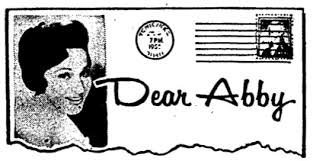
Back when I lived in another century and received daily newspaper delivery, I would read Dear Abby and Ann Landers’ columns. They were such a part of the American cultural landscape for decades. Unlike Mrs. Bird, these two sisters were not afraid to take on any type of question. One of my favorite responses was:
Dear Abby: My boyfriend is going to be 20 years old next month. I’d like to give him something nice for his birthday. What do you think he’d like? —Carol
Dear Carol: Nevermind what he’d like, give him a tie.
I’ve been meaning to read this, but getting the second in the series (Yours Cheerfully) through NetGalley bumped it up my TBR queue. This is a moving story about a young woman in London during WWII. Emmeline is so anxious to get a job as a junior journalist at a newspaper that she fails to truly read the help wanted ad or ask the appropriate questions at her interview. Which is how she comes to be a secretary for Mrs. Bird, the advice columnist for a failing women’s magazine. Mrs. Bird, being of the old school, has a whole list of topics she considers off limits. It pretty much includes anything to do with relationships of any ilk. But Emmy can’t bear to see those letters destroyed and begins to answer them clandestinely. I did feel the book would have benefited from more editing, as it was repetitive in the beginning. But overall, it does a great job of capturing the wartime experience of London during the Blitz. Some of the scenes were just horrible and heartbreaking. I loved that this shows that not all the heroes were in the armed forces. To be honest, what started off as a pretty light story started hitting a lot of emotional keys for me as it went on. I’ll admit to shedding a few tears. Anna Popplewell totally expresses the youthful energy of Emmy and the emotion of every scene.
Norma, Lindsay and I read Dear Mrs. Bird with our Traveling Friends and we all were immediately drawn into this charming, heart-breaking and heart-warming story. Things start off chirpy when we first meet ambitious, chipper, and optimistic Emmy and we were drawn into the hilarious misunderstandings, witty dialog, meddling characters and refreshing lighter tone to the story.
A.J. Pearce does a great job giving a voice to the women at the home front though letters to an advice columnist. We see how women put on their smiley face and tried to find a new normal during the London Blitz. We admired Emmy’s compassion to reach out to help these women find that new normal. Soon reality catches up and things start to turn darker as they start to see death and destruction around them. The story takes on a darker tone and we didn’t except it take that turn so quickly and would of liked the pacing a bit better for that.
The ending wraps up well and in even with the darker parts to the story it still remains an uplifting and charming story that really highlights the strength of these women!! We recommend!!
Thank you so much to NetGalley, Simon & Schuster Canada and A.J. Pearce for the opportunity to read and review an advanced copy of this book.
An utterly charming book, with a tear and a smile, and a fun story too! 'I say old chap', Emmeline Lake is one feisty and courageous young woman indeed! Entertaining and fun, while also heartbreaking, this quick read and therefore four shining stars! More to follow as usual, recommended.
Emmeline Lake and her friend, Bunty, live in London. It is 1940 and the Germans are making rather a nuisance of themselves, but neither are downhearted. In fact, Emmy has big dreams of being a Lady War Correspondent and, when she sees an advert for part-time work at the London Evening Chronicle, she writes off with high hopes. However, before long, she realises that her Enthusiasm (there are a lot of Capital Letters in this book) has meant that she has rushed in without thinking. Rather than finding herself on the first rung of the ladder towards journalism, she is stuck typing up letters for agony aunt, Mrs Bird – who runs the ‘Henrietta Helps,’ column for “Woman’s Friend,” a magazine, which shares nothing with the London Evening Chronicle, other than offices in the same building.
To be honest, when the first question at her interview was, “are you easily scared?” Emmy should have been fore-warned about her new employer. Apart from shouting a lot, Mrs Bird does very little. She does, however, insist that letters which refer to any kind of Unpleasantness, are thrown in the bin. Such unacceptable topics include marital relations, pre-marital relations, extra-marital relations, physical relations, politics or illegal activities. Before long, Emmy, bemoaning the fact that the agony column is not really helping anyone, begins to answer the letters herself…
This debut novel is funny, moving, charming and paints a wonderfully evocative portrait of wartime London. As well as telling a story with great humour, the author also shows how the war caused all kinds of social, and personal, upheaval. Although Mrs Bird’s advice was that everyone should Buck Up and Get On With Things, these unprecedented events did mean that life was, largely, thrown into disarray for most of the inhabitants of the country. She also shows the bravery of those on the Home Front, who faced the bombings, upheaval and shortages with fortitude and a complete inability to accept that things would not work out in the end. I adored this novel and received a review copy from the publisher, via NetGalley, for which many thanks are due.
I love it when an author writes in an honest, true voice. This is, in equal measures, a laugh-out-loud and grope-for-your-hanky story that will have you glued to each well-written page.
The first two chapters inundated you with all kinds of description and information, but, for me, the rest of the novel just zoomed by at a breathless pace. Talk about action-packed! I really cared about the characters and admired Emmeline Lake for setting aside her fears out of a true desire to help her fellow country-women.
Poor Emmeline may have made a mess of things, but her heart was in the right place. Although I am not a fan of sequels (they seldom live up to the first book in the series) I truly hope that A.J. Pearce let's us know how Emmeline Lake fares during the rest of the war. I was so glad to read that a TV movie or series based on this novel is in the works. I highly encourage everyone to read this very heartwarming, endearing story. I was downright entertained! I'd have given this six stars if I could! P.S. The sequel: Yours Cheerfully! will be out very soon. I just got an ARC of this book and and going to try to read it this weekend. Can't wait!!!
Sometimes no matter how much you try to convince yourself that you are going to love a particular book, it just does not happen the way you planned. Such was the case with Dear Mrs. Bird.
I was so looking forward to reading this book for it had all the elements of a story I would adore. I love books about the trials and difficulties many experienced during the war, as well as a view of London at that time. Typically, this book should have fulfilled my desire for a wonderful read and yet it fell somewhat short for me.
There were parts of it that I so enjoyed, the descriptions of the devastation of the London blitz were fascinating, as well as often touching at one's heartstrings. However, much of it seemed a bit repetitious and the characters did seem slightly one dimensional, although at times I did enjoy Emmy's plucky nature.
Emmy Lake wanted to be a wartime journalist. She is young a, mere twenty three, and has her heart set on a goal. She acquirers a position at a run down magazine thinking she was on her was to the career of her dreams. However, that was not to be as she becomes a part time helper to Mrs Bird, a cantankerous woman, who writes a kind of advice column where one can only ask proper questions. Emmy ensnares herself into reading the letters and eventually becomes Mrs Bird. Of course the inevitable happens and as she, her best friend, Bunty, and William, Bunty's fiance, encounter the ravages of war. A horrible event befalls the characters and Emmy blames herself for the tragedy. This was a weak point in the narrative as one could easily see that Emmy bore no responsibility for what occurred.
Be that as it may, and with the reservations I had about the connection that the author was able to make, I did like the book. I realize that this was a debut book for this author and I think as she gains experience, she will turn into an excellent historical fiction writer if she chooses to pursue this genre. This was definitely a lighthearted look at a very serious heavy topic. Recommended for those who like a book with likeable characters and is quick to read.
Thank you once again to my local library for having a copy of this amusing story available to this reader.
This is a spot on rendition of World War 2 London with bubbly, infectious characters in the two young women, Emmeline Lake and her best friend Bunty. The keep calm and carry on attitude of the British is in full force and the era is invoked quite masterfully. I fell in love with Emmy and I haven't felt that way about a person in a book in a long, long time. She is a truly kind person and wants the best for everyone she loves and humanity in general. Emmy is decent, generous, and brave, but is a bit wrongheaded some times which gets her into heaps of trouble.
Her friend Bunty tries to keep her on the straight and narrow, but finds it a heavy task. This is war time London and truly horrible things happen which threaten to dim Emmy and Bunty's light. Emmy and Bunty carry on though, wiser and sadder, but stronger. This is such a lovely book, even though I cried three times, I couldn't recommend it more. Brilliant, ebullient debut!
In many ways this was a quick, light read based on the experiences of a young woman employed to assist a lady writer put together her Agony Aunt column for a weekly magazine during the London Blitz. But there was also a darker side with nightly bombing causing death and destruction and women struggling to terms coping with the changes to their lives brought on by the war.
Emmy Lake thought she was applying for a job as a lady war correspondent and only after she started work realised she'd be working for Mrs Bird, a rather stuffy, forbidding writer opening the letters to the magazine and typing up responses. However, Emmy is a girl who always looks on the bright side of things and thinks she can still do her bit for Britain by giving advice in these difficult times. Unfortunately, Mrs Bird refuses to answer any letters dealing with "Unpleasant" matters (such as premarital sex or pregnancy with your fiance who is being posted to the front line or falling in love with a foreign airman). However, Emmy feels these sorts of letters are from women who most need their help and instead of consigning them to the bin as instructed she starts to write back to the most desperate.
While often light and fluffy in tone, the novel succeeds in giving the sense of what it was like for young women to live and work in London during the blitz. To try and get on with life and love, keeping a stiff upper lip and doing your bit, while facing daily danger and the loss of those close to you. An enjoyable and entertaining read but maybe not as engaging as I expected. 3.5★
I was not very keen on this book initially but then I always hesitate to pick anything related to WWII as most of them are about spies, holocaust and so. Its not like I don't appreciate them, its just that they seem same story with new characters. So this was a fresh breath of air as this story has its tragedies and yet it succeeded in telling us about people who stayed behind.
"The day we stop caring or showing we are human is the day we might just as well give in."
Our heroine took care of others in a strange way but then sometimes all you need are few words of sympathy and courage to move forward. To tell its okay to make mistakes and learn from them, to tell loved ones what they mean to you, to tell its okay to accept that you're in wrong.
It had its flaws but it was charming, fun, and uplifting.
Dear Mrs Bird is set in London during the Blitz, a German bombing campaign against the United Kingdom in 1940 during World War II. It is sobering to read about Londoners being subjected almost every night to air raids that set their homes on fire. Houses were reduced to bricks and glass; buildings disappeared; roads were bomb-cratered; lives were maimed or lost. On the domestic front, securing an onion to make a stew was a cause for celebration. I appreciated how there was a healthy dose of realism in this novel.
Given the context in which the novel is set, I was pleasantly surprised to find it a highly entertaining and enjoyable read. One does not lose sight of the war, but the overall tone is light and even humorous. Bombs are dropping everywhere but the people continue to find pleasure in going to the cinema or a dance. There is a jollity that is comforting and uplifting.
What lends this book its hilarity is its spunky heroine, Emmeline (Emmy) Lake, a 23-year-old aspiring journalist who muddled her way to a typing job in “Woman’s Friend”, a magazine, thinking she has landed a job with the London Evening Chronicle that will bring her a step closer to becoming a Lady War Correspondent. I shared her dismay when she found out that her job is merely to type letters from readers who write to the Problem Page, an Aunt Agony type column helmed by the austere Mrs Henrietta Bird. Mrs Bird has very strict, no-nonsense guidelines on the kinds of letters deemed ‘Acceptable’ to warrant a reply. Letters that carried words or phrases, such as ‘affair’, ‘amorous’, ‘ardent’, ‘bed’, ‘bedroom’, ‘Berlin’ are all to be cut up and destroyed. It is war time and women are struggling with emotional losses and quandaries about courtship, love, marriage, separation, and a whole host of moral dilemmas. Genuine concerns. No reply or counsel, however, is forthcoming from Mrs Bird except stern chastising for what is assumed to be the woman’s fault or a brusque command to be brave, keep calm, and carry on. Mrs Bird is a queer bird indeed. Poor Emmy feels sorry for many of the readers. She identifies especially with the young women on the threshold of some foolish decision and who could be properly guided. Her general good sense, however, is matched by youthful daring, and the stage is set for some reckless ‘journalism’ at ‘Woman’s Friend.’
What is lovely to read, too, is Emmy’s relationship with her best friend, Bunty, with whom she shares a flat. There are no secrets between them except how Emmy is actually doing her job at ‘Woman’s Friend.’ Both ladies have their beaus and plans for marriage, and we share their dreams and hopes. But as one of the chapter titles proclaimed, “War was foul” and that foulness led to some of the saddest moments in this otherwise happy and funny book.
In her author’s note, AJ Pearce let on that Dear Mrs Bird‘ was inspired by a chance discovery of a 1939 women’s magazine. In her own words, ”Many of the readers’ letters in Dear Mrs Bird were inspired by the letters and advice, articles and features printed in those wartime magazines. I found them thought-provoking, moving, and inspirational, and my admiration for the women of that time never stops growing." It was interesting for me to catch a glimpse of what life was like for women in those troubled times.
This debut novel should be lauded for its juxtaposition of joy and sadness, hilarity and heartbreak during some of the darkest days in history.
It’s London, World War II and Emmeline Lake dreams of being a war correspondent. Unfortunately, she has no experience as a journalist and no newspaper will hire her. Finally, she gets what she thinks is her big break, only to have it turn out to be an assistant job to Henrietta Bird, the advice columnist for a women’s magazine.
Henrietta Bird is what is politely called a formidable woman. Her values and outlook are 100% Victorian and she doesn’t tolerate anything that may be even remotely controversial or unpleasant.
The war has brought new problems to women on the home front and Emmeline is touched by the letters from unhappy, confused and desperate women. Increasingly frustrated with Mrs Bird’s refusal to help these readers she makes the decision to take matters into her own hands; answering letters on the sly.
The book is well researched with the exception of a scene where Emmeline and her friend feed bread to birds in the park. During the war, although not rationed, bread became precious and feeding it to birds or other animals became an offense. There are court records of people being fined for doing so. I find it unlikely that the girls wouldn’t have known this or would have taken the chance of being caught doing this in the middle of London.
Dear Mrs. Bird is an intriguing tale that takes you back to the streets of London during WWII and into the life of Emmeline Lake a cheery, optimistic, young woman who after finding herself inadvertently working on the advice column for Woman's Friend magazine takes it upon herself to begin secretly doling out guidance to those on the home front seeking advice for "inappropriate topics".
The prose is comical and light. The characters are plucky, sympathetic, and real. And the plot is an engaging, perfectly paced tale about life, loss, self-discovery, friendship, tragedy, heartbreak, uncertainty, hilarious misunderstandings, good intentions, meddling, and the realities of war.
Overall, Dear Mrs. Bird is a delightfully heartwarming, wonderful debut for Pearce that does an exceptional job of highlighting the incredible impact war had on the personal lives of those it touched both at home and away and the significant roles and contribution of women during those dark times.
Thank you to Simon & Schuster Canada for providing me with a copy in exchange for an honest review.



 Book #2 in this series is due to publish on 8/10/21. I'll be reading the physical ARC soon. Be sure to look for my review next month!