Nella Finestra sul cortile, tra i film più celebri di sempre e grande metafora del cinema, il protagonista Jeff, interpretato da James Stewart, spia i vicini dal suo appartamento, fino a imbattersi nei segni di un omicidio. Per Victor Stoichita, uno degli storici dell'arte più autorevoli dei nostri giorni, il personaggio di Hitchcock, voyeur e detective al tempo stesso, incarna le caratteristiche dello sguardo con cui le arti visive, fin dall'avvento dell'Impressionismo, sembrano chiedere di essere osservate. La potenza del «gioco della rappresentazione» chiama lo spettatore, proiettato in un mondo di ostacoli e incertezze, privo di una storia immediatamente leggibile, a farsi Sherlock Holmes, per orientarsi nell'affascinante, densa coltre delle interpretazioni possibili. Fu la «Nuova pittura» impressionista a mettere in luce l'importanza di ciò che nel dispositivo del quadro si sottrae all'osservazione, è fuori campo, nascosto o troppo piccolo per essere visto. Da allora, l'immagine artistica appare di frequente come un «luogo del delitto». "Effetto Sherlock" è dunque un dittico: la prima tavola è consacrata alla rivoluzione dell'esperienza visuale portata in particolare da Manet, Degas e Caillebotte; la seconda esplora - attraverso capolavori quali La signora scompare e La finestra sul cortile di Alfred Hitchcok e Blow Up di Michelangelo Antonioni - la capacità dell'arte cinematografica di realizzare esperimenti sullo sguardo e di proporre uno «spettacolo ottico». Che si parli di pittura, cinema o arte contemporanea, l'«effetto Sherlock» non è allora che l'esercizio intellettuale della rivelazione. Ma se i romanzi gialli si concludono con la vittoria indiscussa della ragione, per Stoichita davanti all'immagine nessun mistero può essere definitivamente risolto. Pur con questa consapevolezza, però, non possiamo non farci investigatori: solo grazie al nostro sguardo indagatore l'arte acquista profondità e senso.
Victor I. Stoichiță is a Professor of the History of Art at the University of Fribourg, Switzerland. He is the author of "A Short History of the Shadow" (Reaktion, 1997) and co-author of "Goya" (Reaktion, 1999)
The first part of the title could be the idea of the editor; the second part corresponds better with the subject of the book. Or I ought to say, the subject of the six essays contained in the volume. For what concerns Stoichita here is the act of looking: both in paintings--mostly Manet and Degas, but also Caillebotte and Magritte--, as well as in film--mostly Hitchcock and Antonioni.
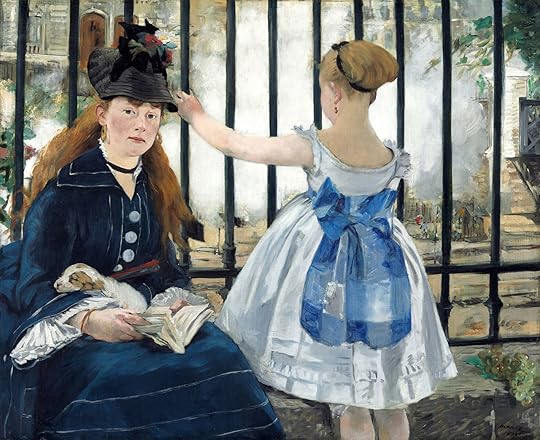
Stoichita's very engaging writing, with sentences as clear as a drop of clean water, as sharp as knife's edge and as effective as a bell ring, presents no obstacles. Obstacles, however, occupy his first chapter. Those obstacles introduced by painters who want us to look, but not always see, what they have painted. Manet excelled in this, as his misnamed (as misnamed as this collection of essays), The Railway, in which we see many things, except the railway. What we see is the white steam and the iron grid and the girl who tries, as we do, to see what is behind the steam - to no avail.
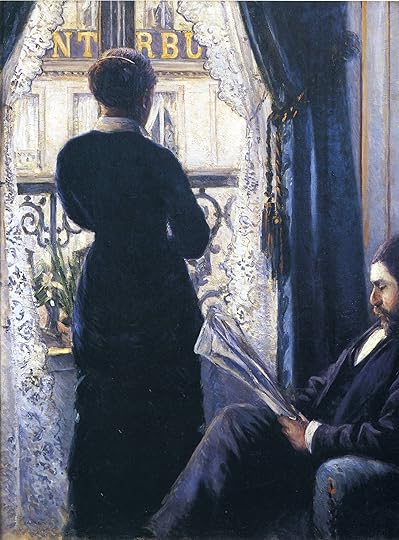
In the Visual Intrigue we are reminded of the Albertian window but of the plays that Caillebotte unfolds with his window paintings. What can be read - not the newspaper the concentrated man holds in front of him - nor the lettering on the facade across the street. And then curtains, in thick velvet and embroidered, and no longer transparent, veil, as well as the window panes and the balcony rail, constitute again obstacles for the lady who is looking at the lady who is looking back at her. Mirror-like then.
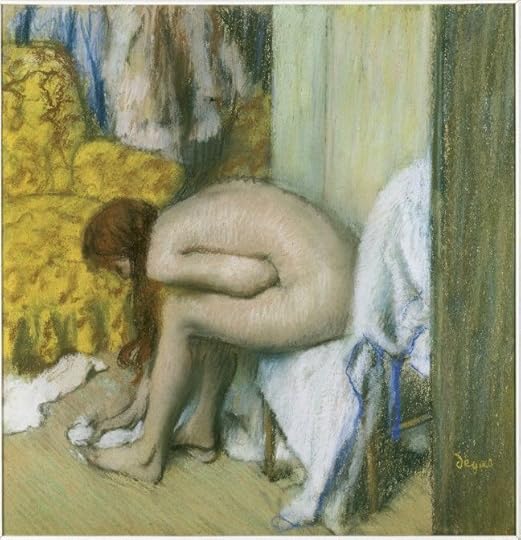
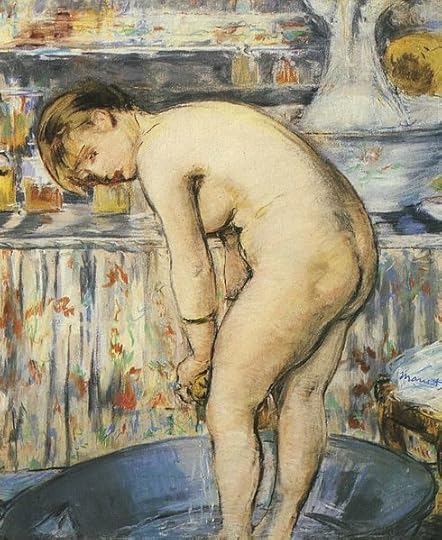
Then he compares the incomparable, and my two favourite painters, Manet again and Degas. And he does this with the self-portraits. In front of a Manet, the onlooker feels that he/she is being observed while Degas makes us feel that nobody notices that we are looking on. This is even more clear when the subject is a woman without her clothes on.
Inevitable that Manet's version of a Degas had to have the woman turn to face us. The scene changes entirely.
Ai zice, observand arborescenta celor trei studii ale cartii, ca Stoichita se pierde in digresiuni si propuneri pentru piste de sugestie. Adevarul este insa acela ca ascutimea ideilor sale si consecventa cu care trateaza fiecare posibila interpretare sunt deopotriva captivante si revelatoare de sens. 4,3/5
“El efecto Sherlock Holmes” es un interesantísimo ensayo sobre la tematización de la mirada en el arte pictórico y cinematográfico. El comienzo es absolutamente subyugante, ya que nos introduce en los hábiles recursos que se dan en la pintura para manipular el recorrido de la mirada del espectador, al tiempo que convierte la mirada misma en un tema y en un punto de interés.
Una primera parte del libro se dedica a la “nueva pintura” (de Manet y su tiempo), y al modo en que una serie de ingredientes pictóricos ocupan la superficie del cuadro animando al observador a permanecer indagando en él.
Una segunda parte, especialmente fascinante en lo concerniente a Hitchcock, se centra en unos cuantos ejemplos de la tematización de la mirada en el cine. Sin lugar a dudas, los párrafos más interesantes me los ha dado la parte en que desglosa el interés conceptual de “La ventana indiscreta”, una de las películas míticas del cineasta inglés.
Tre stelline perché manca un'introduzione o prefazione che introduca il tema e perché il sottotitolo (Storia dello sguardo da Manet a Hitchcock) è ingannevole. Non si tratta infatti di un saggio sulla storia dello sguardo, bensì di una dissertazione sulla tematizzazione dello sguardo e la ricerca visiva nell'arte, in particolare pittura e cinema, da parte di alcuni artisti, tra cui appunto Manet e Hitchcock. Si passa quindi dalla pittura moderna al cinema, oltre a Hitchcock viene analizzato anche Antonioni, senza un apparente filo logico. A parte questi difetti sulla composizione del saggio, la scrittura è ottima e scorrevole, e l'autore offre vari spunti di riflessione (almeno per me che non ho studiato queste cose). Per interesse personale ho preferito la parte sul cinema, però ogni capitolo è analizzato nel dettaglio. Consigliato a chi, in un mondo di parole, vuole scoprire un nuovo modo di vedere le cose.
Sobre la reflexión de la historia de la mirada desde la perspectiva ecléctica de un historiador de arte. Lleno de ideas interesantes para complementar los textos clave de Bazin, Bonitzer y Aumont. En lo estrictamente cinematográfico flaquea un poco.