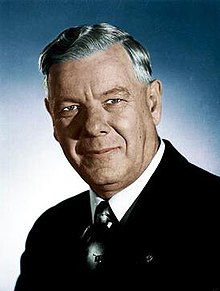
In the South African House of Assembly, on 6 September 1966, Dimitri Tsafendas stabbed to death Prime Minister Hendrik Verwoerd. Afterwards, Tsafendas was declared to be a schizophrenic who believed a tapeworm lived inside him which controlled his actions, and that he had no political motive for assassinating Verwoerd. Pronounced unfit to stand trial, Tsafendas went down in history as a deranged parliamentary messenger. For fifty years, this story prevailed. However, this book now reveals the truth about Tsafendas; that he was deeply political from an early age. He was arrested numerous times, starting in Mozambique, the country of his birth. In Portugal, the security police opened a file on him in 1938, when he was aged only twenty. After the assassination, Tsafendas volunteered a series of incontestable political reasons for killing Verwoerd, but these, along with details of his political past, were never allowed to see the light of day. This book reveals the extent of the cover-up by South Africa's authorities and the desperate lengths they went to conceal the existence of Tsafendas's opposition to apartheid. The book exposes one of the great lies in South African history, that Verwoerd was murdered by a mad man. It also offers for the first time a complete biography of this extraordinary man. Advocate George Bizos characterised Dousemetzis's work on Tsafendas and Verwoerd's assassination as 'monumental' and of being 'of major historical importance for South Africa and as to our understanding of Verwoerd's assassination'. Professor John Dugard, Judge ad hoc at the International Court of Justice in The Hague, said 'South African history should know the truth about Tsafendas. Dousemetzis has done South Africa a service by correcting the historical record.'
Story time. So I was standing in the queue at the post office. The man behind me peeped around me to see who the cashier/post office worker was. Or rather, as I discovered, what his race was. The lady behind him says hoekom kyk jy so om die hoek? [Why are you peeping around the corner] and he says Ek wil sien watter tiepe mens is by die toonbank [I want to see what type of person is behind the counter.] All these white people laugh, the three of them. Everyone else sneers at them, and so do I. The lady behind the counter stares at them. The perpetrator of the joke looks at me expectantly. I glare, and told him to stop being a racist. He starts mumbling to me about betraying my race. I roll up my sleeves, he sees my tattoos and grunts in disdain. I just laughed.
So when I get to the counter, I approach the lady. I'm nice to her. I ask her how her day has been, and she says it's been pretty busy since everyone is coming in for late license renewals and want to avoid extra payments. I tell her You're good at your job, I can see that. Their type always try to get to you, don't they? She laughs, smiles and nods. I pay for my car license renewal and go home.
What asshats. So - my question is, when Dimitri killed the man who decreed Apartheid would be instated, was he justified? I'm not saying he was or wasn't. But you know what, maybe I am. Because this racism that persists in this small pocket of indoctrinated white people who produce racist offspring are still at it - they still treat Black, Coloured and Indian people like crap.
I could list a number of reasons of why someone should read this book, but if I'm to keep it short I would say: A well written, easily read, political thriller / biography, that shows how one person with high moral values and guided by his revolutionary ideas, would fight everyone (from State mechanisms to his own family) and do everything in his power to eliminate injustice - no matter what the cost. Last but not least, an insight on how dictatorships (officially recognized or not) work. In this political "decadence" that surrounds us and the so fashionable "self love", advertised by many as an excuse for our limitless egoism, this book is a must!
If I was to choose a quote for it, it would be the following:
“Above all, always be capable of feeling deeply any injustice committed against anyone, anywhere in the world.” - Che
I found this book very enlightening from a political and historical perspective as well as a biographical perspective. I can't help feeling that Tsafendis was sacrificed at the altar of reconciliation as SA marched into its new era of democracy.
Objectively researched, but compassionately written, this account gives perspective on the motivation of a man who was portrayed as insane by those whose purpose it served. An insightful read.
I have been really gripped by this book that I found hard to put down. Excellent and compelling insight on Tsafendas’s life and Verwoerd’s assassination. Extraordinary research by the author and a must read for anyone interested in apartheid. “Tsafendas did what he considered to be his duty towards South Africa; let us hope that one day South Africa will do its duty towards him.”
Great book, facts ahead of opinion and it’s up to you whether you consider Tsafendas an apartheid hero or a lunatic. I for one consider him a hero, not because he murdered a human being, but because he was disgusted by apartheid and tried to stop it in a way he saw fit.
Love it, the best book I've read in years. A really outstanding political thriller and one of the most important books ever written about South Africa and apartheid.
Incredibly good and compulsive read. A gripping, fast-paced tale, definitely worth the read. I would strongly recommend it to anyone with even a slight interest in history or apartheid.
A stunning marshaling of research into a fascinating figure. It is also very well written. My sole concern is bias, in that the book is so desperate to pay homage to Tsafendas' genius and sanity that it sometimes seem to gloss over his clear foolishness and madness (whether or not he had a literal tapeworm delusion).