

What do you think?
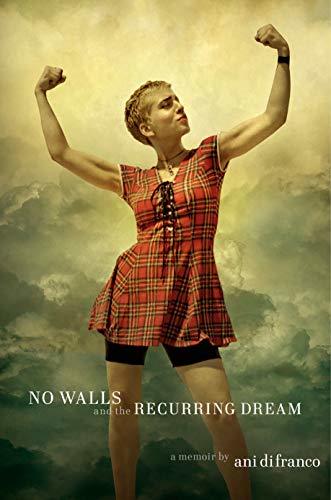
No Walls and the Recurring Dream: A Memoir
A memoir by the celebrated singer-songwriter and social activist Ani DiFranco
In her new memoir, No Walls and the Recurring Dream, Ani DiFranco recounts her early life from a place of hard-won wisdom, combining personal expression, the power of music, feminism, political activism, storytelling, philanthropy, entrepreneurship, and much more into an inspiring whole. In these frank, honest, passionate, and often funny pages is the tale of one woman's eventful and radical journey to the age of thirty. Ani's coming of age story is defined by her ethos of fierce independence--from being an emancipated minor sleeping in a Buffalo bus station, to unwaveringly building a career through appearances at small clubs and festivals, to releasing her first album at the age of 18, to consciously rejecting the mainstream recording industry and creating her own label, Righteous Babe Records. In these pages, as in life, she never hesitates to challenge established rules and expectations, maintaining a level of artistic integrity that has impressed many and antagonized more than a few. Ani continues to be a major touring and recording artist as well as a celebrated activist and feminist, standing as living proof that you can overcome all personal and societal obstacles to be who you are and to follow your dreams.
In her new memoir, No Walls and the Recurring Dream, Ani DiFranco recounts her early life from a place of hard-won wisdom, combining personal expression, the power of music, feminism, political activism, storytelling, philanthropy, entrepreneurship, and much more into an inspiring whole. In these frank, honest, passionate, and often funny pages is the tale of one woman's eventful and radical journey to the age of thirty. Ani's coming of age story is defined by her ethos of fierce independence--from being an emancipated minor sleeping in a Buffalo bus station, to unwaveringly building a career through appearances at small clubs and festivals, to releasing her first album at the age of 18, to consciously rejecting the mainstream recording industry and creating her own label, Righteous Babe Records. In these pages, as in life, she never hesitates to challenge established rules and expectations, maintaining a level of artistic integrity that has impressed many and antagonized more than a few. Ani continues to be a major touring and recording artist as well as a celebrated activist and feminist, standing as living proof that you can overcome all personal and societal obstacles to be who you are and to follow your dreams.
320 pages, Hardcover
First published May 7, 2019
About the author
Ani DiFranco
20 books217 followersAni DiFranco is a Grammy Award winning singer, guitarist, and songwriter. She is known as a prolific artist (having released nineteen albums) and is widely celebrated as a feminist icon.
Ratings & Reviews
Friends & Following
Create a free account to discover what your friends think of this book!
Community Reviews
Displaying 1 - 30 of 461 reviews

March 20, 2019
I read this right away when I received a review copy despite the fact that it isn't due to come out until May. Why? Because I had a huge Ani phase at a very formative period of my life, one that isn't completely over, because here I am writing this review and listening to... Ani. I saw her live in Portland in 1999.
Ani owns her own record label and can put out more than one album of her own work in any given year. Does she just have that much to say, or is she better at writing than editing? Is it true that creating and writing words on a page are part of her monthly cycle as she claims? I ask these questions because this book is a bit of a mess. The prose rambles, the stories are often devoid of the context of time, she is very self... motivated in her storytelling, and at the very end she's like, "Oh yeah, this is only the story up until 2001," something that would have been pretty nice to know from the start. It is badly in need of structure, revision, and a greater purpose. (This is when I question how much a book changes once uncorrected proofs are sent out. Could it be that it can be altered significantly in that time period? Here's to hoping!)
Ani's story that she does tell should be one of triumph! She survives a bizarre childhood of very little parenting in a dying town. She creates her own company rather than dealing with the music multicomplex that everyone else did, and still manages to make it onto the radio, into music festivals, and into music magazine profiles, when music magazines still existed and mattered. She lives her life loving both men and women. She pursues her own sound and look no matter what others think. This should be the story of the year. But none of these ideas ring with the clarity they deserve. It is really a shame.
As a fan, I wanted to know more about the stories behind certain songs. Sometimes a song's lyrics are added to a section without so much as a preamble or explanation, and that could use some finessing. There are a few song stories in here, for instance how her attraction to a man she wasn't with led to a burst of creative energy, and the way he and his current partner and her current partner found out was when she sang the songs he inspired during a live show. (These are the stories I would have read hundreds of pages of, had they been the driving force of the memoir.)
I received a copy from the publisher through Edelweiss in exchange for an honest review, something which they may be regretting in this moment, but here's proof that I am honest! The memoir comes out May 7.
Ani owns her own record label and can put out more than one album of her own work in any given year. Does she just have that much to say, or is she better at writing than editing? Is it true that creating and writing words on a page are part of her monthly cycle as she claims? I ask these questions because this book is a bit of a mess. The prose rambles, the stories are often devoid of the context of time, she is very self... motivated in her storytelling, and at the very end she's like, "Oh yeah, this is only the story up until 2001," something that would have been pretty nice to know from the start. It is badly in need of structure, revision, and a greater purpose. (This is when I question how much a book changes once uncorrected proofs are sent out. Could it be that it can be altered significantly in that time period? Here's to hoping!)
Ani's story that she does tell should be one of triumph! She survives a bizarre childhood of very little parenting in a dying town. She creates her own company rather than dealing with the music multicomplex that everyone else did, and still manages to make it onto the radio, into music festivals, and into music magazine profiles, when music magazines still existed and mattered. She lives her life loving both men and women. She pursues her own sound and look no matter what others think. This should be the story of the year. But none of these ideas ring with the clarity they deserve. It is really a shame.
As a fan, I wanted to know more about the stories behind certain songs. Sometimes a song's lyrics are added to a section without so much as a preamble or explanation, and that could use some finessing. There are a few song stories in here, for instance how her attraction to a man she wasn't with led to a burst of creative energy, and the way he and his current partner and her current partner found out was when she sang the songs he inspired during a live show. (These are the stories I would have read hundreds of pages of, had they been the driving force of the memoir.)
I received a copy from the publisher through Edelweiss in exchange for an honest review, something which they may be regretting in this moment, but here's proof that I am honest! The memoir comes out May 7.

May 17, 2019
If you know Ani DiFranco and expected her memoir to be anything less than a beautiful mess of rambling tangents, poetic prose, strongly worded sermons of staunchly held political beliefs, whimsical idolization of folk heroes, lengthy philosophical lectures, occasional easter egg references to specific beloved lyrics from her discography, deeply personal and often painful confessions & memories all while not indulging an inch past what she cared to share, then you don’t know Ani DiFranco at all.

June 1, 2019
From the time I was thirteen I absolutely worshiped Ani. I memorized every single song in her repertoire and every word of her liner notes, went to every concert when she made it anywhere close to where I was, and in the very early days of the internet I scoured message boards, websites, and good old analog zines for any small scrap of information about her. I would have given anything for this book as a teen. Since those days of heady, cult-like worship, I have grown and "evolved" (HA! Ani joke!) and I have come to view Ani with extreme disappointment. She has shown herself to be someone who thinks having an artist's retreat at a former slave plantation is completely fine, and uses her privilege to issue sarcastic, defensive apologies about it. Her ideas about gender have remained extremely rigid. For awhile now she has seemed completely stuck in a different time, and has refused to evolve along with the rest of us. When Ani was first shaking up the establishment (both music and activism) she was very much a lone icon,, the one woman above the fray whom the rest of us looked to for guidance. Since then, we have taken our cue from Ani, and we stand up for what we believe in, and for what is right, and to question to what is considered "normal." We have been inspired by Ani, and have run on ahead without her, and as much as we want her to, she is unable, or unwilling to keep up.
And so this book was disappointing on all kinds of levels. This was not the manifesto I hoped for in my youth. Nor was it much of an insight into Ani's childhood, or her journey toward emancipation. Bits of her memories included many uncomfortable observations such as this memory of her family's house in Canada where she finds ".... a great deal of satisfaction in being able to paddle a canoe deftly, even silently, like an Indian hunter without lifting my paddle from the water." This is especially rich considering her ancestor who bought the land "for a song" clearly stole it from the First Nations people who lived there previously, silently paddling canoes, just like a spoiled white girl, before being slaughtered by the thousands, and forced off their homelands. She often makes awkward comparisons between herself and and black people, her reasoning being that she understands prejudice because she has a shaved head, and people give her funny looks. She sums some of this up by saying about my favorite of her collaborators, Andy Stochansky: "Like the token white guy in a black band, Andy helped to build a psychic bridge between me and the audience, allowing them to overcome their fear." I guess Ani is the black band in this scenario??? I do not understand this metaphor. She makes long, meandering arguments about her views on life, which ultimately make sense only to her experience. This would be fine (it is her memoir, which I wouldn't be reading if I wasn't interested in her views) but she seems so rigid and judgemental, and comes across as condescending, especially in light of what we are realizing of gender and diversity. All of this makes her sound like an old lady who came of age in the Jim Crow era, where acting like Indians are mythical creatures, and disparaging black people was in vogue. Maybe I prefer Ani's views in the soundbite of a song. So many of her songs are still so relevant today that I know her voice still belongs in the world, even if this book did nothing to reinforce that. How could I hear about what's been happening in the world of reproductive justice, and not constantly have the words to "Hello Burmingham" in my head? But these long chapters about the Great Mother, and her views on abortion, life, and choice are so muddled that I can't quite get her point, and I really don't like that she appears to leave the discussion only open to cis-gendered white women who consistently get the space and the permission to think and feel whatever they want, and refuse to extend that space to anyone else.
When Ani truly reveals her memories is when I like this book best. I could hear the songs running through my head when she hit a certain stride. When she first talked about Shawnee I knew that she was the inspiration behind "If He Tries Anything". I loved that she wrote "Every State Line" on her first solo road trip, since the line "smile pretty and watch your back" was my mantra back when I was traveling the world alone. When she wrote about her father I could hear the lyrics to "Angry Anymore" and "Recoil" in my head. Every sentence she wrote about her first husband, Goat, reminded me of a lyric from Dilate or Little Plastic Castle. There were moments while reading this memoir that the younger version of me screamed in recognition, and I HATED that I had grown up and no longer worshiped Ani as I once had. I remembered being fourteen, attending my first concert (Ani DiFranco, of course!) with my best friend at the time, a girl I had convinced to love Ani as much as I did. I remembered singing "Worthy" a capella as part of my audition to a performing arts high school when I was fifteen. I remembered writing "Hotter Than Flames, Wetter Than Water -- WILLING TO FIGHT" on the poster of the first pro-choice rally I ever went to. I remembered Ani playing "Everest" at Santa Fe's Paolo Soleri as the full moon rose over the mountains. (This was the concert she played on October 2, 2001, less than a month after the 9/11 attacks. She even recited a tiny fragment of the poem that would become "Self-Evident".) I remembered chanting "smile pretty and watch your back" under my breath every time I made plans to visit a new country. I remembered endless commutes around Northern New Mexico listening to every single Ani album that had been released up until that point, drawing strength from different songs at different times. I remembered moving to a new city, and the only thing that brought me comfort was listening to the Knuckle Down album on repeat. I remembered drunkenly telling people in bars that "Going Once" was about me.
In the end, this book served to remind me simultaneously why I no longer like Ani anymore, and why I once loved her with all my heart. We've both grown. We just haven't evolved together. And instead of saying goodbye to her forever I must remind myself of yet another piece of Ani wisdom: "We never see things changing, we only see them ending."
And so this book was disappointing on all kinds of levels. This was not the manifesto I hoped for in my youth. Nor was it much of an insight into Ani's childhood, or her journey toward emancipation. Bits of her memories included many uncomfortable observations such as this memory of her family's house in Canada where she finds ".... a great deal of satisfaction in being able to paddle a canoe deftly, even silently, like an Indian hunter without lifting my paddle from the water." This is especially rich considering her ancestor who bought the land "for a song" clearly stole it from the First Nations people who lived there previously, silently paddling canoes, just like a spoiled white girl, before being slaughtered by the thousands, and forced off their homelands. She often makes awkward comparisons between herself and and black people, her reasoning being that she understands prejudice because she has a shaved head, and people give her funny looks. She sums some of this up by saying about my favorite of her collaborators, Andy Stochansky: "Like the token white guy in a black band, Andy helped to build a psychic bridge between me and the audience, allowing them to overcome their fear." I guess Ani is the black band in this scenario??? I do not understand this metaphor. She makes long, meandering arguments about her views on life, which ultimately make sense only to her experience. This would be fine (it is her memoir, which I wouldn't be reading if I wasn't interested in her views) but she seems so rigid and judgemental, and comes across as condescending, especially in light of what we are realizing of gender and diversity. All of this makes her sound like an old lady who came of age in the Jim Crow era, where acting like Indians are mythical creatures, and disparaging black people was in vogue. Maybe I prefer Ani's views in the soundbite of a song. So many of her songs are still so relevant today that I know her voice still belongs in the world, even if this book did nothing to reinforce that. How could I hear about what's been happening in the world of reproductive justice, and not constantly have the words to "Hello Burmingham" in my head? But these long chapters about the Great Mother, and her views on abortion, life, and choice are so muddled that I can't quite get her point, and I really don't like that she appears to leave the discussion only open to cis-gendered white women who consistently get the space and the permission to think and feel whatever they want, and refuse to extend that space to anyone else.
When Ani truly reveals her memories is when I like this book best. I could hear the songs running through my head when she hit a certain stride. When she first talked about Shawnee I knew that she was the inspiration behind "If He Tries Anything". I loved that she wrote "Every State Line" on her first solo road trip, since the line "smile pretty and watch your back" was my mantra back when I was traveling the world alone. When she wrote about her father I could hear the lyrics to "Angry Anymore" and "Recoil" in my head. Every sentence she wrote about her first husband, Goat, reminded me of a lyric from Dilate or Little Plastic Castle. There were moments while reading this memoir that the younger version of me screamed in recognition, and I HATED that I had grown up and no longer worshiped Ani as I once had. I remembered being fourteen, attending my first concert (Ani DiFranco, of course!) with my best friend at the time, a girl I had convinced to love Ani as much as I did. I remembered singing "Worthy" a capella as part of my audition to a performing arts high school when I was fifteen. I remembered writing "Hotter Than Flames, Wetter Than Water -- WILLING TO FIGHT" on the poster of the first pro-choice rally I ever went to. I remembered Ani playing "Everest" at Santa Fe's Paolo Soleri as the full moon rose over the mountains. (This was the concert she played on October 2, 2001, less than a month after the 9/11 attacks. She even recited a tiny fragment of the poem that would become "Self-Evident".) I remembered chanting "smile pretty and watch your back" under my breath every time I made plans to visit a new country. I remembered endless commutes around Northern New Mexico listening to every single Ani album that had been released up until that point, drawing strength from different songs at different times. I remembered moving to a new city, and the only thing that brought me comfort was listening to the Knuckle Down album on repeat. I remembered drunkenly telling people in bars that "Going Once" was about me.
In the end, this book served to remind me simultaneously why I no longer like Ani anymore, and why I once loved her with all my heart. We've both grown. We just haven't evolved together. And instead of saying goodbye to her forever I must remind myself of yet another piece of Ani wisdom: "We never see things changing, we only see them ending."

July 7, 2019
I am not a pretty girl
that is not what I do
—From “Not a Pretty Girl”
If I were to make a list of the people who’ve had a major impact on how I’ve lived my life, Ani Difranco would be right up there. I first heard her album Not a Pretty Girl when I was 24 or 25, and I’d never heard anything like it. Here was a female who was unafraid of the messiness of life and able to express it in a way I’d never heard before. All categories collapsed, all barricades fell. I was no longer bound by all of the ridiculous implied restrictions of being female (or even just human); Ani dismissed them all like it was her job (which it was!). And there’s nothing wrong with being angry, but Ani wasn’t angry: Even before she released her song “Joyful Girl,” it was obvious that what she did, she did with joy. It’s impossible to know who I’d be without her; I’d frankly rather not think about it.
she taught me how to wage a cold war with quiet charm
but I just want to walk through my life unarmed
to accept and just get by like my father learned to do
but without all the acceptance and getting by that got my father through
—From “Angry Any More”
Reading No Walls and the Recurring Dream was surprising; I realized that despite all of the music I’d listened to and all the interviews I’d read (and there were a lot of them in the 1990s), I really didn’t know that much about her life. But it’s all here; some of it’s funny and all of it is interesting, but it was a little shocking how unstable her childhood was. Her parents seem like decent people overall, but from a young age, Ani was on her own: couch-surfing and staying with friends until she could complete her high school education early. Fortunately she had a lot of mentors in her music community in Buffalo, and all of that is charmingly rendered.
I was shocked to see the mistakes of each generation
will just fade like a radio station
when you drive out of range
—From “Out of Range”
In addition to her music, Ani made some of the kinds of poor decisions that young people tend to make, and reading about those made me realize just how heavily autobiographical her songs are. While reading this memoir I went back to those 1990s albums and constantly had dawnings of recognition: “So that’s who she’s talking about in that song!” This was fascinating, but if I’m being honest, I don’t think it improves my listening experience. I’m really glad I had decades with those songs before their origins were made quite so obvious to me.
I got pulled over in West Texas
so they could look inside my car
they said Are you an American citizen
I said Yes sir, so far
they made sure I wasn’t smuggling
someone in from Mexico
someone willing to settle for America
‘cause there’s nowhere else to go
—From “Every State Line”
An astonishing thing to realize was that, in the mid-1990s media blitz when Difranco seemed to be everywhere, she was still operating on a shoestring, still constantly traveling to gigs in a beat-up car, often by herself or with just one other person. Definitely some of the most fun and absorbing parts of the book recount these times, the people she met, and the impact those people had on her life and her songwriting. Still, the fact that everything was still so bare-bones precisely when she was at the height of her fame blew my mind.
I was once escorted to the doors of a clinic
by a man in a bulletproof vest
and no bombs went off that day
so I am still here to say
Birmingham, I’m wishing you of all my best
on this Election Day
—From “Birmingham”
Part of the reason I knew so little about Ani’s life was because interviewers never asked about her life; they asked about her politics. This is because Ani wrote about her bisexuality and her abortions at a time when hardly anyone was willing to write songs about those things. Ani does talk honestly in this book about her two abortions; she also expounds at length on her philosophy regarding women’s reproductive systems, some of which made sense to me and some of which was way more woo-woo than I was expecting. I could’ve done without the woo-woo, if I’m being honest.
this country is too large
and whoever’s in charge up there
had better take the elevator down
and put more than change in our cup
or else we
are coming
up
—From “Coming Up”
As you can see from these song excerpts, Ani seems to have had a keen eye for the pressing issues of our day before many of us saw them as pressing, and her views on some of these issues are also expounded upon in her memoir—in addition to her feelings on reproductive rights, she talks about class issues and the death penalty, possibly among others I’ve now forgotten. I did appreciate hearing her views, but I wish they’d been set off somehow, possibly as mini-essays between chapters. As it stands now, the narrative came to a screeching halt every time she took on one of these topics. I wanted to get back to the good stuff! Speaking of which….
we’re in a room without a door
and I am sure without a doubt
they’re gonna wanna know how we got in here
they’re gonna wanna know how we plan to get out
—From “Shameless”
I’m not going to lie, it was fascinating to hear directly from the source about the relationship that took up her entire (excellent) album Dilate. In fact, it was fascinating to get this inside view of everything—despite how Difranco’s career took off in the 1990s, everything about this memoir maintains a tight focus on what was actually taking place at the time. She doesn’t get caught up in her own hype, in other words, and that’s a pretty rare thing.
and no I don’t prefer obscurity
but I’m an idealistic girl
and I wouldn’t work for you
no matter what you paid
and I may not be able
to change the whole fucking world
but I can be the million you never made
—From “The Million You Never Made”
Perhaps that’s why it’s not too surprising that she doesn’t talk at length about the record companies that courted her in the 1990s and how she turned them all down. She makes a vague mention of looking at one label’s contract and realizing how much she’d have to give up, and in return for what, exactly? The bottom line is that she would rather be free to be herself even if it means making less money. Imagine if more recording artists went this route? Maybe pop radio wouldn’t be the mass-market horror show it currently is.
I’m going to do my best swan dive
into shark-infested waters
I’m going to pull out my tampon
and start splashing around
‘cause I don’t care if they eat me alive
I’ve got better things to do than survive
—From “Swan Dive”
A few reviewers are disappointed that Ani Difranco seems “unlikable” in this memoir. I don’t agree that she seems unlikable, but either way, “likable” was never the point for Ani and it clearly still isn’t. The Ani of her music and the Ani of this book are both people that I admire, if for no other reason than she is herself without apology. Like many people, I became less interested in Ani’s newer music as we both got older. No Walls and the Recurring Dream ends in 2000; the rest of her life is still a mystery to me, but the music doesn’t have to be. Now that I know a little more about Ani, I’m going to dive into her later stuff and see what I find there. I won’t be too surprised if what I really find is myself.
that is not what I do
—From “Not a Pretty Girl”
If I were to make a list of the people who’ve had a major impact on how I’ve lived my life, Ani Difranco would be right up there. I first heard her album Not a Pretty Girl when I was 24 or 25, and I’d never heard anything like it. Here was a female who was unafraid of the messiness of life and able to express it in a way I’d never heard before. All categories collapsed, all barricades fell. I was no longer bound by all of the ridiculous implied restrictions of being female (or even just human); Ani dismissed them all like it was her job (which it was!). And there’s nothing wrong with being angry, but Ani wasn’t angry: Even before she released her song “Joyful Girl,” it was obvious that what she did, she did with joy. It’s impossible to know who I’d be without her; I’d frankly rather not think about it.
she taught me how to wage a cold war with quiet charm
but I just want to walk through my life unarmed
to accept and just get by like my father learned to do
but without all the acceptance and getting by that got my father through
—From “Angry Any More”
Reading No Walls and the Recurring Dream was surprising; I realized that despite all of the music I’d listened to and all the interviews I’d read (and there were a lot of them in the 1990s), I really didn’t know that much about her life. But it’s all here; some of it’s funny and all of it is interesting, but it was a little shocking how unstable her childhood was. Her parents seem like decent people overall, but from a young age, Ani was on her own: couch-surfing and staying with friends until she could complete her high school education early. Fortunately she had a lot of mentors in her music community in Buffalo, and all of that is charmingly rendered.
I was shocked to see the mistakes of each generation
will just fade like a radio station
when you drive out of range
—From “Out of Range”
In addition to her music, Ani made some of the kinds of poor decisions that young people tend to make, and reading about those made me realize just how heavily autobiographical her songs are. While reading this memoir I went back to those 1990s albums and constantly had dawnings of recognition: “So that’s who she’s talking about in that song!” This was fascinating, but if I’m being honest, I don’t think it improves my listening experience. I’m really glad I had decades with those songs before their origins were made quite so obvious to me.
I got pulled over in West Texas
so they could look inside my car
they said Are you an American citizen
I said Yes sir, so far
they made sure I wasn’t smuggling
someone in from Mexico
someone willing to settle for America
‘cause there’s nowhere else to go
—From “Every State Line”
An astonishing thing to realize was that, in the mid-1990s media blitz when Difranco seemed to be everywhere, she was still operating on a shoestring, still constantly traveling to gigs in a beat-up car, often by herself or with just one other person. Definitely some of the most fun and absorbing parts of the book recount these times, the people she met, and the impact those people had on her life and her songwriting. Still, the fact that everything was still so bare-bones precisely when she was at the height of her fame blew my mind.
I was once escorted to the doors of a clinic
by a man in a bulletproof vest
and no bombs went off that day
so I am still here to say
Birmingham, I’m wishing you of all my best
on this Election Day
—From “Birmingham”
Part of the reason I knew so little about Ani’s life was because interviewers never asked about her life; they asked about her politics. This is because Ani wrote about her bisexuality and her abortions at a time when hardly anyone was willing to write songs about those things. Ani does talk honestly in this book about her two abortions; she also expounds at length on her philosophy regarding women’s reproductive systems, some of which made sense to me and some of which was way more woo-woo than I was expecting. I could’ve done without the woo-woo, if I’m being honest.
this country is too large
and whoever’s in charge up there
had better take the elevator down
and put more than change in our cup
or else we
are coming
up
—From “Coming Up”
As you can see from these song excerpts, Ani seems to have had a keen eye for the pressing issues of our day before many of us saw them as pressing, and her views on some of these issues are also expounded upon in her memoir—in addition to her feelings on reproductive rights, she talks about class issues and the death penalty, possibly among others I’ve now forgotten. I did appreciate hearing her views, but I wish they’d been set off somehow, possibly as mini-essays between chapters. As it stands now, the narrative came to a screeching halt every time she took on one of these topics. I wanted to get back to the good stuff! Speaking of which….
we’re in a room without a door
and I am sure without a doubt
they’re gonna wanna know how we got in here
they’re gonna wanna know how we plan to get out
—From “Shameless”
I’m not going to lie, it was fascinating to hear directly from the source about the relationship that took up her entire (excellent) album Dilate. In fact, it was fascinating to get this inside view of everything—despite how Difranco’s career took off in the 1990s, everything about this memoir maintains a tight focus on what was actually taking place at the time. She doesn’t get caught up in her own hype, in other words, and that’s a pretty rare thing.
and no I don’t prefer obscurity
but I’m an idealistic girl
and I wouldn’t work for you
no matter what you paid
and I may not be able
to change the whole fucking world
but I can be the million you never made
—From “The Million You Never Made”
Perhaps that’s why it’s not too surprising that she doesn’t talk at length about the record companies that courted her in the 1990s and how she turned them all down. She makes a vague mention of looking at one label’s contract and realizing how much she’d have to give up, and in return for what, exactly? The bottom line is that she would rather be free to be herself even if it means making less money. Imagine if more recording artists went this route? Maybe pop radio wouldn’t be the mass-market horror show it currently is.
I’m going to do my best swan dive
into shark-infested waters
I’m going to pull out my tampon
and start splashing around
‘cause I don’t care if they eat me alive
I’ve got better things to do than survive
—From “Swan Dive”
A few reviewers are disappointed that Ani Difranco seems “unlikable” in this memoir. I don’t agree that she seems unlikable, but either way, “likable” was never the point for Ani and it clearly still isn’t. The Ani of her music and the Ani of this book are both people that I admire, if for no other reason than she is herself without apology. Like many people, I became less interested in Ani’s newer music as we both got older. No Walls and the Recurring Dream ends in 2000; the rest of her life is still a mystery to me, but the music doesn’t have to be. Now that I know a little more about Ani, I’m going to dive into her later stuff and see what I find there. I won’t be too surprised if what I really find is myself.

May 24, 2019
Reading other people’s (negative) reactions to this book is interesting. Ani is this figure from the 90s that I feel so many women hitched their formative years to as a pillar of... what? Feminism? Rebellion? Nonconformity? I love her in this way too. But for some, the stories they made of her in their heads, that is who she is to them and the almost shock of her not living up to that is just... interesting. Yes, this book is rambling at times and yes she glosses over what feel like happenings that could take their own whole book (her emancipation as a minor, her MUCH older boyfriends and frankly all the older men in her life, etc). This book gives us what she wanted to or was ready to give us. What a life she’s had! How could it be contained in 300 pages? I ended this feeling like she is not some hero, that was never her goal, and regardless of her outspokenness or daring ness, she is just as scared and confused inside as the rest of us. I think that was the point of this book and I deeply appreciate that.

May 23, 2019
It’s Ani Fucking Difranco. What else is there to say?

May 9, 2019
This book is at its strongest when DiFranco reflects on her songwriting and touring experiences. It turns EXASPERATING when she decides to go off on weird pseudosciency tangents (not drinking milk for 6 months cleared up HER acne, so she wants to tell people with pimples to go off of dairy because it TOTALLY WORKS????), stuff about the Goddess, and just plain WEIRD shit about periods. Oh, and there are some bits where she talks very strangely about people with disabilities--which, as a person with disabilities...slow your roll, Ani. Also, use of the phrase "Chinese fire drill" when she is otherwise very concerned about racism = YIKES
I'm a huge fan of Ani DiFranco, and parts of this book are wonderful...but some of it was a slog.
I'm a huge fan of Ani DiFranco, and parts of this book are wonderful...but some of it was a slog.

May 20, 2019
5/19:
OK, a few things, in no particular order:
- I loved Ani DiFranco's music as a #teen, and found her to be an inspiring feminist icon. That said, as an adult I became aware of some of her more cringey moments, but overall I went into this book feeling positive, nostalgic feelings about Ani DiFranco, certainly willing to give her the benefit of the doubt and check out her memoir.
- Despite the fact that the title a) sounds like it should be a memoir of a Mexican immigrant? and b) also sounds like she thought of two titles for her memoir and couldn't decide so she just used them both.
- Anyway I DNFed this after 4 chapters because like, it's a lot, and I do not believe she employed an editor at ALL, and also maybe I just don't care that much about Ani DiFranco anymore? A more hardcore fan would likely get more out of this.
--
5/21:
Finished reading it for the podcast but honestly did not improve my opinion of it, big yikes Ani
https://www.frowl.org/worstbestseller...
OK, a few things, in no particular order:
- I loved Ani DiFranco's music as a #teen, and found her to be an inspiring feminist icon. That said, as an adult I became aware of some of her more cringey moments, but overall I went into this book feeling positive, nostalgic feelings about Ani DiFranco, certainly willing to give her the benefit of the doubt and check out her memoir.
- Despite the fact that the title a) sounds like it should be a memoir of a Mexican immigrant? and b) also sounds like she thought of two titles for her memoir and couldn't decide so she just used them both.
- Anyway I DNFed this after 4 chapters because like, it's a lot, and I do not believe she employed an editor at ALL, and also maybe I just don't care that much about Ani DiFranco anymore? A more hardcore fan would likely get more out of this.
--
5/21:
Finished reading it for the podcast but honestly did not improve my opinion of it, big yikes Ani
https://www.frowl.org/worstbestseller...

August 22, 2023
If you have seen Ani DiFranco in interviews in the last few years - that is, if you know who she is - you already know that she has... well, mellowed. She's in her 50s and is on her second marriage (apparently a happy one, complete with two great kids). She admits now to being calmer.
[Sidebar for The Initiated: Remember 'Untouchable Face'? She married the guy; hubby #1. They're still friends.]
I can't say I was ever a huge fan from the beginning - although she did blow me away in 1996, when she released her 'Dilate' CD; then again 3 years later when she produced 'Up Up Up Up Up Up'. (Her lament for America - ''Tis of Thee' - remains potent for where we are in 2023.) Those two recordings are phenomenal. They were produced when she was in her late 20s and still... well, I don't want to say 'angry'... but she would say 'angry' so I guess I should say that. (Though Lord knows she's always been capable of a lovely ballad - like 'Joyful Girl' or 'You Had Time'.)
Let's say she was generally... intense. Yeah, let's say that. Wonderfully intense. Her 'mission' was connected to her commitment as a human rights activist, which intertwined with her (at the time) fluid sexuality and a fiercely exploratory mind.
Her memoir covers what seems the first half of her career - which is more or less the first half of her particularly active / creative life. At 15, she was on her own in the world (often in harrowing circumstances). At 18, she had her own recording label (Righteous Babe). It was a hard-knocks road (literally, nationwide and internationally) most of the time, bringing herself up as a singer / songwriter in the folk tradition, mapping out a "misguided" existence while absorbing the harshness of life (as well as a defiantly anti-corporate life) - or keeping it barely at bay.
Her look back reveals a hard-earned wisdom. But writing this book does not mean that she has begun to sum things up. To hear her talk, she's in it for the long haul; she has lots to say and lots to sing, lots to share or pass on continuously - always in "a little kernel of truth".
[Sidebar for The Initiated: Remember 'Untouchable Face'? She married the guy; hubby #1. They're still friends.]
I can't say I was ever a huge fan from the beginning - although she did blow me away in 1996, when she released her 'Dilate' CD; then again 3 years later when she produced 'Up Up Up Up Up Up'. (Her lament for America - ''Tis of Thee' - remains potent for where we are in 2023.) Those two recordings are phenomenal. They were produced when she was in her late 20s and still... well, I don't want to say 'angry'... but she would say 'angry' so I guess I should say that. (Though Lord knows she's always been capable of a lovely ballad - like 'Joyful Girl' or 'You Had Time'.)
Let's say she was generally... intense. Yeah, let's say that. Wonderfully intense. Her 'mission' was connected to her commitment as a human rights activist, which intertwined with her (at the time) fluid sexuality and a fiercely exploratory mind.
Her memoir covers what seems the first half of her career - which is more or less the first half of her particularly active / creative life. At 15, she was on her own in the world (often in harrowing circumstances). At 18, she had her own recording label (Righteous Babe). It was a hard-knocks road (literally, nationwide and internationally) most of the time, bringing herself up as a singer / songwriter in the folk tradition, mapping out a "misguided" existence while absorbing the harshness of life (as well as a defiantly anti-corporate life) - or keeping it barely at bay.
... I have felt my humanity thoroughly erased many times. At those times, I remind myself: Ani, this is why you can't rely on the affirmation of others for your own self-worth. If you are counting on the big thumbs-up from the world to get by, you leave yourself open to getting slain.I believe she feels that it is mainly music that has sustained her in all facets of her being:
Music results in deep empathy for one another and therefore a feeling of wholeness within ourselves.I don't tend to read memoirs by singer / songwriters. Actually, it's possible that this is the first one I've read. ~ which speaks to how I feel about Ani as a unique personality. I'm drawn to her outlook on life as well as her hands-on approach to being human.
Her look back reveals a hard-earned wisdom. But writing this book does not mean that she has begun to sum things up. To hear her talk, she's in it for the long haul; she has lots to say and lots to sing, lots to share or pass on continuously - always in "a little kernel of truth".

December 18, 2019
I've been a fan of Ani for many years, and so I was excited to see this memoir come out. I was THRILLED when I found that she was narrating the audiobook herself. Sadly, the experience went way downhill from there.
I expected that it would be a little rambling and odd, as Ani herself is. I didn't expect it to be as condescending and problematic as it turned out to be. Ani had a crazy, mostly unparented childhood. While she speaks lovingly of many poets, mentors, and friends, she is mostly cold toward her fans and seems annoyed that they have to exist in her space. She describes underage relationships with men in their 30s barely tackling the questions that raises, and speaks of sexual assault in "it happens to all of us women, and it's all a grey area in what can really be defined as rape" way, but never digs into any emotional meat of the conversation. She's judgemental about other musical artists in a rather uncomfortable way, and adoringly idolizing the ones that liked/helped her. She has a lot of classist and ableist attitudes, and her attitude toward the trans community was shockingly unsupportive. Her narration sounds flat and a little snobby, and a lot self-involved. The book CLEARLY needed an editor and apparently never got one. I felt myself cringing and pulling backward from her story by halfway through the book as I found her narrative more and more unlikeable. I finally had to put the book down in disgust and sadness. I guess this is why we should never meet our heroes (or at least the ones from your formative teen years).
I wanted fierce, feminist, inclusionary Ani. I wanted poetic phrasing like in her songs. I wanted her narration to have the emotion in it that she has when performing her songs and doing stage banter. I wanted to hear more about the stories behind the songs, and how she wrote them. I wanted more HEART, more vulnerability. I wanted her narration to sound like she gave a damn and wasn't just writing this book as masturbatory exercise or to make some easy extra income.
What I wanted was Amanda Palmer's memoir "The Art of Asking", which caught me and left me gasping with my heart more cracked open and hope shining outwards. Put this book down and go read that one.
I expected that it would be a little rambling and odd, as Ani herself is. I didn't expect it to be as condescending and problematic as it turned out to be. Ani had a crazy, mostly unparented childhood. While she speaks lovingly of many poets, mentors, and friends, she is mostly cold toward her fans and seems annoyed that they have to exist in her space. She describes underage relationships with men in their 30s barely tackling the questions that raises, and speaks of sexual assault in "it happens to all of us women, and it's all a grey area in what can really be defined as rape" way, but never digs into any emotional meat of the conversation. She's judgemental about other musical artists in a rather uncomfortable way, and adoringly idolizing the ones that liked/helped her. She has a lot of classist and ableist attitudes, and her attitude toward the trans community was shockingly unsupportive. Her narration sounds flat and a little snobby, and a lot self-involved. The book CLEARLY needed an editor and apparently never got one. I felt myself cringing and pulling backward from her story by halfway through the book as I found her narrative more and more unlikeable. I finally had to put the book down in disgust and sadness. I guess this is why we should never meet our heroes (or at least the ones from your formative teen years).
I wanted fierce, feminist, inclusionary Ani. I wanted poetic phrasing like in her songs. I wanted her narration to have the emotion in it that she has when performing her songs and doing stage banter. I wanted to hear more about the stories behind the songs, and how she wrote them. I wanted more HEART, more vulnerability. I wanted her narration to sound like she gave a damn and wasn't just writing this book as masturbatory exercise or to make some easy extra income.
What I wanted was Amanda Palmer's memoir "The Art of Asking", which caught me and left me gasping with my heart more cracked open and hope shining outwards. Put this book down and go read that one.

February 26, 2019
I received an advance copy from Edelweiss in exchange for an honest review.
How do I objectively review something from someone who's meant so much in my life? How do I separate the Ani of my life from the Ani of her own?
First, it should be noted that the detailed stories in this end in roughly 2001, with 9/11. If you go into the book looking for stories about Ani's life in New Orleans, her kids, her second husband, and basically any album after Revelling/Reckoning, this isn't going to be it. But if you want to know the Ani who started as Angela, who ran feral in Buffalo and New York, who sold tapes out of a Hyundai trunk for years, this is for you.
For Ani DiFranco fans, this is an open door into the artist that has meant so much to so many, telling stories of her family, her background, her childhood, and her youth, and the details of how she got into music. I read articles about her obsessively in the 1990s, trying to find any new bits of detail or history of this person who told stories that spoke so strongly to me, I hoarded magazines with her photos and taped them to my walls, while stapling the articles together and stashing them to re-read later for anything I might have missed. This book answers so many questions I had, which was fantastic. Her stories of life driving from venue to venue, sleeping in cars and benches and random apartments are fascinating, not only because WOW that's some dedication, but also because long-time fans will recognize stories that found their way into songs over the years.
Ani's grappling with the demands of her fame vs the idea she had of being just a folksinger starts out interesting but after a while I questioned why she kept going if she felt like selling her music/starting a label/selling t-shirts was some sort of weird betrayal of her ideals. We may yearn for the downfall of capitalism but that's what we live in now, so unless she wanted to just hand out a million cassettes (which, to be fair, is how she got started) forever, I don't know what she wanted? I mean, now she's selling ornaments and underwear, and she's still working with local printers and artists, so she's doing it with as much integrity as anyone can.
The one thing that put me off of this book (and it may be entirely just a personality thing) is the wandering off into the idea of the Great Mother Spirit, the idea of masculine/feminine ways of expressing oneself, and some weird gender stuff that I was just NOT into and made me feel like maybe, while Ani's working hard to get it right, there's some gender and race issues that she's not up to Twitter/Tumblr levels of engagement with. I definitely noticed that, in stopping at 2001, she didn't have to address the plantation songwriting workshop fiasco of 2013/2014.
Overall, this is completely recommended to longtime Ani DiFranco fans, but readers unfamiliar with her may find her language and storytelling to be repetitive or too self-consciously folksy.
How do I objectively review something from someone who's meant so much in my life? How do I separate the Ani of my life from the Ani of her own?
First, it should be noted that the detailed stories in this end in roughly 2001, with 9/11. If you go into the book looking for stories about Ani's life in New Orleans, her kids, her second husband, and basically any album after Revelling/Reckoning, this isn't going to be it. But if you want to know the Ani who started as Angela, who ran feral in Buffalo and New York, who sold tapes out of a Hyundai trunk for years, this is for you.
For Ani DiFranco fans, this is an open door into the artist that has meant so much to so many, telling stories of her family, her background, her childhood, and her youth, and the details of how she got into music. I read articles about her obsessively in the 1990s, trying to find any new bits of detail or history of this person who told stories that spoke so strongly to me, I hoarded magazines with her photos and taped them to my walls, while stapling the articles together and stashing them to re-read later for anything I might have missed. This book answers so many questions I had, which was fantastic. Her stories of life driving from venue to venue, sleeping in cars and benches and random apartments are fascinating, not only because WOW that's some dedication, but also because long-time fans will recognize stories that found their way into songs over the years.
Ani's grappling with the demands of her fame vs the idea she had of being just a folksinger starts out interesting but after a while I questioned why she kept going if she felt like selling her music/starting a label/selling t-shirts was some sort of weird betrayal of her ideals. We may yearn for the downfall of capitalism but that's what we live in now, so unless she wanted to just hand out a million cassettes (which, to be fair, is how she got started) forever, I don't know what she wanted? I mean, now she's selling ornaments and underwear, and she's still working with local printers and artists, so she's doing it with as much integrity as anyone can.
The one thing that put me off of this book (and it may be entirely just a personality thing) is the wandering off into the idea of the Great Mother Spirit, the idea of masculine/feminine ways of expressing oneself, and some weird gender stuff that I was just NOT into and made me feel like maybe, while Ani's working hard to get it right, there's some gender and race issues that she's not up to Twitter/Tumblr levels of engagement with. I definitely noticed that, in stopping at 2001, she didn't have to address the plantation songwriting workshop fiasco of 2013/2014.
Overall, this is completely recommended to longtime Ani DiFranco fans, but readers unfamiliar with her may find her language and storytelling to be repetitive or too self-consciously folksy.
This entire review has been hidden because of spoilers.

May 28, 2019
I'm not an objective reader of this book. Ani gave voice to our collective experience as young women in America at the end of the 20th century. I played her CDs until I wore them out; I went to her shows as often as I could find her. She was the soundtrack to my college years and my 20's, and while I've listened to her less in recent years (little kids around + expletives = tough combo), I've recently put her music back on and it still speaks to my heart.
I note all of this because it makes me predisposed to like her memoir. Frankly, I can't imagine someone stumbling across this memoir who didn't have context for Ani and trying to read it. It wouldn't parse. But as a fan, I found this book deeply satisfying. I appreciate knowing more context around the lyrics of some of her songs; I enjoy being allowed into her world to understand her upbringing and her forming. I was saddened to learn how little self-confidence she has, in particular around her music, but I realize this further illustrates how human she is (not the untouchable goddess we have imagined her to be).
I hope she'll write a follow-up that covers finding new love, maturing as an artist, raising children, living in New Orleans, and contemporary political commentary- in short, what I imagine she has been up to over the last 20 years.
Ani, if you're reading this: thank you. You are enough.
I note all of this because it makes me predisposed to like her memoir. Frankly, I can't imagine someone stumbling across this memoir who didn't have context for Ani and trying to read it. It wouldn't parse. But as a fan, I found this book deeply satisfying. I appreciate knowing more context around the lyrics of some of her songs; I enjoy being allowed into her world to understand her upbringing and her forming. I was saddened to learn how little self-confidence she has, in particular around her music, but I realize this further illustrates how human she is (not the untouchable goddess we have imagined her to be).
I hope she'll write a follow-up that covers finding new love, maturing as an artist, raising children, living in New Orleans, and contemporary political commentary- in short, what I imagine she has been up to over the last 20 years.
Ani, if you're reading this: thank you. You are enough.

May 26, 2019
It is hard for me to give this three stars. After all, I am a big fan of Ani’s music and it was her songs that helped me recognize that I am queer. But many parts left me feeling uncomfortable, like her rant about non-smoking and scent-free sections at shows (ableist much?) and her attitude toward the trans community. I agree with much of her activism, but I found myself skimming those sections because it felt like I wasn’t learning anything new. As I read, I kept stopping to check the name of the publisher, wondering who edited the book...some sections seemed out of place, others felt tacked together with little or no connection. I read one section multiple times before giving up and moving on because I couldn’t figure out how the paragraphs connected. It also seemed to end abruptly and left me with lots of questions.
I enjoyed this most when she was talking about her formative years, her creative process and collaborations, and what it has been like to run a business.
I enjoyed this most when she was talking about her formative years, her creative process and collaborations, and what it has been like to run a business.

April 17, 2019
This is an illuminating memoir for Ani Difranco fans. I always assumed she was born in that Righteous Babe muscle flexin’ pose- but of course she wasnt. Of course there is a story behind that image, behind her record company, behind her guitar. This memoir is a gift. It highlights a young woman shifting cultural norms and working hard to keep the wheels of her life spinning. At the same time, it shares what her unique path felt and looked like from her perspective, not the hype of media or the fanaticism of fans.
I look forward to part II in twenty years.
I was given an Advanced Reading Copy by NetGalley in exchange for my honest review.
I look forward to part II in twenty years.
I was given an Advanced Reading Copy by NetGalley in exchange for my honest review.

May 9, 2019
Ani Difranco was my savior during my college years. Her music meant so much to me and she is still, hands down, the best live performer I have ever seen. I have such fond memories of her smaller, intimate shows where you could sense her life force radiating off the stage, and feel the audience collectively falling in love with her. Then she started to get super popular, and I got distracted with other things. We grew apart. 💔
I was so happy to see she has written a memoir. I’ve read some reviews that criticize this book, saying it’s a bit all over the place, kind of a mess. I don’t know. It’s her voice and I think it’s absolutely perfect the way it is.
I was so happy to see she has written a memoir. I’ve read some reviews that criticize this book, saying it’s a bit all over the place, kind of a mess. I don’t know. It’s her voice and I think it’s absolutely perfect the way it is.

July 10, 2021
Trying to read more music autobiographies and thought I would pick this up from the library since I was into her as a emo 20-something-pseudo-revolutionary. Had to put it down a lot cause of the random musings of gender and the Earth and all that is existence. Thought her runnings in of famous people like Utah Philips was cool. But it felt like I was hanging out with a really weird drama kid friend who was always “on.” Anyways, I’m surprised I finished it. I skipped over all the poetry.

January 31, 2019
This is probably more like 2.5 stars than 3.
This reminded me of Tori Amos’ Piece by Piece. A rambly “memoir” written by a high-school shero that made me like them less and remember why I stopped listening to them in the first place. Bit of a bummer.
This reminded me of Tori Amos’ Piece by Piece. A rambly “memoir” written by a high-school shero that made me like them less and remember why I stopped listening to them in the first place. Bit of a bummer.

May 8, 2019
The first CD I bought was Little Plastic Castle. Maybe that explains why I read this in one sitting. (Or maybe because I technically bought it as a gift for a friend and need to wrap it up.)
June 2, 2019
I've always admired Ani DiFranco. Her songs, and performances are fiercely truthful, and tumultuously musical. I met her early in her career at a Folk Alliance Conference. Her showcase performance was intimidating in its power. Then I sat next to her in a late-night hotel room showcase for another up-and-coming artist, and she was as friendly, engaging and funny as she had been ferocious on stage. This book reflects all that. DiFranco is honest, forceful, self-effacing, indignant, gracious and philosophical. As she admits at the end of her book, this memoir is not a complete, chronological explication, but a select memoir that she hopes informs readers about who she is, and why she is who she is. It's great reading for anyone who wants to understand the joy, terror, anger, love, anxiety and fear in the heart of an artist.

February 25, 2026
Oh ani!

June 26, 2019
"The culture of the RBR office was getting away from itself and its radical feminist intention. Scot's approach had become dictatorial and did not reflect, in many instances, my core ideology. Unable to deal, I turned away. I drifted further and further from Buffalo and this thing that had once been my creation. I started floating groundlessly, hotel room to hotel room, escaping, whenever possible, into music.
The Truth about myself that I was avoiding lay somewhere in the fact that, behind the public facade of the self-made women, control freak, queen-of-her-own-universe, was an unparented child perpetually searching for someone, anyone to hand over the keys to. From my early teenhood, in the shadow of The First Boyfriend, there had always been a man in the background with his fingers wrapped around my steering wheel. I had yet to admit that this was my pattern, that I secretly invited people there and handed over control because, deep inside, I craved the experience of sitting back and looking out the window, safe and strapped into my car seat. These two faces of myself (the outwardly assertive and the inwardly deeply passive), unreconciled, swung further into extremes." Part 7, pg 279
Ani does an admirable job of sharing her Life with us through this Memoir. She takes us into her Journey from childhood to the early 2000s giving the reader a pretty thorough overview, which is filled with a certain amount of self-inquiry & revelation. Needless to say, her Writing style is magnetic and poetic drawing you into her World effectively and earnestly. I would have enjoyed less background of her younger years finding accommodations in New York and more about the potent changes she chose to make as her marriage failed and she realized she had always been giving her power away as a habitual form of trying to be parented. Of course, I would like to believe there will be a part two as she grows into her later years. Definitely worthy of reading if you're interested in strong Women creating and working from their genius to bring about change!
The Truth about myself that I was avoiding lay somewhere in the fact that, behind the public facade of the self-made women, control freak, queen-of-her-own-universe, was an unparented child perpetually searching for someone, anyone to hand over the keys to. From my early teenhood, in the shadow of The First Boyfriend, there had always been a man in the background with his fingers wrapped around my steering wheel. I had yet to admit that this was my pattern, that I secretly invited people there and handed over control because, deep inside, I craved the experience of sitting back and looking out the window, safe and strapped into my car seat. These two faces of myself (the outwardly assertive and the inwardly deeply passive), unreconciled, swung further into extremes." Part 7, pg 279
Ani does an admirable job of sharing her Life with us through this Memoir. She takes us into her Journey from childhood to the early 2000s giving the reader a pretty thorough overview, which is filled with a certain amount of self-inquiry & revelation. Needless to say, her Writing style is magnetic and poetic drawing you into her World effectively and earnestly. I would have enjoyed less background of her younger years finding accommodations in New York and more about the potent changes she chose to make as her marriage failed and she realized she had always been giving her power away as a habitual form of trying to be parented. Of course, I would like to believe there will be a part two as she grows into her later years. Definitely worthy of reading if you're interested in strong Women creating and working from their genius to bring about change!

February 20, 2020
I've been a lifelong fan of Ani and dutifully preordered this from my local indie bookstore (yes I'm just now getting to it) and I am, to my great surprise, disappointed in this book. I enjoyed her recounting of her life and career and enjoyed getting to hear the backstories to many of her songs. However, by the end of the book, I couldn't help but feel profoundly disheartened.
It was admittedly uncomfortable to watch a feminist icon consistently discuss womanhood in the most bioessentialist of terms and to sympathize with trans-exclusionist women. I believed I understood the root of what she was getting at, so I looked to see if she had clarified or reworded this stance at all. When asked about it in an interview, she said "I think women are asked again and again and again to move over and make room for somebody else, you know?" With this statement, she both excludes AFAB trans people and does not include trans women as women.
Ani mentions in this memoir that she doesn't read any criticism directed at her and it shows in her outdated beliefs. When people criticize you no matter what you do, I understand that it must be difficult to sort out which are critiques made in good faith. However, it seems that Ani has a great fear of "cancel culture" when it's simply criticism itself that she can't stomach. She is not being "canceled," she's receiving criticism.
It seems that while the conversations around gender and feminist thought have evolved, Ani is still choosing to be stuck in the past. The work of people committed to social justice before us remains crucial to what we're able to do today, but these individuals and their ideas are never immune to being questioned.
It was admittedly uncomfortable to watch a feminist icon consistently discuss womanhood in the most bioessentialist of terms and to sympathize with trans-exclusionist women. I believed I understood the root of what she was getting at, so I looked to see if she had clarified or reworded this stance at all. When asked about it in an interview, she said "I think women are asked again and again and again to move over and make room for somebody else, you know?" With this statement, she both excludes AFAB trans people and does not include trans women as women.
Ani mentions in this memoir that she doesn't read any criticism directed at her and it shows in her outdated beliefs. When people criticize you no matter what you do, I understand that it must be difficult to sort out which are critiques made in good faith. However, it seems that Ani has a great fear of "cancel culture" when it's simply criticism itself that she can't stomach. She is not being "canceled," she's receiving criticism.
It seems that while the conversations around gender and feminist thought have evolved, Ani is still choosing to be stuck in the past. The work of people committed to social justice before us remains crucial to what we're able to do today, but these individuals and their ideas are never immune to being questioned.

June 16, 2019
I've been a fan of Ani since 1998 and have seen her in concert six times. Admittedly, I've never really invested much in knowing about her as a person, I just really enjoyed her music, live shows, and the message behind the poetry of her lyrics. So, when I picked this up, I didn't know what to expect beyond maybe some feminist musings. I enjoyed the look into her life and some of her questionable life choices, some that could've ended badly if luck wasn't on her side. She didn't seem to regret any of it though beyond the hitchhiking. It was fun though, reading through the stories (bc that's basically what this memoir is, short stories cobbled together) and figuring out which song of hers pertained back to that portion of the book.
There were times though when some of her terminologies seemed a bit outdated. Not sure people use the term transexual as much anymore and I'm pretty sure it's frowned upon to use the word gypsy as an umbrella term for someone who doesn't settle down. I'm reminded of how sometimes we can be progressive in our time, but if we don't keep evolving then sometimes we can be stunted. I felt a little of that for her reading this book.
I was also disappointed that the book ended in the early 2000s. Hopefully, she feels compelled to work on a follow up to her life since then. Her music has seemed especially changed since becoming a mother and I'd like to get more insight into that beyond the tiny portion she wrote near the end.
Rambling in some parts, insightful in others. Sometimes cringy, other times beautiful. Worth the read, but I'd advise going in with the expectation that she will disappoint you some.
There were times though when some of her terminologies seemed a bit outdated. Not sure people use the term transexual as much anymore and I'm pretty sure it's frowned upon to use the word gypsy as an umbrella term for someone who doesn't settle down. I'm reminded of how sometimes we can be progressive in our time, but if we don't keep evolving then sometimes we can be stunted. I felt a little of that for her reading this book.
I was also disappointed that the book ended in the early 2000s. Hopefully, she feels compelled to work on a follow up to her life since then. Her music has seemed especially changed since becoming a mother and I'd like to get more insight into that beyond the tiny portion she wrote near the end.
Rambling in some parts, insightful in others. Sometimes cringy, other times beautiful. Worth the read, but I'd advise going in with the expectation that she will disappoint you some.

February 18, 2022
First and foremost, I adore Ani DiFranco and I wouldn’t be me today without her impact on my teenage years. I will be grateful to and in awe of her always for how her songs spoke to me during some formative years of my life. She is an incredible songwriter, in my opinion.
This said, I couldn’t help but feel all through this book that she had no interest at all in writing it. I was hoping this would strengthen my feelings of connection to her and her work - especially now that I am a full-fledged adult and could appreciate her journey from a more nuanced view. That’s not what this book does, though. It isn’t particularly vulnerable and doesn’t have very many stories at all about where the songs come from, what inspires her (aside from political side stories), and her creative process. I wanted to know where she was when she was struck by the need to write Both Hands! What relationship filled her with the feeling that inspired Gravel?!
It has a “first I was born and my house looked like this… and then this happened…and then I moved here…” structure. I don’t think her heart was in this book, and she ends it randomly in 2001 with 9/11 somewhat admitting that it’s random with an “oh well” tone.
I listened to this on audiobook because life is better with Ani’s voice in it, in my opinion. I wouldn’t recommend this book to people who aren’t Ani fans, and I don’t recommend it too highly for fans, either. Still, I love her.
This said, I couldn’t help but feel all through this book that she had no interest at all in writing it. I was hoping this would strengthen my feelings of connection to her and her work - especially now that I am a full-fledged adult and could appreciate her journey from a more nuanced view. That’s not what this book does, though. It isn’t particularly vulnerable and doesn’t have very many stories at all about where the songs come from, what inspires her (aside from political side stories), and her creative process. I wanted to know where she was when she was struck by the need to write Both Hands! What relationship filled her with the feeling that inspired Gravel?!
It has a “first I was born and my house looked like this… and then this happened…and then I moved here…” structure. I don’t think her heart was in this book, and she ends it randomly in 2001 with 9/11 somewhat admitting that it’s random with an “oh well” tone.
I listened to this on audiobook because life is better with Ani’s voice in it, in my opinion. I wouldn’t recommend this book to people who aren’t Ani fans, and I don’t recommend it too highly for fans, either. Still, I love her.

June 6, 2019
This one's hard for me. Ani Difranco has and still is my #1 favorite musician. I discovered her in 1994 and never looked back. Her songs have been the soundtrack to my life. I still get goose bumply when I listen to her work. Her songs and lyrics just resonate in such as way that no other artist does.
I was so excited when I found out Ani had a book coming! And as a huge audiobook listener, even more excited that there was an audiobook that she narrates. I love me some Ani. I love the stories she tells at her concerts and this is how the book read to me.
The book feels like Ani wrote a bunch of vignettes about her life and randomly placed them together in this book. It jarred me a little that they didn't seem to flow together in any sort of timeline and I almost started my own timeline on paper to keep track because imma book nerd like that. Individually the vignettes were good. I liked them, but overall I didn't love them and I feel sad writing that because I love me some Ani.
So if you love Ani, I think you will enjoy the book (and listen to the audio because she reads a few of her spoken words and that is very cool) but if you don't already love Ani, I'm not sure this book is for you.
I was so excited when I found out Ani had a book coming! And as a huge audiobook listener, even more excited that there was an audiobook that she narrates. I love me some Ani. I love the stories she tells at her concerts and this is how the book read to me.
The book feels like Ani wrote a bunch of vignettes about her life and randomly placed them together in this book. It jarred me a little that they didn't seem to flow together in any sort of timeline and I almost started my own timeline on paper to keep track because imma book nerd like that. Individually the vignettes were good. I liked them, but overall I didn't love them and I feel sad writing that because I love me some Ani.
So if you love Ani, I think you will enjoy the book (and listen to the audio because she reads a few of her spoken words and that is very cool) but if you don't already love Ani, I'm not sure this book is for you.
March 14, 2020
Ani DiFranco’s memoir, No Walls and the Recurring Dream, is a loosely organized ramble through her life. It’s frustrating, cries out for a stern editor, and often can leave you scratching your head, wondering what exactly that sentence meant. It’s also a wonderful read in which certain phrases immediately stir up musical memories of Ani’s songs. If you are a fan of Ani, particularly a fan who’s been with her since the 90s, you will enjoy this memoir.
Ani begins by telling the story of being on stage in a short tight dress that kept riding up her thighs to expose her ass and relating it to all the times she’s been very uncomfortable on stage and wasn’t sure how to connect to the crowd, so she took a deep breath and went ahead with the show. She called these problems that couldn’t be fixed, so the only thing to do was to conquer the fear: “If you got caught with your pants down, take’em off” (4). I’ve been enamored of Ani DiFranco since I first heard her sing in 1996 in Cleveland, Ohio. She was just one of many to perform at a collaboration between the Woody Guthrie Archives and the Rock and Roll Hall of Fame Museum. Although there were more famous artists there (Bruce Springsteen, Billy Bragg, Arlo Guthrie, Pete Seeger, Indigo Girls), I was completely wowed by Ani, a folksinger/writer I’d never heard of before. She sang “Not a Pretty Girl” and I couldn’t believe how much I connected with the lyrics. She read my mind! After coming home, I found the album (Not a Pretty Girl) and bought it and played it until I had the entire album memorized.
Another beautiful aspect of the book is Ani’s stories behind the songs. She’s not so structured as to have organized her memoir by album—which she could have done as her lyrics are intensely autobiographical and personal and brutally honest—no, she’ll be rambling along about a trip she took here or there or a run-in with the law or a skeevy person and I’ll think, wow, that reminds me of X song and at the end of the story (sometimes) she’ll write, Oh, and this experience resulted in the songs “Gravel,” “Shameless,” and “Untouchable Face.” Sometimes the way she discusses past relationships with certain people (two women in particular) I thought, Oh, I bet the song “Two Little Girls” is about her. Maybe I was right, I don’t know because Ani doesn’t always disclose this information, but I’m betting I am. It’s fascinating seeing how openly Ani explores her romances, her friendships, her politics, her own fears and anxieties right out there in the open. She can be discrete, however, and doesn’t dish on people she sang about in a negative way (“Napoleon”) and more details about her battles with the music industry can be found in her songs (“Make Them Apologize” and “The Million You Never Made”) than in the book. Ani also discusses how her record label, Righteous Babe Records, was conceived. She and a friend got tired of men always shouting things at them (“hey, babe, why don’t we…..”) and inserted “babe” in the company’s name as a subversive fuck-you to the random and casual sexism and misogyny they experienced and because (as they later learned) Righteous Records was already taken by a gospel recording company who didn’t want to share its name with a bisexual lefty folksinger.
While I enjoyed the stories and found some of them laugh-out-loud funny (petite Ani loading trucks at UPS and her WTF regarding the British version of Mexican food as guacamole tinged with mayonnaise), I also wished they had been more structured. She introduces lots of people, then drops them, then reintroduces them later and I don’t remember who they are. Narratives are grouped by headings such as “The Big Apple,” “The Unread Note,” “Once More with Feeling” and when she’s done with that topic, she’s often done, even if you are left hanging. The next section may have nothing to do with the previous one. This makes for a disjointed reading. Much is left out, not just of her personal life, but (more importantly) of her professional life—although the two overlapped most of the time. If you are reading this hoping for an orderly exploration of how an 18 year old woman goes from open mic nights to defying the bullying recording music industry to start her own record label, you will be disappointed. The journey is told is fits and starts and is interspersed with details of her chaotic and nomadic personal life. You will also have to fight through her woo-woo ramblings, the worst part (I thought) of the book.
If you are familiar at all with Ani’s music, then you are familiar with her politics and her thoughts on lots of subjects. For the most part, I agree with her. However, how she expresses those views is a bit of an eye-roll for me. Gender, sexuality, monogamy and women’s reproductive health are just a few of the topics she gets philosophical about. I tried to power my way through them but eventually gave up and began skimming if not outright skipping the sections if they were too long. One particular section, “Once More with Feeling,” I had to skip after I read this: “Every girl baby is born with a basket of tender seeds” (130). Lots of talk about women’s seeds, menstruation, fertilization—all leading up to her exploration of conception and defense of abortion. I’m pro-choice too, but I don’t need all this woo-woo rationalization to back me up. It’s called my body, my life, fuck you old white men—it’s none of your business. I don’t ask you how often you jerk off and waste your sperm (one half of the beginnings of life), so don’t worry your Bible-clouded misogynistic brains about my ovaries. What I found more compelling was her discussion of the blurry line of what is rape, what isn’t. Ani often found herself hitchhiking and taking shelter where she could (she is much more impulsive and risk-taking than I could ever be) and she recounts at least one instance (although it’s implied this isn’t the first time) when her host wants sex in exchange: “…By the second night, reprehensible as it seemed, he insisted I use my body to pay him rent. A little send-off. It is hard to know sometimes what constitutes ‘rape.’ Rape is a black dot in the center of a dark smudge in the center of a very big grey cloud that dissipates and pales at the edges. I have found myself in various gradations of powerlessness around that dark center and never quite known what the name is for where I am. I image most women have looked down at some point in their life and not been able to see their own hands in the fog. Where am I? Am I here?...or here?” (92).
Ani DiFranco ends her story at 2001. For some readers/fans this may be disappointing, but I’m okay with it. There are a lot of gems in this memoir, lots of sentences that had me nodding my head in agreement: yup, Ani, I’m right there with you. For fans of Ani’s music and lyrics, this memoir lets us peek into her brain just the smallest bit and gives us a glimpse of what was going on behind the scenes. The Ani of this book is the same Ani I hear in her lyrics; maybe a little more mixed-up, more scared, but never a pretender. The musical Ani is the memoir Ani.
Ani begins by telling the story of being on stage in a short tight dress that kept riding up her thighs to expose her ass and relating it to all the times she’s been very uncomfortable on stage and wasn’t sure how to connect to the crowd, so she took a deep breath and went ahead with the show. She called these problems that couldn’t be fixed, so the only thing to do was to conquer the fear: “If you got caught with your pants down, take’em off” (4). I’ve been enamored of Ani DiFranco since I first heard her sing in 1996 in Cleveland, Ohio. She was just one of many to perform at a collaboration between the Woody Guthrie Archives and the Rock and Roll Hall of Fame Museum. Although there were more famous artists there (Bruce Springsteen, Billy Bragg, Arlo Guthrie, Pete Seeger, Indigo Girls), I was completely wowed by Ani, a folksinger/writer I’d never heard of before. She sang “Not a Pretty Girl” and I couldn’t believe how much I connected with the lyrics. She read my mind! After coming home, I found the album (Not a Pretty Girl) and bought it and played it until I had the entire album memorized.
I am not a pretty girlI’ve followed Ani’s music through the early 2000s, with Reprieve (2006) being the last album I bought. I kind of drifted away from her and began listening to other music. That doesn’t mean I stopped seeing her in concert when I could; I’ve seen her at least half a dozen times, the last time being a few years ago at Kent State University in Ohio. What I enjoyed the most about reading this book is how evocative it is of her music. A sentence here, a phrase there, and a specific song is playing in my head. Throughout the book, she includes the lyrics to a few songs. It’s amazing how reading the first few lyrics of “Grey,” “Subdivision” or “Imagine That” and I hear her voice and guitar—and these are songs I haven’t listened to in years. With this memoir, Ani has reminded me, that, oh yeah, I love her music. I pulled up the albums Not a Pretty Girl, Little Plastic Castle and Living in Clip on Amazon music (sorry anti-capitalist Ani—I have the cds, but they are boxed up in my attic) and damn, they are as powerful and honest and current now as they were 20 or so years ago.
That is not what I do
I ain't no damsel in distress
And I don't need to be rescued, so
So put me down, punk
Wouldn’t you prefer a maiden fair?
Isn't there a kitten stuck up a tree somewhere?
I am not an angry girl
But it seems like I've got everyone fooled
Every time I say something they find hard to hear
They chalk it up to my anger
And never to their own fear, imagine you're a girl
Just trying to finally come clean
Knowing full well they'd prefer you were dirty
And smiling, and I am sorry
But I am not a maiden fair
And I am not a kitten
Stuck up a tree somewhere
Another beautiful aspect of the book is Ani’s stories behind the songs. She’s not so structured as to have organized her memoir by album—which she could have done as her lyrics are intensely autobiographical and personal and brutally honest—no, she’ll be rambling along about a trip she took here or there or a run-in with the law or a skeevy person and I’ll think, wow, that reminds me of X song and at the end of the story (sometimes) she’ll write, Oh, and this experience resulted in the songs “Gravel,” “Shameless,” and “Untouchable Face.” Sometimes the way she discusses past relationships with certain people (two women in particular) I thought, Oh, I bet the song “Two Little Girls” is about her. Maybe I was right, I don’t know because Ani doesn’t always disclose this information, but I’m betting I am. It’s fascinating seeing how openly Ani explores her romances, her friendships, her politics, her own fears and anxieties right out there in the open. She can be discrete, however, and doesn’t dish on people she sang about in a negative way (“Napoleon”) and more details about her battles with the music industry can be found in her songs (“Make Them Apologize” and “The Million You Never Made”) than in the book. Ani also discusses how her record label, Righteous Babe Records, was conceived. She and a friend got tired of men always shouting things at them (“hey, babe, why don’t we…..”) and inserted “babe” in the company’s name as a subversive fuck-you to the random and casual sexism and misogyny they experienced and because (as they later learned) Righteous Records was already taken by a gospel recording company who didn’t want to share its name with a bisexual lefty folksinger.
While I enjoyed the stories and found some of them laugh-out-loud funny (petite Ani loading trucks at UPS and her WTF regarding the British version of Mexican food as guacamole tinged with mayonnaise), I also wished they had been more structured. She introduces lots of people, then drops them, then reintroduces them later and I don’t remember who they are. Narratives are grouped by headings such as “The Big Apple,” “The Unread Note,” “Once More with Feeling” and when she’s done with that topic, she’s often done, even if you are left hanging. The next section may have nothing to do with the previous one. This makes for a disjointed reading. Much is left out, not just of her personal life, but (more importantly) of her professional life—although the two overlapped most of the time. If you are reading this hoping for an orderly exploration of how an 18 year old woman goes from open mic nights to defying the bullying recording music industry to start her own record label, you will be disappointed. The journey is told is fits and starts and is interspersed with details of her chaotic and nomadic personal life. You will also have to fight through her woo-woo ramblings, the worst part (I thought) of the book.
If you are familiar at all with Ani’s music, then you are familiar with her politics and her thoughts on lots of subjects. For the most part, I agree with her. However, how she expresses those views is a bit of an eye-roll for me. Gender, sexuality, monogamy and women’s reproductive health are just a few of the topics she gets philosophical about. I tried to power my way through them but eventually gave up and began skimming if not outright skipping the sections if they were too long. One particular section, “Once More with Feeling,” I had to skip after I read this: “Every girl baby is born with a basket of tender seeds” (130). Lots of talk about women’s seeds, menstruation, fertilization—all leading up to her exploration of conception and defense of abortion. I’m pro-choice too, but I don’t need all this woo-woo rationalization to back me up. It’s called my body, my life, fuck you old white men—it’s none of your business. I don’t ask you how often you jerk off and waste your sperm (one half of the beginnings of life), so don’t worry your Bible-clouded misogynistic brains about my ovaries. What I found more compelling was her discussion of the blurry line of what is rape, what isn’t. Ani often found herself hitchhiking and taking shelter where she could (she is much more impulsive and risk-taking than I could ever be) and she recounts at least one instance (although it’s implied this isn’t the first time) when her host wants sex in exchange: “…By the second night, reprehensible as it seemed, he insisted I use my body to pay him rent. A little send-off. It is hard to know sometimes what constitutes ‘rape.’ Rape is a black dot in the center of a dark smudge in the center of a very big grey cloud that dissipates and pales at the edges. I have found myself in various gradations of powerlessness around that dark center and never quite known what the name is for where I am. I image most women have looked down at some point in their life and not been able to see their own hands in the fog. Where am I? Am I here?...or here?” (92).
Ani DiFranco ends her story at 2001. For some readers/fans this may be disappointing, but I’m okay with it. There are a lot of gems in this memoir, lots of sentences that had me nodding my head in agreement: yup, Ani, I’m right there with you. For fans of Ani’s music and lyrics, this memoir lets us peek into her brain just the smallest bit and gives us a glimpse of what was going on behind the scenes. The Ani of this book is the same Ani I hear in her lyrics; maybe a little more mixed-up, more scared, but never a pretender. The musical Ani is the memoir Ani.
I think that I'm happy
I think that I'm blessed
But I've had a lack of inhibition
I've had a loss of perspective
I've had a little bit to drink
And it's making me think
That I can jump ship and swim
That the ocean will hold me
That there's got to be more
Than this boat I'm in
They can call me crazy if I fall
All the chance I need
Is one-in-a-million
And they can call me brilliant
If I succeed
Gravity is nothing to me
I'm moving at the speed of sound
I'm just gonna get my feet wet
Until I drown –“Swan Dive”

September 18, 2021
This was very enjoyable. A well narrated mix of music, people, faminism, activism and other shennaningans.

October 7, 2019
2-2.5 stars.
This was a tough read for me. I knew going in that there were going to be some cringey moments, but Ani’s music was SO formative to me in college as a baby queer that I couldn’t not read it. And there were some great moments—her stories about Shawnee, stories about roadtripping across the country, and reflections about being a DIY artist.
But wow oh wow did this go from a few uncomfortable comments about race and gender to some seriously TERFy bullshit about gender. I can kind of deal with the...esoteric ideas about menstruation, but claiming music is inherently female and language is inherently male? Nah. No. Just no. So many of her rambles about gender were just so binary and boring and painfully out of touch.
Which brings me to the other part of the book I struggled with: the organization or lack thereof. I realized at one point, over a hundred pages in, that I had no idea where we were chronologically. It wasn’t until she mentioned a Bob Dylan album that had come out recently that I knew we were somewhere around the year 1989. The structure is just so meandering and confusing.
This was a tough read for me. I knew going in that there were going to be some cringey moments, but Ani’s music was SO formative to me in college as a baby queer that I couldn’t not read it. And there were some great moments—her stories about Shawnee, stories about roadtripping across the country, and reflections about being a DIY artist.
But wow oh wow did this go from a few uncomfortable comments about race and gender to some seriously TERFy bullshit about gender. I can kind of deal with the...esoteric ideas about menstruation, but claiming music is inherently female and language is inherently male? Nah. No. Just no. So many of her rambles about gender were just so binary and boring and painfully out of touch.
Which brings me to the other part of the book I struggled with: the organization or lack thereof. I realized at one point, over a hundred pages in, that I had no idea where we were chronologically. It wasn’t until she mentioned a Bob Dylan album that had come out recently that I knew we were somewhere around the year 1989. The structure is just so meandering and confusing.
March 8, 2021
I fell for Ani DiFranco in the mid-90's in college. To me, she was the first person to sing songs about feminism and activism and angst. I memorized her first 9 albums quickly and they are part of my college soundtrack.
Since her songs are etched into my brain, I thought I knew all about her life and what she stood for. Not so much.
I listened to Ani read her book (highly recommended!) and I adored it. I didn't know anything about her personal life, her inspiration for her songs and how she was produced so much music at such a young age. I was shocked by much of your young adult life and realized even though I knew her music, I didn't know her story.
Ani gives us a gift of her "making of" in her memoir. She wasn't the person I thought she was, but she was so much more.
I highly recommend this book to fans.
Since her songs are etched into my brain, I thought I knew all about her life and what she stood for. Not so much.
I listened to Ani read her book (highly recommended!) and I adored it. I didn't know anything about her personal life, her inspiration for her songs and how she was produced so much music at such a young age. I was shocked by much of your young adult life and realized even though I knew her music, I didn't know her story.
Ani gives us a gift of her "making of" in her memoir. She wasn't the person I thought she was, but she was so much more.
I highly recommend this book to fans.
September 10, 2020
1.5 stars. She has some good songs, though.
Displaying 1 - 30 of 461 reviews