During September and October, I tend to read a lot of horror stories, and I realize that those of us seasoned fans of the genre have a bit of an advantage over others when it comes to fear of death. Not only does the often gruesome nature of horror tend to desensitize one against dangers, but the often satirical and comedic nature associated with the genre's violence and death tends to prepare us for the inevitable with a bit of swagger. Also, many horror stories have a supernatural element, whether it be ghosts or demons, ghouls and vampires, or any number of immortal beings of all shapes and sizes whose tragedy is that they can't share in the blissful union that is the afterlife. These kinds of stories take for granted that there actually is a kind of conscious existence waiting for us once we shed our mortal coil. Even if you are not religious at all, the idea that we are more than just our physical bodies is engrained in our worldview, and this is true across many cultures. So as presented in much of our horror stories throughout history, the idea of death is not very scary.
Enter Maurice Maeterlinck, Belgian playwright, Nobel-prize winner, and overall smart bastard. Like most of us, he too stopped to think whether our cultural mores about death had any merit, and so he sat down and tried to reason through it. The result is "La Morte," an essay published in 1911 which was translated to English as "Our Eternity" in 1913 along with a more famous and accessible version titled simply "Death."
Maeterlinck tries to take a logical approach to the greatest fear of humanity. He says that apart from the various religious beliefs throughout the world in an afterlife, there is no reason to assume that there is one. At least not in the sense that we retain our current consciousness and memories throughout eternity. But there is also no reason to assume we will be totally annihilated either, falling into a dreamless sleep from which there is no awakening--essentially becoming nothing.
Having an ego, a sense of self, implies limits. Our egos are actually not capable of understanding infinity, so he does not endeavor to guess what it may be like. He does think that if we were to retain our full consciousness without our bodies to control, that would be a kind of hell. But scientifically, the complex sensations that make up our consciousness is a result of the functions of physical structure of our brains and bodies, and so it makes no sense that we would have any kind of ego after death. He does surmise that energy is conserved, and that thought will persist. And just as our sense of self grows and develops in a long series of encounters and experience with the world, so we may travel through an infinity of endless thought, perhaps to continuing to grow and expand in endless wisdom.
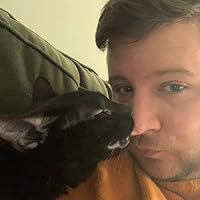
At least I think that's what he is saying. This book is definitely one that will award repeat consultation. But one thing that is clear, he does not believe we are destined to go through St. Peter's pearly gates and live among the clouds retaining all our memories in everlasting happiness. In some ways, that seems just, because what about babies or even stillborns who died before any development of an ego narrative? What about other forms of life? Is my pet cat, who clearly has an ego, doomed to oblivion and simple non-existence after years of love, affection, and pain, of learning about his environment and capable of some modicum of expansion of understanding? Rather, Maeterlinck concludes that whatever consciousness we bring to infinity from our various lives will contribute to a vast neuronal network and continue to expand, if not in happiness, with "an indifference that is higher and purer than joy."
Last year, I read a philosophy compilation called "The Metaphysics of Death" that tried to minutely analyze what lies outside the circle of life. Ultimately, the conclusions were not much different than what we find in this short and beautifully written monograph--we don't really know what happens to our sense of self, our memories, our ability to make new experiences after our bodies cease to function. Period.
Horror writers will continue to exploit our inherent fear of the ultimate unknown that we all must inevitably face. Some do it better than others. Check out Stephen King's "Revival" for one of the scariest visions of what becomes of us after death, just to name an example. It is natural for us to be scared. All living things have an innate fear of non-existence, even if they don't contemplate death like we cursed humans do. So books like this are not necessarily the best escapist entertainment.
But it's fun to read how a great thinker approached the idea of infinity from a non-faith perspective over 100 years ago. And I think the resulting message in Maeterlinck's book is that we have an obligation to enjoy the life we are given, to take advantage of the fact that we do not have the neurology of a jellyfish, but human biology that is capable of reading, thinking, playing music, traveling, and doing whatever it can to expand knowledge and consciousness.
A perfect short supplement to your Halloween reading for you philosphers and poets.