

What do you think?

Przygody młodego przyrodnika
W 1954 roku młody prezenter telewizyjny David Attenborough otrzymał propozycję życia – miał podróżować po całym świecie w poszukiwaniu rzadkich, trudno osiągalnych zwierząt do kolekcji londyńskiego zoo oraz filmować swoje wyprawy na potrzeby nowego programu telewizji BBC pod tytułem "Zoo Quest" (Zoologiczne poszukiwania).
Oto historia tych podróży. Podczas wędrówek w poszukiwaniu gujańskich mrówkojadów, wielkich indonezyjskich "smoków z Komodo" i paragwajskich pancerników autor i pozostali członkowie zespołu musieli korzystać z gościny miejscowych plemion oraz zmagać się z drapieżnymi rybami, agresywnymi jeżozwierzami nadrzewnymi i biegłymi w sztuce ucieczek dzikimi świniami, a także ze zdradliwym terenem i nieprzewidywalną pogodą, żeby móc rejestrować piękno i biologiczną różnorodność odwiedzanych okolic.
Książka Przygody młodego przyrodnika, napisana z właściwymi autorowi dowcipem i urokiem, to nie tylko opowieść o niezwykłej przygodzie, lecz także o człowieku, który nauczył nas kochać świat przyrody i doceniać znaczenie jego ochrony, czym zajmuje się do dziś.
Oto historia tych podróży. Podczas wędrówek w poszukiwaniu gujańskich mrówkojadów, wielkich indonezyjskich "smoków z Komodo" i paragwajskich pancerników autor i pozostali członkowie zespołu musieli korzystać z gościny miejscowych plemion oraz zmagać się z drapieżnymi rybami, agresywnymi jeżozwierzami nadrzewnymi i biegłymi w sztuce ucieczek dzikimi świniami, a także ze zdradliwym terenem i nieprzewidywalną pogodą, żeby móc rejestrować piękno i biologiczną różnorodność odwiedzanych okolic.
Książka Przygody młodego przyrodnika, napisana z właściwymi autorowi dowcipem i urokiem, to nie tylko opowieść o niezwykłej przygodzie, lecz także o człowieku, który nauczył nas kochać świat przyrody i doceniać znaczenie jego ochrony, czym zajmuje się do dziś.
416 pages, Hardcover
First published September 17, 2017
About the author
David Attenborough
182 books2,962 followersSir David Frederick Attenborough is a naturalist and broadcaster, who is most well-known for writing and presenting the nine "Life" series, produced in conjunction with BBC's Natural History Unit. The series includes Life on Earth (1979), The Living Planet (1984), The Trials of Life (1990), Life in the Freezer (about Antarctica; 1993), The Private Life of Plants (1995), The Life of Birds (1998), The Life of Mammals (2002), Life in the Undergrowth (2005) and Life in Cold Blood (2008).
He is the younger brother of director and actor Richard Attenborough.
Photo credit: Wildscreen's photograph of David Attenborough at ARKive's launch in Bristol, England © May 2003
He is the younger brother of director and actor Richard Attenborough.
Photo credit: Wildscreen's photograph of David Attenborough at ARKive's launch in Bristol, England © May 2003
Ratings & Reviews
Friends & Following
Create a free account to discover what your friends think of this book!
Community Reviews
Displaying 1 - 30 of 502 reviews

March 24, 2019
Back in 1954, when television was still black-and-white, David Attenborough was a young television presenter and not the icon and international treasure he is today. He was offered the opportunity of a lifetime: a new format in television had appeared for which rare animals were captured and brought back to The London Zoo and the BBC needed someone to travel with some of the staff of London Zoo to all kinds of places around the world in search of these rare animals, to film and present that expedition.
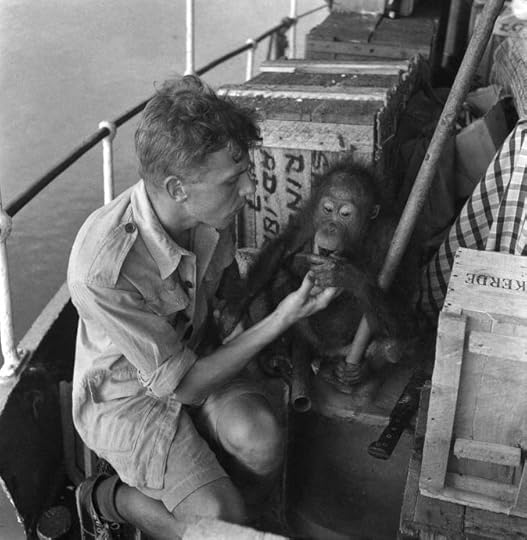
Nobody - not David Attenborough himself, not the BBC, not the viewers - could have imagined the career this sparked. The Zoo Quest Expeditions series that was broadcast from 1954 to 1963 was an instant hit, not least of which because it not only showed the rare animals but also local people and their customs.
David Attenborough introduced each programme from the studio and then narrated the film his team had shot on location. At the end of each series, the animals the team had captured were introduced in the studio, where experts from the zoo discussed them.
It catapulted David Attenborough to instant fame and established his career as a nature documentary presenter.
It (alongside its presenter) also slowly but surely transformed the documentary business itself until programmes no longer showed animals in cages but humans actually looking for them in the wild and filming them in their natural habitats. And it resulted in the ban of simply capturing wild animals anywhere to bring them to a zoo.

This book was written (and the audio version narrated) by Sir David Attenborough himself in his trademark charming way. He recounts the encounters with the inhabitants of New Guinea, Indonesia and Northern Australia as well as the ones with the intimidatingly powerful Komodo dragon, the flashily fascinating Birds of Paradise and cute wallabies or rather loud cockatoos.
He thus tells us of cultural misunderstandings and personal growth. His love for the natural world is palpable - just one of the reasons he's changed the way people view it and are a bit more interested in preserving it as well (which is why I was so delighted the other day when I heard that he was producing a programme addressing climate change, its repercussions and what we can still do).
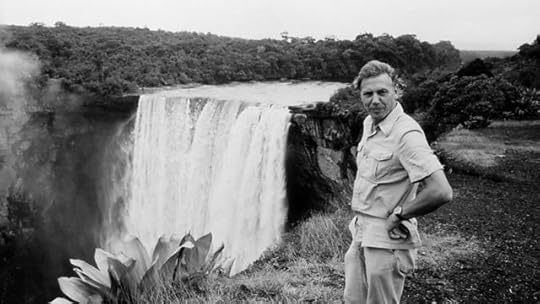
To experience the history of television and realise how far we've come in animal preservation and the respectful treatment of other nations' wildlife treasures gives me hope. I also loved how Sir Attenborough addressed not only his own shock when someone tried to shoot an orang-utan but his realization why the indiginous people didn't understand his stance, his acceptance of their status quo and that he was merely a visitor. Even at a young age, he was a remarkable man.
Sadly, only one episode remains to be watched online (though edited => https://www.youtube.com/watch?v=rG5QE... ), the rest are in the BBC's archive. Nevertheless, the series is part of television history as much as the series' presenter has been a fixed part of my life ever since I was a little girl. I'm glad I was able to follow history as much as some very cool animals and to see how producing a show worked back then (and to hear the author explaining the differences to nowadays).
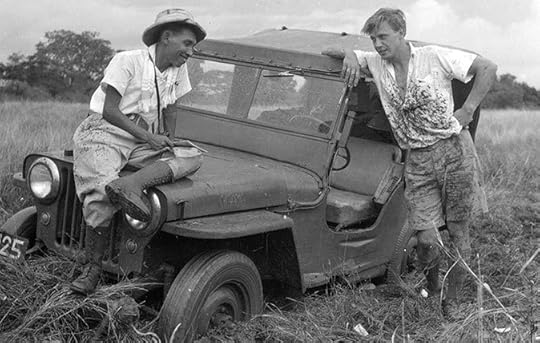
I was equally delighted by the accompanying photographs from the various expeditions as well as the humour Sir Attenborough obviously possesses and with which he recounted his endeavours.
Nobody - not David Attenborough himself, not the BBC, not the viewers - could have imagined the career this sparked. The Zoo Quest Expeditions series that was broadcast from 1954 to 1963 was an instant hit, not least of which because it not only showed the rare animals but also local people and their customs.
David Attenborough introduced each programme from the studio and then narrated the film his team had shot on location. At the end of each series, the animals the team had captured were introduced in the studio, where experts from the zoo discussed them.
It catapulted David Attenborough to instant fame and established his career as a nature documentary presenter.
It (alongside its presenter) also slowly but surely transformed the documentary business itself until programmes no longer showed animals in cages but humans actually looking for them in the wild and filming them in their natural habitats. And it resulted in the ban of simply capturing wild animals anywhere to bring them to a zoo.
This book was written (and the audio version narrated) by Sir David Attenborough himself in his trademark charming way. He recounts the encounters with the inhabitants of New Guinea, Indonesia and Northern Australia as well as the ones with the intimidatingly powerful Komodo dragon, the flashily fascinating Birds of Paradise and cute wallabies or rather loud cockatoos.
He thus tells us of cultural misunderstandings and personal growth. His love for the natural world is palpable - just one of the reasons he's changed the way people view it and are a bit more interested in preserving it as well (which is why I was so delighted the other day when I heard that he was producing a programme addressing climate change, its repercussions and what we can still do).
To experience the history of television and realise how far we've come in animal preservation and the respectful treatment of other nations' wildlife treasures gives me hope. I also loved how Sir Attenborough addressed not only his own shock when someone tried to shoot an orang-utan but his realization why the indiginous people didn't understand his stance, his acceptance of their status quo and that he was merely a visitor. Even at a young age, he was a remarkable man.
Sadly, only one episode remains to be watched online (though edited => https://www.youtube.com/watch?v=rG5QE... ), the rest are in the BBC's archive. Nevertheless, the series is part of television history as much as the series' presenter has been a fixed part of my life ever since I was a little girl. I'm glad I was able to follow history as much as some very cool animals and to see how producing a show worked back then (and to hear the author explaining the differences to nowadays).
I was equally delighted by the accompanying photographs from the various expeditions as well as the humour Sir Attenborough obviously possesses and with which he recounted his endeavours.

May 9, 2024
Apparentemente alla ricerca di animali nel pianeta per riempire lo zoo di Londra negli anni cinquanta dello scorso secolo, il libro è il racconto delle prime esperienze del naturalista e pioniere della divulgazione scientifica attraverso filmati per la BBC forse più noto al mondo. Ho trovato la terza parte del libro più completa ed equilibrata. Il racconto è molto gradevole anche per quel senso umoristico tipicamente inglese e quella capacità innata di darsi da fare per risolvere qualsiasi problema o avversità talvolta con delle trovate davvero geniali considerati i mezzi a disposizione.

January 12, 2018
Read this last year as I'm a big fan. However I feel like he's better suited to the visual arts. Still a solid and interesting read.

February 21, 2020
I love David Attenborough so I was very excited to read this book. Unfortunately, it did not live up to my expectations. I found the writing style too dense and convoluted. I did not get a sense of Attenborough's sense of humour which is a shame.

October 15, 2017
This book first came to my attention in the upcoming Dymock's release newsletter, and it sounded like my kind of book form the description. Even after a little research and realizing that this is basically a reprinted bundle of David Attenborough's first three books did little to dissuade me; I hadn't read them or collected them either. With this very pretty Hardcover edition, I was sold.
Next I was sold on the stories within, fascinating time capsules of an era that has passed. The David Attenborough I know from modern documentaries is a young naturalist of the times; that is, he is also engaged to capture and return animals for display at London Zoo. Perhaps this might be confronting for some, but as he says in the very beginning, this is not the way things are done now and that's a good thing. But the fact is they happened, and here you can read about it.
As well as the animal side of things, we have our intrepid explorers surviving some really rough conditions in order to catch animals or visit villages in which they might be found. There are some real highs and lows in this book, and it is mostly David's view. It makes the story so much more personal, and I even had to look at a few Zoo Quest clips on YouTube to add to the book (check them out, they're pretty cool)
The other thing I realized from reading this book was that David has other books out and I definitely want to read them too. If I don't find them, hopefully the will release a similar edition to this one of the next lot of books; I'd enjoy that. I have a large collection of Gerald Durrell's books that I read as a teenager; these remind me of those books.
An interesting look at a very famous person, and a really fascinating glimpse at a different time. Four stars!
Next I was sold on the stories within, fascinating time capsules of an era that has passed. The David Attenborough I know from modern documentaries is a young naturalist of the times; that is, he is also engaged to capture and return animals for display at London Zoo. Perhaps this might be confronting for some, but as he says in the very beginning, this is not the way things are done now and that's a good thing. But the fact is they happened, and here you can read about it.
As well as the animal side of things, we have our intrepid explorers surviving some really rough conditions in order to catch animals or visit villages in which they might be found. There are some real highs and lows in this book, and it is mostly David's view. It makes the story so much more personal, and I even had to look at a few Zoo Quest clips on YouTube to add to the book (check them out, they're pretty cool)
The other thing I realized from reading this book was that David has other books out and I definitely want to read them too. If I don't find them, hopefully the will release a similar edition to this one of the next lot of books; I'd enjoy that. I have a large collection of Gerald Durrell's books that I read as a teenager; these remind me of those books.
An interesting look at a very famous person, and a really fascinating glimpse at a different time. Four stars!

March 12, 2021
Ador cartea asta.
˝-Mister, băieții de pe vas îmi spune mie că mulți lilieci vampir aici.Ce fac, că nu am plasă de țânțari la hamac?
- Doar nu deranjează vampirii la tine coniță, nu? s-a băgat în vorbă tânărul african cu cana smălțuită.
Replica ei a fost energică.
- Ba sigur că mă deranjează. Dispoziția mea psihologică este foarte nervoasă.˝
˝-Mister, băieții de pe vas îmi spune mie că mulți lilieci vampir aici.Ce fac, că nu am plasă de țânțari la hamac?
- Doar nu deranjează vampirii la tine coniță, nu? s-a băgat în vorbă tânărul african cu cana smălțuită.
Replica ei a fost energică.
- Ba sigur că mă deranjează. Dispoziția mea psihologică este foarte nervoasă.˝

December 20, 2018
4.5
This is truly an account of a world that no longer exists. These are David Attenborough's memoirs of the three Zoo Quest expeditions to Guyana, Indonesia, and Paraguay that he filmed for the BBC back when nature documentaries were a brand new genre. His second purpose was to capture animals for the London Zoo (with the permission of the countries in question), something that just isn't done now but used to be a legitimate job.
This is the 1950s, a time when Bali wasn't a tourist resort and some Europeans doubted the existence of armadillos. Also a time where, apparently, you could do things like waltz around any country via unrestricted air and water travel, unknowingly commission arms dealers to sail you to unheard of islands, and not get murdered or kidnapped while relying on the hospitality of strangers.
Sure, David, lets just follow this barefoot Paraguayan drifter with five wild dogs around the desert for a week because he too shares your interest in tracking giant armadillos. Of course, we should fly to an unknown town in southern Indonesia because this random shop keeper's cousin knows a guy with a boat who might know how to get to Komodo Island.
In all seriousness, this is a gently funny and compelling account of some wild adventures. I most admire how Attenborough is able to convey grief and moral wrongness without outrage or defaulting to a sense of cultural superiority. That makes stories like the Balinese cockfights even more poignant in a way. His quiet anger and compassion for these animals being brutally exploited by humans is like a slow, furious heartbeat underneath his restrained prose.
This is a balance so rarely achieved in the precarious genre of travelogue and memoir, where our cultural judgements can so easily seep through. He is honest without being judgmental, conscious of his foreignness but not obsequiously so, and never forgets his purpose. He is not in these rarely traveled places for people, but for nature. Animals are given personality and identity similar to the people he meets. They are never treated like dumb creatures one rung lower than humans, but instead like fellow occupants and right holders to our natural world. They can communicate and feel, no matter if they are a tree porcupine or a komodo dragon. It's definitely an attitude that has carried through Attenborough's life and work.
On a personal note, I felt jealous as a woman reading about what men could do so fearlessly in the 1950s. Because it's over 60 years later and I still can't do many of the things they did. I.e. just me and a female friend with our super expensive camera equipment trekking through patriarchal communities in parts unknown, dining and sleeping alongside strange men without a worry.
This is truly an account of a world that no longer exists. These are David Attenborough's memoirs of the three Zoo Quest expeditions to Guyana, Indonesia, and Paraguay that he filmed for the BBC back when nature documentaries were a brand new genre. His second purpose was to capture animals for the London Zoo (with the permission of the countries in question), something that just isn't done now but used to be a legitimate job.
This is the 1950s, a time when Bali wasn't a tourist resort and some Europeans doubted the existence of armadillos. Also a time where, apparently, you could do things like waltz around any country via unrestricted air and water travel, unknowingly commission arms dealers to sail you to unheard of islands, and not get murdered or kidnapped while relying on the hospitality of strangers.
Sure, David, lets just follow this barefoot Paraguayan drifter with five wild dogs around the desert for a week because he too shares your interest in tracking giant armadillos. Of course, we should fly to an unknown town in southern Indonesia because this random shop keeper's cousin knows a guy with a boat who might know how to get to Komodo Island.
In all seriousness, this is a gently funny and compelling account of some wild adventures. I most admire how Attenborough is able to convey grief and moral wrongness without outrage or defaulting to a sense of cultural superiority. That makes stories like the Balinese cockfights even more poignant in a way. His quiet anger and compassion for these animals being brutally exploited by humans is like a slow, furious heartbeat underneath his restrained prose.
This is a balance so rarely achieved in the precarious genre of travelogue and memoir, where our cultural judgements can so easily seep through. He is honest without being judgmental, conscious of his foreignness but not obsequiously so, and never forgets his purpose. He is not in these rarely traveled places for people, but for nature. Animals are given personality and identity similar to the people he meets. They are never treated like dumb creatures one rung lower than humans, but instead like fellow occupants and right holders to our natural world. They can communicate and feel, no matter if they are a tree porcupine or a komodo dragon. It's definitely an attitude that has carried through Attenborough's life and work.
On a personal note, I felt jealous as a woman reading about what men could do so fearlessly in the 1950s. Because it's over 60 years later and I still can't do many of the things they did. I.e. just me and a female friend with our super expensive camera equipment trekking through patriarchal communities in parts unknown, dining and sleeping alongside strange men without a worry.

January 19, 2019
Well done for re-releasing three early accounts of zoo collecting and making broadcasts of natural history programmes for BBC. Sir David Attenborough recently took the People's Chair at COP 24 and is one of the most respected persons on the planet.
With these books, we can explore how David got his start in the world of TV naturalist and producer, and admire him and his friends all over again for the hardships and dangers they endured while trying to amass a collection of animals for London Zoo.
While the books remind me a lot of Gerald Durrell's books, including the locations as the British Commonwealth made obvious connections, Durrell tells us right away that he could see the spread of humanity was going to threaten the lives of species and he wanted to preserve some in safer havens, working particularly to save breeding pairs. David tells us in a foreword that he just wanted to make good television and help the zoo's naturalists, but nowadays our enlightened attitude means that the animals in zoos are derived from breeding those already in captivity rather than taking from the wild. I would add that some have been saved at customs points; Dublin Zoo has two Burmese pythons, Monty and Brian, which were being illegally smuggled when they were found.
We also see how comparatively safe it was to travel, with no bribes or threats, almost no civil wars or pirates, no roadblocks or menace. This reminds me of Dervla Murphy cycling from Ireland to India. David and his team get into a small boat with a captain who is obviously a smuggler of some sort (gun-runner as it turned out) who didn't even know how to get to Komodo where they were headed. They set off upriver in a luxury cruiser in the South American rainforest, and when the captain baulks at the dangerous rapids, the British lads hand their expensive gear to a local woodcutter for his boat and get into a tiny boat with a dicky petrol engine to continue upriver for weeks. They get bitten and eaten alive all day and night, they go hungry, sleep in cockroach-infested sheds and wrestle their own large reptiles. Filming all the while.
Both Durrell and Attenborough describe buying animals from locals who took them as pets or normally killed them for food or as nuisances anyway. The creatures were well cared for and any David could not feed, such as a sloth, were turned loose when they had been filmed. More than Durrell, these books spend equal or longer time with the people met in the bush, providing a record of anthropology. I enjoyed every page and say rather him than me.
I borrowed this book from the Royal Dublin Society Library. This is an unbiased review.
With these books, we can explore how David got his start in the world of TV naturalist and producer, and admire him and his friends all over again for the hardships and dangers they endured while trying to amass a collection of animals for London Zoo.
While the books remind me a lot of Gerald Durrell's books, including the locations as the British Commonwealth made obvious connections, Durrell tells us right away that he could see the spread of humanity was going to threaten the lives of species and he wanted to preserve some in safer havens, working particularly to save breeding pairs. David tells us in a foreword that he just wanted to make good television and help the zoo's naturalists, but nowadays our enlightened attitude means that the animals in zoos are derived from breeding those already in captivity rather than taking from the wild. I would add that some have been saved at customs points; Dublin Zoo has two Burmese pythons, Monty and Brian, which were being illegally smuggled when they were found.
We also see how comparatively safe it was to travel, with no bribes or threats, almost no civil wars or pirates, no roadblocks or menace. This reminds me of Dervla Murphy cycling from Ireland to India. David and his team get into a small boat with a captain who is obviously a smuggler of some sort (gun-runner as it turned out) who didn't even know how to get to Komodo where they were headed. They set off upriver in a luxury cruiser in the South American rainforest, and when the captain baulks at the dangerous rapids, the British lads hand their expensive gear to a local woodcutter for his boat and get into a tiny boat with a dicky petrol engine to continue upriver for weeks. They get bitten and eaten alive all day and night, they go hungry, sleep in cockroach-infested sheds and wrestle their own large reptiles. Filming all the while.
Both Durrell and Attenborough describe buying animals from locals who took them as pets or normally killed them for food or as nuisances anyway. The creatures were well cared for and any David could not feed, such as a sloth, were turned loose when they had been filmed. More than Durrell, these books spend equal or longer time with the people met in the bush, providing a record of anthropology. I enjoyed every page and say rather him than me.
I borrowed this book from the Royal Dublin Society Library. This is an unbiased review.

April 14, 2020
“These days zoos don’t send out animal collectors on quests to bring ‘em back alive. And quite right too ………. But it was not always so. London Zoo was founded in 1828 by men of science who were, at the time, still concerned with the important but almost impossible task of compiling a catalogue of all the species of animal alive today …. special attention was paid to finding species that no other zoo had ever possessed and that ambition still lingered on even in the 1950s when I visited one of the Zoo’s curators with an idea for a new kind of television programme.”
And thus was born Zoo Quest – and this book is a (slightly abbreviated and updated) compilation of the books that David Attenborough wrote in 1956, 1957 and 1959 to accompany Series 2-4 of the programme: Zoo Quest to Guyana, Zoo Quest for a Dragon (to Indonesia), Zoo Quest in Paraguay.
I found this a thoroughly enjoyable book – a throw back to a very different age both of television and naturalist work ,and full of memorable characters (one highlight being the enterprising shop keeper who outfits them for their trip to the almost comically inhospitable Chaco - he could teach coffee shops something about "rounding up" the order).
The reckless (given the sea journeys undertaken) but successful quest for a Komodo dragon is also an enjoyable contrast to the doomed attempt to see (let alone) acquire a giant armadillo.
I read the book with my daughter and we also enjoyed tracking down and watching excerpts from the programmes – the disparity between the written and filmed (often I think re-staged) accounts adds an additional dimension.

October 12, 2018
I just don't think I was in the mood to read this from the beginning but with almost every book, I persevered. It's well-written as you'd imagine with it being by Sir David Attenborough. Certainly, it's also interesting to hear of all these intrepid and often challenging expeditions.

February 1, 2026
David Attenborough recounts his 1950s adventures, where he traveled to remote regions in Guyana, Indonesia, and Paraguay to capture rare animals for the London Zoo and film animals and local culture for the BBC. Interesting in a historical sense: colour film was a relatively new development at the time and cameras were not quite so portable; and the logistics was a challenge due to many of the regions visited being in remote regions with no decent transport routes. Mildly entertaining, but I couldn't help feeling sorry for all those animals, minding their own business, and then being plucked out of their homes, stuffed in cages, and shipped to the UK.

May 27, 2021
Written in the 1950s, the book shows Attenborough before he became the great environmentalist he is today. He gathered animals for the London Zoo and filmed animals for the first tv series on animals, Zoo Quest.
My favorite picture in the book shows him with a mass of butterflies on his hand drinking his sweat. I had never seen that before.
My favorite picture in the book shows him with a mass of butterflies on his hand drinking his sweat. I had never seen that before.
May 27, 2018
"The truth is: the natural world is changing. And we are totally dependent on that world. It provides our food, water and air. It is the most precious thing we have and we need to defend it."

May 3, 2020
What an absolutely wonderful, adventurous book! David Attenborough is a treasure to us all!

February 17, 2019
This book is actually three books in one. They take place post WW2 with a young David Attenborough who is just starting is career in film making. Each book chronologies the trips to various countries in the search for animals to document and bring back to the London Zoo. Reading this in our world today, it's clear that catching animals to send back to zoos is not exactly ethical, but it wasn't an issue back then.
Review Continued Here
Review Continued Here

July 4, 2019
I love Attenbourough's documentaries so this was a treat for me. I understand that this book may not be for everyone because it's just a diary of sorts about how Attenborough started his accidental journey across the world. So it's just probably for fangirls like me.
But don't worry, it's written quite nicely and you won't be bored. I enjoyed the "behind the scenes" stories of obtaining animals because it must have been so difficult back then. The book also explains how documentaries and pictures of real wildlife are taken and that they can be staged to some extent.
All in all, it's a must read for Attenborough's fans.
But don't worry, it's written quite nicely and you won't be bored. I enjoyed the "behind the scenes" stories of obtaining animals because it must have been so difficult back then. The book also explains how documentaries and pictures of real wildlife are taken and that they can be staged to some extent.
All in all, it's a must read for Attenborough's fans.
August 22, 2023
Wonderful stories of Attenboroughs experiences and expeditions. Very lovely to read about the animals and the people they met. I do have to say that I am glad Zoos don't set our for expeditions anymore, as the animals should stay in their natural habitats! Nevertheless interesting to read how it used to be.

June 22, 2022
Very good book! Interesting to compare to Gerald Durrell, both working in the same field and often the same regions. I like Durrell's humour and depiction of people, but prefer Attenborough's elegant writing style and more quiet appreciation of the natural world.
January 17, 2020
Povestea unor expeditii remarcabile.
A avut sansa vietii si a profitat.
Bravo lui !
A avut sansa vietii si a profitat.
Bravo lui !

December 14, 2018
In 1952 David Attenborough got a job as a trainee producer with BBC. He was 26 years old, a novice television producer with two years broadcasting experience and an unused zoology degree, anxious to make animal programs himself.
We’re all familiar with David Attenborough and his wonderful wildlife shows. In saying that, I had eagerly opened the covers of this book in anticipation of reading about some amazingly descriptive wildlife experiences, much like the ones I had viewed with pleasure and awe on television over many years. I guess I knew what a zoo quest is, but these words had not really registered in my mind.
This book is David Attenborough’s account of the first three “zoo quest” expeditions which took place in the late 1950's. David had come up with an idea which was quickly to become a joint venture of the London Zoo and the BBC. A quest to capture birds, reptiles, indeed any creature of interest, to bring them back alive, and also to film them in their natural habitat. Wildlife programs were already attracting a huge viewing audience on television at that time.
The initial quests took place in British Guiana (on South America’s North Atlantic coast, now independent Guyana), Indonesia, and Paraguay (a landlocked country in South America).
David was 28 years old when he set off for British Guiana, together with an animal capturer and handler (Jack Lester), his cameraman (Charles Lagus), and later an animal carer, whose task was to remain at their base at the coast and look after the animals as they were caught and brought to him.
David was to direct film sequences showing Jack searching for and finally capturing a creature of particular interest. Unfortunately, Jack’s health was failing and David had to step in as the animal collector and subsequently presenter for the BBC series on their return to London. This is how David Attenborough’s wildlife programs began to take shape.
For me, it was good to read over the book’s introduction again, as this was not the David Attenborough I was familiar with, capturing wildlife for a zoo. It was a different world back in the 1950s, and the quest to find species that no other zoo had ever possessed still lingered on from the early 19th century.
All care was taken not to harm any of the creatures caught, and if their food source could not be readily obtained and supported back in London, they were released into their natural habitat shortly after capture. It saddened me to read that chicks and baby animals were taken from their /burrows and nesting holes.
Reading about the armadillos was particularly interesting, and I learned that it is only the three-banded armadillo that can roll itself into a ball, and that all armadillos have ticklish tummies. The nine-banded armadillo has the extraordinary characteristic of giving birth to identical quadruplets. They are the commonest and most widespread of all armadillos. Very sadly, the giant armadillo, with eleven to 13 bands, is considered ‘vulnerable to extinction’.
As David and his companions would stay in remote villages with the natives in the jungle, some of the village practices I read about were quite distressing. In saying that though, David gives a candid description of their customs, telling it how it is. The natives, being adept hunters, were encouraged to trap/capture live wildlife for David and Charles, with blue, white and red beads, sticks of tobacco, and cakes of crude salt being the favoured items for barter.
Their quests in South America and Indonesia were a far cry from any hint of civilisation or luxury, be it their mode of transport, the food they had to eat, the people they met and encountered on their journeys, and the numerous biting insects.
It is easy to imagine that throughout the entire book, it was David Attenborough’s mellow tones narrating to me from every page. Some of the descriptions of characters he met and protocols that had to be followed were often quite comical.
" One of the most important functions a zoo can perform is establish breeding pairs of rare animals so that if the species is faced with extinction in the wild state it can be preserved in captivity and later, perhaps, zoo-bred animals may be released in reservations and re-established in their homelands.” – David Attenborough
“Secure but not home, alive but not free” - Matthew L Miller, Director of Science Communications for the Nature Conservancy USA.
Deforestation, loss of habitat, poaching, hunting, introduced species that are devastating to native wildlife, all contribute to the extinction status. So, I do believe, sad fact as it is, that many species of wildlife, that once flew and roamed free, may only exist in zoos, their survival status, ‘extinct in the wild’.
We’re all familiar with David Attenborough and his wonderful wildlife shows. In saying that, I had eagerly opened the covers of this book in anticipation of reading about some amazingly descriptive wildlife experiences, much like the ones I had viewed with pleasure and awe on television over many years. I guess I knew what a zoo quest is, but these words had not really registered in my mind.
This book is David Attenborough’s account of the first three “zoo quest” expeditions which took place in the late 1950's. David had come up with an idea which was quickly to become a joint venture of the London Zoo and the BBC. A quest to capture birds, reptiles, indeed any creature of interest, to bring them back alive, and also to film them in their natural habitat. Wildlife programs were already attracting a huge viewing audience on television at that time.
The initial quests took place in British Guiana (on South America’s North Atlantic coast, now independent Guyana), Indonesia, and Paraguay (a landlocked country in South America).
David was 28 years old when he set off for British Guiana, together with an animal capturer and handler (Jack Lester), his cameraman (Charles Lagus), and later an animal carer, whose task was to remain at their base at the coast and look after the animals as they were caught and brought to him.
David was to direct film sequences showing Jack searching for and finally capturing a creature of particular interest. Unfortunately, Jack’s health was failing and David had to step in as the animal collector and subsequently presenter for the BBC series on their return to London. This is how David Attenborough’s wildlife programs began to take shape.
For me, it was good to read over the book’s introduction again, as this was not the David Attenborough I was familiar with, capturing wildlife for a zoo. It was a different world back in the 1950s, and the quest to find species that no other zoo had ever possessed still lingered on from the early 19th century.
All care was taken not to harm any of the creatures caught, and if their food source could not be readily obtained and supported back in London, they were released into their natural habitat shortly after capture. It saddened me to read that chicks and baby animals were taken from their /burrows and nesting holes.
Reading about the armadillos was particularly interesting, and I learned that it is only the three-banded armadillo that can roll itself into a ball, and that all armadillos have ticklish tummies. The nine-banded armadillo has the extraordinary characteristic of giving birth to identical quadruplets. They are the commonest and most widespread of all armadillos. Very sadly, the giant armadillo, with eleven to 13 bands, is considered ‘vulnerable to extinction’.
As David and his companions would stay in remote villages with the natives in the jungle, some of the village practices I read about were quite distressing. In saying that though, David gives a candid description of their customs, telling it how it is. The natives, being adept hunters, were encouraged to trap/capture live wildlife for David and Charles, with blue, white and red beads, sticks of tobacco, and cakes of crude salt being the favoured items for barter.
Their quests in South America and Indonesia were a far cry from any hint of civilisation or luxury, be it their mode of transport, the food they had to eat, the people they met and encountered on their journeys, and the numerous biting insects.
It is easy to imagine that throughout the entire book, it was David Attenborough’s mellow tones narrating to me from every page. Some of the descriptions of characters he met and protocols that had to be followed were often quite comical.
" One of the most important functions a zoo can perform is establish breeding pairs of rare animals so that if the species is faced with extinction in the wild state it can be preserved in captivity and later, perhaps, zoo-bred animals may be released in reservations and re-established in their homelands.” – David Attenborough
“Secure but not home, alive but not free” - Matthew L Miller, Director of Science Communications for the Nature Conservancy USA.
Deforestation, loss of habitat, poaching, hunting, introduced species that are devastating to native wildlife, all contribute to the extinction status. So, I do believe, sad fact as it is, that many species of wildlife, that once flew and roamed free, may only exist in zoos, their survival status, ‘extinct in the wild’.

August 13, 2021
Sir David Attenborough goes a long way to present us the Zoo Quest expeditions in which BBC and the London Zoo sent him to film and bring back live animals.
Written in a fairly easy manner, making is a quick read, along with the photos and the classic British humor, the author transports us into the wild terrains and wild life of South America and Indonesia.
I am a sucker for stories from people who actually lived them and I believe it would be a great honor to hear him talk about these adventures. I also liked how many times he educates us about the animals, but also about the differences in culture between nations without passing judgement.
All in all, I believe it's worth a read, especially if you are looking for something easy and fun.
Written in a fairly easy manner, making is a quick read, along with the photos and the classic British humor, the author transports us into the wild terrains and wild life of South America and Indonesia.
I am a sucker for stories from people who actually lived them and I believe it would be a great honor to hear him talk about these adventures. I also liked how many times he educates us about the animals, but also about the differences in culture between nations without passing judgement.
All in all, I believe it's worth a read, especially if you are looking for something easy and fun.
May 20, 2021
This is a bumper edition of three smaller volumes that Attenborough had written about his (separate, I believe) trips to Guyana, Indonesia and Paraguay, although he has written a new prologue specifically for this collection. Although I have never watched any of Attenborough's shows on tv, the way he writes reminds me of how someone might be narrating a show, and he comes across as the affable person that I have associated with him from several of his academic talks that I have seen. I was drawn in from the prologue, as he introduces the members of the London team that feature across all 3 expeditions (including the rather sad story of Jack), and a general overview of how zoos generally go about acquiring animals for their collection.
The three locations combined into this book are also very different from one another, and despite the title the book features local cultures almost as much as it does the pursuit of rare species endemic to the part of the world, and I found both of these equally interesting. What spoiled it a bit for me was the fair amount of overlap between the trips when it comes to things like living conditions, methods used to capture wild animals and how the transport of the animals back to London had to be carefully arranged beforehand - and honestly by the trip to Paraguay the seemingly endless description of repairing boats and building cages was getting rather dry.
Still, this was an interesting read and I "met" species that I never knew existed! I liked how the book included actual photos taken during the trip inserted into the text (rather than as a photo section like some books do) as it flowed right into the narrative - the one of Attenborough with his head and neck down an armadillo nest made me LOL - and it was almost like reading the journal of someone taking part in the expedition. Well written and I enjoyed it for most part, and educational as well. I'll be looking out for his other books, particularly The People in Paradise sounds like an interesting one. Solid 4 star.
The three locations combined into this book are also very different from one another, and despite the title the book features local cultures almost as much as it does the pursuit of rare species endemic to the part of the world, and I found both of these equally interesting. What spoiled it a bit for me was the fair amount of overlap between the trips when it comes to things like living conditions, methods used to capture wild animals and how the transport of the animals back to London had to be carefully arranged beforehand - and honestly by the trip to Paraguay the seemingly endless description of repairing boats and building cages was getting rather dry.
Still, this was an interesting read and I "met" species that I never knew existed! I liked how the book included actual photos taken during the trip inserted into the text (rather than as a photo section like some books do) as it flowed right into the narrative - the one of Attenborough with his head and neck down an armadillo nest made me LOL - and it was almost like reading the journal of someone taking part in the expedition. Well written and I enjoyed it for most part, and educational as well. I'll be looking out for his other books, particularly The People in Paradise sounds like an interesting one. Solid 4 star.

October 8, 2020
This book was really great. I didn’t realize that it was just a collection of his first three Zoo Quest books, but Attenborough’s writing has apparently always been great.
I was shocked that despite these books being written in the 1950s, they didn’t seem dated at all. Obviously, some of the equipment was dated as well as some interactions with locals, but a lot of it was very well done. Local sources were treated with respect for the most part, even in writing and the animals were treated fairly well considering these adventures took place almost 70 years ago. In his introduction, Attenborough mentions that in modern times, these quests for animals would not be ok and that zoos mostly breed for conservation, but it’s still incredible to hear the care that was given to these animals.
Attenborough clearly loves animals and it was so interesting to read about his relationship with them. The best account by far was him capturing a sloth. A funny and sweet story. My only real problem with the book is that I found the adventures in Paraguay to be boring compared to Guyana and Indonesia. There was a lot of repeated animals from Guayana, and their adventures were a lot more about having bad luck with boats than finding animals. Still good, just not as engaging as the other two parts!
I was shocked that despite these books being written in the 1950s, they didn’t seem dated at all. Obviously, some of the equipment was dated as well as some interactions with locals, but a lot of it was very well done. Local sources were treated with respect for the most part, even in writing and the animals were treated fairly well considering these adventures took place almost 70 years ago. In his introduction, Attenborough mentions that in modern times, these quests for animals would not be ok and that zoos mostly breed for conservation, but it’s still incredible to hear the care that was given to these animals.
Attenborough clearly loves animals and it was so interesting to read about his relationship with them. The best account by far was him capturing a sloth. A funny and sweet story. My only real problem with the book is that I found the adventures in Paraguay to be boring compared to Guyana and Indonesia. There was a lot of repeated animals from Guayana, and their adventures were a lot more about having bad luck with boats than finding animals. Still good, just not as engaging as the other two parts!

December 26, 2017
3.5 stars - enjoyable and does what it sets out to do perfectly. This is the BBC Radio 4 abridged audio version of Attenborough's account of some of his very first expeditions done for the BBC on natural history and animal life. I started listening to this in the evenings, as I needed something easy to follow, dip in and out of, as a replacement to reading before bed. This was perfect for that and exactly what I needed; narrated by David Attenborough himself, it's easy to listen to, and the stories are non-confrontational and undemanding. I admit I feel a little harsh rating this (I'm mostly doing that for my own benefit and stats!), as I can't say I listened closely to every second of the recording, but what I did hear was fun and intriguing, and would be familiar to those who are fans of Attenborough's work. There's no major conflict to these stories, despite the fact that the explorers certainly faced rough conditions and that these expeditions are very much of their time, not the type of expeditions that would be carried out in modern times. Mostly, I'm now keen to look old Zoo Quest clips on YouTube. Remembered to fans of Attenborough and those in need of some light easy listening/reading.

February 20, 2021
At almost 400 pages, this is quite a weighty tome, consisting of three Zoo Quest books, a lengthy modern-day introduction, and two sets of photographic plates in between. The first trip is to Guyana, the second to Indonesia, Java, Borneo, Komodo and the third trip is to Paraguay. Even the most worldly-wise travellers will hardly be familiar with such places during the 1950s, nor their flora and fauna, so there is much here to interest, educate and entertain. Sir Dave's writing style is always erudite, eloquent without ever being too scientific or dry. He is occasionally very amusing, usually upbeat in the face of adversity and often just admirable. I could almost hear his voice whilst reading this wonderful book. Quite brilliant. I wish I had all his other books. 5/5

July 10, 2022
I was excited about this book when I got it for my birthday last year (and had to make sure I finish it before my birthday this year). However, it did not really live up to my expectations, the writing style is very dense (as is the formatting, actually) and unnecessarily complex, convoluted. The book should have been edited down significantly. I think the author’s ideas and expertise are much better (re)presented in the AV format. I enjoyed the linguistic aspect of the Paraguay trip and just generally reading about Paraguay as I’ve visited it as well, but these things weren’t the main focus of the book and were naturally only mentioned in passing. All in all, I’d advise you to watch any of Attenborough’s documentaries instead.

September 7, 2018
If you love nature programs and are a fan of Sir David Attenborough, his unmistakeable style and strength in the subject matter, or know someone who is, you can’t go wrong purchasing this book irrespective of the current price.
One hardback book containing three of his Zoo Quest books - journeys through Guyana, Indonesia and Paraguay.
Flicking through, this hardback book contains within many colour pictures and the wonderful wit of a fresh faced Sir David.
I have included pictures of the contents so that you can see how diverse the subjects covered are, but they do include sloths in Guyana, the Indonesian Komodo dragon and the Paraguayan armadillo.
Enjoy. I am.
One hardback book containing three of his Zoo Quest books - journeys through Guyana, Indonesia and Paraguay.
Flicking through, this hardback book contains within many colour pictures and the wonderful wit of a fresh faced Sir David.
I have included pictures of the contents so that you can see how diverse the subjects covered are, but they do include sloths in Guyana, the Indonesian Komodo dragon and the Paraguayan armadillo.
Enjoy. I am.
May 11, 2021
This book is not like the Planet Earth Documentaries the main subject is known for and instead recounts his journeys across the world collecting animals for the London zoo back in the day. It was a fun page turner, with many amusing anecdotes about cultures and places that are much different now than they were then. This book would be loved by anyone who has an interest in travel or adventure, and would like to learn about some wild animals and places along the way.
June 8, 2020
It was so delightful to read young Attenborough's adventures in quests for amazing animals and contacts with remote indian people throughout the world. One could expect no less from the legendary sir David Attenborough.
Minor spoiler: unlike what the cover suggests, the book features no chimpanzee.
Minor spoiler: unlike what the cover suggests, the book features no chimpanzee.

October 8, 2022
What a good book. Really got his character shining through, he was delighted with the the little birds and coatimundi in book one and the coatimundi in book three.
I found sometimes Mr Attenborough didn't explain what an animal was in passing, this meant I could look it up on Google or imagine it. The pictures in the book were interesting too.
I found it intriguing how he could observe creatures so patiently and methodically, it was really clever, there was a definite knack to all his observation and care and thought for all of the creatures. The armidillo needed soil!!!
My favourite book was book one. It also has Amerindian culture from the 50's..I thought the shaman was so spooky. I think it's amazing that David Attenborough had all these experiences in his long life...he is in his 90's. There was a great deal of gentle awe. It was interesting how he was angry but decided anger was pointless in dealing with people who were official and native.
(David Attenborough managed to grab a wolf in book 3).
I think my least favourite bits were when they couldn't find things to eat and the captain in book 2 didn't know where Komodo island was. They navigated to find it somehow, with the Southern cross in the sky.
I found sometimes Mr Attenborough didn't explain what an animal was in passing, this meant I could look it up on Google or imagine it. The pictures in the book were interesting too.
I found it intriguing how he could observe creatures so patiently and methodically, it was really clever, there was a definite knack to all his observation and care and thought for all of the creatures. The armidillo needed soil!!!
My favourite book was book one. It also has Amerindian culture from the 50's..I thought the shaman was so spooky. I think it's amazing that David Attenborough had all these experiences in his long life...he is in his 90's. There was a great deal of gentle awe. It was interesting how he was angry but decided anger was pointless in dealing with people who were official and native.
(David Attenborough managed to grab a wolf in book 3).
I think my least favourite bits were when they couldn't find things to eat and the captain in book 2 didn't know where Komodo island was. They navigated to find it somehow, with the Southern cross in the sky.
Displaying 1 - 30 of 502 reviews