The New England Journal of Medicine is one of the most important general medical journals in the world. Doctors rely on the conclusions it publishes, and most do not have the time to look beyond abstracts to examine methodology or question assumptions. Many of its pronouncements are conveyed by the media to a mass audience, which is likely to take them as authoritative. But is this trust entirely warranted?
Theodore Dalrymple, a doctor retired from practice, turned a critical eye upon a full year of the Journal, alert to dubious premises and to what is left unsaid. In False Positive, he demonstrates that many of the papers it publishes reach conclusions that are not only flawed, but obviously flawed. He exposes errors of reasoning and conspicuous omissions apparently undetected by the editors. In some cases, there is reason to suspect actual corruption.
When the Journal takes on social questions, its perspective is solidly politically correct. Practically no debate on social issues appears in the printed version, and highly debatable points of view go unchallenged. The Journal reads as if there were only one possible point of view, though the American medical profession (to say nothing of the extensive foreign readership) cannot possibly be in total agreement with the stances taken in its pages. It is thus more megaphone than sounding board.
There is indeed much in the New England Journal of Medicine that deserves praise and admiration. But this book should encourage the general reader to take a constructively critical view of medical news and to be wary of the latest medical doctrines.
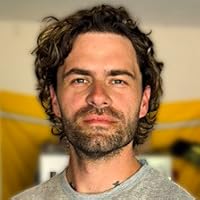
Anthony Malcolm Daniels, who generally uses the pen name Theodore Dalrymple, is an English writer and retired prison doctor and psychiatrist. He worked in a number of Sub-Saharan African countries as well as in the east end of London. Before his retirement in 2005, he worked in City Hospital, Birmingham and Winson Green Prison in inner-city Birmingham, England.
Daniels is a contributing editor to City Journal, published by the Manhattan Institute, where he is the Dietrich Weismann Fellow. In addition to City Journal, his work has appeared in The British Medical Journal, The Times, The Observer, The Daily Telegraph, The Spectator, The Salisbury Review, National Review, and Axess magasin.
In 2011, Dalrymple received the 2011 Freedom Prize from the Flemish think tank Libera!.
I love this author, and have read many of his books. This book is a selection of a year’s worth of articles, selected from the New England Journal of Medicine, from January 2017 to January 2018. Since he retired from being a doctor he has come to realize just how flawed much of their content is. It’s the dog that doesn’t bark you have to look for—what is not said is often very revealing. Since so much of medical research relies on sophisticated statistical techniques, and common sense tends to be the first victim. Further, when the NEJM pronounces on social policy it reads like Pravda, not to mention how politically correct it is. The main lesson is this: general readers should remain skeptical of medical findings reported in the general media. Correlation is not causation, and this can be difficult to tease out of many of these papers. This makes some sense, since these journals are exploring the frontiers of the unknown, and ignorance is always greater than knowledge.
Here are some of the findings and analysis from Dalrymple I found most interesting:
Mistrust papers where only relative and not absolute risks are given, or that make it difficult to calculate the reduction in the absolute risk (e.g., 1/1,000,000 chance of dying of disease X, and by eating broccoli I can reduce it to 1/3,000,000. A reduction of 2/3, but not very significant in absolute terms, hardly worth the effort.
He doesn’t like giving doctors a review, like restaurants, since it’s not the same relationship, and the patient might not like what the doctor tells them. Only the survivors of surgery can give a review of their surgeon, so the Dr. could decimate a countryside and receive glowing reports.
Paying doctors only for good results would encourage doctors to congregate in rich areas and spurn the poor.
Are disparities in health outcomes necessarily inequitable? Inequity in the sense of inequality is the price of humanity.
Knowledge is always finite, while ignorance is always infinite.
Being in prison substantially reduces the risk of dying—a sad commentary on society. This is because health care is provided in prison.
Heroin addiction is not something that happens to a person, like a disease. It’s something he consciously wants.
A society in which nothing is stigmatized would be a society without standards. A lack of shame would be shameless, and shamelessness is far from an admirable quality.
PSA screening for prostate cancer causes more harm than good, because of so many false positives and the anxiety and dangerous treatment that to which a positive read leads. Many men die with prostate cancer, but not from it.
The fact that the opioid crisis has caused over 300,000 deaths in the USA by the end of 2017 illustrates the simple-mindedness of assuming that drugs only do harm because they are illegal. What is the FDA’s responsibility here, since it licensed the products as they were in fact marketed?
The QALY—Quality-adjusted life-year—only gives people a false sense of assurance that their decisions are purely rational. Amen.
Substances derived from cannabis will go through the cycle of attitudes to new drugs, as does pharmacology: first, it’s a miracle cure, then deadly poison, and finally useful in some cases.
Measurement itself has a cost. Trying to prove one’s efficiency can get in the way of one’s efficiency. Results can be achieved by bureaucratic manipulation rather than in reality.
Nature does not always deal with us kindly. The state of nature is not one of longevity.
As countries become richer they become fatter, though not always. Within rich countries, obesity is associated with poverty, not wealth. In poor countries, the fat are rich.
What makes science right is the enduring capacity to admit we are wrong.
Mobutu Sese Seko: It takes two to be corrupt.
A philosopher might be defined as a man who overestimates the importance of intellectual consistency in practical matters.
A statistically significant difference between two groups: has less than a one in twenty likelihood of having arisen by chance. It need not be significant in other ways, e.g., clinically. This is often forgotten.
Old Hippocrates was right: time is short, the art is long, the occasion fleeting and judgment difficult.
Waste is easier to spot than value (Lean Six Sigma green belt turtles take note).
Measuring readmission rates into hospitals can cause unintended consequences. After all, death will decrease the rate most effectively.
Inequality is not the same as inequity. The former is easy to measure, the latter difficult to assess.
Everyone’s vested interests are easy to discern but one’s own.
The Human Genome Project was grossly oversold with respect to benefits. The idea that disease is a monocausal phenomenon, like a faulty gene.
Medication to control high blood pressure may in fact cause more harm than good. This was disconcerting to read, and I’m not sure how to interpret the results?
I don’t agree with his view of sports, which he believes causes more harm than pleasure. That said, this is a thought-provoking book, especially if you are interested in what modern medicine knows, and doesn’t know, the gaps in between, and the judgment required to deal with the consequences.
A year of reflection on how to read medical papers. Obviously, somewhat random owing to the nature of the papers that came up. The effects of government payments to improve care. Failure to attribute responsibility in several different situations (including one complaining about the lack of autonomy for some of those it was exonerating of responsibility). Statistics and consequences.
How can you not love Theodore Dalrymple? Logical, witty, a brilliant thinker and writer. Even though, like me, you may not be in possession of a medical degree, you'll enjoy this.
Да критикуваш научни статии в най-престижното медицинско списание - New England Journal of Medicine (NEJM) е нелека задача. Авторът на "False positive", с псевдоним Теодор Далримпъл, е психиатър, затворнически лекар и културен критик. Той анализира пропуските или грешките във всеки брой на NEJM, издаден през 2017 г. Главите от книгата са посветени на отделните броеве през годината, а темите са много и разнообразни. Анализът признава, че не разбира статистическите аспекти на публикациите и ги спестява на читателите си, което може да е плюс или минус в зависимост от гледната точка.
Рядко някоя книга ме е оставяла толкова раздвоен. Да започнем с позитивите. Авторът засяга огромен брой теми макар и съвсем накратко в някои случаи. По-важното е, че много от обсъжданите концепции НЕ се изучават в българските медицински университети и ще бъдат от полза на всеки лекар или студент по медицина. Прочетете книгата, ако за първи път чувате за ефект на чекмеджето (publication bias), криза на репликациите, сурогатни маркери (confounders, като например измерване на брой рехоспитализации за оценка качеството на болничната услуга), рискове при скрининг (свръхдиагностика, свръхлечение), критерии на Брадфорд-Хил за причинност, разлики между intention to treat и per protocol анализ.
За съжаление книгата влиза в дискусии, които не са чисто научни, а меко казано спорни, като политическа коректност, социална справедливост (каквото и да значи това), лична отговорност (или дори вина) на пациентите за заболявания, които сами са си причинили. Меко казано авторът мрази политическата коректност. Неговото отвращение достига абсурдни нива. Например той отделя цял абзац да изрази възмущението си от израза "женски и мъжки мишки". Според него правилният словоред е "мъжки и женски мишки" дори поради чисто лингвистични причини, а обратното е проява на "фанатизъм към детайлите" поради политическа коректност. В друга глава авторът анализира статия за епидемия от холера в Хаити, настъпила след опустошаващо земетресение. Той критикува статията, че не посочва източника на епидемията, а именно медици и доброволци от Непал, които отиват в Хаити за по-високо заплащане. Пропускането на този смущаващ факт, според автора, е единствено с цел да не бъдат обидени международните здравни организации, които индиректно стават причина за иначе предотвратимо медицинско бедствие. Не на последно място, не мога да дам висока оценка на книга, която изказва дори минимално съмнение за антропогенно причинените климатични промени. Особено ме вбеси използвания израз "климатични алармисти" за хора, които се вълнуват и работят по проблема.
Спорна книга, която трябва да се чете критично. Препоръчвам я на колегите, защото ще им даде чисто медицински знания, които иначе няма да придобият в университета.
2020 was the year of "Trust the Science!" But what became quickly obvious shortly after the coronavirus pandemic arrived on the world scene was that the a weight was being put on the term "science," or more properly, "medicine," than it was able to bear. I felt fortunate as the year progressed to be, first, somewhat familiar with research as a discipline, and therefore of the limitations of what even "scientific" studies are able to answer definitively, and second, to be familiar with the work of Thomas Sowell, who has spent a lifetime teaching his readers to question the assumptions and the variables that are behind, and complicate, different findings.
It was through the work of Sowell that I first encountered the name of Theodore Dalrymple, a pseudonym for a retired British doctor turned cultural and political commentator. Dalrymple is fully within the skeptical tradition personified by Sowell, so when I came across Dalrymple's False Positive, a work assessing a year's worth of editions of the New England Journal of Medicine, I was intrigued. I must admit to having read Dalrymple's book through a Covid-19 lens - that is, as someone jaded by the politicization of science and medicine that has occurred in the last year, and by the inability of even medical practitioners to admit their failures and the extent of their own ignorance.
Reading it through this lens was probably unfair to the work, because what I wanted was a weekly takedown of the hubris of the NEJM which pointed out all the blatant errors the journal was susceptible to. And while there is a fair amount of this in the book, Dalrymple's overall case is, ironically, less conclusive. What Dalrymple does conclude is that the kind of medical research found in the NEJM is of variable quality, that the conclusions with even the most compelling supporting data are not altogether conclusive, and that medical journals in general (and this journal in particular) operate from a sociopolitical standpoint that guides its analysis on non-scientific matters (and even on some scientific ones). As Dalrymple states, "The dead hand of political correctness is upon medical journals."
Since each "chapter" in the book deals with one or more entries in a week's edition of the NEJM, there's a certain unevenness to the book in that there is not a topic flow from chapter to chapter. However, Dalrymple makes several interesting observations. For instance, in the first chapter Dalrymple observes that an article about the treatment of a cholera outbreak in Haiti makes no mention of the source of the outbreak, which it turns out were Nepalese troops in a United Nations peacekeeping mission. In order to avoid embarrassment and accountability for starting a new outbreak in an impoverished country, the major health organization and journals of the world - including the CDC, WHO, The Lancet, and the NEJM - covered up the outbreak's source, and went so far as to suggest that looking for the source was unnecessary and counterproductive.
Dalrymple notes that this episode is reminiscent of an effort by UNICEF in the 1970s to reduce the infant mortality rate in Bangladesh, which was due to contaminated ground water, by drilling new wells for drinking water. This humanitarian effort had the desired effect of supplying less contaminated drinking water, but had a baneful effect as well: the high rate of arsenic in the water led to the increased risk of cancer for millions of people. This, too, was covered up to avoid embarrassment and accountability. Again, through the lens of 2020, these are interesting episodes, inasmuch as they cast considerable doubt on the claim that medical bodies are disinterested in politics, and want only to cure disease.
Also of interest are the several chapters Dalrymple dedicates to the ongoing opioid epidemic in the United States, and here again he notes that the medical community was an early cause of the epidemic, then sought to deny and cover up their role in it in order to avoid embarrassment and accountability. Of course, these incidents do not mean that blame avoidance is all that physicians and scientists do, and Dalrymple discusses a wide range of interesting topics where research is shedding light on new therapies or casting into doubt old ones.
But I would be lying if I said I found these chapters as interesting as the ones where fallacies - whether political, social, or scientific in nature - are laid bare. Given what the world has experienced in the last year, such evidence cannot help but result in a higher degree of skepticism toward medical research and reporting than currently exists. Indeed, Dalrymple states this as one of the purposes of his book, writing, "My hope is that readers will come to see how complex and difficult medical research is, and how they should remain skeptical of medical findings reported in the general media."
With that as the goal, then, this book is generally a success, though there was enough medical minutiae between the covers that I found myself skimming some sections.
The entry for 23 March 2017 is a good example of the refreshing approach of the author. He starts with a definition of psychobabble.
"In 1977, R. D. Rosen coined the term psychobabble and characterised it as follows: a set of repetitive verbal formalities that kills off the very spontaneity, candour, and understanding it pretends to promote. It's an idiom that reduces psychological insight to a collection of standardised observations that provides a frozen lexicon to deal with an infinite variety of problems.... psychobabble was the means by which people could talk about themselves without revealing anything."
And goes on to observe:
"The title assumes, of course, that stigma must be harmful in itself and that it can play no positive part in our social existence [but] A society in which nothing is stigmatised would be a society without standards."
"...stereotyping ... of course, is always wrong. [but] what would a person be like if he had no stereotypes in his mind whatever? He would be as defenceless as a newborn mouse."
"fear, shame and guilt are often justified; and an alcoholic who has ruined his family's life for years is rightly ashamed. A lack of such shame would be shameless, and shamelessness is far from an admirable quality."
"self compassion here sounds remarkably like self-pity, and few people are so lacking in compassion that they fail to feel sorry for themselves. The author's notion of being honest with himself almost amounts to a plea for dishonesty and a permanent evasion of the duty of self-examination."
I became curious about this book after having read the book "Life at the bottom" which I had bought recently. Having discovered this author who is much talked about in conservative political media, I decided to look him up. Particularly as he is a Psychiatrist writing about his work in the 1990s England. His writing is an honest journalistic account of life in the lower socioeconomic classes of working class Britain, in the book- Life at the bottom, and it was as if I had struck a vein of gold in the mines of books in finding Dalrymple. I found this book False positive (FP) in the Public library and was so happy to find it there. I could not find "Life at the Bottom" however, and take it that the public library curates books and in their choice of FP I am delighted, but disappointed that they do not have the best of his books ie Life at the Bottom. "False positive" is about how medical literature, even from the most respected journals can be open to interpretation. The public nor journalists nor doctors have time or energy to read the articles and papers with a critical mind, not in the sense of fault finding, but in the sense of correctly assessing and sifting through the material for degrees of truth and probabilities. Just as language clarifies and speaks, it can also fudge, obfuscate, puzzle and mislead. Dalrymple devotes his brilliant analytical mind to reading these articles in the New England Journal of Medicine in the year 2017. You might think , aha! he is going to destroy! the writings ( as they do on you tube videos) and give low reviews, but no, he points out vague language, political bias, ambiguous statements, the problem with reading statistical significance and how to apply it to clinical practice, how to interpret risk as identified in the writings -specifically in the articles he describes. He also expresses delight at some articles of recent discoveries and where things were good. I liked in particular his analysis of psychobabble in one article written by a doctor of his own struggles with alcohol and depression. Dalrymple correctly identifies the self aggrandizing flavour , the language of denial and establishment of victim credentials in this article by its author( who suffers from the disorder) very accurately as psychobabble. Something doctors and clinicians hear everyday when dealing with people with addictions. I found the book with its essays a very honest and courageous account of a doctor looking at his colleagues, refusing to collude in the language of vagueness and political correctness. A must read, which eerily predicted how we read the news on Covid-19 pandemic in the last one year, and how indeed all of Dalrymple's observations came true in the context of the pandemic, how tentative and how subjective interpretations can be , of facts and factoids that have multiple political, and economic conflicts of interest. Overall a balanced, fair and enlightening book. Read this book if you want to understand how to read and interpret Medical literature. I wish I had learned this years ago when when I was a medical student.
It was mostly a pleasure to read the author’s dissection of selections from the NEJM in 2017. Writing under a pseudonym, he covers problems in logic and philosophy and some in statistics. Most of these are well-known, but journal articles can be stultifying, and Dalrymple can cut through bullshit like a knife. On the other hand, his role here is the curmudgeon, and he is sometimes merely argumentative. So, he specifically admits to ignorance about the earth sciences, but then presents his potentially destructive opinions about global warming; he attacks the use of B.C.E. for B.C. in a footnote calling it contemptible; he strongly believes that it is inappropriate to see drug addiction as a disease; and, although he is most helpful to us when logical fallacies are revealed, he might be accused of occasionally succumbing to a false analogy, appealing to ridicule, steering us to a slippery slope, and using a rare vacuous truth.
For a year, Theodore Dalrymple (pen name for retired British psychiatrist Anthony Daniels) engaged in focused, critical reading of The New England Journal of Medicine. In the chronologically ordered essays collected here he lays bare the poor logic, sentimentality, hubris, and political sloganeering that unfortunately infest a lot of scientific research and the public policy that is based upon it. It’s not his best book, but anything by TheoDal (as I like to call him) is worth reading.
No mínimo um ignorante que não acompanha a evolução da língua (embora seja um doutor) e despeja um comentário racista dizendo que “De qualquer forma, a sigla LGBTQ me pareceu escandalosamente não inclusiva. Sem dúvida, deveria, no mínimo, ser LGBTQFNPI, que significa Lésbica, Gay, Bissexual, Transexual, Queer, Fetichista, Necrofílico, Poligâmico, Incestófilo…um acrônimo verdadeiramente reflexivo da variedade sexual humana”
I love this author, and many of the passages in this book are witty, informative, and thought-provoking. It was a slower read, often delving into technical details, and there was no overall narrative, so I enjoyed it less than the previous books of his that I’ve read.