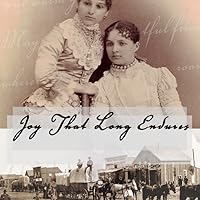
A copy of the novel was provided for my perusal, and I freely chose to review it.
This is the third of Loretta Tollefson’s Old New Mexico novels I read, although it is the first one in the series that relates the adventures of Gerald Locke and his family. I came across the second novel thanks to a review group I belong to, loved it, and read the third one when it was published, and loved it as well. When I was offered the option to read the beginning of the saga, I couldn’t resist. And although I know I haven’t read the series as it was designed and intended, it has worked wonderfully for me. It was like having hindsight in reverse: I knew everything that would happen later, and I got to see how things had started, and why they had developed the way they did. It was a fascinating exercise, as it helped me realise how well conceived the whole story is, and how many details and words that we might not think are important to the plot when we read them, in the end are fundamental to the development of the whole narrative. It all fits in organically. This is not a series where books are just added to stretch the story or to tell the further adventures of the characters. This is a story told in three books, where each one gives more attention and voice to one of the characters in the family. And, although that does not mean each book cannot be read in its own right, the whole is more than the sum of its individual parts.
The author has a personal knowledge of the area, and of the lifestyle as well, as stated in her biography, and her skills as a researcher and her interest in history shine through this book and the whole series. She manages to insert her fictional characters into a world that feels incredibly close to how life must have been in New Mexico at the time, and the inclusion of real historical events and characters (mayors [alcaldes, as the territory was under Mexican rule in the early XIX century, when the story is set], governors and other local politicians, priests, soldiers and military men, trappers, Native American chiefs, members of the important families, merchants...), and her use of original sources from the era make give it a very vivid feel, as if we were immersed in the era, partaking in the trapping expeditions, and becoming involved in the complex and changing politics.
The style of writing is beautifully descriptive, with special attention being paid to the rhythm of the seasons, nature and landscapes, the land and the resources it could provide for sustenance and livelihood, and the action is narrated in the third person and present tense (that although it might come across as a bit weird at first, it adds to the impression readers get of sharing the experience with the characters as it is taking place), mostly from the point of view of Gerald Locke, although there are some brief fragments from other character’s perspective (we get to know what Suzanna thinks of Gerald before he does, and we also witness some interesting conversations that give us an insight into matters we are likely to have been wondering about, and others that might come to the fore in the future). Although there are plenty of adventures included in this novel, the pace is not a whirlwind, and it doesn’t rely solely on non-stop action. There are high pressure moments, but there is a lot of drudgery, hanging around, or simply travelling from one place to the next and then waiting around, as is the case in real life, and more so when you depend on the seasons, the weather, and the will and actions of others. As usual, I’d recommend checking a sample of the book to those wondering if the writing style would suit them, or the author’s blog, as she shares a lot of stories there as well.
I don’t want to provide too many details about the plot, other than those already included in the above description, which I think gives a fair idea of the adventures and the conflicts Gerald experiences. Themes like race and discrimination play an important part in the story, and the author explains in her note at the end of the novel what the society of New Mexico was like at the time in that respect. It sounds like the “melting pot” one hears mentioned very often when referring to the United States, which seems to be —in many cases and historical periods— unfortunately very far from the truth. Tollefson explains the laws and the traditions in the area, and why they were more tolerant there than in Missouri, where Gerald comes from. Of course, that does not mean that everybody was as understanding and open-minded as the more enlightened people, and one of the characters in the book exemplifies the worst of all behaviours: he is lazy; he blames others for his shortcomings; he is racist and prejudiced; he is abusive towards all he perceives as his inferiors or weaker than him (women, Mexicans, mixed-race...). He is a villain through and through, but there are other characters who are morally ambiguous, and although they seem to behave reasonably enough in some aspects (they might give Gerald a fair opportunity and help him along), they might not always be honest in all their dealings with others or with the government or the law (that is shown as capricious at best, truly unreasonable or worst in most cases), or might have other flaws (they drink too much, talk too much, tell tall tales, chase after women, are selfish and only think of themselves...).
The author offers a list of historical characters and also of the sources she has used at the end of the novel, and in her note she explains how closely she followed some of the trapping expeditions and real events that took place then. The brief biographical notes she provides about the characters suffices to give us a good idea of how colourful some of these characters really were and to make us understand that she doesn’t seem to have strayed too far from the truth in recreating them.
As for the fictional characters... I’ve mentioned the villain, although I won’t say anything else about him to avoid spoilers. Let me warn readers, though, that he is the protagonist of some scenes that might cause upset or trigger some readers, as the threatens physical and also sexual violence and abuse in several occasions, and once quite explicitly so. I like Gerald, though. Especially after having read the other two novels, where we see him from other people’s perspective most of the time, it was good to get to know him and understand where he was coming from, his circumstances, his deep love for the land, and also why he makes a certain decision that will, much later (in the third book), come back to bite him. He is quite understanding and willing to give others the benefit of the doubt, and his view of the property of the land and the rights of those who live in it makes him a truly modern character, much more enlightened than most. Even if he doesn’t always choose wisely, he tries to do what he thinks is right. We also meet many of the characters that will play big parts in the other novels, like Suzanna, who already appears like a remarkable young woman who knows her own mind and has many skills, despite her age (not quite sixteen yet); her father (a man with an interesting past and quite open-minded when it comes to education and to his daughter and her future), Encarnación (the cook, who has a strong sense of loyalty and loves Suzanna’s family as if it was her own), Ramón (the perfect companion for Gerald, and one that will continue to play an important part in the series), and many others. As I’ve mentioned at the beginning, I was impressed by how well the arc of the characters works through the series, and how consistent the overall atmosphere and story is.
The ending is also perfect. It seems to be a fairly happy ending (a bit hesitant, perhaps), but the epilogue hints at things yet to come. I don’t mean there is a cliffhanger at all, but readers will probably guess that the story is far from complete, and some of the things that seem solved are anything but.
In sum, I recommend this book to readers of historical fiction looking for a story about a historical period and an era not usually the subject of novels, and about people who don’t normally feature in historical books either, as they are not considered important enough. I mentioned Little House in the Prairie in a previous review, and fans of those books, and anybody interested in the pioneers, and in life in New Mexico in the early XIX Century should check this series. It is a joy.