In this "thoughtful, entertaining, and often insightful" book, a former CIA director explores the delicate give-and-take between the Oval Office and Langley With the disastrous intelligence failures of the last few years still fresh in Americans minds -- and to all appearances still continuing -- there has never been a more urgent need for a book like this. In Burn Before Reading , Admiral Stansfield Turner, the CIA director under President Jimmy Carter, takes the reader inside the Beltway to examine the complicated, often strained relationships between presidents and their CIA chiefs. From FDR and "Wild Bill" Donovan to George W. Bush and George Tenet, twelve pairings are studied in these pages, and the results are eye-opening and provocative. Throughout, Turner offers a fascinating look into the machinery of intelligence gathering, revealing how personal and political issues often interfere with government busines -- and the nation's safety.
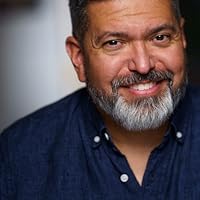
Admiral Stansfield Turner served as director of central intelligence from 1977 to 1981, heading both the Intelligence Community and the CIA. Previously, as an admiral in the U.S. Navy, he served as the commander of the U.S. Second Fleet and president of the Naval War College, and as the commander in chief of NATO's Southern Flank. Admiral Turner is on the faculty of the University of Maryland's Graduate School of Public Policy. He lives in Washington, D.C.
Helped me brush up on American History by examining the development of the CIA overtime. Personal anecdotes were sometimes distracting and came across as tangents. Interesting overall.
The fact that all of his recommendations were lumped into the W. Bush presidency chapter and not in a separate bothered me.
A Review of Stansfield Turner’s “Burn Before Reading”
Admiral Turner’s book on his years as the Director of Central Intelligence was an appealing read because of his unique tenure as the head of America’s intelligence operations. Breaking from the relative traditions of company men or the old World War 2 guard involved with the intel. work, President Carter brought in Turner to head the agency as a political move, a necessary leadership change from George Bush, Sr. who was too closely identified with the GOP.
Whereas there had, before, been an unwritten rule to keep the DCI stable regardless of the political regime in power. Turner’s tenure is marked by a great deal of change, a great deal of transition from the relative end of the WW2 era and also the implosion of the Nixon regime transitioning into Reagan. And yet, with this book, one never gets the real meat of his leadership. The book is written in such a flight of fancy that it never delivers on its full potential. Some of this may be due to the CIA’s review of former employee publishing, but one gets the impression that Turner is simply not capable of giving history and the public the information it demands.
Turner goes through a history and his read on former Directors. And his analysis always fits his personal political predictions. The cold warriors are cast in a negative light, and those who are more liberal-identified come out fine. This partisanship makes the book frankly lose credibility. Certainly he has insight into good gossip on both sides, and is capable of a specific critique of all the major players, but he fastidiously avoids even a small critique of those on his political team. Even his critiques of Republican-appointed directors start fitting a similar narrative: that they were all “bad administrators”, especially compared to himself, whom he holds in obvious high esteem.
Let’s consider, though, several major problems and mistakes that Democrat Presidents have made with regard to intelligence and intelligence situations, and go completely unacknowledged in the book:
1. Ngo Dinh Diem’s sanctioned assassination by Kennedy and Ambassador Lodge
2. Operation Cyclone and its controversial aftermath
3. The intel. failures at the Gulf of Tonkin
4. The attack upon the USS Liberty
5. Various commissions and investigations that weakened the public appetite for intelligence, persecuted agents and demoralized the trade -Rockefeller Commission -Church Committee -House Committee on Assassinations -Pike Committee
As well, Turner grossly mischaracterizes several incidents and the involvement of his ideological pals. He wildly mischaracterizes Operation Mongoose, a creation of the Kennedy brothers, and almost completely whitewashes their involvement with the Operation. And lest anyone be tempted to think that it simply happened under their watch, Mongoose was overseen by what was called the “Special Group Augmented” which consisted of military officials, relevant bureaucrats, and Bobby Kennedy as the Attorney General. Mongoose was a military operation and RFK was present, probably due to the sensitivity of the operation and so that Jack Kennedy could have someone he trusted completely involved, but several testimonies and oral histories of the committee make clear that Bobby Kennedy was completely in charge of Mongoose.
It’s a mistake too big to excuse, and it’s a much more interesting story to tell in better context. The Camelot myth is predicated on the Kennedy brothers as doves, yet when in power they were brutal to their domestic opponents, and complete fans of paramilitary operations abroad. The Kennedy brothers were about as reckless with their policies as they were with their women, but to Turner he chooses to, instead, place the blame for Mongoose at the feet of those commanded to carry it out.
Turner also mischaracterizes the Bay of Pigs disaster, specifically the denial of the importance of the promised air cover, as never being promised and that, even if it had arrived, that it wouldn’t have saved the men who died needlessly on the beach because the revolution lacked popular support. That seems, though, rather convenient considering that the Cuban people never had the chance to support it, and so Turner’s logic is circular and a distraction from the betrayal of John Kennedy to the men who went forward.
Outnumbered as they landed either 20:1 or some estimates, 200:1, the men still inflicted casualties on the Cubans on a scale of 50:1, an amazing feat. The air cover that Kennedy denied could have made all the difference in the world, and the discussion about the lack of popular support is misleading and wrong.
The World War 2 information is interesting, and seemingly new and fresh. Turner can’t resist criticizing Donovan at the time as reckless though, and carry that same critique forward a few years to Allen Dulles. The critique of these two men also becomes that they were too aggressive and too foolhardy, yet this is coming from the man who helped Carter start the Afghanistan operation known as Cyclone, and also the several failed daring rescue missions to recover the hostages in Iran. It seems a bit hypocritical to chastise these two for their aggressiveness when Turner’s own major operations were each independently on scale to spark major wars if mishandled.
But the real amazing intellectual dishonesty in this book relates to the Iranian revolution and the subsequent hostage crisis. Turner blames the revolution on the Mossedegh operation from ’54, as a pretext for the overthrow of the Shah. In reality, of course, the Shah was losing popular support for years and the CIA’s own analysts were warning of impending problems with the U.S.’s best ally in the middle east. And when the going got tough for the Carter administration, they foolishly cut ties with the Shah and pressured him against taking quick decisive action against the insurgents. Turner needs to blame the intel. community for Mossedegh to take away from his own obvious failures as DCI in both foreseeing the problem, and not demanding precautionary measures to safeguard staff and secrets within the embassy.
The book lost any serious credibility with his careful equivocations about the Iranian revolution, something that sealed the fate of Jimmy Carter’s re-election, and was perhaps the longest-lasting and most serious intelligence disaster until 9/11, and yet Turner can only offer tepid defenses and blame others. This book becomes a hack job, and detaches itself from useful historical books by principals that offers lessons for the future.
If it has a useful purpose, he does discuss and assess the basic structural, authority and role responsibilities of the DCI in decent detail, and considers how the modern application of the recent reforms might play out. He correctly identifies natural role tension with State and DoD, as well as the odd role of the DCI overseeing all intelligence even though it lacks the control over military actions in particular. Fundamentally, the intelligence community has to implement the wishes of the President but is not, and has never been, fully vested with the authority to directly act on his behalf, and thus the power-sharing arrangements are always messy.
Turner’s observations here are decent, but his final analysis that it all depends on the quality of the DCI’s personal relationship with the President is too simple for the book, while true, he could have and should have given us more.
In the end, this book is Turner making potshots to protect his record, one that upon any serious examination would be considered fatally flawed.
20/100, */****, F
This entire review has been hidden because of spoilers.
The book suffered by providing only surface level details on the history of the DCI, the CIA, and their relationship with the presidency. 270 pages are simply not enough time to cover 80 years of history. What's there is a brief description and thesis before moving on to the next era. This seems to get worse as the book goes on as if the writer was losing patience. The section covering 9/11, Iraq, and the 9/11 Commission covered all of two pages. The book offers tantalizing glimpses into a fascinating and controversial part of American history. I am, regrettably, left wanting more. Certainly a topic I would like to revisit. Turner mentions early in the book that it started as a memoir of his time in the Carter Administration. I think that may have been more detailed and fulfilling.
News flash: Central Intelligence isn't centralized. The amazing Admiral Turner, surely the only frank director of the CIA we are likely to see, offers critiques, anecdotes, personality profiles, insider institutional analysis and policy recommendations. Weirdly enough, the only way for the Dir. of Intelligence to be successful is to be close to the president and to be SEEN to be close to the president. But at the same time, this very closeness makes for the greatest risks and intelligence failures. It is sobering, if often funny, to hear which presidents just ignored what they heard, or didn't even listen at all. The in-fighting between CIA and all the other cranky branches of the armed services is worthy of the sandbox, and gives the American public the worst possible results. Civil rights violations turn out to be the least of our worries. The only thing that would make this better would be a volume two that compared the US CIA with other countries' intelligence services, shedding light on which of our multiple deficiencies we ought to be grateful for given the horrors that might be. Hey, we don't actually toast dissenters on the rack during interrogations, like in Iran! (remember those posters from the old days of Shah Pahlavi protests?)
Amazing tidbits include: Turner wasn't allowed to inform Congress that we could respond massively to a Russian first strike during the Carter administration, thus allowing armed forces in 1980 to merrily back Reagan's trillion-dollar Star Wars initiative! And this was from a Republican elected on a low-spending platform: the "strong, praised-worthy Reagan who allegedly faced down the Evil Empire" deliberately suppressed info that would have let the public know that Russia was already weak, and that it was a grotesque and unneeded military boondoggle! Eisenhower would have had some choice words for that one. I don't hear this being cited at the "wonderful" Reagan eulogies at funeral, in textbooks,or in craven, admiring biographies by such surprising and fact-challenged chroniclers as the once proud Sean Wilentz. When a former CIA director is more candid than a Princeton historian, we have a real problem w. truth in democracy.
Ambiguous thing in status of CIA is that is is ultimately part of DIPLOMATIC corps, so its relationship to politics is more than close, it IS politics. Whenever, or at least often, when CIA offers good analysis that is contradicted by Dept. of Defense policy or interests it is disregarded.
Admiral Turner was Jimmy Carter's Director of Central Intelligence. In Burn Before Reading, Turner captures and comments on the relationship between each President and their DCI from the inception of the CIA in 1947 to the Bush - Tennet years. He touches on scandals, covert ops, illegalities and dirty tricks pulled by the CIA, and he doesn't pull many punches in his analysis of his own agency's blunders. Amazingly, at the end of the book, Turner calls for the CIA to be disbanded. It is hard to disagree with him, or the CIA as anything but a failure in its most important task, the collection and analysis of information. It's greatest blunders, though, may be in the long-term damage its operational wing has caused to US foreign policy, our own security and the peace and prosperity of the entire world. It's hard not to agree with Turner that it may be time for new options. Here's hoping this review doesn't get me killed.
Admiral Stansfield Turner(ret.) wrote a very interesting account of the relationship between the Presidents of the United States of America since Franklin D. Roosevelt (FDR) and their chiefs of the intelligence community. The main question that the author tries to address is how to attain maximum efficiency and reliability within the intelligence community in order to serve the office of the President of the USA to its full potential. The new position of director of national intelligence will try to address this goal, but in my view the question of how to reorganize the intelligence community to attain maximum efficiency and reliability is still open to debates.
A good book, fun to read. A little too much bogged down in acronyms and organizations. The book covered post WW2 American history by showing the effects of major and minor events on Intelligence, Covert actions, and Data gathering. I appreciate how the book was organized President-by-President so we could see the personalities change and shift.
Written before the current stand down between President Donald Trump and his intelligence opposition, this previous chief of intelligence talks about the history of intelligence chiefs since the 1950s when the CIA was first created.
He discusses in real terms the power of the intelligence apparatus has over the President of the United States and how that conflict has manifested in the past.
He Openly admits to intelligence failures, intelligence community cooking the books in order to get the policy they want, agreeing to assassinations, and lying to get us into wars.
Great book on the history of the position of Director of Central Intelligence and the DCI’s relationship with their President. Good lessons on leadership styles, working in bureaucracies, leading change, and working for a boss that may or may not care about what you do. The book ends with radical recommendations for changes to the organization of collection and analysis within the ODNI.
This was really interesting...and extremely frustrating. The relationships between the CIA directors, Presidents, and other branches of intelligence have been so fractured, and it's all because of egos. Just stupid.
I thought this book was very interesting but kind of boring in parts. I liked the in depth storys told with a lot of detail and they told about some cool stuff the CIA has done.
An interesting history of the CIA and how it fits into the Washington DC power structure. A bit dry at times, but filled with amazing stories from our nation's history.
Another slow-read with a reading slump. This book spent a good amount of time sitting on the shelf and I was also slow to get through it even when I started, just a bad timing of picking up two non-fiction at the same time.
I do prefer historical nonfiction as they progress through time and aren't as repetitive. The author was a former Director of Central Intelligence (DCI) and his stories and insights were very interesting. A great book for anyone interested in espionage and the dirty work that goes on behind D.C. The origin story of the CIA and how they coordinated historical events in the past with a number of presidents were insightful.
Many stories of big names such as Hoover, Acheson, Dulles and many former presidents (FDR, JFK, LBJ, etc). The book covered as early as WWII, the Cold War, and the Gulf War (9/11 era) so a vast stretch of history in this piece.
Informative history of the CIA and the Director of Central Intelligence (DCI) position and how it evolved through Sept 11th, 2001 into the Intelligence Community and the Director of National Intelligence (DNI). I love hearing the backstory for what was going on at the time historical events were happening, why people made the decisions they did, and what secrets later came to light. It’s also unfortunate how political these positions become, when American security and defending the constitution are not political endeavors.
This book was interesting. Whether one agrees with his actions I believe Mr. Turner explains his rationale well for the Halloween Massacre. People such as the CIA head historian Dr. Robarge see Mr. Turner in a very negative light and therefore I am very interested in hearing the counter arguments for this book.
This book was super interesting and did a great job of summarizing the positives and negatives of the relationships between presidents and their intelligence directors.
I had stopped writing reviews for a bit but after reading this book, I felt like I should provide a few general thoughts, particularly on a book that I believe to be subpar. The topic is a good one, but the author is not the most objective person to write this. He does a bit of a hatchet job on a number of the folks that served in the same position as he did, both before and after. It's not to say that each of these individuals didn't have their own shortcomings, but it felt like he was overly harsh and judgmental on them. He then spends a lot of time talking about his tenure and about all the good that happened during his tenure with Carter, while ignoring the criticism that was a hallmark of his time, mainly the gutting of the human intelligence capabilities. Turner would have been much better off writing a bio about his time in office and his reflections rather than taking others to task about their failures but not putting the same critical eye on his time.
This book's title, "Burn Before Reading", might imply that it will be filled with relevations of inside secrets of the CIA, contain details of exciting exploits of CIA operatives, etc., but that really isn't the case. Written by a former CIA Director, Stansfield Turner, it's much more a history of the Agency, it's management and budgeting issues, its growth and setbacks. It might be better to consider it as a listing of Who's Who in the CIA from its formation through the G.W. Bush Administration, ending with several ideas to improve the efficiency and organization of the Agency. If you're truly interested in how the CIA has evolved over the years, you'll gain some insights. But if you're looking for an exciting inside look into the workings of the Agency, trust the middling Goodreads ratings, and select a different book.
If I were to rate this book on the content it would only get two stars due to the lack thereof. However, Turner (Carter's Director of Central Intelligence) does stick to his premise and provides an overview of the history of the head of the US intelligence community. Chapters are broken down into Presidencies and each discusses the relationship the President had with the intel community, the authorities bestowed upon the head of the intel community by the President, and the lasting effects the the relationship and authorities. It gets an extra star for being easy to read.
It was a somewhat interesting history, but came across dry and pedantic. I was listening to the audio version and the only reason I got two hours in was due to the narrator's voice. I felt like I was listening to a radio broadcast from the 1930s. That, however, was not amusing enough to keep my interest when I have a whole stack of titles waiting to be read/listened to. Add this one to the stack of books I started and didn't have an interest to finish (which is, admittedly, a very small stack).
Explores the relationship between Presidents and the intelligence community since Roosevelt. It's interesting political history that relates to current debates about the role of CIA, DNI and other players. Not really a spy story, but fascinating stories about the political dimensions of national intelligence from a former DCI.
The book was certainly one DCI's opinion of the performance and relationships that DCIs had with the respective presidents (and vice versa). I'm sure that each DCI would have a different opinion as to the relative effectiveness. Are anecdotes really proof of a hypothesis (actually, no).
The book was, in fact, okay. It covered a lot of ground, so it did not go in detail.
While the book is well written and obviously by an insider (a former DCI), the material is rather dry and focuses on relationships and the role of the DCI in each administration. Not much detail on CIA actions. A little disappointing.