Jump to ratings and reviews
Rate this book

Build My Gallows High

Rate this book
Retired private eye Red Bailey is happier than he's been for a long time. Living in Nevada, bothered by nobody, he runs a little gas station, gets in a lot of fishing, and might even be falling for a local girl. Then, out of the blue, his past comes back to haunt him. Blackmailed into doing just one more job, he's forced to revisit the life he fled—in particular, the seductive Mumsie McGonigle. It's not long before Bailey realizes that a trap has been set for him. The novel, scripted by the author, went on in the hands of Jacques Tourneur to become the cinema's most celebrated work of "film noir," starring Robert Mitchum, Kirk Douglas, and Jane Greer.

The Film Ink series presents the novels that inspired the work of some of the most celebrated directors of our time. While each novel is first and foremost a classic in its own right, these books offer the dedicated cinephile a richer understanding of the most illustrious films of American and European cinema.

156 pages, Paperback

First published January 1, 1946

6 people are currently reading
587 people want to read

About the author

Geoffrey Homes

39 books2 followers
Pseudonym of Daniel Mainwaring.

Ratings & Reviews

What do you think?
Rate this book

Friends & Following

Create a free account to discover what your friends think of this book!

Community Reviews

5 stars
54 (23%)
4 stars
90 (38%)
3 stars
68 (29%)
2 stars
15 (6%)
1 star
5 (2%)
Displaying 1 - 30 of 47 reviews
Profile Image for Algernon (Darth Anyan).
1,833 reviews1,157 followers
September 20, 2016

From the summit you could see Tahoe far below - the whole blue waste of it sleeping in the sun. Hills walled it in, walled in the broad meadows to the south. Here and there like teardrops were other tiny lakes. As always, when he looked down on the big lake, he felt his spirits lift. You didn't amount to anything and what happened to you didn't matter. He glanced over at Guy, brooding over the wheel of the Cadillac and said, 'Do you ever mourn for the wasted years?'
'For Christ's sake! Guy said, turning his attention momentarily from the winding road.
'If I'm hanged I'd like to be hanged from a sugar pine,' Red said. 'A good high one.'


Red Bailey wants to spend his life quietly, tending his gas station in small town Bridgeport and fishing alone in the High Sierras. The errors of judgement and the rash decisions that Red has made in the past come back to haunt him though and to drag him back to the underworld of gambling, fast guns and even more lethal women.

Red hangs out his fishing pole, kiss his nubile, blonde, wholesome local sweetheart Ann goodbye and heads to Vegas to find out what kind of ghost has come Out of the Past

Her name is Mumsie McGonigle as she's as different from Ann Miller as you can possibly get : red-headed with a matching fiery temper, about as reliable and truthfull as a poisonous snake, vengeful and selfish yet still as breathtakingly beautiful as the first time Red has laid eyes on her, in another lifetime ...

He's get over it, he knew. He'd be lonely for a while, lonely for a myth. And Mumsie? With that wad of money she should be very happy. Money was something you could hold and count. Love? Hell, you could pick that up in a Mexican cafe when you needed it.

The backstory is told in flashbacks from the time when Bailey worked as a private investigator searching for a gangster's moll who shot her boss and run to Mexico with a bag full of his money, followed by a series of crosses and double crosses that lead up to the current offer that Red Bailey cannot refuse and a new set of betrayals and double crosses in New York. It builds up to a frankly muddled and often confusing plot, the only clear point being that it is impossible to run away from your past, and that sooner or later you have to pay the price.

The doomed protagonist, the femme fatale, the convoluted story - these are all trademark ingredients of the classic noir novel, and the original movie adaptation with Robert Mitchum is so well done and so well known it almost overshadows the source material by Geoffrey Homes. For a moment I was tempted to laugh when I came across a name like Mumsie McGonigle, but then I had before my eyes the fallen angel face of Jane Greer, almost as fascinating as the portrait of Gene Tierney in "Laura", and I became as much of a sap for love as Mitchum under the sun of Acapulco.

fatale

What the novel has to offer to the fans of the movie is a slightly better portrait of Ann Miller, as the archetype of the 'good' woman, as the promise of redemption in a more honest lifestyle. And the second, complementary contrast between the corrupting decadence of life in the big city and the liberation of the wide empty spaces of the mountain ranges. Here's a short, but poignant cameo of street life in New york city:

The hockey players had departed, but Forty-Eighth Street wasn't quiet. Women yelled at each other across the narrow way or screamed at their offspring. The offspring paid little heed. Two girls traded witticisms with a man in a delivery truck. A crap game was in progress on the sidewalk in front of a small grocery. The woman who ran the place stood in the door watching the boys roll the cubes against a brick wall.

See the opening quote for the alternative and for an explanation of the different title of the original novel.

My recommendation is to try both, the movie and the book, as one of the finest examples of what noir is all about and how good it can get.
Profile Image for Melki.
7,260 reviews2,606 followers
May 11, 2015
Money was something you could hold and count. Love? Hell, you could pick that up in a Mexican cafe when you needed it.

This book epitomizes the noir genre. There's a tough-talking loner with a past, a femme fatale or two, and dead bodies lying around where they shouldn't be. Though there's nothing particularly groundbreaking here, it's a fast and entertaining read.

Read for free - http://www.scribd.com/doc/63561702/Bu...
Profile Image for Nancy Oakes.
2,018 reviews915 followers
November 9, 2014
I think the only thing keeping it from being a perfect read for me are the long, often tedious and repetitive scenes among the gangsters in this book, but otherwise, it's nearly perfect. I haven't seen the movie based on this book ("Out of the Past") yet, but it's on tonight's schedule.

This book is chock full of betrayals, double crosses and murder making for a hell of a good straight crime read, but it can certainly also stand on its literary merits.

PI Peter "Red" Markham and his partner Jack Fisher have taken on their last case together. They are called to the home of Whit Sterling, who hired them to find his missing girl, Mumsie McGonigle and the fifty-six thousand dollars she ran away with. The case takes Markham to Mexico, where he locates Mumsie who swears she never took the cash -- only enough to get by on. Unfortunately, as it turns out, Red falls hard for Mumsie. He still has to report to Sterling, though, so the two of them return to California, where Markham gives his client the news that he couldn't find her. When he thinks he's in the clear, the two of them move to a little cabin up near Lake Tahoe, planning to stay there "until the snow flies," then move on to Reno so that Red can open an office there. As plans go it's a good one, but that particular future just isn't in the cards. Flash forward ten years into the future and Red Markham has become Red Bailey. He's left the PI business behind for a gas station that he owns in little Bridgeport, California, and has an entirely new life. He spends his time off fishing, and has fallen for a much-younger little blonde named Ann. But underneath his quiet life in this quiet town, Red is just biding his time waiting for his past to catch up with him, which it does in the form of a summons to Reno. From there, Bailey is sent to New York to do a job, and he has no choice but to comply. It's only after he gets there that he realizes that he's been duped -- and that there may be no way out.

Past the initial setup, once the trap has been sprung, Build My Gallows High is the story of Red trying to find a way out the snare that has been very carefully set for him. It moves in and out of the past, as well as back and forth between the small Northern California town of Bridgeport and the streets of New York, making its way back to Red's current situation as he tries to take control of things and clear himself. It's extremely well crafted -- double crosses and betrayals abound as the figurative noose around Bailey's neck gets tighter with each turn of events. If the novel rested entirely on its plot, it would be a very good read, but there's much more to it than simply story. For example, there is such a keen sense of place here as the author moves back and forth contrasting hard, edgy New York -- its streets filled with young hooligans, cabbies who ply their trade and know when to keep their mouths shut, and gangsters who have no qualms about killing -- with the natural beauty of small Bridgeport, with its flowing streams, quiet fishing spots, tree-lined mountains and people living a good and wholesome life.

What I find the most interesting about this book, though, is not so much the action, but rather the focus on the characters. Without the time or space to go into them all, the standouts begin with Bailey, who's just been waiting for the day the past comes knocking on his door to reclaim him and who knows that the decisions he's made in the past will circle back to haunt him some day. He is the poster boy for "if only," thinking about how to get out of his present dilemma so that he and Ann might just be free to start the new life both of them really want, one that he's constantly deferring because he lives in this constant state of purgatory. Then there's Caldwell, the local Bridgeport game keeper, who is in love with Ann and has dreams of the two of them together in his cabin in the woods -- he also makes a decision that may come to haunt him as well -- but it's a moral one he feels he must make. Ann is a quiet beauty, blonde, small, willing to please and trying to do what's right by everyone, but there's a very strong-willed woman underneath her quiet veneer. She is contrasted with the two femme fatales of this book -- Mumsie and another woman named Meta Carson (in New York), both seductive and charming, but each as deadly as the other.

Build My Gallows High is such a fine example of true noir goodness that it's easy to recommend it to anyone who is into the genre but hasn't had the good fortune of reading this book yet. It is as dark as dark can be, and reveals that present and future are both inextricably bound by the choices we make. The more I stop and think about it, the more it grows on me, and the more in love with this book I become.
Profile Image for Jim.
Author 12 books2,563 followers
October 24, 2011
There is huge disagreement among film buffs, scholars, the general public, and marketers about what is and isn't film noir. (I'm of the more selective school that says that a film isn't noir just because it's in black-and-white and it's about crime. To me, noir, in a vast oversimplfication, means one thing about the protagonist: he's screwed. If your hero survives or wins the girl and solves the case, then there's a good chance it's not film noir. But, as I said, there's a lot of argument about that.

One thing no one seems to argue about, one film everyone seems to agree is not only film noir but the quintessential film noir is OUT OF THE PAST (1947). Everything people do agree on about noir is in this film, and in it just about perfectly. It's in my top ten films of all time list, and lots of other people's, too.

OUT OF THE PAST is based on the novel BUILD MY GALLOWS HIGH, by Geoffrey Homes (a pseudonym for Daniel Mainwaring). It is as noir as the film, at least. It's plot is roughly the same, but it is a bit more tangled, more intricate, with a pair of antagonists who were combined in the film. The main character, Red Bailey (Jeff in the film), is a former private investigator caught up in the wreckage of a ten-year-old case, with revenge and a femme fatale of the first order dogging his heels. Homes writes poetically, yet with Hemingwayesque strength. The book is no longer than it needs to be, but is rich and evocative. If you've seen the film, the book will strike you as having been perfectly captured in the film, even with the plot adjustments. The same sense of place, of topography, of architecture fills the book. It's a wonderful book, now in my top ten favorite crime novels.
Profile Image for Jesse.
504 reviews642 followers
March 13, 2012
A total bummer of a pulp mystery, and I can only attribute the high star ratings on this site as the residual memories of the elegance and literary wit of the classic film noir that was adapted from it, 1947's Out of the Past. It's telling that all three of the enthusiastic quotes adorning the cover of this edition are taken from reviews of the film, and have nothing to do with the novel itself.

Homes constantly allows the plot to stray into long chapters dealing with peripheral characters who are hardly distinguishable from each other (I had a difficult time keeping them all straight--they all have similarly terse, one-syllable names like Guy, Slats, Lou, etc--and finally gave up when I finally realized they don't add much to the plot anyway), and there's a lot of focus on the good-girl Ann and her dogged suitor, small-town Jim. But at least there's the presence of Kathie, one of the most infamous femme fatales in all of cinema to compensate, right? Well, no--she barely makes an appearance here, and to add insult to injury, is named Mumsie McGonigle, which has to be the most ill-conceived name for a femme fatale ever.

So how did Homes, which is actually the pen name for Daniel Mainwaring who is credited with the film's screenplay, manage to transform his pigs ear of a novel into the silk purse that is the screenplay of Out of the Past? As it turns out, some archive detective work in the 90's by film scholar Jeff Schwager revealed that Mainwaring's screenplay was deemed completely unsuitable and discarded (the same goes for an additional draft by James M. Cain), and that the screenplay used in the film was actually by an obscure studio writer who went by the name of Frank Fenton. All of the elements that are most loved about the film's screenplay--the incomprehensibly sophisticated twists, the witty quips, the character of Kathie--only surface in shooting scripts after Fenton was assigned the project. He was never credited, however, and Mainwaring happily took all credit for the lauded screenplay (I read an interview with him from near the end of his life and he discusses it as if it was all his own creation).

But even if I was ultimately disappointed, I'm not sorry I read this. In the end, it merely made me love the film all the more.
Profile Image for Dave.
3,649 reviews446 followers
August 6, 2025
“Build My Gallows High” (1956) is best known as the celebrated noir film “Out of the Past” (1947) starring Robert Mitchum, Kirk Douglas, Jane Greer, and Virginia Huston. Maiwaring, who eventually became primarily a screenwriter rather than an author, wrote under the penname Homes for all but his first novel. “Build My Gallows High” was his final novel. It was originally published as part of an Ace double novel.

“Build my Gallows High,” which sort of sounds like a Western, is a noir story about how you can never escape your past no matter how hard you try and how, once you are in the life, you cannot trust anyone to have your back. It opens with a scene in small mountain town Bridgeport, California, on the eastern side of the Sierras and is reminiscent of Burnett’s High Sierra (1940) with the snow-capped mountains and the isolation from the big city. Red Bailey is living a quiet life in the small mountain town, running a gas station with the help of a deaf-mute known only as “the Kid,” fishing on his off time, and romancing a local girl Ann, who does not know much about Red, only that he has a past, “a black past.”

She knows he was a detective and “did something” but “won’t say what” and then came to Bridgeport and opened a gas station. Ann asks if nothing matters but us and Red is sure of it. “The past was dead Ten years dead, and buried deep.” Red is a tortured man, trying to escape whatever happened in his past and hoping he can just live a quiet life. With those little hints, you know his past is right around the corner and ready to catch up with him.

Red’s past catches up with him moments later as the pull into his gas station and Joe Stefanos in his white linen suit and Panama hat is sitting there in a beat up Dodge. Red knows he has been defeated and that the mob has found him and there’s nothing they won’t burn down to get to him now that they found him.

Stefanos takes Red to Reno to meet, unwillingly, with Guy Parker, who tells him it has been ten or eleven years and asks why Red folded his office and took to selling gas. He also tells Red that they spotted him quite a while ago and decided to call in his chips now. Red just has to go to New York, all expense paid, and wants Red to get “a line on” Lloyd Eels. Red still does not want to play ball, but everything changes for him when Guy calls in Mumsie McGonigle, the femme fatale blonde temptress.

Then, we tumble to a time ten years in the past when everything was different. Red Bailey was Red Markham and working as a detective in New York City. Mobster Whit Sterling has a job for Red. Sterling explains that a couple of days earlier a dame put a thirty-two slug in his belly and walked off with $56,000 dollars in cash. Red is tasked with going down to Acapulco and bringing back the dame (Mumsie) and the cash.

It took Red three weeks of sun and booze to meet up with her. And there, with the sun and the moon and the waves below the cliffs and the native boys chasing iguanas, tough old Red Markham fell for this dame. She asks him when they go back to face the music and he comes with an idea- a lousy idea, but an idea, that he will ship her to Los Angeles and go back to New York and claim he never found her or the money. You can’t really believe Sterling will believe the tale, particularly when Markham sells out his half of the detective agency to his partner for quick money and disappears first to a house in Laurel Canyon and then to Bridgeport in the high sierras. He is hooked on Mumsie, but never really sure if she is telling the truth about never getting her hands on the money, that is, he is never sure until his ex-partner looks him up and demands half the loot. After a tussle, a gun goes off, and the ex-partner will never be a problem again and no one will ever know except Red and Mumsie, the mobster’s dame, who then quickly disappears with the money.

All that is the background and it is now ten years later and Red once again has to do one last task for the mob and find this guy in New York. None of it makes much sense, but if it pays his debt and keeps Ann and the Kid out of it, maybe it is worth it.

But, of course, doing a job for people who are ready to stab you in the back for what you stole from them ten years ago is not the easy trick you think it is going to be and Red has to be prepared for backstabbing and more backstabbing and to be on the run with only his wits to guide him and wholly on his own with no one to depend on.

“Build My Gallows High” is a wonderful piece of dark noir, encapsulating so many themes such as the man on his own with no one he can turn to, the idea that you can never go straight in that business and never retire, and the purity and light of the high mountains against the corrupt darkness of the city.
Profile Image for Bayneeta.
2,389 reviews19 followers
June 26, 2017
Close to the movie (Out of the Past--a long-standing favorite) but not identical. Who would name the femme fatale Mumsie McGonigle? In the movie they wisely changed it to Kathie Moffett. Could hear Mitchum's voice throughout the book. What a voice, what a man!
Profile Image for Vicent.
493 reviews25 followers
February 1, 2025
La quantitat de personatges, interminable. Descripcions prolixes que no aporten res. L'adjectivació és exuberant, i si tenim en compte, a més, que un munt d'aquestos adjectius estan avantposats als substantius (culpa de la traductora), el resultat és decebedor. Pel que fa a la trama (o, més aviat, les trames) és d'allò més enrevessada. No tenc cap dubte que una segona lectura ajudaria a entendre més coses que amb la primera, però ni boig se m'acudiria fer aquesta segona lectura. La novel·la no s'ho mereix.

L'autor i la traductora fan bona parella. Na Montserrat Solanas tradueix de l'anglès de la forma més mecànica: un munt de possessius innecessaris, frases en passiva, presents continus, castellanismes sintàctics, fins i tot hi ha ultracorreccions (el full d'un ganivet), mal ús de temps verbals (no crec que ell tornarà), unitats que es presten a confusió (tradueix Anava al voltant dels cinquanta, quan hauria de ser Anava al voltant de cinquanta milles per hora o bé Anava al voltant de vuitanta quilómetres per hora), falta de diminutius (un petit tros en comptes de un trosset; petits llacs en comptes de llacunes), ús incorrecte dels pronoms febles (Us deixaré perquè us ho parleu)... I la quantitat de pleonasmes és tan gran que podria participar en una competició de traductors pleonàstics, i hi faria un bon paper.
Profile Image for Chris Browning.
1,461 reviews17 followers
March 8, 2021
About as good as this genre gets - I know the film very well and although it slightly misses the magic that Tourneur brought to the film, it’s still beautifully written with that woozy sadness and tragedy that feeds so much noir. Pretty much everyone is tragic here, including characters who probably have no need to have it inflicted on them. Mumsie is perhaps not the best femme fatale name but by god she’s a deliciously amoral character and Red is as doomed and noble as all the best heroes of noir should be. Wonderful
Profile Image for Roxy.
299 reviews8 followers
November 19, 2019
A fun read for someone like me, who loves film noir. I could hear Robert Mitchum as Red, and read his thoughts like "She wore slacks and a blue silk blouse. Apparently there was nothing under the blouse but Mega Carson". Typical gansters, backwaters and double-crossers.
Profile Image for tortoise dreams.
1,232 reviews59 followers
May 2, 2022
A retired private eye is dragged back into a life he hoped he'd left behind.

Mystery Review: Build My Gallows High is classic pulp fiction with hard-boiled detectives, femme fatales, gangsters, betrayals, murders, and everything else requisite in noir fiction. A short novel, a quick read, and right in the Hammett, Cain, Chandler tradition. The plot gets confusing in places, but doesn't detract from the story because it's really about existential despair: doomed love, doomed life, and nobody gets out of this life alive. All sins must be paid. Build My Gallows High was the last published novel by Daniel Mainwaring (1902-77) who went on to be a full time screenwriter. One can't talk about Build My Gallows High without mentioning the movie it inspired, the quintessential film noir Out of the Past (1947) with Jane Greer, Robert Mitchum, and Kirk Douglas (remade as Against All Odds in 1984). It's sufficiently different to make reading the book still suspenseful. Although the film's screenplay is credited to "Geoffrey Homes" (aka Mainwaring), I don't believe he wrote it. None of the movie's best lines are found in the book, and, sadly, the book isn't as good as the film. [4★]
Profile Image for Philip.
282 reviews57 followers
July 26, 2011
Of course I'm reading a 1946 first edition copy from Morrow, not the paperback reprint shown here...

BUILD MY GALLOWS HIGH became one of Hollywood's top Film Noir thrillers, OUT OF THE PAST, with unforgettable performances from Robert Mitchum, Kirk Douglas, and the under-rated Jane Greer as Kathie Moffat (in a performance that should have been Oscar-nominated: one of the great "bad girl" performances of all time).

I've already read this at least once, but picked it up again on impulse.

7/26: A fine, taut thriller, this was the last novel written by Daniel Mainwaring using the pseudonym "Geoffrey Homes" - RKO bought the film rights and Mainwaring spent the rest of his career writing screenplays, including the one for OUT OF THE PAST. While Mainwaring didn’t modify the novel’s plot in his screenplay (it might have been titled CROSS, AND DOUBLE-CROSS or FRAME, AND DOUBLE-FRAME), he did streamline the characters, eliminating two from the novel while at the same time combining them with two others to enlarge the roles and narrow the focus. In the novel Red Bailey (called Jeff in the film) doesn’t tell Ann about his past until very near the end, whereas in the film he tells Ann about his past early on, when he’s been summoned to meet with Whit almost ten years after the events he tells her of, which provide the impetus for the flashback sequence which details his first encounters with Whit and with Kathie Moffat (rather ridiculously named Mumsie McGonigle in the novel) – in the novel Red merely casts his mind back ten years to remember. The novel’s policeman-turned-gambler Guy Parker was more or less merged with Whit Sterling, who isn’t physically present much in the book, though as in the film it’s his actions that get the story (or both stories) underway – in the novel Parker and Bailey knew each other in the past, so their backstory is missing from the film. In the novel Bailey’s former PI partner Jack Fisher is accidentally shot in a scuffle with Bailey – in the film he’s shot by Kathie, thus her homicidal trait much earlier than Mumsie’s is revealed in the novel (the fact that she only wounded whit is sort of a smokescreen for the real Mumsie/Kathie). Another hired killer named Slats was combined with Joe Stefanos for the film – in the novel it’s Slats who tries to follow Bailey up into the wild hills and is killed by The Kid, who, as in the film, ‘hooks’ him with a fishing hook and causes him to fatally lose his balance to fall amongst the rocks and water below). At the end of the novel Whit is killed by Stefanos, who is in turn killed by Mumsie McGonigle (who was renamed Kathie Moffat for the film, and given more screen time than she has in the novel) - the reason for Whit’s murder by Stefanos isn’t really clear, but Mumsie wanted the money Whit had set aside for Red (Jeff in the film) – Mumsie had by then hooked up with Guy Parker. In the film, Whit is killed by Kathie to ensure that she and Jeff can get away safely. In the novel Jeff is shot by Mumsie as he reclaims the money she’d taken – he’s followed out to his car by an angry Guy, but “He didn’t hear the gun when Guy shot him because he was dead.” In the film Jeff has alerted the police that he and Kathie are leaving together, and as they approach a roadblock she realizes what he has done and shoots him before being killed by the police.
Profile Image for Felipemarlou.
61 reviews4 followers
January 9, 2022
I confess that I had not read anything by this author previously, among other things because he never enjoyed excessive prestige, either outside or within our country, beyond this work, eventually converted into a semi-cult work and taken to the cinema in another work still more cult: Out of the past (Return to the past, Jacques Tourneur, 1947). Born in 1902 and died in 1977, his real name was Daniel Mainwaring, and like Horace McCoy he had a career in Hollywood as a screenwriter parallel to that of a writer, in films of varied cut and category (rather in the confines of the series B) leaving a classic for Phil Karlson and especially Don Siegel, with whom he would work on several occasions. His production in the literary field noir comprises about a dozen books, during the period 1933-1946, the latter year of the publication of the novel under analysis. What makes Build my gallows high, a semi-cult work for a certain part of the critics or Connoisseurs? Well the truth, a mystery for me to be. Perhaps it is because of the growing prestige that the Tourneur adaptation has aroused, because as a novel it is no big deal. Its starting point has a certain charm, but it quickly becomes a novel with a lot of straw, in which the novelist indulges in a lot of description of nature (there is, as in Burnett, a certain Country / City contrast) somewhat tiresome, instead of giving it force the substrate of history. He expands on what he does not owe, and stops spicing up what he DOES owe. Hence I understand that Tourneur-and probably thanks to the collaboration (not accredited) of James M Cain-gave some guidelines or at least warnings to Mainwaring / Homes himself, at the time of transferring his own novel. And boy did he do it! Although film and novel are very similar, at the same time they have a great difference. The cinematographic work of the Tourneur supposes a pruning of the novel for the sake of, one, understanding (in the film the entire central block of the "other story" with Mitchum in the city and the redhead Rhonda Fleming is perfectly understood, unlike the novel, messy and cumbersome at the same time) and two, of the narrative "agility", something absent in the book. The character of Red bailey, who has to deal with accounts with the past (the gangsters, the femme fatal…) lacks the dimension that Holmes wants to give him. It is somewhat forced and its "poetic" fatality sounds somewhat contrived. Neither his dialogues are as hardboiled as he pretends (as far as quality is concerned at least) nor does the plot have the force of the movie. In line with the aforementioned Cain, I think that his famous novel Double indemnity (1936) does not have anywhere near the quality of the dialogues, nor the dimension that Wilder and Chandler gave it in their mythical film transfer. And the same can be said of this work by Holmes, which does not even have the quality of dialogues of his film transfer. Two correct novels, gave rise to two extraordinary films. In the world of famous "literary adaptations", sometimes "turns thing round". And it is fair to say it.
Profile Image for Willem van den Oever.
545 reviews6 followers
June 14, 2011
Hidden between the high Nevada mountain slumbers a quiet town called Bridgewater. Retired private eye Red Bailey wastes his days away fishing and mending his gas station, until one day a man shows up at his job and introduces Red to one final job to solve. An assignment that started ten years ago with a suitcase filled with cash and a beautiful woman on the run for a powerful mobster. There was no way Red could’ve brought the affair to a successful ending then and he’ll have to be as cunning as he ever was to escape with his life this time around.

The novel ‘Build My Gallows High’ is known nowadays mostly because of the brilliant if unfortunately little known movie ‘Out of the Past’ from 1946. Having said that, ‘Build My Gallows High’ is a tragic murder mystery that works perfectly well in its own right. At its core it’s a detective novel in the likes of Chandler and Cain, with its short, sharp and fast pacing and dialogue. All the archetypical characters are here; the antihero with a troubled past, the femme fatale and the villainous puppet master hiding in the shadows. But here, the P.I. hardly stalks around alleyways in some big metropolis on the west coast - most of the action takes place in the secluded village of Bridgewater with its roaring mountain creeks and high peaks turning red as the sun goes down.

This backdrop accentuates ‘Gallows’’ romantic nature. There is obsessive love to be found within these pages, regret and hope for a better future. It seems all too clear from the very first pages that its plot is doomladen and whatever victories may arise during its plot course are only all too short and bittersweet to be thoroughly enjoyed. There is the righteous warden fighting for the love of a young woman, who has lost her heart to the old detective. Relationships evolve that couldn’t possibly work, yet those involved are willing to put their lives on the line because they so deeply care about each other. It’s during those glorious moments where the story rises above its tired genre required murder plot, when the relationships and dynamics between the characters take front and center stage. And make ‘Build My Gallows High’ something unique to be treasured.
Profile Image for Tom.
320 reviews14 followers
December 26, 2013
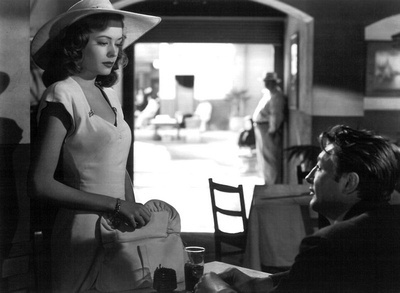
Great crime noir classic. Published in 1946, it still holds up brilliantly. Geoffrey Homes is the pen name for screenwriter Daniel Mainwaring, who authored Out of the Past (see book cover for still of Jane Greer and Robert Mitchum), the classic b/w noir film based on his own book. I think Out of the Past is one of the best movies ever made - it certainly is the best noir film. Both book and movie are so good that it doesn't matter which you read/watch first. Mainwaring also co-penned the screenplay for the remake Against All Odds.
Profile Image for Gabbiadini.
681 reviews9 followers
April 30, 2014
A nasty little tale which is quite a complicated read . Must keep your mind on the book. Think I will try and catch up with the Mitchum film "out of the past" to see if I like it better. Not that this is anything other than totally noir but there are a few superfluous characters that you try to keep in your head only to find they aren't important in the greater scheme of things and also I read this straight after the vengeful virgin by Gil brewer that was just brilliant so it had a lot to live up to.
Profile Image for Michael Shou-Yung Shum.
Author 1 book10 followers
June 18, 2016
The writing is terrible and the movie is far superior. Having said that, this is a great book to read aloud to your loved one.
Profile Image for smokeandmirrors.
334 reviews
June 26, 2020
there's a part of me that likes this for reminding me of the film adaptation and another part which dislikes it for not being as good, which i guess can be the problem with becoming something else's source material; i may have liked this less complicatedly if robert mitchum and jane greer weren't constantly lurking in my head dropping swell one-liners. this is not the place to review the film, i understand this, but it must be said that the film dialogue is sharp as hell and the book dialogue was, hmm, not so much. also in the book there were multiple instances of conversations which went like this --
‘Your name isn’t Red Bailey?’
‘No.’
‘You were a detective and you did something.’
‘Right.’
‘But you won’t say what.’
‘No.’
‘So you went to Korea and became a hero.’
‘Not exactly,’ Red said.
‘You fought.’
‘And bled.’
‘For a principle.’
‘Of necessity.’
‘You believed.’
‘Eventually. I get no credit for that. I’m not altogether stupid.’

i land on the fonder side of the like this-hate this continuum, but i found that occasionally i did wish for geoffrey homes to simply take a break and tell me that someone was smoking a cigarette. my last hot take about this book is that 'mumsie mcgonigle' is a deeply unsexy name and i'm very glad it was changed in adaptation. this book is fine, i liked it, but i cannot envision a situation where, upon feeling an itch, i would not simply go and watch the film instead.
Profile Image for Sofia B.
87 reviews6 followers
December 19, 2019
Es un buen libro de este género. La introducción es magnífica. Pero lo que me impide ponerle 5 estrellas son unos pequeños detalles: algunas escenas y acciones que no tienen sentido, o pudieron evitarse dado que Red Baily no parece que cometeria esos errores y un detalle de Baily que te harta un poco (es repetitivo y facil de detectar). Pero el protagonista y la antagonista estan muy bien construidos. Al menos la antagonista, resulta siendo impredecible y algo fascinante por su nivel de frialdad que muestra en todo lo que hace.
Profile Image for Andy Weston.
3,175 reviews225 followers
July 30, 2023
A rare example of the film this novel was adapted to, being better than the book; Out of the Past (1947), starred Robert Mitchum, Jane Greer, and Kirk Douglas, and was one of the best noir crime films ever made. Perhaps it has something to do with the author (Daniel Mainwaring, Homes was his pen name) writing the screenplay also.

Both novel and film are powerful studies of a man’s struggle to maintain hope for some sort of future when his past catches inevitably up with him.
Profile Image for Ted.
239 reviews24 followers
April 12, 2024
Read this one years ago but it's stayed with me until the present. This is the novel that became Out of the Past one of the best films of the film noir genre. The story is basically the same as in the film but the characters are more fully developed in the novel and there is a bit more detail. The ending is different in the novel and in my opinion, more satisfying. That said, if you enjoyed the film, I think you will also enjoy the novel. They complement each other perfectly.
Profile Image for Franc.
364 reviews
February 15, 2019
Out of the Past is my vote for greatest noir, but its source is one of those books that suffers in comparison to its film. Like The Godfather, the writing is sloppy, repetitive, and clichéd, but a master lapidarist like Coppola or Tourneur can cut and burnish away these flaws to reveal a gem.
Profile Image for Glenn Hopp.
249 reviews2 followers
August 21, 2022
Always interesting, though not as good as the film Out of the Past, which was based on this novel and written by the same author. Jane Greer’s part in the movie is renamed and built up much more than in the novel. Worth reading, though hard to find.
Profile Image for Debbie.
1,413 reviews
July 7, 2017
The original novella that the movie Out of the Past was based on. Short, sharp and to the point.
Profile Image for Frank Marzano.
81 reviews
June 10, 2018
Plot was a bit convoluted; the movie ("Out of the Past") greatly streamlined things.
1 review
Read
August 13, 2019
Very worthwhile. Having seen the movie and enjoyed it, I wanted to read the source novel. I'm glad I did.
Profile Image for Williwaw.
482 reviews30 followers
June 5, 2020
See my review under The Humming Box / Build My Gallows High.
Displaying 1 - 30 of 47 reviews

Can't find what you're looking for?

Get help and learn more about the design.