

What do you think?

A Very, Very Short History of England #4
England in the Age of Chivalry . . . And Awful Diseases: The Hundred Years' War and Black Death
A revealing glimpse into the tumultuous history of England's medieval period, full of knights in shining armor and terrible peasant suffering
Covering the violent and disease-ridden period between 1272 to 1399, England in the Age of Chivalry ... and Awful Diseases covers the events, personages, and ideas most commonly known as medieval. This includes Geoffrey Chaucer, the Peasants revolt, the Scottish wars of independence, the Great Famine of 1315, the Black Death, and the 100 Years War. Central to this time is King Edward III, who started the 100 Years War and defined the concept of chivalry, including England's order of the garter. His legacy continues to shape our view of England's history and is crucial in understanding the development of Europe.
Covering the violent and disease-ridden period between 1272 to 1399, England in the Age of Chivalry ... and Awful Diseases covers the events, personages, and ideas most commonly known as medieval. This includes Geoffrey Chaucer, the Peasants revolt, the Scottish wars of independence, the Great Famine of 1315, the Black Death, and the 100 Years War. Central to this time is King Edward III, who started the 100 Years War and defined the concept of chivalry, including England's order of the garter. His legacy continues to shape our view of England's history and is crucial in understanding the development of Europe.
184 pages, Kindle Edition
First published January 1, 2018
Ratings & Reviews
Friends & Following
Create a free account to discover what your friends think of this book!
Community Reviews
Displaying 1 - 30 of 31 reviews

July 9, 2023
A fun look at The Hundred Year's War & Black Death!
King Edward I (but not really the 1st), known as Edward Longshanks is the guy we all remember as the villain from the highly inaccurate Mel Gibson film, Braveheart.
But he was so much more than just that.
He was a man who enjoyed burning someone's intestines while they were still alive in front of them.
And the English loved him for it.
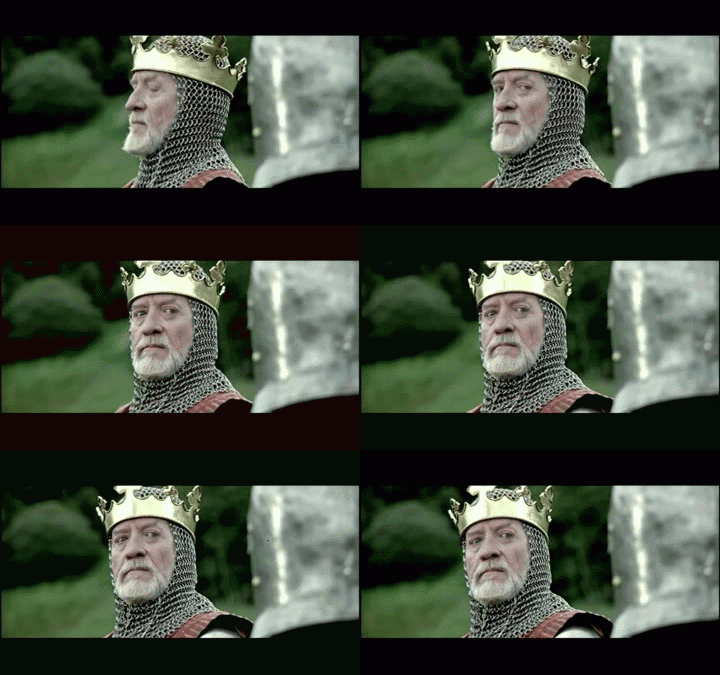
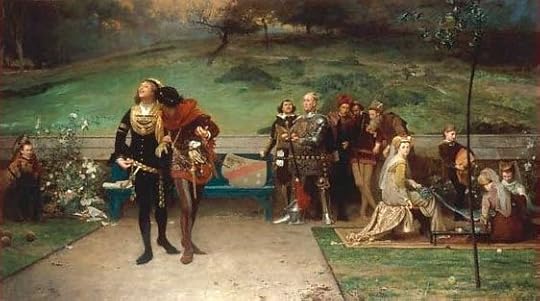
Because even as brutal as he was, he wasn't as hated as his son Edward II. Mainly, because he kept giving his gay lover all the goodies that should have gone to his wife. Or more importantly, his barons.
Neither was thrilled with him, to say the least. Eventually, the barons complained about his preferential treatment so much that Ed had to exile his annoying boyfriend. And yet, the guy kept turning up like a bad penny over and over again. It was kind of hilarious.
Well, until everyone had enough and Edward II was deposed. And died shortly thereafter.
I'm sure it was a coincidence.
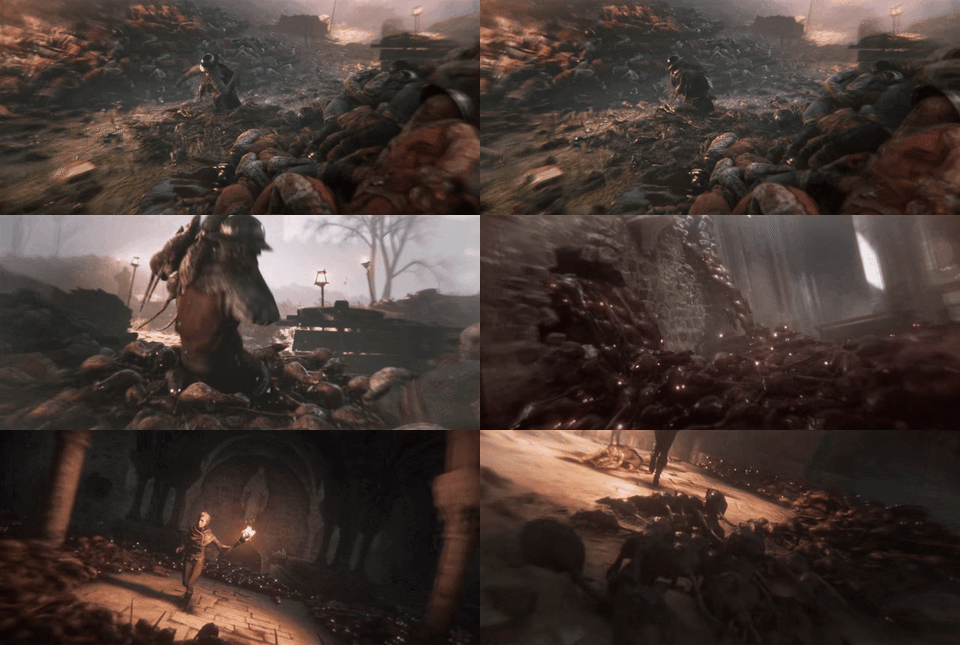
And the Black Death!
Ah, the good old days...
Unsurprisingly people thought they were living in the end times, blamed the disease on sin, and warned that this was God's wrath upon them.
And yet, rats and poor hygiene seem to be the actual culprit.
Things change but things never change, do they?
There's more between the pages than just this, though. And once again, the series delivers a concise and often funny look at a large chunk of history.
Recommended for those who are not looking for an in-depth study, but an overall view of what was going on during the time period these things took place.
King Edward I (but not really the 1st), known as Edward Longshanks is the guy we all remember as the villain from the highly inaccurate Mel Gibson film, Braveheart.
But he was so much more than just that.
He was a man who enjoyed burning someone's intestines while they were still alive in front of them.
And the English loved him for it.
Because even as brutal as he was, he wasn't as hated as his son Edward II. Mainly, because he kept giving his gay lover all the goodies that should have gone to his wife. Or more importantly, his barons.
Neither was thrilled with him, to say the least. Eventually, the barons complained about his preferential treatment so much that Ed had to exile his annoying boyfriend. And yet, the guy kept turning up like a bad penny over and over again. It was kind of hilarious.
Well, until everyone had enough and Edward II was deposed. And died shortly thereafter.
I'm sure it was a coincidence.
And the Black Death!
Ah, the good old days...
Unsurprisingly people thought they were living in the end times, blamed the disease on sin, and warned that this was God's wrath upon them.
And yet, rats and poor hygiene seem to be the actual culprit.
Things change but things never change, do they?
There's more between the pages than just this, though. And once again, the series delivers a concise and often funny look at a large chunk of history.
Recommended for those who are not looking for an in-depth study, but an overall view of what was going on during the time period these things took place.
August 19, 2023
3,5 stars rounded up
A flippant, irreverent and funny social and historical commentary despite the less than amusing subject.
A good appetiser and summary of the age for "people in a hurry", starting with the reign of Edward I and finishing with Richard II.
It is in no way comprehensive or pretends to be so. If you want an in-depth study with a more serious tone, then this is not the book you are looking for.
Myths get debunked and historic figures stripped off of any false romanticism/glory hung around their necks by authors of fiction, TV shows or hugely inaccurate Hollywood films like Mel Gibson's Braveheart in a -for me- very satisfying fashion. Everyone gets the warts-and-all treatment, which is really refreshing.
A flippant, irreverent and funny social and historical commentary despite the less than amusing subject.
A good appetiser and summary of the age for "people in a hurry", starting with the reign of Edward I and finishing with Richard II.
It is in no way comprehensive or pretends to be so. If you want an in-depth study with a more serious tone, then this is not the book you are looking for.
Myths get debunked and historic figures stripped off of any false romanticism/glory hung around their necks by authors of fiction, TV shows or hugely inaccurate Hollywood films like Mel Gibson's Braveheart in a -for me- very satisfying fashion. Everyone gets the warts-and-all treatment, which is really refreshing.

April 26, 2025
The action in this book fits pretty neatly into the 14th century beginning with a new king in England in 1308 and covers much tumult, warfare with the French, Welsh and Scots, treachery, regicide, literal backstabbing, plague and other disasters. It closes with a new king in 1400 and the beginning of the War of the Roses.
Ed West has a bit of Monty Python type humor and I initially thought that wasn’t going to do this history any good, but actually it suits the century well, I adjusted my thinking and liked this compact book for what it was. I wasn’t really looking for a 800 page history in any case. It provides a good survey, has plenty of references and is very entertaining. My takeaway is that chivalry wasn’t all it was cracked up to be, the 14th century wasn’t much good for anyone, and no one should be a serf. Plague was a disaster unless you were among those who managed to survive death and the chaos that followed.
I recommend the book and will probably look for another book by West.
Ed West has a bit of Monty Python type humor and I initially thought that wasn’t going to do this history any good, but actually it suits the century well, I adjusted my thinking and liked this compact book for what it was. I wasn’t really looking for a 800 page history in any case. It provides a good survey, has plenty of references and is very entertaining. My takeaway is that chivalry wasn’t all it was cracked up to be, the 14th century wasn’t much good for anyone, and no one should be a serf. Plague was a disaster unless you were among those who managed to survive death and the chaos that followed.
I recommend the book and will probably look for another book by West.

April 14, 2024
Just discovered this series, and found it truly well written, and perfectly read by Mr Crossley. Definitely will listen to the other audiobooks.

February 27, 2020
A nice concept, but the history is very much a gloss and the humor indicated from the title rarely makes an appearance and only in very simple ways that get repetitious after a few chapters. Would be better for readers who aren't familiar with medieval history in general and maybe don't want to delve too deep. Better than a Wikipedia article but only kinda.
March 17, 2021
A clear concise and entertaining recounting of the tumultuous 14th century. This is a thoroughly entertaining read, written like a particularly riveting lecture, or a story told over a couple of pints by someone who knows what they're talking about. If you want a rundown of events along with satisfyingly scathing asides, this is the book for you.
April 3, 2021
This series of books would be good for anyone who finds most popular history books slow and boring yet wants to learn more about England's history. They are fast moving and have a sarcastic dark humour - necessary for some pretty gruesome stories.
May 24, 2018
Blargh.
Why did I read this? For some reason, I saw the title and thought it might tell me something about social life in England during the Late Middle Ages. Nope. The title is just clickbait.
It's a generic rehashing of England during the 1300s. The title is even a bit misleading, as the Hundred Years War doesn't show up for the first third of the book (and the Plague took place during it). In the mean time, he goes over the Braveheart stuff.
Anything interesting about this book? Well, there are some nice longbbow stats. They were lethal over 150 yards and could pierce armor at 60 yards. Someone could fire 12 arrows a minute. England got off 70,000 arrows in the first minute at Crecy. About half of them were in the air before the first one landed. As the 100 Years War went on, increasingly fighting was carried out by professional mercenary companies. West also says the 100 Years War helped make English the language of the ruling classes - which is an interesting nugget, but I don't know how much I trust this author on that one.
Why did I read this? For some reason, I saw the title and thought it might tell me something about social life in England during the Late Middle Ages. Nope. The title is just clickbait.
It's a generic rehashing of England during the 1300s. The title is even a bit misleading, as the Hundred Years War doesn't show up for the first third of the book (and the Plague took place during it). In the mean time, he goes over the Braveheart stuff.
Anything interesting about this book? Well, there are some nice longbbow stats. They were lethal over 150 yards and could pierce armor at 60 yards. Someone could fire 12 arrows a minute. England got off 70,000 arrows in the first minute at Crecy. About half of them were in the air before the first one landed. As the 100 Years War went on, increasingly fighting was carried out by professional mercenary companies. West also says the 100 Years War helped make English the language of the ruling classes - which is an interesting nugget, but I don't know how much I trust this author on that one.
June 3, 2020
History at its most intriguing
Another immensely entertaining and informative book by Ed West. Although I have read many books about the wars of the roses, I had scant knowledge of the years leading up to it and how feudalism ended.
Another immensely entertaining and informative book by Ed West. Although I have read many books about the wars of the roses, I had scant knowledge of the years leading up to it and how feudalism ended.

April 28, 2021
I've read 3 of these in a row, and they deliver. Good quick reads, succinct style, and everything I need to know since I'm not trying to earn a history degree. Dude is funny too. Favorite part of this book was the bit on the Scottish Wars of Independence.

June 26, 2019
There were some interesting points in this book but it also dragged a lot sometimes and it whipped through the events so fast that it was often hard to follow.
February 1, 2022
England in the Age of Chivalry... and Awful Diseases: The Hundred Years' War and Black Death by Ed West is exactly what the title suggests. It tells the story of four different English kings of various worths --- three Edwards and a Richard. They are each of varying degrees of awfulness. West tells the history of England from the years 1272 to 1399. Obviously a lot can happen in 100+ years including the Hundred Years' War (which was actually a composite of three different wars) and the the Black Death. West covers a lot of ground here and manages to do so in 158 pages. How can one be so concise you may ask? Simple. Select the most interesting anecdotes that still give readers a picture of what actually happened during this time in England. West's stories are not only revealing of historical facts but manage to convey ordinary (and often gruesome) life in Medieval England. It helps that West is also cynically funny and the history he reveals can be jaw-droppingly awful. This is not the history you will find in your college history class. West's version of England is fascinating, gruesome, and chock full of gossipy asides.
Although West manages to dish enough anecdotes and stories to keep readers shaking their heads in awe, he suffers at times from too much detail when less is needed. Readers find themselves scrambling up a twisted and ingrown family tree of England's rulers and their kin. It becomes very hard to keep track of who's who and who did what. West seems unable to constrain himself when faced with such a wealth of weirdness and so tosses every bit in -- to the confusion of his readers. This information overload bogged down the pace of the book and left me going back in the book just to make sure I hadn't missed anything or forgotten some important historical figure. Alas, no.
With only 158 pages to tell over 100 years worth of English history during one of the country's most turbulent times, West seems to get a little lost and thus readers are as well.
Despite these flaws the book is overall very humorous and completely entertaining. Don't read this book expecting to get a master's thesis on English history. Read it because you already have a general knowledge of the times and wish to get the historical facts that most historians leave out. You know, the fun stuff.
West's book is not for hardcore history scholars, nor is it for absolute beginners. It strikes somewhere in the middle ground building upon commonly held knowledge with interesting vignettes and dark humor. It is easy to get lost in some of the twists and turns of the monarchies and their families, but for those who stick to the path, the journey is well worth it.
Although West manages to dish enough anecdotes and stories to keep readers shaking their heads in awe, he suffers at times from too much detail when less is needed. Readers find themselves scrambling up a twisted and ingrown family tree of England's rulers and their kin. It becomes very hard to keep track of who's who and who did what. West seems unable to constrain himself when faced with such a wealth of weirdness and so tosses every bit in -- to the confusion of his readers. This information overload bogged down the pace of the book and left me going back in the book just to make sure I hadn't missed anything or forgotten some important historical figure. Alas, no.
With only 158 pages to tell over 100 years worth of English history during one of the country's most turbulent times, West seems to get a little lost and thus readers are as well.
Despite these flaws the book is overall very humorous and completely entertaining. Don't read this book expecting to get a master's thesis on English history. Read it because you already have a general knowledge of the times and wish to get the historical facts that most historians leave out. You know, the fun stuff.
West's book is not for hardcore history scholars, nor is it for absolute beginners. It strikes somewhere in the middle ground building upon commonly held knowledge with interesting vignettes and dark humor. It is easy to get lost in some of the twists and turns of the monarchies and their families, but for those who stick to the path, the journey is well worth it.
March 3, 2020
This book has a whimsical mood, but I am seriously interested in Medieval history.

May 15, 2023
I am enjoying these brief recaps of English history, but am glad I read so much historical fiction and mystery series set in these periods. I have also read other nonfiction about certain events like the 100 Years War and the Black Death, so I am somewhat familiar. I think this would be a confusing book to start with! I have read the author’s previous three books in this series, and will read the last, covering the War of the Roses. I appreciate his dry humor, and try to capture some of the interesting and/or humorous bits in my Reading Progress, so other history buffs can see if the style might suit them.

May 15, 2024
What an engaging journey through the plague and war ridden years of England (ages ago, not recent history). Written in a very light tone, with a bit of humourous opinion thrown in amongst the facts, it’s a great introduction to this series of books on English history (the others of which I will purchase later). Mad kings, vengeful rulers, corrupt religious leaders, xenophobia, tough lives (pretty much anyone, tbph, especially the poor, and women of any class). Recommended as an easy read, or palate cleanser before getting into more psychological thrillers.
December 3, 2024
This is the second short history I have read in Mr West's series concerning early British hisory. Having little knowledge of that time other than in broafd terms, i find these to be perfect fro my needs. It also helps that the author has a sense of humor that entertains as it teaches. I plan to reda more of the series in 2025.
July 30, 2022
A very witty book about the behavior of the monarchs of the past
January 17, 2023
Similar to other books in the series but more virtue signaling.

July 31, 2025
Had a lot of interesting information, I had not read previously. Definitely a good read for history buffs.

March 25, 2026
3.5⬆️
This series is a great starting point for anyone looking to learn about English history. It’s quick and funny at times, and also gives you enough other resources for further reading.
This series is a great starting point for anyone looking to learn about English history. It’s quick and funny at times, and also gives you enough other resources for further reading.
September 20, 2026
A brief historical review of England roughly between 1300 - 1400 c.e.
The sections regarding the black plague and the linguistic development of English is where the book shines.
The sections regarding the black plague and the linguistic development of English is where the book shines.

February 22, 2025
It's a great book if you are interested in the topic, research, or term paper. Enjoy!

February 29, 2024
The pace of this is good, lots of facts I never knew and an entertaining read.
May 8, 2019
England in the Age of Chivalry…And Awful Diseases is part of a series on English history. This short volume covers the Hundred Years War and the Black Death, which runs roughly from the mid 1200’s through the mid 1300’s. It is the second book I have read by Ed West. The author’s style is somewhat irreverent, but he is interesting to read.
Much of the book is about the kings and their wars with other pretenders and with the Scots and the Franks, mostly in Normandy. The Hundred Years War actually lasted 116 years and was on and off again during that period with mostly incursions by the English into France. The excuses for the wars seem rather flimsy from my perspective, but the people in power saw things differently. Some, like Edward III, loved fighting and saw it as a grand thing. Mercenaries abounded, and war in those days was about plundering the losers, or at least those on whose ground it was fought. There were monetary reasons as well. Bordeaux was a city in France that belonged to the English. The wine sales from Bordeaux brought in more money for the crown than that of all England. But wars cost money, and Edward’s fighting caused the crown to be heavily in debt. As a side note, two Italian banker families who loaned Edward money were bankrupted because he couldn’t pay his debts.
The Black Death, what we know now as the bubonic plague, killed a terrible amount of people. In some areas, no one was left. It was worst in the cities because of the poor hygiene and basic squalor of lots of people living in pretty filthy conditions. Half the people in London died in 1348-9. Medical knowledge was limited, and the notion that it was carried by fleas on rats was not on the radar. In 1348 the learned doctors at the University of Paris concluded the following: “it was due to a triple conjunction of Saturn, Jupiter, and Mars in the 40th degree of Aquarius.” The conjunction took place on March 20, 1345, so it became the official accepted theory accepted in Europe. Life was pretty tough in those days. There was lots of violence, famine, and sickness that took its toll.
The book is short and full of names of kings and pretenders and allies and enemies and other characters. For those not familiar with English history, the names become rather meaningless after a while. I did find the short portion about Geoffrey Chaucer to be interesting, but that is likely due to my being an English major in college. I learned, or perhaps relearned, a few things about his personal life. So, the book was of interest to me in some ways, but I doubt most folks will be reading it.
Much of the book is about the kings and their wars with other pretenders and with the Scots and the Franks, mostly in Normandy. The Hundred Years War actually lasted 116 years and was on and off again during that period with mostly incursions by the English into France. The excuses for the wars seem rather flimsy from my perspective, but the people in power saw things differently. Some, like Edward III, loved fighting and saw it as a grand thing. Mercenaries abounded, and war in those days was about plundering the losers, or at least those on whose ground it was fought. There were monetary reasons as well. Bordeaux was a city in France that belonged to the English. The wine sales from Bordeaux brought in more money for the crown than that of all England. But wars cost money, and Edward’s fighting caused the crown to be heavily in debt. As a side note, two Italian banker families who loaned Edward money were bankrupted because he couldn’t pay his debts.
The Black Death, what we know now as the bubonic plague, killed a terrible amount of people. In some areas, no one was left. It was worst in the cities because of the poor hygiene and basic squalor of lots of people living in pretty filthy conditions. Half the people in London died in 1348-9. Medical knowledge was limited, and the notion that it was carried by fleas on rats was not on the radar. In 1348 the learned doctors at the University of Paris concluded the following: “it was due to a triple conjunction of Saturn, Jupiter, and Mars in the 40th degree of Aquarius.” The conjunction took place on March 20, 1345, so it became the official accepted theory accepted in Europe. Life was pretty tough in those days. There was lots of violence, famine, and sickness that took its toll.
The book is short and full of names of kings and pretenders and allies and enemies and other characters. For those not familiar with English history, the names become rather meaningless after a while. I did find the short portion about Geoffrey Chaucer to be interesting, but that is likely due to my being an English major in college. I learned, or perhaps relearned, a few things about his personal life. So, the book was of interest to me in some ways, but I doubt most folks will be reading it.
March 26, 2018
Just because you can READ a history book does not mean you can WRITE a history book. And some people shouldn't write at all, like this author.
The only reason I even attempted to read this book was to see how bad the train wreck was going to be. There will never be a train or train track here ever again. It was bad. It was beyond bad. If I were to go further with this I would be insulting the reader and wasting good words on junk.
First, the writing. Okay, it wasn't writing. It was a bad comedy act in print. Or an editorial hit piece against history. No, just a really bad comedy act trying too hard to be funny. You don't need to treat history as a subject that everyone hates and so the author decides to make it interesting by treating it as if everything was really just a punch line waiting to happen.
Two, well more on the writing, somewhat. History texts deal with, well, I don't know, history. At least, I thought so. I could be wrong. And that involves quoting sources, listing sources in a bibliography, stating facts, and if starting opinions, backing them up with support and quotes. And dealing with actual history, that's a big one. This was a giant book report on books the author read that he combined together and called it a book.
Three, I gave up on this book. It was just horrible. I just wanted to throw it across the room at all the snotty assumptions and lack of citations. It was giving me a headache.
All in all: DO NOT READ THIS BOOK. Save your money or the trip to the library. There are better books out there about this time in English history. Remember: just because you read a history book does not make you a historian.
The only reason I even attempted to read this book was to see how bad the train wreck was going to be. There will never be a train or train track here ever again. It was bad. It was beyond bad. If I were to go further with this I would be insulting the reader and wasting good words on junk.
First, the writing. Okay, it wasn't writing. It was a bad comedy act in print. Or an editorial hit piece against history. No, just a really bad comedy act trying too hard to be funny. You don't need to treat history as a subject that everyone hates and so the author decides to make it interesting by treating it as if everything was really just a punch line waiting to happen.
Two, well more on the writing, somewhat. History texts deal with, well, I don't know, history. At least, I thought so. I could be wrong. And that involves quoting sources, listing sources in a bibliography, stating facts, and if starting opinions, backing them up with support and quotes. And dealing with actual history, that's a big one. This was a giant book report on books the author read that he combined together and called it a book.
Three, I gave up on this book. It was just horrible. I just wanted to throw it across the room at all the snotty assumptions and lack of citations. It was giving me a headache.
All in all: DO NOT READ THIS BOOK. Save your money or the trip to the library. There are better books out there about this time in English history. Remember: just because you read a history book does not make you a historian.

February 13, 2020
This is the second of Ed West's series of short, short histories of England that I have read. This book, along with the first one I read, are a delightful summary of a certain period in English history that, while short, do pack a great deal of information. Plus, he writes in such a breezy and almost whimsical style at times, that they are a real pleasure to read. You could read the whole book in one setting, but I prefer to take the time and digest each chapter. And he can be incredibly funny. He makes English history funny, which is no small feat. I will be reading more.

June 10, 2019
Considering that a third of the book’s title is dedicated to The Black Death, I was disappointed that the plague was only the focus of a single chapter. If you’re looking to learn more about the plague in England there are likely far better books to learn from. This book is simply a very surface-level retelling of the key points of English history.

May 4, 2019
Often hilarious, always informative.

May 21, 2019
Another entertaining slice of English history by Ed West. It’s not “1066 And All That”, but it is a very close second. I think I will see what else Mr. West has written.
Displaying 1 - 30 of 31 reviews