"FEARSCAPE is an evil and really very good comic." -Warren Ellis
"It’s hard to find something this fresh and visionary. I genuinely love it." -Scott Snyder
The Fearscape is a world beyond our own, populated by manifestations of our worst fears. Once per generation, The Muse travels to Earth, discovers our greatest Storyteller, and takes them with her to the Fearscape to battle these fear-creatures on our behalf. All has been well for eons, until The Muse encounters Henry Henry―a plagiarist with delusions of literary grandeur. Mistaking him for our greatest Storyteller, she ushers him into the Fearscape. Doom follows.
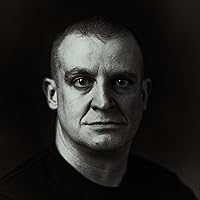
Ryan O'Sullivan is a comic book writer from the North of England. Best known for original works such as A Dark Interlude, Fearscape, Void Trip, and Turncoat; Ryan has also written for licensed properties such as Dark Souls, Warhammer 40,000, and The Evil Within; as well as music industry professionals such as RZA of the Wutang Clan, Yungblud, and Abbey Road Studios. His original graphic novel, Fearscape, was one of only two comics selected for The Guardian newspaper's "Best Books of the Year 2019". He is one quarter of the White Noise comic-writer studio.
A heavily meta story about amoral, wanna-be author plagiarist who steals his mentor's identity when The Muse comes looking for the era's greatest author to defeat humanity's greatest fear. It's a neat idea, especially when we see instances of this reprobate editing over what really happened in real time, actually posting his word balloons over the top of what actually happened. It's a neat effect and really the only one where this story works better as a comic rather than prose. The obviously unreliable narrator is a blowhard, enraptured with his own words, rambling on on on. I often just gave up on those passages and skipped ahead to escape the mind-numbing drudgery of said pages.
Andrea Mutti puts out a lot of work. It's passable work but always seems to remind me of what you'd see in an author's sketch book that has been poorly colored with a watercolor effect. The best I can say about the guy's work is that it's serviceable.
Henry Henry, an unscrupulous would-be author, is led by a Muse into the Fearscape, an otherworldly realm of anthropomorphic fears in which history's greatest writers are forged by trial. Only he's not who the Muse thinks he is, having stolen the work of his Alzheimer's suffering mentor.
Henry guides the reader through the story, speaking directly to us, but he is the most unreliable of unreliable narrators, rewriting his own motivations in real time. He brazenly paints himself as an innocent victim of cruel circumstance, and his vile actions as unfortunate necessities caused by treacherous friends and acquaintances. At points he literally writes over the dialogue of others with self-serving and self-glorifying revisions (if Henry were less literate he could be president. Ba dum, tsss.)
Fearscape is jam packed with meta literary references, and Henry speaks to us in wonderful flowery prose: "Forgive me, dear reader, for subjecting you to witless exposition from the sentient encyclopedia [the Muse] now masquerading as my escort. Her insincere self-imposed grandiosity was an attempt to entertain me, as she had those middlebrow and upper-Philistine storytellers before me, with the patter of that most repugnant specimen, the world-building fantasy author. She who once enflamed my soul with the promises of the ivory tower, now exhausted me with babel-by-the-numbers."
There is revealed at the end of the volume to have been a second story cleverly buried within the first one. The clues were abundant but artfully hidden, sometimes in plain sight.
After seeing this book recommended by several writers/artists/critics whose opinions I value, I decided to check it out for myself. Also, I've been hearing a lot of good things about Vault Comics and this was the title chosen for my maiden voyage into their available works.
Honestly, the narrator (and writing in general) got on my nerves too much for me to even begin to enjoy the book. With comics as a visual medium I usually tend towards writers that are able to let the art flourish on its own without word balloons and captions filling up a page. One point I really enjoyed occurred in Issue #3 when Henry Henry's narrative captions covered the dialogue of "Wolfgang" and Jill. Not sure if this was the work of Ryan O'Sullivan or the lettering by Andworld Design but props. This was the first work of Ryan O'Sullivan that I have read so I will not judge him as a writer based purely on this. I'm not calling him a bad writer, I just found the majority of this work to be overwritten. Fans of Alan Moore or Neil Gaiman will probably love this comic. I've never been a huge fan of either (I see them more as novelists finding more work in comics due to lack of competent competition) so perhaps I was biased at the beginning.
As far as the art goes, I'm not a huge fan of Andrea Mutti's style. Sketchy? I guess you would call it. At this point, I expect the main characters to be drawn well enough to be distinguished. As a fan of art/animation, I pay more attention to backgrounds and settings than I do the foreground. Especially in stories with fantasy worlds (such as the titular Fearscape), the setting deserves just as much detail as the characters involved and you don't really see that here. The coloring did a nice way to mimic watercolors through digital means. It gave the story a nice little whimsy that I assume added to the "fantasy" element. Nothing says fantasy like watercolors.
I view this as an adult retelling of the Sesame Street classic The Monster at the End of This Book. The narrative captions sort of force the reader to feel as though they are partly guilty for the actions that play out. The "twist-ending" featured in issue #5 was obvious to me earlier on in the story but I also agree with the sentiments of Jill in that the same thing happens to many people without them growing up to be vengeful murderers. I see that this is the first part of an ongoing story but don't see myself returning for the next round.
You'll notice a lot of I's present in my review above. I understand that reviews are subjective and that although I was not entirely wooed by this comic, others may eat it up. If you enjoy the works of Neil Gaiman, unreliable narrators, and meta-fiction this is perhaps your bag.
Woah super dialogue heavy which didnt allow the art to contribute to the story telling. Also super meta. Muttis art is hit and miss. Im sometimes a fan of the sketch work but it didn't seem to work well here
I found reading this graphic novel oddly tumultuous. While the 'protagonist' Henry Henry is meant to be pretentious to the point of repugnant, I came to find his white text box interjections too obstructive of the flow of the overall plot.
Then again the very nature of Fearscape is inversion. Henry always has a vastly different take on opposition and is quick to lie for the sake of self-preservation. That being said the one he deceives most is undoubtedly himself.
While I can't say I fully comprehended the greater mythological significance of the Fearscape as a place, I can say that I got to the core of why Henry is the way he is. Then again while the end revelation explains his overall desperation and compulsive lying, to say that it does so for his narcissism and megalomania feels emotionally wrong. While other characters draw attention to this within the narrative, I felt the negative implication remained which many similar victims would find not only incorrect but downright insulting.
While it isn't always quite as clever and meta as it would like to be, I found Fearscape a fascinating use of the graphic novel medium and an intriguing successor to the likes of Neil Gaiman's Sandman series. I recommend it to writers and those with a high tolerance of avant-garde storytelling and the unreliable narrator.
This review covers Fearscape and A Dark Interlude:
These graphic novels were fine, cleverly done even. The author is obviously a deft hand at believably untrustworthy narrators, which is precisely what Henry Henry is. And I found it interesting watching events unfold and then seeing him re-remember them. His delusion is almost a character of its own in the story, book one especially. I also liked the art.
I did see book one’s reveal coming from the first hint. Both books, but especially book two, have some large blocks of print that feel out of place in a graphic novel, and frankly, I started skimming all the literati-babel by the end. I understood what the author was going for, but I got bored with it.
All in all, these were middle-of-the-road reads for me. I am, after all, Henry Henry’s most despised class of people, the casual reader (especially of graphic novels). But I’m sure will find their audience.
Fearscape es, sin ninguna duda, uno de esos cómics que se alejan de los cómics convencionales. Es una historia complicada de entender al principio pero de la que te vas familiarizando con cada página. El cómic original está publicado por la editorial Vault, una editorial americana independiente que está especializada en ciencia ficción y fantasía. En España es bastante desconocida, pero gracias a su colaboración con Medusa vamos a poder leer algunas de sus obras.
El protagonista de la historia es Henry Henry, un escritor frustrado que se dedica a traducir obras. Más que traducir, se dedica a cambiar las novelas originales: sus tramas, sus títulos, etc., porque cree que sus versiones son mejores. Este ha estado bajo el patrocinio de Arthur Proctor, un escritor superventas de fantasía, pero que en la actualidad padece alzhéimer. Este tiene una hija, Jill.
La trama arranca con Henry hablando con su agente. Este le dice que lo que escribe no vale para nada, porque no sabe hacer una novela, apenas hace bien su trabajo de traductor. Este, quien está también resentido con Arthur, decide robarle su último manuscrito, otro superventas seguro. Cuando hace esto se le presenta una mujer dorada: la Mesa. Le dice que en Fearscape se necesita al gran Arthur Proctor.Henry, mintiéndole, se hace pasar por él. Fearscape es un reino de magia oscura donde los miedos humanos se materializan en criaturas vivas. La Musa busca en cada generación al mejor narrador de la humanidad para que derrote al mayor de todos los miedos. A partir de aquí las aventuras, la magia, los secretos y las traiciones acampan a su anchas.
Fearscape es una historia que enlaza muy bien lo onírico, el mundo de los sueños, con la fantasía y lo intelectual, pues tendremos muchas referencias a los grandes de la literatura. Las referencias a otros escritores de la literatura universal las vamos a encontrar en Petrarca, quien aparece como personaje custodiando un árbol, Lovecraft o Poe. Estos últimos, entre otros, están reflejados en el Héroe, un ser que tiene más de mil rostros. Es la representación del saber colectivo de las grandes mentes de la humanidad.
Está escrito en primera persona y el propio Henry habla con el lector (y habla constantemente), haciéndole partícipe de todo lo que él haga, como si fuera su cómplice. Si Henry hace algo mal y cae por ello, el lector, al ser su compinche, también lo hará. Esta forma de narrar me ha gustado mucho, ya que rompe la cuarta pared e involucra en la trama al lector, que pasa de ser un mero espectador a parte de la trama. Henry intenta demostrar su inocencia justificando todo lo que hace, para hacernos poner de su lado. Todo esto lo hace con mensajes en off.
En cuanto al apartado artístico de Mutti y Popov, este es muy bueno. Encontramos a personajes de cuento, semireales e imaginados, que están muy bien diseñados. Y a pesar de que los rostros, que son totalmente expresivos, no están muy detallados. Por algunos momentos, las viñetas se tornan con un fuerte tono de oscuridad con tintes de terror. El estilo de Mutti encaja a la perfección con esa atmósfera que se quiere transmitir en la narración, más aún con la paleta cromática de Popov.
Por último, la edición de Medusa Cómics, no podría ser de otra forma, es una edición perfectamente cuidada. Tenemos un tomo de tapa dura, con una excelente calidad en el papel. Como ya es tradicional, tenemos un contenido extra al final de los cinco capítulos que forman este tomo. Este contenido extra está formado por la galería de portadas de varios artistas, una muestra del proceso y evolución del diseño del título y las biografías de los creadores.
En conclusión, nos encontramos ante un cómic que rompe con las convenciones acostumbradas. Una historia que enlaza perfectamente lo onírico con la fantasía y lo intelectual. Un personaje protagonista/antihéroe que habla directamente con el lector, rompiendo la cuarta pared, y haciéndole su cómplice de todo lo que hace. Una historia llena de magia, de terror, de aventuras, de ambición y de traiciones. Un cómic con unos dibujos muy buenos y una lectura ágil y rápida. Un soplo de aire fresco en el mundo de los cómics.
"Pretentious people are like cross stitch pieces, they look fine and pretty at the front. But twisted and messed up in the back."
A uniquely meta book that might scare away people looking for something more straight forward or with a protagonist that you don't hate.
Henry Henry when we start our tale is a bit of a sad sack. Endlessly pretentious and lacking in the skill to match his ego, he's denied one too many times by editor due to his behavior and (lack of) skill and decides to take advantage of his relationship with a more successful author. This in turn ends up with him getting confused for that author and getting sent to the Fearscape, where the greatest storytellers fight humanity's fears. The story spends equal times in the Fearscape and in the real world, with Henry's escalating behavior slowly bringing both of them to ruin.
Henry is really the main player here, both main character and narrator, much of the story focusing exclusively on the dichotomy between his actions on the page and his overly verbose narration constantly twisting or defending them. He's a bit of a caricature of a pretentious author, loathing the "Casual Reader" and constantly praising the reader for "understanding" how deep his work is. You're either going to enjoy how smarmy and pretentious his narration is or it's going to be a deal breaker for you since he comes off as TOO unlikable.
I don't have much to say about the art other than I enjoy it, the sketchy nature of it enhances both the Fearscape and the Real World.
If you want something that is truly unique, especially in the realm of comics, a story that isn't unafraid to have a truly unlikable protagonist and to have a meta narrative that doesn't revolve around how cool superhero history is, then this is worth a look.
This story held me, despite trying quite hard to have me set it down. The opening device of the text-only page, pushing back against the way it always is, did nothing but make me roll my eyes and brace myself. The smug, meta, faux-literary approach made me wonder if this was an angry, revenge story of the actual writer against an industry that had failed to recognise their brilliance for too long. The protagonist was instantly unlikable - a petty, aspiring author, jealous of those with success, but sure of his own superiority. Pushing through the story, while I still cringed at times, I was invested for the final closing act. I really was surprised by my own turnaround. I enjoyed the art style immensely, and thought it worked well for this story.
I genuinely and unironically enjoyed this book, so don't misunderstand when I say IT WAS A LITTLE TOO SUBLTLE SOMETIMES!!!!!!!!! Since anybody reading this review will not need me to spell it out for them, I will not say anything at all about how the author made sure that nobody's blind CATATONIC GOAT would miss any of the exposition or veiled realities going on under the surface of the storyline. It was all handled with such FINESSE AND DELICACY!!!!!! But other than the equisite subtleness, I enjoyed it. I like getting hit on the head with frying pans, too. The art is very nice and the loony protagonist was fun to watch.
essa nota não dá conta de representar o quanto esse quadrinho me deixou dividido. formalmente, muito interessante. a desconstrução literária me pegou desde a primeira edição. por outro lado, será que precisamos de mais narrativas do ponto de vista do psicopata? no fundo, no fundo, esse é um quadrinho
"Back cover blurbs are a waste of ink" sets the knowing tone. I found these flourishes annoying after a while, especially when the story seems to loop around on its self in a massive case of unreliable narrator.
The domain of the Fearscape will feel very familiar to anyone who has read The Sandman - too familiar for me leaving the story trapped in Sandman's gravitational field. Authorised new works are being published in the Dream Country, which I haven't read yet. Was O'Sullivan bold or foolhardy for setting his own course?
I didn't like the style, plot, characters, or art.
Glib and chatty all throughout, the Fearscape tries to redeem itself with a 'shocking' end. The narrator Henry Henry is annoying and generates no sympathy even post reveal. The art is boring and most of the panels look similar. I can't say the art is 'bad', but it wasn't to my taste, and the long boring narrative did it no favors.
What my ratings mean: ★★★★★ Legendary — Impactful, outstanding story and prose. An all-time favorite. Must read. ★★★★☆ Great — Expertly-crafted and worthwhile. Would recommend enthusiastically. ★★★☆☆ Solid — Good but not a standout. Would recommend to the right person. ★★☆☆☆ Mediocre — Not bad, but there's better options from this author or genre. ★☆☆☆☆ Terrible — Actively bad, disappointing, or amateurish. Avoid.
Though it could easily be a 4 star rating if it had a second volume, the completely unreliable narrator only makes for a good half a story, and left me unsatisfied seeing as it was never continued. I will say that I loved how the comic dealt with the unreliable narrator, who turns from pretentious to downright delusional throughout the story.
Very enjoyable and imaginative (love the way the panel layout shows the narrator talking over his own story), but it doesn't quite stick the landing - the 'twist' ending is obvious from the first hint, so the fact that the second half of the final chapter is spent recapping that feels like a waste.
Fearscape ⭐️⭐️ This just wasn't for me I'm afraid - I wasn't the biggest fan of it. I also didn't really understand what was going on, and that really threw me off because I spent a lot of time being confused. The illustrations however were gorgeous and I loved how they looked.
Además de ser una historia penosa resulta que termina con un FIN DE LA PRIMERA PARTE, cuando se supone que era un recopilatorio COMPLETO, no un simple Volumen 1.
The last thing I should have done was read this at 3 in the morning in fear of missing stuff; but it’s also probably going in to my all time favorites so...